Blog Archives
Shinbone Lane


Shinbone Lane is a work of magical realism set in 1970s San Francisco, following sixteen-year-old runaway Maddy as she stumbles into a pocket of the city that feels almost hidden from time. Taken in by warm-hearted Clara and her neighbor Ted at 346 Shinbone Lane, Maddy finds herself surrounded by artists, misfits, and dreamers, watched over by Captain, a vividly colored, opinionated pigeon with a spring for a foot. As she settles into this found family, the lane’s history starts to surface: a bitter neighbor whose daughter vanished, a house that seems to reconfigure itself, a ripple tree that hums and shimmers, and secrets that tie the past and present together until they converge at the annual Shinbone Fair, where healing and reckoning arrive side by side.
Reading it, I kept feeling like the lane itself was the main character. The magical realism sits lightly on the story, but it is everywhere, from the impossible backyard at 346 to the soft chiming of the ripple tree’s heart-shaped leaves and the way Captain quietly nudges people toward wiser choices. Laura McHale Holland writes San Francisco with such affection that I could almost smell the mix of diesel, ocean air, and bakery sweets, especially when the scent of those famous Star Bakery scones with their butterscotch maple glaze drifts up the hill. The choice to juggle many points of view, not just Maddy’s but also people like Clara, Lark, Eloise, and others, gives the book that classic ensemble feel you often get in community-centered magical realism.
What stuck with me most were the emotional currents under the whimsy. This is magical realism, but the magic never erases how hard it is to be human. You feel Maddy’s hunger for safety after months on the road, Lark’s bruised self-image as she compares herself to every woman who passes beneath her window, and Eloise’s grief curdling into control and cruelty as she clings to the idea that her missing daughter must be close by. The book does not shy away from darker turns, including violence and betrayal, or from the way people can exploit each other while insisting they are acting out of love. At the same time, there is a steady thread of resilience that feels very much in line with women’s fiction: characters keep getting knocked down, then choosing, sometimes shakily, to reach for connection again. I appreciated that the magic, whether it is a talking pigeon or a mysterious flute sending shimmering mist across the hillside, mostly amplifies what is already in the characters instead of fixing their problems for them.
By the end, I felt like I had been invited to a long, slightly chaotic block party where people sing show tunes off key, argue about renaming the street, fall in and out of love, and still manage to show up for one another when it really counts. The book sits comfortably in the genre of magical realism with a strong blend of historical and women’s fiction, and I think it will land best with readers who enjoy character-driven stories, found family, and a city setting that feels almost like a living spell. If you are up for wandering a strange little lane in 1974 San Francisco, listening to a wisecracking pigeon and a singing old house while a group of wounded people figure out how to be kinder to themselves and each other, Shinbone Lane is a very satisfying place to spend some time.
Pages: 324 | ASIN : B0F5N6Y2X4

My Twelve-Year-Old Wife: Erased Memories


My Twelve-Year-Old Wife: Erased Memories drops the reader straight into a world where time folds, grief bites hard, and reality keeps shifting under the characters’ feet. The book follows Dan, a man who loses his wife brutally, then hurls himself backward through time to save her. He lands in 2003 and discovers a teenage version of Celia, a younger and sharper incarnation of the woman he loved, and a chilling truth about Lang, the man who killed her. As Dan struggles to protect her, time glitches, memories warp, and past and future versions of Lang collide. The story moves fast, and the stakes sit right at the throat from the opening chapter.
I kept feeling the tension coil in my chest whenever Dan slipped between timelines. His heartbreak is loud. His fear is louder. I found myself rooting for him even when he made choices that scared me. The writing surprised me with small, quiet moments tucked between scenes of dread. A breakfast. A joke. A breath of calm before the ground cracked open. They made the danger feel personal instead of mechanical, and I loved that steady tug between ordinary life and cosmic consequences. There were times when the dialogue carried more weight than the action itself, and those were the moments that resonated with me.
Time travel is usually all rules and logic, but here it felt messy and emotional, which I liked. Time behaves like a living thing. It twitches when Dan pushes it. It punishes him when he presses too hard. I also appreciated how the author handled trauma. Nothing is graphic, but the emotional fallout hit real. Celia’s distrust, Dan’s guilt, the thin places in the world that react to their fear, all of it landed with a strange mix of warmth and dread. I kept forgetting to breathe during the scenes under the bleachers, especially when the masked figure flickered in and out of sight. The writing there felt sharp and cold in the best way.
I would recommend this book to readers who enjoy psychological thrillers with a strong emotional core, and to anyone who likes their time travel tangled with heartbreak instead of gadgets. If you want a story that creeps under your skin and sits there long after the last page, this is a good one. Author Dan Uselton turns time itself into a monster, and the result is unforgettable.
Pages: 323 | ASIN : B0G2FLTQSP
Rhea’s Game: A Psychological Survival Thriller

I read Rhea’s Game by Dan Uselton, and at its core, it’s a dystopian psychological survival thriller about control, spectacle, and the quiet violence of systems that pretend to offer choice. The story follows Rhea and Ryker, two working-class teenagers caught inside a society where a brutal reality show, Chloroform Wars, has become ordinary background noise. Winning brings money and temporary safety. Losing brings public humiliation that lingers long after the cameras cut away. Told through alternating perspectives, the book traces what happens when survival, loyalty, and coercion grind against each other inside a machine designed to extract pain and call it entertainment.
What hit me first was how intentional the discomfort feels. Uselton doesn’t flinch or hurry through the hard parts. He lets them sprawl. Shame, fear, and moral compromise are given room to breathe, which makes them heavier. The dual perspectives work especially well here. Ryker’s chapters feel boxed in, crowded with guilt and second-guessing, his thoughts looping like a bad echo. Rhea’s sections are more restrained but sharper at the edges. Her resistance isn’t loud or theatrical. It’s refusal. It’s control reclaimed through stillness. That choice feels precise rather than poetic, and it carries real weight.
The handling of power is where the book excels. There are no cartoon villains, no dramatic speeches about evil. Instead, there are contracts, incentives, polished smiles, and people who insist this is simply how the world functions. The executives and politicians are unsettling because they’re calm, competent, and utterly unbothered. The prose stays mostly clean and unadorned, which makes the darker moments land harder. When figurative language shows up, it earns its place, often tied to breath, pressure, or physical limits. The pacing mirrors the story’s emotional rhythm, tightening under the gaze of the cameras and loosening just enough in private moments to remind you what’s at stake.
Rhea’s Game left me uneasy in a way that felt purposeful rather than gratuitous. It sits firmly in the dystopian psychological thriller genre, with a sharp streak of social satire running through it, especially in how it examines media consumption and our tolerance for cruelty when it’s framed as spectacle. I’d recommend it to readers who gravitate toward dark speculative fiction that asks hard ethical questions without rushing to comfort. If you like stories that explore agency, exploitation, and quiet defiance, then you’ll really enjoy this book. Rhea’s Game feels like a darker, more intimate cousin to The Hunger Games, trading large-scale rebellion and spectacle for a tighter psychological focus on coercion, consent, and what survival quietly erodes when the cameras never look away.
Pages: 268 | ASIN : B0G7VWM8QN
No Redemption, No Recovery

Because of His Heart centers around the strained marriage between a journalist and a doctor, and the psychological maze that tests their limits. Where did the idea for this novel come from?
It is not uncommon for an author to find inspiration in a dream. This was the case with Because of His Heart. The dream, quite a few years ago, provided the basic conflict, sexual abuse in marriage, but also the overwhelming uncertainties that attend when strong emotions are present. Much like “the fog of war” that is often described, there are several characters who know each other to varying degrees, but invariably make critical errors of judgment as well as indulge in half-truths in communicating. No single character understands the whole, and the reader must bring it all together.
What were some of the trials that you felt were important to highlight your characters’ development?
I believe that a thoughtful, competent, successful individual (in this case, Erica Seames) would suffer profoundly if all that she worked for, all that she created for herself, was to steadily fall away, beyond her control. So much that we believe of ourselves hinges on a feeling of agency, that our choices and actions are efficacious. If this sense collapses, the alienation and sadness may be overwhelming. In Because of His Heart, Erica Seames’ loss of trust in her husband, in her work as a physician, and finally in her own body, is her trial. Erica’s reason does not fail her, but she is led by a malign influence to depression and resignation. Her recovery is achieved by regaining her world. It is, finally, a joyous thing. In contrast, Nathan Milo chooses pain in love and deception in his progress, leading to further evil choices, including the destruction of others as he rationalizes. He too loses agency, but as it was his choice, there is no redemption, no recovery. Unreliable narratives compound uncertainties. Secondary characters, Constable John Deuter, student poet Dale Jeffer, and arts promoter Dorothea Lunnery, add to the density of the interwoven community, and the continuing uncertainty in moral choices of the main characters.
When you first sat down to write this story, did you know where you were going, or did the twists come as you were writing?
I began writing Because of His Heart with the core conflict in mind. (see above)
Honestly, I can’t remember how or when the other characters emerged, though I outlined each one as I wrote. Elements and characters from two other proto-novels entered the plot over time as the three-part structure settled in. Note: Because of His Heart took almost ten years to write, not because of uncertainties, but because I was working as a classical musician and had limited time for writing. I cut over 30,000 words from the final drafts because the length and focus became too broad over the years of writing. Some of this material may have value in itself. I am considering publishing some extra segments on my website if there is interest in the future.
What is the next book you are working on, and when will it be available?
I am an older fellow, so I may not work on another new novel. However, I have another novel complete right now. Its title is: Francis. It is quite different in design, an adventure in northern Kenya (where I have spent some time over the years). The character, Philip Stroud, who is an important figure in Because of His Heart, makes his appearance in Francis as a young man. We get the back story on Stroud and his fiancée, psychologist Jaye Stevens, in what might be considered a prequel novel. Francis is ready for publication, but my plan is to promote Because of His Heart, which I call my magnum opus, for at least a year before moving to publish Francis.
Author Links: GoodReads | Substack | Facebook | Website | Amazon
Erica is losing her identity and purpose. How could she have been so wrong about her husband? Charles is shocked by this personal tragedy, but as a reporter who knows his beat, he is determined to understand. “I am not a bad man, I am not.” He had acted foolishly, even meanly, but as he considers his joyful marriage of eight years, he discovers that there is something vital he is missing.
As Erica flees New York for her childhood home in Toronto, an anonymous blog is her creation and refuge. She is never alone. Yet when Charles discovers Erica’s online diary, he no longer recognizes his wife or himself in her anguished assertions. To whom can he turn?
In this chilling psychological thriller, abuse, infidelity, psychological manipulation and calculated malice draw a group of near-strangers together to save Erica―in pursuit of elusive justice.
Because of His Heart

Because of His Heart tells a twisting story of strained love, private wounds, and the strange ways people hide from themselves. The book moves between Charles Portland, a journalist who stumbles through heartbreak and confusion, and Erica Seames, a doctor whose inner world spills into journals, therapy sessions, and dream-like reflections. Their marriage trembles under jealousy, grief, illness, and the pull of outside influences. Around them swirl detectives, therapists, academics, and a host of observers who add tension and mystery. What begins as a domestic rift grows into a psychological maze that pushes everyone toward breaking points and revelations. The story feels intimate and huge at the same time, like a whisper that somehow shakes the walls.
I felt pulled in by the writing right away. The style is rich, sometimes thick with emotion, sometimes floating in quiet sadness. I caught myself slowing down just to feel the rhythm of a paragraph. At other times, I sped ahead because the tension swelled and I needed to know what someone would say or remember or confess. The voices of the characters shift often, and that creates a strange, almost musical pattern. I enjoyed that. It felt risky and bold. When the book turns inward, especially through Erica’s journal passages, I felt a kind of ache, something tender and unsettling. The language is lush, sometimes a little wild, but it fits the turbulence inside her.
The book probes marriage. It pokes at the pride and fear that sit quietly between two people who love each other but stop speaking honestly. It also wanders into questions about identity, longing, projection, and the blurry line between truth and imagination. Some sections confused me in a way that felt intentional, almost like the author wanted me to experience the disorientation the characters felt. At times, I wished for clearer edges, yet the fog added to the emotional weight. I admired how the book balanced real-world problems with almost mythic undertones. Charles and Erica felt fragile but also alive, and their pain carried a beauty.
I would recommend Because of His Heart to readers who enjoy psychological fiction that digs deep into relationships and the hidden storms beneath daily life. It is perfect for someone who likes character-driven stories that wander through memory, longing, and emotional tension. If you want a straightforward plot, this may feel heavy. If you love getting lost in voices, feelings, and messy human truths, this will be a fantastic book for you.
Pages: 555 | ASIN : B0FS5BF8GD

Devotion and Duty

Sick is a haunting psychological horror that follows a marriage unraveling into madness as devotion, illness, and manipulation, and blurs into a claustrophobic battle for control and belonging. What was the inspiration for the setup of your story?
This story was born from a nightmare. I dreamt I was a woman whose life was decaying around her as she cared for her sickly husband. By the end of the dream, she discovered the man she loved and trusted was far more ill than she could imagine. Her disorientation and fear pulled at me, and I knew I had to write the story.
How did you balance the ambiguity of John’s illness so the reader constantly questions what’s real and what’s manipulation?
I wanted to put people inside Susan’s mind, in the perspective of your typical person who feels the duty to care for their loved ones, no matter what is required. She has let her husband’s illness take over her life, so much so that she no longer has one. Of course, caregivers think, this person is sick, they need me. But what is the cost to yourself? When does devotion and duty become co-dependency? You can only be manipulated if you allow people to do so. How much of it is your own fault?
The book relies heavily on atmosphere and sensory detail rather than overt scares. How do you approach building tension through subtlety rather than shock?
I think the dark, quiet desires, motivations, and needs of our inner selves are more terrifying than your typical monsters, serial killers, or jump scares. It’s the realization that the frame you put around your life story to keep you safe could be a lie, and that you have been preyed upon by those you love and trust. It’s being slowly bled dry and not knowing until it’s too late. Worst of all is realizing you had a hand in your own demise.
What do you hope readers take away about love, neediness, and the moral gray zones that exist inside unhealthy relationships?
I hope readers will think more deeply about what they’re giving and taking in relationships, to be aware when someone is manipulating and using them, and where they themselves might be abusing a person in their life in a mental or emotional way.
Most victims can’t conceive that someone who claims to love them is silently exploiting them for their own gain. Likewise, abusers often don’t know that what they are doing is toxic. These are survival mechanisms they learned as children.
That is why I showed both Susan’s and John’s sides of the story. Neither of them is innocent.
Unfortunately, once confronted, not all abusers will acknowledge to themselves, much less to others, that they were damaging the people around them. It takes a brave person, a genuinely good-hearted and self-aware person, to be willing to admit their flaws and work to change them. Most narcissists and psychopaths do not have any empathy for others, nor true self-awareness that extends beyond their own self-importance.
I hope this story will wake up victims to possible abuse and tip off abusers that maybe they are the villain, and not the hero, of their own story.
Author Links: GoodReads | Facebook | Instagram | Website | Write Catalyst | Amazon
Charming and enigmatic, but very sick.
Born into wealth and prestige, John lost his family’s fortune to the mysterious illness that has now left him bedridden, and Susan’s life revolves around his care.
Years of devotion have left her exhausted and frustrated, yet she’s determined to scrape together whatever resources she can to keep John comfortable and happy—including stealing Demerol from the doctor’s office where she works to feed his growing dependence on painkillers.
As John’s condition continues to baffle doctors, Susan uncovers a secret from his childhood and the chilling cause of his illness.
Now that she knows the truth, can she put an end to the madness?
Christa Wojciechowski delivers a twisted psychological suspense novel for readers who like their fiction sick, sharp, and unforgettable.
Marcus Douglas Presents The Cycle of Completion

The Cycle of Completion by Marcus Douglas introduces readers to New Jerusalem, a haven in a post-apocalyptic landscape plagued by internal discord and looming external dangers. The narrative centers on David Shakir, a young protagonist burdened by prophecy and physical challenges, who is thrust into a leadership role amidst escalating turmoil. This novel intricately weaves themes of faith, resilience, and divine providence, climaxing in a compelling finale that prompts a reevaluation of the concept of salvation.
Douglas adeptly handles these motifs, creating a compelling story that resonates well beyond the book’s conclusion. While the plot occasionally ventures into familiar territory and exhibits some uneven pacing, the detailed character development and rich thematic exploration significantly enrich the narrative. David’s evolution from a hesitant leader to a symbol of hope is particularly engaging, highlighting the transformative impact of faith when confronted with adversity. The author’s examination of human vulnerability and divine intervention invites readers to reflect deeply on their own views of fate and destiny, enhancing the connection with the protagonist. This book delivers a thought-provoking story that encourages introspection. Marcus Douglas’s narrative offers a timely meditation on the critical roles of trust and persistence through life’s challenges. This book comes highly recommended for its insightful portrayal and enduring themes.
The Cycle of Completion not only offers an immersive escape into a meticulously crafted world but also leaves a lasting impression with its profound exploration of spiritual and existential themes. Marcus Douglas’s narrative skillfully encourages the reader to ponder deeper questions of faith and purpose amidst adversity. As such, this novel stands out as a poignant reflection on human strength and the power of belief, making it a notable addition to the genre and a compelling read for those who appreciate stories that challenge and inspire.
Pages: 163 | ASIN : B0CQFZNYXF
Servant
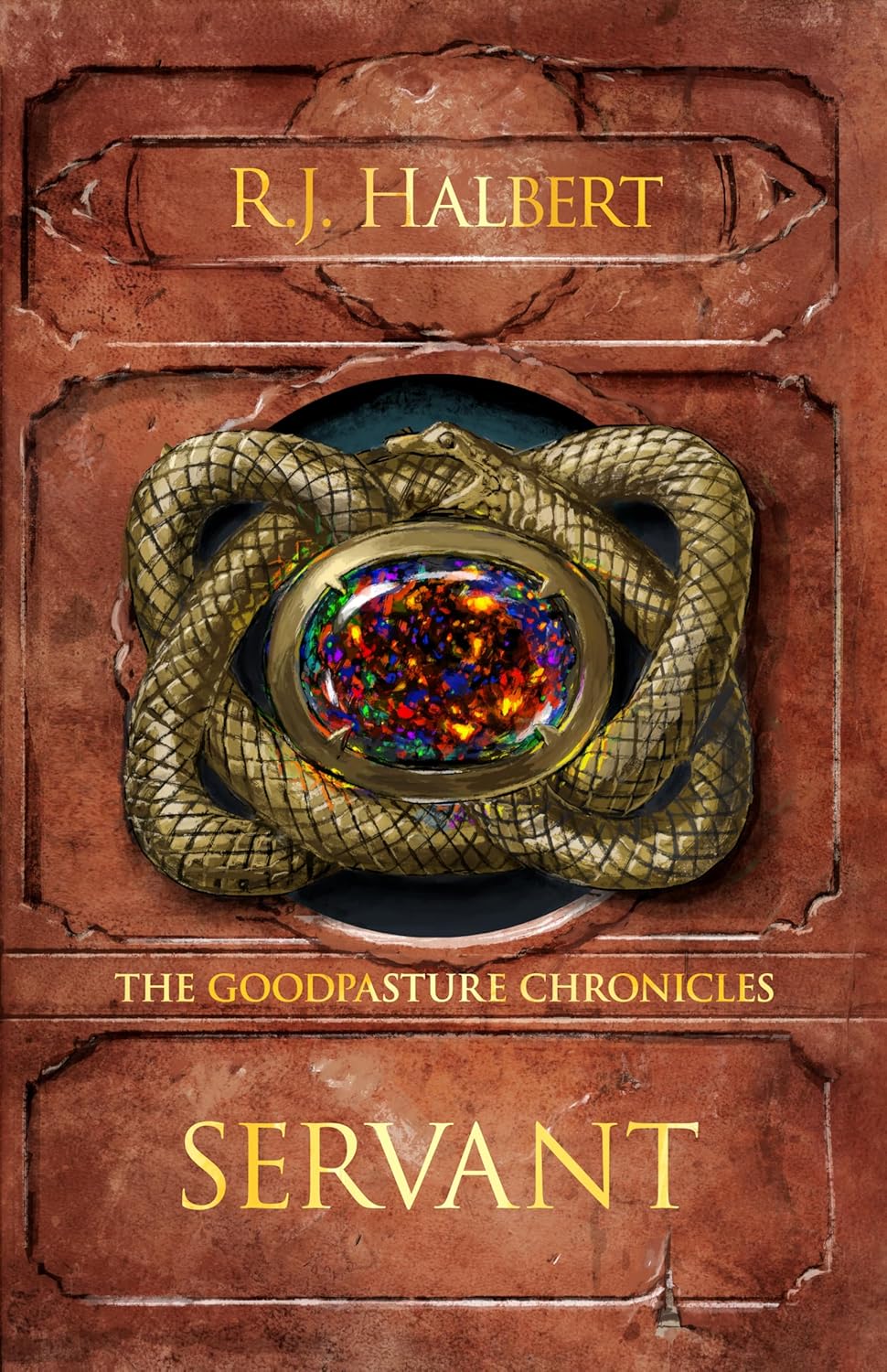
Servant is a supernatural fantasy novel that blends family drama, ancient mystery, and time-crossed storytelling. The book follows two threads that eventually begin to echo one another: Zach, a middle-school kid from the Keane family who vanishes from his house under eerie circumstances, and Akolo, a boy living centuries earlier whose life is marked by war, trauma, and the demands of kings. As Zach’s family searches for him in the present day, he finds himself wandering through stone hallways, oil-lit corridors, and a world that feels pulled straight from his dad’s archaeology stories. Meanwhile, Akolo faces his own captivity in a foreign palace controlled by a ruler who insists he will “need” him. Both boys are caught in places where power, fear, and destiny collide. By the time the book reaches its epilogue, the story has cracked wide open into something larger, hinting at deep magic, interwoven timelines, and a house that is far more alive than anyone wants to admit.
I found myself pulled in by the writing style. It’s simple on the surface but has this steady emotional current running underneath. The authors don’t rush. They let each moment breathe. Even the small scenes, a father making coffee, a daughter complaining about pizza for breakfast, or the house creaking in the early morning, carry a sense of “something is happening here,” even if you can’t name it yet. I liked that. It made me feel like I was sitting inside the Keanes’ home, overhearing bits of life while the bigger mystery brewed just out of sight. And then we cut to Akolo’s story, which feels raw and grounded and ancient. Those chapters landed hardest for me. His fear. His confusion. The way he clutches the jeweled stone in his pocket just to feel connected to something familiar.
I also appreciated the author’s choices around pacing and perspective. Switching between timelines can easily feel gimmicky, but here it feels purposeful. Zach’s modern confusion mirrors Akolo’s ancient disorientation, and that parallel makes the supernatural elements feel earned. I liked how the book doesn’t give its secrets away too quickly. We get hints, symbols carved into doors, fog in places fog shouldn’t be, Marshall knowing more than he says, but the authors trust the reader to sit in the unknown for a while. That kind of patience is rare, and honestly, refreshing. The emotional beats hit hardest because they’re framed by that tension: the Keane parents’ terror when Zach goes missing, Ariel’s mix of resentment and fear, Akolo’s grief for his family, Marshall’s haunted loyalty to forces he doesn’t entirely understand. All of it builds toward that late-book shake of the earth, where the house itself moves as though waking up.
Servant doesn’t wrap everything up, but it feels like a middle chapter that knows exactly what it is. I’d recommend this book to readers who love supernatural fantasy with a human heart, people who enjoy stories about families surviving strange things, or anyone who likes time-slip mysteries tied to ancient cultures. If you want something atmospheric, character-driven, and a little eerie without tipping into horror, this one will hit the spot.
Pages: 262 | ASIN : B0FQ5ZGH1R


