Blog Archives
Dynamic Storytelling

The War for Heaven follows a dying man who wakes in an afterlife that is not the serene heaven he imagined. What was the inspiration for the setup of your story?
Like Damian, I grew up in a tight-knit religious community in central Illinois, where the concept of a flawless afterlife is a comforting certainty for many. Moving around the country after college opened my eyes to the beautiful complexity of cultures and ideologies. I realized that the differences between our politics and religions are vast, and no single system is perfect enough to guarantee everyone’s happiness here on Earth. These gulfs became undeniably stark during the COVID-19 pandemic, as the world fractured into rigid binaries of right versus wrong, good versus evil. For those who believe in an afterlife, its ultimate appeal lies in its perfection—the promise that all suffering will cease. It was precisely that fragile concept of perfection, and the inherently flawed human attempt to capture or force it into existence, that inspired the setup of The War for Heaven.
Damian and Alena’s reunion feels emotionally complicated rather than sentimental. How did you approach writing love after death?
Relationships are hard! Even the healthiest ones require continuous care, attention, and compromise. In any successful partnership, both individuals inevitably set aside certain personal wants for the sake of the collective bond. I wanted to carry this reality directly into the afterlife to again challenge the idea of perfection. Just because Damian and Alena find themselves in a “better place” doesn’t mean they suddenly get everything they ever wanted. Exploring that natural friction—where individual desires clash even in eternity—makes for more compelling and dynamic storytelling than a purely sentimental reunion. And I think that makes Damian and Alena’s love for one another more real!
What drew you to combining theological fantasy with mystery and political intrigue?
The idea for The War for Heaven has been rolling around in my head for over twenty years. At the time of its inception, I was active in my church, so it was destined to be theological in nature. Creating the fantasy elements—the Dungeon of Darkness, the Sphere of Doom, and the Hall of Hands—was incredibly fun, but they also served to hint at a much grander, more unsettling mystery. As both the world and myself changed in the intervening years, so did the story. Its political intrigue was heavily inspired by the onset of the pandemic, specifically in how the crisis was so deeply weaponized for political gain. Combining these elements allowed me to use the fun, high-concept machinery of epic fantasy to explore the very real, fractured political realities we face today.
If readers leave The War for Heaven thinking differently about grief, eternity, or human connection, what do you hope stays with them most?
More than anything, I hope readers walk away with the understanding that perfection is an ideal simply not worth pursuing. Throughout the book, I tried to give the antagonists real depth and personality. Their grievances are valid and identifiable. In the end, though, it is their own selfish, short-sighted pursuits that bring about their downfall. The human experience, which encompasses grief, love, joy, and sadness, is best when navigated as a collective. Life is about lifting everyone up together. If readers leave the book thinking that our shared, flawed connections here and now matter more than a manufactured eternity, then The War for Heaven has done its job.
Author Links: GoodReads | Facebook | Website | Amazon
After a fatal car accident, Damian awakens in a bureaucratic Afterlife where faith is irrelevant and souls can perish again. Reunited with his wife and best friend, he tries to settle into a perfect existence, taking a job in the Embassy’s Department of Satanic Investigations. But the Afterlife isn’t as peaceful as he imagined.
Whispers inside the Embassy warn of a growing conspiracy that threatens all of Creation. Damian and his allies are locked in a race to secure the Sphere of Doom and stop an evil soul from infiltrating the Celestial City. The dangerous relic is creating a pattern of destructive havoc around the city, paving the way for a full-scale invasion by Satan and the Fallen.
As Damian navigates office politics, bureaucracy, and ancient secrets, he’s forced to confront lingering memories from his time on Earth. His past urges him to question his faith, his choices, and the kind of person he truly is. And as he gets closer to the truth, he realizes the true enemy might be someone he trusts with his life—and his afterlife.
The War for Heaven blends bureaucratic fantasy with cosmic intrigue in a gripping tale of afterlife, betrayal, and redemption you won’t want to miss.
The War for Heaven


The War for Heaven, by Isaac Grisham, begins with Damian Hartter dying in a car accident and waking up in an afterlife that is not the serene, doctrinally tidy heaven he half-feared and half-wanted. Reunited with his dead wife, Alena, he enters a Celestial City full of strange rules, alien souls, bureaucratic departments, uneasy Guardians, lost children, and old fractures in Creation. What first feels like a second chance at domestic peace soon becomes something larger and darker: a mystery about the architecture of eternity, the politics of salvation, and the war still smoldering between Heaven and Hell.
I liked how the novel refuses to make the afterlife merely luminous. Grisham gives Heaven kitchens, libraries, orientations, traffic, work, committees, and petty cruelty; the result is funnier and more unsettling than a paradise made of harp music. Damian’s skepticism is the book’s best instrument. He’s grieving, sarcastic, wounded, and often ill-prepared for the cosmic scale of what he discovers, which keeps the story human even when the canvas stretches into multiversal theology. The humor works because it’s slightly mordant rather than flippant, and the worldbuilding has a pleasingly ornate quality: diamond walls, bureaucratic embassies, soul logistics, and infernal loopholes all clicking into place like celestial machinery.
What surprised me most was how emotionally grounded the book remains beneath its speculative abundance. Damian and Alena’s reunion could have become sentimental, but their marriage still has texture: old disagreements, unspoken losses, love complicated by memory. The subplot involving children in the Afterlife gives the story a genuine moral ache, and Damian’s shifting relationship to fatherhood feels earned rather than pasted on for softness. The book’s explanations are expansive. I found myself admiring the ambition. Grisham isn’t simply asking what Heaven looks like; he’s asking whether perfection can survive contact with institutions, fear, grief, and desire.
I think The War for Heaven is best suited for readers of speculative fiction, afterlife fantasy, theological fantasy, supernatural adventure, metaphysical mystery, and character-driven fantasy who enjoy big ideas delivered with wit and emotional ballast. It may appeal to fans of Neil Gaiman’s mythic playfulness or readers who liked the cosmic irreverence of Good Omens, though Grisham’s novel is more earnest in its grief and more invested in the architecture of its world. The War for Heaven turns eternity into a place worth questioning, defending, and finally loving.
Pages: 349 | ASIN : B0GP93RYMC

Daughter of Ash and Bone


Daughter of Ash and Bone is a mythological fantasy with a strong romantic thread, the kind of book that drops a modern woman into an old war and then asks what survives when buried history starts breathing again. Alice Reed begins as a chemist trying to hold together a quiet, carefully built life, then inherits a strange Norse pendant from a relative she never knew and gets pulled into a world of tokens, gods, dreams, and old violence that never really ended. What starts as an eerie inheritance mystery widens into a story about identity, legacy, and the dangerous pull between the mortal present and mythic past.
I liked how grounded the book tries to keep Alice, even when the story gets bigger and stranger. I liked that she isn’t introduced as some already fearless chosen one. She’s tired, wary, practical, and a little stubborn, which makes her easier to believe in. The early scenes with the package, the apartment, the cat, the office, and the slow creep of dread do a lot of work. They give the fantasy something solid to push against. I also think the author has a real feel for momentum. The book keeps feeding you just enough mystery to make you keep going, whether that is the changing pendant, the dreams, or the shifting loyalties around Alice. Sometimes the dialogue and emotional beats feel a bit heightened, but in this kind of fantasy romance, that intensity is part of the engine, and it works.
I was especially interested in the author’s choice to build the story around Norse mythology without making it feel like a cold mythology lesson. The gods and their history arrive through conflict, family damage, and personal cost, which makes the lore feel lived in instead of pinned to a board. Beckett and Alice’s connection gives the book warmth, and I appreciated that the romance grows beside danger rather than replacing it. Tia, Freya, Campbell Graves, and Loki also help widen the emotional field of the novel. Loki, in particular, comes across less like a flat villain and more like an old wound that learned how to speak.
Daughter of Ash and Bone is easy to sink into and easier than I expected to care about. It feels like an urban fantasy and mythic fantasy blend with romance at its center, written for readers who want magic, emotional stakes, ancient grudges, and a heroine who has to piece herself together while everything around her is coming apart. I would recommend it most to readers who enjoy modern settings crossed with old gods, character-driven fantasy, and stories where attraction, danger, and destiny all arrive at the door together.
Pages: 352 | ASIN : B0GTFG3C9D
Immortal Beings

A Tale for the Shadows follows a murdered woman who is reborn as a ghost and finds unexpected love and purpose alongside a hunted vampire in a world where death is only the beginning. What drew you to combining ghost lore with vampire mythology in the same narrative?
The simplest answer is that I love stories about ghosts, and I love stories about vampires, so I combined them for my own entertainment. I knew that I wanted to write a novel that I would love to read.
A longer answer would include a recognition that the lore around ghosts and vampires is deep, centuries of material. Those stories are also ingrained in our societal consciousness. We tend to view ghosts as fearful entities in most European traditions, but in so many cultures, they’re welcomed, revered. Vampires are feared because they are alpha predators of human beings. In the Victorian novels (Bram Stoker’s Dracula, for example), vampires are symbolic of a frightening force of sexuality. I think the fear of ghosts and vampires also rises from a fear of death, our own and that of those we love. My idea was to turn this fear on its head, at least to some degree. No group of humanity is monolithic. That includes the dead and undead. Could there not be kind ghosts, wise vampires? We know that, for those who live on, love lingers after death. What would happen if love were a force for those who have died?
And, finally, I was intrigued by how a friendship might develop between a ghost and a vampire, two supernatural beings. And from there, how love might develop. From that rose the promise of an eternity together, as two immortal beings. How cool would that be?
Senka’s story begins in trauma but grows into something more complex. How did you shape her emotional evolution?
A lot of my shaping of Senka’s character was instinctual, based on my own experiences. Life, not just mine but everyone’s, is a process of accumulating anniversaries—of births, marriages, deaths, significant events. When I was in high school, my father died suddenly. My grandmother, mother, and life partner all died in the space of a year. My son’s fianceé died about a year after he was in a devastating car accident that left him paralyzed from the collarbones down. I watched him recover and learned a lot about forgiveness from him. Senka’s losses and her eventual choices about how to heal come from my own beliefs about the value of life and the extraordinary healing power of forgiveness and compassion.
The novel explores love after betrayal. Do you see the story as more about love, survival, or transformation?
Hmmm. I see those three as inextricably intertwined. Each supports the others; each makes the others possible. In Shadows, there are obviously several different kinds of love: Finn’s for his mom, hers for him; Senka and Silas for Luna, his for them; Mrs. Wang for her husband; Jeremy for his parents; Sarah/Senka’s for Stanley; and, of course, Senka and Silas for each other. There are also several kinds of transformation: from living to dead, from apparently good husband to … not so good husband, from smoke to monster, from revenge-focused to justice-focused. There’s even a shape-shifter. If Senka hadn’t transformed from the self-absorbed, willfully blind actress she was into the compassionate, caring, introspective ghost she became, she wouldn’t have been capable of finding the love with Silas that she finds. At the same time, if Silas hadn’t found the love he has with Senka, he wouldn’t have been interested in continued survival.
What is the next book that you are working on, and when will it be available?
It’s 1972. When Poppy is forced to move to Monterey, California, just before her senior year in high school, she’s furious and powerless to stop it. Then she discovers a mysterious journal that answers her anger with something irresistible: every wish she writes becomes real. At first, it feels like freedom, like finally taking control. But the magic has a cost, and someone else always pays. As the consequences grow darker, Poppy realizes she must give up the magic and develop the strength to shape her life without it. It’s a coming-of-age story with a dollop of Twilight Zone. I’m hoping it will be in bookstores by October 2026.
Author Links: GoodReads | Facebook | Website | Amazon
She was murdered by the man she loved. Now she’s a ghost bound to the cabin where she died—until a wounded vampire, an ancient enemy, and a mysterious cat change everything.
Senka was once a rising television star. Now, she’s a restless spirit, trapped in the site of her betrayal. But everything shifts the night Silas appears—an ageless Native American vampire fleeing a ruthless Maker determined to erase him from existence. When a violent confrontation leaves the cabin in flames, Senka is finally freed, and an unlikely partnership is born.
As Senka and Silas forge a path through shadows and centuries-old grudges, they begin to pursue justice—not just for Senka’s murder but for the other lives shattered along the way. Guided by ghosts who’ve chosen to remain in the world of the living and aided by Luna the twenty-third, a clever feline with a talent for love and loyalty, they face vengeful vampires, unravel hidden truths, and awaken powers Senka never imagined.
But love in the afterlife is complicated. Haunted by the past and hesitant to trust again, Senka must confront the choices that led her here—and decide if an eternity with Silas is worth risking her heart one more time.
Lush, lyrical, and darkly romantic, A Tale for the Shadows is a supernatural fantasy that blends ghost stories and vampire lore with emotional depth, wit, and resilience. Perfect for fans of The Invisible Life of Addie LaRue, The Dead Romantics, and Buffy the Vampire Slayer, this is a tale of second chances, found family, and the quiet power of choosing love—even after death.
Servant
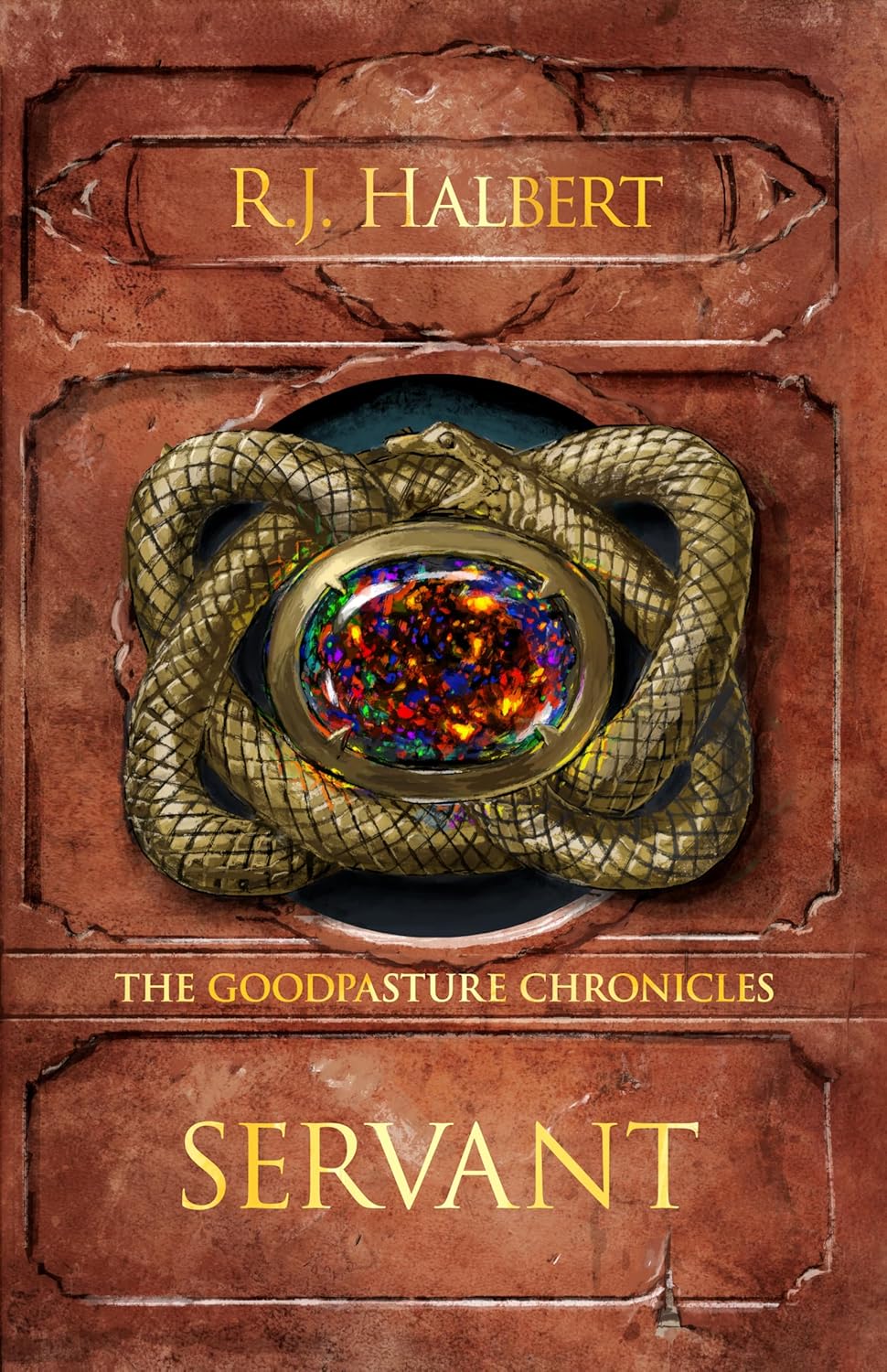
Servant is a supernatural fantasy novel that blends family drama, ancient mystery, and time-crossed storytelling. The book follows two threads that eventually begin to echo one another: Zach, a middle-school kid from the Keane family who vanishes from his house under eerie circumstances, and Akolo, a boy living centuries earlier whose life is marked by war, trauma, and the demands of kings. As Zach’s family searches for him in the present day, he finds himself wandering through stone hallways, oil-lit corridors, and a world that feels pulled straight from his dad’s archaeology stories. Meanwhile, Akolo faces his own captivity in a foreign palace controlled by a ruler who insists he will “need” him. Both boys are caught in places where power, fear, and destiny collide. By the time the book reaches its epilogue, the story has cracked wide open into something larger, hinting at deep magic, interwoven timelines, and a house that is far more alive than anyone wants to admit.
I found myself pulled in by the writing style. It’s simple on the surface but has this steady emotional current running underneath. The authors don’t rush. They let each moment breathe. Even the small scenes, a father making coffee, a daughter complaining about pizza for breakfast, or the house creaking in the early morning, carry a sense of “something is happening here,” even if you can’t name it yet. I liked that. It made me feel like I was sitting inside the Keanes’ home, overhearing bits of life while the bigger mystery brewed just out of sight. And then we cut to Akolo’s story, which feels raw and grounded and ancient. Those chapters landed hardest for me. His fear. His confusion. The way he clutches the jeweled stone in his pocket just to feel connected to something familiar.
I also appreciated the author’s choices around pacing and perspective. Switching between timelines can easily feel gimmicky, but here it feels purposeful. Zach’s modern confusion mirrors Akolo’s ancient disorientation, and that parallel makes the supernatural elements feel earned. I liked how the book doesn’t give its secrets away too quickly. We get hints, symbols carved into doors, fog in places fog shouldn’t be, Marshall knowing more than he says, but the authors trust the reader to sit in the unknown for a while. That kind of patience is rare, and honestly, refreshing. The emotional beats hit hardest because they’re framed by that tension: the Keane parents’ terror when Zach goes missing, Ariel’s mix of resentment and fear, Akolo’s grief for his family, Marshall’s haunted loyalty to forces he doesn’t entirely understand. All of it builds toward that late-book shake of the earth, where the house itself moves as though waking up.
Servant doesn’t wrap everything up, but it feels like a middle chapter that knows exactly what it is. I’d recommend this book to readers who love supernatural fantasy with a human heart, people who enjoy stories about families surviving strange things, or anyone who likes time-slip mysteries tied to ancient cultures. If you want something atmospheric, character-driven, and a little eerie without tipping into horror, this one will hit the spot.
Pages: 262 | ASIN : B0FQ5ZGH1R
Duty and Honor

Culgan follows a young woman on the verge of discovering her destiny as a direwolf shifter, and a seasoned warrior and heir to the Freki clan who find themselves bound by fate, ancient prophecy, and a rising evil that threatens the balance of their realm. What was the inspiration for the setup of your story?
A previous series, The Titanian Chronicles, inspired me to see and write about the Freki World. In fact, some characters in Culgan appear in The Titanian Chronicles.
I find the world you created in this novel brimming with possibilities. Where did the inspiration for the setting come from, and how did it change as you were writing?
The secrecy imposed by universal decree on supernatural creatures was a critical aspect of the story. This helped me place and run their existence parallel to humans. Side by side, but the two shall never cross over.
What were some themes that were important for you to explore in this book?
The themes of duty and honor tied to power and abilities were part of the exploration. The gryphon comes into play, as the creatures symbolize purity, loyalty, and trustworthiness. They can’t accept an undeserving wolf. To ride a wolf must be worthy.
Where does the story go in the next book, and where do you see it going in the future?
The next book is in the editing process. This story delves deeper into the consequences of sin, greed, and amorality. How far up will someone go, breaking all the rules before the fall?
I have two more stories planned. But I haven’t seen the road yet.
Author Links: Goodreads | Facebook | X (Twitter) | Website | Amazon
Long dreaming of becoming a gryphon rider and training to defend her clan, Roisin Hati is impatient for her sleeping inner wolf to awaken. She never expected a choking cloud of evil magic to do just that. When she finally opens her eyes, a huge black direwolf with stunning cobalt eyes is standing over her—Culgan, son of her beloved godparents.
Culgan freezes when he hears the first snarl of Roisin’s rising wolf in his mind, feels her fear in his bones. As a warrior defending the hidden Freki stronghold, bonding has never been a high priority. But something about the white-haired, dark-eyed Roisin rouses an irresistible drive to: Claim. Mate. Possess.
As Roisin navigates battle training, Culgan is at her side, guiding every step. The pull between them grows stronger until it ignites in a glorious mating union. But dark forces are gathering in the desert. A daemon hungry for revenge bargains with a goddess for the power to destroy the Freki. And the gryphon riders may have to make the ultimate sacrifice to save the kingdom.
A Sandbox of Possibilities

Vexed follows the outcast twin of a royal wendigo house, living in hiding, who is thrust back into a world that feeds on power and control, where her ability to love is seen as a weakness, and her greatest fear is becoming a monster like the rest of them. What was the inspiration for the setup of your story?
I’ve always been fascinated by the darker side of folklore—particularly wendigos and skinwalkers. For a while, I wasn’t quite sure how to approach them without falling into the usual tropes. But then it hit me: why not lean into what I already enjoy doing—taking something familiar and reshaping it into something unsettling, emotional, and new? That was something readers appreciated in The Orphan Maker (Book 1 of the series), and their response gave me the confidence to push further. With Vexed, I wanted to continue subverting expectations, not just in terms of myth, but in how we portray monstrosity, love, and identity. Emilia’s journey is my way of asking: What if the real horror isn’t the monster’s form—but what we’re willing to become to survive?
It seemed like you took your time in building the characters and the story to great emotional effect. How did you manage the pacing of the story while keeping readers engaged?
Pacing is something I take very seriously—especially in a series where emotional stakes evolve across multiple books. In The Orphan Maker, the protagonist Damien was strategic, composed, and emotionally closed off. So for Vexed, I wanted a complete shift. Emilia, while equally intelligent, is emotionally raw—her turmoil is deeply internal. That contrast was deliberate. I wanted to disorient readers, to make them feel the weight of her silence and her slow unraveling. Structurally, I made sure every chapter carried either emotional or plot-driven tension, weaving personal revelations with external threats. It’s a careful balance—letting the characters breathe while still turning the screws. That tension keeps the pages turning.
In fantasy novels, it’s easy to get carried away with the magical powers characters have. How did you balance the use of supernatural powers?
Fantasy gives you a sandbox of possibilities—but too much freedom can dilute impact. So from the very beginning, I set hard rules for the supernatural. In my planning process, I define exactly what each creature or bloodline can and cannot do, and I document these limits religiously—post-its, diagrams, notebooks, you name it. Power in my world always comes at a cost. If a character uses an ability, there has to be tension or consequence, either physically, emotionally, or narratively. That way, the magic becomes part of the story’s weight—not an escape from it. I want readers to feel that powers don’t make a character stronger—they expose who they really are.
Where does the story go in the next book, and where do you see it going in the future?
I’m incredibly excited for Book 3. Without giving too much away, I’ll say this: the stakes will rise, and the lines between human and monster will blur even more. Readers who’ve followed Emilia’s journey will see her pushed further—to the edge of everything she once believed about herself. Expect more secrets, more betrayals, and yes, more of the world’s hidden lore unfolding. The series as a whole is about identity and inheritance, about what we carry from the past and whether we can ever truly choose who we become. Even in a world of vampires, wendigos, and ancient bloodlines, I believe the heart of every story is still about the choice to be kind… or cruel. That tension will only grow as the saga continues.
Author Links: GoodReads | Facebook | Website
In a world where ancient dynasties feed on control, lust, and carnality, Emilia must survive a court of predators that sees love as weakness and hunger as strength. But the real threat isn’t the creatures around her—it’s the one awakening inside her.
Vexed is a dark supernatural thriller that expands the mythos of The Orphan Maker, diving deeper into a world of secret societies, brutal inheritance, and seductive horror. With relentless pacing and prose that bites like a wendigo’s teeth, this is a story that won’t let go.
The Son of Poetry
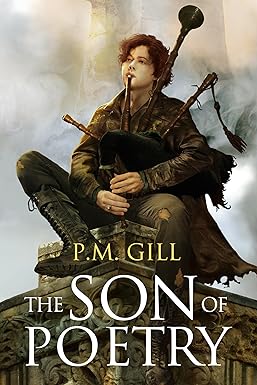
The Son of Poetry is a contemporary coming-of-age novel wrapped in folklore and urban grit. At its core, it follows Louis Song, a high-achieving and emotionally frayed teenager navigating high school in Edinburgh while being unwittingly drawn into a mysterious, supernatural conflict. The story spirals out from a single unsettling encounter with a trio of schoolyard bullies and unfurls into something deeper and stranger—intertwining ancient Celtic myth, school rivalries, emotional trauma, and questions of identity, fate, and power. With alternating character perspectives and a keen focus on inner conflict, Gill weaves together the ordinary and the uncanny until they’re nearly inseparable.
I didn’t expect this book to affect me the way it did. It starts like a gritty YA drama with sharp edges and painful truths. Gill doesn’t flinch from the ugliness of teen angst, class tension, or casual cruelty. But then something slips into the cracks of the real world—an invisible force, a memory that doesn’t belong, a tug of fate—and that’s when I couldn’t look away. The prose can be raw and jagged. But it’s also lyrical in strange, surprising bursts. I found myself drawn to Louis not because he was brave or brilliant, but because he was painfully human. His quiet ache, his confusion, the moments he second-guesses himself all felt real. His voice, at times, hit me in the gut. And Collin Gannet is one of the most sharply drawn, unforgettable characters I’ve read in a long time.
That said, part of the book’s charm is how it doesn’t rush to explain everything. The pacing takes its time, often drifting into rich layers of lore and dreamy, metaphysical turns that feel more like an immersive experience than a straight path. Some of the fantasy elements are elusive. It adds mystery and atmosphere, inviting the reader to lean in and wonder. A few of the side characters appear just briefly, like passing spirits, and it left me curious and hungry for more. These unexpected textures gave the story a raw, unfiltered energy. It didn’t feel like a polished fairy tale—it felt alive, and brimming with pain, wonder, and a quiet kind of magic.
I’d recommend The Son of Poetry to readers who love literary fiction with a supernatural bent—people who can sit with mystery and don’t mind feeling a bit off-kilter. Fans of The Secret History, Skellig, or The Ocean at the End of the Lane will find something here to love. It’s a story that haunts, confuses, and occasionally sings, just like poetry should.
Pages: 526 | ASIN : B0DBV9XM4J


