Blog Archives
Challenging the Paradigm
What Happened?: What Mental Health is Really About introduces readers to deeply moving tales of patients who have journeyed through tumultuous challenges and experienced remarkable recoveries. Why was this an important book for you to write?
I wanted to challenge the prevailing ‘what’s wrong with you?’ paradigm that dominates psychiatry and psychology. Having just retired I think I wanted to ‘fire a parting shot’ at my profession.
How much research did you undertake for this book, and how much time did it take to put it all together?
The book had been in my head for a while and with Covid occuring it was a great time to write! Apart from looking up the odd reference I knew most of the research supporting my position and most of the book is in fact case studies so they were more about recall than research. I spent about three months at a friend’s house by the ocean writing the book, with absolutely nothing to do but write.
What were some goals you set for yourself as a writer in this book?
Only one, get it done.
What is one thing that you hope readers take away from What Happened?
I hope readers will ponder whether how we currently respond to mental health problems is the best response. I believe we have over medicalised and misunderstood the very nature of mental health.
But what if this is a hazardous and flawed paradigm? What if psychiatrists are inherently unable to reliably diagnose what ails you? Or, despite the listing of over 250 ‘mental illnesses’ in the Diagnostic and Statistical Manual of Mental Disorders, what if there are only eight different types of interventions available to treat this myriad of different ‘mental illnesses?’
Furthermore, what if you take pills that change your brain biochemistry, but the biological basis of all the purported ‘mental illnesses’ are unknown?
Could there be an alternative? And just maybe, are we being asked the wrong question?
With over 40 years as a practicing psychologist and educator, Dr. Bill Saunders takes us on an open, honest, heartfelt and sometimes confronting journey of human experience. In his book, Bill challenges some of the ‘truths’ we know about mental health, sharing real stories that will make you laugh and cry, and sometimes leave you in shock!
So, if you want to know what Mental Health is really about this is the book to read.
What Happened?
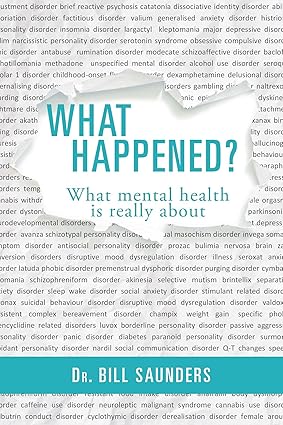

Mental health, a frequently discussed yet deeply misunderstood subject, is expertly explained by Dr. Bill Saunders in his book What Happened?: What Mental Health is Really About. With an academic background preceding his illustrious 40-year career in psychotherapy, Dr. Saunders deftly unpacks intricate topics ranging from the nuances of antidepressants to the impacts of childhood trauma.
The book introduces readers to deeply moving tales of patients who have journeyed through tumultuous challenges and experienced remarkable recoveries. These stories not only illuminate the resilience of the human spirit but also underscore the depths to which trauma can scar an individual.
One of the book’s most salient discussions is the deep and often devastating aftermath of childhood trauma. It underscores the tragic reality that a significant number of victims grappling with the shadows of their past do not receive the requisite support or intervention. The narrative brings to light the sometimes inadvertent negligence by caregivers, emphasizing the dire importance of attentiveness to a child’s emotional well-being to prevent unspeakable tragedies.
Dr. Saunders transcends the conventional therapist-client relationship, forming deep connections with his patients, guiding them through their healing journeys, and championing their pursuit of happiness. His insights provide invaluable lessons on human behavior, shedding light on the complexities and potentials inherent in the realm of psychology. This work challenged and reshaped many of my preconceived notions regarding mental health.
For anyone drawn to the intricate worlds of psychology, psychotherapy, and mental wellness, What Happened?: What Mental Health is Really About by Dr. Bill Saunders promises to be a compelling and enlightening exploration.
Pages: 235 | ASIN : B0946T6XVP

How To Love Yourself, Be Happy With Your Life And Heal Negative Thoughts
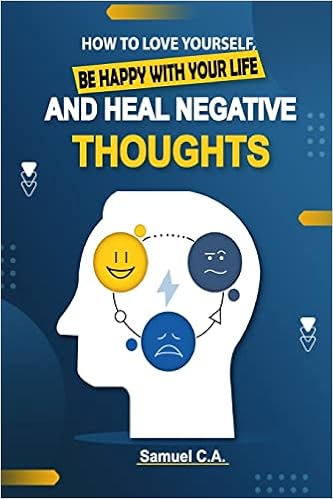

Are you ready to change your inner dialogue and start thriving in life? If so, How to Love Yourself, Be Happy with Your Life and Heal Negative Thoughts is the book for you. Author Samuel C.A. comprehensibly explains the science behind why we struggle to deal with problems and gives some excellent advice about what we can do to change our mental habits.
The author touches upon subjects like the gut-brain axis, sleep, and support systems, showing us that the key to a positive mindset is deeper than merely our thoughts. Each topic is broken down into manageable chapters and interactive tasks, encouraging the reader to begin their own self-help journey from the beginning of the book. In addition, the book was structured in a way that promoted a change in the reader. Samuel C.A. uses checklists, bold headings, and direct instructions for an active learning experience.
After checking out Samuel C.A.’s music recommendations and following his instructions for meditation techniques, I was surprised at the positive effect I felt in such little time. I am convinced that, used over an extended period, this book could genuinely change the reader’s outlook on life.
At first, I felt like there was a lot of scientific information to digest, but Samuel reviews previously-mentioned vocabulary throughout the book, creating a more precise understanding as the book goes on. I would say that the book could have been organized better for greater fluidity, as it sometimes seems to jump from topic to topic. However, this was easy to overlook, as I learned much about myself and how the mind functions.
The book was highly relevant to present-day life, with references to the Covid pandemic and how this has affected our mental state. Samuel C.A. also explores how culture and assimilation affect our mental health. This was unique to other self-help books I had read in the past. I feel as if Samuel C.A. recognizes the difficulties we face in society and empathizes with our struggle to remain mentally healthy. He avoids sounding preachy and reminds the reader of the benefits they can receive by following his advice. He also makes each step easier for the reader, providing set time frames and routines. This is more than a book; it is a guide to improving your life from the core.
Pages: 91 | ASIN : B0B3T7T5JH
Taming Fear in the Age of Covid
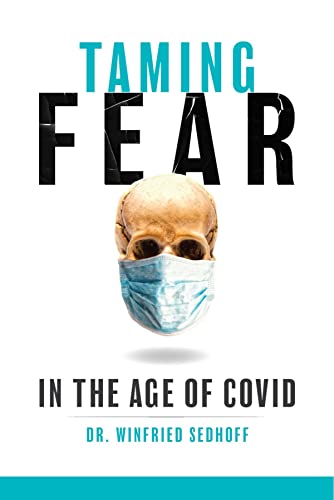
As an individual that struggles with anxiety and depression that have worsened in the last few years, Taming Fear in the Age of Covid by Dr. Winfried Sedhoff is the perfect place to begin tackling fears. This beautiful book is divided into two parts: Fear is a Charlatan and From Fear Monster to Friend.
The first part of the book goes into detail about the trauma experienced by most human beings and the power it takes to tame this fear. Through real-life experiences (including his own), Dr. Winfried goes into the science of the human brain and how it can rewrite fears.
The second part of this book goes into actionable steps that one can take to overcome their fear. He shares the feeling of lack of interpersonal communication and isolation during COVID, transmission and how it occurs, and unknowns associated with the COVID-19 virus. One of the tips that he gave that has increased my productivity instead of obsessing over unfinished work is the notepad trick. He shares that when he was an intern, he carried with him a large notepad everywhere, and he wrote down everything. A daytime task diary has become part of his routine and is now part of my routine to increase efficiency. This helps us stay in the present and not stress about the future. After all, “Mindfulness taps into a secret about the fear we have just learned: the brain can only be afraid if it considers the future.”
It is important to know that this is not the kind of book one can read in one sitting. The actionable steps in part two of the book require practice and mindfulness before moving on to the next stage of practice. Yes, there are stories about how certain people overcome anxiety and depression. However, healing does not take one day, just as Rome was not built in a day. I rate the book four out of five stars. Through the practices that Dr. Winfried gives, one releases so much tension and anxiety that one was not aware they carried, which is both a beautiful and sad experience.
Pages: 304 | ASIN : B0BF8213Z6



 LITERARY TITAN