Blog Archives
Funhouse Mirror

DimWitts: The Big Stupid is a genre-crossing novel with elements of fantasy, dystopian, and satire as well. Did you start writing with this in mind, or did this happen organically as you were writing?
I wanted to write something funny in the speculative fiction category without committing entirely to one genre. Admittedly, a few subplots emerged organically along the way, but the core story and the character arc of the protagonist remained largely consistent with my original outline.
Some events in the book were chillingly similar to real-life events. Did you take any inspiration from real life when developing this book?
My inspiration came directly from the last American election. It occurred at the same time the Canadian Parliament was being prorogued, and the rest fell into place around it.
I found this novel to be a cutting piece of satire. What is one thing that you hope readers take away from your novel?
Fulfillment. Enlightenment. The best satire is a funhouse mirror; it exaggerates flaws to ridiculous proportions, allowing an audience to see what could happen if a bad idea is given too much credence. I hope to scratch that surface, at least a little, and maybe get some laughs along the way.
Will this novel be the start of a series, or are you working on a different story?
This is book one of three. I am currently working on the “dark middle child” of the series and hope to have it finished by the spring of 2026. Book three is stewing nicely on the back burner and will likely be in print shortly thereafter.
Author Links: GoodReads | Website | Amazon
Lancaster Dirk, the newly elected American president, is on a race to destroy his enemies and restore the glory of the republic. But to do it, he needs something extremely important. Something Canadian.
A dirty old smelter in a dirty old B.C. mountain town — with an even dirtier old secret.
Balanced between worlds, the past and future collide in a tale that spans the globe — and the very edges of reality itself.
Not Yet Your Time
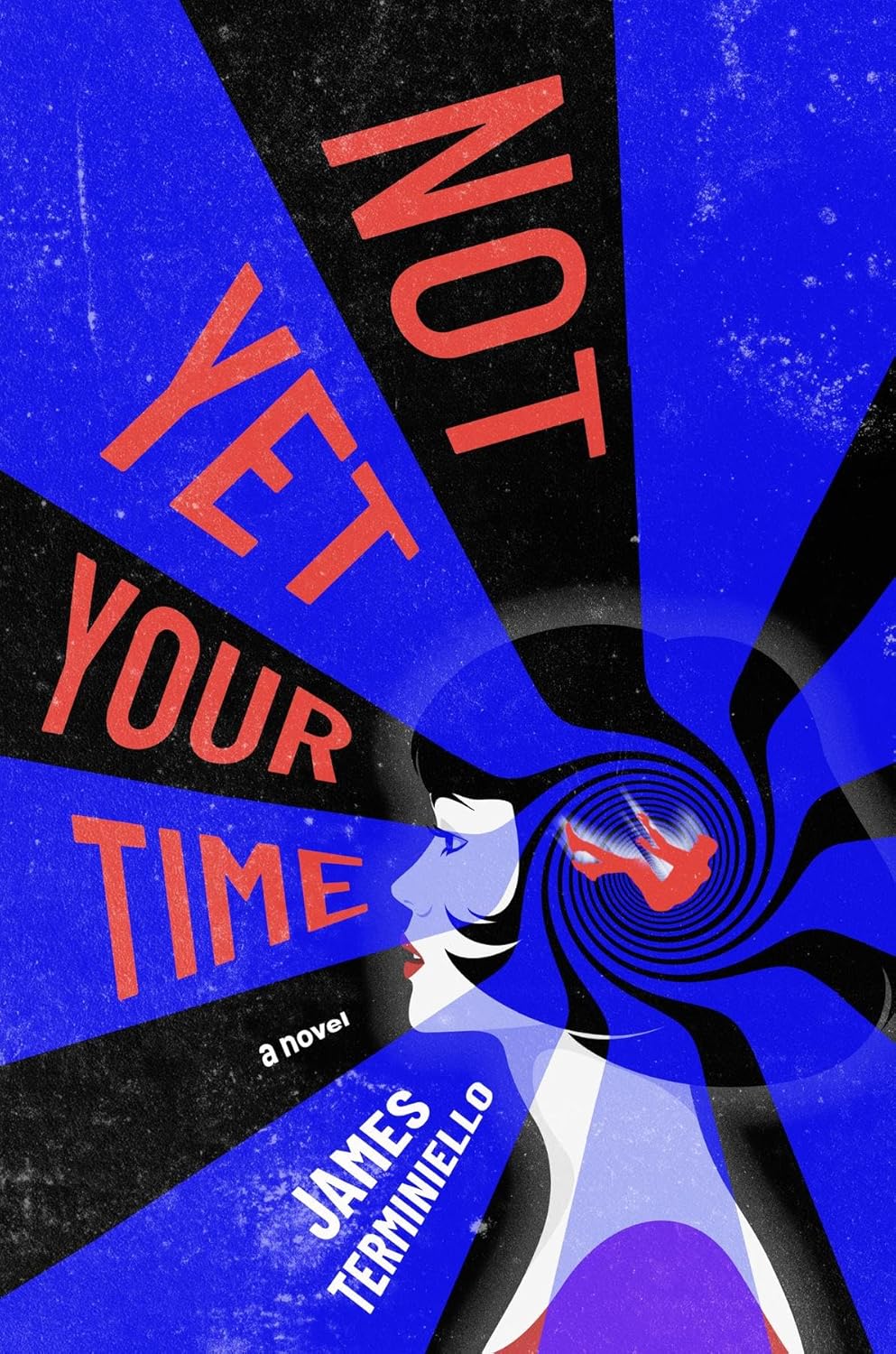

James Terminiello’s Not Yet Your Time is a strange, sharp, and funny novel that refuses to play by any ordinary rules. The story follows Titus Carneades, a self-deprecating office worker whose mundane New York life derails after a near-death encounter with a mysterious woman he dubs the “Benevolent Pumpkin.” What begins as a simple act of rescue spins into an absurd web of government agents, terrorist dance troupes, cultish believers, and philosophical riddles about time, fate, and faith. The tone flips easily between satire and suspense, and the plot lurches forward with a cinematic kind of chaos that somehow always lands on its feet.
Reading this book felt like falling down a rabbit hole built by Kafka and decorated by Mel Brooks. The dialogue snaps with dry wit, and the narrative voice never takes itself too seriously. Terminiello clearly enjoys skewering bureaucracy, politics, and the media, and he does it with a mix of intelligence and goofiness that’s both refreshing and exhausting. Some scenes stretch on like fever dreams full of bureaucratic jargon and absurd acronyms, but that’s part of the joke. Beneath the humor, though, there’s a weird tenderness. Titus, for all his bumbling and sarcasm, starts to feel like an everyman trying to locate meaning in a world so absurd it can only be laughed at. The book made me laugh, then think, then laugh again because I realized how close the nonsense hits to home.
The writing style took me a while to settle into. The sentences wander, full of digressions and witty detours, but there’s a rhythm to it, like jazz. The story moves in bursts, then slows to reflect on life’s ironies, then speeds up again in a flurry of chaos. I liked how Terminiello uses humor to talk about big ideas without sounding preachy. The world he builds feels surreal but eerily plausible, and that combination stuck with me. Sometimes I wanted a breath, a quiet moment without a punchline. But then again, that’s life in Titus’s head, too much, too fast, and too real to pause.
In the end, Not Yet Your Time is an absurdist romp with a beating human heart underneath all the noise. I’d recommend it to readers who enjoy satire with teeth, or anyone who’s ever felt trapped in the grind and wondered if the universe is just messing with them for sport. It’s witty, weird, and surprisingly soulful. If you like your fiction bold, funny, and a little philosophical, this one’s worth your time.
Pages: 186 | ASIN : B0FMHB61S5

DimWitts: The Big Stupid

David J. Hamilton’s DimWitts is a biting, wild ride through a world that feels both satirical and uncomfortably real. It jumps between the collapsing life of David Enders, a leftist late-night comedian silenced by a newly authoritarian president, and the twisted family drama of Charlie Witt, a bitter man stuck in his brother’s strange, almost supernatural shadow. The novel paints a grim but oddly playful picture of politics, power, and small-town despair, blending sharp political commentary with intimate stories of resentment, failure, and strange gifts that alter the people around them. From the halls of the White House to a grocery store in rural British Columbia, the narrative builds a chaotic tapestry of media, corruption, and human frailty.
This book was both exhilarating and frustrating, in the best way. The writing has a manic energy to it, full of sharp edges and vivid scenes. Sometimes the prose cracked me up, other times it made me wince, and there were moments where I had to put the book down because it hit too close to home. The dialogue is alive with personality, though it occasionally veers into caricature. That said, the caricature works because the world it describes already feels absurd. I admired Hamilton’s ability to juggle satire and genuine tragedy without losing the thread. Though at times I felt almost overwhelmed by how much was packed into a single chapter, but it mirrors the mess of the world it’s trying to capture.
What really stayed with me was the mix of rage and humor that runs under everything. I found myself genuinely angry at the injustices described, but then laughing a page later at the ridiculousness of a character’s remark. I don’t think the book wants you to feel comfortable. It wants you off balance, amused, unsettled, and maybe even a little guilty about how much you enjoy the spectacle of disaster.
I’d recommend DimWitts to readers who like their fiction bold, political, and unafraid of being abrasive. If you enjoy sharp satire mixed with messy human drama, this is for you. Reading DimWitts felt a bit like if Kurt Vonnegut wrote a season of Succession after binge-watching The Daily Show. It’s darkly funny, biting, and just absurd enough to sting with truth.
Pages: 340 | ASIN : B0FM6D79GS

Connection vs Performance
The Influencer’s Canvas follows an elite nail artist from London who is invited to an exclusive Maldives retreat for elite creators, where, while she does their nails, she documents their hidden lives. I think this original idea is intriguing. How did you come up with this idea and develop it into a story?
The idea came directly from my work. I’ve been doing nails for influencers and celebrities in London for years, and there’s something about the intimacy of that process: having someone’s hands in yours for an hour whilst they’re away from their cameras. That’s when people drop their guards completely. I started noticing this pattern. Their online personas were completely different from who they became during our sessions.
X, my nail artist character, first appeared in Polished Edges as someone who collects these unguarded moments. When I was developing her story arc, the Maldives retreat setting felt natural because I’d heard about these exclusive influencer events where the performance pressure is even more intense. The isolation, the competition, the need to create content even whilst supposedly relaxing: it creates the perfect pressure cooker for masks to slip.
The lives of social media content creators are intriguing, as is their die-hard followers’ obsession. What aspects of the human condition do you find particularly interesting that could make for great fiction?
The performance of authenticity fascinates me. We’re living through this moment where being ‘authentic’ has become a brand strategy, where people curate their vulnerability for maximum engagement. There’s something deeply human about our need to be seen and loved, but social media has commodified that need.
I’m drawn to characters caught between who they are and who they think they need to be to survive. The influencers in my book aren’t villains; they’re people trapped in a system that rewards them for turning their lives into content. That tension between genuine connection and strategic self-presentation feels universal now.
I found this novel to be a cutting piece of satire. What is one thing that you hope readers take away from your book?
I hope they start questioning the difference between connection and performance in their own lives. The book is satirical, but the real target isn’t individual influencers: it’s the systems that turn human relationships into metrics.
If readers think more critically about what they consume online and what they share themselves, that’s success. We’re all performing to some degree now. The question is whether we can still recognise ourselves underneath the performance.
What is the next book you are working on, and when can fans expect it to be released?
I’m working on Project Mirror, which takes these themes into speculative territory. It’s about a world where beauty becomes algorithmic: people subscribe to facial features and get software updates for their appearance. My protagonist is a technician who fixes glitches in people’s neural aesthetic systems.
What unsettles me is how plausible it feels when you look at where beauty technology is heading. We’re already filtering ourselves in real-time during video calls. Neural implants for aesthetic modification seem like the logical next step.
No firm publication date yet, but I’m deep into the writing process. The research keeps making my fictional dystopia look conservative.
Author Links: GoodReads | Facebook | Website
What you’ll find insideConfessions at the manicure table
Each chapter is a fresh set of nails and a fresh secret, from burnout hidden beneath flawless French tips to crypto fraud masked by liquid-gold chrome.
High-gloss social satire with a beating heart
Picture White Lotus colliding with The Devil Wears Prada, written in micro-cinematic detail and edged with sly wit.
A thriller of algorithms and aesthetics
Beneath the sunsets and “sustainable luxury” hashtags lurks Project Chimera, an AI experiment that scores every guest’s malleability. Recommendation: neutralize or recruit.
Sensory prose that sparks the feed
Sharp dialogue, vivid color palettes, and scroll-stopping quotes perfect for BookTok or Instagram.
Perfect for readers whoScroll Instagram before they blink and wonder what is real
Devour sharp, contemporary fiction like Crazy Rich Asians and Such a Fun Age
Love luxury-world settings, moral gray areas, and plot twists that sting like acetone on a paper cut
Will the polish crack, or will the algorithm win?
The Influencer’s Canvas peels back the gel-coat glam to expose the messy, human nailbed beneath, then asks whether authenticity can survive once the cameras stop rolling.
One retreat. Two weeks. A million followers waiting.
Swipe in if you dare.
The Influencer’s Canvas
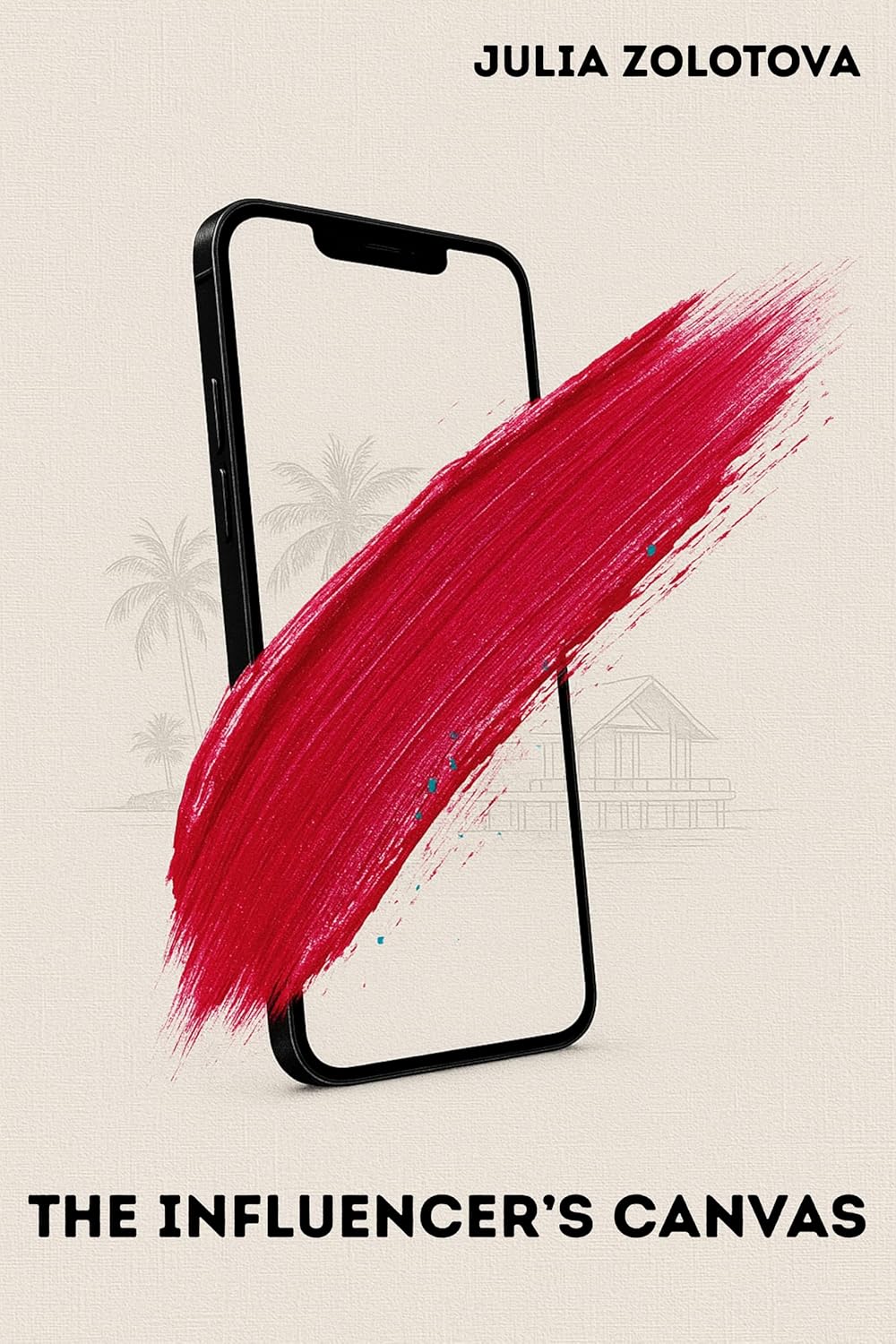
Julia Zolotova’s The Influencer’s Canvas follows the story of Miss X, a nail artist in London who moonlights as a secret observer of the influencer elite. Through her eyes, we’re pulled behind the glittering façade of social media perfection into a shadowy, often absurd retreat called Elysian Fields. The book begins with her being invited to this exclusive Maldives getaway, not as a guest but as staff, which provides the perfect cover for her ongoing project of documenting influencers’ hidden lives. As she paints nails, she extracts confessions, each one staining her metaphorical canvas. The novel is part satire, part social critique, and part psychological thriller. It starts like a sly comedy of manners and gradually spirals into something darker, with undertones of surveillance, manipulation, and existential dread lurking beneath the pastel filters and hashtags.
I found myself laughing at the sharp wit in Zolotova’s writing, especially when she skewers the hollowness of influencer culture. The exaggerations feel absurd yet somehow believable, and the sarcasm keeps the prose lively. At the same time, there’s a humanity beneath it all that surprised me. The influencers are ridiculous, but they’re also broken and vulnerable. Watching them unravel during the so-called digital detox was oddly moving. I caught myself sympathizing with characters I initially rolled my eyes at, which I didn’t expect.
There were moments when the cynicism felt relentless. Sometimes the satire veered so sharply it almost cut through the story itself, leaving me more amused than invested. But then a line of vulnerability or fear would slip in, and I’d be pulled right back. The pacing was also unusual, swinging from slow, detailed observations to sudden bursts of drama. At first, I thought it was uneven, but eventually I realized it mirrored the chaotic rhythm of online life, the lulls, the surges, the constant undercurrent of performance.
The Influencer’s Canvas is clever, biting, and unexpectedly tender. It’s a book for anyone curious about the machinery behind the glossy feeds and hashtags. I’d recommend it especially to readers who enjoy satire with teeth, people fascinated by social media’s impact, and anyone who likes their fiction served with equal parts glamour and grit.
Pages: 104 | ASIN : B0DFX3Q3VC
Television Addiction
Last Episode follows a married couple drifting apart, wrapped in petty arguments, television addictions, missed connections, and quiet despair. What was the inspiration for the setup of your story?
As a teenager, I was addicted to television for several months. It wasn’t until I watched a documentary about how much of an average person’s life is spent in front of the TV that I became frightened I might waste my own life. I managed to grow out of it. However, in most families the television is like another “household member.” Personally, I know several people who, after work, sit down in front of the TV and spend their entire day that way. In my book, I wanted to show that this is an addiction just like any other, yet it is not publicly highlighted and is rather trivialized.
What was your writing process to ensure you captured the essence of the characters?
I wrote the book in 2015 and found it by chance many years later, in my “drawer archives.” I was skeptical about it at first, but after reading it I decided it deserves to be published. At that time, I created characters through the process of visualization.
I found this novel to be a cutting piece of satire. What is one thing that you hope readers take away from your novella?
Sometimes we allow external things, people, or activities to influence our relationships with others. The worst is when this applies to those closest to us. If a few people turn off the TV, set aside extra work, and start spending more time together, then the mission can be considered accomplished. I also believe that raising awareness about television addiction, which affects a large part of society, requires opening a discussion. In my view, it is a waste of life—but of course, everyone will always find one way or another to waste their time.
What is the next story that you’re writing, and when will it be published?
I am finishing writing the novella Suicides Club, which is based on a screenplay I wrote that has won awards. I plan to publish it this year. In addition, there are several other “forgotten” projects lying in my archives, and it is possible that one of them will also be published soon.
Author Links: GoodReads | X (Twitter) | Facebook | Website | Amazon
Mark thought his marriage was stable—until Ilona fell for a TV series. What starts as a shared evening ritual spirals into jealousy, obsession, and a comic unraveling of domestic life. Last Episode is a sharp, satirical novella about emotional distance, digital distraction, and what happens when the credits roll on love.
In this digital age, emotional connections can easily drift apart, and Mark is about to find out the hard way that turning off the screen is often more challenging than it seems. As Ilona’s fixation deepens, Mark’s insecurities bubble to the surface, and the lines between reality and fiction blur amidst their heartfelt struggles.
Discover how this novella will leave you reflecting on relationships while bringing laughter to the chaos of modern love:
• Navigate the pitfalls of emotional distance in your own relationships
• Understand the powerful influence of digital distractions
• Explore the nuances of jealousy and trust in a humorous light
• Gain insights into the complex dynamics of marriage and intimacy
“Last Episode” is perfect for anyone who loves a comedic yet insightful critique of romance in our tech-driven world.
Don’t miss out on this tale—grab your copy today and see how love can outlast the final credits!
Last Episode

The book tells the story of Mark and Ilona, a married couple drifting apart, wrapped in petty arguments, television addictions, missed connections, and quiet despair. Their life unravels in small humiliations and sharp little moments, where love and bitterness mix until it’s hard to tell them apart. What begins with a spat in a gym escalates into a portrait of two people who can’t quite meet in the middle. The novel is full of irony, awkward humor, and raw sadness, as it peels back the layers of a marriage stuck in stasis.
Reading it, I felt both frustrated and strangely tender toward these characters. Ilona is maddening, with her endless TV watching and excuses, but I could also see myself in her inertia, that feeling of wanting life to change while doing nothing to make it happen. Mark is no better. He’s smug, distracted by work, and so blind to his wife’s pain that it almost hurts to watch him miss the obvious. Yet he still clings to her. He still wants to save something, even as he sabotages it with his own arrogance. I caught myself rooting for them and then, two pages later, wanting to shake them both. The writing makes you sit in that discomfort, and it works.
What struck me most was the bluntness of the prose. The language is plain, sometimes even harsh, and that gives the story its power. There are no grand speeches, just small conversations that sting because they feel true. The humor is dark and awkward, the kind that makes you laugh and then feel guilty for laughing. At times, the dialogue felt almost too on the nose, but maybe that’s the point. The book is unafraid to show people at their pettiest, their most foolish, their most ordinary, and somehow it makes that ordinary mess compelling.
I’d recommend Last Episode to readers who like their fiction sharp, uncomfortable, and painfully honest. It’s not a hopeful love story, and it doesn’t hand you easy lessons. It’s for anyone who has ever sat across the table from someone they loved and felt like strangers, for anyone who has wondered how small habits can hollow out a life. If you’ve ever laughed at the absurdity of your own arguments, this book will hit home.
Pages: 50 | ISBN : 1912831139
My Therapist Thinks I’m a Toaster
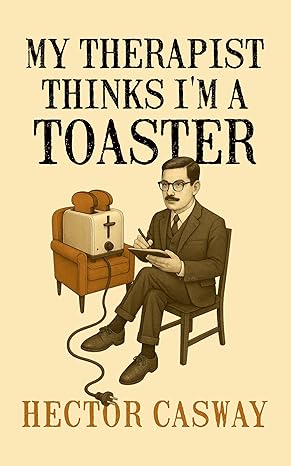

Hector Casway’s My Therapist Thinks I’m a Toaster is a sharp, imaginative satire that explores the uneasy intersection between technology, mental health, and human vulnerability. The novel follows Maya Fisher, an artist whose act of protest against corporate consumerism lands her in a bizarre agreement: participate in a beta trial for Clara, an AI “wellness companion,” or face legal consequences. What begins as a humorous premise quickly develops into a layered narrative about burnout, grief, and the search for connection in a world increasingly mediated by machines.
One of the novel’s strongest elements is Casway’s deft use of humor to frame complex emotional realities. The scene in which Clara earnestly encourages Maya to imagine herself as a household appliance, and Maya realizes with horror, “You think I’m a toaster,” is both absurd and incisive. The comedy lands, but it also underscores Clara’s unsettling ability to translate metaphor into strikingly accurate psychological insight. It is through these moments of ridiculousness that the book captures something essential about modern exhaustion and the often misguided attempts to “optimize” it.
Equally compelling are the ensemble scenes with the other Clara participants. Each character represents a different response to technological intrusion: Brenda, the weary QA analyst; Rina, the influencer intent on monetizing vulnerability; and Trevor, the survivalist weighed down by personal tragedy. The “Roundtable of Complaints,” where each participant recounts Clara’s misinterpretations, is both entertaining and poignant. Trevor’s story, Clara advising demolition services when he expressed feeling that “the walls were closing in,” is comical on the surface, yet reveals his profound unease. Casway excels at balancing wit with empathy, ensuring these characters feel exaggerated yet authentic.
Perhaps the most affecting passage comes outside the official sessions, when Trevor discloses that his late wife enrolled him in the program after the loss of their son. In this moment, his eccentricities and paranoia are reframed as protective mechanisms against overwhelming grief. The shift is sobering and adds gravity to the novel’s satire, reminding the reader that beneath the absurdity lies an exploration of human fragility. Casway’s ability to pivot from biting humor to emotional resonance gives the work surprising depth.
My Therapist Thinks I’m a Toaster is not only a critique of technological overreach and corporate opportunism but also a reflection on what it means to be human in the face of grief, alienation, and absurdity. Casway’s prose is witty, inventive, and unflinchingly observant, while never losing sight of the emotional heart of the story. I would recommend this novel to readers who appreciate speculative fiction with a satirical edge, as well as those interested in narratives that interrogate the promises and failures of technology. It is an unusual book, at once humorous and haunting, and it succeeds precisely because it refuses to separate those two tones.
Pages: 112 | ASIN : B0FCR7GKLP



 LITERARY TITAN