Blog Archives
Born in Space: Unlocking Destiny
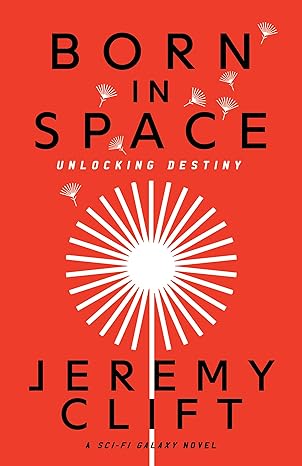

Born in Space: Unlocking Destiny, by Jeremy Clift, transports readers to Tucson, Arizona, in 2063, introducing the Ward family amid a society where artificial intelligence seamlessly integrates into daily life. This relatable yet futuristic setting immediately captivates, highlighting the pervasive role of AI in human existence. We learn that the children’s mother, Clara, is stationed on the Moon as a botanist, working to establish a sustainable food supply. As Earth’s conditions deteriorate, humanity seeks refuge on other planets, though these colonies also face growing unrest.
The narrative intensifies as the Ward family relocates to an orbiting space habitat, delving into profound ethical and moral dilemmas that resonate deeply. Despite its futuristic backdrop, the story remains relatable, reflecting issues not far removed from our current reality. Clift skillfully evokes emotions of remorse, pity, and sadness early in the tale, crafting a narrative that explores the essence of humanity and the potential alienation brought by technological and societal advancements. As a mother, I found myself moved to tears on multiple occasions.
The plot follows both Teagan and Hunter Ward, though Teagan’s journey particularly stands out. While Hunter’s storyline contributes to the overarching message, Teagan emerges as the central figure, her experiences deeply engaging. The antagonists in the novel are portrayed with striking malevolence, and certain scenes are intense, featuring violence and gore that may be challenging for some readers.
Born in Space: Unlocking Destiny serves as a poignant reminder of the consequences of overstepping natural boundaries, especially concerning the future of AI and technology. It’s a compelling read that I highly recommend, and I look forward to adding a physical copy to my collection.
Pages: 443 | ASIN : B0D1PWPRBJ

The Senescence Sentence: A Short Novel
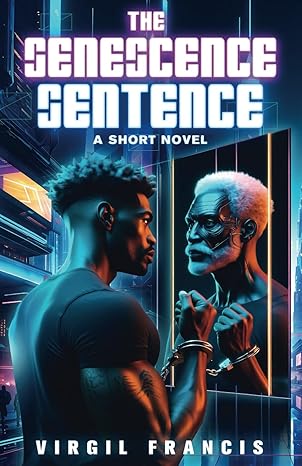
The Senescence Sentence, by Virgil Francis, is a compelling blend of futuristic science and philosophical tension, centered on Frances, a nanotechnology scientist navigating an increasingly dystopian world where technology and corporate ambition blur moral boundaries. Frances grapples with the allure and danger of technological advancements, especially as his work places him at odds with powerful organizations and impacts his family life intensely. His struggle with ethical limits, corporate pressure, and personal responsibility create a narrative that feels at once suspenseful and introspective.
The writing strikes a unique balance between technical immersion and emotional depth, though at times, the level of detail around futuristic technology can feel overwhelming. The detailed descriptions, like the “holographic 4D model” and Frances’ advanced “NanoShots,” allow readers to visualize this futuristic world. Francis does a fantastic job using relationships to ground the story’s intensity. Frances’ bond with his daughter, Gege, and wife, Naomi, brings warmth and stakes to his otherwise clinical, tech-driven world. These relationships are crucial to understanding Frances’ internal conflict, making him feel real and vulnerable. The complexity of his friendship with Fray, a business partner driven by ambition, further enhances the story’s themes, showing Frances’ struggle between corporate allure and ethical boundaries.
One of my favorite aspects of the book is how it raises philosophical questions about technological advancement. The story poses the question: How far should science go before it encroaches on our humanity? When Frances resists unethical partnerships, the narrative invites readers to consider their own moral lines. The moral dilemma Frances faces, especially against the backdrop of companies like NanoDawn, keeps the reader wondering if anyone can stay principled in a world dominated by corporate giants. The novel encourages self-reflection, making it more than just a futuristic thriller.
The Senescence Sentence is a great fit for readers interested in science fiction that explores the ethical dimensions of tech advancements. Fans of Black Mirror-esque tales who enjoy introspective, morally complex narratives will find this book thought-provoking. It’s a bold, reflective story that pulls readers into a world of intense moral and technological exploration.
Pages: 268 | ASIN : B0DDTTFS3F
Storm on the Horizon
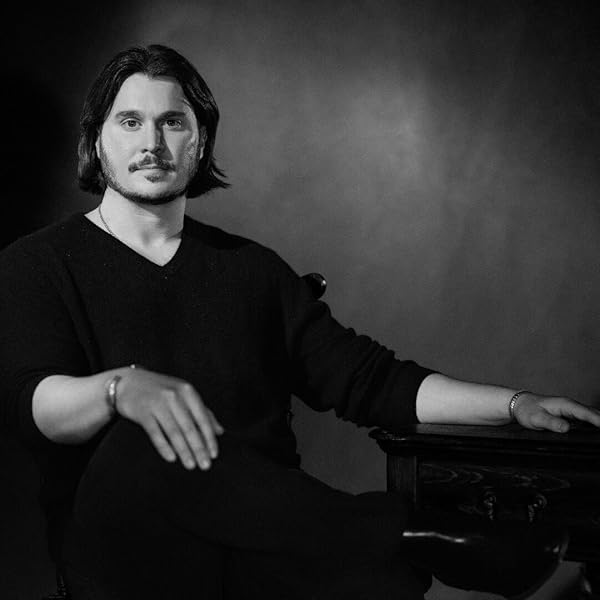
Vitalerium: Descent into the Void follows a rogue criminal living in the golden age of space exploration who winds up at the center of a conspiracy of a government faction looking to implement a Machiavellian vision of utopia. What was the inspiration for the setup of your story?
The inspiration for Vitalerium – Descent into the Void, though stemming from numerous influences, is first and foremost a result of my life-long love of science fiction. I have always admired the ability of sci-fi writers to extrapolate a vision of the future (and how that vision could go terribly awry) through the lens of their own knowledge and experience. The restorative property of escaping to worlds filled with technological marvels, glorious triumphs in space combat, and endless possibilities of the future is something I cherish. I also find the dystopian elements so commonly captured to be humbling in a way; reminding us that we are still human, and thus prone to err no matter how advanced the world around us becomes. There’s value in identifying potential pitfalls and unexpected difficulties that lay in wait for humanity in the uncharted waters ahead. Although progress is inevitable, we could just as easily progress into a burning building as we could greener pastures. I pull from many authors’ examples that came before me, including some of the greats in classic sci-fi writing, cinema, and video games. I even went so far as to leave small easter eggs within the first book that highlight some of my influences. That part was a lot of fun for me, and I hope the readers will enjoy finding them, too.
Other sources of inspiration came from within. “Write what you know” was a phrase I never fully understood until I started hitting the keyboard at regular intervals. I tend to pull from real-life experiences to craft narratives throughout the book. Vitalerium documents the rediscovery of purpose and the growth of numerous characters throughout their trials and tribulations. Although the stakes are certainly higher in Vitalerium than in my own experiences, the lessons learned are undoubtedly transferable. A number of the major characters in the book are based on people I know or have met that made a lasting imprint. I feel this breathes life and sincerity into their personalities. Even the dream sequences that emerge are altered versions of some of the most vivid dreams I’ve ever had. Sleep paralysis is something I experience on a regular basis. For those of you who understand the feeling associated with the phenomenon, I’m sure you understand how impactful the experience can be. Ultimately, I find that if I’m focusing on the right things, I can find inspiration anywhere, and everywhere.
Current events also provide plenty of fuel for the fire. Today’s world presents no shortage of inspiration for the potential emergence of a dystopian world. All one has to do is turn on the TV or open their preferred news app. To watch the way narratives are portrayed and subsequently spun by both sides of the aisle is like watching two different planets reporting on entirely different stories. The dichotomy of left and right today is portrayed as a vast chasm, where only the extremes are highlighted by each respective camp. The resulting weight of interpreted division is one that we carry into our daily lives, whether we realize it or not. Nuance is a thing lost to the binary world of left or right, right or wrong, win or lose, omitting the infinite shades of gray existing between them. Although this manufactured portrayal of the world is far from reality, where people have more in common than they are told to realize, its effects endure.
In Vitalerium – Descent into the Void, I forecast a world where this vision is carried forward—one where obedience means surviving, and disagreement means suffering (for those who remember their high school English curriculum, this is undoubtedly Orwellian-reminiscent). For when perceived division accelerates and is pitted against itself, and the populations lose all sense of the common ground on which they walk, the only option left is for one side to emerge victorious; and that is when all of society loses.
While it incorporates the ethical dilemmas and cutthroat politics of an advanced civilization, Vitalerium remains non-partisan. The thematic focus is on philosophical exploration, and the often-blurred lines of morality the human condition exposes us to…and yes, it’s got lots of action! So, for those of you who are sick of being preached to in every book, movie, play, or fading sticker you happen to read on a bathroom stall seeking to teach you the error of your personal leanings, don’t worry. It’s my belief that adults can make their own decisions, and I wouldn’t bore you with that horseshit.
I find the world you created in this novel brimming with possibilities. Where did the inspiration for the setting come from, and how did it change as you were writing?
I have always been fascinated with space travel. Although my professional career took me down a different path, I still maintain that childlike curiosity when it comes to new cosmological discoveries, breakthroughs in modern physics, or anything else that falls into the realm of exploring the great void. Perhaps in an attempt to fulfill my own desires to explore the cosmos, I created the element Vitalerium: the gravity-bending catalyst to accomplish such a monumental feat. However, the ability to traverse any space poses an important question: to where, then, do we go? Although the exact number is not known, it is calculated that anywhere between 200 billion and 2 trillion galaxies exist in the observable universe. Zoom in a little closer, and you’ll find there are anywhere between 100 and 400 billion stars in the Milky Way alone—each with their own potential for harboring orbital exoplanets: each with the promise of life in some form. So, why couldn’t we assume that given our current limitations in measuring such things, that a planet similar to our own exists somewhere in the celestial neighborhood (so to speak)?
For planet Deorum, where the majority of the first book takes place, I wanted to create similar conditions to Earth as I began to expound on this fabricated universe: one where a futuristic take on modern life was possible, yet even the smallest differences in conditions could lead to massive disparities in flora, fauna, and the course of evolution on its surface. A planet so close to the source of vitalerium, the book’s strange new addition to the periodic table, is bound to provoke some very interesting wildlife. As the series progresses, I plan to incorporate more planets with even stranger conditions and cultural traditions. Perhaps one planet was optimally positioned but required terraforming to be inhabited, resulting in a strange uniformity of flora, and a subsequently stark uniformity in its society. Conceivably, one planet’s surface could be covered entirely by water, creating a business hub for water and sea life commodities. Maybe I’ll create a planet where tectonic plate activity is much more extreme compared with Earth’s. To find out, you’ll simply have to read on, friends.
Another source of my perpetual curiosity lies in mythology, and the ruins of past civilizations. Understanding the roots of our species and the emergence of civilization fascinates me to no end: an unremitting cascade of inspiration. This was especially helpful in crafting the ruins readers will discover on planet Deorum. In the book, the Coalition’s perceived lack of desire to explore the remnants of this dead civilization mimics our own dearth of answers in regard to our predecessors.
The story has changed drastically since my initial mapping, and its future remains flexible to this day. Although there are major events that I plan for, I base how we get there off the characters, for whom I attempt to give a mind of their own. Currently, I’m about 150 pages into the second book, which promises to be even more exciting than the first. So, for the potential readers out there, I’ll leave you with a friendly forewarning: the first book was created with the entire series in mind, and thus some of the themes in the overarching narrative are left unrequited…for now. There is, however, no need to fret. Each new release in the series promises to provide new characters, new planets, new concepts, and technologies, and yes…closure for narrative cliffhangers, while potentially opening new ones.
What were some themes that were important for you to explore in this book? Will there be a follow-up novel to this story? If so, what aspects of the story will the next book cover?
Descent into the Void, though a gripping tale of its own, is only the beginning of what’s to come. It is a thrilling yet heartbreaking glance into spacefaring civilization in a technologically advanced, dystopian universe. In the first book, the reader is dropped into the story just prior to its tipping point. This starting line serves to shed light on how the immense external pressures of a hybrid authoritarian society form our protagonist, Roman Matthews, as well as other threads in this multinarrative odyssey. The horrific life experiences Roman endures shape the man we follow throughout the majority of the book. Readers will get a front-row view of his bitter evolution from a clean-cut boy with a bright future, to an aimless lost soul whose circumstances have forged a hardened roughneck; and then, his transformation into something else entirely.
Starting from this vantage point also allowed me breadth to illustrate how the Coalition for Prosperity—the government on planet Deorum—operates. Their centralized shift from governing to ruling creates a society where authority is the only currency that carries weight. The result is a stark transition from keeping its people safe, to keeping its citizens in line. When powerful “public servants” begin to serve themselves and their perceived greater causes rather than the populace they no longer feel obligated to, a ripple effect radiates outward from leadership with dire consequences. The resulting conditions create a harsh world where no freedom, or person, is safe. Together, these concepts provide only a glimpse of the storm on the horizon, one of blind ambitions, and a lack of understanding of the larger forces at play.
Although we dive into ethical dilemmas, political factions, and some hard-hitting action, the book also sets the stage for a much greater theme: That in the scope of the universe, humans are but a few atoms of a bacterium on a speck of dust floating through a never-ending black field. Humanity, in all its glory of exploration and colonization, when examined on the grand stage that is our plane of existence is magnificently miniscule, yet important none-the-less to the harmony of order and chaos. The universe, as we will discover, has a narrative of its own that it intends to see to fruition; ever balancing the forces of equilibrium on a scale that our consciousness may not fathom due to the physical limitations of our organic vessels.
Descent into the Void is only the first of seven books I have planned in the Vitalerium series, and that number could be a low estimate. When I first mapped out the universe and started writing, I realized the book I had storyboarded for was far too long to be a single novel. The reality hit me when I was starting chapter 15 on a flight to Boston and noticed the number at the bottom of the page: 229. Most of my writing is done on a plane due to the incessant travel requirements of my job in medical device sales. The majority of the first book was written at 36,000 feet. Whether it was the opportunity to disconnect from the internet and other distractions in life, or the fact that I was just a hair closer to the void of space itself, I’m not entirely sure. Whatever the case, I found it to be the perfect writing office for Vitalerium. Writing this series has been my proverbial construction of an interstellar spacecraft to explore and enjoy that which I can only dream of. It is my only hope that you all board, and enjoy the ride…
Author Links: GoodReads | X (Twitter) | Facebook | Website | Amazon
Nearly six centuries have passed since humanity’s discovery of vitalerium, which ushered in a golden age of space exploration and colonization. Planet Deorum’s society is centered around this illustrious, gravity-bending blue crystal. The year is 2701.
Following a near-fatal disaster, roughneck freelancer Roman Matthews becomes unwittingly trapped at the center of a harrowing conspiracy. Hunted by Deorum’s government, the Coalition for Prosperity, Roman must use his deadly skillset to survive against all odds.
Roman and his band of unlikely allies will discover that the Coalition’s indiscretions threaten the delicate balance of advanced civilization. As a sect of the Coalition prepares to implement their Machiavellian vision of utopia, the proverbial pendulum begins to swing toward chaos…
Dreamlike Nature of Reality

The Monarchs follows a teenage boy with unique psychic abilities living in a laboratory who escapes and goes on the run with an ordinary orphan girl. What was the inspiration for the setup of your story?
This is a good question, as it is often difficult to discern the source of the inspiration. The original idea for The Monarchs came to me all the way back in 2014 during a senior year of college spring break beach trip. At the time I was questioning what I wanted to do with my life (having chosen philosophy as one of my majors) and was searching inward for answers. My own process of spiritual awakening, questioning the nature of reality, and exploring the potentials of consciousness through modalities such as lucid dreaming were obvious inspirations for this novel and are reflected in Samuel’s journey.
Moreover, I’ve always been fascinated with psi phenomena and the possibility of supernormal abilities. Even as a kid, I was obsessed with the movie Matilda—about a young girl who could move objects with her mind—and the X-Men series. Eventually, I came across the concept of indigo children which reignited my interest in supernatural abilities—as well as a possible shift in human evolution—and inspired the idea for “new youth” children. Music was another big inspiration, particularly M83’s “Midnight City” music video, which shows psychic kids being tested at a facility. Only later when I researched the Montauk Project, which the show Stranger Things is based on, did I understand that this might be more of a reality than most people realize.
One point I’d like to add is that although the novel may be taken literally (a teenage boy with psychic powers escaping a facility), from another perspective, it may be interpreted as an allegory for spiritual awakening and enlightenment. The opening scene, which is very dreamlike in nature, shows Samuel attempting to escape the laboratory complex with no end in sight. This represents the endless maze of the thinking mind, the dream of the egoic personality which many teachers and mystics insist that we must awaken from. Luna hints to this later in the novel when teaching Samuel how to meditate: “Beyond the thinking mind, escaping its never-ending labyrinth of illusion, there exists a force infinitely more intelligent.”
From there ensues a hero’s journey which forces Samuel out of his comfort zone, leading him to confront his shadow, learn through challenges, and awaken to his essential oneness with God (or, using an analogy of a book, oneness with the author and all other characters). This culminates with him breaking out of character and transcending the strings of time—symbolizing cutting the cords to his past and dying to his time-based egoic self. The evolution and awakening of Evelyn from her coma also represent that of the earth and humanity as a whole. This novel is loaded with symbolism and synchronicity, and although I left several things up to interpretation, there are many Easter eggs and hidden surprises that readers may not immediately pick up on.
The writing in your story is very artful and creative. Was it a conscious effort to create a story in this fashion or is this style of writing reflective of your writing style in general?
Thank you for the kind words. Because music is a central theme (and I often used lyrics from popular songs in the dialogue), in general, I did try to make the writing more lyrical and poetic, allowing the sentences to flow in a smooth manner. I wanted my writing to be affecting to the reader, instilled at points with uplifting wisdom, while being careful not to sound verbose or pretentious. Truthfully, because this is my first novel, it took me a while to find my writing style, and it is still a learning process. It took a leap of faith, and years of trial and error, to trust the ideas that came to me and discover how to put them together into a coherently written story. My editors were also a big help. I am grateful for the journey.
What were some themes that were important for you to explore in this book?
Beginning with Samuel’s conversations with his wise tutor, Walter, and expounded on thereafter, this novel explores several philosophical and metaphysical themes, including the existence of God, free will versus predeterminism, human evolution, planetary ascension, and the dreamlike nature of reality. Before embarking on his hero’s journey, Samuel tells Walter that he feels he has no control over his own destiny—that he is trapped like a puppet on a prewritten path. Here and at points throughout the book, we see Samuel developing a sort of metacognition of being a character in a novel—one who indeed is on a path that is already written, yet strives for free will.
Samuel must reconcile this paradox with the ultimate realization of his essential oneness with God (again, oneness with myself as the author). There is no separation between me, him, and all other characters; it is simply an illusion, a game of “one consciousness interacting with itself.” From this highest level, beyond the conditioned limitations of the egoic personality and into God or “author” consciousness, Samuel comprehends that he does have free will, as in a sense he has “written all of it.” His identity as the small, helpless, separate character dissipates as he attunes to the power to write his own destiny. He dies to his old self and is reborn as a Monarch, a symbol of personal sovereignty and spiritual transformation.
As previously mentioned, music is a central theme, as is the idea that we are living in a musical universe, or the view that “all things could be expressed through vibration, sound, and geometry.” To compliment this theme, many song lyrics are quoted in the book, some explicitly referenced, and others hidden in the dialogue. Samuel gradually picks up on the fact that there is music all around him—that his consciousness is but one note in a cosmic symphony. I had to receive print license permissions for 24 different songs to be included in the novel, from artists ranging from The Beatles to Fleetwood Mac to Jimi Hendrix to The Flaming Lips. This was a journey in itself, but it was worth it to preserve the musical element. Some song references may contain hidden clues pertaining to the story when interpreted correctly.
The book is not without darker themes, including the perpetual cycles of human war and division, government corruption, and secret experimentation (some researchers have spoken of “Monarch” mind control programming, which is the lesser-known negative connotation to the symbol). Although another human division is introduced in the book, between the larger-eyed “new youth” and the “ordinary” people and children, the ultimate theme I strove to emphasize is that only through unconditional love, acceptance, empathy, and forgiveness can we truly heal our planet and transcend the influences that have long kept us divided.
As the sagacious Leon puts it, “We are but dream characters in the mind of God, striving for Self-realization, though only a select few may consciously remember this. Most identify entirely with their egos, and this generates great inner conflict.” We all have a choice to stay stuck in our characters, our narrow ego identities trapped in the game of duality and separation, or strive toward something higher—a deeper connection with ourselves, with nature, and with all other beings. Taking this path requires a leap of faith into the unknown, opening our hearts and allowing a greater intelligence to guide us through life, which is one of Samuel’s main lessons.
I find a problem in well-written stories in that I always want there to be another book to keep the story going. Is there a second book planned?
Another great question. During most of my time writing The Monarchs, I didn’t plan for there to be a second book. Yet as my first editor told me, this story is almost too big to contain in just one book. I now realize that it is meant to be a trilogy, and I have already (albeit very loosely) outlined the story for books 2 and 3. I’m not going to give it away, but it will be done in a way that plays with time, lending a chance to fill in more of Samuel’s backstory, his time at the Facility, and the world in general, while also pointing toward an incredible future destiny.
Books 2 and 3 will further explore mind-bending themes such as the multidimensional nature of self, extraterrestrial life, other incarnational existences, and even other timelines. I’m excited to expand on this story, and I will continue to trust what comes to me. Stay tuned and thank you for the support.
Author Links: GoodReads | Website | Amazon
Born into a world ravaged by war, Samuel Helen is among the first in a wave of “new youth” children who possess abnormally large eyes and breathtaking psychic abilities. But Samuel’s powerful telekinesis cannot be managed by the team of scientists at General George Mabus’s military facility. He finds his only solace in his sessions with his wise tutor, Walter, who introduces him to music and philosophy, and his cherished weekly visits with an ordinary orphan girl, Evelyn, in the neighboring village.
When a twist of fate sends Samuel and Evelyn into uncharted territory, Samuel is forced to confront dark shadows from his past in order to unlock the deepest wells of his psyche, even the universe itself, and discover deep spiritual truths while harnessing his abilities-and facing off with vengeful enemies.
He soon realizes that he is part of something much greater than he could have ever imagined . . .
Future Unfolds


Future Unfolds, by J. L. Yarrow, is a captivating sci-fi novel that delves into the complexities of advanced time travel, weaving together multiple storylines that intersect in intriguing ways. Among the diverse cast of lead characters, Hunter emerges as the protagonist, grappling with the consequences of his time-travel escapades. Accompanied by his AI companion, Comperi, Hunter embarks on a series of time jumps to uncover the truth behind the Time Forward Project and his pivotal role in shaping the future of the world.
Yarrow’s writing style is engaging, drawing readers into a meticulously crafted time-traveling world where even the villains have richly-developed timelines and stories. The narrative is filled with twists and turns and brilliant action sequences that keep readers on the edge of their seats. The intertwining timelines add a complexity that invites readers to engage deeply with the story. While I believe it may require some back-and-forth reading to fully grasp, this intricacy is balanced by the fast-paced action, which provides constant excitement and motivation to continue.
One of the many standout aspects of the book is the character of Chen-Yi, who elicits strong emotions from the reader—a testament to Yarrow’s skill in character development, especially in the sci-fi genre where such emotional engagement is often rare. The novel’s depiction of planets and colonies is vivid and immersive, with genetic advancements, cohabitation with aliens, and advanced AI contributing to the rich atmosphere of a futuristic world. The central theme of time travel is explored in depth, highlighting the complexities and far-reaching consequences of tampering with time. The interplay between the present, past, and future is skillfully handled, showcasing the ripple effects of the characters’ actions.
Future Unfolds offers a fresh and thrilling take on the time travel genre. Sci-fi enthusiasts, particularly those who enjoy time travel plots, will find Hunter’s journey through time a compelling and exhilarating ride.
Pages: 320 | ISBN : 1611883962



 LITERARY TITAN