Blog Archives
Healing the Wounds

Uncovering Amy shares your experiences of being diagnosed with Dissociative Identity Disorder and working with Bryan Redfield using the brain training method to integrate your inner Parent, Adult, and Child into a single unified self. What were some ideas that were important for you to share in this book?
It was incredibly important to me that I get across the frame of mind I was in when the whole situation began: Searching for answers outside of myself in every way I had available to me because I had no conception that there could be more going on INSIDE my own mind. I also wanted to be sure to give the reader hope: whether they suffered from a similar experience or not, there is a solution to bringing all parts of your mind together as one.
What was the most challenging part of writing your memoir, and what was the most rewarding?
The most challenging part of this was explaining the process I went through, because I feel that the only way someone can truly understand it is to go through it. This concept is not just about affirmations or subliminals or NLP; this is recognizing the multiple parts of your own personality and healing the wounds they’ve carried for your entire life so you can be reborn as the person you were always meant to be. It’s not a process everyone can handle.
What do you hope is one thing readers take away from your story?
I hope my book makes its way into the hands of those who need it most: the person who is afraid to be themselves, afraid of what society might do to them, and doesn’t know how to protect themselves from the abusers in the world. I want you to know: there is hope.
Author Links: GoodReads | Facebook | Website | Amazon
Uncovering Amy is Amelia South’s raw, unfiltered memoir of living with dissociative identity disorder (formerly known as multiple personality disorder) — and the radical, self-directed process she used to retrain her brain and reclaim internal control.
This is not a story of gentle healing. It is a firsthand account of internal wars, competing identities, and the desperate, sometimes dangerous attempts to make the chaos stop. Alcohol. Exorcisms. Extreme self-experimentation. Moments of terror. Moments of breakthrough. And the slow, deliberate work of learning how to lead a fractured inner world.
With a chapter by Bryan Redfield, her guide through the process, Uncovering Amy explores a structured framework for internal leadership — not surface-level coping, not spiritual bypassing, but the gritty, methodical reorganization of the mind from the inside out.
This book does not claim to be the only answer. It is one person’s documented path from psychological fragmentation to internal coordination. Along the way, it raises a provocative question: if a divided mind can learn to work together, what might that mean for the internal conflicts we all carry?
If you’re looking for comforting platitudes, this isn’t it.
If you’re ready for honesty, courage, and a story that challenges what you think is possible for the human mind — keep reading.
I’M FINE!: A Practical Guide To Managing Your Emotions To Strengthen Relationships With Loved Ones And Yourself
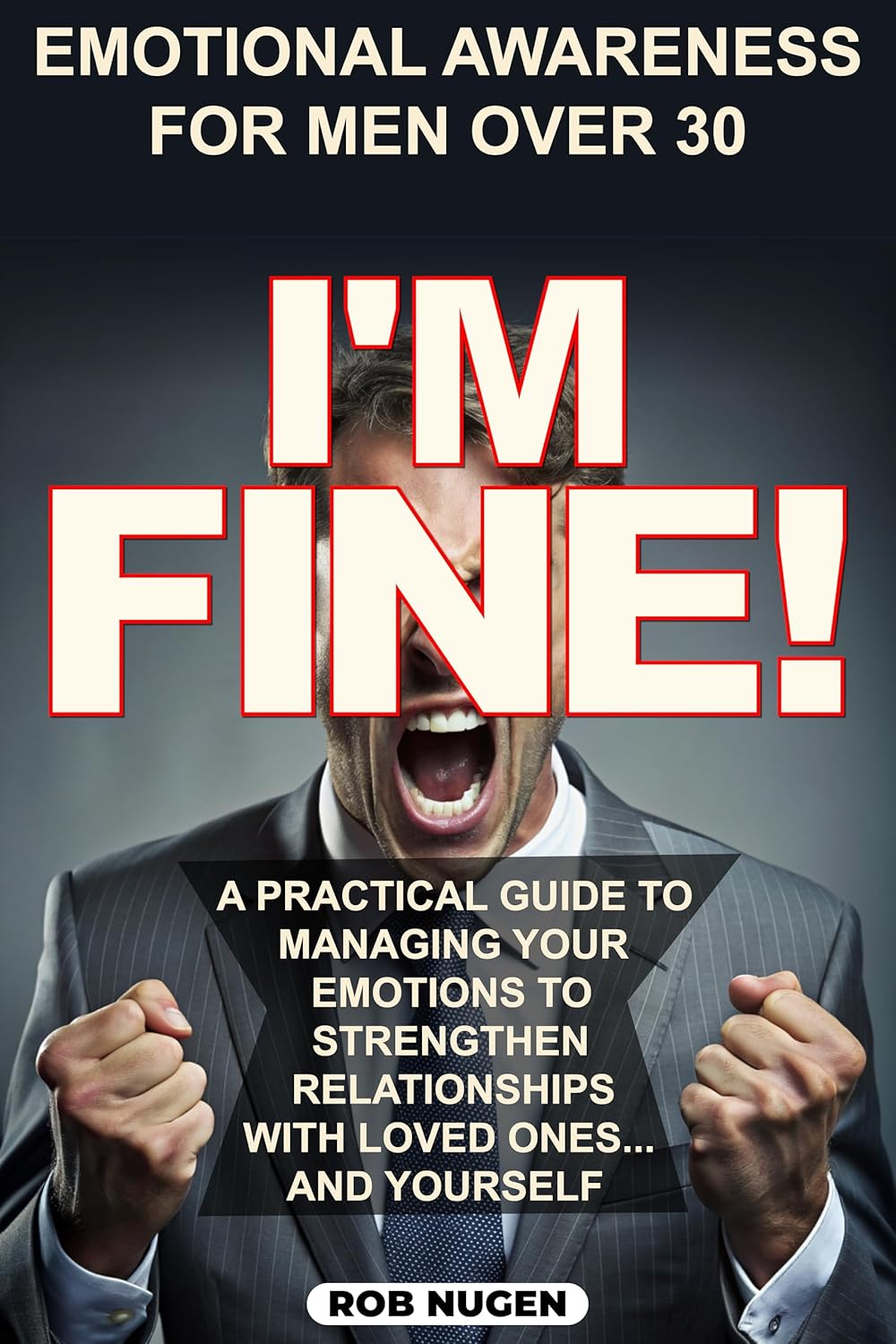

I’m Fine! is a short and personal guide to emotional awareness written for men who grew up being told to toughen up, get on with it, and never cry. Rob Nugen walks through why that “I’m fine” script is often a lie, how emotions actually work as signals, what happens when we suppress them, and how men can start feeling and expressing them in healthier ways. The book moves from basic ideas about emotions, through stories of suppression, masking, and meltdown, into practical tools for working with anger, fear, sadness, happiness, guilt, shame, and gratitude, before landing in deeper topics like connection, loneliness, self-care, and living with an open heart.
I really enjoyed the way Rob writes. The tone is warm, plain, and direct, and he keeps it grounded in his own stories instead of hiding behind theory. The images he uses stick. The inbox full of unread emotional “emails,” the “Meeseeks” standing in for neglected feelings, the little boy trying to write “Jr.” on a Nerf football and then shredding it in shame, these landed for me much more than abstract advice ever could. I also liked the structure. Each chapter ends with simple reflection questions, so the book nudges you to actually do something with what you just read instead of nodding along and forgetting it ten minutes later. The style is conversational, but the content is serious, and that mix makes some heavy topics feel more approachable.
I found his core message both simple and powerful. Emotions are not defects. They are messengers that hang around until you listen, and when you finally let them move, they change. That shows up everywhere in the book, from his delayed grief over his grandfather’s death, to the fear sitting under his anger, to his description of “self-care” that quietly turns into avoidance and numbing. I appreciated how strongly he leans toward agency without sliding into blame. He honors the fact that childhood and culture shape us, then keeps coming back to the question, “What can I choose now.” Sometimes I wanted a bit more engagement with bigger social factors, like work, class, or culture outside his own experience, since most of the examples are straight, Western, and personal. That said, the honesty and humility soften that gap for me. He is not preaching from on high. He is saying, “Here is what I did wrong, here is what helped, try what fits.”
By the end of the book, I felt a steady mix of hope and practicality. The closing chapters on self-care, connection, and “practicing emotional awareness” do a good job of tying everything together into daily life, instead of leaving the reader with one big cathartic moment and no follow-through. Rob’s invitation to “pay it forward” by handing the book on to another man, with a written note, is a lovely touch that fits the whole spirit of the project. I finished the last pages with a real sense that the book is less a lecture and more a hand on the shoulder.
I would recommend this book to men over 30 who feel competent on the outside and quietly lost or numb on the inside, especially those who grew up with “men don’t cry” as a background rule. It would also be useful for partners of men like that, and for coaches or group leaders who work with men and want simple language and relatable stories to point to. If you want a straight-talking, very relatable guide that makes you feel less alone while giving you concrete ways to start feeling more, I think this one is worth your time.
Pages: 150 | ASIN : B0FYNH5WNC

Reverse Analysis, the Existential Shift, Gestalt Family Therapy and the Prevention of the Next Holocaust

In Reverse Analysis, The Existential shift, Gestalt Family Therapy and the Prevention of the Next Holocaust, the reader gets to experience life through other people’s experiences. The author writes about different life situations and encounters and adds tales of professionals and icons to convey his message. His book is about life, therapy, change in perspective, and the future.
Dr. Len Bergantino writes in detail about how exciting or boring life can be depending on an individual’s path. He has interesting takes and ideal examples that make the reading engrossing. This interesting book is generally about life, how we relate with other people, how our thoughts affect us, and improving the life we live. The author ensures that the reader understands every unfamiliar terminology and theory by fully explaining things. Dr. Len Bergantino is an excellent author because he knows how to blend casual discussion with academic and professional text. He will write about scientific and expert opinions and add a bit of a casual story to balance the discussion. I appreciate the author for being candid and nonpartisan, even when discussing sensitive issues. This book is a gem that will have you open your eyes to multiple problems in life. The author helps the reader connect with their conscious self and gets one to value every minute they are alive and functioning.
One of the things that you enjoy as a reader is the many stories the author shares. Dr. Len Bergantino writes well and understands the art of narration better than most. I especially loved reading his tales as he wrote about his professional and personal life. In every story, the reader gets a life lesson or prudent sayings. Dr. Len Bergantino is open and discusses his high and low moments without concealing crucial information. This book teaches you the definition of therapy and psychotherapy and how various therapists identify with the subject. The author also shares essential information about gestalt therapy.
Reverse Analysis, The Existential shift, Gestalt Family Therapy and the Prevention of the Next Holocaust has a dozen subjects that can help one improve their lifestyle. Dr. Len Bergantino uses notes from experts to expound on his concepts, which is an excellent idea as one gets multiple angles from other people. The book’s arrangement is a tad unconventional but still easy to follow. The notes are brief but contain a critical message. One thing I love about Dr. Len Bergantino is how shrewd he is. Every topic discussed is well-researched, and the author considers expert opinion before analyzing.
I rate Reverse Analysis, The Existential shift, Gestalt Family Therapy and the Prevention of the Next Holocaust with 4 out of 5 stars for the excellent penmanship and for the advice that will make the reader an all-rounded better individual.
Pages: 246 | ASIN : B07QNSKBL2




