Blog Archives
The Art of Managing Humans
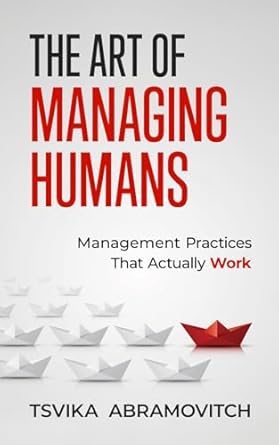

Managing human relationships is an essential skill that permeates daily life, from casual interactions like getting coffee to the complex responsibilities of leadership at work. Tsvika Abramovitch’s book, The Art of Managing Humans, is a comprehensive resource designed to be within arm’s reach, ready to offer practical insights at a moment’s notice. Abramovitch’s central aim is for managers to regularly consult this book and apply its principles in real-world situations. The book’s success lies in its ability to improve a manager’s approach by either clarifying existing knowledge or introducing new, actionable strategies that lead to tangible results. By the end of the book, readers will likely appreciate how seamlessly it achieves this objective.
One of the book’s most compelling elements is its exploration of the evolving workplace landscape, contrasting the rigid, hierarchical norms of the past with today’s dynamic, employee-centric environments. Abramovitch uses vivid examples, such as a scene from Revolutionary Road, to illustrate this shift from monotonous subordination to a work culture where employees seek meaningful engagement, career development, and a sense of purpose.
A particularly noteworthy feature of the book is the introduction of the “Seesaw Model,” which offers a fresh perspective on the shifting balance of power between employers and employees. Abramovitch effectively argues that modern managers must navigate a landscape where authority is no longer absolute, and employee input and satisfaction are critical to organizational success. The value of this book is further underscored by its historical perspective on the evolution of Human Resources (HR). Abramovitch traces HR’s journey from a clerical function to a vital business partner, providing readers with a deeper understanding of the complexities involved in managing human capital today. This historical context highlights the crucial role HR plays in driving organizational success.
Abramovitch’s writing is both insightful and practical, making The Art of Managing Humans an invaluable resource for managers at all levels. His ability to distill complex concepts into actionable advice is one of the book’s key strengths. The text is peppered with quips that not only add depth to the discussion but also engage the reader, prompting them to reflect on the various dimensions of leadership.
The Art of Managing Humans serves as a manual for navigating the challenges of modern management and excelling as a leader in today’s workforce. Abramovitch set out to create a tool that managers can refer to whenever and wherever needed. This book is like a guru imparting wisdom and a wise mentor offering encouragement and knowledge as you step into the world of management.
Pages: 195 | ASIN : B0CPX43KX3




 LITERARY TITAN