Blog Archives
AWAKENING


Tony Sunderland’s Awakening is a dystopian science fiction thriller set in 2121, where society has split into two very different realities. The privileged New City offers clean living, advanced medicine, and the promise of technological immortality, while the decaying Old City survives on rationed food, failing infrastructure, addictive virtual worlds, and a chemically enhanced version of faith. Sunderland establishes that divide early and makes it central to everything that follows. Senior Guardian Paul Valentine is introduced as a man still going through the motions of duty in a culture that has largely stopped expecting a future. When former New World director William Lennon is murdered inside the supposedly secure Permanent Virtual Facility, Paul finally gets a case that feels meaningful, and the novel shifts naturally into a murder investigation with much larger consequences.
What gives this dystopian science fiction novel its personality is the way the mystery keeps opening doors into bigger questions about consciousness, faith, technology, class, and personal choice. The Permanent Virtual promises an endless simulated existence, while the Faithful offer religious transcendence through drug-assisted communion. Both appeal to people who are exhausted by ordinary life, and Sunderland keeps returning to the idea that control becomes especially powerful when people willingly participate in it. The investigation eventually uncovers something far darker inside the Facility, where desperate Old City citizens have become raw material for the elite’s version of immortality. The revelation of Neural Substrate Farming is especially effective because it turns the novel’s philosophical concerns into something physical and disturbing: human minds are literally stripped of identity and used to make artificial paradise feel emotionally real.
Paul’s personal story keeps the speculative ideas from floating away into abstraction. His father Jason chooses the Permanent Virtual as his body fails, his sister Maggie becomes involved with people trying to expose New World, and Paul slowly discovers that his partner Tom, his old friend Simon, and even people he suspects of extremism know pieces of the truth he’s been unable or unwilling to see. His relationship with Sophia, who left the Old City years earlier to build a life in the Outlands, gives the book another version of resistance, one based on work, community, relationships, and accepting the uncertainty of real life. Maggie is particularly memorable because her anger has genuine consequences. She isn’t simply there to tell Paul he’s wrong. Her grief pushes her toward dangerous alliances, then forces her to decide what kind of rebellion she actually believes in. That makes the novel’s conflicts feel personal even as the plot grows from a murder mystery into a full-scale speculative thriller about institutional power.
As Awakening moves into its final stretch, the investigative structure gives way to open rebellion, public exposure, and a battle over who gets to define reality for the Old City. The later chapters are faster and more action-driven, but the strongest thread remains Paul’s gradual change from a man who confuses obedience with purpose into someone willing to make choices without institutional permission. Sunderland’s dystopian thriller ultimately centers on ownership: ownership of the body, of consciousness, of belief, of grief, and of the future. The title earns its meaning because awakening here is both literal and psychological. People are pulled out of virtual dreams, religious sedation, political passivity, and private denial, then left with the much harder business of deciding what comes next. That gives Awakening a satisfying identity as dystopian science fiction, speculative fiction, and a technology-driven thriller with a strong philosophical streak.
Page: 173 | ASIN : B0HBG8Y7SD

Universal Salvation and Personal Enlightenment
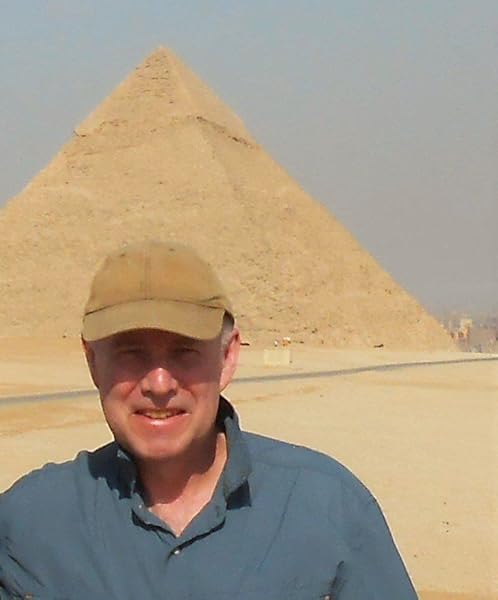
The Secret Religion is a compelling and educational exploration of the evolution of religion in Western societies, focusing on the enigmatic esoteric tradition of Christianity known as Gnosticism. Why was this an important book for you to write?
In my first book, The Obelisk and the Cross, I asked three existential questions; where did we come from? Why are we here? What happens when we die? Unfortunately, I found no clear answers evidenced in any of the western spiritual traditions. But I did discover an underlying theme that permeated (and still permeates) beneath all faith traditions – the choice between universal salvation and personal enlightenment.
How much research did you undertake for this book and how much time did it take to put it all together?
The book is the culmination of over 15 years of theoretic and field research.
What is one thing that you hope readers take away from The Secret Religion?
What we believe and how we act on those beliefs are two of the most important and personal choices each of us makes in the journey of our lived existence. If we strip away the supernatural aspects of the Christ myth and disregard the institutional constructions that arose after him, all that remains is a story of someone born in poverty and raised in obscurity, who dedicated his life to being a voice for the oppressed and abused. His works and words give people the hope of something better, something more than mere servitude and survival. Jesus rebelled against organised religious sects and political structures and gave hope to the hopeless so that the struggles of life are not in vain. This is the tangible legacy given to us by the ‘Jesus of history’. If seen through this perspective, the story of the human Jesus is part of a greater narrative that puts the individual at the centre of all things.
Author Links: GoodReads | Amazon
The Gnostics were brutally persecuted and their ideas were suppressed. But their teachings were powerful enough to linger on in the collective unconscious of succeeding generations and to re-emerge in the most unexpected places. From symbols on the American one-dollar bill to the ideals of the 1960s counterculture, from heavy metal music to 21st-century technological innovations, various facets of Gnostic thought continue to offer us a way to interpret the meaning of our lives. As Sunderland traces the battle between the orthodox and heretical traditions of Christianity, his thorough research and ability to make counterintuitive connections reveal to us a struggle that continues to rage beneath the surface of contemporary life.
THE SECRET RELIGION: Unveiling Hidden Beliefs and Ancient Mysteries in Christianity
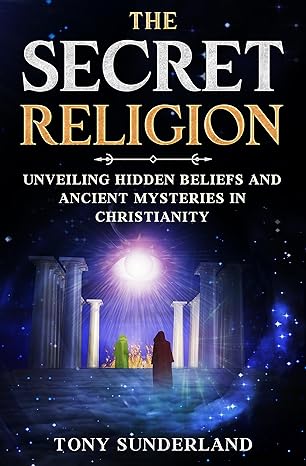

The Secret Religion by Tony Sunderland is a compelling and educational exploration of the evolution of religion in Western societies, focusing on the enigmatic esoteric tradition of Christianity known as Gnosticism. Sunderland skillfully contrasts this hidden tradition with the beliefs of traditional orthodox Christians, particularly in their understanding of the origins of their faith and the cosmos. The book invites readers to journey back to the city of Nicaea in 325 CE, where the council of senior church bishops, under the influence of Emperor Constantine, negotiated a uniform conception of Jesus Christ and his relationship with God. Sunderland’s narrative extends beyond historical analysis. He delves into the influence of Gnostic thought in various forms of art, including music and movies, revealing how secretive gnosis has permeated popular culture. Additionally, he explores the intersection of gnosis and technology, offering insights into what the future may hold for humanity.
The Secret Religion is a richly detailed account that will captivate intellectually curious readers. Sunderland provides access to a wealth of quotes and references, including works by notable figures like the controversial academic and author John Allegro, one of the first to link ancient Gnostics to the counterculture movements of the 1960s and 1970s. The book also covers significant historical events, such as the discovery of the Nag Hammadi library in 1945, which sparked a renewed interest in Gnostic practices and ways of experiencing the divine. The book challenges preconceived notions about Christianity’s uniformity throughout history, revealing surprising insights—such as the idea that a medieval pope might condemn the majority of today’s Christians. Sunderland often adopts a detached, objective tone, allowing readers to draw their own conclusions from the evidence and sources he presents. His voice becomes more pronounced towards the book’s conclusion, where he emphasizes the importance of integrating a personal quest for individual enlightenment into one’s spiritual journey.
The Secret Religion is a thought-provoking and eye-opening read for anyone interested in the history of Christianity and the influence of secret religious groups in shaping media and culture. This book offers a fresh perspective on the world and the future, leaving a lasting impact on its readers.
Pages: 339 | ASIN : B0D8RGKC7V


