Blog Archives
Kinker Circusing the Seventies


Kinker: Circusing the Seventies by Dave Letterfly Knoderer is a sprawling coming-of-age memoir and firsthand account of life under the big top. Beginning with a teenager determined to escape an unhappy home and pursue the dream his father helped plant, the book follows Knoderer from rookie drummer and canvas hand to animal trainer, horseman, performer, artist, and seasoned showman. Its long journey through one-day stands, winter quarters, roadside breakdowns, Canadian tours, and changing circus companies gives the story the scale of a travel memoir, while the author’s reflections on family, ambition, addiction, creativity, and belonging make it deeply personal. Knoderer describes the finished work as a story of love, dedication, risk, and the rewards of traveling show life, which captures its range well.
The book is most absorbing when it settles into the practical rhythms of the circus. Knoderer explains how tents rise and fall, how a show moves overnight, how performers respond to musical cues, and how every employee contributes to the daily transformation of an empty lot into a functioning world. His descriptions of mud, canvas, machinery, cookhouse meals, improvised repairs, livestock care, and backstage labor give this circus autobiography real documentary value. The extensive circus vocabulary feels natural because readers learn it while watching people work, and the glossary at the end turns the memoir into a useful piece of circus history as well as an adventure story.
Its emotional center is Knoderer’s need to create a place for himself. He keeps expanding his skills, sometimes recklessly, training ponies, building equipment, painting banners, learning horsemanship, developing acts, and finding fresh ways to remain useful. That drive carries him through broken vehicles, failed plans, dangerous weather, professional conflicts, substance abuse, financial strain, and a devastating accident that leaves him stranded with animals and damaged equipment. The book’s episodic structure can feel abundant, since nearly every person, project, and mishap receives room on the page, but that fullness also reflects the restless life being remembered. Knoderer’s plainspoken enthusiasm makes the historical circus memoir feel less like a polished legend and more like a long conversation with someone who still marvels at where the road took him.
By the final chapters, the many trades and relationships begin to form a coherent picture of a young man learning that independence also requires responsibility, patience, and help from others. His relationship with Beth, his devotion to his animals, and the culminating elephant performance give the ending warmth without separating it from the hard physical work that defines the rest of the book. Kinker: Circusing the Seventies is an expansive memoir about apprenticeship, reinvention, and life inside a fading entertainment tradition. Readers interested in circus history, classic horsemanship, unconventional careers, or personal stories of recovery and creative persistence will find plenty worth lingering over.
Pages: 494 | ASIN : B0DL46KMM9

The Healing Powers of Travel & Connection

Belonging to the World is an inspirational travel memoir that shares your journey of healing after the tragic loss of your wife and your mission to travel to all 193 countries on earth, and the personal transformation you experience. Why was this an important book for you to write?
I did not start out traveling to write a book, but rather as a means of escape. It was one year into my journey, after a compelling trip to Afghanistan only a year after the Taliban takeover, that I realized that I was really “living” again, learning and, most of all, collecting stories. At that point, I realized that there was an evolving story that I needed to tell. It was about the healing powers of travel and connection.
What were some ideas that were important for you to share in this book?
Sure, other than specific profound connections with people from everyday life in countries all over the world, below are some themes and ideas that kept coming to the surface:
Ø The unexpected and transformative power of grief
Ø Letting go of control brings unexpected peak experiences around the world
Ø Finding awe and wonder in the world’s places considered some of the world’s most dangerous
Ø The best things in life can happen by chance if you let them
Ø Reconciling a world that feels deeply divided yet profoundly interconnected
Ø How do we honor the past yet be ready to step into what may come next
Ø How the world can change you if you let it
What was the most challenging part of writing your memoir, and what was the most rewarding?
It took me a while in my journey to understand that I wasn’t simply seeking new countries, but the people within them. With that came the anticipation of finding the one story in each place that resonated with me, my story, shaped by my own impressions and by the mystery of how and when it would reveal itself. Somehow, it always did.
I found that profoundly moving: the realization that if you seek people and their wisdom with an open heart and genuine respect, you will find it.
How has writing your memoir impacted or changed your life?
I am sure for many writers, the release of a book is the end of a big project. For me it is end of a significant entire chapter of my life, of devastating loss, of being lost, of leaning into grief and going on a amazing journey. That journey completely rewired my brain and changed the way I see the world and my place in it.
Author Links: GoodReads | Instagram | Website
Some journeys we choose. Others choose us.
In the aftermath of tragedy, Barry Hoffner wanted to feel the pulse of the world again. The whole world.
When Barry Hoffner lost his wife and travel partner, Jackie, in a sudden tragedy, his grief was a black hole that consumed everything. But amid the quiet wreckage of loss, something unexpected stirred: the call to move, to reconnect, and to live fully again.
What began as a reluctant return to the road became an audacious mission to visit all 193 countries on Earth-not to escape his pain but to transform it. Along the way, Barry discovered a world with far more depth and complexity than headlines suggest-one full of unexpected joy, even amid hardship and struggle. From war zones to mountaintops, refugee camps to ancient ruins, he found people whose kindness and openness brought him back to life.
Belonging to the World is a deeply felt memoir of healing from grief, finding resilience, and forging human connection across the globe
Belonging to the World


Belonging to the World follows Barry Hoffner’s journey from the sudden loss of his wife, Jackie, to an unexpected path of healing as he travels to every country on earth. The book opens with the shattering grief of Jackie’s death and the dark, disorienting months that follow, then widens into a story about connection, curiosity, and the raw power of human kindness. Hoffner moves through deserts in Oman, chaos and beauty in Afghanistan, warmth in Syria, wonder in Bhutan, and countless small moments of humanity that tell him he still belongs to the world, even when he feels unmoored from it. It is both a memoir of loss and a chronicle of awe, written with honesty and a clear desire to understand people wherever he goes.
As I read, I felt pulled into his emotional rhythm. Sometimes he writes with a quiet weight, almost like he is whispering because the grief is still too close. Other times, he throws himself into a scene with bright energy, like he is hungry to feel alive again. I found that mix moving. It mirrors how grief actually behaves. It hits hard, then softens, then surprises you all over again. The travel stories aren’t just pretty postcard moments. They are the places where he bumps into his own pain and also where he finds these tiny sparks of connection. I loved how often strangers show up at the perfect time. It made me think about how people everywhere have this instinct to reach toward someone who hurts.
I also appreciated the simplicity of the writing. He doesn’t try to sound wise or polished, and I liked that. It feels like someone telling you the truth as they live it. The chapters unfold quickly, each country arriving like a new test or a new chance. I sometimes wished he lingered longer, especially in the places that clearly changed him. But the pace also reflects his state of mind. After loss, standing still can feel dangerous. Moving forward feels like survival. And the way he carries Jackie with him in every experience made me ache. It never felt sentimental. It felt real.
By the end, I had this sense that the world he traveled through became less a map and more a mirror. Every landscape, every border crossing, every shared meal made him a little braver and a little softer. I didn’t finish the book thinking about travel as a checklist. I finished it thinking about how connection works. How people can stitch you back together without even knowing they’re doing it. How a life can shift from broken to open if you let yourself keep going, one unfamiliar place at a time.
I would recommend Belonging to the World to anyone traveling through grief, anyone who loves travel stories with heart, and anyone who wants to see the world as more generous than the headlines make it seem. It’s especially good for readers who don’t need tidy lessons and who are comfortable walking beside someone still figuring it all out. The book feels like a companion for anyone trying to rebuild after life comes apart.
Pages: 405 | ASIN : B0FZNNDF5L
The Edge of Now

The Edge of Now is a raw and heartfelt travel memoir by Thom Barrett that weaves together the physical landscapes of South America and Antarctica with the internal terrain of a man living with stage IV cancer. It chronicles Barrett’s journey through Argentina, Chile, Bolivia, and beyond, all while confronting his own mortality, redefining resilience, and wrestling with the question of how to live fully when time is uncertain. The book is structured around a physical expedition and a spiritual one, framed by his ARC Cycle—Awaken, Release, Change—and grounded in mindfulness, vulnerability, and deep reflection.
Reading this book was like sitting across from someone who’s been to the brink and come back with stories that matter. Barrett’s writing is lucid and personal, unflinching in its honesty. He doesn’t sugarcoat the toll illness has taken on his body, or the creeping doubts and insecurities that threaten to erode his sense of self. But his words are never maudlin. Instead, they carry a weight that feels earned. The balance between travel writing and personal introspection is beautifully done. Descriptions of thundering waterfalls or Antarctic silence fold seamlessly into thoughts on impermanence, love, and what it means to have enough. I found myself lingering on certain passages, not because they were complex, but because they hit so close to home.
What moved me most was the way Barrett writes about acceptance, not as some passive surrender, but as an act of courage. He challenges the reader to rethink what strength looks like. It’s not climbing the hardest peak, but knowing when to ask for help. It’s not pushing through at all costs, but listening when your body says stop. This hit me hard. His decision to value quality of life over extending it at all costs is presented not as defeat, but as deeply human. He writes like someone who’s let go of pretending and is inviting you to do the same. There’s a peace in that, and it’s contagious.
The Edge of Now isn’t just a book about dying. It’s a guide to living—not later, not when things are easier, but now, in all its messy, breathtaking glory. I’d recommend this to anyone who’s ever felt stuck, scared, or just unsure of how to keep going. It’s especially for caregivers, patients, and wanderers, anyone straddling the line between holding on and letting go. Barrett’s journey is personal, but his insights are universal. This book doesn’t just ask you to read—it asks you to feel, reflect, and maybe even change.
Pages: 291 | ASIN : B0F3367892
Life is Fragile

The Blank Journal is a heartfelt travel memoir that follows your journey together riding a tandem bike in all 50 states, and sharing your experiences of healing from deep grief, rediscovering joy, and making the most of the time you have left in life. Why was this an important book for you to write?
Because we understand life’s fragility, our goal in writing this book is to inspire and encourage others, especially those starting over after having experienced setbacks or loss.
What were some ideas that were important for you to share in this book?
By being vulnerable, we shared emotions, hope, and the importance of resilience. We also shared the raw ups and downs of our lives while achieving this goal.
What was the most challenging part of writing your memoir and what was the most rewarding?
It was challenging to decide which stories to include in various chapters in an effort to keep the book inspirational and motivational, as opposed to being a purely historical record. The most rewarding aspect was being authentic while reminiscing and focusing on lessons learned about life, ourselves, and each other.
What do you hope is one thing readers take away from your story?
Life is fragile and unpredictable. For readers who have gone through difficult circumstances, we hope the book will encourage them to stay engaged in life. For readers longing to pursue dreams and goals, we hope the book will ignite passion and persistence.
Author Links: GoodReads | Website
The Blank Journal: Biking in All 50 States and So Much More

The Blank Journal is a heartfelt travel memoir that follows Bob and Tammy Cranston, a remarried couple in their fifties, as they bike together through all 50 U.S. states—on a tandem bike, no less. But this book isn’t just about biking. It’s about healing from deep grief, rediscovering joy, and making the most of the time we have left. With each chapter, they unfold stories of adventure, misadventure, love, laughter, and the unexpected moments that stitched their lives back together after both lost their first spouses to cancer.
I really connected with the raw honesty in the opening chapter, “CHANGE,” where they describe their grief journey and how dance lessons became a surprising first step toward healing. I didn’t expect a memoir that starts with ballroom dancing to make me tear up, but there I was, feeling it all. There’s something deeply human about their story—two people learning to laugh again, stumbling through box steps, dealing with doubt and guilt, and ultimately choosing joy. It’s not written like a polished memoir with literary pretensions. It’s more like sitting across from two kind, chatty friends over coffee while they tell you their life story—complete with a few photos and some goofy mishaps.
That down-to-earth vibe continues throughout. I laughed out loud at their “Murphy’s Law” chapter, especially the part where they get locked out of their RV with their dog Zoey while being swarmed by mosquitoes in Arkansas. And don’t even get me started on the moose encounter in Alaska or the unexpected act of kindness from a stranger who helped guide them down a dangerous trail in Hawaii with just a flashlight and a whole lot of grace. The writing is simple but warm. Even their faith—woven throughout—is shared in a gentle, conversational way. No preaching, just quiet reflections on how their belief in God carried them through the valleys.
This isn’t just a book for cycling lovers, though fellow bikers will definitely enjoy the tales of scenic trails and the occasional tire mishap. This is for anyone who’s ever had to start over. Anyone navigating grief, or retirement, or just itching to pursue a dream later in life. It’s for the hopeful, the sentimental, and the road trip romantics. If you like stories that make you laugh, tear up a little, and want to hug your person tighter—or maybe get back on a bike again—this book’s for you.
Pages: 97 | ASIN : B0DC4PF97R
Volcanic Adventures in Tonga – Species Conservation on Tin Can Island
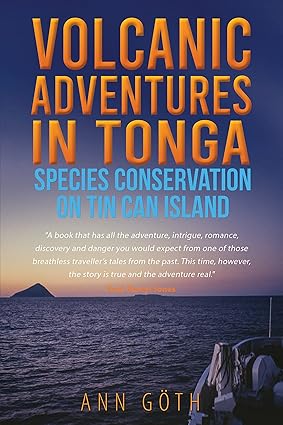
Volcanic Adventures in Tonga is an enthralling travel memoir that blurs the lines between fact and fiction, taking readers on a captivating journey to the remote Kingdom of Tonga alongside scientist Ann Göth. Departing from the picturesque Austrian Alps in the early 90s, a spirited 21-year-old Ann, accompanied by her German boyfriend and fellow scientist, Ivo, embarks on a daring 17-month expedition to save the endangered “Malau” bird, whose existence is exclusive to the volcanic island of Niuafo’ou. These enigmatic chicken-like creatures emerge from subterranean nests, buried deep beneath the ground.
In this vividly portrayed memoir, Ann and Ivo’s modest abode, a humble hut constructed from wood and leaves, becomes their sanctuary amidst the untamed beauty of Tonga. Here, they immerse themselves in the unhurried rhythm of life, embracing the “Anga faka Tonga,” the laid-back lifestyle unique to the region. The enchanting melodies of kava-drinkers echo through their hearts, while they marvel at the intricate craftsmanship of handwoven mats and traditional church dresses. Adventurous palates relish the indigenous cuisine, savoring dishes like breadfruit, succulent meats bathed in coconut water, and the delectable “Tongan ice cream.”
Despite grappling with concerns over animal welfare and the local consumption of Malau eggs, Ann and Ivo cultivate meaningful relationships with the Tongan community, earning the privilege of bestowing a name upon a newborn baby. However, the stark contrasts in Tonga leave an indelible impression on their minds: the regal Tongan king, stepping onto a ceremonial mat at the airport adorned with elegant German eyewear, juxtaposed with impoverished children, their innocent faces marked by bug bites, indulging in beetle larvae. Months of arduous camping and tireless excavation culminate in the relocation of Malau eggs to Late Island, thereby accomplishing their mission. Yet, as Ann succumbs to the allure of “island fever,” bidding farewell to Tin Can Island becomes inevitable. Within the pages of this captivating memoir, readers are transported to a world far removed from their own—a paradise juxtaposed with an inferno. Stunning coral islands surrounded by turquoise waters and pristine white sands stand in stark contrast to the pervasive poverty, environmental degradation, and the discomforts of fleas, bed bugs, and poor sanitation. Yet, it is impossible not to be awed by Ann and Ivo’s unwavering determination, profound passion, and extraordinary resilience. Through sleepless tropical nights, debilitating illnesses, relentless insect bites, and clothes stiffened by dirt and sweat, the tenacity of these “beautiful small fat palangi” shines through. Their unwavering spirit persists, even in the face of constant volcanic threats.
In Volcanic Adventures in Tonga, Ann Göth faithfully fulfills a promise she made to herself three decades ago. Her exceptional tales of volcanic exploration have been meticulously preserved within the pages of this remarkable book, which undoubtedly deserves a five-star rating. Seamlessly blending captivating storytelling with enlightening information, Ann’s contagious passion resonates from the first page to the last, creating an immersive experience that will captivate readers seeking an escape to a world both mesmerizing and unforgiving.
Pages: 277 | ASIN : B0BZSJT5TT
Bike Riding in Kabul


Bike Riding in Kabul is the story of Jamie Bowman, a woman who works as foreign aid in several post-war countries. The author’s story is a unique take on the travel memoir genre. We don’t just read countless stories of an individual eating world-class dishes and laying on the beach; we watch someone help entire countries find their own peace. Through it all, we learn about the invaluable pieces of wisdom she learned along the way. From learning how to truly help people and understanding how many of these countries found themselves in their situations, there is so much wisdom to devour.
Conversational and thorough is one of the best ways to describe Bowman’s writing style. As she walks readers through her time in each country, she shares descriptions of the surrounding buildings and scenery. Without being long and drawn out, you gain a sense of the exotic locations as if you were there.
I enjoyed reading about Bowman’s adventures navigating the different cities she was in and how she made the best out of some of the most gloomy situations. It was easy to gather how passionate she was about the work she was doing. Even when the air quality in her broom closet-style office was so bad that she had to work on a staircase and stay in some not-so-great dwellings.
One of my favorite parts of this invigorating book is its unique twist on the classic travel memoir. Unlike many travel memoirs, there is a heavy focus on helping others through the author’s travels instead of personal enlightenment. Of course, there were enlightening moments for Bowman as she learns about the world outside of the United States, but that wasn’t the focal point. It was a nice change and made me feel like I wasn’t reading the same stories from memoirs past.
Bike Riding in Kabul by Jamie Bowman was a delightful read with much wisdom amongst its pages. This was a quick and engaging book that I highly recommend. If you’re looking for a unique travel memoir or just a profound story, then this is a book you must pick up.
Pages: 375 | ISBN : 978-1-6337-634-2


