Blog Archives
Homicide in the Hood: Murders that Haunt a Small Town Girl


Kelli Martin’s Homicide in the Hood is a heartfelt and haunting exploration of unsolved murders in the seemingly quaint town of Granbury, Texas. Drawing on her personal experiences growing up there, Martin provides an emotional narrative about six specific cases that left an indelible mark on the community. The detailed accounts not only memorialize the victims but also call for justice and renewed attention to these cold cases.
What struck me most about Martin’s writing is her ability to weave personal anecdotes with meticulous research. She describes the murder of Lillian Peart, who was brutally shot in a convenience store for a mere $57. Her recounting of how this event shook her childhood innocence is raw and moving, making it easy to empathize with the fear and confusion she must have felt. The inclusion of small-town quirks, such as the community’s reliance on word-of-mouth gossip, adds an authentic charm to an otherwise grim subject matter. Martin’s knack for storytelling truly shines when she recounts how these murders affected her family and her career path. In the chapter on Holly Palmer’s murder near the sheriff’s department, Martin ties her personal memories of riding her bike past the location to a broader discussion of law enforcement’s struggles in solving these cases.
The contrast between her idyllic childhood memories and the brutal reality of these crimes adds an emotional depth that is hard to ignore. While the book is gripping, it’s also frustrating and that’s no fault of the author. Martin is transparent about the challenges law enforcement faced due to the lack of modern technology like DNA testing during the 1980s. For example, she discusses how suspects were identified but not prosecuted due to insufficient evidence, leaving readers with a sense of unresolved injustice. Her writing conveys not just the facts but also her palpable frustration and determination to bring attention to these cases.
I particularly appreciated Martin’s plea to humanize the victims. Her insistence that these women were more than statistics resonates strongly. In discussing Dorothy Sanders, who was stabbed over 100 times, Martin paints a vivid picture of the victim’s humanity and the ripple effects of her loss on the community. This level of compassion and advocacy is what makes the book stand out.
Homicide in the Hood is a compelling read for true crime enthusiasts, particularly those interested in cold cases and the intricacies of small-town dynamics. Martin’s passion for justice and her ability to connect the reader to her past create an engaging and thought-provoking narrative. This book is perfect for those looking to better understand the long-term impacts of unsolved crimes on families and communities. It left me both heartbroken and hopeful, a testament to Martin’s powerful storytelling.
Pages: 322 | ASIN : B0DMPTY2V9

Those Who Live
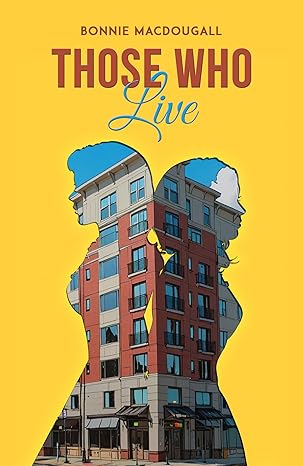
This book got its hooks in me right from the first chapter. Those Who Live follows two cousins, Chinle and Mae, who stumble onto a chilling family secret—six baby girls, all born into their family, all dead in infancy, and nobody wants to talk about it. When Mae and Chinle start digging through old diaries and confronting family members, they open a Pandora’s box of dark history, secrets and, let’s just say, not-so-trustworthy narrators. The story is told through a mix of diary entries, interviews, and personal accounts, which gives it a raw, almost documentary feel. But don’t let that fool you, this book is anything but dry. It’s eerie, emotional, and absolutely gripping.
Bonnie MacDougall has this way of making everything feel so personal, like you’re sitting in the room with Mae and Chinle, listening to them argue about who makes the next phone call or watching them lay out their case like true detectives. The dialogue is sharp, and the characters especially Chinle, have real depth. Chinle, with her physical struggles and razor-sharp mind, is one of the most compelling characters I’ve read in a long time. There’s a moment when she starts having visions of an old trauma (was it really an accident, or was she pushed?), and that absolutely floored me. The way MacDougall weaves together past and present makes the tension constant. I couldn’t stop flipping pages.
The mystery itself is layered. One of my favorite parts is when they meet their cousin Maple-Syrup (yes, that’s her real name), an alcoholic with a chip on her shoulder the size of a boulder. She’s got sass for days, and her interactions with Mae had me laughing and cringing at the same time. But she also holds pieces of the truth, and when she finally starts opening up, it’s heartbreaking. The book keeps you guessing. Every family member seems to have a version of the past that doesn’t quite line up. And then there’s Theresa’s diary (wow), which is honestly one of the most disturbing and fascinating pieces of the whole book. It completely shifts the story into something even darker than I was expecting.
By the time I reached the end, I was emotionally wrung out. But I loved it. Those Who Live isn’t just about solving a mystery, it’s about family, trauma, and the weight of unspoken history. Fans of true crime, family sagas with a dark twist, or anything Gillian Flynn-esque will eat this up.
Pages: 298 | ASIN : B0DS9RFGP6
Unanswered Questions

CONVOLUTED: The 1972 Durham Family Triple Homicide takes readers through the fifty-year-long investigation of the murders of Bryce, Virginia, and Bobby, exploring the multiple leads, theories, motives, and suspects that have been put forth in the case. What inspired you to write this book and tell their story?
These murders took place in my hometown when I was not quite seven years old and only two miles from my family’s home, so I grew up with knowledge about the case. It held my attention throughout the decades because of how heinous it was and because it continued to be unsolved. I had periodically considered writing about the case, and I ultimately decided to do so when, fifty years after the murders, authorities announced that the killers had been identified. This surprising development and the questions it generated were the catalysts for me finally deciding to move ahead with a book about the murders.
One thing that stands out in your book is the depth of your research. What was the process like to collect all of this information, and how long did it take to put it together?
I worked on the book for a solid two years. Initally, I was not convinced I had enough material to warrant a book, but after I delved into a plethora of news articles, ordered court documents, gained access to investigative files and audio recordings, and conducted my own interviews, I ended up with more than enough. In fact, it was so much material that I had to decide what to leave out without compromising the story as well as take the remainder and figure out how to present it in such a way that would both engage and make sense to the reader. Some of the materials – particularly the taped interviews with one of the alleged perpetrators and the son of another – were especially difficult to acquire, and it took many months of begging for them before I was ultimately granted access.
Did you find anything in your research of this book that surprised you?
Throughout the history of this case, most people have agreed in their suspicion of the son-in-law’s involvement, but there was never enough concrete evidence to link him to the murders. When it was announced that four members of Georgia’s Dixie Mafia had killed the Durhams, the remaining and unanswered questions were who instigated the murders, and if these four Georgia men really were the killers, who arranged to bring them to North Carolina? With suspicion of the son-in-law in mind, I hoped to find links between him and the Dixie Mafia. I did find it curious that he eventually moved to Georgia and became an attorney, establishing his law practice only about thirty minutes from the alleged killers’ home base. It was also very odd that his second wife was the step-daughter of an attorney, who not only defended one of the alleged killers in another murder case that would eventually be compared to the Durham case but also married into a family that this same alleged killer’s wife was also connected to. While these things may have been purely coincidental, I find them odd and was quite surprised by them.
What is the next book that you are writing, and when will it be published?
Prior to this book, I was already working on another book detailing the history of crime in my home county in North Carolina, in which the Durham case was going to be discussed among many others. When the 2022 developments occurred in the Durham Case, I decided to put that book on hold and write a stand alone book on this case. Although I am not sure when it will be ready for publication, my plan is to return to working on the original book as well as write some short stories or something along the line of blog posts on my author’s website. I also have other book ideas in mind, mostly dealing with local history and family stories, and hopefully those will be realized in the years ahead.
Author Links: GoodReads | Facebook | Website | Amazon
CONVOLUTED: The 1972 Durham Family Triple Homicide

Terry L. Harmon’s Convoluted takes a deep dive into one of North Carolina’s most baffling cold cases the 1972 triple homicide of Bryce, Virginia, and Bobby Durham in Boone, NC. The book is as much an investigative journey as it is a historical recounting, spanning fifty years of theories, suspects, and tangled clues. It follows the twists and turns of the case, the relentless pursuit of justice, and the frustrating dead ends that kept this brutal crime unsolved for decades. Harmon’s meticulous research shines through, presenting a labyrinth of evidence, speculation, and personal stories, all leading to the ultimate closure of the case in 2022.
Harmon’s writing is incredibly detailed, bringing the case to life with a level of depth that true crime enthusiasts will appreciate. His thorough research ensures that no stone is left unturned, immersing the reader in the investigation’s many layers. While the book covers an extensive historical backdrop and a wide cast of characters, each element adds richness to the story, making it a truly comprehensive account. The opening chapters are particularly gripping, vividly setting the scene of the crime without resorting to sensationalism. The image of the Durham family in their final moments is haunting yet powerfully written, immediately drawing the reader into the gravity of the case. Harmon’s ability to balance stark reality with respectful storytelling is one of the book’s greatest strengths.
One of the book’s strongest elements is its exploration of the investigation itself the sheer frustration of law enforcement, the wild theories (some credible, some downright absurd), and the eerie involvement of psychics, informants, and supposed hitmen. Chapter 9, Every Theory Known to Mankind, is particularly fascinating. It lays out the many possible explanations, from organized crime connections to local disputes that have gone terribly wrong. Harmon doesn’t just present these theories; he dismantles them piece by piece, showing which hold weight and which are nothing more than desperate grasps at the truth.
Harmon personalizes the victims, especially Bobby Durham. The book’s preface describes how Harmon, after looking at post-mortem photos of Bobby, felt a deep connection to the young man who seemed to have been caught in a nightmare he never saw coming. This personal touch makes the book more than just a recounting of a crime, it becomes a plea for justice, a tribute to lives lost, and a reflection on the chilling reality that some crimes take lifetimes to solve.
Convoluted is the perfect read for true crime lovers who appreciate meticulous research and aren’t afraid to get deep into the weeds of an investigation. It’s a rich and immersive read, filled with valuable information that brings the case to life. For those who enjoy diving deep into the details, it offers a fascinating and rewarding exploration of a crime that profoundly impacted a community. If you enjoy books that challenge you to think critically, question every lead, and wrestle with the frustration of an unsolved mystery, this one’s for you.
Pages: 1007 | ASIN : B0DLLK9RQY
Flew Too High
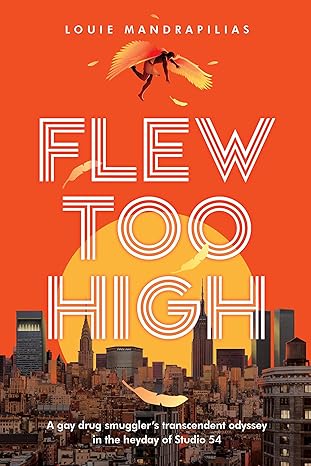
Louie Mandrapilias offers an intimate and unfiltered look into his past in Flew Too High: A Gay Drug Smuggler’s Transcendent Odyssey. With raw honesty, he invites readers into the turbulence of his youth, transporting us to the late 1970s, a time of self-discovery, rebellion, and excess. That summer, as he put it, he “let the wolf in when he came knocking.” The result was a wild, intoxicating journey through sex, drugs, and an urgent search for identity, all set against the backdrop of a rapidly shifting cultural landscape.
Memoirs often leave readers searching for the author’s flaws, yet Mandrapilias offers them up freely. He does not shy away from his missteps but instead presents them with a level of self-awareness that is both admirable and deeply human. His account unfolds at a time when being openly gay was still fraught with danger and defiance, the echoes of Stonewall still fresh in the air. His story captures not just his own struggle but also the broader, unspoken battles of an era.
One of the book’s greatest strengths lies in its immersive storytelling. Mandrapilias paints his world so vividly that the reader feels transported to standing on the streets of New York, witnessing fleeting glances, whispered exchanges, and electric moments of both connection and isolation. His descriptions bring the 1970s to life, not just in setting but in language. The slang, the cadence of conversation, and the atmosphere all feel cinematic, yet undeniably real.
For LGBTQ readers, Flew Too High resonates on a profound level. The unapologetic portrayal of raw, lived experiences makes this memoir not just a personal reflection but a cultural artifact. It’s a time capsule of love, loss, indulgence, and self-acceptance, capturing both the recklessness of youth and the wisdom gained through it.
Mandrapilias does not present a sanitized version of his past. He acknowledges the mistakes, the missteps, the moments of excess. Yet, none of it diminishes the journey, it enhances it. His story is one of self-discovery, of learning, of stumbling through the darkness in search of something real. Flew Too High is more than a memoir; it’s a reckoning with the past, a tribute to survival, and a testament to the beauty of becoming.
Pages: 284 | ASIN : B0DR2S64LR
Clear Narratives
In Death to Justice, you provide readers with an in-depth look at the evidence, investigations, and implications surrounding the murder of Lee Harvey Oswald. What first drew you to write a book centered on this case?
It was when I was working on another project that I saw a lot of gaping inconsistencies and irregularities among the statements of witnesses to Lee Harvey Oswald’s shooting.
From there, very clear narratives that have largely been overlooked emerged, compelling me to write this book.
How much research did you undertake for this book, and how much time did it take to put it all together?
It took me 18 months – to compile all witness statements and evidence & write the book.
Did you find anything in your research that surprised you?
Yes, the media personnel that were present to witness the shooting had been completely overlooked – the 50/50 ratio of media personnel to police at the scene is startling.
What do you hope readers take away from Death to Justice?
To provide new insight into an aspect of the subject of President Kennedy’s assassination and make Oswald’s shooting a topic worthy of its own productive research.
Author Links: GoodReads | Website | Amazon
And despite the many works on that historic weekend ever since, very little research has been dedicated to the shocking murder of Lee Oswald. Instead, it has stood presumed as one of the more open-and-shut aspects of the horror of that weekend in 1963.
But as this book will prove – it is anything but.
DEATH TO JUSTICE is the first book to focus entirely on the shooting of Lee Harvey Oswald. In doing so, it provides a never-before-seen deep dive into all aspects of the crime that includes:
Exposing the lengths of incompetence and culpability of the Dallas Police Department for Oswald’s slaying, providing the most definitive record of witnesses at the scene, highlighting a list of suspects, alongside Jack Ruby, that were involved in the shooting and its cover-up, and consolidating the evidence to establish a clear and complete scenario of how Oswald’s shooting most likely took place.
Through reasoned and critical analysis of all facets of the event, DEATH TO JUSTICE corrects the narrative and solidifies the case that Lee Harvey Oswald’s murder is worthy of its own field of research. From this point, what more can still be uncovered about the weekend that changed the course of the world?
Death to Justice: The Shooting of Lee Harvey Oswald
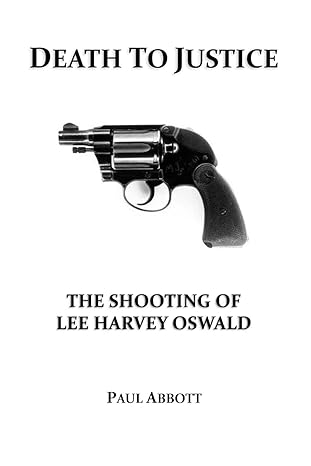
Paul Abbott’s Death to Justice dives deep into one of history’s most curious and often overlooked crimes: the murder of Lee Harvey Oswald, the man accused of assassinating President John F. Kennedy. Abbott doesn’t merely recount events; he methodically examines the evidence, investigations, and implications of Oswald’s shooting, exposing cracks in the official narrative and shedding light on the wider web of conspiracies surrounding that fateful weekend in November 1963. The book oscillates between being a historical account and a sharp critique of the system that hastily closed the book on Oswald’s death without satisfying scrutiny.
Abbott’s attention to detail is astounding, especially when unpacking inconsistencies in witness testimonies and discrepancies in photographic evidence. The book delves into the peculiarities of Oswald’s movements, suggesting gaps in the official timeline that make it almost impossible for him to have acted alone or at all in the Kennedy assassination. This isn’t a book that just scratches the surface; it digs deep into police reports, forensic details, and the behavior of key players. The vivid descriptions and well-documented accounts create a scene that feels immediate and unnervingly real.
What I found most compelling were Abbott’s reflections on justice and accountability. He argues persuasively that Oswald’s murder, while captured live on television, was treated more like an inconvenient afterthought than a crime worthy of serious inquiry. The parallels he draws between public outrage over contemporary events like George Floyd’s death and the apathy following Oswald’s assassination are striking. These comparisons make the book feel not just relevant but urgent, pressing the reader to consider how historical blind spots shape public consciousness.
Death to Justice is a thought-provoking and painstakingly researched exploration of a case that has long lingered in the shadow of a greater tragedy. Abbott’s writing is clear, engaging, and at times outright damning. This book is perfect for history buffs, conspiracy theory enthusiasts, and anyone who enjoys digging into unsolved mysteries. While it can feel dense, the payoff is undeniable for those willing to dive in. I would recommend it to anyone curious about the untold stories that history tends to bury.
Pages: 426 | ISBN : 978-1763725805
The Horrific Experimental Prison Program

Chained Birds is a true crime memoir that explores the wrongful conviction of a man accused of a prison stabbing and the legal battle that follows his conviction. Why was this an important story for you to share?
I always wanted to tell my version of the horrific experimental prison program at Lewisburg Prison that NPR and The Marshall Project reported on in 2016. But it took me more than a decade to finally write CHAINED BIRDS because, for better or worse, I had become part of the story, and that gave me pause. Once I accepted that the story would be more than just a prison exposé told through the eyes of an insider, I began to weave my personal experiences, feelings, and interactions into the journalistic account. Luckily this genre-blending merger of true crime and memoir was the version of CHAINED BIRDS my publisher, WildBlue Press, was interested in.
What were some goals you set for yourself as a writer in this book?
My number one goal was to finally commit to writing the book despite being imperiled by association with the inmate at the heart of the story, Kevin Sanders. Kevin’s attorney and my high school friend, Scott Powell, brought me into the criminal case over a decade ago, and there has been a security risk for all three of us during the odyssey, especially for Kevin. So, I had to figure out a way to tell the story truthfully but keep the story participants as safe as possible. My publisher, WildBlue Press, has allowed me to write under a pseudonym and change some names and locations in the story to help with security.
What is one thing you found in your research that surprised you?
I mentioned NPR and The Marshall Project as two news outlets that teamed up in 2016 to report on the abuses at Lewisburg Prison’s Special Management Unit (SMU). CHAINED BIRDS reveals similar and previously unknown abuses but also adds two new elements to that canon of work. The first was to trace the origin of the SMU creation to the tragic murder of an Atwater Prison correctional officer in 2008 by two inmates who were drunk on prison wine. This devastating event was key to developing the SMU program under the misguided belief that housing the “worst of the worst” federal prisoners in one location would keep the other prisons safer.
The second new element introduced in CHAINED BIRDS is that of corruption. Thanks to my inside sources, I was able to tell the stories of officer corruption, including collusion with prison gangs. Motives included personal officer vendettas and the perceived need to plot with gang leaders to try and keep the peace.
What is one thing you hope readers take away from your story?
Primarily, I hope readers come away with a better understanding of some of the failings of our criminal justice and federal prison systems. Incarcerated men and women are often a forgotten segment of our society and have little agency. I have tried to give a voice to a small sector of the voiceless, and I hope CHAINED BIRDS adds to that conversation.
Childhood abuse and addiction are other themes in the book, and I’ve had early readers tell me those sections resonated with them, or they identified with one or more of the abuse victims. I hope I have done justice to such characterizations and understanding.
Author Links: GoodReads | X | Facebook | Instagram | Threads | Website
This thrilling, frightening book depicts a journey filled with unlikely friendships, invisible victims of prison abuse, failings in our criminal justice system, and redemption through storytelling.



 LITERARY TITAN