Blog Archives
NICK and CLANCY – A Tale of Nine Lives


NICK and CLANCY – A Tale of Nine Lives tells the story of Nick, a gentle and wounded man recovering from severe heart trauma, and Clancy, the sharp, funny, deeply devoted dog who enters his life at exactly the right moment. The narrative moves through years of shared life, illness, dreams, small victories, and fear, often told from Clancy’s point of view. At its core, the book is about survival, companionship, purpose, and the strange ways love shows up when life feels fragile and uncertain.
The writing feels intimate and conversational, almost like someone sitting across from you and telling you a story late at night. I laughed more than I expected. I also felt a quiet ache settle in as the pages went on. The dog’s perspective could have felt gimmicky, but it does not. It feels earnest and oddly wise. Clancy’s humor, guilt, loyalty, and protectiveness landed hard for me. I felt protective of Nick, too, even frustrated with him at times. The writing is messy in a relatable way. It rambles. It lingers. That worked for me. Life rarely moves in neat arcs, and this book does not pretend otherwise.
The theme of borrowed time runs through everything. Illness hangs over each chapter like background noise that never fully shuts off. I felt the anxiety of waiting for the next medical crisis. I also felt the stubborn hope that keeps Nick moving forward anyway. The story made me think about purpose in small terms. Not destiny. Not grand success. Just showing up for someone else. Just staying. There is a tenderness here that caught me off guard. Some sections felt repetitive, and a tighter edit could help in places, but I did not mind lingering with these characters. I cared about them. That matters more to me than polish.
I would recommend this book to readers who enjoy character-driven stories and emotional honesty. It is especially well-suited for animal lovers, people who have faced serious illness, or anyone who has felt unmoored and searching for meaning. This book is reflective and heartfelt and sometimes sad. If you like books that feel personal and lived in, and you do not mind getting a little misty-eyed along the way, this one is worth your time.
Pages: 288 | ASIN : B0FMTS6KZK

What Happens Next?
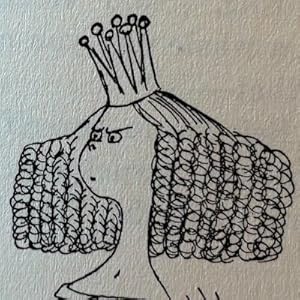
The Countess and the Spatula follows a disheveled noblewoman who finds solace in baking after her husband’s death until her peaceful life of flour and philosophy is upended by a melodramatic opera singer. What was the inspiration for the setup of your story?
The Spatula of Power came first. The characters of the countess; Claudio, the Man with the Black Mustache; and Isabella of Alberthane followed.
What inspired your characters’ interactions and backstories?
Once you know the characters, their interactions follow more or less logically.
I found this novel to be a cutting piece of satire. What is one thing that you hope readers take away from your novel?
I hope readers take away the desire to read the sequel and find out what happens to the countess next.
What is the next book that you are working on, and when can your fans expect it to be out?
The sequel to THE COUNTESS AND THE SPATULA is called NOBODY EXPECTS THE SPANISH INQUISITION. It’s about an inquisition that is also a soap opera.
Author Links: X
The Countess and the Spatula
The Countess and the Spatula is a whimsical, oddball fairy tale that tumbles through aristocratic kitchens, magic-laced crumpets, and absurd courtship. The story follows Fredegonde, Countess of Bellise, a disheveled noblewoman who finds solace in baking after her husband’s death. Her peaceful life of flour and philosophy is upended by Claudio Arrigoni, a melodramatic opera singer who won’t stop proposing marriage. Between the countess’s eccentric habits, a meddlesome staff, a scheming neighbor, and the mysterious “Spatula of Power,” the book becomes a delicious blend of satire, fantasy, and farce.
Reading this story felt like stepping into a dream where logic takes the day off. The writing dances between the silly and the profound, and I loved that contrast. Elizabeth Austin writes with the kind of precision that makes nonsense sound perfectly reasonable. I laughed at the countess’s solemn devotion to crumpets and her tendency to quote Aristotle at moments of chaos. Still, beneath the humor runs a tender current: the loneliness of aging, the need for purpose, and the comfort of small rituals. I found myself rooting for this scatterbrained heroine who keeps her dignity even when the world tilts toward absurdity.
The book lingers over conversations and kitchen scenes. Yet I can’t really complain, because those detours, the gossiping servants, the absurd dialogue, the odd bits of theology, create the book’s strange magic. It’s like sitting by a fire while someone spins a story that refuses to behave. The language sparkles without showing off, and every page smells faintly of butter and mischief. I liked how the story never tried to be grand or sentimental. It’s clever without being cold, and funny without cruelty.
I’d recommend The Countess and the Spatula to readers who like their humor dry and their fairy tales a little crooked. It’s perfect for anyone who enjoys P. G. Wodehouse, G. K. Chesterton, or a bit of magical realism with a side of tea. This isn’t a book for those who want action or romance that makes sense; it’s for people who like to watch chaos unfold politely. I finished it smiling, craving crumpets, and oddly comforted by the idea that common sense might just be the most magical thing of all.
Pages: 361 | ASIN : B0FPDNFGH4
Black Glove
The novel Black Glove by M.A.N. is a sprawling tale of vengeance, power, and the blurry line between justice and corruption. It follows Leroy Black, a young man marked by loss, who grows from grief into a relentless vigilante. His brother is murdered by gang members, his father killed unjustly by police, and these tragedies set him on a lifelong path. Trained in every art of combat, from boxing to martial arts to military precision, Leroy reinvents himself as a force of wrath against gangs and systemic oppression. Parallel to his story is the rise of King Solomon, the leader of the Dynamite Flash, a militant group caught between fighting oppression and becoming what they despise. The two figures move through a world where brutality and ideals clash, raising the question of whether salvation can ever be born from violence.
This story is a whirlwind of action and anger. The fight scenes are long, detailed, and absolutely wild, sometimes almost cinematic in their intensity. At times, I found myself grinning at the sheer audacity of the battles. The writing doesn’t hold back. It’s raw and brutal, sometimes over-the-top, yet I could tell the author poured a lot of heart into balancing the spectacle with deeper themes. I liked the tension between Leroy’s personal mission and the wider chaos around him. He’s both a hero and a man broken by grief, and that contradiction kept me hooked. At the same time, there were stretches where the detail of combat overshadowed the emotional core, and I found myself wishing the quieter, human moments had more room to breathe.
I admired the ambition. The book isn’t afraid to dive into uncomfortable territory. It doesn’t gloss over systemic failures or the ways power corrupts, and it asks hard questions about what happens when resistance begins to mirror oppression. King Solomon, in particular, fascinated me. He’s charismatic and ruthless, convinced that dirt must be fought with dirt. I felt uneasy whenever he spoke, which I think was the point. The moral ambiguity, paired with the relentless energy of the prose, gave the story a jagged edge.
Black Glove is a furious book. It’s for readers who want action mixed with philosophy, who don’t mind a story that gets messy and brutal to make its point. I’d recommend it to people who enjoy gritty superhero stories, vigilante epics, or urban tales that don’t shy away from politics and pain. It’s not a light read, but if you’re ready to ride through chaos, it has a lot to offer.
Pages: 260 | ASIN : B0FDTRSBZH
No Plan, No Outline

Talking White Owl follows a 15-year-old teen who wins a prestigious academic scholarship, but he has no idea this is part of a plan that has been in the works for decades. What was the inspiration for the setup of your story?
First off, I wish to thank Literary Titan for the thoughtful review of my novel. The image of the young man who was to evolve into Viktor Talking White Owl was conceived in my teen years and remained with me well into adulthood when, out of the blue, he began to relate his story to me. Viktor was greatly inspired by W.H. Hudson’s wood-nymph Rima in his book Green Mansions. The setting was the Venezuelan jungles and Rima was the lone survivor of a race that had vanished. A favorite movie at the time that surely influenced me was the 1939 version of Lost Horizon. The idea of Shangri-La, a hidden valley tucked deep within the Himalayan mountains, sparked my imagination.
When creating Viktor Talking White Owl, did you have a plan for development and character traits, or did it grow organically as you were writing the story?
No plan, no outline. Plot and characters unfold as I write, which is fun. It’s a mystery as to how things emerge from the subconscious. That Viktor should be a Lakota Indian from South Dakota surprised me, having never met any Native Americans nor been exposed to aspects of reservation life. As the storyline took shape, I did a lot of research, in order to better inform myself about events, places, and the personalities involved.
What were some themes that were important for you to explore in this book?
It is only in hindsight that I recognize some themes since I didn’t start out with an agenda. My purpose in writing the book was to entertain the reader from beginning to end. Family dynamics turned out to be far more important than was ever intended. I realized early on that Native culture would play a prominent role, and I therefore needed to make details surrounding Viktor’s background especially believable. I wanted to convey the satisfaction derived from intellectual pursuits, as well as the sheer joy that comes from playing a sport, which in Viktor’s case is football.
Where do you see your characters after the book ends?
The end of the book alludes to a history-making event that will occur a decade into the future, one spearheaded by Viktor along with his daughter, Honor Red Hawk, who by then becomes a force in her own right.
Approximately 679 pages long.
Talking White Owl

Talking White Owl, a 15-year-old descendant of the Lakota Tribe, has spent his life near the sacred Black Hills of South Dakota. When he learns he’s been awarded a prestigious academic scholarship from Ohio State University, it feels like the beginning of something promising. What he doesn’t realize is that this single moment will ignite a chain of events that will alter his life and possibly much more.
Unbeknownst to him, the elusive Rawakota Tribe, believed by many to be extinct, has been watching closely. Their sights are set on reclaiming land lost to broken treaties, a mission tied to the larger ambitions of the Council of First Nations. Their plan? To use Talking White Owl as a key figure in their efforts.
Valerie Hagenbush’s Talking White Owl is a contemporary fiction novel that blends cultural legacy, political struggle, and personal awakening. Echoes of the TV series Dark Winds and the film Thunderheart will resonate with readers, though Hagenbush brings a voice and vision distinctly her own.
Tackling Native American issues, especially the ongoing consequences of stolen land and fractured treaties, requires sensitivity and courage. Hagenbush approaches the subject with both. Her narrative doesn’t tiptoe; it confronts. And while the topic is fraught, the writing never veers into melodrama. Instead, it invites thoughtful reflection, balancing historical injustice with deeply personal stakes.
At the heart of it all is Talking White Owl himself. Grounded in tradition but disconnected from its deeper meanings, he begins to sense a spiritual link to the mysterious Rawakota. Visions push him toward answers, but clarity doesn’t come easily. As secrets emerge, he finds himself torn between honoring his heritage and questioning the motives of those who claim to protect it.
There’s a lot in motion here, political undercurrents, spiritual revelations, coming-of-age dilemmas, but Hagenbush juggles these threads with skill. She manages to weave suspense, emotional gravity, and cultural nuance into a seamless whole. Her supporting characters are vivid, her pacing assured, and her prose charged with conviction.
Talking White Owl is more than a compelling read; it’s a powerful, introspective journey. As its young protagonist grapples with his identity, legacy, and the weight of expectations, readers will find themselves drawn into a story that lingers long after the final page.
Pages: 680 | ASIN : B0DNF5JXLM




 LITERARY TITAN