Blog Archives
Experiences and Memories Shape Us

The Silver Screen follows an elderly widower trapped in a strange world of abandoned theaters, where he meets a woman who helps him uncover the truth he has kept hidden. What was the inspiration for the setup of your story?
One cold winter day, I was driving to work and saw that the old, abandoned downtown movie theater was being renovated. I started thinking about how many small towns in the world probably have an old theater like that and how many of them are probably crumbling into disrepair. Then my mind started to wander into uncharted territory. I asked myself, “What if all those theaters were somehow connected?” After work that evening, I sat down and wrote the opening scene. The next day I wrote the scene where Wyatt touches the screen and steps into the hallway of doors. Then I was off and running.
I think the pain of having recently lost my grandfather, who suffered from dementia, bled through quite a bit when I was drafting this novel. Combine the speculative nature of the theater and the doors with loss and regret, and that’s where the idea started.
The novel spans war, family, marriage, trauma, aging, dementia, and death. How did you decide which parts of Wyatt’s life were essential to understanding him?
Wyatt’s story really started as a “life review”. I wondered, “What does a man at the end of their life wish he’d done differently? What memories do they treasure, and what memories do they wish they could forget? I knew early on that Wyatt would be spending a lot of time looking back. I knew that’s what those doors were almost immediately.
I started thinking about the older folks I knew; I thought of the things my grandfathers had been through, and I started to understand that Wyatt was a man who’d been through more than most people could imagine. He was an amalgam of all the trauma and loss I could throw at him, but also moments of peace and joy. I didn’t want him to come off as a “hero” character but rather a man who did the best he could, like most of us. June really is the “hero” of this story.
The essential parts of Wyatt seemed to revolve around his relationships. Emma, June, Russell, Hersch, and Wyatt Jr. were characters that drove Wyatt’s stories. Without them, he’d have been a sad, lonely old man. He spent long portions of his life running from trauma, so I had to include some of that as well. Like real life, there’s good and bad, and without the bad, the good wouldn’t seem as sweet. Wyatt had to have both good and bad experiences, because we all have good and bad experiences. But as he was stuck in a kind of purgatory, it seemed he was destined to focus more on the bad than the good; enter Emma, who reminds him of so much good he’d forgotten.
Memory is central to both the mystery and the emotional story. What interested you about exploring the relationship between memory and identity?
Our experiences, our memories, shape our identity. Wyatt is a clear example of this. The combination of war, love, anger, and torture turned him into the man he became. If he hadn’t gone to World War II, he may never have been a photojournalist. His entire life could have been different. Then, at the end of his life, he’d have had a different set of memories, regrets, and he’d have had a different hallway of doors to comb through. I guess, in the end, Wyatt was trying to come to terms with things he wished he’d done differently. Things it was too late to change. And that interests me. In my own life, there are already things I wish I’d done differently; what will that feel like when I’m 88? How will the choices I make today alter my future identity?
Did writing about Wyatt’s long life change the way you thought about aging, memory, or relationships?
Relationships and experiences create richness in our lives that no material possessions could ever mimic. They’re more valuable than any amount of money, and when we get old and see our own deaths coming, they’re all we really have. I used to think memory was the only thing we had that no one could take away. Then I watched my grandparents suffer through dementia. I think that’s what scares me most. At some point, people with dementia have their experiences and relationships taken. I saw my grandparents go from knowing me, to calling me my cousin’s name, to not knowing me at all. It’s like when the repo man comes to take a car, but so much worse; it’s your whole life. You don’t remember your family; you don’t remember the things you’ve done. Hell, maybe you don’t even remember that you’ve died, and you’re just stuck living with bits and pieces of the life you’d once lived.
If writing this story changed me at all, it made me more willing to risk a little bit, in order to live the life I want to live, to experience the things I want to experience before I get too old to enjoy them.
Author Links: GoodReads | Facebook | Website
The Silver Screen
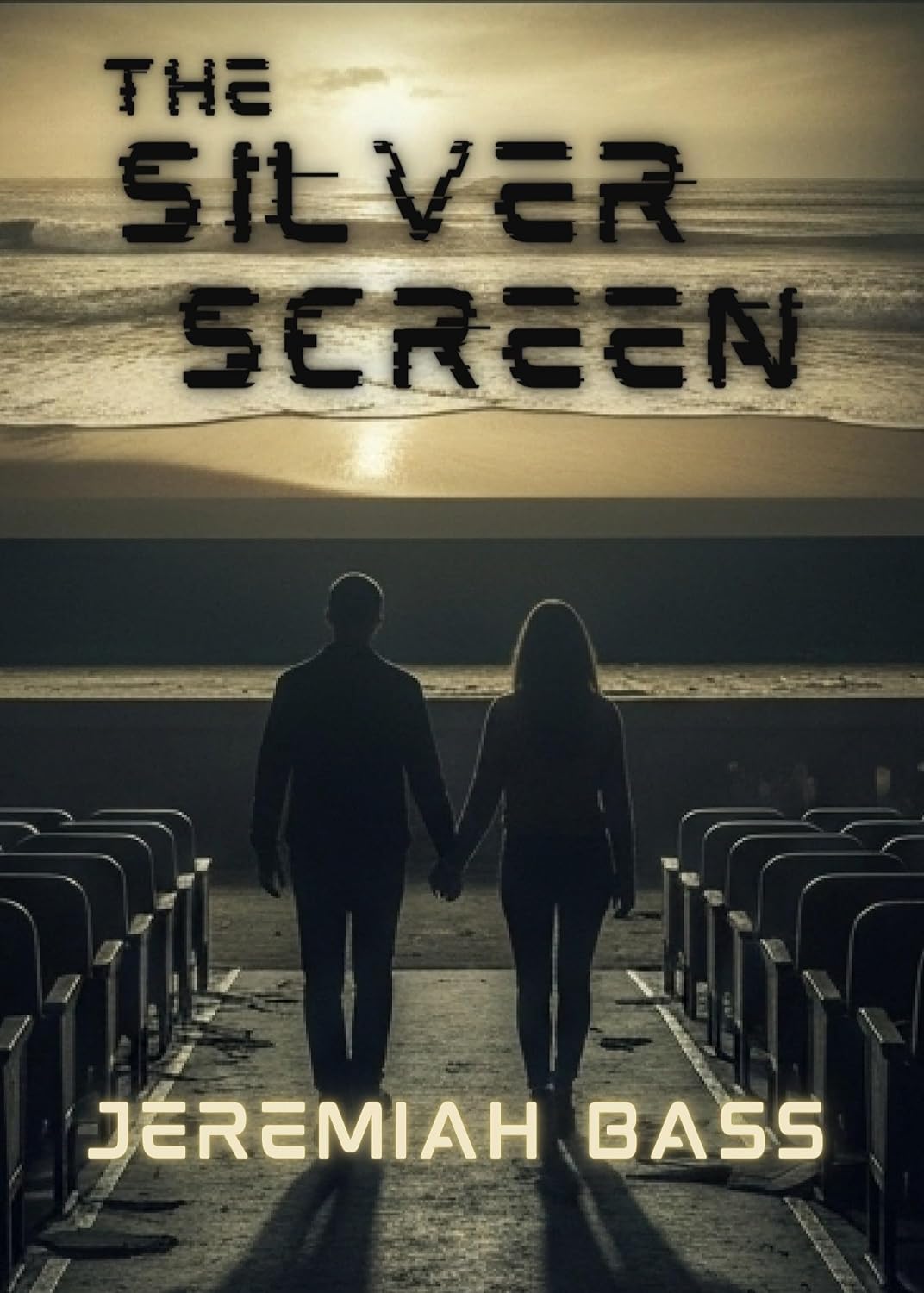

Jeremiah Bass’s The Silver Screen is a contemporary supernatural fantasy with a strong romantic core, but its real subject is memory and the strange ways people reshape their lives after death. Wyatt Gaumond believes he’s an eighty-eight-year-old widower living in an abandoned Minnesota movie theater, even though his body has mysteriously stopped aging. He can charge old cinema screens with “lifeforce” and step through them into an endless hallway of doors, each opening onto another theater somewhere in the world. When he encounters Emma, a sick and frightened young woman who increasingly resembles his late wife, their journey turns into an exploration of Wyatt’s past, his fractured mind, and the truth about where they are.
Wyatt is a compellingly difficult narrator. He’s funny, abrasive, protective, arrogant, traumatized, and often unreliable, sometimes within the same scene. His memories stretch from childhood and World War II to Vietnam, family losses, dementia, and his long marriage to June. Emma’s chapters gradually challenge his version of events, giving the story emotional tension beyond the central mystery. Their marriage feels especially convincing because Bass treats it as a lifetime of affection, secrecy, irritation, sacrifice, and mutual dependence. The book understands that loving someone for decades means knowing their tenderness and their damage, even when neither person knows how to talk about either one.
The novel’s closest popular relative may be Mitch Albom’s The Five People You Meet in Heaven. Both books use the afterlife as a place where a person must revisit a lifetime, understand old wounds, and accept that it’s time to continue onward. Bass’s approach is rougher and more expansive, with profanity, violence, war memories, horror imagery, and an elaborate mythology built around abandoned theaters. The hallway of doors is a terrific central image because it works as supernatural transportation, a map of Wyatt’s memory, and a reminder of all the choices he can’t make again. Where Albom tends toward fable, Bass writes more like a storyteller unpacking decades of family history at the kitchen table, wandering occasionally but finding revealing details along the way.
The Silver Screen takes its time, especially when Wyatt recounts wars, assignments, relatives, and old grievances. That breadth makes the middle feel heavy in places, but it also gives the final revelations real weight. The mystery eventually becomes less about how the screens work and more about why Wyatt needs to believe they work. Once Emma understands that they’re both dead and that Wyatt has become trapped in an in-between world shaped by dementia and grief, her mission is heartbreakingly clear: she has returned to help the man she loved recognize his life and let it go. The ending earns its sentiment because Wyatt doesn’t simply recover a few happy memories. He accepts the fear, cruelty, love, regret, and joy as parts of one full life, making the book a moving supernatural drama about being remembered, being forgiven, and finally being ready to leave.
Pages: 317 | ASIN : B0FV7M23ZM

The Write-In

The Write-In by James A. Brandt is a political fiction novel with strong elements of inspirational drama and political thriller. It follows Jake Kilthread, a retired Army colonel turned local news anchor in Lawton, Oklahoma, whose offhand suggestion that voters write in his name for president turns into a national movement. What begins as frustration with two deeply flawed candidates becomes a surreal rise to the White House, complete with legal challenges, family strain, faith, public pressure, and the early tests of leadership.
I liked how earnest the book is. It wears its heart right on its sleeve. Brandt isn’t trying to write a cynical Washington novel full of smoky rooms and clever betrayals. He’s writing about what leadership should feel like to ordinary people: honest, service-minded, grounded in family, and willing to speak plainly. I enjoyed that. Jake is almost idealized at times, but that seems intentional. He’s less a messy antihero and more a wish cast into fiction, the kind of leader people imagine when they are tired of being disappointed.
The writing is big, direct, and emotional. Sometimes it leans on grand descriptions and affirmations of Jake’s goodness. I found myself wanting a little more friction inside Jake himself, more doubt, more moments where the answers were not so clear. Still, the author’s choices make sense for the genre. As political fiction, the book isn’t just asking “what if?” It is asking “what if the country remembered its better self?” That question gives the story its pulse.
One other thing I liked about the book was the way it keeps Jake’s family close to the center of the story. His rise is national and dramatic, but the scenes with Carol, Keith, and Kyle make the book feel warmer and more personal. They remind us that Jake isn’t just a symbol or a candidate. He’s a husband and father trying to stay grounded while the world around him gets louder.
I would recommend The Write-In most to readers who enjoy patriotic political fiction, faith-informed storytelling, underdog narratives, and stories where family values sit beside national stakes. Readers who want a hopeful, sincere, and very American fantasy about a regular man being called into extraordinary service, this book will be a great read.
Pages: 222 | ASIN : B0GSSJNCT7
In Jake’s Shoes


In Jake’s Shoes is a work of contemporary literary fiction with a strong family drama and coming-of-age core, and it follows Jake Gatlin, a young soldier serving in Mortuary Affairs in Afghanistan, while also tracing the older grief and silence that shaped him back home. As the novel moves between war, memory, and the letters Jake wrote to his dead grandmother, it slowly becomes a story about loss, guilt, and the hard work of finally seeing someone you thought you already knew. It’s not just about what happened to Jake. It is also about what his family, especially his father, failed to understand until it was almost too late.
Author Andrew C. Phillips does not rush the pain in this book, and he also doesn’t try to dress it up too much. The novel trusts ordinary family moments, old arguments, private letters, and half-finished conversations to carry real weight. I liked that the book lets Jake feel wounded, observant, tender, and angry all at once. The letters to Gammy Gat could have felt like a gimmick in another novel, but here they become the quiet engine of the whole story. They give Jake a voice that is open in ways he cannot be with the living, and they also give the novel its deepest sense of intimacy.
I also found myself thinking a lot about the father. In many books like this, the emotionally blocked parent is there just to be judged. Here, Phillips does something harder and better. He lets Marshall be wrong without flattening him into a villain. That choice gave the novel its professional edge for me, because it pushed the story beyond easy blame and into something more honest about family, masculinity, and the stories parents tell themselves about discipline, strength, and love. The novel is direct to the point of sentimentality. Still, I respected that openness. The book means what it says. And by the end, that candor felt earned rather than naive, especially once the father begins to understand Jake through the letters and, finally, through grief.
I would recommend In Jake’s Shoes most to readers who like heartfelt literary fiction, family-centered war novels, and stories of grief that lean toward healing rather than irony. People who respond to books about parents and children missing each other emotionally, then trying to bridge that distance, will probably find a lot here. It’s a reflective, sad, generous novel, and it feels written from a place of real care.
Pages: 345 | ASIN : B0G6G8R4QT

You-Gin One-Gin: Sort of a Novel
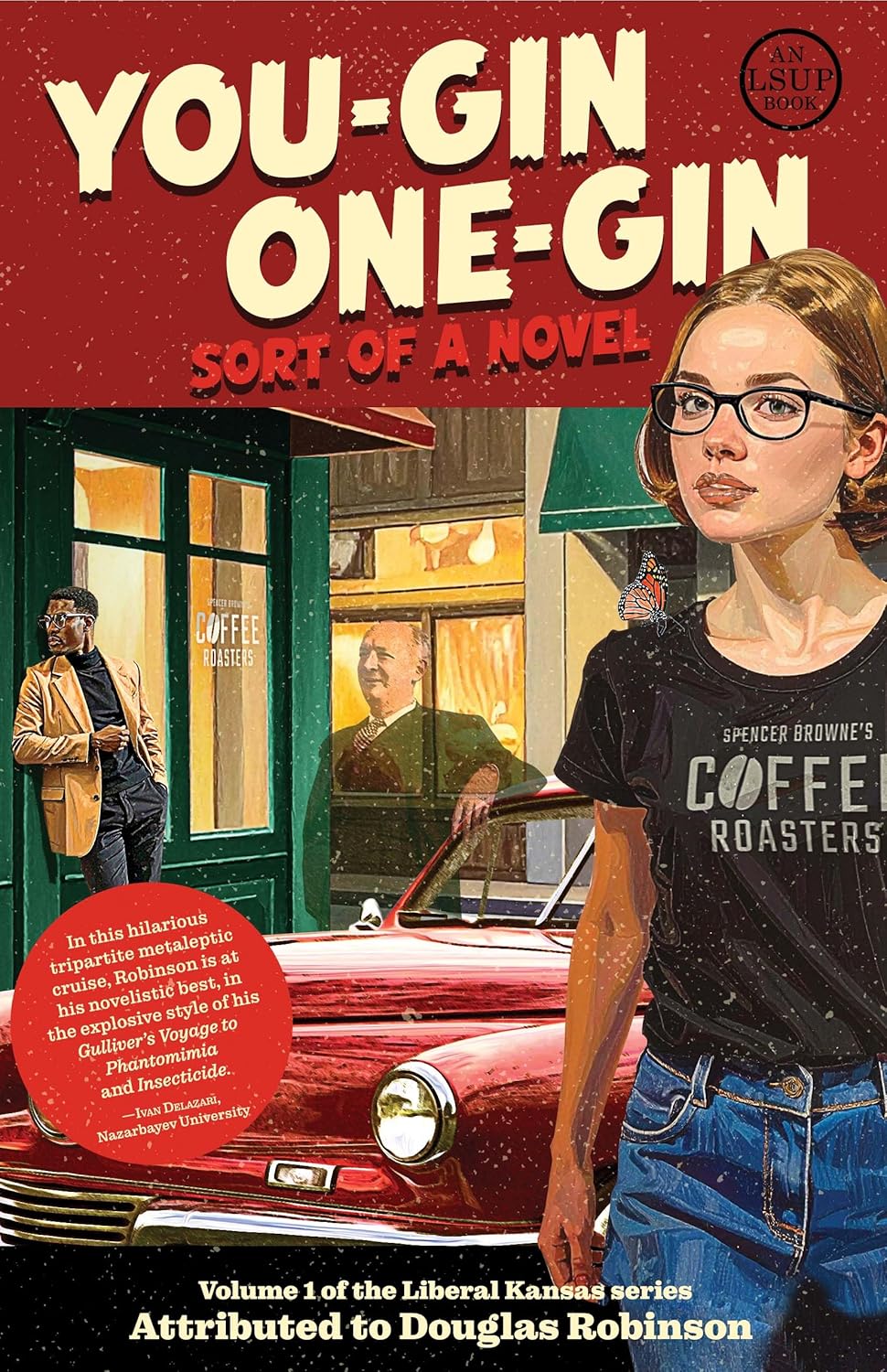
You-Gin One-Gin: Sort of a Novel is a strange, clever, and self-aware book that lives somewhere between literary metafiction, campus novel, and sports novel. It starts as a stage adaptation of Eugene Onegin for a small Midwestern university, with Pushkin himself striding around the stage and arguing with his own characters. Around that, an editorial foreword and the later sections, “Pushkin” and “Nabokov,” spin out a campus story involving a near assassination, an alleged alien abduction at a lingerie league football game, and a ghostly Vladimir Nabokov who may or may not be narrating part of what we are reading. All of it sits inside a fake university press package that treats the whole thing as if it were a serious publication from Liberal State University Press, complete with squabbles over authorship and attribution.
Reading it, I felt like I was watching someone juggle too many glass balls and somehow not drop a single one. The play in Part 1 is funny and nimble, and the dialogue has that quick, teasing rhythm that makes you want to hear it spoken on stage, not just read it. I liked how Robinson lets Pushkin walk in and out of his own story, constantly poking at the thin wall between author and character, past and present. Sometimes it felt like sitting in the back row of a rehearsal where the playwright keeps changing lines on the fly, then turning to you to justify the change. That intimacy works. It made the classic material feel playful and modern.
Parts 2 and 3 shift tone, and I had mostly positive feelings as the book leaned into campus satire and metafiction. The attempted murder, the football game hysteria, the rumors about an alien abduction, the ghost narrator who may be Nabokov or may just be another mask for Robinson himself: all of that is fun, and often genuinely sharp about academic ego, gossip, and the way stories get told and retold until no one remembers what actually happened. Sometimes the book layered one clever reference on top of another. But even when I felt a bit lost, I never felt bored. The voice stays wry and curious, like that colleague who can spend an hour in your doorway unpacking one wild departmental rumor, and you do not quite want them to stop.
If you are in the mood for literary metafiction that plays with a classic text, makes fun of academia, and is happy to chase a joke or an idea as far as it will go, then You-Gin One-Gin: Sort of a Novel is worth your time. Readers who enjoy experimental fiction, campus and sports stories with a twist, or who already have a soft spot for Eugene Onegin and Nabokov will probably get the most out of it.
Pages: 380 | ASIN : B0GFPWGFTX
A Real Collusion

A Real Collusion is a political thriller told through the eyes of Skip Winters, a mid-level ad guy who looks back on his friendship with John Campbell and the wild rise and fall of a grassroots movement. It starts small, with a silly local fight over cigar smoke at a community board meeting in the Bowery, where John’s angry “I object” moment and a quick handshake outside the gym turn into a tabloid photo and a cable-news booking. From there, Skip helps John ride a wave of viral attention into the creation of the American Coalition, a scrappy effort to break the two-party lock, curb big money, and push more honest voting in Congress. As donors, TV producers, and dark-money groups close in, the story widens from New York to Washington and Philadelphia, where the movement crashes into a secretive business council and a lurking gunman in the crowd, leaving John’s legacy split between real reform and a sense that the system still has its hands on the wheel.
Skip sounds like that smart, slightly bitter friend who tells a story over a drink and keeps circling back to the parts that really hurt. The early chapters are vivid and weirdly fun: folding chairs tipping over in a hot school gym, cops’ lights splashing off old brick, a stunned ride on the F train with the Post open to a photo of your buddy on the front page. The scenes in the bar, the cramped apartment, the ad agency office feel specific and lived in, and the jokes land with a light touch instead of feeling like “political satire.” The author knows how to tighten the screws; the book shifts from goofy excitement to real tension smoothly, and by the time CNN calls and big donors sniff around, the momentum feels natural, not like the plot is dragging the characters along.
I did feel the “novel and exposé” label in the writing. When Skip and John hammer out the American Coalition platform and talk through campaign finance, independent candidates, and the way corporations game the rules, the book turns into a kind of civics lesson. I did not mind that most of the time, because Skip is honest about his own ego and fear, and that keeps the big ideas grounded in one guy’s midlife crisis and his hunger to matter. Still, a few speeches run long, and some side characters can drift toward types more than people. The scenes that follow the BCL and the man in the crowd with a gun, though, hit hard. They show how a hopeful movement can be bent or broken by a handful of people with money and no shame, and they made me uncomfortable in a way that felt earned rather than melodramatic.
The book made me angry, sad, and weirdly hopeful all at once. The introduction lays out a blunt case that the real threat to American democracy comes from inside, from quiet collusion between parties and donors who let inequality balloon while the middle class slides, and the plot keeps circling that point without ever feeling like a pure lecture. I liked how the story shows the media as both amplifier and filter, how a tossed-off joke about both parties “sucking” becomes a brand, how consultants and billionaires talk about “fixing the system” while protecting their own slice. The ending, with John gone and a handful of independents in Congress, hit me hardest; change happens, but not cleanly, and the people who lit the fire do not always get to see the house rebuilt. That left me thinking less about whether the plot was “realistic” in a narrow sense and more about how much of it already feels true.
I would recommend A Real Collusion to readers who enjoy political stories with heart, anyone who follows American politics and feels worn down but not completely checked out, and folks who like character-driven fiction about friendship, compromise, and the cost of sticking your neck out. If you are okay sitting with some ambiguity, some righteous anger, and a stubborn streak of hope, you’ll enjoy this novel.
Pages: 286 | ASIN : B0G5K3BJ1K
NICK and CLANCY – A Tale of Nine Lives

NICK and CLANCY – A Tale of Nine Lives tells the story of Nick, a gentle and wounded man recovering from severe heart trauma, and Clancy, the sharp, funny, deeply devoted dog who enters his life at exactly the right moment. The narrative moves through years of shared life, illness, dreams, small victories, and fear, often told from Clancy’s point of view. At its core, the book is about survival, companionship, purpose, and the strange ways love shows up when life feels fragile and uncertain.
The writing feels intimate and conversational, almost like someone sitting across from you and telling you a story late at night. I laughed more than I expected. I also felt a quiet ache settle in as the pages went on. The dog’s perspective could have felt gimmicky, but it does not. It feels earnest and oddly wise. Clancy’s humor, guilt, loyalty, and protectiveness landed hard for me. I felt protective of Nick, too, even frustrated with him at times. The writing is messy in a relatable way. It rambles. It lingers. That worked for me. Life rarely moves in neat arcs, and this book does not pretend otherwise.
The theme of borrowed time runs through everything. Illness hangs over each chapter like background noise that never fully shuts off. I felt the anxiety of waiting for the next medical crisis. I also felt the stubborn hope that keeps Nick moving forward anyway. The story made me think about purpose in small terms. Not destiny. Not grand success. Just showing up for someone else. Just staying. There is a tenderness here that caught me off guard. Some sections felt repetitive, and a tighter edit could help in places, but I did not mind lingering with these characters. I cared about them. That matters more to me than polish.
I would recommend this book to readers who enjoy character-driven stories and emotional honesty. It is especially well-suited for animal lovers, people who have faced serious illness, or anyone who has felt unmoored and searching for meaning. This book is reflective and heartfelt and sometimes sad. If you like books that feel personal and lived in, and you do not mind getting a little misty-eyed along the way, this one is worth your time.
Pages: 288 | ASIN : B0FMTS6KZK
That Kind of Girl

That Kind of Girl by Jacey Bici is a sharp, funny, and often painfully honest novel about Opal Collins, a dedicated physician whose life teeters between the chaos of her high-pressure hospital job and the fragile balance of her family life. The story follows her through frantic hospital shifts, tense moments with her husband Fox, and unexpected encounters, like meeting Fantasia, a stripper-slash-therapist whose fearless confidence rattles Opal’s view of herself. The book is about identity, ambition, and the difficult choices women face when juggling personal fulfillment with the demands of career and relationships. Bici builds Opal’s world with a mix of biting humor, messy realism, and moments of quiet vulnerability that keep the pages turning.
I loved how the writing felt alive. The humor is sly, often showing up in the middle of high-stress moments, and the dialogue snaps with authenticity. Opal’s internal commentary is razor-sharp yet tinged with self-doubt, making her both flawed and relatable. The pacing keeps you in that sweet spot between wanting to race ahead and needing to savor the detail. Still, there were times the book’s whirlwind of side characters and subplots made me feel a little like Opal herself, pulled in a dozen directions. It works thematically, but it occasionally left me craving more breathing room in the narrative.
The ideas at play here are what really stuck with me. Bici isn’t just telling the story of one woman in crisis. She’s poking at the bigger question of what it means to “have it all” without losing yourself in the process. Through Opal’s encounters, with her controlling boss, her relentlessly supportive yet sometimes misguided husband, and the magnetic Fantasia, the book explores power, compromise, and self-preservation. I appreciated that Bici never gave easy answers. Opal’s choices are messy, sometimes self-sabotaging, but they feel honest. The mix of humor and emotional weight keeps the themes from becoming heavy-handed, and the moments of intimacy, both in friendships and in marriage, felt refreshingly unvarnished.
By the end, I felt like I’d been through something alongside Opal, rooting for her even when she didn’t quite know where she was headed. That Kind of Girl would be a great pick for readers who love character-driven stories with bite, especially those who appreciate frank and slightly irreverent explorations of marriage, career, and identity. If you’ve ever felt the tug-of-war between ambition and the rest of your life, this book will make you laugh, squirm, and maybe even feel seen.
ASIN : B0FJNFV2CK


