Blog Archives
A Complex Mixture

Wishes and Choices: Mythral’s Wish follows the intertwined destinies of a powerful yet emotionally walled-off wizard, a teenage girl aching for purpose and adventure, and a dark wizard with revenge in his veins who live in three different realms. What was the inspiration for the setup of your story?
Wishes and Choices evolved after years of reading the classic sci-fi authors, then the magical realism/fantasy writers, and finally stirring in personal values and interests. A very complex a mixture.
What character did you enjoy writing for? Was there one that was more challenging to write for?
Cat was fun to write. He did not begin as the narrator, but those who read the early versions wanted more of Cat. Perhaps we all wish we could be that snarky at times.
Visualizing and articulating the story’s events and emotions from the perspective of a teenage girl was challenging.
What were some themes that were important for you to explore in this book?
The primary theme is personal integrity and courage–being true to oneself. Learning to avoid the biases and distractions that keeps us from seeing clearly what is right and what is wrong is a critical lesson in life.
A secondary theme is solving problems or finding answers, in life and in theory, by creative processes.
Is this the first book in the series? If so, when is the next book coming out and what can your fans expect in the next story?
This is the first book in a series of three. Book two, MorKano’s Wish, should be released by the end of 2025. My hope is that each book will entertain, challenge and encourage the reader. There is always a surprising twist at the end. I’d like to know if anyone saw the twist coming. There are clues along the way.
Author Website
Wishes and Choices: Mythral’s Wish is filled with moral dilemmas and mental puzzles to engage and challenge the reader. The quest to alter Mythral’s foreseen death leads them to all three Realms. Within these Realms, the reader will encounter gryphons, dragons, wizards with unique talents, and even stranger dwellings, myths, and mysteries. As they confront dark magic and betrayal, they must face their own flaws. Surviving the final confrontation compels both of them to fundamentally alter themselves in unforeseen ways.
The reader will learn why using wands and hand gestures to do magic is only for beginners. The secrets and physics behind the Time-Space Continuum, déjà vu, and visions into the past and the future will be explained. Did I mention the sarcastic and smug Cat who narrates the story? Warning: Cat never lies, but he does like to toy with you readers.
As Long as We’re Alive, Problems Will Arise

Pandora’s Box follows a 14-year-old boy who discovers he is a demigod like his late mother. His life has become a whirlwind of magical schools, ancient mythologies, and adventure while he tries to prevent evil from taking over the world. What was the inspiration for the setup of your story?
My son was my inspiration. When I became a mother, a new fear was unlocked: what will become of my child if I am not here tomorrow? I wanted to write something that could speak to him, nurture him, and entertain him, while leaving him with the values I hope I will have the time and support to instill in him.
The MC’s name is my child’s name: Liam. His mourning is built on my biggest fear.
The chaos the MC faces is nothing but the chaos of life. We tend to think our problems are the biggest in the world—and for us, they are. But it’s important for children to see that everyone has problems, which, to them, feel just as big. As long as we’re alive, problems will arise, and that will be true for everyone. The realization of this fact gives them a sense of belonging, helping them step out of the victim mentality and see problems for what they really are: opportunities for solutions and growth. I was careful to reflect that on each and every page.
I find the world you created in this novel brimming with possibilities. Where did the inspiration for the setting come from and how did it change as you were writing?
My inspiration comes from the books I grew up with. I’m a huge Star Wars fan, which is why you’ll see a mix of Sci-Fi and Fantasy in my work. I also love The Lord of the Rings and The Hobbit, and I read a lot of Agatha Christie and Sherlock Holmes as a child—this helped me develop my approach to building suspense, planting clues, and leading characters (and readers) toward discoveries.
Role-playing games have also been a major influence. I spent years as a Game Master for Vampire: The Masquerade and Dungeons & Dragons, which shaped my multi-perspective storytelling, worldbuilding, and rule-setting for magic and power. RPGs also helped me focus on character growth, much like players leveling up through campaigns.
Brazilian folklore played a big role in my childhood—it was mandatory in school and deeply woven into our culture. This sparked my curiosity about other mythologies, particularly Nordic folklore. Beyond that, I have a very poetic way of describing emotions, which comes from my younger years when I wrote poetry, competed in poetry contests, and attended poetry events as early as 12 years old.
On top of that, I love Greek mythology, Egyptian history, and the original versions of the stories that Disney adapted—many of which were quite dark in their European roots before being softened for children. That’s probably why my writing naturally leans toward darker themes.
Honestly? My writing style hasn’t changed much while writing. What has changed is my awareness of how readers perceive my published works, which influences what I choose to emphasize or tone down in future books. Since I haven’t read anything published in the last 20 years, my writing style remains uninfluenced by modern trends—it’s purely shaped by the stories I love.
What were some themes that were important for you to explore in this book?
Self-discovery, the concept of character (discerning good from bad), cause-and-effect (accountability for our choices), and inner power were all central themes. I wanted to show that having flaws doesn’t make you incapable of achieving great things—nor does it automatically turn you into the villain. It’s important for teenagers to develop a fair sense of self rather than viewing themselves through extremes of “good” or “bad.”
Faith in something bigger also plays a key role. Throughout the trilogy, I touch on difficult topics, even taboos like suicidal thoughts, in hopes of helping young readers recognize that the voice telling them they’re not enough doesn’t come from them—and that they can (and should) break free from it.
Can you tell us more about where the story and characters go after book one?
Without giving too much away—because surprises are half the fun—the second and third books take the characters much deeper into the prophecy hinted at in Pandora’s Box. Relationships will evolve, secrets will come to light, and the stakes will grow far beyond what they imagined. You’ll see characters like Liam, Ada, and others struggle with even more challenging situations, both magical and personal. Also, expect to see new realms, powerful antagonists, and the consequences of choices made in book one. It becomes a story not just about stopping evil, but about understanding yourself and the cost of standing for what you believe in.
Author Links: GoodReads | X | Facebook | Website | Trilogy Website
Liam Hale gets a posthumous gift from his late mother, Bree, on his 14th birthday. It’s a holographic message that turns Liam’s life upside down: According to a projection of Bree, Liam is a demigod (as Bree had been), will attend a magic school, and will take over his mom’s role as keeper of the Seven Wonders (Earth and six other dimensions).
He will have to be “initiated” before claiming the keeper’s throne within 90 days, or the resultant fight for the position will trigger an intergalactic war (“It’s too much power”). As if that weren’t enough pressure, Liam must also complete Bree’s mission of finding “the Pandora’s Box,” an artifact that will restore the balance between good and (currently rising) evil. Luckily, he’s got help: His allies include his best friend Ada, mage student Benji, and perpetually bickering witch-twins Zac and Zoe.
With mythological creatures, a magic school, and dimension-hopping adventures, Liam and his friends must uncover the secrets of The Pandora’s Box before darkness takes over.
Wishes and Choices, Mythral’s Wish


This book is a wild, layered ride through parallel realms, ancient magic, and the heavy weight of choice. Narrated in part by a clever, time-hopping feline named Cat, the story follows the intertwined destinies of Mythral, a powerful yet emotionally walled-off wizard; Kit, a teenage girl aching for purpose and adventure; and MorKano, a dark wizard with revenge in his veins. The Realms are split into three, each with its own rules, power structures, and secrets, an attempt to keep dark magic in check.
What hooked me right away was the voice of Cat in the prologue. It’s cheeky, philosophical, and just a little smug. But in a good way. The book immediately signals that it’s going to toy with time and ripple effects like they’re ingredients in a magical stew. The nonlinear timeline and concept of the Time-Path was mind-bendy, but the kind of bend I enjoy. It reminded me of those “what if?” moments we all have but raised to a cosmic level. And yet, this isn’t just high-concept fantasy. It’s also deeply human. Mythral’s loneliness, especially his regret over not taking on an apprentice sooner, made him more than just your typical “wise old wizard.” He’s flawed, proud, and sometimes a bit of an idiot, in a good way.
Kit absolutely stole my heart. She’s smart, a little stubborn, and full of questions that hit home. Her diary entries feel raw and real, like a teen on the cusp of something big, with no idea just how big it’s about to get. She doesn’t come from magic. She doesn’t know her past. But she walks into this magical bookshop and takes that leap anyway. Her dry wit and fierce independence reminded me a bit of early Hermione Granger, if Hermione had been way more annoyed about not having an adventure yet.
The writing itself has got this whimsical edge to it, like a fairy tale told by someone who’s lived through a few too many of them. There’s a bursty rhythm to the storytelling, jumping between realms and characters, sometimes even doubling back in time. At first, it’s a lot. But once you’re in the flow, it works. One moment you’re reading Mythral brooding in a cold underground chamber, the next you’re watching a blue-gray cat manipulate the fabric of fate with an exasperated sigh. And MorKano is your classic megalomaniac with daddy issues, and yet there’s a calculated patience to him that makes him genuinely chilling. He’s not the cackling type, he’s the slow-burn villain, the kind who would rather humiliate you before destroying you.
Wishes and Choices is more than just a magical adventure, it’s a meditation on responsibility, consequences, and whether we’re brave enough to make the hard call when it counts. The story dances around the idea of fate and free will, but it doesn’t drown in its own philosophy. Instead, it gently nudges you to ask, “What would I do?”—without giving you the easy answer. I’d recommend this to fantasy lovers who enjoy stories with heart, brains, and a talking cat that may or may not be a god. Especially great for fans of His Dark Materials, A Wrinkle in Time, or early Harry Potter, but with a slightly older, more introspective twist.
Pages: 264 | ASIN : B0DP2X8RKM

Adding Depth to My Characters
The Oberon Stone follows a group of friends who are searching for an ancient artifact of immeasurable power, when one is kidnapped, turning their mission into a desperate rescue. What was the inspiration for the setup of your story?
I wanted the second book to break away from the artifact-hunting structure of the first, so I set up the story to make readers believe the search for the artifact was the main plot—only to subvert that expectation when the real quest became the Mage’s rescue. That shift came as a shock, flipping the narrative focus. If you look at the book’s climaxes, they’re tied more to the rescue than to the artifact itself, even in the “coming back home” moment. The artifact hunt ended up taking more of a side-quest role.
Removing the MC’s mentor was also intentional. It allowed other characters to step into the mentor role, shifting the dynamics from Book 1. The different quests also gave me the opportunity to define the rules of magic in more depth, breathing more life into the Downtown-verse—something I couldn’t fully explore in the first book without overwhelming the reader.
What character did you enjoy writing for? Was there one that was more challenging to write for?
Ada was a difficult character for me. I was very cautious about making her more than just an unpredictable sidekick. I wanted someone loud, someone who would steal the scene multiple times, but she also needed to be deeply flawed—a character that would play with the reader’s emotions. I couldn’t push her so far that readers would put the book down because of her, but I wanted to push right up to that emotional edge, making her memorable not for her wins, if that makes sense. The hardest part was figuring out where that fine line was for different readers.
I really enjoyed writing Montgomery. It’s easy to write a classic arch-enemy—just make them all bad and powerful. But if you know anything about me, you know I’d never lean into that cliché, just as much as I dislike Deus Ex Machina solutions. So yes, Montgomery needed to be awful, but he also needed a history behind his awfulness—one that readers could relate to, enough to humanize him. I loved crafting his background: the family dynamics, the bad parenting that shaped him, his desperate need for his father’s attention, and how discovering a half-brother only deepened his existing insecurities. I especially enjoyed writing Montgomery as a father—desperately overcompensating with Rachael, trying to give her the love he never had, without realizing he was creating another version of himself. Different paths leading to the same destination.
Yes, Montgomery was a fantastic creative process.
When you first sat down to write this story, did you know where you were going, or did the twists come as you were writing?
Mostly, yes — I knew where it was going, at least for the main ideas. But side stories and details tend to change as I populate the story. I base the overall plot on Vogler’s Hero’s Journey structure, which gives the main plot a very well-defined progression. Then, I break the story into bigger chunks, which usually turn into one or two chapters each. From there, I start layering the side stories — the events that make character interactions unique and develop each character’s individual trajectory.
For example, Bruno and Sarah’s broken romance is a side story. Sarah’s emotional progression — learning self-love and accepting that she often gives more than she receives — is another side arc in itself. These subplots, along with side quests, can shift as I write. I also tend to place unexpected obstacles in the characters’ paths that I hadn’t planned initially. This adds a sharp edge of anxiety to the quest, making readers wonder whether success is even possible. Sometimes I let the characters overcome these hurdles, and sometimes they are forced to find a workaround — a plan B. These choices often happen at the last minute. Yes, I’m the kind of author who ruins my characters’ lives — and you’ll love it.
When will book three be available? Can you give us an idea of where that book will take readers?
Book three (The Temporal Scythe) is already available for pre-order on Amazon (Kindle only). It will be released — along with the physical copies — on June 10th, 2025.
You can expect a deeper, darker, and more emotionally intense story, just as you could notice the progression from book 1 to book 2. The characters are also more emotionally mature, with their arcs intensifying both in magical knowledge and personal growth. The stakes are higher, and the long-awaited climax of the trilogy arrives, featuring the much-anticipated final battle between good and evil.
Without giving too much away, readers should prepare for the emotional rollercoaster they already know they will get from my works — only this time, with higher speed, sharper loops, and a broken track somewhere that might just as well launch them toward their doom.
Author Links: GoodReads | X | Facebook | Website | Trilogy Website
“This jam-packed, … cross-genre tale proves consistently entertaining! A smashing final-act turn makes checking out the sequels a virtual necessity.” – Kirkus Reviews
The Wishing Shelf Book Awards Nominee
Eric Hoffer Da Vinci Eye Nominee
Reader’s Favorite Five Stars YA SF / Dark Fantasy
_____________________________________________________________________
Liam Hale’s world spirals into chaos when he receives a message in his late mother’s handwriting-delivered by a friend who should no longer exist. This is no coincidence. As he searches for answers, he unearths something far worse: the prophecy foretelling the end times has been shattered, tearing apart the fragile barrier between the Houses of the Living and the Dead.
With the Megaverse on the brink of collapse, Liam and his companions-alongside the enigmatic druid Sarah and the unpredictable witch Bruno-set out to restore the balance. Their only hope lies in the Oberon Stone, an ancient artifact of immeasurable power. But when McCormick is kidnapped by the merciless Winifred family, their mission turns into a desperate rescue.
The Oberon Stone

In this second installment of the Conjurers’ Prophecy series, the stakes are higher, the darkness is deeper, and the emotional gut-punches come harder. The Oberon Stone dives right back into the chaos where book one left off, with Liam’s powers growing out of control, old enemies regrouping, and new villains entering the game. We get a peek behind enemy lines—into the twisted mind of Montgomery and the broken-but-desperate heart of his daughter, Rachael. The story stretches across magical dimensions, haunting memories, and existential questions about fate, free will, and what it really means to be “good” or “chosen.”
The book kicks off with a literal storm of dark energy, grief, and desperation. Montgomery flying through chaos, clutching a dying Rachael is intense. And weirdly emotional. He’s awful—seriously, he’s terrifying—but seeing his panic over his daughter gives you this whiplash moment of almost-feeling sorry for him. The writing here is theatrical, like a twisted fairytale. The fairies trapped in a dark cave scrubbing stone for eternity is both horrifying and weirdly beautiful.
Then we’ve got the heart of the book—Chiara. Watching her spiral, question everything, and fall for Rachael’s manipulation felt like watching someone you love walk straight off a cliff while you’re screaming at them to stop. In the scene where she spies on Liam and Ada through water pipes I could feel her guilt like it was my own. But what really broke me was the final confrontation with Rachael. The choking spell, the pain, Chiara trying to survive and not wanting to hurt anyone was brutal. Rachael’s cruelty felt personal. The moment Chiara dies (or seems to—Franco loves to keep us guessing) was so vivid, so devastating, that I actually had to stop reading for a minute.
And Liam… poor Liam. He’s unraveling in real-time. One of my favorite moments is when he looks at Ada and says, “I’m tired.” It’s not dramatic. It’s raw. He’s lost so much—his mom, Chiara, maybe even Ada—and he’s still standing, still chasing birds and cryptic notes like his life depends on it. That moment when Titan (his maybe-dead, maybe-magical bird) leads him through the portal into a new world was actually kind of magical. For a second, there’s peace. Wonder. Then everything falls apart again, but that pause? That pink-sky, giant-mushroom pause? It gave the book a necessary breath before plunging us back into the deep.
I absolutely recommend The Oberon Stone. But be warned—it’s darker than book one. It’s emotionally heavier. It’s also bolder, messier, and richer. If you loved the first book, this one will break your heart and make you thank it for doing so. It’s for fans of character-driven fantasy who aren’t afraid to feel a little wrecked. Anyone into morally gray characters, epic stakes, and stories that feel like myths and memories wrapped into one—this is for you.
Pages: 277 | ASIN : B0CLDCT9D7
The Pandora’s Box
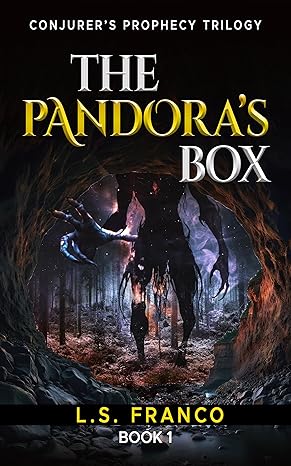
L.S. Franco’s The Pandora’s Box is a coming-of-age fantasy that throws you into the chaotic, heart-wrenching, and ultimately magical life of 14-year-old Liam Hale. After the sudden loss of his mother, Liam stumbles upon a hidden world full of demigods, cosmic wonders, and parallel universes. What starts off as a rough summer in Florida quickly morphs into an urgent quest involving magical schools, mysterious holograms, ancient mythologies, and a ticking clock to save the world from spiraling evil. Franco balances it all with humor, emotion, and a relatable teen protagonist.
What really stood out to me was the emotional depth in the opening chapters. Liam’s grief over his mom’s death felt raw and authentic. That moment where he holds the green hurricane-patterned mug she gave him was emotional. The mug becomes more than a memory. It’s almost like a stand-in for his mom, a symbol of comfort and loss, and the way Franco uses it later (as a literal gateway to magic) was both clever and poetic. I felt like I was right there with him—awkward, overwhelmed, and trying not to fall apart. Even when things got fantastical, the emotional throughline grounded the story.
The writing is fast-paced and dialogue-heavy, which made it really easy to get into, even during more expository moments. I especially liked the dynamic between Liam and his best friend Ada—her personality bursts off the page. She’s loud, bold, slightly chaotic, and totally loyal. Their banter adds so much charm. When she gifts him the matching LA pendant and calls him “bestie,” you can practically see Liam’s heart crack just a little. He’s totally smitten, and it’s adorably painful. Franco nailed that awkward, hopeful teen crush energy without being corny.
Then there’s the twist: Liam is a second-generation demigod and heir to the “Keeper of the Seven Wonders” throne. His mother’s hologram spills the beans in what might be the most emotionally charged info-dump I’ve ever read. It was wild, but also kind of epic. The idea of seven parallel universes, a magical school hidden within a regular university, and secret codes inside mugs and journals gave it this mash-up vibe—like Percy Jackson meets Spy Kids with a sprinkle of Inception. The dream sequence with the unicorn and the mermaid was unsettling and beautiful. I wasn’t always sure what was real, but I didn’t mind. That’s part of the charm.
The Pandora’s Box is an emotional rollercoaster wrapped in magic and teenage angst. It’s for anyone who ever felt like they didn’t belong or wanted to escape their reality just for a little while. It’s especially great for young teens who love fantasy but want stories with heart—and some very real-world grief. That said, even as an adult, I found it moving and imaginative.
Pages: 256 | ASIN : B0DKMVCVNS



 LITERARY TITAN