Blog Archives
A Personal Reckoning

Twice the Family is your poignant memoir of identity, adoption, and the unyielding bonds of sisterhood, exploring the journey of being “chosen” while searching for belonging. Why was this an important book for you to write?
For me, this book was a greater challenge than writing my debut memoir, Twice a Daughter, the five-year saga about searching for my birth parents to gather family medical history. Twice the Family rose out of readers’ requests to know more about what it was like to grow up as a twin and an adoptee. Yet, for me, the book is more than that. It is a personal reckoning.
Twice a Daughter had a specific frame or timeline. While I provided the necessary backstory, it focused on the events surrounding my adoption search. Because Twice the Family is a coming-of-age story, it has a longer timeline: twenty-seven years. It opens with the births of my twin sister and me, and our subsequent adoption, and culminates with the building of my own biological family.
Choosing the events to include in this new book and tying those moments to the desired themes of love, loss, and family was a deliberate and challenging task. Telling the story and sharing my unique perspective as a twin and adoptee within the context of our family history was a delicate balance. My goal was for the reader to understand the struggles I faced within a loving family governed by the strict rules of Catholicism. While we were soothed by love and instilled with a strong sense of belonging, our formative years were overshadowed by my parents’ infertility and drive to achieve their goal of a big Irish Catholic family. As I matured, I realized some of my parents’ goals and values did not align with mine.
How did your adoptive family’s faith shape your understanding of being “chosen” and your identity?
Some of the foundational tenets of Catholicism are love is patient, love is kind, and love heals all. Also, love your neighbor as yourself. This belief system became ingrained in my siblings and me during our formative years at school, church, and at home. Also, the struggles my parents faced in building their big, Irish Catholic family through adoption, their years of infertility, and subsequent child loss due to stillborn death and sudden illness made a lasting impression on me. It was, however, my parents deeply held religious beliefs, their unrelenting commitment to family, and the strong examples they set about honesty, perseverance, and resiliency that influenced who I am and the person I have become.
I always felt as if I held a strong place in my family. Some of that “chosen” feeling arose from the stature of being the firstborn and a twin. I strongly believe that the adoption of my twin sister, myself, and our younger brother was not what set us apart from our younger siblings––my folks’ biological children––but what strung us all together. We were individuals and my mother recognized that and used it in a cohesive way. My mother is a very inclusive person. If she thought, you were the underdog in a given situation, she became your fiercest champion. I love this trait about her; it made her a faithful and reliable mother, neighbor, and friend.
What message do you hope readers—especially adoptees—take away from your story?
Parenting, whether it comes by way of adoption or not, is not a smooth easy road to success. As parents, we make numerous mistakes, and each child takes note, adjusting their behavior to accommodate it. When it is our turn to build our own families, sometimes we are successful at not repeating the mistakes our parents made. Often though, we make different errors, and so the cycle repeats itself. The point I wanted to make in Twice the Family is that family building, then and now, is no easy road. It takes commitment, but through shared values, love, and consistent efforts, parents succeed in building character among those they call family.
Were there moments during the writing process where revisiting your story became emotionally overwhelming? How did you navigate them?
There were chapters I intended to include in the book that happened so long ago that I knew I needed help with validating facts. Because I wanted a true accounting, I consulted with my twin sister and my mother. Together we revisited those key moments. Collaborating was informative and fun, and it enabled me to craft a true story. The result was one part family history, one part memoir, and one part nostalgia for a bygone era of society. Navigating the tough scenes and events meant the writing process slowed down due to the strong emotional impact of those moments. The aftermath of getting them down, getting them right, and polishing them was both exhilarating and draining. Slowing down and honoring those moments was an important aspect of the writing process. The outcome, Twice the Family, fills me with deep pride and satisfaction.
Author Links: GoodReads | Facebook | Instagram | X (Twitter) | Website | Amazon
In this coming-of-age memoir, set in Chicago’s western suburbs between the 1960s and ’80s, adopted twins Julie and Jenny provide their parents with an instant family. Their sisterly bond holds tight as the two strive for identity, individuality, and belonging. But as Julie’s parents continue adding children to the family, some painful and tragic experiences test family values, parental relationships, and sibling bonds.
Faced with these hurdles, Julie questions everything—who she is, how she fits in, her adoption circumstances, her faith, and her idea of family. But the life her parents have constructed is not one she wants for herself—and as she matures, she recognizes how the experiences that formed her have provided her a road map for the person and mother she wants to be.
Report an issue with this product or seller
My Life in Dog Years: A Poodle Named Henry & Other Melodramas


Candida Pugh’s memoir is a heartfelt exploration of life through the lens of her love for dogs. Each chapter introduces a new canine companion, unveiling not only the unique bond she shares with them but also the profound lessons they impart. From moments of joy to unexpected challenges, every dog shapes Candida’s journey in ways that are as endearing as they are transformative.
One of the standout stories revolves around Henry, a poodle she was advised against adopting. Defying the warnings, Candida brings him home, embarking on a journey of mutual growth. The lessons they teach each other resonate deeply, showcasing the enduring impact of trust and resilience. Every bond she forges with her dogs radiates warmth and authenticity, leaving readers with a sense of connection to her experiences. The writing flows effortlessly, inviting readers into Candida’s world as if they were seated across from her, sharing coffee and listening to her reminisce about her furry companions. The narrative weaves seamlessly through each chapter, intertwining the stories of her dogs with pivotal moments in her life. Together, they navigate challenges and celebrate new experiences, illuminating the profound ways dogs enrich human lives. This memoir also underscores the invaluable lessons dogs teach about loyalty, patience, and love. Their personalities shine through the pages—each dog is a reflection of their environment and their bond with Candida. Acts of love, defiance, determination, and resilience define these relationships, shaping both her life and theirs. For dog enthusiasts, the book offers both emotional depth and practical insights. Readers gain glimpses into various dog sports, training activities, and the fascinating history and capabilities of breeds like the German Shepherd. Jessie, a German Shepherd featured in the memoir, emerges as a personal favorite. Her loyalty and fierce determination to protect Candida add a layer of poignancy to the narrative.
My Life in Dog Years: A Poodle Named Henry and Other Melodramas is a captivating blend of canine tales and personal reflection. Candida Pugh’s stories will make you laugh, cry, and cherish your own relationships with the dogs in your life. This memoir is a must-read for anyone who carries paw prints on their heart and fur on their clothes—a celebration of the indelible bond between humans and their four-legged friends.
Pages: 287 | ASIN : B0DKZHC385

The Significance of Curly Hair: A Loving Memoir of Life and Loss
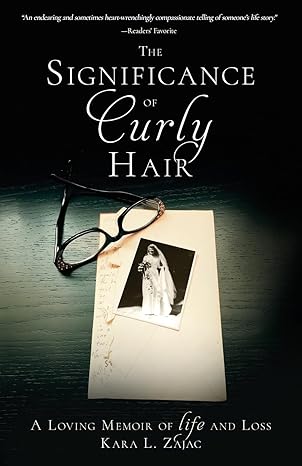
Kara Zajac’s The Significance of Curly Hair is an emotional and heartfelt memoir that delves into the deep bond between the author and her grandmother. At its core, the book is about family, love, loss, and the legacy of memories we hold onto after someone we love passes. Through vivid storytelling, Zajac chronicles moments of joy, heartbreak, and profound personal reflection, offering a touching tribute to a woman who shaped her life.
What struck me first was Zajac’s candid and unfiltered voice. She doesn’t shy away from raw emotion. Take, for example, the chapter where she describes trying to reach her grandmother before she passed. The desperation in her voice, coupled with the chaos of airport logistics, made my chest tighten as if I were the one missing that final goodbye. Her ability to weave universal feelings of guilt and longing into personal anecdotes was compelling. It reminded me of how we all struggle with the inevitability of time slipping through our fingers.
Zajac’s use of flashbacks brings a rich and layered texture to the memoir. Scenes from her childhood, like riding the school bus with her grandmother running alongside in the woods, are not just sweet but illustrative of the eccentric and loving relationship they shared. These moments balance the book’s heavier themes, giving readers a sense of the joy and laughter that defined their bond. At times, though, I found the transitions between past and present a bit abrupt, which occasionally interrupted the emotional flow.
One of the most memorable parts of the book is the chapter where Zajac reflects on her grandmother’s fading health and the helplessness she felt. The scene in the airport, where a stranger offers her comfort, beautifully illustrates humanity’s capacity for kindness. It’s this interplay between personal grief and the support of others that makes the book so moving.
The Significance of Curly Hair is an evocative and deeply personal memoir that will resonate with anyone who has ever loved and lost. Zajac’s writing is vivid and heartfelt, making you feel as though you are right there with her through every laugh, tear, and bittersweet memory. I would highly recommend this book to readers who enjoy reflective family stories or who might be navigating their own journeys of grief.
Pages: 364 | ASIN : B0D2QX3SQ9

Living a Fulfilling Life

My Unexpected Life: Finding Balance Beyond My Diagnosis is your memoir and call to action for accessibility and inclusivity after receiving your diagnosis of Friedreich’s Ataxia (FA). Why was this an important book for you to write?
There are a few reasons, but I’ll stick to two:
I wanted to show a positive representation of living with a disability. For too long, it’s been described as a tragedy and something that needs to be fixed. But that is not always the case. Being disabled has its challenges, no doubt, but living a fulfilling life is possible.
Secondly, I wanted to show people going through similar things that they are not alone.
What were some ideas that were important for you to share in this book?
Some ideas include that the ability to walk does not equal happiness, and disabled people have value and are capable.
What is one piece of advice someone gave you that changed your life?
The neurologist who diagnosed me told me not to let FA stop me from doing what I had planned with my life.
What is one thing you hope readers take away from your story?
Living a fulfilling life with a disability is possible, and don’t assume disabled people aren’t intelligent or capable to do a job.
Author Links: GoodReads | Facebook | Website | Amazon
Jennifer Gasner is seventeen when her dreams are shattered overnight.
Receiving a diagnosis of Friedreich’s ataxia, a rare genetic neuromuscular disease, means she must prepare herself for a life of loss. When she starts college, she can still walk on her own, but as her disease progresses, she spirals further into sadness, denial, and alienation. She turns to alcohol and a toxic relationship to distract her from what she refuses to accept—that her body, her self-esteem, and her hope for her future are failing.
When Jennifer develops a friendship with rock star Dave Matthews, her outlook changes. She begins to understand that using a wheelchair doesn’t mean her life is over. In fact, when she discovers disability culture, she realizes it’s not her body that needs to be fixed but her assumptions about being disabled.
In her captivating memoir, My Unexpected Life: Finding Balance Beyond My Diagnosis, Jennifer invites you into her world, where she must learn to view her changing body with compassion and choose gratitude over anger as she finds strength and acceptance in a whole new way of moving through life.
Delve Deeper Into Relationships

Growing Up, Rocky is a poignant journey through your childhood in rural Australia, revealing the profound impact of family dynamics and life’s tumultuous waves on shaping one’s character and destiny. Why was this an important book for you to write?
I wanted to show the backstory and intimate behind-the-scenes of a prominent, public family. You cannot judge others until you know their full story.
How did your family’s missionary background and rural Australia influence your perspective on life and relationships?
Watching my parents give their time, energy and love to others was inspirational. Later, even though I knew we were loved, I also realised that our family always came second, as an afterthought.
Looking back, what do you believe is the most significant lesson you learned from the challenges and experiences of your youth?
I learned to back myself, and that anything was achievable. I had two hands and a brain, the same as everyone else. How hard can it be?
What do you hope is one thing readers take away from your story?
To believe in yourself, be resilient and follow your dream. Delve deeper into relationships with your family. Things are not always as they seem. Perhaps there were reasons for neglect, as my parents also struggled with their own demons of depression and loneliness.
Author Links: GoodReads | Instagram | Facebook | Website | Amazon
This is the true story of the youngest daughter of a Sydney couple living at Lockhart River Mission for 9 years, raising their children within an Aboriginal village of five tribes.
Conceived on Cape York, and finally moving to Rockhampton as a young child. A family tragedy in 1971 with the shocking death of brother Chris, two days before a family wedding, sees the upheaval of family life.
Patty feels abandoned and has to educate and raise herself as well as learn to iron a cassock!
Patty brings herself up with her distracted parents, marries young and then flees a violent marriage. Patty dreamed of a bigger life than what was offered in her sleepy country town. Life became a series of ground-breaking adventures, and we follow her turbulent relationships and jobs, learning how to survive.
Share her adventures in this gentle, humorous and insightful early memoir.
Memoirs of Successful Women

Memoirs of Successful Women, compiled by Annie Gibbins, is an engaging anthology that resonates with the contemporary theme of female empowerment. This collection presents twelve chapters, each a unique memoir, where women from various professional realms share their journeys toward success. These narratives delve into their effective strategies, notable mistakes, and the innovative approaches that catapulted their careers. The book effectively highlights the transformative moments that shape a woman’s transition from an idealist to a trailblazing figure in the business landscape.
Each story in this compilation stands out for its individual perspective on success, making the book a versatile resource. It caters to a broad audience, from young professionals seeking guidance to mid-career individuals in need of inspiration and those intrigued by the varied success stories of women globally. The strength of this compilation lies in its diverse representation, offering relatable and empowering tales for readers from all backgrounds. The memoirs encompass an array of professions and challenges, underscoring the message that success is not tied to a singular path but is accessible through perseverance, adaptability, and continuous learning. A personal highlight for me was Swati Tyagi’s memoir, which elegantly brings to the forefront the learnings from everyday challenges, reminding us that what may seem mundane to some can be a significant hurdle for others. Like the others, her story offers valuable insights from a unique vantage point.
Memoirs of Successful Women stands as a testament to women’s enduring spirit, resilience, and tenacity worldwide. It celebrates their achievements and serves as an inspirational guidebook for anyone aspiring to navigate the complexities of personal and professional success.
Pages: 142 | ASIN : B0CLL26Z9N
The Past is the Past

Eleonora and Joseph: Passion, Tragedy, and Revolution in the Age of Enlightenment follows an aristocratic woman who becomes an advocate for liberty and plays an important role in forming the Neapolitan Republic. What was the inspiration for the setup of your story?
Good question, thank you! Many years ago, one sunny Saturday morning, I was walking in the streets of Naples and found in the Spanish Quarter a school that bore the name of Eleonora Fonseca Pimentel. I was surprised: this was a Portuguese name, not Italian. I had never heard of Eleonora; she wasn’t well known in Portugal as I was growing up. So, I looked up her name. Later, I read The Volcano Lover by Susan Sontag; the novel takes place in Naples during the time of Eleonora’s life. At the end of the book Sontag has several monologues and one of them is by Eleonora. I enjoyed Sontag’s book but didn’t like Eleonora’s voice: it didn’t sound quite right to me. I thought I could do a better job with her literary voice, after all I am Portuguese like Eleonora. I hope I don’t sound presumptuous, but this is exactly how I felt. So, I decided to write the novel. It took me years to complete the job.
Your novel is rich with historical details that are not well-known to the average reader. What kind of research did you do for this novel to ensure you captured the essence of the story’s theme?
I am a very disciplined person, but writing a historical novel takes a huge amount of work. Huge! I also love history, and so, this combination of discipline and love for a given theme can be quiet rewarding. Moreover, I love the freedom of imagination that fiction allows me. For credibility’s sake, a historical novel needs to be both accurate and plausible. These are different issues. Accuracy has to do with knowing the period well enough not to make gross historical mistakes about events, dates and so on. Plausibility is about filling in the historical record in such a way that what we don’t know as an historical fact (or event), could indeed have occurred. Good historians share this approach with historical novelists: think of a book like Citizens by Simon Schama, a professor at Columbia University.
Therefore, you look at historical sources and go back and forth all the time about issues. Compare sources. Check again and again, look at information from different angles. Take notes, build private maps of many lives and historical facts. Then you create your own road map. If lucky, you get close to the truth. I wrote close to the truth – not the truth itself. That doesn’t exist and historians know this as well as historical novelists. That someone was born in such a such date is just a fact, but the truth of someone’s life is something very different. It requires digging up, examining that life in dept, looking at it from many different angles, with vision and perspective.
What was one scene in the novel that you felt captured the morals and message you were trying to deliver to readers?
Another good question! We can’t look at the past as if the events we are describing took place at the time we are writing. The past is the past, no way around it.
An example comes to mind, and it has to do with Jefferson’s Monticello.
We rightfully condemn slavery today but, as horrible as it was, it was an accepted practice for centuries. I read recently a great book, Wicked Flesh by Jessica Marie Johnson. Descriptions like those of the Middle Passage are gut-wrenching. But the book also shows how people in captivity were also able to take some advantage of the conditions they were in.
I needed to be very thoughtful when describing Joseph Correia da Serra’s views of Monticello when he and Jefferson go for walks there. Jefferson was a complex man, full of contradictions. To such an extent that when he died, his family had to sell his slaves to pay a few of his debts. And later, Monticello itself had to be sold, too.
This is, somehow, beyond belief, but it did happen. There were, however, much crueler slave owners in Virginia than Thomas Jefferson. Nevertheless, to say – as I read somewhere – that he raped Sally Hemings for a lifetime is a distortion of their lives. It represents a total lack of understand of the historical period. Slave owners did sleep with slaves, and the practice was much more generalized than one tends to believe. Reproachable? Yes, certainly, and also a crime in Virginia. But Sally Hemings did succeed in having her children freed when they grew up. She wasn’t sold either, she lived as a free woman in Charlottesville after Jefferson’s death.
So, the difficulty of this kind of analysis is to find the balance of a life, any life. In the past, as much as in the present. One only needs to consider one’s own life (one among many other lives, mind you!) to notice the challenges that ‘balance’ presents.
What is the next book that you are working on, and when will it be available?
I have just returned from Istanbul, where my next novel takes place. It’s another historical novel, the set-up is Constantinople in the late 18th century. I had a great time, and a dear Turkish friend helped me enormously, but I am dealing with an artist whose work is far greater than his extant oeuvres. That is not what I was hoping for…
The soul of a place is important, but the way it touches you as an author, that’s important too! I still need to figure out how to deal with my, somewhat, disappointment. How can I say this? I wanted a particular 18th-century garden to be still there – but it isn’t! Crazy, right? So, this is how it goes: you have to imagine a setting as accurately as you can, if your work is going to be any good. Again, you need to go back to the period you are dealing with and try to figure out how it could have been. I wanted clues to help me along the way with my writing, but I was left with very few, close to none.
I don’t really like to discuss what I am writing about; I will present the work when it is finished. Then, as now, Istanbul is a fascinating city, the true meeting of East and West. I love the set-up I chose. The city is grandiose, cosmopolitan, exotic, and adventurous. But I still have a lot of work ahead. If I work consistently, I might have the novel finished within a year.
Literary Titan, thank you so very much for this opportunity.
Author Links: GoodReads | Twitter | Facebook | Website
Eleonora and Joseph. Passion, Tragedy, and Revolution in the Age of Enlightenment. A Novel.

Eleonora and Joseph: Passion, Tragedy, and Revolution in the Age of Enlightenment by Julieta Almeida Rodrigues is a captivating debut novel that brings to life the stirring tale of Eleonora Fonseca Pimentel, a revolutionary and advocate of liberty in the 18th century. Her pivotal role in forming the Neapolitan Republic is a testament to her unwavering belief in equality and the power of education, even as she faced the dire consequences of opposing the ruling class.
Born into aristocracy, Eleonora’s early acclaim for her poetic genius and intellectual prowess sets the stage for a life less ordinary. Her heartrending love story with Joseph Correia de Serra—a young man from a humbler background, and her own journey through triumph and adversity—are poignantly chronicled in her memoirs, discovered posthumously in Thomas Jefferson’s library. Jefferson, an acquaintance of Joseph and a scholar of great repute, becomes the conduit through which Eleonora’s indelible impact is revealed.
The novel is a rich tale of young love’s exuberance and the complexities of human relationships, as seen in Joseph’s life choices, including his unexpected path to priesthood and the paradoxes that define his existence. Thomas Jefferson emerges as a beacon of intellect and kindness, while Eleonora herself is portrayed as a formidable and spirited force, her intellect and rebellious nature blazing against the backdrop of societal constraints. With its exquisite character development and compelling narrative, the book vividly portrays the social stratifications of the time, marked by class, religion, and economic divisions. The rich and elaborate dialogue complements the exceptional storytelling, showcasing the author’s deep dive into historical records to create an immersive and captivating experience.
For historical fiction enthusiasts, Eleonora and Joseph is a cornucopia of passion, tragedy, and the spirit of enlightenment. It’s a celebration of a remarkable woman whose legacy endures and a journey through a time that shaped the modern world. This novel is not just a read; it’s an encounter with history’s enduring echo.
Pages: 212 | ASIN : B08K3HGZYX


