Blog Archives
You Are Not Broken

The Split gives voice to women who have faced pain, loss, the dissolution of their marriages, and challenges of long-held beliefs. Why was this an important book for you to write?
This book wanted to be written. Another collaborative book was not in my plans and yet, the idea came to me in a moment of frustration as I heard yet another person reference families of divorce as ‘broken’. I pushed it off and the idea wouldn’t let go, so I knew it needed to be shared. The women I know that have gone through divorce are not ‘broken’ and neither are their families. As we discuss in the book, something is arguable broken before divorce happens. Divorce is the and the answer to a problem where no other solution has worked. Letting women know that the end of a marriage or relationship is not the end of the story, simply the end of a chapter is extremely empowering. Having gone through divorce mostly alone, I know the power of having a group of women guide you in the process is priceless.
With so many authors involved in the making of The Split, I would imagine the collaboration process was complex. Can you share with us a little about the writing process?
Surprisingly, it was more difficult getting women to join the book than it was to have them write! So many women that were interested in writing self selected out before the process really began. To choose to share a story, especially one as raw as divorce, one has to be ready to share. You want to share what you’ve learned along the way and if you’re not quite there yet, the story simply won’t come. Being ready was the most challenging part. Once the women said they were in, the writing happened and the deadlines were (mostly) met without much fuss. The Split is now a beacon in the dark for those that need it.
Did you learn anything about yourself while putting this book together?
I learned the seeds of my divorce (and so many others) were planted long before marriage was even a consideration. From a young age, our families of origin and society share a particular message of happiness, without providing a lot of room for curiosity. I realized that when I began to become seriously curious about my life and the future I wanted, I found out the story I had been told I wanted isn’t what I actually wanted.
What is one thing you hope readers take away from The Split?
I hope the readers understand that the idea of divorce is not one they need to explore alone. It can be a tough journey and I hope this book provides a guiding light and the authors in it become a part of the readers’ support system. I hope they connect with the authors that resonate with them the most and continue their healing journey.
Did you hear? They’re getting divorced.
We have a broken family.
We’ve all heard these phrases whispered in hushed tones—words laced with judgment, pity, or shame. But what if they’re wrong?
The Split: Tales of Family Renewal and Female Resiliencechallenges the narrative that divorce equals failure. These powerful, deeply personal stories reveal that splitting isn’t the breaking point—it’s the breakthrough. In these pages, women share how they reclaimed their voices, rebuilt their lives, and redefined what family, love, and strength can look like after endings that became beginnings.
This anthology dismantles generations of stigma around divorce and womanhood, replacing it with a message of renewal, courage, and collective healing. These are not broken women. They are bold, audacious, and resilient—choosing themselves, their peace, and a new path forward. Splitting isn’t the end; it’s a rebirth.
Contributors: Brandee Melcher, Dr. Katherine Humphreys, Carol Britton, Lesley Goth, PsyD, Carolina Cifuentes, Sierra Melcher, Christen E. Bryce, MS RN, Allison Banegas, Dr. Erica Anne Love, Summer Jean, LaToya Burdiss, and Jen Kennedy, MPA
The Split


The Split gathers the voices of women who faced the unraveling of marriages, families, identities, and long-held beliefs. Across these stories, the writers look directly at pain, loss, and the complicated paths toward freedom. Instead of treating divorce or separation as a collapse, the book reframes each ending as a turning point where women choose themselves, rebuild their lives, and honor the truth that wholeness can follow even the hardest breaks. By the final pages, the collection stitches together a message that is steady and hopeful. These women are not broken, and they are becoming something stronger.
Reading their words, I felt an ache in my chest more than once. The writing is striking in its honesty, and the stories breathe with real life. Brandee Melcher’s chapter opens with the raw confusion of childhood and grows into a powerful reclaiming of self, and her voice shook me because of how clear and grounded it becomes. Her journey from chaos to confidence made me root for her, and it reminded me how childhood patterns can shadow adulthood until we finally name them. I also found myself lingering on Sierra Melcher’s reflections on choosing peace over performance. Her reminder that children do not need perfect homes, they need healthy adults, resonated with me personally. The stories impact in different ways, but all of them bring a unique emotional punch.
Some chapters hit harder than others, and the shifts in tone from one writer to the next made the book feel unpredictable in a way I genuinely enjoyed. That variety gave the collection its energy. I especially appreciated the moments when the authors stepped back from the trauma and wrote about joy creeping in again. Those small wins felt huge. They made the book less about loss and more about rebuilding something real. At times, I wished a few stories went deeper into the “after” rather than the “during,” but even that unevenness felt honest. Healing rarely moves in a straight line, and the structure of the book mirrors that reality.
The Split would be a meaningful read for anyone standing at the edge of a major life change, especially women navigating separation, divorce, or the quiet breaking points that do not always have names. It would also help friends, partners, and professionals who want to understand what these experiences actually feel like from the inside. The book sits with the hard parts, and it also leaves space for light. I would gladly recommend it to anyone who needs a reminder that endings do not mean failure. They mean a new chapter is ready for you, and you get to decide what it becomes.
Pages: 144 | ASIN : B0G274WVFH

The Opioid Epidemic

Flirting With Extinction is a raw and unapologetic mosaic of personal essays and stories that chart a life punctuated by grief, recklessness, resilience, and searching. Why was this an important book for you to write?
I needed to process my grief in some way, and I thought that by analyzing it and finding the life lessons in all that had transpired and writing about it would help me navigate my pain as well as the pain of others who have lost cherished loved ones to the opioid epidemic sweeping America’s youth.
What were some ideas that were important for you to share in this book?
My love for my sons was not as powerful a motivating force in their lives as the cultural zeitgeist they lived with. They had moved away from their Land Before Time and Pokémon mindset into what their peers were doing in the Seattle music scene in the late 1990s and early 2000s. The 1960s bohemian fashion was in style along with designer drugs I had never heard of until one of my sons died after using the latest drug on the scene, fentanyl. And then even after rehab, the other one followed suit several years later, killing himself on meth. I was absolutely devastated.
I appreciated the candid nature with which you told your story. What was the hardest thing for you to write about?
The deaths of my sons, I cried every time I worked on that aspect of the story. It took multiple edits with my tears running into my coffee and ruining the taste.
What do you hope is one thing readers take away from your story?
If you value life, and even if you believe in an afterlife, after experiencing the death of a loved one, it’s important for one’s sanity to find the positive in the negative and nurture those seeds of positivity in everything, to make the pain more bearable. In my sons’ memory, I wear the Jewish Chai symbol that serves as a reminder to embrace life’s inherent beauty, to cherish the present moment, and to recognize the profound interconnectedness of all life.
Author Links: GoodReads | X (Twitter) | Facebook | Website | Amazon
After converting to Judaism and adopting her new husband’s name, she moved to Washington state and together with her husband, Joanna helped create a utopia on their island home, far from family feuds. As a family they explored the Pacific Northwest wilderness and played sports. Their children thrived in an environment filled with art, music, and freedom. But the idyllic life they built took a dark turn when their teenage son Micah, along with his friends, defaced a yeshiva, with one drawing swastikas and the chilling message, “this way to the gas chambers”—a reckless joke that would lead to devastating consequences.
As the law came down hard on Micah, the family faced the unbearable loss of their other son, Seth. In Flirting with Extinction, Joanna Kadish explores the deep-rooted trauma inherited from Holocaust survivors. Micah’s great-grandfather was killed in a German labor camp, and Micah’s grandfather, with his mother and sister, fled Germany shortly before Kristallnacht. Decades later, that trauma continues to haunt the family, proving that the wounds of history are not so easily healed.
These are Joanna’s stories of survival, loss, and the enduring impact of generational trauma.
Flirting With Extinction: Collected Essays & Stories

Joanna Kadish’s Flirting With Extinction is a raw and unapologetic mosaic of personal essays and stories that chart a life punctuated by grief, recklessness, resilience, and searching. The book dives headfirst into heavy themes: addiction, motherhood, loss, and the fragile line between survival and surrender. With prose that veers between unfiltered vulnerability and sharp humor, Kadish offers an intimate chronicle of a woman navigating trauma through love, memory, danger, and—sometimes—wild horses.
What struck me most was Kadish’s unflinching voice. She doesn’t tidy up her pain, doesn’t soften her edges. In the preface, she talks about clawing her way back from a state of “perpetual sadness” after losing her sons to the opioid crisis—a tragedy that ripples through many of the essays with a haunting steadiness. In “Anatomy of a Firefighter,” she captures childhood pyromania and sibling chaos in the heat-scorched deserts east of Los Angeles. It’s darkly funny, but the undercurrent of danger—both literal and emotional—never lets you forget the stakes.
Kadish’s writing is pure guts and gravel in “Calamity Jane,” where she recounts a horrifying attempt to break a rodeo bronc as a young girl. The imagery is searing: the smashed teeth, the blood, the betrayal of the body. But what lingers most is her twisted pride in lasting the “full eight seconds” before being flung like a ragdoll. There’s something electric in the way she writes pain. It’s not masochism; it’s a yearning to feel, to prove, to matter. This isn’t just about animals—it’s about people, about relationships, about the wild things in ourselves that won’t be tamed no matter how gently we try.
What I liked most about the chapter Zero Evidence was how it peeled back the layers of human fragility in the face of relentless judgment. Kadish walks the tightrope between raw confession and sharp critique, especially when she recounts the moments after her son’s overdose and the unbearable silence that followed. The way she describes the hospital room, the indifferent fluorescent lights, and the cold detachment of the medical staff—it all made my chest tighten. But it’s the emotional isolation that hit hardest. She’s grieving, furious, helpless, and still somehow worried about how others might view her as a mother. Her honesty cuts deep.
This is not a gentle collection. It won’t hold your hand or let you off the hook. But Flirting With Extinction will speak to anyone who’s lived through pain and come out the other side with scars and stories. It’s for people who can’t stop looking backward even while forging ahead. I’d especially recommend it to those who’ve wrestled with addiction in their families, lovers of memoir that bleeds fiction, and women who’ve ever been called “too much” for wanting to ride the bronc instead of just watching.
Pages: 300 | ASIN : B0DJHCQ5LT
How We Tell the Story
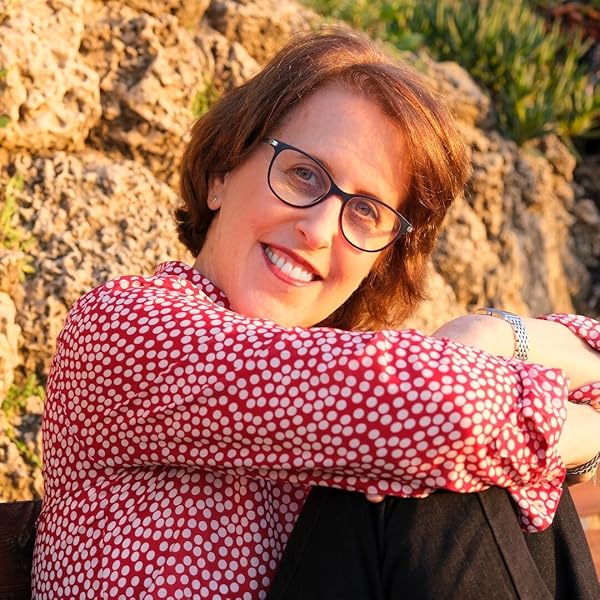
Landed: A yogi’s memoir in pieces & poses is a deeply personal exploration of identity, culture, and the search for belonging. Why was this an important book for you to write?
I’ve been writing about identity, culture, home, and the search for belonging for years. It was as if I was obsessed or possessed. I wrote in longform narrative, personal essay, compression, flash, circular structure, acrostic, prose poem, you name it. Writing it in full, in book-length form, helped get it out of my system. To see my way to the finish line. To take the final steps in my journey from point A to point B and to move on, beyond.
What were some ideas that were important for you to share in this book?
Shortly after returning to Israel in 2011, I began a blog called Open to Israel for my yoga students, family, and friends in the US, Jewish and not Jewish. I wrote about celebrating the holidays, about sending my son to the army, about voting in my first election, about navigating the bureaucracy. I wanted to show what life was like here in this tiny, complicated, misunderstood country. The more I wrote, the more I sensed my mission: to show life in Israel for people who don’t know or understand its complexities, its history, its importance, and its presence. To show, as Martha Engber writes in her review of my book, the lightness, darkness, and in between rainbow colors.
In addition, I write about change and choice, freedom, and selfhood. There is so much we cannot control in the world, but we do control how we tell the story.
What was the most challenging part of writing your memoir and what was the most rewarding?
Hands down, the structure was the most challenging part of this book. The story of my seven-year journey written in seven long sections—in present, past, and [yoga] poses—was obvious because seven is significant in both yoga and Judaism. I chose to tell the narrative in present tense and through poses but jumped back in time, in the past tense (indicated with year and place), thematically. Between each of the seven-year sections is a short scene about learning the seven chakras or spiritual energy channels in yoga, beginning from the root/pelvis and ending at the crown of the head, as learned in class with my first teacher, Rodney Yee, in Oakland, California circa 1996. I was convinced the structure could be the death of the manuscript and wasn’t sure how to revamp it.
After Vine Leaves Press sent me an offer of publication, I felt understood, seen, and validated. That seemingly convoluted structure was redeemed. My greatest reward. It worked.
What do you hope is one thing readers take away from your story?
Decades ago, when working in Paris and immersing myself in French, I learned the idiomatic expression “être bien dans sa peau,” literally translated as to be comfortable in one’s skin. At some point in my intense, new relationship with a Frenchman, I lost my sense of self. Only 23, I lost my way, my voice, my identity. And from that point on, I no longer felt comfortable in my own skin.
Home is a given for many people. But for me, it felt shaky. My one takeaway for readers is how important it is to stay true to yourself, your core, your home.
On a side note, I want to share that in today’s world—a completely different one from when I started writing about Israel—I sign my emails with “The region where I live is fragile. Please treat my words with care.” Thank you for reading my work.
Author Links: GoodReads | Facebook | Website | Amazon
American-born Jennifer traces her journey—both on and off the yoga mat—reckoning with her adopted country (Israel), midlife hormones (merciless), cross-cultural marriage (to a Frenchman) and their imminent empty nest (a mixed blessing), eventually realizing the words her yoga teachers had been offering for the past twenty-three years: root down into the ground and stay true to yourself. Finally, she understands that home is about who you are, not where you live. Written in experimental chapterettes, Landed spans seven years (and then some), each punctuated with chakra wisdom from nationally-acclaimed Rodney Yee, her first teacher.
Landed: A Yogi’s Memoir In Pieces & Poses

Landed: A Yogi’s Memoir in Pieces and Poses, by Jennifer Lang, is a deeply personal exploration of identity, culture, and the search for belonging. Lang, torn between the United States and Israel, grapples with feeling like an outsider in both places, constantly navigating the expectations of each. Her struggle is mirrored within her family, where two opposing approaches to their Jewish heritage—one modern and flexible, the other more traditional and rigid—create an ongoing internal tug-of-war.
This memoir traces Lang’s journey as she seeks to find herself in the space between these conflicting worlds. Drawing on both her writing and yoga practice, she embarks on a quest to discover which culture and location she can truly call home. Lang delves into her personal history and the challenges of being caught between two distinct yet intertwined identities through a series of essays and reflections. Lang’s writing shines in its portrayal of the complexities faced by Jewish women—whether in their connection to Israel, to their families, or to their own sense of self. Her storytelling is both witty and introspective, weaving in moments of self-discovery alongside the backdrop of yoga poses that serve as metaphors for her emotional journey. She offers readers a poignant look at life in Israel, vividly depicting both the beauty and the turmoil that coexist there. Her compassion for the land and its people is evident, as is her keen awareness of the personal and political struggles that shape daily life. Throughout the memoir, Lang’s internal conflict is palpable, inviting readers to reflect on their own definitions of home and belonging. The raw honesty with which she portrays her emotional and spiritual battles allows the reader to connect with her on a deeply personal level. Her reflections serve as an inspiration to anyone navigating the difficult balance between familial obligations and self-discovery, encouraging others to look inward and consider what truly feels like home.
While Landed will likely resonate most with women both younger and older, it offers valuable insights for anyone striving to find peace within themselves amid external pressures. In a world where societal and familial expectations often overshadow personal growth, Lang’s memoir paves the way for self-exploration and empowerment, making it a must-read for those seeking to prioritize their own journeys of self-discovery, regardless of age or circumstance.
Pages: 267 | ASIN: B0DB97P6FP
Break the Chains

In your memoir Trust Yourself to Be All In: Safe to Love and Let Go, readers will find a deeply personal and emotional account of how divorce and personal loss have affected your life. What motivated you to share your story with the world?
I believe we experience loss and other pain in life in order to heal and then help others. We aren’t supposed to keep it for ourselves. I know there are many people suffering the pain of emotional abandonment, grief, and trauma, and I have found healing and a solution that not only sets me free but gives my life purpose. I’m compelled to share this healing with others. It’s as simple as that…something inside pushes me to help others.
I greatly appreciate the candid and transparent nature of the story you have shared. Would you be able to shed some light on the most arduous aspect of the writing process?
Personally, rewriting Chapter 1, “The Catalyst,” about my brother’s overdose, our childhood memories (some pleasant, others, not so much), my anger about his addiction and death, and eventually how his death set me free, was very difficult. I would find myself in disbelief that I was crying, again. It was also challenging to see the truth of my story. Seeing the reality of some painful events, in black and white, was emotionally draining. In general, I didn’t find the writing process arduous. It was a period of divine inspiration and came quite naturally to me. The hardest part was deciding which parts to keep and which parts to toss. I felt much of what was removed was important, but I had to make very honest decisions about if it added or detracted from the main message and the power of the book. It was a humbling process.
What is one piece of advice you wish someone had given you when you were younger that could have helped you deal with personal loss and grow from these challenges?
You are good, worthy, and loved no matter what. Know that other people’s actions and behaviors are not about you, and you are not responsible for anyone else’s happiness.
I understand that your story is important to you and you want your readers to connect with it. Can you please help me understand what message you want your readers to take away from your story?
Healing your personal pain holds the power to heal the collective. It’s the only power we truly have. Finding comfort in all of your emotions by healing your grief and trauma, building an unshakable foundation of self-worth and self-love, and trusting yourself to show up for yourself in good times and “bad” creates an open heart of unconditional love and compassion, for yourself and others. It’s time to break the chains of generational family dysfunction, address your pain, and do the work to heal. Your life, and the lives of others, depend on it.
Author Links: GoodReads | Instagram | Facebook | Website
Everyone leaves you or hurts you. This false myth of generational family dysfunction, compounded through trauma, appeared frighteningly true to Amanda the moment her brother overdosed and died. Devastated, she shined up the emotional armor she wore to protect herself from pain and soldiered on. But a decade of self-reflection and personal growth in 12-step recovery could not save her from herself. Attempting to destroy everything around her, including her troubled marriage, she experienced a spiritual awakening that radically transformed deeply engrained lies about love, loss, and connection. Lies she didn’t even know she believed.
Trust Yourself to Be All In: Safe to Love and Let Go is a pragmatic yet soulful inspirational memoir delivering uncompromising self-love that heals deep wounds. Amanda’s revealing, thought-provoking narrative will guide you to find comfort in your emotions and meaning in your suffering, while organically bridging an inseverable, trustworthy connection with self, others, and the universe.
Trust Yourself to Be All In: Safe to Love and Let Go

The narrative of Amanda’s life, as depicted in this book, offers a raw and poignant exploration of the impact of divorce and personal loss. Amanda’s journey begins in the wake of her parents’ separation, primarily due to her father’s affair, a situation that significantly alters her familial landscape. The book delves into her deep connection with her brother, Jeremy, who, despite his own struggles with addiction, serves as a crucial pillar of support until his untimely death. Tragically, Amanda faces a series of losses, including the passing of five close individuals within a span of three years.
This book candidly portrays her struggle with alcohol addiction as a coping mechanism and how these experiences leave indelible marks on her life. Particularly moving is how Amanda cherishes memories, such as a shared love for the band Pearl Jam, highlighting the bittersweet nature of remembrance. Amanda’s story is not just about loss and grief but also about resilience and healing. The narrative follows her as she confronts and manages an anxiety disorder, navigates the near breakdown of her marriage, and embarks on a journey toward recovery. The decision to relocate and the challenges of adapting to a new environment without familiar support systems are also explored, showcasing her strength and adaptability. The author’s candidness and emotional depth make this memoir particularly engaging. Amanda’s experiences are conveyed with a sincerity that invites empathy and reflection.
Trust Yourself to Be All In: Safe to Love and Let Go is not just a chronicle of hardships; it’s a testament to the human spirit’s capacity to endure and grow. This book is a compelling read for those interested in memoirs that offer a deeply personal and touching narrative filled with genuine emotion and the triumphs of overcoming life’s adversities.
Pages: 193 | ASIN : B0C4M137BJ


