Blog Archives
How Learning to Say Goodbye Taught Me How to Live


Joffre McClung’s How Learning to Say Goodbye Taught Me How to Live is a spiritual memoir shaped by the final months of her best friend Rob’s life. After surviving a series of painful losses, McClung learns that Rob has stage-four breast cancer and makes a difficult promise to remain present without disappearing into grief again. What follows is both an intimate account of accompanying a loved one toward death and a record of the inner work that experience demands. McClung writes from inside the uncertainty, anger, tenderness, and exhaustion of anticipatory grief, giving the book an emotional immediacy that feels more like an honest conversation than a lesson delivered from a distance.
The heart of the book is the friendship between McClung and Rob. Their daily calls, disagreements, laughter, spiritual conversations, practical decisions, and moments of fear create a vivid portrait of love under pressure. Rob’s illness unfolds alongside major changes in her life, including the death of her partner, a difficult move, renewed closeness with her family, and the gradual acceptance of care she’d often struggled to receive. McClung doesn’t reduce Rob to her diagnosis. She presents her as complicated, funny, stubborn, frightened, generous, and deeply human. The brief chapter devoted to Rob’s rescue dog, Dudley, is especially affecting because it shows how devotion can be expressed through something as simple as staying close.
Each chapter pairs the unfolding story with a spiritual principle and a set of reflective questions. McClung explores emotional honesty, self-compassion, forgiveness, surrender, intuition, gratitude, intimacy, belief, and the balance between giving and receiving. Her language is direct and personal, and she’s willing to show the moments when her own ego becomes controlling, judgmental, or desperate for certainty. That self-awareness gives the guidance weight. These ideas aren’t presented as abstract theories. They arise from hospital visits, financial worries, frightened phone calls, family tensions, meditations, hard conversations, and the daily choice to keep loving when love can’t guarantee the outcome.
By the time McClung reaches Rob’s final days, learning to say goodbye has become an act of attention. The memoir’s deepest insight is that grief can reveal the beliefs, wounds, and fears that quietly shape a life, while love can give us the courage to meet them. McClung’s story will speak most strongly to readers who see spiritual growth as active, emotional work and who want companionship through the strange territory of loss. It’s a candid, compassionate book about staying awake to life precisely when the heart is tempted to close. A fearless and tender memoir that turns saying goodbye into an invitation to live with a wider heart.
Pages: 168 | ASIN : B0793PZ6KD

Living in the Long Shadow: Surviving a Legacy of Mental Illness
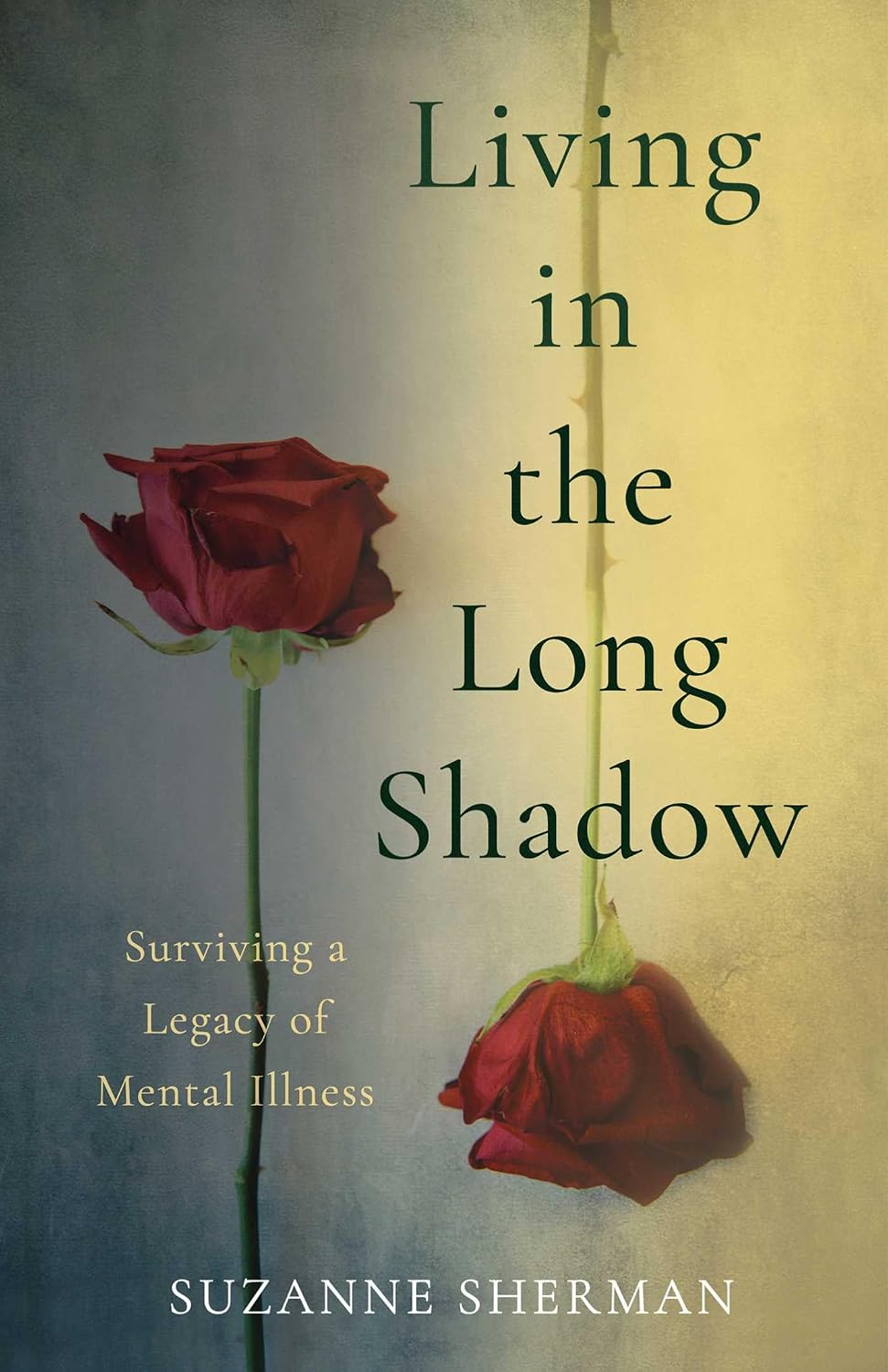

In Living in the Long Shadow, author Suzanne Sherman revisits her childhood as the daughter of Marilyn, a gifted, loving, musically alive woman whose schizophrenia slowly reshapes the family’s world, and then follows the aftermath of Marilyn’s suicide into Sherman’s adulthood. The memoir moves through West Los Angeles childhood scenes, divorce, sibling fracture, hospitals, medication, silence, and grief, but it’s never only a book about damage. It’s also about memory doing its careful work: a child in Sequoia learning to “listen” to the forest with her mother, a birthday cake left suspended in terror, a candlelight peace march led by Marilyn’s guitar and trembling hope, and, years later, roses drifting on the San Francisco Bay like an impossible answer.
I was taken by the book’s refusal to flatten Marilyn into her illness. Sherman writes about her mother’s frightening absences with clarity, but she also restores the radiance that illness couldn’t fully erase. I believed in Marilyn as the woman who made one-sleeved dresses for a daughter in a cast, who turned an environmental poem into a song, who planted lemon trees and noticed birds hatching under the trellis. That tenderness makes the pain sharper. The memoir understands that love and fear can live in the same room, sometimes in the same breath, and Sherman has a rare gift for letting those contradictions remain unsettled.
The writing is intimate, precise, and quietly devastating. Sherman’s structure, moving between childhood recollection and the approaching knowledge of her mother’s death, gives the book a haunted pulse. I found that approach emotionally true, because grief rarely arrives in a straight line. Some passages feel almost unbearably vivid, especially the small domestic humiliations and terrors: the father who insists on logic, the child learning to manage adults’ moods, the sister’s volatility, the stepmother’s cool judgments around food. The ideas beneath the story are equally strong. The book asks what children inherit when a family cannot name what’s happening, and what it costs when mental illness is met with denial, shame, or inadequate care. The density of pain is heavy, but I didn’t find it excessive. It felt earned, the way an old house creaks because every beam remembers.
I finished this memoir moved by its sorrow, but also by its steadiness. Living in the Long Shadow is not a simple recovery story, and that’s part of its grace. It’s a book about surviving what can’t be repaired, then finding language tender enough to hold it. I’d recommend it to readers of reflective memoirs, especially those interested in family trauma, mental illness, suicide loss, complicated mother-daughter love, and the long work of making peace with the past.
Pages: 312 | ASIN : B0GPJ4ZSDG
The Ultimate Soul’s Purpose

Hydrangeas From Dad follows you through the devastating loss of your father and the mysterious hydrangea text he sent from beyond, opening into a courageous memoir of grief, soul, family, and spiritual healing. Why was this an important book for you to write?
First of all, I admired my dad for the man he became in the last 25 years of his life. Once he retired and no longer had to fully provide for 5 kids, a wife, and his mother, he became a real father to me. And I was gradually able to let him in after spending my childhood feeling detached from him. During retirement, Dad visited me several times a year, called frequently, and moved to FL, and was closer, so I could visit him. We finally had a relationship.
Secondly, I thought the way he lived his life was authentic, courageous, and full of gusto, and he encouraged me to live the same way. I told him when he was dying that I would write a book about him and his life, and I was committed to that promise.
And, the third reason was that his message to me from the afterlife was so powerful and life-changing that I knew I needed to share the story with others. My desire was to help others who had also lost a loved one, maybe a parent, to know with certainty that our soul relationships continue after the body is gone. I found that awareness to be so comforting during the early months and ongoing years of grieving that Dad was no longer physically with us. I trusted that others could find comfort in this story, too. And his message to me ignited the fire of complete authenticity in me to live my life fully and honestly! I wanted to share that message too, knowing that physical life as we experience it is short, but HOW we live prepares us for the possibility of a glorious afterlife.
What was the first thing you felt when you saw the text from your father’s phone with the photo of blue hydrangeas?
I was honestly shocked! I think my heart stopped beating, and I lost my breath for a moment. But my mind couldn’t process this, and I tried desperately to find another explanation other than this was Dad reaching out to me right after a man on television talked about how important it was to call your parents while they were still alive. I was trying to digest all of that. It was more of an emotional experience than it was anything cognitive. It was tumultuous! My gut was in knots. I stared at the screen in disbelief. And after a few moments, I convinced myself that my sister had planted a flower bush in Dad’s yard and used his phone to send me a picture of it. I needed to believe in that to get through the night and let my gut and heart settle down.
How did writing about your father’s final days change your relationship to those memories?
I commented to my siblings that they lived through my dad’s dying and moved on; and, I lived it off and on for 10 years, the length of time it took me to finish the manuscript. Writing about those 5 days of my dad’s dying kept me anchored in the experience of dying. It also helped me appreciate living even more because I now knew what it was like to have a loved one leave this physical world and their physical body. I became more intimately attached to death and dying and re-writing the definitions of this for myself. And, through this awareness, I knew that preparing oneself for the afterlife by HOW we lived in THIS life was the ultimate soul’s purpose.
Were there parts of your spiritual journey that you felt afraid or hesitant to share so openly?
After serious reflection on this question, I would have to say the part of my spiritual journey that I had hesitation or fear to share openly was about my venture into the world of shamanism. Not because of my own trepidation, but because I feared being judged harshly and my book being discredited because of that.
I live in the Bible Belt of the US. People are predominantly Christian, and fundamentally so. I consider myself a Christian, but open to receiving influence from many other religions as a spiritual seeker. Shamanism would be seen as a pagan practice by many. But I had to push through this fear of rejection and dismissal because my spiritual journey, prompted by my Dad’s text message from the afterlife, was and still is about being my TRUE self!
Now, I welcome questions from anyone. I love the opportunity to better explain how studying shamanism and the powerful rituals as they were taught by Don Oscar Miro Quesada, taught me how to fully and completely love! My heart was blocked by layers of anger, disappointment, and despair for most of my life. The practice of Anyi, “sacred reciprocity,” and the initiations and blessings received from don Oscar and the Universal Shamanism community removed the barriers I didn’t even know I had. Somehow, I was set
free, became lighter, more positive, and loving; and this has been a treasured gift.
Author Links: GoodReads | Facebook | Mary Ellen McDonald | Mary Ellen Connett McDonald | Connett Therapy and Coaching | EquiHeart | Website | Fierce Feminine Fire | EquiHeart Guided Horsemanship | Amazon
If you are:
– Wrestling with the mysteries of life and death
– Questioning why we love, even when loss seems inevitable
– Anticipating or grieving the passing of a parent or other cherished soul
– Feeling lost, displaced, or hollow after such a profound absence
– Living in the shadows instead of embracing your deepest truths and longings
Then this book is here for you-a companion for your soul’s journey to:
– Ease the sorrow of losing those you love, and bring gentle healing to your heart
– Affirm the eternal nature of your soul and the souls of those who have passed
– Understand that death cannot sever the bonds of love you share
– Live fully in alignment with your soul’s deepest purpose
– Cultivate spiritual practices that nurture and sustain your soul
– Move toward the highest state of fulfillment-union with God, Source, or Great Spirit
May this journey light your path, opening your heart to healing, connection, and the limitless presence of your soul in every moment of your life.
First-Hand Knowledge

Reach Out with Acts of Kindness is a heartfelt and practical guide offering compassionate, straightforward advice on how to support people facing illness, grief, or crisis. Why was this an important book for you to write?
After going through a traumatic time, I felt called to write this book. I could not not write this resource in which I share my passion for reaching out to others in hardship. We will all face obstacles and hurdles throughout life, and support from family, friends, acquaintances, coworkers, etc., is vital for those hurting attempting to move forward.
I appreciated the candid nature with which you told your story. What was the hardest thing for you to write about?
I am a private person, so sharing my feelings with readers was the hardest part of writing the book. Those who are deeply entrenched in a troubling period or have gone through a tumultuous time can relate to the many mixed emotions I express in the book and that anyone in crisis may experience. There were many dark, unsettling instances too personal to include that were left out, in respect for my family.
What were some ideas that were important for you to share in this book?
I share first-hand knowledge of what may help and what may not help those struggling, and also include examples from others who endured trauma, regardless of the circumstance or predicament. Specific ideas and suggestions to lend support are featured. I’m a firm believer that everyone has a gift, whether it’s picking up the phone to touch base, sending a thinking-of-you card, delivering a meal, completing an errand, mowing the grass, etc. I emphasize lending support in an area that is most comfortable and easy for the giver. Readers are invited to consider what their gift may be.
Could you tell me what one thing you hope readers take away from Reach Out with Kindness?
The goal of Reach Out is for readers to understand the importance of reaching out and connecting with anyone struggling with simple acts of kindness.
Author Links: GoodReads | Website | Instagram | Amazon
At some point in life, everyone will face a roadblock, obstacle, or will be touched by someone experiencing a challenging, tumultuous period. No one is immune to struggles, but outsiders are often unsure how to best offer comfort and support.
Reach Out is a call to action for creating a culture of compassion and empathy by illuminating how to be there for others when they need it the most. This relatable resource highlights specific ways to help others in crisis as well as the aftermath. Everyone has a gift to offer, whether it is just picking up the phone to touch base, sending a card of concern, delivering a meal, mowing the grass, or other helpful acts. What is your gift?
Flirting With Extinction: Collected Essays & Stories

Joanna Kadish’s Flirting With Extinction is a raw and unapologetic mosaic of personal essays and stories that chart a life punctuated by grief, recklessness, resilience, and searching. The book dives headfirst into heavy themes: addiction, motherhood, loss, and the fragile line between survival and surrender. With prose that veers between unfiltered vulnerability and sharp humor, Kadish offers an intimate chronicle of a woman navigating trauma through love, memory, danger, and—sometimes—wild horses.
What struck me most was Kadish’s unflinching voice. She doesn’t tidy up her pain, doesn’t soften her edges. In the preface, she talks about clawing her way back from a state of “perpetual sadness” after losing her sons to the opioid crisis—a tragedy that ripples through many of the essays with a haunting steadiness. In “Anatomy of a Firefighter,” she captures childhood pyromania and sibling chaos in the heat-scorched deserts east of Los Angeles. It’s darkly funny, but the undercurrent of danger—both literal and emotional—never lets you forget the stakes.
Kadish’s writing is pure guts and gravel in “Calamity Jane,” where she recounts a horrifying attempt to break a rodeo bronc as a young girl. The imagery is searing: the smashed teeth, the blood, the betrayal of the body. But what lingers most is her twisted pride in lasting the “full eight seconds” before being flung like a ragdoll. There’s something electric in the way she writes pain. It’s not masochism; it’s a yearning to feel, to prove, to matter. This isn’t just about animals—it’s about people, about relationships, about the wild things in ourselves that won’t be tamed no matter how gently we try.
What I liked most about the chapter Zero Evidence was how it peeled back the layers of human fragility in the face of relentless judgment. Kadish walks the tightrope between raw confession and sharp critique, especially when she recounts the moments after her son’s overdose and the unbearable silence that followed. The way she describes the hospital room, the indifferent fluorescent lights, and the cold detachment of the medical staff—it all made my chest tighten. But it’s the emotional isolation that hit hardest. She’s grieving, furious, helpless, and still somehow worried about how others might view her as a mother. Her honesty cuts deep.
This is not a gentle collection. It won’t hold your hand or let you off the hook. But Flirting With Extinction will speak to anyone who’s lived through pain and come out the other side with scars and stories. It’s for people who can’t stop looking backward even while forging ahead. I’d especially recommend it to those who’ve wrestled with addiction in their families, lovers of memoir that bleeds fiction, and women who’ve ever been called “too much” for wanting to ride the bronc instead of just watching.
Pages: 300 | ASIN : B0DJHCQ5LT
How to Rewrite Our Lives
Willower: Rewriting Life After Unimaginable Loss is a heartfelt memoir that delves into the complexities of loss, grief, and resilience, sharing the emotional journey surrounding the tragic death of your son and the toll this unimaginable loss takes on you and the family. Why was this an important book for you to write?
Writing this book was something I needed to do to stay connected to Sam and keep his memory alive. And, writing was a necessary distraction for me, which I later learned. For hours at a time, while concentrating on writing how I was processing and reshaping my loss and grief I was finding some relief from it. I know it seems counterintuitive to write about loss and grief as a way of escaping it, but I came to realize that’s what I was doing. Day after day, year after year, trying to grasp reality, searching for answers and meaning—even if I had to construct my own, creating and crafting this book, then finishing and publishing it is what gave me a focus, a purpose, a reason to live.
What were some ideas that were important for you to share in this book?
One idea was that grieving the death of your child and relearning to live without them, is an unpredictable and lifelong readjustment process.
Another key idea I wanted to get across was that eventually, in time, you do learn to live with the weight of your loss.
But I think the most important idea I wanted to share was that as we migrate through our grief, all we can do is learn how to rewrite our lives and reimagine our stories, the ones we tell ourselves so that we can keep going. As Sam told me in my book’s last chapter: “Imagine the rest, Mommy. And remember, the letters are magic.”
What was the most challenging part of writing your memoir and what was the most rewarding?
The most challenging part of writing this memoir was learning how to write—and then how to write a memoir. After five years of work, I’d sent my “finished draft” to an editor who told me it was a good “first draft.” I was devastated, but learned so much from that experience. I kept at it, the rewriting. Like I said earlier, focusing on this book, on finishing it, is what gave me a purpose, a reason to live. Eleven years later, after taking writing classes, working with a writing coach, and hiring an editor again, my “finished draft” turned out to be my “final draft.”
The most rewarding part of writing this memoir was the magic I experienced while writing the dialogue with Sam. For anyone who’s grieving, I’d recommend—after enough time has passed, and you feel up to it—writing dialogue, a back-and-forth, with your deceased loved one.
What do you hope is one thing readers take away from your story?
After experiencing my story, I hope the reader feels more hopeful and less alone in their grief.
Author Links: GoodReads | Facebook | Website | Amazon
On April 30, 2007, Deanna Kassenoff experienced a parent’s worst nightmare when her nine-year-old son, Sam, collapsed on the playground at school and died from sudden cardiac arrest. Drowning in grief, considering ways to end her own life, Deanna was faced with a choice: give up or rewrite her story, one with a different ending.
A Finalist in the 18th Annual National Indie Excellence® Awards, Willower is a book about using the power of story and imagination to survive the unimaginable. It is the story of a bereaved mother’s urgent quest to find a way to stay connected with her beautiful boy.
Deanna Kassenoff’s memoir takes us into an unfathomable world of the most profound and permanently disorienting experiences: the sudden death of a child. Determined to find meaning in the details of her son’s life, Deanna shows us how it is sometimes our lunacy that pulls us through grief back to living again. Written with stunning honesty, intensity, and eloquence, Willower is an unforgettable and heartbreaking demonstration of the endurance it takes to grieve and the courage it takes to live. This thoughtful and lyrical narrative will change you and stay with you forever.
We use the words widow, widower, and orphan, but there is no word in our vocabulary that identifies the bereaved parent. So, Deanna coined the term willower®. From the words willow, a weeping tree that symbolizes deep mourning; and willpower, that creative source within that provides the superhuman strength and determination it takes to continue on—despite unimaginable loss.
Willower: Rewriting Life After Unimaginable Loss

Willower: Rewriting Life After Unimaginable Loss is a heartfelt memoir that dives into the complexities of loss, grief, and resilience. The book chronicles the author’s emotional journey following the tragic death of her son, Sam, and explores the psychological and emotional toll this unimaginable loss takes on her and her family. It is a raw and emotional recounting of how she navigates through the darkest moments. From grappling with the realities of death to attempting to rewrite her life after such a profound loss. The narrative shifts between memories of Sam’s vibrant personality and Kassenoff’s poignant reflections on grief and survival, offering a deeply personal look at the process of healing.
Deanna Kassenoff’s writing is gripping and intense. She effortlessly transports the reader into her world of sleepless nights and unbearable sorrow, which makes reading it an emotional experience. What stood out most to me was the way Kassenoff interweaves elements of her daily life with reflections on survival. Her comparison of her own struggle with that of Ayla from the “Earth’s Children” series was both powerful and relatable. I appreciated how she used literature as a means of understanding her grief. It’s raw and there’s no sugarcoating the immense difficulty she faces in trying to make sense of her new reality. The chapter where she recounts Sam’s heart issues, the doctor’s warnings, and the overwhelming dread left me in a state of emotional exhaustion. She manages to make the reader feel what she’s feeling without overdramatizing it.
Another element I appreciated was the humanity Kassenoff brings to her story. Despite the weight of the subject, she manages to sprinkle in moments of warmth and humor, particularly in her memories of Sam. I found myself smiling through the tears at some of Sam’s childhood antics and her recollections of his deep imagination. Her decision to preserve these moments, along with her son’s struggles and eventual passing, adds layers of complexity to the book.
Willower is an emotional read that will resonate deeply with anyone who has experienced grief or who has felt overwhelmed by life’s darkest moments. Kassenoff writes with sincerity and, while the subject matter is heavy, there’s a resilience that shines through her words. This book is for anyone who’s ever had to rewrite their story after a loss, or for those who seek to understand the raw and often unspoken emotions of grief.
Pages: 268 | ASIN : B0CJN7YF7V
Ringo’s Rainbow Journey: A Memoir of Our Border Collie’s Return to His Soul Family

Ringo’s Rainbow Journey: A Memoir of Our Border Collie’s Return to His Soul Family, by Kathy Bolte, captures the precious bond between a pet and its family, a relationship often as deep as any other familial connection. Bolte’s narrative starts with the adoption of Ringo, tracing their shared experiences from joyous adventures to their eventual, inevitable parting. This book is more than a simple recounting of pet ownership; it’s an engaging, love-filled journey through life with Ringo, marked by vibrant anecdotes and moments of joy.
Bolte does not focus solely on Ringo; she paints a full picture of her life with multiple pets, both cats and dogs, detailing the family dynamics and the different personalities of each animal. Her writing brings us into the fold of her household, enriched with photographs that offer a glimpse into these cherished relationships. The inclusion of characters like Amanda, who possesses the ability to communicate with animals, adds a unique dimension to the narrative, deepening our understanding of the pets’ distinct traits. The prose is rich and evocative, effectively conveying the emotional landscape of living with and loving animals. It emphasizes themes of empathy and family unity. The story is beautifully told, with life lessons woven through the personal reflections and shared moments that will resonate with anyone who has ever loved a pet.
In Ringo’s Rainbow Journey, Kathy Bolte beautifully illustrates the multifaceted relationship between humans and their animal companions, capturing the essence of love, loss, and the indelible mark a pet leaves on a family. Her heartfelt storytelling invites readers into a world where pets are not just animals, but cherished family members with their own stories and personalities. This memoir not only shares the joy and challenges of pet ownership but also celebrates the unbreakable bonds that form along the way, leaving readers with a deeper appreciation for the creatures that enrich our lives.
Pages: 238 | ASIN : B0D3KB31WW


