Blog Archives
Johnny’s War – Volume Two – Storm Clouds Over Africa


Johnny’s War – Volume 2 picks up where the first left off, following the ever-changing and ever-challenging journey of Johnny Pink, a young RAF officer during World War II. The book dives deep into his evolving experience, from the highs of promotion and love to the brutal lows of combat and loss. We follow Johnny as he boards a Sunderland flying boat bound for North Africa, reconnects with old friends, and gradually descends into the heart of war’s emotional chaos. It’s not just a tale of battles and bombers, though. It’s a story about growing up too fast, about finding courage in the unlikeliest places, and about the lasting scars—visible or not—that war carves into people.
Reading this was like being dropped straight into the 1940s, with all its smoke, salt, fear, and tea. The writing is unapologetically immersive. That first vivid attack on the Sunderland—my stomach actually turned. What caught me most, though, were the quiet in-between moments: Johnny’s chats with his mates, his unspoken grief, his longing for home. The author doesn’t just want us to know the facts of war. They want us to feel it. The fear, the camaraderie, the occasional absurdity of army life—it all came through loud and clear.
At times, the pacing slowed with heavy detail, especially in technical sections, but then it would slam you with a gut-punch of emotion or action that left you breathless. And I felt Johnny’s emotional shifts, while often believable, occasionally moved too quickly without enough inner reflection. But those are small things. What really stayed with me was how the war slowly changed him, not in a dramatic, movie-style way, but in that creeping, quiet erosion of innocence. It’s those little truths, told plainly, that make this book more than just historical fiction. It becomes personal.
Johnny’s War – Volume 2 is not just for military history buffs or fans of wartime dramas. It’s for anyone who wants to understand the human side of war—what it costs, how it twists people, and how, sometimes, even in the darkest places, you find light. I’d recommend this book to readers who love character-driven narratives, rich historical detail, and emotional truth. It’s not a page-turner in the thriller sense, but it sticks to your bones.
Pages: 325 | ASIN : B0F9X715VC

Johnny’s War Volume one
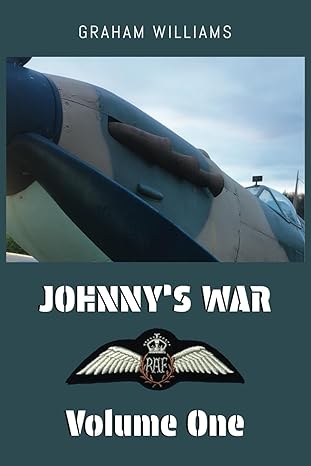
Graham Williams’ Johnny’s War: Volume One is a heartfelt and immersive account of a young man’s journey from the peaceful English countryside into the skies of World War II Britain as a trainee RAF pilot. Told through a blend of personal letters, vividly detailed scenes, and nostalgic reflection, the story follows John “Johnny” Pink from his family home to the RAF training grounds. Along the way, readers are introduced to a cast of fellow cadets, the unbreakable bond between friends, and the anxieties of wartime youth. It’s a story that doesn’t glorify war—it personalizes it, through the eyes of a son, a friend, and a hopeful pilot.
Reading this book was an emotional ride. I was struck right away by the authenticity of the writing—it didn’t feel like fiction. The dialogue between characters, especially Johnny and his friend Tommy, was real and warm, full of that particular blend of courage and awkwardness you’d expect from young men stepping into war. I appreciated how the author didn’t rush anything. Scenes breathed. Letters home from Johnny gave the book its soul. And the flying scenes were genuinely thrilling. The writing is simple and tender, almost old-fashioned in tone, which fits perfectly with the 1940s setting. The pacing is gentle, but it suits the story’s reflective nature.
What really hit me was the depth of care in the relationships. Johnny’s bond with his father had me choked up more than once. There’s such dignity in the way George keeps his hope alive, reading letters, tending the grave of his wife, and waiting. It’s a slow burn emotionally, but the ending caught me off guard. The buildup to Johnny’s solo flight was incredibly satisfying, both nerve-wracking and beautiful. And the quiet mystery of the boy with the apple added just the right amount of eerie wonder. This isn’t a flashy book—it’s thoughtful, steady, and often poignant. And that’s its strength.
If you love character-driven tales, historical settings done with care, and stories that tug at your heart more than your adrenaline, you’ll really like Johnny’s War. It’s a book for history lovers, romantics, and anyone who’s ever missed someone. I’d recommend it to readers who appreciate Band of Brothers for its humanity more than its action, or fans of heartfelt war dramas like Testament of Youth.
Pages: 364 | ASIN : B0F5Z2VXQT

An Unsung Neighborhood
The Mystery from Way Back When follows a man returning to his childhood church where he meets a young woman who is the baby he rescued years ago. She now needs his help to find her birth mother. What was the inspiration for the setup of your story?
My father grew up a member of a close family that were proud members of Sacred Heart Church in the Keighry Head neighborhood of Elizabeth, New Jersey. He attended Sacred Heart School and was even an altar boy. Sacred Heart Church later became Our Lady of Fatima Church. I wanted to set a mystery there, in Keighry Head. It’s an unsung neighborhood and, from my late dad’s stories, the way it once was when he was a boy during the Depression and World War II has pretty much disappeared.
What were the morals you were trying to capture while creating your characters?
Above all, strength of character and decency! The main character, Benny, doesn’t hesitate for a second when he sees a young girl at a distance abandoning a baby on the steps of his church. He takes the baby right home to his mother, knowing she can help the little one, and then tries to identify who abandoned her. It’s World War II. The people are patriotic. The kids have their eye on a suspected spy. Maybe a lot of people these days don’t realize this, but Catholics have always taken a lot of flak in this country, even yet, and especially since the whole situation came to light about the pedophile priests. In this story, the priest doesn’t belong in jail. He’s a really good guy.
What was your favorite scene in this story?
Oh, that’s an easy question! When Benny brings the abandoned newborn baby home and his mother tends to her, she starts to sing to the baby, and naturally, the song is “Baby Face.” Benny, his brothers, and even the old grandfather who lives with them chimes in. It’s joyous! It turns the baby’s sad start into something of a celebration of her arrival.
What is the next book that you are working on, and when will it be available?
There were two books that I had started working on and then put temporarily aside. I picked them up again and I’m continuing with both. They’re mysteries. One is set on a cruise ship and the other in a non-profit organization where someone is corrupt to the core and stealing the funds. I also have another one in mind, and it’s a mystery that unfolds during a wedding, where the parents of the bride are divorced and it’s always a battleground when they’re required to get together. So I’ve got three books in the works, and they should be available later in the year. Somehow, for me, it works out beautifully to work on more than one book at a time. I’m loving the whole process of creating all of these stories!
Author Links: GoodReads | X (Twitter) | Facebook | Website | Amazon
The only clue to the child’s origins is a note found in the basket requesting that she be raised Catholic. The police arrive to get the baby to the hospital while the parish priest arranges for her adoption. Meanwhile, the boys try to play detective and figure out who gave the baby up. Benny even has a likely suspect, Nancy Kilkenny, but she hotly denies it.
Years later, the baby, all grown up, has an urgent reason to connect with Benny and Timmy to try and find out what really happened way back when. Who was the mother who gave her away? What happened on that memorable day in 1944? And can she ever manage to find out the truth?
Contending With the Aftermath
To Bloom Like a Tulip follows a family separated by two continents during WWII and their efforts to survive as a Jewish family. What was the inspiration for the setup of your story?
I have known quite a few people who survived World War II in Europe. One of the toughest aspects of the war was that people didn’t always know where their relatives were, or what was happening to them if they were separated in different countries by the war. Communications between warring Allied and Axis nations were completely stopped. So in this story, the mother had taken her two youngest children to America to settle her late father’s estate. Her three oldest children and their father stay behind in the Netherlands so the kids can go to school and the father can run his business. They think their country is going to remain neutral as it did in World War I, so they’re not initially worried, although the Nazis are already gearing up to be on the march. Settling the estate takes longer than the mother thought it would, the war comes to Holland when the Nazis invade, and then, they can’t be reunited for years. Right there, that’s a cause for a lot of concern and worry on both sides. So that was the initial setup. Add to that, this is a Jewish family, so the ones under Nazi occupation are in peril. Imagine being in America and having to wonder what’s happening to them! Horrific. Yet it’s exactly what went on with a whole lot of families during that war.
What were some ideas that were important for you to personify in your characters?
The time period of this story is completely crazy so that in itself adds a lot of intriguing drama into the mix. Nazis turned normal life on its head in every one of the countries they took over, and, worse, state-sanctioned murder was legal. The Jewish characters are a nice family that’s just trying to survive and they find themselves in extraordinary circumstances. There are some very good people in this story, like the ones who hide the three children in a movie theater when matters become worse, and there are also some absolutely atrocious folks, hideous ones. A lot of prejudice came to the surface after the Nazis arrived on the scene, and the worst of the civilian characters suddenly think they have a green light to persecute others, in their own small ways. Others are just nosy and are watching their neighbors to see what they’re up to, but that’s terrifying to those they’ve got under scrutiny. So there was a lot to work with there.
What were some themes that were important for you to explore in this book?
I’ve heard that for many, many people who survived the war, the worst part of it wasn’t the war itself, incredibly, but contending with the aftermath. In this case, some of the characters are betrayed. They don’t know by who, and they don’t know why. Imagine making it through, yet having to live with a question like that! It would be like the “whodunit” from Hell, and it happened, for real, to scores of survivors. So that’s the big question they’re all trying to answer in this story, once the hostilities are over and they’re trying to go forward. Who did it?
What is the next book that you are working on, and when will it be available?
I’m in the middle of writing another mystery, and this one is set in the neighborhood where my dad grew up in Elizabeth, New Jersey. The characters in this one are Catholics. Two little boys find a baby abandoned on the steps of their church. It’s also set during World War II, but on the American homefront. I’m enjoying writing it to the hilt because my father grew up in a very colorful area with a lot of interesting personalities and I was told so many wonderful stories about it. The book should be available sometime this winter. Stay tuned!
Author Links: GoodReads | X (Twitter) | Facebook | Website | Amazon
The Van Der Graafs, Bram and Charlotta, took the risk of hiding Rika, Henk and Kees Spranger, concealing them in their movie theater. All went well – until they were betrayed. Who could have done it?
TO BLOOM LIKE A TULIP is the unforgettable story of good people in a bad time, their efforts to survive the war, and their ultimate determination to find out the identity of the informer.
Tremendous Social Injustice

The Fight of Their Lives presents a sweeping narrative of World War II, tracing the conflict from the fallout of the Treaty of Versailles to the dawn of the Cold War. Why was this an important book for you to write?
Well, there is certainly no shortage of books about World War II out there, but the vast majority are written for an audience of World War II history enthusiasts. I wanted to write–substantively and stylistically–something for a broader audience. Readers who are interested in history and want to learn more about the war, but would never pick up an 800-page book on the subject. The Fight of Their Lives is for them.
How much research did you undertake for this book and how much time did it take to put it all together?
I spent about two years researching the material for this book, but thankfully there are tremendous resources out there, from the National World War II Museum to the Holocaust Museum and Memorial, to all the historical documents, images, and records available from the US Army, US Navy, and US Marine Corps. I also relied a great deal on secondary sources, of which there are so many out there – all credited in my book.
What were some ideas that were important for you to share in this book?
First, the utter inhumanity that swept across the world in those years, and the horrific scale of death and destruction, particularly among innocent civilians. Second, the importance of global alliances and partnerships – we were hardly close friends with the Soviets, but very simply, we wouldn’t have defeated Hitler without them. And finally, although there are countless stories of perseverance, courage, and sacrifice in that era, it’s important for people, particularly Americans, to understand there was also tremendous social injustice at that time in our own country, most notably racial inequality and the wartime incarceration of Japanese Americans. Winning the war was imperative, but we had quite a bit of work to do at home.
What is one thing that people point out after reading your book that surprises you?
I think a lot of readers are taken aback by the degree of suffering among civilian populations. And to be honest, I’m glad that is making an impact – people really need to understand how profound that suffering was if we are to ensure it never happens again.
Author Links: GoodReads | Facebook | Website | Amazon
The Fight of Their Lives: A 21st Century Primer on World War II is a riveting account of the peril and resiliency that marked the darkest chapter in human history. From blood-soaked clashes across farm fields and jungle islands, to the code rooms and factory floors that powered the Allies to final victory, the fast-paced narrative fully documents the epic struggle that claimed at least sixty million lives. Styled to appeal to all audiences, The Fight of Their Lives is a timely read, from the legacies that remain supremely relevant today, to the lessons humanity cannot afford to learn again.
Janszoon


Mark Kraver’s Janszoon offers a compelling and meticulously crafted exploration of Hollywood icon Humphrey Bogart’s life, set against the tumultuous backdrop of World War II. While Bogart is widely celebrated for his on-screen charisma, this book delves deeper, revealing the complexities of his personal life—his fraught relationship with his studio, the marital discord with his wife Mayo, and his yearning for a lasting legacy and a sense of family. These personal struggles are intriguingly intertwined with Bogart’s fascination with his ancestor, the pirate Jan Janszoon van Salee, whose adventurous spirit and rebellious nature seem to resonate deeply with him. This connection propels Bogart to seek out his own form of adventure and to leave a meaningful mark on the world.
Kraver’s narrative skillfully weaves together Bogart’s personal history with the broader historical context of the 1940s Hollywood scene. His extensive research is evident throughout the book, as he vividly brings to life the golden age of cinema. The author’s ability to humanize Bogart, highlighting his cinematic achievements and his personal trials, makes this fictional biography both engaging and insightful. Through detailed accounts from Bogart’s contemporaries, studio archives, and historical records, Kraver offers readers a nuanced portrayal of a man driven by both his personal demons and his desire for significance. One of the book’s strongest elements is its exploration of Bogart’s internal conflict. The juxtaposition of his tough-guy image with his more vulnerable moments is compelling and offers a nuanced portrayal of a Hollywood legend. The conversations with his aunt and cousin about his family’s pirate ancestry add a unique layer to his character, linking his rebellious spirit to a storied past. These moments of introspection are where the book truly shines, offering insights into Bogart’s motivations and the pressures he faced in both his personal and professional life.
Janszoon stands out as a richly informative and captivating work of biographical fiction, offering a fresh perspective on a legendary figure. Kraver’s expert storytelling invites readers to journey alongside Bogart, experiencing the highs and lows of his life both on and off the screen. This book is highly recommended for those who appreciate historical fiction, drama, and a deep dive into the life of one of Hollywood’s most enduring legends.
Pages: 465 | ASIN : B0CZ7MCXPP
A Conflict Between Love and Tradition

Beyond the Bukubuk Tree follows a young Jewish doctor and a Catholic WWI veteran who are assigned to the same battalion and form an unlikely bond. What inspired the setup of your story?
I wanted to convey two emotional truths in the novel: the beauty of Rabaul, which has a quality of enchantment as it nestles between active volcanoes and lush green flora; and the conflict between love and tradition during wartime. An uncle I never met served in that battalion, Lark Force, and his service inspired me to write Beyond. Family anecdotes suggest that he was conflicted about his sexuality although we don’t actually know. I felt a deep connection to an unspoken pain I saw in photographs of hm. Sharing this truth in a fictionalized character allows readers to connect with characters on a deeper level. I knew that in mainland New Guinea at this time, many incidents of male-male intimacy between soldiers were investigated by the Army. Like Alan Turing, gay soldiers gave their all to their country. It’s time to honor them.
Jake and Alex both have secrets they keep hidden and struggle with their emotions while remaining strong as the battles continue. There was a lot of time spent crafting the character traits in this novel. What was the most important factor for you to get right in your characters?
That they started from one way of functioning in society that repressed vital parts of themselves. With Jake, the orthodox Jewish doctor, it was his desires. With Whipple, his childhood and war traumas gave him a nihilistic view of humanity, stifling his capacity for hope and generosity. Their deepening bond in the crucible of war transformed them.
What were some themes that were important for you to explore in this book?
First, Lark Force, the lone battalion of volunteers defending Rabaul, was under-resourced and abandoned by the Australian Government. Documents revealing that the government never had a plan to reinforce or extract them were concealed for 50 years. But the soldiers gradually realized their plight as peril approached. I wanted to bring to life those moments of revelation. Fiction seemed like a better genre for me than non-fiction.
Second, to convey the diverse population of Rabaul in 1941-2: Australian administrators and soldiers; a solid community of Chinese merchants; and the majority indigenous Tolai inhabitants. These communities’ cultures were opaque to each other but they were interdependent. I wanted characters from the different communities to have a voice in this war between white and Japanese colonists that upended all their lives. It was a risk to do this, but I felt compelled. I love Rabaul!
What is the next book that you are working on, and when will it be available?
I have a sequel to The Reversible Mask: An Elizabethan Spy Novel in rough shape but no scheduled release. Believe me, Literary Titan will be the first to know. My shorter articles on a variety of topics are likely to come out first. But thank you and readers can stay in touch with me via my website.
Author Links: GoodReads | Facebook | Website
New Guinea, 1941. Heroism, sacrifice and ultimately, hope, transcend the terrifying war.
Two men preparing for war, both with secrets they are determined to keep. Jake Friedman, an idealistic young Jewish doctor from Melbourne, is haunted by the death of a colleague he thinks he caused. Alex Whipple, a Catholic known as Wip, is a soul-scarred veteran of the First World War. Wip is an enigma who fights bullies on behalf of their victims yet has a chequered past in the wild side of post-war Paris that he is determined to forget.
Both are posted to Lark Force, a lone and under-resourced battalion defending the port town of Rabaul. It’s not long before Jake and Wip feel a deep pull of attraction. When the Japanese invade Rabaul, their battalion is abandoned by its government. Improvising a desperate jungle retreat, fighting rain, insects, disease, and vengeful Japanese pursuers, Jake will face the ultimate trials of his courage as Wip struggles to find the will to live.
***
This meticulously researched and richly textured novel is set in a lesser-known battle of the Pacific War. The strength of the human spirit, the bonds of love, and the resilience of diverse communities are tested against the backdrop of these battles. “Beyond the Bukubuk Tree” is a gripping saga of courage, love, and survival in the face of overwhelming adversity.
PRAISE FOR BEYOND THE BUKUBUK TREE
This is a war novel like no other, an aching love-story of two people trying to do right when everything around them has gone wrong. With incredibly rich detail in her characters and their struggles, treating childhood polio, indigenous Tolai beliefs, the Aussie army during World War II and much more. Central to the story is a Jewish physician fighting his affection for a fellow officer, and a captivating, widely diverse supporting cast. With lyrical descriptions, the reader is absorbed into a time and place that history has forgotten, the tropical paradise of Rabaul on the deadly Pacific front line.
Nev March, author of award-winning Murder in Old Bombay
“Exquisite battle sequences of utter chaos. Readers can taste the feel of being outnumbered with antique WWI ordnance, all communications cut off, and no place to go. Homage to James Michener, Herman Wouk, and James Jones.”
Roger Crossland, retired U.S. Navy SEAL officer and author of The Abalone Ukulele
“You convey so well in your writing that Tolia people while very respectful are also a very proud lot.”
Tolai researcher Angelique Giranah, Director, Niugini Singaut Ltd.
“Gripping and sensual love story between two Australian officers during World War Two New Guinea, one a doctor driven to heal, the other an officer with a past he is determined to forget. Amid the worlds of army camp and hospital, the native Tolai, and the fight against fungus sores, malaria, and polio, Jake falls in love with the enigmatic Wip, love which was then against the law. The two men’s spiritual and physical bond will face even dire challenges as the first enemy bombs fall. BEYOND is an utterly fascinating nove. lMagically done. Very hard to put down, impossible to forget.”
Stephanie Cowell, author of Claude & Camille and The Boy in the Rain, American Book Award
Beyond the Bukubuk Tree: A World War II Novel of Love and Loss

Set against the tumultuous backdrop of New Guinea in 1941, Beyond the Bukubuk Tree, by Loretta Goldberg, is a masterfully crafted tale of heroism, sacrifice, and hope amidst the terrors of war. The story centers on two compelling characters: Jake Friedman, an idealistic young Jewish doctor from Melbourne, and Alex Whipple, a Catholic veteran of the First World War with a troubled past. Both men are posted to Lark Force, an under-resourced battalion defending the port town of Rabaul, and both carry secrets that haunt them. Jake is tormented by guilt over the death of a colleague he believes he caused, while Whipple struggles with memories of his chequered past in post-war Paris. Their relationship deepens as they face the impending Japanese invasion, leading to a desperate retreat through the jungle. This harrowing journey tests their courage and will to survive, with Jake facing the ultimate trials of bravery and Whipple battling his desire to live.
Author Loretta Goldberg’s meticulous research and rich narrative bring to life a lesser-known battle of the Pacific War. The novel explores themes of love, resilience, and the strength of the human spirit against overwhelming adversity. The characters are deeply complex and vividly portrayed, making their struggles and growth profoundly affecting. Beyond the Bukubuk Tree stands out not only as a gripping war novel but also as a poignant love story. The relationship between Jake and Whipple is sensitively and beautifully developed, set against the chaotic and dangerous backdrop of war.
Goldberg’s lyrical prose immerses readers in the tropical paradise of Rabaul, capturing both its beauty and its peril. The novel’s authentic portrayal of historical events, emotional depth, and character-driven narrative make it an unforgettable read. Readers will be captivated by the detailed descriptions, the intense battle sequences, and the touching moments of tenderness and connection. It’s a book that not only entertains but also offers a profound reflection on the resilience of the human spirit in the face of war’s horrors.
Beyond the Bukubuk Tree is an absorbing and satisfying read that will leave a lasting impression on anyone who picks it up. Loretta Goldberg has crafted a remarkable novel that combines the best elements of historical fiction and romance, making it a must-read for fans of both genres.
Pages: 395 | ASIN : B0D4MH8D63



 LITERARY TITAN