Blog Archives
Growing Up in Rural Louisiana: A Memoir
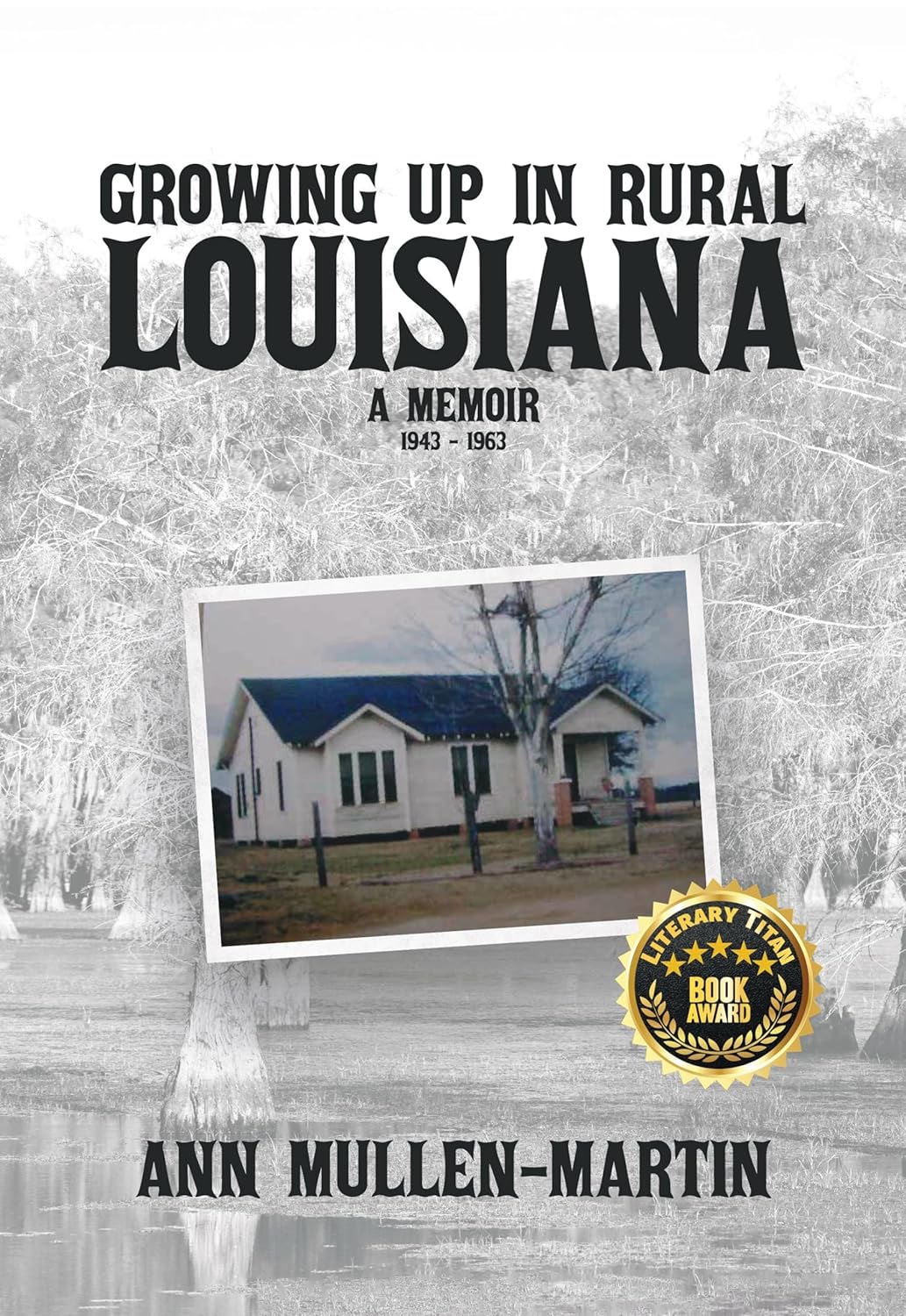

Growing Up in Rural Louisiana is Ann Mullen-Martin’s memoir of a girlhood shaped by family devotion, poverty without self-pity, religious feeling, rural custom, and the long shadow of segregation in mid-century Tioga, Louisiana. The book follows her from a childhood in a three-room shotgun house through school, grief, work, and the first stirrings of independence, until she leaves for Dallas carrying both the tenderness and the damage of what made her.
What I found most compelling is that the memoir does not merely catalogue events; it preserves a whole vanished atmosphere, creosoted walls, gravel roads, coffee at the kitchen table, railroad rhythms, and a community so small it could feel protective one minute and morally blinkered the next.
What stayed with me most was the book’s emotional grain. Mullen-Martin writes with a candor that gives the strongest scenes their force: the tornado remembered through a mother’s improvisational courage, the family’s move to the “big house on the hill,” the talismanic vase that gathers memory around it, and the raw, almost childlike terror of being sent to school and separated from her mother. None of this is dressed up into false lyricism; the feeling arrives honestly, and because of that, it lands hard. I admired the way ordinary objects and episodes accrue meaning over time. A vase is never just a vase here, and a report card is never just a report card. The book understands, in a way many memoirs do not, that childhood is not small just because it is young.
I also appreciated that the memoir is willing to look directly at the moral weather of its setting. Early on, the narrator names the racism around her with disarming clarity, including her father’s defense of segregation and her own adolescent absorption in a culture of “separate but equal.” That refusal to varnish the past gives the book more backbone than a merely nostalgic remembrance would have had. At times, the prose can be repetitive, and the book’s sheer length asks for patience, but even that excess feels connected to its deepest impulse: to save people and moments from being lost. I never had the sense that the author was performing wisdom after the fact; instead, I felt her trying to tell the truth as fully as memory permits, including where memory implicates her world and her younger self.
I’d recommend this book to readers of memoirs, family history, coming-of-age stories, autobiographical history, and inspirational life writing, especially those drawn to women’s lived history, rural life, faith, and intergenerational memory. It will likely appeal to readers who respond to Jeannette Walls, though this book is gentler in register and more regionally rooted, with less narrative flash and more porch-light intimacy. I came away feeling I had not simply read about a childhood, but briefly inhabited one. This memoir’s great gift is that it makes a modest life feel momentous without ever pretending it was anything else.
Pages: 553 | ASIN : B0DNNVFW6R

Clarity

In Writing in the Wound, you share with readers what it means to be shaped by academia, gendered power, and migration, and how your reliance on music proved to be a method of rescue. Why was this an important book for you to write?
I began writing Writing in the Wound at a moment of profound emotional and political intensity in my life. After years of navigating the Canadian immigration system, I found myself confronting not only institutional barriers but also the deeper psychological and embodied impact of living within them.
Initially, I considered writing a more overtly critical, policy-driven book—one that directly addressed the failures and frustrations of the immigration system. But I realized that such a project would take me away from my core as an artist.
What felt more urgent was to write from within my own lived experience—through sound, memory, and relationship. This book became a way of tracing how I endured, and what allowed me to stay. In that sense, it is not only a story of struggle, but of artistic becoming.
In its early drafts, the manuscript was expansive and uncontained. Over time, it found its center—particularly through my relationship with my mentor, which offered a space of care, listening, and growth. That relational grounding became essential to shaping the narrative.
Ultimately, this book created a new path for me—a path where I was no longer masking who I am or what I am enduring within this system. It allowed me to situate myself clearly as an artist, while also naming the conditions I was navigating.
I wrote this book not just to document what happened, but to understand how one continues to create, even within systems that constrain and wound.
Music appears as discipline, refuge, and language—when did it become central to your survival?
Music became central to my survival during the uncertainty of the COVID-19 period. After serving as Music Faculty for Semester at Sea, I travelled to Karachi due to the pandemic and found myself unexpectedly unable to return to Canada for nearly two years, at a time when institutions were largely closed and opportunities had disappeared.
In that period of precarity, when academic institutions had stopped hiring faculty, and it was difficult to teach remotely from where I was situated, music shifted from being a practice of expression to a practice of sustenance. Earlier compositions, like Anticipating and Living with Purpose, had received recognition on international charts and in competitions, which gave me the confidence to continue applying for opportunities. Then, Perils of Heavy Rainfall received Second Prize in Listening during COVID contest (2020).
Gradually, commissions and invitations followed, including from organizations such as New Music Edmonton and New Music Calgary, as well as from the International Women’s Day festival and the Canadian Music Week platform. What began as a fragile thread of continuity became, over time, a means of survival—both materially and emotionally.
Was there a moment when you felt your voice shifting—from survival to assertion?
Yes—there was a moment when everything I had been experiencing condensed into a single, clear sentence: that after 17 years in Canada, I still did not have permanent residency, and that this was not incidental, but tied to the structural limitations of the immigration system.
This clarity came to me in July, during a later stage of working on Writing in the Wound. By that point, the writing had begun to settle, and I was able to see my experience not only as something I had lived through but as something I could name with precision.
Being able to name that so directly marked a shift for me. Until then, much of my writing had been about processing and surviving. But that sentence became a position—it allowed me to see my experience not as an individual struggle, but as part of a broader systemic pattern.
Around that time, I also began to explore new pathways within the immigration system, including applying on humanitarian and compassionate grounds. That process required me to articulate my story not only as narrative, but as a formal claim—something that could be recognized within institutional frameworks. In that sense, my voice was no longer only expressive; it became strategic and assertive.
This shift was also reflected in how my work moved into public space. My writing on the undervaluation of artistic labour was published in Canadian Dimension, and I began sharing my story in community settings, including an event with Action Dignity. Speaking in those spaces—where these issues are often not centered—felt like an important act of bringing lived experience into public discourse.
That momentum continued with invitations to speak at larger gatherings, including a Labour Day event, where my story was witnessed by a wide network of community organizations.
In that sense, assertion was not a single moment, but a series of acts—each one moving my voice from private endurance toward public articulation and advocacy.
What is one thing you hope readers take away from Writing in the Wound?
At its heart, the book asks: what happens when our scars begin to speak?
I hope readers come away with a deeper recognition that the wound is not only personal, but structural. Experiences of migration, racialization, and institutional struggle are not simply endured—they also carry strength, insight, and endurance. They shape ways of seeing, feeling, and creating that are often overlooked or undervalued.
For those navigating migration and racialization, these experiences are frequently internalized, fragmented, or rendered invisible. This book is an attempt to give them form—to show that what is carried in the body and in memory can become voice.
If there is one thing I hope readers take away, it is that these experiences are not only sites of injury, but also sites of knowledge. When scars begin to speak, they do more than tell a story—they begin to name the structures that produced them, and in doing so, open the possibility of shifting those systems—and one’s positionality within them.
Author Links: GoodReads | X (Twitter) | Facebook | Website | Amazon
For Dr. Shumaila Hemani, music began as a calling. It unfolded into a life path through a rare human connection with eminent ethnomusicologist Professor Regula Burckhardt Qureshi, whose faith in her awakened the courage to risk everything for the artist’s path.
Spanning nearly two decades — from 2006 to the present — across the academic corridors of Harvard and the University of Alberta to the soundscapes of London, Boston, Chicago, Edmonton, Mumbai, Karachi, Calgary, Banff, and Toronto, and a world odyssey aboard a floating campus, Writing in the Wound is a story of resilience and fragile belonging, of visibility and erasure, and of the power of art — in particular Sufi music — to transmute pain into wisdom.
It is an intimate testament to truth and vulnerability in the face of institutional silencing, immigration precarity, and the long endurance toward permanent belonging.
Writing in the Wound: Acculturation, Trauma, and Music
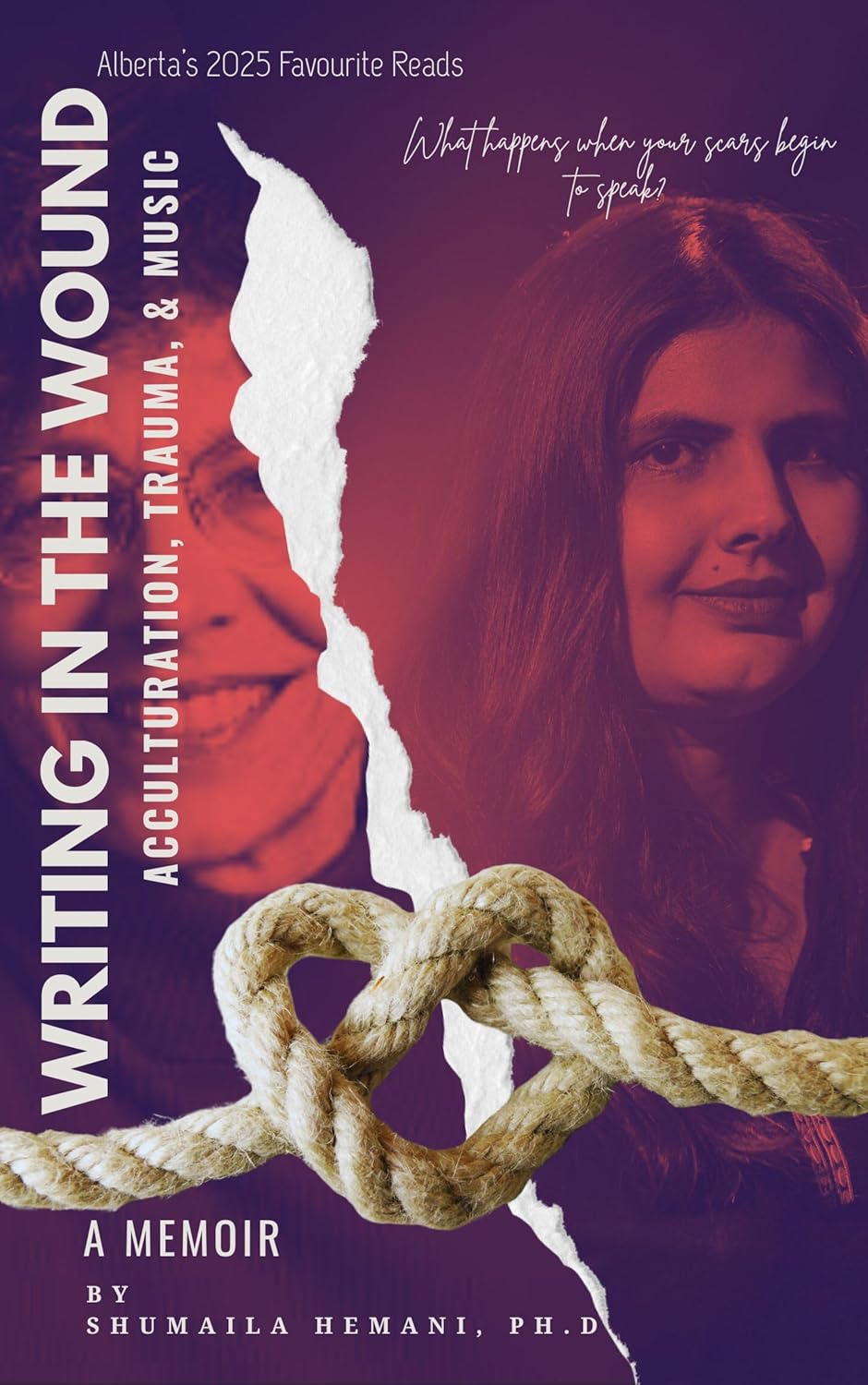

Writing in the Wound is a memoir about what it means to be shaped and repeatedly injured by migration, academia, gendered power, and the long bureaucratic violence of immigration precarity, while still refusing to let art go mute. Author Shumaila Hemani traces that struggle across Karachi, London, Edmonton, Harvard, Banff, Calgary, and beyond, returning again and again to music as both discipline and rescue. What stayed with me most was the book’s insistence that the “wound” is not just a private sorrow but a structural fact, something lived in the body and sharpened by institutions, and that song can become not a cure exactly, but a way of bearing truth without surrendering to it. Scenes like the freezing Alberta night when she seeks refuge in a restaurant lobby, her charged decision between Chicago and Harvard, and the later episodes of artistic endurance under precarity give the memoir a real narrative pulse beneath its reflective surface.
What I admired most was the book’s emotional candor and the seriousness with which it treats art. Hemani writes as if sound were breath, shelter, lineage, prayer, argument, and last defense all at once. I found that deeply moving. Some of the strongest passages are the ones where sensory memory and intellectual reflection fuse cleanly: Karachi’s street sounds and household textures, the strange thrill of hearing the theremin in London, the feeling of Cambridge as a place that “held” her differently, the sea storms aboard the World Odyssey, the pink-moon stillness that arrives after so much psychic abrasion. The prose can be overtly lyrical, but for me, that ambition is mostly earned because it rises from lived intensity rather than decorative flourish.
Its ideas are forceful and, at their best, unsettling. Hemani’s central claim that exclusion is often discussed in abstract policy language while its damage is absorbed by actual bodies felt painfully persuasive. The memoir is strongest when it shows that argument rather than merely stating it: in the humiliations of school and class performance, in the uneasy academic encounters where she feels reduced to a gap to be filled rather than a mind to be met, in the grinding absurdity of years of achievement that still do not translate into belonging. There were moments when I wanted a bit more compression, because the book sometimes circles its pain. But even that repetition began to make sense to me as part of the memoir’s design. Trauma here is not tidy, and Hemani refuses to fake tidiness for the reader’s comfort. I respected that.
I found Writing in the Wound arresting, thought-provoking, and fiercely alive. It’s a memoir that believes art can carry knowledge that institutions cannot properly hear, and that belief gives the whole book its tensile strength. It keeps faith with fracture while still making room for beauty, devotion, and survival. I’d recommend it especially to readers drawn to memoirs of migration, music, trauma, and intellectual becoming, and to anyone interested in how a life in art can be both exalted and terribly precarious.
Pages: 290 | ASIN : B0FVQB8XGV
Through Her Eyes: A Memoir of Purpose and Courage
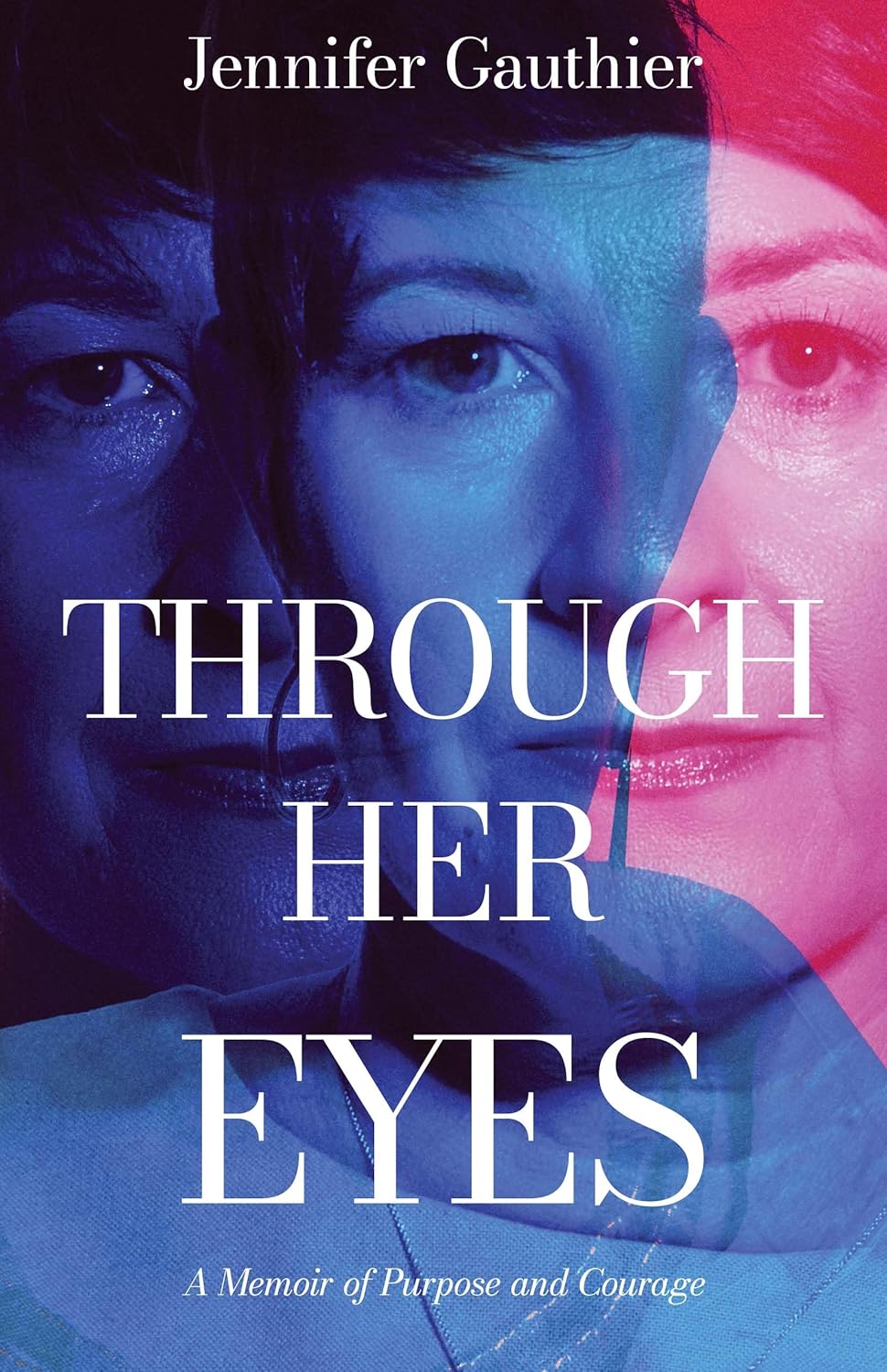
Through Her Eyes follows Jennifer Gauthier as she grows from a noisy, painful childhood into the role of founder and CEO of a nonprofit that centers healing, youth, and community. The book moves through her early years in a home shaped by addiction, her teenage pregnancy, homelessness, and single motherhood, then into her spiritual searching, discovery of Sufism, and her work as a mentor and leader. Along the way, she keeps circling one core message. Your story is yours to claim, even if the first chapters were written by other people.
I felt her voice first, more than any single scene. The writing is direct and chatty, like a friend talking with no filter. She warns you early that she is “that person” who talks to strangers in line and laughs too loud, and the prose matches that energy. I liked that she keeps the language simple and straight. She uses a lot of short, punchy lines, and she often drops into story mode with “Throwback” sections that read like spoken-word pieces. That style pulled me in. I could almost hear her accent, see her hands moving while she talked. She jumps from memory to lesson to side story in quick turns, and sometimes I wanted a bit more shape or pause, a little more space to sit with one scene before we moved on to the next.
Emotionally, the book hit me hardest when she wrote about addiction, codependency, and the way a child tries to manage a house that feels unstable. Her honesty about wanting her father to die, then shifting into years of praying for him to live sober, landed with real weight. There is no polish on those parts, and I appreciated that. I also liked her insistence on personal responsibility without erasing systems and trauma. She talks about racism, privilege, generational patterns, and spiritual harm, and still looks straight at herself and asks, “What can I control today.” I would have liked more direct talk about structural barriers, especially given her work with underserved communities. Even so, the through-line of “I will not stay stuck” felt honest to her story and background.
I walked away feeling like I had spent time with a real person, not a polished brand. The book would be a strong fit for readers who grew up around addiction, teen parents, people who have experienced trauma and are now ready to look at it, and anyone in social work, education, or youth programs who wants a reminder of what their clients might be carrying. It will also speak to women building something from scratch in midlife, especially those who feel “too loud” or “too much.” If you want a raw, talky, spiritually curious, no-nonsense story from someone who has actually had to claw her way forward, I recommend Through Her Eyes.
Pages: 228 | ASIN : B0GCFCTHLL

Coming Free
Ashley Abaie’s Coming Free is one of those rare memoirs that grips you from the first page and doesn’t let go, not because it promises fame or glamour, but because it offers something far more compelling—raw truth. It’s a journey through a life shaped by neglect, perseverance, and a relentless hunger to be seen. Ashley walks us through her childhood, adolescence, and early adulthood with stunning honesty, sharing stories of abuse, abandonment, cultural displacement, eating disorders, spiritual awakening, and ultimately, healing. It’s not neat. It’s not pretty. But it’s real. And that’s what makes it powerful.
I liked how Ashley captures the complicated, often contradictory emotions of growing up in a family that looked normal from the outside but was anything but. There’s a passage early on where she describes being forgotten in the snow for hours, wearing flip-flops, only to brush it off as a regular part of life. The way she recounts it—plainspoken, even a bit humorous—is heartbreaking. She doesn’t need to dramatize her pain. It’s just there, quietly devastating. And it’s in these small moments—dragging a bassoon case home alone in the snow, wearing fifth-grade underwear in high school, watching her brother spiral while trying to stay invisible—that I felt her loneliness, deep and aching.
The writing itself is conversational, poetic at times, but never pretentious. Ashley’s voice feels like a friend who’s finally decided to spill everything over a long coffee date. Her humor is dry, her observations sharp, and her emotions raw. When she writes about collapsing from malnutrition and basking in the rare moment of attention from her dad at a Mediterranean restaurant, it broke me. “I basked in my dad’s care,” she says. It’s such a simple line, but loaded with years of hunger—for food, yes, but more for love. I found myself rooting for her not just to survive, but to thrive. And when she finally begins to find that spark of purpose during a service trip in Mexico, it felt like breathing fresh air after being underwater.
What surprised me most was how she finds redemption not in the usual places, but in unexpected acts of service and spirituality. Her accidental dive into Christianity—after unknowingly signing up for a missionary trip—is both hilarious and oddly moving. She’s skeptical, awkward, and completely unprepared, yet open in a way that makes the experience feel authentic. Her reflections on mixing concrete, building homes, and connecting with strangers in a colonia in Reynosa are among the most touching parts of the book. She writes about laying cinderblocks like she’s laying the foundation for her own rebirth. And in those dusty streets, surrounded by poverty and purpose, she starts to heal in ways therapy hadn’t yet managed.
Coming Free isn’t tied up with a bow. Ashley doesn’t pretend to have it all figured out, and that’s what makes her voice so trustworthy. It’s a book for anyone who has felt invisible, who’s been through the fire and come out the other side unsure of what’s next. It’s especially powerful for those navigating childhood trauma, identity struggles, and the long road to self-worth.
Pages: 272 | ASIN : B0DRH75YLC
Changing Shoes: Staying in the Game with Style, Humor, and Grace
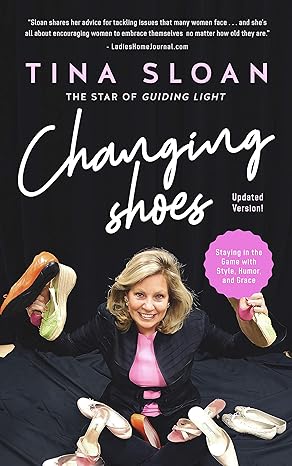
Changing Shoes: Staying in the Game with Style, Humor, and Grace by Tina Sloan is an engaging, heartfelt exploration of aging, life’s transitions, and the power of reinvention, all told through the lens of an actress’s glamorous yet relatable life. Using shoes as a metaphor, Sloan recounts her journey through youth, middle age, and beyond, detailing her career, family, and personal revelations with humor and vulnerability. She encourages women to embrace the inevitability of change with style, grace, and self-respect.
What struck me immediately was Sloan’s candid voice. Her storytelling feels like a warm conversation with an old friend. In the first chapter, she describes a jarring realization in a Manhattan coffee shop: younger women, not her, were the center of attention. Her vulnerability in admitting feelings of invisibility resonates deeply. She reflects on her glamorous past while candidly confronting aging’s physical and emotional realities. Her balance of humor and poignancy here is nothing short of inspiring.
The book’s structure, woven with personal anecdotes and life lessons, is another strength. One particularly touching moment is her memory of Aga Church, a Parisian mentor who taught her to live boldly and stylishly. This tale about shoes as symbols of life’s chapters, some for fun, some for seduction, and others for practicality, adds a whimsical yet profound layer to the narrative. It reminded me of how objects, like shoes, can carry emotional weight and personal history.
Sloan’s honesty about the challenges of aging in a youth-obsessed culture is refreshing. Whether discussing her rejection of plastic surgery or her heartbreak over letting go of youthful clothes, she never sugarcoats. I loved the scene where she reluctantly sends her favorite dresses to her niece after realizing they no longer suit her body. Her wit shines here as she laments, “Watching the UPS man haul my youth away felt like losing a part of myself.”
By the end, Sloan’s message is uplifting: aging doesn’t mean fading away. It means finding new ways to shine. Her advice to “wear your own shoes” to embrace your individuality and authenticity feels both empowering and timeless. Her ability to transform deeply personal struggles into universal lessons makes the book a gem.
I’d recommend Changing Shoes: Staying in the Game with Style, Humor, and Grace to women navigating midlife and beyond or anyone who enjoys reflective yet humorous memoirs. It’s a delightful mix of wisdom, self-deprecation, and inspiration. Sloan reminds us that aging, while challenging, can be a stylish, fulfilling adventure if you wear the right shoes.
Pages: 225 | ASIN : B086BLBFF6
Quell the Cringe with Curiosity
Rosemary, Now and Then is a heartfelt memoir that chronicles a paramedic daughter’s care for her mother, Rosemary, through the labyrinth of strokes and dementia and lessons learned about life along the way. Why was this an important book for you to write?
In addition to honoring my inimitable mother, Rosemary, Now and Then tells a story of quality living with dementia, end-of-life surprises, and afterlife intrigue based on near-death experiences. These topics–too often ignored–can be uplifting experiences for all of us, as mortal human beings.
What were some ideas that were important for you to share in this book?
Asked what I wrote about, if I were to simply say, “dementia and dying,” people would naturally cringe. So familiar we are with associated misery, but less acquainted with the amazing phenomena of these transformative experiences. Rosemary, Now and Then aims to quell the cringe with curiosity.
What was the most challenging part of writing your memoir, and what was the most rewarding?
An author, not a marketing strategist, the post-launch world requires a PR hat not in my wardrobe. But connecting with writing groups and other authors has proven invaluable.
It is most gratifying to share with readers the wonderful person I had the privilege of calling “Mom.” Beyond a daughter’s devotion, when readers relate to the broader message–virtually redefining dementia, dying, and death–we join together in a paradigm shift; an understanding of mortality as a gift of lifelong opportunities and death as immortal reacquaintance with the infinite, loving Beyond.
Fine threads of brilliance weave intricate Irish-veil thoughts through her filigree mind. Her three-year-old self emerges, radiant and quizzical. Grappling with the nature of existence, Rosemary laughs her way to the grave. Devoted daughter Christina devises caregiving innovations and connects dots of amazing coincidences. Paradoxes of mortality balance gravity with hilarity, pain with joy, absurdity with wisdom, practicality with mysticism.
The “Now and Then” format depicts leaps in time, place, and person that challenge reality, in league with Rosemary’s mind.
A journey of wit, wisdom, and sheer determination, Rosemary’s story concludes with her signature cinnamon bun recipe for readers to bake and share with loved ones . . . as Rosemary would do.
Rosemary, Now and Then
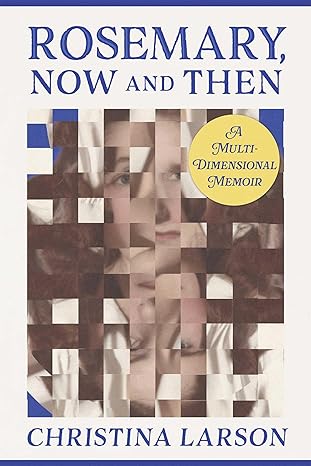
Rosemary, Now and Then is a heartfelt memoir that chronicles the author’s experience caring for her mother, Rosemary, through the labyrinth of strokes and dementia. This story is about resilience, love, and finding moments of humor and grace amid decline. The book paints an intimate portrait of a woman whose vibrant personality and sharp wit remain luminous despite her fading health. It delves into the challenges of caregiving, the philosophical reflections on mortality, and the surprising gifts of dementia, offering readers an unexpectedly uplifting perspective on life’s inevitable final chapter.
The writing is unflinchingly honest and emotionally raw, yet it’s peppered with humor that keeps the tone buoyant. One moment that stood out to me was when Rosemary, in the throes of a stroke-induced episode, commented on walking backward into a wall, comparing it to her mother’s wringer washer. It’s poignant and hilarious, a testament to Larson’s ability to capture the absurdity and humanity of such situations. These anecdotes keep the narrative personal and relatable, transforming it from a clinical account into a deeply human story.
I particularly appreciated Larson’s exploration of dementia not as a linear descent but as a reorganization of memories and self. Rosemary’s “mental excursions” into her past and imagined realms are described with a mystical reverence that challenges the stigma surrounding cognitive disorders. The book doesn’t shy away from showing the hard truths of caregiving, from burnt meals to late-night hospital runs. It also highlights the transformative power of love, like Larson’s determination to honor her mother’s wishes to maintain her dignity and humor to the very end.
One of my favorite sections was the rehabilitation episodes, especially Rosemary’s knack for connecting with strangers at the rehab center. The way she toasted “to the witnesses” at lunch, a subtle nod to Longfellow’s poem about slavery, demonstrated her sharp intellect and enduring sense of justice. It’s these moments of depth and insight that elevate the book from being just a caregiving memoir to a broader reflection on life’s interconnectedness and the enduring strength of character.
Rosemary, Now and Then is a beautifully written and deeply moving memoir that will resonate with anyone who has cared for a loved one through illness or who is curious about the interplay between life, death, and memory. Larson’s storytelling is warm and conversational, making complex topics accessible and relatable. I’d recommend this book to caregivers, healthcare professionals, and anyone seeking a profound yet uplifting exploration of the human condition.
Pages: 355 | ASIN : B0DQLNNFQN


