Blog Archives
Relentless Commitment

Transform Procurement: The Value of E-Auctions is a practical, clear-eyed guide to building an e-auction program that actually works, not just as software adoption but as a cultural and strategic shift inside procurement. Why do so many e-auction programs fail before they even start?
A lot of procurement teams try to use e-auctions to replace the Request for Proposal (RFP) instead of viewing them as a negotiation tool. Viewing e-auctions as a quick RFP is such a small piece of what they can do that it’s like using your chainsaw only to cut down trees. Just as a chainsaw can also help you make firewood, cut up brush into manageable piles, or even carve a beautiful sculpture in the right hands, an e-auction can also reduce lead times, bring clarity to complicated bids with lots of options, speed up contracting, and improve scopes of work. E-auction programs fail because they don’t treat e-auctions as a tool in the toolbox and don’t articulate the value of that tool to stakeholders (both internal and external).
The book highlights internal resistance as a major barrier. What are the most common forms of pushback, and how can leaders build buy-in without forcing adoption?
The example I see most often is that a supply chain or procurement leader tells their team, “We’re going to start using e-auctions.” The team goes through training, they identify categories to start with, issue an RFP, and tell suppliers there might be an e-auction in the negotiation bid phase. Then the buyer receives a phone call, usually from the incumbent supplier, who tells the buyer that the supplier won’t participate in an e-auction, that this will destroy the supplier relationship, and the buyer just cares about price and not value if they move forward with an auction. This scares the buyer, who has been well-trained that procurement is about relationships (because it is!), and they go to their leader and ask for an exception. “I know we were planning to do an e-auction for this category, but I just don’t think we should anymore.” This is the critical moment for the leader. If they say, “You don’t have to do the e-auction,” that set of suppliers and that buyer will now never try one again. If the conversation gets to this point, I highly recommend that the leader have the buyer at least try the e-auction and have a conversation with the supplier about how the buyer considered full value in their e-auction setup.
The “e-auction exception” conversation is common because the buyer never understood the reasons the company was using e-auctions in the first place. Every procurement team member has to understand the why of e-auctions: considering true value (freight, tariffs, which options are in or out, communicating clear business opportunities to suppliers, etc.), and they also have to be ready with their answer to the suppliers who make that phone call. Supplier benefits to e-auction are transparency of where they are in the market, clarity of scope, and speed to a decision. When an e-auction ends, a supplier should know if they need to start prepping their team for the business or if they should spend their resources on other opportunities. A supplier who immediately pushes back against an auction without figuring out if the buyer is running it well may not be the supplier partner the buyer thought they were. An e-auction program tends to expose poor supplier relationships because those relationships can’t survive when the suppliers have to compete on a level playing field.
As Simon Sinek always says, the answer to building buy-in without forcing adoption is to “Start With Why” and help buyers and suppliers alike understand the value of the e-auction tool.
You spend a lot of time on supplier perception and trust. What do suppliers get wrong about e-auctions? What do buyers get wrong?
Suppliers tend to fear that their full value proposition isn’t being considered in an e-auction. This is part of why I insist on running an RFP ahead of the e-auction in most cases, because it allows the buyer to eliminate suppliers that do not meet quality, service, or specification standards. Only a short list of suppliers should be invited to the e-auction, just as only a short list of suppliers is invited to any procurement negotiation. In addition, if suppliers are proposing value-add opportunities (such as a faster schedule or extra support), the e-auction can help clarify if those extras are actually desirable to the buyer. If they are, the buyer should include them in the e-auction. If they aren’t, that may be an opportunity for both parties to save cost and effort by removing the extras from the bid.
Buyers often think that e-auctions are only useful for material bids with simple, clear specifications. Due to the proliferation of e-auctions in the early 2000s, the “simple” material bids, like fasteners or MRO, can actually be the most difficult to run. Those suppliers are most wary of a “race to the bottom,” and it’s common for the buyer to forget service components like shipping, stocking vending machines, or helping consolidate similar part numbers. I will happily run an e-auction for a capital improvement project like a factory expansion or a utility line construction long before I will tackle MRO. I’ve run e-auctions for or with clients that include debt collection, temp labor markups, marketing, elevator maintenance, software implementation, and a number of other categories that are definitely not direct materials.
You open with your first failed auction. What did that experience teach you that success couldn’t have?
I learned that e-auctions were trickier than they first seemed. E-auctions are not just a matter of “publish this, and the market will bid,” they take diplomacy and finesse. They require supplier phone calls and assurances. E-auctions often require creative setups and a relentless commitment to integrity and fairness. I also learned that a failed e-auction is not necessarily a failure for the buyer. If suppliers are truly putting their best foot forward in the RFP, then they will not reduce their price in the e-auction, and the auction was a quick confirmation that the buyer is paying market price (or getting market lead time, or whatever number is in the bid). An e-auction reduction of zero means the awarded supplier has a clear understanding of the scope, that the system has captured and confirmed their best bid, and that the supplier is treating the buyer like a true supplier partner.
Author Links: GoodReads | Amazon
If you want to increase supplier transparency, reduce costs, and improve your supply chain maturity, an e-Auction program is the answer. E-Auctions have a bad reputation because there are thousands of ways to do them wrong and only a few ways to do them right.
This book is your guide to thoughtfully implementing or expanding your e-Auction program in a way that brings value to your business. It will guide you through the order to gather buy-in (executives are first, but who is second?), resources needed, major decision points, supplier management, responses to common supplier questions, process steps, and how to e-Auction traditionally “unauctionable” categories. In addition, this book includes guidelines on writing a good scope of work with detailed examples, process maps, and sample supplier communications to smooth your path through implementation.
Topics covered:
Benefits of e-Auctions for both buyer and supplier
Timeline a typical e-Auction adds to the process (spoiler alert: it’s a couple of days!)
Psychology of e-Auctions
Building an e-Auction team
Setting ceilings, bid decrements, reserves, overtime, and tie rules
Determining exemptions to e-Auction by category (e-Auctions are not just for materials!)
Measuring and reporting metrics
Training suppliers while keeping or strengthening relationships
Writing bid criteria and a solid scope of work
Calculating bid transformations and including supplier transition costs
Fitting hourly rates, project components, creative services, and staff augmentation bids into your e-Auction strategy
Running single supplier e-Auctions (when and why would you do so?)
You may have either had an experience with e-Auctions or heard about them previously, but this book is here to tell you all those rumors don’t have to be true. While e-Auctions were rapidly adopted and then abandoned in the early 2000s, we’ve learned a few things since then. They don’t have to be a race to the bottom or an opaque way to just squeeze margins from suppliers. They can instead be a fair approach to allowing suppliers to improve their value and partnership to the business and get immediate market feedback. If you have been tasked with finding better value and more cost savings with less time and fewer resources, this book is for you.
You’ll go from accepting your suppliers’ first price to negotiating value with every bid.
You’ll go from only negotiating a few of your bids to negotiating all of them.
You’ll dramatically expand your negotiation toolset.
Order copies for your team now.
Femme Led
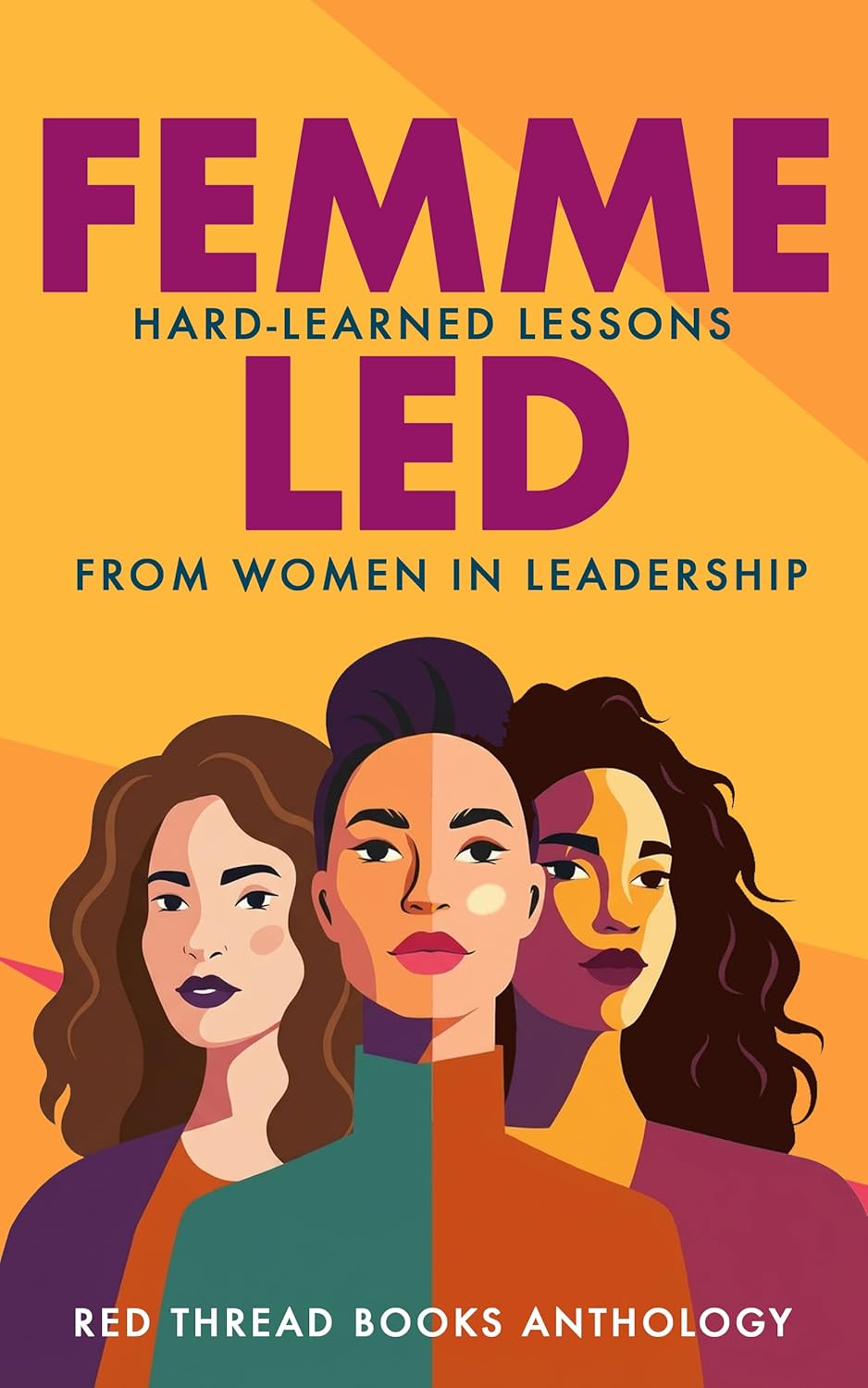

Femme Led: Hard-Learned Lessons from Women in Leadership is an anthology of women’s leadership stories that asks what becomes possible when leadership is no longer treated as control, performance, or self-erasure, but as truth lived in public. Across its chapters, the book moves from Sierra Melcher and Stephanie Mikulasek’s framing of the “leadership leap” to stories of reinvention, illness, entrepreneurship, grief, courage, and generosity. Catalina Escobar Bravo’s memories of growing up in Medellín, sleeping with taped windows during years of violence, eventually deepen into her purpose-driven work with Makaia. Carol Britton’s account of stepping into a high-pressure procurement role at the Bank of New York turns fear into a managerial instrument rather than an obstacle. Anna Dravland’s stroke and her transformation from a woman who did everything into a leader who built like a starfish instead of a spider web may be the book’s most tender image of all. Together, these essays argue that leadership isn’t a costume women must wear correctly. It’s a reckoning with one’s own voice, limits, power, and capacity to keep becoming.
What moved me most was the book’s assertion that the body often knows before the résumé does. I felt that idea gathering force each time a woman chose alignment over appearances: Tracy Macdonald turning in her badge and weapon after realizing the Secret Service no longer fit the life or values she could carry, Catalina stepping aside from the CEO role at Makaia to protect the mission rather than her title, Stephanie admitting that certainty itself had become a cage. These aren’t tidy triumphs. They ache. The book does a great job of showing how the emotional truth of leadership is often found in unmarketable moments: fatigue that rest doesn’t fix, ambition that has gone hollow, success that starts to feel like betrayal. I admired the way the authors return again and again to intuition without making it flimsy. Here, intuition is data of another kind, less quantifiable, perhaps, but no less exacting.
Some chapters read like polished keynote addresses, clear, instructive, almost ceremonious. Others arrive closer to confession, with rougher edges and a more immediate heat. Anna’s chapter, shaped around the aftermath of brain injury, resists a conventional arc, and I found that choice not only compassionate but artistically right. It lets form carry meaning. I was also struck by the range of metaphors the book earns rather than merely decorates with: the “leadership leap,” the internal flame, the spider web in a storm, the starfish that can keep functioning while it heals. The ideas circle familiar territory around purpose, resilience, and authenticity, but the best pieces refresh those words by grounding them in the particulars that people actually lived through, like Janice Marquardt leasing an office so her work would stop being absorbed by the quiet gravity of household labor, or Alexandra Yung reframing business as giving rather than transaction.
Femme Led respects uncertainty as part of the work. Leadership becomes most humane when women stop asking permission to be whole. I’d recommend this book to women in transition, founders, executives, coaches, nonprofit leaders, creatives, and anyone who has achieved the thing they thought they wanted only to feel some private truth pressing against the edges of it. This book’s gift is reminding us that crossing over can be frightening, scary, and necessary all at once.
Pages: 200 | ASIN : B0GQJPDW8Q

Transform Procurement


Transform Procurement: The Value of E-Auctions is a practical, clear-eyed guide to building an e-auction program that actually works, not just as software adoption but as a cultural and strategic shift inside procurement. Author Janice Marquardt walks through the mechanics of e-auctions, the internal politics that can quietly sabotage them, the supplier psychology involved, and the importance of disciplined scopes of work, executive support, training, metrics, and thoughtful parameters. What could have been a dry technical manual becomes a lived account of trial, resistance, and eventual fluency, beginning with her own failed first auction and expanding into lessons drawn from thousands of events across materials, services, and supposedly “non-auctionable” categories.
I was most drawn to the book’s insistence that e-auctions aren’t cold by nature, but can become cold when people use them lazily. Marquardt is persuasive when she reframes the old “sharpen your pencil” phone call as its own kind of theater, warm on the surface but often vague, biased, and inefficient underneath. That comparison stayed with me because it gives the book its moral center: fairness is not always the same thing as friendliness. I also appreciated how often she returns to the human messiness behind procurement. The CEO’s friend calling to escape an auction, the procurement team mapping the process as a “black hole,” the oddly delightful leadership-conference auction built around guessing a Whitesnake song, all of these moments make the subject feel less like process engineering and more like organizational psychology with spreadsheets nearby.
The writing is at its best when Marquardt trusts her experience and lets anecdotes carry the argument. Her tone is practical, unpretentious, and refreshingly free of mystique; she writes like someone who has been burned, learned the hard way, and now wants to spare the reader a few scars. The book’s structure is more like a manual, especially in the parameter-heavy sections on bid ceilings, reserve prices, overtime rules, supplier training, and metrics. I didn’t find that a flaw so much as a signal of the book’s purpose. It wants to be used. The ideas are strongest when they complicate the usual procurement reflexes: that price is never just price, that scope quality may be the hidden prize of an auction program, and that suppliers can benefit from transparency when the process is built with care rather than intimidation.
I came away from Transform Procurement with respect for both the discipline and the humility behind Marquardt’s approach. The book doesn’t romanticize e-auctions, but it does rescue them from their worst reputation, showing how they can reduce cycle time, clarify expectations, widen competition, and make procurement less dependent on charisma, incumbency, and back-channel comfort. It’s a smart, grounded read for procurement leaders, sourcing professionals, executives considering an e-auction program, and anyone who suspects their organization’s negotiation habits are more emotional and inherited than anyone wants to admit. I’d recommend it especially to teams that want practical guidance, but also need the courage to change how people think before they change what people do.
Pages: 146 | ASIN : B0F79T6F25



