Category Archives: Interviews
An Important Lesson

The Case Against Jasper is an allegorical mystery where a farm’s rush to judgment after a tragic accident exposes how communities distort truth when fear takes hold. What inspired you to explore human justice and mob mentality through the lens of animal characters?
The book was born out of a rush to judgement on my daughter’s part, who is age seven and arguing with her five-year-old brother and gossiping about him with her friends in the neighborhood. In order to teach both of them an important lesson, I created this theme about Jasper the squirrel and his endeavors. The story is a way to connect with them and give them an example that rushing to judgement and gossiping can have detrimental effects. Then enter Ink and Fiona, who represent intellect. Before rushing to judgment, look at the situation, study it and come to a conclusion. Ink and Fiona represented the internal intellect to look at things from all sides, test theories, and make decisions on the results. I liked the story so much that I decided to write the book.
Did you model any of the farm’s characters, like Ink or Fiona, after real people or archetypes?
Regarding real people, not really. The name Fiona is my mother’s name, so I used it in that way. Archetypes, absolutely. Jasper represents the scapegoat and those that are misunderstood. Jenny is the catalyst for the story. Others, like the group of squirrels, rabbits, etc., represent the mob. The hens, they are the hypocrites.
How did you balance the fable-like simplicity of the narrative with the weight of its moral themes?
By writing Jasper with a leaning towards gentle naivety, I allow the reader to experience injustice through the innocent eyes of Jasper. Although Jasper never fully comprehends the malice directed at him, he definitely feels it. It is this emotional honesty that preserves the purity of the fable while allowing readers to impose their own interpretations of guilt, grief, and alienation.
I think the ending leans toward restoration rather than punishment. What message did you hope readers would take from that choice?
Take any classic fable, and they typically end with punishment: the liar is caught, the greedy are undone, and the cruel are devoured by their own cruelty. Yet, The Case Against Jasper is written to break that cycle because the true tragedy of the story is born from misunderstanding, not malice. Jasper, as it turns out, never commits a crime. The crime is the community’s judgment itself. To punish would affirm the same broken logic that condemned him and would fall in line with classic fables. The stories’ true resolution must come from recognition and reparation, not vengeance.
Author Links: GoodReads
As rumors tangle like briars, a chorus of barnyard witnesses steps forward—some earnest, some opportunistic, all convinced they know what happened. Unreliable testimonies pile high: a jealous hen with a glint for shiny narratives, a rabbit fond of order and outrage, and a skittish mouse who “saw something.” With the farm on edge and a tribunal brewing, Jasper must prove his innocence before the story hardens into a sentence.
Enter Ink, the investigative ferret with a nose for hidden threads, and Fiona, the whisper cat whose quiet intuition hears what pride and fear try to bury. Together, they sift through half-truths and harvest-time politics to uncover what grief looks like when it’s weaponized—and what justice requires when the crowd wants a culprit.
Balancing Psychological Realism with Supernatural Metaphor
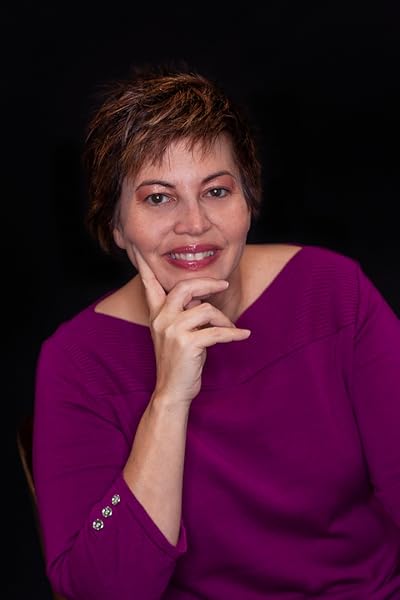
Purgatory follows a woman on the edge of sanity as she flees her past and finds herself trapped in a place where empathy is a curse, and redemption comes at the cost of self. What inspired you to frame Purgatory within the context of the UK’s Mental Health Act?
My own life inspired me to frame Purgatory within the context of the Mental Health Act. In 2017 I was sectioned and experienced what life was like in psychiatric hospitals first hand. When I got well I worked in mental health facilities for CAMHS patients aged between 12-17 it was important for me to work with this age group as I had my own struggles at this age and I wanted to be the person that I needed for the patients that I had the pleasure of supporting during their healing and rehabilitation. Two years ago I qualified as an intuitive life coach mainly focusing on helping people overcome trauma as a result of abuse, again something I knew too well, but I have always refused to let my pain from my past hold me back. Instead I chose to turn my pain into power and help as many people as I can. Mental health has played a big part in not just my own life but the lives of my family as well. So I know how difficult it is to access the right care and I know what happens when you don’t receive the right care or worse no care at all. It was always important to me to write about something that I have a good understanding of but something that genuinely means something to me and so many other people. It is so important for people to resonate so they know they are not alone and that is why I didn’t glamorise any parts of mental health in Purgatory, the truth is mental health is painful, disturbing and uncomfortable but if we keep being honest it will become less uncomfortable eventually make it easier to recover from.
The world of Blackthorn Palace feels both real and dreamlike. How did you balance psychological realism with supernatural metaphor?
Balancing psychological realism with supernatural metaphor was something that came easy to me. I have always had a love for magic, myth and supernatural. I would often remove myself from anything that was causing me pain and try and get lost in a good book or scary film to take my mind off what was going on in real life. I found comfort in other worlds that writers created and was fascinated about what a life after this one could be like. I felt alone throughout most of my life so when I discovered characters that had interest in things I liked or was able to learn more about the history associated with the supernatural it made me feel safe in a way that nothing else could. I was always going to combine my love and fascination with the human mind and spiritual world and hopefully one day Purgatory can be someones comfort.
What were some themes that were important for you to explore in this book?
The themes that were most important for me to explore in my book were the abuse themes and the affect it has on not just the person who is trying to navigate life after being abused and living with the trauma of it, but the people in their lives that are affected by it also, abuse has ripple effect on so many peoples lives even strangers who hear about someone being abused are affected by it. It was important that I made sure the parts of Purgatory that discussed abuse was done with raw honesty and no shame attached, Purgatory is the story of Rose Blackthorn and her journey into Purgatory, but it is also my own story and the story of many others so it would be an injustice not to write about abuse with the truth that every person who has survived abuse or still going through it deserves. I want it to give people strength and courage to speak out or recognise that what they might believe is normal is not.
What is the next book that you are working on, and when will it be available?
Purgatory-The Palace was the first book in the Purgatory Trilogy. The second book Purgatory-The Tasks and the third book Purgatory-The Final Battle are both available on Amazon. I would love to revisit all the characters I created in Purgatory again one day, but at the moment I have stepped away from fantasy worlds, I am currently working on a new bittersweet novel of a mother, a daughter, a widow, and a desperate sister.
An Even Greater Challenge

One True King follows the people in a kingdom teetering on the edge of chaos after their king has disappeared on a quest, leaving his companions to wonder where he is while his enemies try to take advantage of the situation. What was the inspiration for the setup of your story?
While The Hidden Kingdom and Shadow of the Dragon presented a number of challenging situations to navigate for Aaron and Timothy as well as their supporters, I felt that the story of One True King needed an even greater challenge that would impact every single character, whether good, bad, or on the fence, and rock the kingdom of Qiledara and the neighboring kingdoms to their core. Aaron’s disappearance created the perfect void and a very destabilizing event that would test everyone in Aaron’s close and distant circles, and his enemies. It gave me an opportunity to develop each character more in the process. I also wanted to expand on the subplot with Penelope which emerged in book 2 because when I wrote Shadow of the Dragon I had a lot more to reveal about her world, so One True King allowed me to do that and also continue to build on the Hidden Kingdom’s relationship with the rest of the world and its rulers’ ambitions.
What was the process like to create the audiobook, and what was it like working with Garan Patrick and Phillip Nathaniel Freeman?
It was so much fun for me to produce my own audiobook for One True King, to pick out all of these amazing voice actors to play specific key characters, and to work with Garan Patrick and Phillip Nathaniel Freeman who both encouraged me as an author by remarking on specific scenes they enjoyed! I was thrilled that all 20+ supporting voice actors were available to record dialogues for books 2 and 3 together so that I would have consistency across my series, and then I wove those dialogues into the main narration file for each chapter. In this chaotic new plot, there are many dramatic and intense scenes and Phil did an outstanding job bringing to life all the evil dragonkin characters as well other key players such as Theodamus, Gueric, and Otheran. After such intense scenes and dialogues, when sometimes all seems lost, Garan, as the main narrator, with his familiar, reassuring voice, brings us back to a sense of normalcy and makes us feel that, just maybe, things will turn out alright in the end. He also did a great job voicing some of the characters himself. Each voice actor contributed so much to drawing people into the story and added new layers to the story’s overall complexity. Louise Porter did an outstanding job bringing a relatively new character and strong female character, Penelope, to life and making her relatable. It was a lot of work pulling this large audiobook together but definitely worth it to hear it all together.
What scene in the book did you have the most fun writing?
I have several scenes I thought about at length and then wrote down, such as my descriptions of the lower tunnels in the ice cave and its exploration, or the escape from the tower. However, I would have to admit that my favorite scenes to write, and to listen to in the audiobook, were the interactions between Damien and the sentinel, and most of all, the dramatic exchange between the two dragonkin warriors and Damien. Robert Cassyleon did an outstanding job as the evil and narcissistic prince Damien throughout One True King with his many opportunities to interact with his co-conspirators and others. In general, I enjoy trying to throw in some twists and turns that readers/listeners do not expect.
Where does the next book in the series take the characters?
I hope to release book 4 in 2026 while the audiobook version of The Hidden Kingdom, Book 1, is about to be released on Audible. There are a few loose ends from One True King that remain to be resolved, such as an unsolved murder, and I also want to work on continuing to develop some of the love interests between certain couples. This fourth book in the series will serve as an opportunity to explain more about the way characters learn to wield their magic and provide some backstories that I’ve hinted at in the past but not yet explained. Book 4 will have a few major surprises in it that I do not want to spoil here. Thank you for listening to the audiobooks!
Author Links: GoodReads | Amazon
The absence of Aaron since he left on his quest troubles his companions. With his whereabouts unknown, the heroes of Qiledara are tested in ways they never could have imagined, and they face an ever-growing threat from beyond the Amber River. Meanwhile, Aaron’s enemies seek to take advantage of his absence for their own gain. Who will remain loyal and steadfast during these dark days, and who will bring the evildoers to justice?
His Amazing Stories About Rural Life

Tales of the Beechy Hollow Great Outdoors Club follows a weary journalist who returns home and stumbles into his late father’s wild band of outdoorsmen, discovering that friendship, foolishness, and the forest are entwined. Are any of the Beechy Hollow Club members based on real people from your own life or hometown?
All the main characters in the book are a composite, a blend of real people I’ve known across my life. Rufus Sneed, for example, was inspired by my great-grandfather, who was born in the 1800s and lived to be 99. He lived with my grandparents on a small farm until his death in the ’70s. I grew up listening to his amazing stories about rural life. Similarly, Rob and Rusty are fictionalized versions of my brother and me.
The foundation for the character Scoutster was a nerdy but well-intentioned Scoutmaster I once knew; I layered in traits of a bourbon-loving outdoorsman and a magistrate from other personalities. Same with Smitty, a good-natured farmer and mechanic who loves to hunt and fish. I’ve known lots of good people in Appalachia who fit that mold.
My personal favorite, Holly, is a combination of college friends and people I’ve met over the years. She will play a more significant role in the next book.
What were some themes that were important for you to explore in this book?
I set out to write a series of humorous outdoor stories. But over time, as I kept reworking and revising the stories and characters, I think a few underlying themes emerged. One is the innate human desire to return to our roots. All the stories spring from the main character, Rob, returning to his hometown. Other themes would be the redemptive power of wild spaces, and the Appalachian love of storytelling.
In my book, I primarily use these ideas to mine for humor. While some of the comedy definitely borders on the absurdist, I believe a heartfelt strain runs beneath the surface that speaks to a genuine love of home and the importance of found family. I’m always eager to hear what other themes readers detect in the stories. Of course, I also hope they get a chuckle or two along the way.
The setting feels so alive. What kind of research or personal experience shaped your portrayal of Appalachian life?
The stories are deeply rooted in my years of hiking, camping, and fishing across West Virginia, Kentucky, and southeastern Ohio. I’ve also spent time living in Tennessee and exploring the Great Smoky Mountains.
As for research, I began studying Appalachian dialects several years ago, starting as a newspaper project that quickly grew. This involved poring over books in the library and studying some of the linguistic research being done at West Virginia University. You can see this in the story, “The Evil Psychic Mule of Devil Ridge,” through the old-time mountaineer character, Shiloh Young.
While this type of speech was once dismissively called “hillbilly,” it’s now one of the most-studied dialects in the field. Sadly, authentic Appalachian speech is rapidly dying off. The good news is there’s less stigma affecting young people from our region. Appalachians are increasingly taking pride in their heritage. I hope some of that comes through in the book.
Author Links: GoodReads | X | Bluesky | Facebook | Medium | Website
In these humorous stories set in West Virginia, small-town reporter Rob Greenwood and a cast of offbeat characters prove that the best outdoor adventures are the ones that go completely off the rails. From camping and fishing trips gone sideways to half-baked schemes that never quite pan out, these stories celebrate friendship, folly, and the untamed spirit of Appalachia.
After being fired from his big-city job, Rob returns to his hometown of Looneyton—only to be swept up in the antics of a free-spirited outdoors club. Each hilarious misadventure blends humor, heart, and a deep love for the wild. In the end, Rob discovers that what makes the journey worthwhile is the family you find along the way.
This book includes the novella, The Evil Psychic Mule of Devil Ridge, because no backwoods saga is complete without a demon mule on a rampage—but the mayhem doesn’t stop there.
Tales of the Beechy Hollow Great Outdoors Club is perfect for fans of Patrick F. McManus and for readers who loved Bill Bryson’s A Walk in the Woods. The club’s escapades are guaranteed tokeep you laughing and leave you yearning for a seat around the campfire.
The Hidden, Untold Story

Mask of Romulus follows an oracle whose visions lead her into the midst of the politics of two powerful civilizations. What was the inspiration for the setup of your story?
The impetus to bring India and Rome together started with news of an archeological find in Pompeii. The report chronicled how a statue of Lakshmi was found in the ashes. I was not aware of the cross-pollination between these societies. I started to do some research, which led to Suetonius documenting how an embassy from India reached Augustus vacationing on the island of Samos in 21 B.C. I could not resist asking myself, who were these travelers from India, what was their mission or what did they hope to achieve? What were their lives before and after? How was Augustus impacted? Who was he before and after? The creative license to answer these questions inspired me to weave a narrative between the known facts and create the hidden, untold story of this pivotal woman, Kamala.
What intrigues you about this time period enough to write such a epic period piece?
I have ancestral ties to the Italian, Dalmatia and Balkan regions. I suppose that explains part of the passion. The discovery of that statue certainly sparked my interest and intrigue. The mysteries and missing bits in the chronicles of time that experts have spent their entire careers attempting to discover or explain only added to my creative fervor. There was something there to be told, my heart said. However, while it is fascinating to consider the absolute vastness of all things Roman Empire, that fascination is shared by so many authors that in my mind I was also intimidated to even try.
What were some themes that were important for you to explore in this book?
As I was doing my research, it occurred to me I could potentially differentiate my telling of the age of Augustus from other works covering this period by not creating a biography of Augustus, following his many feats and political maneuvers, but rather highlight specific ones as landmarks on his journey as a man. How worried was he about his legacy, what insecurities, what frustrations did he feel? The same holds for Kamala, the oracle from India. What a terrifying journey! Would her Buddhist faith be a calming influence? How would her religious and spiritual practices be challenged or accepted by Roman society? Someone owned a statue of the Goddess Lakshmi in Pompeii, so part of her faith most also be accepted in Roman culture of that time. Exploring these questions was more interesting to me as a writer than having an emphasis on one specific event or specific people, whether exploring the dire love of Marc Antony, Cleopatra, or the acts of bravery and stoicism during a specific battle or revolt. I wanted to delve into the psyche and emotions of the characters, to unpack their fears and ambitions, their strengths and weaknesses. In the end, the main themes of destiny, fate, personal philosophies and the role of spirituality are intended to fill each page with meaning, insight, and perhaps wisdom we can use for ourselves in our lives now.
What is the next book you are working on, and when will it be available?
My next book is centered on the 1921 assassination of the first elected president of the post-WW I newly formed Poland, the man who did it, and the Polish diplomat working as a double agent for the Russians that groomed the assassin into carrying it out. The book will be telling the story of the double agent, exploring his life and motivations through the lenses of societal shifts, family drama, political ambitions, conspiracy theories, and a missing Fabergé egg. It will be another sweeping saga, spanning the century 1850 – 1950. I am targeting late 2027 for that release.
I am also working on a graphic novel adaptation of my first book, The Road to Moresco. I hope to have that available in 2026.
Author Links: GoodReads | X | Website
Stories About Demon Hunters
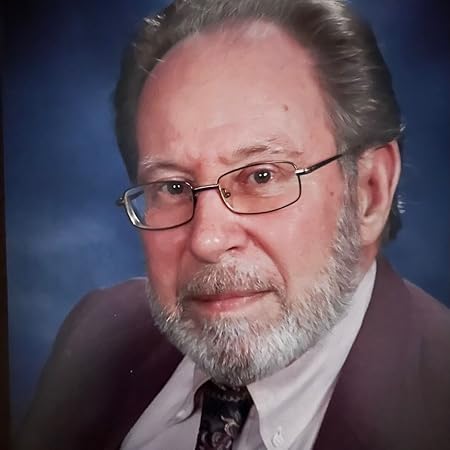
Son of Asmodeus follows a former monk turned demon hunter who learns that his bloodline ties him to both Heaven and Hell. What was the inspiration for the setup of your story?
I have always loved stories about demon hunters, demons and angels. I love anything supernatural but always wondered if there would ever be a story about a demon hunter who is actually the son of a demon and an archangel. Just this thought alone inspired me to create the Heaven and Hell series.
I find the world you created in this novel brimming with possibilities. Where did the inspiration for the setting come from, and how did it change as you were writing?
I tend to write about the places I’ve been to and love visiting. LA was always a big interest of mine to visit and explore the depths of humanity in. It became the perfect setting to bring demons and angels alive in the human world.
What were some themes that were important for you to explore in this book?
I didn’t want to focus on religion but mostly the concepts of good vs evil. All of my books consist of this theme. Where there is good, there is always evil and one can’t survive without the other. I also wanted to explore the concept of humanity against a supernatural world.
Where does the story go in the next book, and where do you see it going in the future?
Sully continues his journey to discover his true birthright and purpose. Hell Hounds is the second book in which not only Hell Hounds are released on earth, but he learns the possibility of a Second War between Heaven and Hell is inevitable.
Author Links: GoodReads | Facebook | Website
A lone demon hunter, his true birthright unknown, roams the streets of Los Angeles while killing demons to prevent atrocities against the world. As the son of Asmodeus, Sully is a hunter feared by both demons and angels. His world was not the same once he walked into a bar and offered to help Mick, a gothic bartender.
Mick worried about her missing friend until the day she met Sully. The minute he walked into her bar and offered his help, her world changed. Secrets of her destiny unlocked, and he was at her side everywhere she turned. Friend. Protector.
Can they live with the secrets that are revealed to them? Will they survive the chase for the truth between Heaven and Hell?
“We never knew.”
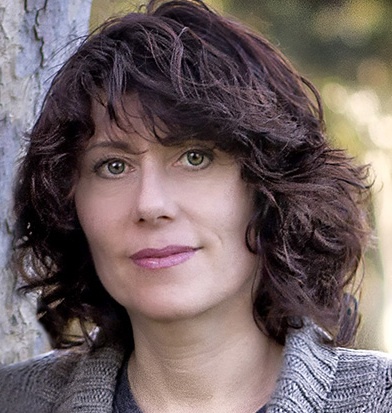
Untertauchen follows a Jewish couple living in Berlin under the rule of Hitler, who, when summoned for “resettlement,” went underground for thirteen months, living in fear of capture. Why was it important for you to share this story, which is based on a real couple and real events?
Having edited and helped the couple publish their memoir, it was obvious their story held a side of the Holocaust barely known. UNTERTAUCHEN does not dwell on the death camps (few in Germany knew precisely what was happening) but all knew, those sent east were never heard from again. The book brings to life what one couple endured under Nazi rule between 1932 and 1942, then the rigors of living underground, hiding in plain sight for 13 months while the Allies bombed Berlin round the clock. As one Jewish reader told me, “We never knew.” The story is written as fiction for intrigue and suspense, earning five-star ratings and lauded by reviewers. The original manuscript was over 30 years in the making and somewhat academic. Before publication though, it was rewritten and edited numerous times to make it “reader friendly.” Readers are now praising it wholeheartedly.
What were some goals you set for yourself as a writer in this book?
Goals? As Herr Shacker — the real person behind the character Hans Bracher — told me more than once, he wanted the world to know his story. Now, this has become reality. Secondly, to show through thoughtful writing that good literature can be inviting without vulgarity and obscene language. The reviewers definitely agree. And maybe too, to leave a legacy that has the possibility of changing lives, one reader at a time. As one lady put it: “Your life will never be the same, once you’ve read UNTERTAUCHEN.”
What was one of the hardest parts in Untertauchen for you to write?
Not necessarily difficult, rather prolonged — doing the massive research into Nazi laws, promulgations, etc., that affected Jews under their domination, then bringing this into perspective in Hans and Anna’s daily lives, making sure the time frames were in sync. In other words, writing historical facts into understandable reality without being boring.
What is the next novel that you are working on, and when will that be available?
My preference for Historical Fiction is definitely the biographical. Up next focused on Robert Smalls, the slave who was the pilot of a Confederate gun ship, out of Charleston (S.C.). He and several other slaves who were deck hands (accompanied by their families) commandeered The Planter, sailing it past Fort Sumter (where the opening volley of the Civil War took place) and turning it over to the Union forces which were blockading the Charleston harbor. My research began a year before I learned of a bill in the S.C. General Assembly that would have a statue of Smalls placed on the State House grounds. This legislation was signed by Gov. Henry McMaster (R-South Carolina) several months ago, during which he hoped the image would be ready by 2028. I’m looking toward a similar time frame for the book –yet to be titled — to be published.
Author Links: Amazon | GoodReads
Untertauchen is an historical novel, based on the true story of a German Jewish couple who outlived Hitler’s Thousand-Year Reich. When their summons for “resettlement” arrived in November 1942, they went underground, living a heartbeat away from capture for thirteen months.
The reader will be drawn into the maelstrom of their tortuous existence, from the time of their engagement as the Nazis came to power, until their escape from war-torn Berlin with falsified papers on Christmas Day, 1943.
Principle dates and events—the historical and those in their personal lives—are as they were.
Intuitive and Non-Logical
Love’s Cauldron traces your path from childhood wounds and self-doubt toward awakening her “witch self,” a reclamation of intuition, creativity, and the divine feminine. Why was this an important book for you to write?
Writing Love’s Cauldron made me much more aware of how the feminine aspects of myself have been shaped and impacted by my family, our culture, and the world. It was only in writing the book and talking about what I had written that I fully realized that part of my identity (and sensitivity) was that of a Healing Witch. I had not fully understood the value of my feminine sides previously.
What were some ideas that were important for you to share in this book?
In a world dominated by logic, it was vital for me to look at how specific feminine qualities have been demonized. The intuitive, those who channel, and the non-logical have been made suspect and sometimes punished by mainstream culture. I also wanted to share what an emotional healing journey looks and feels like.
What was the most challenging part of writing your memoir and what was the most rewarding?
I had wanted to write this book for years. But I had not been able to sense how to weave together the ideas that were percolating. It was challenging to write a non-linear book without losing the reader. It was satisfying to have the book come together and to see that, despite its unorthodox form, it worked. It was also rewarding to have readers let me know that it had a positive impact on them.
What do you hope is one thing readers take away from your story?
I hope that the readers will affirm aspects of themselves that they have not fully claimed. I wish for them to understand more about themselves and about the necessity of these undervalued aspects of each of us.
Author Links: GoodReads | Facebook | Facebook Page | Website | Book Page
Jennifer J. Lehr, LMFT, shares her journey from emotional pain and disconnection to deep self-awareness and spiritual awakening. Weaving together memories, mystical understanding, and guidance from the unseen realms, she offers a path to reconnect with our intuition, compassion, and inner voice—qualities often lost in a world that favors logic over feeling.
Through powerful narratives and sacred incantations, Love’s Cauldron redefines the meaning of “witch” as someone who embraces all aspects of themselves and holds the power to transform not only their own life, but the world around them. This is a book for anyone who has ever felt marginalized, silenced, or spiritually disconnected—and who longs to come home to their wild, wise self.
Whether you’re healing from trauma, seeking spiritual connection, or curious about reclaiming your feminine power, this book will stir something ancient and true within you. The feminine is rising—and Love’s Cauldron is a call to remember, rejoice, and rise with it.



 LITERARY TITAN