Blog Archives
Leftwich Blues/Elfwitch Rules
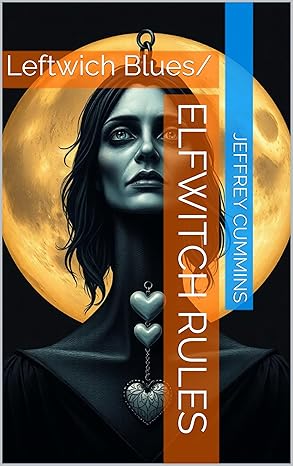

Leftwich Blues/Elfwitch Rules is a sweeping fantasy tale woven into the struggles of a fractured family. It starts in myth, with vows made under the moon and curses that shake kingdoms. Then it jolts into the present, landing in the Ozarks with two twins caught in the fallout of their parents’ broken marriage. From there, the story keeps folding back and forth between a mystical Realm of hunters, owls, and ancient metals, and the harsher modern reality of courtrooms, social workers, and family strife. The twin narratives eventually bleed together, blurring what is real, what is allegory, and what is memory.
The writing bounces between old-world fantasy language and down-to-earth small-town chatter. That clash can be jarring, but it also gives the book a unique energy. One minute I was caught up in quicksilver necklaces glowing under a full moon, the next I was listening to kids argue about video games and crackheads. Sometimes I found myself laughing at the dialogue, other times I felt weighed down by how bleak it could get. The swings were sharp, but they kept me reading.
What hit me hardest wasn’t the magic or the battles. It was the raw mess of family life. The fights between Mom and Dad felt too familiar, too close to real arguments I’ve overheard in my own life. The kids’ tug-of-war over which parent to trust felt honest, painful, and sad. The fantasy parts worked like a mirror, twisting those personal struggles into epic stakes. When the twins lost their footing in the “real” world, it was like the Realm itself was cracking apart. That connection between worlds gave the story its punch.
The sudden shifts might throw some readers. But for people who like fantasy mixed with real grit, who don’t mind faith and scripture tucked into the corners, and who can handle a story that cuts close to the bone about family, it’s worth the ride. I’d recommend it to readers who like their myths messy, their heroes flawed, and their stories willing to sit in both wonder and heartbreak.
Pages: 435 | ASIN : B09CD1D958

Darkness and Blight

The story follows Lydarc, a shaman whose survival in the hostile wasteland of the bitterwood feels both desperate and defiant. Her battles with carrion ghouls, her visions, and her fraught ties to her tribe form the beating heart of the book. Alongside her are figures like Wayland, Rapha, Leisil, and Sitka, each carrying their own griefs and secrets. The novel shifts between past and present, weaving together brutal survival, strange magic, and an undercurrent of looming doom. It is a tale drenched in blood, pain, and flashes of tenderness, set in a world teetering on collapse.
The writing is harsh and unflinching, sometimes even grotesque, but it never feels hollow. Author Dap Dahlstrom has this way of dropping you right into the mud and gore, then undercutting it with dark humor or an intimate confession. I loved how Lydarc’s voice carried such bitter resilience, even when she teetered on madness. The story doesn’t shy away from the ugliness of survival, and I enjoyed that. Sometimes the violence was relentless. Every chapter bleeds. Still, I couldn’t look away.
The ideas behind the story fascinated me. The notion of peri-souls and spirit animals, the fractured world of “afterarth,” and the endless tug-of-war between survival and humanity gave me plenty to chew on. Sitka’s transformation into the bear was one of my favorite moments, both raw and oddly uplifting. And Leisil’s chapters hit me hardest. Her childhood trauma, her brutal induction into the Resistance, all of it felt painfully real under the fantasy trappings. I found myself angry, sad, and unexpectedly protective of her. The slang language was sometimes heavy, but it added character to the dialogue.
By the end, I came away impressed and strangely energized. This book is for readers who don’t mind being dragged through blood, madness, and despair if it means glimpsing strange beauty on the other side. If you like your fantasy dark, twisted, and uncompromising, you’ll find a lot here. I’d recommend it to fans of grimdark fantasy.
Pages: 372 | ASIN: B0FGK5NFPN
A Fresh Start For Humanity

Tim Rees’ Original Earth: Book One follows the last survivors of humanity who have, for generations, drifted through space and now, after their ship is sabotaged, are forced to land on what they now call Earth 2. What was the inspiration for the setup of your story?
What a great question! Thank you for asking it.
I live very near a beach in Wales called Freshwater West. It’s a beautiful beach and I walk on it pretty much every day. Whilst walking on this one beach in Wales, I will see the debris of humankind. Our rubbish. Manmade items that have no place in the natural world. I am constantly being shocked by what I see in this very small corner of the world and this is just one beach. I’m sure you could walk on every beach in the world and experience shock and horror at what we’ve done. And what I see is of little consequence to the bigger picture. What is the rubbish made of and where do we get the materials to make the rubbish in the first place, that’s the bigger picture. And, of course, I’m only scratching the surface here… So, to keep this short, I find myself gasping on the same question every day: imagine how beautiful this planet would be without humans?
I’m a novelist and my tools are words, so the story evolved upon the question: imagine if we were offered a new, uncontaminated planet and a fresh start, how would I, as an author, wish to see humanity move forward…?
And I wanted the main character to be an individual in perfect harmony with the natural world, so through that character I could play with scenarios and ideas about what it must feel like to be truly in harmony with nature and with all my fellow natural beings.
One of the things that stands out in your novel is the complex relationships of the survivors as they try to rebuild a life on this new planet. What aspects of the human condition do you find particularly interesting that could make for great fiction?
I like your use of the term ‘human condition’, because we live in societies where we are conditioned to live in particular patterns and aspire to particular goals. I could go on, but let’s keep this simple. On the spaceship, everyone was forced to live together in a sterile, confined space. They knew no different, so it wasn’t really a problem, that is, until they were exposed to the hope or the opportunity to explore their own dreams and aspirations. They land on a planet without any experience of how to live in the ‘real’ world. They are completely innocent, except for information and data they have with regard Original Earth. So I asked myself the question: where do these people begin to build a community into a free-thinking society? To begin to answer that question, I reflected on a passage in a previous novel I’d written called Delphian. In the novel there is this relevant passage:
For some reason his thoughts always ended up at the same questions: society and establishment; two words describing the maze of structure created to protect and enable the vast variety of people to live in apparent harmony. His mother had put it perfectly when she’d said: ‘People are different shades of colour, darling, and too often the colours clash.’ She was so right. Different shades of colour. Beautiful. Different shades of personality in a rainbow of dreams, aspirations, hopes and desires… It is we, collectively, who accept terms like human resources, for instance. It is we who put up fences labelled ideology and either stand on one side or the other and proclaim this is right and that wrong…
As an author, I’m hugely excited to explore this landscape. No spoilers, but in books two and three you see those colours naturally coming together and blending, whilst other colours clash and pull apart. I leave that very much to the characters to play out. I’m in discussion with a film producer at the moment, not for Original Earth, but another story, but he complimented me on the fact my scenes breathe. I know what he means, but I don’t create that, the characters do.
What themes were particularly important for you to explore in this book?
That’s an easy question. The damage we have done to planet Earth. The damage we have and are continuing to do to ourselves, because, whilst we poison the planet, we also poison ourselves. And the damage we have done and continue to do to the planet and all other life forms with whom we share this space has to stop, because we only have this one planet. I write fiction so can imagine exploring different worlds, but will humanity survive our collective suicide in order to really explore other worlds?
Where does the story go in the next book, and where do you see it going in the future?
Anu grows closer to Sonri and together they will explore the universe. You already see that in books two and three and in all the planets Anu visits you’ll see a reflection of humans on Earth. For instance, in book three Anu visits a planet run by a humanoid species governed by a repressive, authoritarian ideology similar to Afghanistan and the Taliban – Anu, of course, liberates the women in that society. In book four, the novel I’m currently writing, Anu returns to Original Earth about 150 years in our future. Planet Earth is unrecognisable.
I think in the back of my mind, I always had the idea I’d like Original Earth to evolve in a similar way the stories of Star Trek must have for Gene Roddenberry.
Author Links: Facebook | Instagram | Threads | TikTok
Now, armed with some knowledge of the complex relationships that exist between both fauna and flora – all life with whom we share this incredible planet – what lessons have we learned?
This is a story about a new beginning…
Anu has a gift: her personal vibration is in perfect harmony with the natural world.
Special Bond

Where’s My Wabby Dabby? follows a young girl looking for her father, who is away on a trip, as she asks all the animals in her yard where her Wabby Dabby is. What was the inspiration for your story?
The inspiration for this book came from a time when my husband was fighting COVID. He was in the hospital, and we were only able to talk to him on the phone and on FaceTime. My husband called one night, and we saw COVID winning the battle, but our faith in the Lord kept us strong. My husband called my granddaughter his Eva wava little baby. She was very emotional and called him her wabby dabby. When I heard that, I decided to create a story about their bond, showing how she would go out and speak to animals to see where her wabby dabby went. At the time, we weren’t sure if my husband would come home, but we prayed and believed God for a miracle. He came home. It was a long road to recovery, but he was home. The same way we were unsure he would come home, I wanted to create this story for those children who maybe one of their parents were absent, and they can use their imagination to remember something special about them, which would give them peace and comfort.
What was your writing process to ensure you captured the essence of Eva and the animals she talked to?
Discovery–I observed their special bond, which prompted me to start drafting and editing.
What was your favorite scene in this story?
When Eva is in her bedroom and she hears her wabby dabby’s voice say, “Goodnight, my Ava wava little baby.”
What is the next book you’re working on, and when can fans expect it?
My next book is in the illustration stage, and it’s called The Night We Followed the Moon. I’m not sure when it will be finished.
Author Links: GoodReads | Website | Amazon
Tim Rees’ Original Earth: Book One
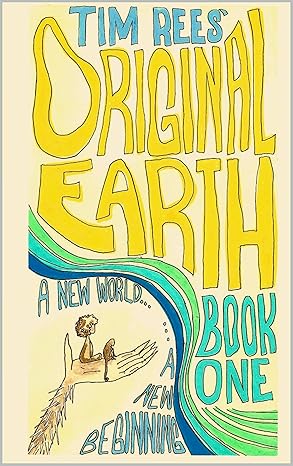
When I opened Tim Rees’ Original Earth: Book One, I expected a familiar survival tale. Instead, I found an emotional journey that runs from the claustrophobic passages of a crippled starship to the harsh beauty of an alien planet. Humanity’s last thousand survivors drift in space for generations before sabotage forces an emergency landing on a world they call Earth 2. Tim Rees explores not just survival, but whether people can truly change when given a second chance. At the heart of it all is Anu, an eight-year-old girl whose honesty and quiet courage cut deeper than the words of most adults.
The opening chapters carried a warmth that drew me in. Anu’s algae-block “strawberry” breakfast was both sweet and heartbreaking, and it showed me how well Rees balances innocence with underlying loss. That sense of comfort didn’t last. The sabotage of the algae vats shattered it in an instant. The frantic scramble to abandon ship, paired with Juno’s ruthless grab for power, made me feel just how fragile their world had always been.
The landing on Earth 2 was one of the most striking sections for me. Rees describes grass beneath bare feet, birds overhead, and the shock of real air with such vividness that I felt the settlers’ exhilaration. Yet he cuts that wonder short with the sudden appearance of a dinosaur-like creature, a jarring reminder that this new world is as dangerous as it is beautiful. Survival becomes grueling, and the endless cycle of hunting, gathering, and securing water presses heavily on every page. Rees captures that grind with a stark honesty that left me uneasy but deeply invested.
For me, Juno’s tightening grip was one of the most unsettling parts of the book. His obsession with water control felt alarmingly real, and it made me think about how fragile any society can be when power rests on basic needs. At the same time, I found myself drawn to Emrys and Onua’s struggle to hold their family together, even as Onua’s injuries dragged them down. What struck me most was Anu’s quiet strength in these chapters. Watching her comfort her brother with a maturity far beyond her years was both moving and painful.
The latter portion of the narrative resonated with me. The pages carried betrayals, losses, and a sliver of hope that felt almost too fragile to hold. Anu’s reflection near the end on what survival truly costs stunned me. It wasn’t neat, and it wasn’t reassuring. Rees doesn’t hand out easy answers. Instead, he leaves us with the harsh truth that humanity has to keep trying, even when the odds feel impossible.
Tender and tense, Tim Rees’ Original Earth: Book One blends discovery, danger, and humanity’s flaws with remarkable honesty. For readers who love survival stories with heart and grit, this book delivers.
Pages: 338 | ASIN : B0DLPGDKQF

The Brothers of Dane
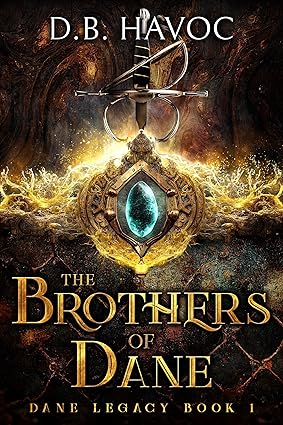
D.B. Havoc’s The Brothers of Dane begins as a tale of mischief and theft, but it quickly expands into something much grander. On the surface, the novel follows Balran, Mak, and Dag, three notorious outlaws whose exploits make them both feared and strangely admired. What starts as a high-society robbery soon spirals into a quest tied to ancient artifacts, the legendary city of Dhravendor, and the fabled Udin Stone. Beneath the adventurous exterior lies a narrative about loyalty, betrayal, and the often-fractured bonds that hold families, chosen or otherwise, together.
The opening scene at Counselor Imara Enas’s estate establishes this duality immediately. The cultivated elegance of an elven dinner party collides with the chaos of the Brothers’ sudden intrusion, led by Balran’s dryly menacing declaration: “This is a robbery.” The episode is both dramatic and darkly humorous, and it illustrates Havoc’s ability to balance tones with confidence. The moment also introduces Maeve, whose tense but charged interaction with Mak provides an early glimpse of the interpersonal conflicts that run beneath the novel’s more visible plot.
The novel’s strongest element is the interplay between the brothers themselves. Their dialogue is sharp, unpolished, and filled with an authenticity that makes their quarrels and camaraderie equally compelling. Dag, for instance, provides a mix of cynicism and biting humor, as when he mocks Mak’s affection for Maeve through his song “Sweet Maeveriene”. Balran assumes the role of pragmatic leader, while Mak wrestles with the tensions of his half-elven identity. Together, they form a partnership that feels volatile but indispensable, and it is this sense of lived-in brotherhood that makes the narrative resonate beyond its adventurous trappings.
The scope of the story broadens dramatically with the introduction of Emperor Elric Veshlor, the so-called Sun Eagle. The confrontation in the Tower of Tiriel, particularly the battle with a shadowed figure whose blows are revealed to fall from a wooden blade, is a pivotal moment. Elric’s eventual appearance transforms the narrative from one of petty thefts into an epic struggle intertwined with exile, history, and the hope of redemption. The Brothers’ shifting responses, debating whether to assist, betray, or outwit the emperor, add moral complexity and highlight Havoc’s interest in the gray spaces between honor and survival.
By its conclusion, The Brothers of Dane reveals itself as more than an adventure tale. Havoc blends action with myth, allowing the reader to move seamlessly from tavern brawls to weighty reflections on power, freedom, and legacy. At times, the exposition particularly in the sections concerning the Treaty of Maltran Heights and the dwarven astrolabe leans heavily on lore. Yet even these passages contribute to the sense that the Brothers are entangled in a world where their small-scale ambitions intersect with forces far greater than themselves.
The Brothers of Dane is recommended for readers who appreciate fantasy that is bold, atmospheric, and character-driven. It will appeal especially to those who enjoyed the grit of Scott Lynch’s The Lies of Locke Lamora or Christopher Buehlman’s The Blacktongue Thief. Havoc has crafted a story that captures both the recklessness of outlaw life and the enduring weight of myth, producing a work that is as much about the bonds of brotherhood as it is about treasure and survival.
Pages: 302 | ASIN : B0DPR7YM66
The Dryad’s Crown


The story follows Piper, a girl who comes into the world under strange and magical circumstances, a child not born but found. She grows up pulled between care and cruelty, eventually falling under the rule of Dahlia Tulan, a guildmaster feared by all of Penderyn. Piper, renamed Silbrey, learns to fight, to kill, and to survive, carrying with her a mysterious staff that ties her to the forest and the gods. The book traces her journey from abandoned child to trained warrior to wife and mother, weaving in themes of love, power, abuse, and the weight of choices. It’s a tale about what it means to belong, and what it costs to escape.
Reading this book stirred up a mix of emotions. At times, the writing hit me hard with its blunt edges. Scenes of brutality were uncomfortable, but that discomfort made the story feel real. I caught myself holding my breath when Dahlia appeared, because the tension the author created around her was suffocating. The pacing sometimes slowed down with long descriptions, yet I didn’t mind, because it grounded me in the world. The tenderness between Silbrey and Callis was a much-needed counterweight to the violence. Their love felt believable, raw, and fragile. It gave me hope that even people shaped by cruelty can carve out something good.
What I found most striking were the ideas buried under the story. The book isn’t just about fantasy battles or guild politics. It’s about how trauma roots itself in people and how hard it is to pull free. Silbrey’s connection to her staff, to the trees, and the earth, reminded me of the ways we cling to something solid when everything else is crumbling. Hopkins doesn’t hand out easy answers. The gods don’t swoop in to save anyone. Instead, the book suggests that survival itself is sacred, and sometimes love, though messy and imperfect, is the closest thing to grace. That felt honest to me.
The Dryad’s Crown reminded me of Robin Hobb’s Farseer Trilogy with its mix of intimate character struggle, harsh mentorship, and the ache of trying to build a life in a world that feels both cruel and magical. I’d recommend The Dryad’s Crown to readers who like their fantasy with grit and heart, who don’t mind being unsettled along the way. If you’re drawn to characters who bleed, who fight, who love fiercely even while carrying deep scars, then this book will stay with you long after you set it down.
Pages: 569 | ASIN : B0C19R4FM5
An Age-Old Dilemma

Emergence: The Orbit Stone Saga follows a young man recruited into an ancient order of protectors who must learn how to navigate a world of ancient magic, political intrigue, and try to prevent a genocide. What was the inspiration for the setup of your story?
Ottix’ arc was mostly inspired by my own journey into law enforcement. Much as I did, Ottix has a desire to help others, protect the innocent, and make Orbis a better place. His story is not a rags-to-riches tale though. Other characters like Glacea and Armin follow this classic trope. Ottix however, was born into a good family that cared about him and gave him opportunities. I wanted to emphasize that bad situations or upbringings do not always create good characters. Ottix came from an upper-middle class situation and through hard work, ascended further beyond that station. The elements surrounding Ottix such as magic, politics, and genocide were inspired by classic fantasy stories and real history.
I find the world you created in this novel brimming with possibilities. Where did the inspiration for the setting come from, and how did it change as you were writing?
My settings were inspired by a variety of things and places, as Orbis is a large world. I’ll start with Palagr, since it was the first region I developed. Palagr is based on my home, the southeast U.S. I wanted to share the beauty of this area with my readers. The towering pine forests and bountiful marshes are a sight few get to see and one I thought was worth sharing. Next came Mwantamba. At the time I began writing Emergence, my sister was traveling to Africa to study elephants for a college project. I researched the country’s wildlife, cultures, and history. Mwantamba is home to many fantasy creatures based on real ones. The Watu were inspired by Zulu, Maasai, and Swahili. Next came the icy homeland of the Visoibri, Vorigheim. This nation was developed with Iceland in mind. Many ancient Visoibri words are based on old Norse, such as Vorigheim which means “origin home.” I imagine the structures of Towerton to be norse inspired, though the culture relies more on magic than sea raiding as the vikings did. Every story needs a villain, and Emergence’s live in Metusol. The central land of the Azeri has a varied climate. On the west it is arid but has access to the ocean and plenty of trade routes. On the east side it is more temperate with most of the country’s agriculture. I wanted to reflect the Azeri’s split ideologies with this difference. Many of the people in Metusol just want to live a fair and happy life. But the rulers use the citizens for their own gains. My next creation was the Jah’kuls of The Paw. As I created the map, I ended up drawing an island in the southeast that kind of looked like a paw. Later on, I added an entire race, the Jah’kul, to the island. This race was inspired by the Khajit from the Elder Scrolls series. I figured if there are cat-people, why not make dog-people! Next came my favorite group of characters, the Marinites. These creatures were inspired by many things including the Zora from Zelda, Kitt Fisto from Star Wars, and Abe Sapien from Hellboy. I wanted Orbis to be connected by a large ocean, and the Marinites helped complete that goal. The other thing that connects the world is of course, the Orbit Stone ring. The magic ring of stones is the source of all magic on Orbis.
What were some themes that were important for you to explore in this book?
Throughout history there have been many examples of religion or politics creating opposing groups that are pitted against one another. I wanted to incorporate this age-old dilemma into Emergence. I also wanted to explore the themes of duty and loyalty. Characters are often torn between their loyalties to their family or nation and the greater good. I also wanted to explore how magic could be used other than in the traditional sense. The prevalence of magic and Azeri technology makes for a unique setting in which ancient magic and modern technology collide. Finally, I wanted to write about war and peace. Emergence delves into the fragility of peace and the brutal consequences of war, contrasting the ideals of unity and cooperation with the destructive nature of hatred and ambition.
Where does the story go in the next book, and where do you see it going in the future?
The second book, Convergence, will continue the story, focusing more on Razi as the new leader of the paladins. An ancient secret is revealed which changes everything. The truth about what happened to the ancient Visoibri comes to light. And the war against the Azeri rages on and eventually concludes. The second book dives deeper into the relationships between characters and even some romances. The third book, Transcendence, will take place 15 orbits after Convergence, and will focus on the paladin’s new mission after the war.
Author Links: GoodReads | Facebook | Website
The Paladins, an ancient order of protectors, rise up to counter the Azeri threat. Among them is Ottix, a young man recruited into their ranks, determined to fight for his world’s survival. As war erupts across Orbis, the Paladins lose their greatest weapon, and the future of the Republic hangs in the balance.
In the face of impending chaos, the heroes of Orbis must navigate a world of shifting allegiances, ancient magic, and political intrigue. With the stakes higher than ever, it’s unclear who will emerge victorious—and who will be lost forever.
The Orbit Stone Saga 1: Emergence is a high-stakes adult fantasy filled with complex characters, dangerous magic, and a world on the brink of war. Will Ottix rise to the challenge, or will Orbis fall into ruin?



 LITERARY TITAN