Blog Archives
The Pawn against the King


In The Pawn Against the King, Giorgos Katsoulas crafts a riveting tale where the game of chess becomes a battlefield for survival. The king represents both power and fear, standing as a towering symbol of authority. Opposite him is a man with everything to lose, who enters a high-stakes chess simulation. Victory promises elevation in status; failure ensures death. As the match unfolds, readers are drawn into the intricacies of each move, from the quiet steps of a pawn to the commanding presence of the rook. Even the humble pawn, often underestimated, has potential to surpass expectations—if the king allows it.
This suspense-filled narrative seamlessly combines the art of chess with an intense psychological struggle. The atmosphere is electric, capturing the tension of a world-class tournament. Every move matters, and the story leaves no room for complacency. Questions like “Had he made a fatal mistake?” and “Had he underestimated his opponent?” amplify the stakes and keep readers on edge. Chess enthusiasts will find themselves enthralled by the way Katsoulas integrates the game’s mechanics into the plot. Each piece comes alive, its role vividly personified. The queen, for instance, is described as moving “full of grace and harmony,” a royal elegance that contrasts with the knight’s unpredictable jumps. These humanized chess elements are as entertaining as they are insightful, making the game accessible to readers while adding charm to the narrative. The story’s depth lies in the chessboard and the characters and their philosophical exchanges. Their dialogue brims with tension, strategy, and reflection, inviting readers to explore themes of confidence, humility, and perseverance. The king’s arrogance serves as a striking foil to his opponent’s quiet determination, creating a compelling dynamic. This subtle excellence reminds us of the virtues of diligence and humility, as opposed to overconfidence and hubris.
The Pawn Against the King is more than just a tale of chess. It’s a metaphorical journey that challenges the reader to consider the value of resilience and strategy in life. With engaging characters, thought-provoking dialogue, and pulse-quickening moments, Katsoulas delivers a concise yet powerful narrative. Whether you’re a seasoned chess player or simply intrigued by stories of mental fortitude, this book is a captivating and thought-stirring read.
Pages: 42 | ASIN : B0DJWGZC9L

Our Shared Human Condition

Keyholes follows two brothers who have a strained relationship grappling with an ethical dilemma when they stumble upon a portal to another world. Where did the idea for this novel come from?
I have a deep love of both science and our shared human condition. As a hard science fiction work, I wanted to build a story that used the many worlds theory as a grounding back drop. I want any of my works to show something about our thinking, and mistakes. How we approach situations that are novel and stressful can demonstrate much of a person or people. I hope the book checks both these boxes.
What was your approach to writing the interactions between Allen and Brice?
First, I gave them different world views. Brice’s military background, and Allen’s academic. I have had more foot in both these words. I used that to help guide the process of writing their perspectives and then interactions.
Do you have a favorite scene in this story? One that was particularly enjoyable to write?
One that I found exciting to write was one where the characters are attacked by a pack of creatures they knew were about. Its a fast-paced scene with a lot going on it is one I had some of the best feedback on from beta readers. Needless to say, it was tinkered with a good bit.
Can you give readers a glimpse inside the second book in the Keyholes trilogy? Where does it take readers?
The next book will be out around the end of this year. It will pick up right after the events of Keyholes. Since much of the technological parts of the world are already explained. The second book focuses more on action, characters, and other world building. It will cover a lot of ground and readers will get to see much more of what can be out there.
Author Links: GoodReads | Amazo
Unlock the Mysteries of the Universe in the Keyholes Trilogy!
In the first installment of The Keyholes Trilogy, Dr. Allen Messman and his brother, COL. Brice Messman, are thrust into an extraordinary discovery—a mysterious portal that challenges everything they know about reality and the universe. With a team of military and scientific experts by their side, they embark on a race against time to uncover the truth behind this enigmatic gateway.
Is it a doorway to the past, an entrance to another universe, or something beyond comprehension? As they push the boundaries of science and existence, the Messman brothers face obstacles that could unravel the very fabric of space and time. What they uncover may not only reshape their understanding of the universe but alter its course forever.
Hard science fiction fans, prepare for a mind-expanding journey that will keep you questioning the nature of reality long after you turn the last page.
Book One of The Keyholes Trilogy—a gripping adventure that will leave you on the edge of your seat, craving the next installment.
Keyholes


Keyholes, by Tony Travis, follows brothers Allen and Brice Messman as they stumble upon a potential breakthrough in physics, a portal to another world, or possibly another time, created accidentally in Allen’s lab. Their relationship, strained by past familial tensions, becomes the backdrop to an intense exploration of the unknown, as they grapple with the ethical and scientific implications of their discovery. It’s a story about curiosity, risk, and the heavy weight of decisions that could change the world.
One of the many things I enjoyed about Keyholes was the interplay between Allen and Brice. Their banter felt realistic, especially when their different worldviews clashed. Allen’s more cautious, scientific approach contrasts with Brice’s military background and action-oriented mindset. This dynamic is particularly evident in scenes like when Brice suggests taking immediate action to test the portal’s possibilities, while Allen insists on carefully considering the potential dangers first. The tension between them gave the narrative an emotional depth that kept me invested.
I feel the pacing felt a bit uneven at times. Some chapters start with gripping tension, but others contain lengthy technical descriptions of the lab equipment and experiments. While these details ground the story in realism, they occasionally slowed the plot, and I found myself skimming through them to get back to the meat of the story—the interactions between the brothers and the mystery of the portal.
The most exciting aspect of Keyholes was the moral quandary presented by the portal. The stakes feel personal and global all at once, and the narrative doesn’t shy away from showing the complexity of their decision. Watching them debate the implications of their actions added a layer of philosophical tension that I really appreciated.
Keyholes is a thought-provoking read that would appeal to fans of slow-burn science fiction, especially those who enjoy stories rooted in ethical dilemmas and personal relationships. If you’re the kind of reader who enjoys a mix of scientific exploration, sibling rivalry, and just a touch of danger, Keyholes is a must-read.
Pages: 342 | ASIN : B0CQYR8VT9
Who Are We as a Species?
The Last Loop follows an AI agent from the future on a mission to restore balance to the universe and save humanity, who travels back in time and has her consciousness transferred to a 19-year-old girl. What was the inspiration for the setup of your story?
I have always had a great imagination and a host of half jotted down ideas on my phone in the old yellow notepad app. This idea was at least a few years old. Scribbled, half cooked, more of a softer young adult idea less than 2 pages long that I lost interest in as I couldn’t envision it properly. It sat in my phone.
I’m a nurse and mum to 2 under 5, and I lost my mum to MND in Jan of this year. I was in quite a serious and heavy place, and I was coping by staying as busy as I could so I started working on an idea I had. A paranormal comedy, but it stalled.
I had gone back to this old idea on my phone of this fractured, broken android woman in this dystopian future, where our world no longer exists, standing in an iridescent, bio-luminescent false garden, trying to find the strength to return to Earth’s past once again, when she herself was so damaged, so conflicted. Most of that idea was rewritten immediately. For one, Cynth isn’t a victim and I wrote her originally as damaged, barely coping when really, she is an idealist and a battler. Someone who questions, and has learnt through trial and error and experience.
Also, with the realities of AI and technological advancements currently and how AI is changing various fields, business, art, literature, once I applied the concept of these androids being human AI, it felt I had something to ground the novel on where these androids originally began and where they were at, at Origin Point. I couldn’t stop writing. I could picture it differently and better than I originally had. I wrote easily over twenty pages in an hour or two and I just didn’t stop. I had this story burning clearly in my mind. The entry records came to me first. These crucial notes that slightly reflect later in the book. The initial conversation with SPEAKER. Every scrap of spare time I had, between work, kids, packing a house to move interstate, ect, I wrote. Most of it began on my phone but it got to a stage where I had written all these chapters in different notes on my phone and i kind of needed to get a laptop so I could put this story together.
The inspiration for my novel has always been there but to actually sit down to write and give it a go, came from trauma and coping with a hard reality. Losing my mum was a catalyst to just sit down and try. Start writing, and see where it led.
Finishing my first novel was as much for my sake as my mum’s. Publishing and having completed something I created was a huge tick on a personal goal that I was proud of and I thought she would be proud of. If people liked it or didn’t like it, regardless, it was done. I handed over a finished manuscript to Hannah, business owner of Bookish Trinity and she beta read, formatted and edited The Last Loop. It was a constant dialogue of communication. She would ask me to elaborate, expand, reword, adjust, add emotion, or make clearer to the reader.
I also chose to say no or explain why I was writing something that way or where I was going with that, or why I didn’t wish to change something. Working together, with her feedback during formatting and editing, led me to have a much better book than what I had originally perceived as finished.Truly, she was invaluable to this book and to me, as a first time author. I would work with her again.
There was a lot of time spent crafting the character traits in this novel. What was the most important factor for you to get right in your characters?
I’ve read my entire life. I’m a reading enthusiast. I’m a serial reader. I know in the first couple of chapters, if I will like a book. Sometimes I’ve been disappointed, and sometimes pleasantly surprised by the story, but the characters are everything.
What I didn’t realise when I began writing is that Cynth, Warden, SIG, Harry, the apartment girls, Pam, LOR, all these characters had rented space in my brain and demanded to be written and heard.
I’m aware I packed so many concepts and ideas into this novel and I needed my charactors to be as believable and normal as I could get them, to help carry the heavy sci fi elements and concepts.
I wanted to blur reality and fiction. I wanted characters that pose questions at the heart of us that might resonate with the reader.
I tried to use humour and emotion, but this story is told not through great action scenes, but the day to day world we live in and the relationships we have. I wanted it to feel like any day of our lives.
Hannah really helped with expanding Harry’s opinion during Cynth’s monologues and prompt me to add more emotion.
What were some themes that were important for you to explore in this book?
Who are we as a species? where are we going as a species? what are we doing right now to fix problems in our world? What are some problems in our world? How might we react or deal with a species that might supersede us, or a sentient species in general. An idea of how we would really be seen by an intergalactic sentient culture. The idea of AI being sentient, helping to wipe us out but needing us later on, so trying to fix what they helped break.
Reincarnation. The far future, dystopian societies, time travel.
I think I went a bit nuts on the topics to be honest, so I can see how this novel migh be seen as complex and to be tackled by an adventurous reader. I think I will get better at this, as I go. I Just have to keep writing.
What is the next novel that you are working on and when will that be available?
My partner and I recently completed painting this house after an interstate move. I am full-time mum-ing at the moment. I don’t know when they will be available. I hope within six months. I have three paused for this month in various stages.
A sequel to the last loop, penned outline, two chapters. High paced, moving parts, tying in old and new characters. Complex. And split storyline between four key figures.
A paranormal comedy 1 quarter of the way through. This book will be light and humorous with absolutely endearing, funny charactors when I finish writing it, one day.
Lastly, a story that blends historical fiction, reality now and world building through plausibility. A thriller. It’s a great idea and story, and it’s very ambitious for the level of writing I am at but I’m giving it a go.
Author Links: GoodReads | Facebook | Website | Book Review
One last chance to ARC drop an Agent to a human body, into a set time to try and alter humankind’s direction to stop them from being destroyed.
With no Agents able to return to Origin Point, Cynth is the last. The very last, they can send.
With ARC focal point set to the 2019 SARS pandemic, ARC drop 2020, Cynth must attempt something never done before successfully. No pressure, just success or total destruction.
With her Operator SIG monitoring her human life, returning to dimension CERN 2008, ARC drop year 2020, Cynth must fight to restore herself from a brain injury, to remember who she is and begin her task.
Trying to piece herself back together and fit into this new life her mind felt it was reaching for a place. A place so far away, so infinitely far, it was a different universe. She had never felt more alone, in that in-between place of knowing this was her life, and this absolutely, was not her life.
With the CERNR 2001 Anomaly’s Dimensional Disturbance destabilising the dimensions,
Origin Point under threat of destruction, and humankind being its usual ridiculous stubborn species, Cynth thinks it’s a big ask, to accomplish what she was sent to do.
The Last Loop
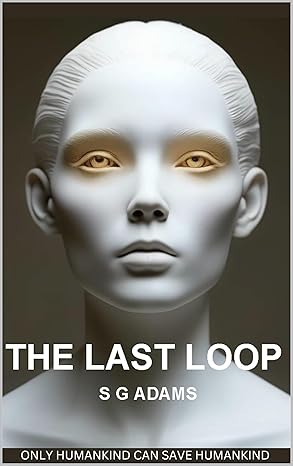
S.G. Adams’ debut novel, The Last Loop, is a captivating and thought-provoking entry into modern science fiction, tackling profound themes of identity, memory, and the absurdity of human existence. Set in a future where Earth has become uninhabitable and humanity is extinct, the novel presents an intriguing twist: humanity, despite its flaws, is essential to the survival of the universe. To fix what has gone wrong, an android named CYNTH is sent back in time to restore the balance. CYNTH’s consciousness is transferred into the body of Evie, a 19-year-old living in 2020. From there, CYNTH must navigate the complex challenge of maintaining her sense of self while inhabiting a human body. Simultaneously, she grapples with the gradual recovery of her lost memories, all while the world teeters on the edge of catastrophe. As CYNTH’s mission unfolds, the line between human and artificial intelligence begins to blur, making the stakes even higher for the future of both species.
Adams has crafted a novel that demands engagement and reflection. It’s a complex story but worth every ounce of effort. The intricate weaving of multiple timelines and perspectives adds depth to the narrative, and Adams masterfully connects these stories in ways that surprise and challenge the reader. The heart of the novel lies in its characters, particularly CYNTH/Evie. Adams delivers a fascinating portrayal of CYNTH’s internal conflict, where her android logic clashes with the messy, emotional reality of human experience. The result is a deeply relatable AI protagonist whose journey raises thought-provoking questions about consciousness, identity, and what it means to be human. The supporting characters are equally well-developed, adding further layers to the philosophical exploration of the novel. As a sci-fi enthusiast, I was particularly impressed by Adams’ world-building. She vividly depicts both the bleak dystopian future and the more familiar past/present, crafting environments that feel immersive and detailed. The concept of time travel and the “Remembering You” program is explained with care, ensuring the technological elements of consciousness transfer feel grounded and believable within the story’s universe. The novel opens with a dense exposition that leans heavily on sci-fi terminology. The complexity of the structure, particularly the interwoven timelines, might overwhelm readers who prefer a more straightforward narrative.
The Last Loop is a rewarding and unique read, especially for fans of cerebral sci-fi. Readers are taken on a journey exploring the question of what it means to be human and treated to a story that lingers long after the final page. Adams has created a memorable and ambitious debut, and I’m eager to see what she writes next.
Pages: 354 | ASIN : B0D96BZDSQ

Recompense – Book 1: A King for Scotland

Jay Anderson’s RECOMPENSE: Book 1 – A King for Scotland is a captivating blend of survival, brotherhood, romance, and history. While it may appear to be a straightforward war story at first glance, it delves much deeper, offering a rich exploration of heritage and the quest to correct historical wrongs. Anderson’s characters are vividly drawn, deeply human, and their emotional and romantic journeys will keep you engaged from start to finish. The novel centers on a British regiment fighting in Afghanistan in 2010, who are suddenly thrust back in time to 1746 Scotland—just days before the pivotal Battle of Culloden. Faced with the unprecedented opportunity to alter the course of history, the regiment must navigate the complexities of the 18th century and find their place in Prince Charles’ court.
Anderson expertly weaves military strategy and tactics throughout the narrative, creating a suspenseful and page-turning experience as the battles unfold. One of the novel’s strengths is its respectful and detailed portrayal of Scottish heritage and rituals, from the use of Gaelic language to traditional war practices. The characters’ deep love for their country and commitment to their heritage are palpable, driving their desire to reshape the future. At the same time, the story is also a poignant exploration of loss and adaptation, as the soldiers grapple with the heartache of being torn from their families and thrust into an unfamiliar era.
RECOMPENSE: Book 1 – A King for Scotland is a must-read for fans of military strategy, historical warfare, and courtly intrigue. Anderson leaves readers on the edge of their seats with a cliffhanger ending, eagerly anticipating the next installment in the Recompense series.
Pages: 388 | ASIN : B0CZPKJLDT
In the Time of the Flash
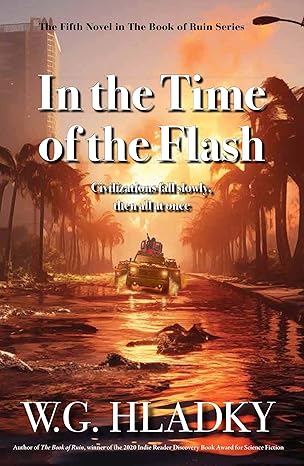
In In the Time of the Flash by W. G. Hladky, unprecedented solar activity devastates the Earth’s electrical infrastructure, causing recurring auroras that thwart any long-term repairs. This new reality forces humanity to adapt rapidly. Abigail Tate, a student supported by her estranged father, faces a life-altering shift during a spring break trip to Florida with her half-sister. The Miami-Dade area, now a perilous wasteland, is riddled with walled cities, cult-like gangs, religious zealots, and mutated animals. Amidst this chaos, Abbie quickly forms a powerful bond with a unique group, perhaps the only people capable of ensuring her survival.
Hladky’s novel offers a distinctive take on apocalyptic fiction, exploring a world destabilized by the loss of a fundamental force often taken for granted. This premise breathes fresh life into the genre, presenting a collapse of recognizable society through a lens that challenges the reader’s suspension of disbelief. While the narrative initially presents a world that seems disjointed and surreal, explanations unfold as the story progresses. The portrayal of gangs, a mix of pop-culture references and outlandish themes, adds a peculiar flavor to the setting. Although it is the fifth installment in The Book of Ruin series, In the Time of the Flash functions mainly as a standalone story, beginning before the catastrophic event and requiring no prior knowledge of the series. The narrative’s primary focus on the Miami-Dade area means the broader world is seldom mentioned, though familiarity with the series might enhance understanding of the broader context. The plot moves at a breakneck pace, occasionally to the detriment of character development. Abbie’s rapid evolution and integration into a team of skilled operatives who navigate roles between police and military can feel rushed. Despite this, the book’s unique setting and fast-paced narrative make it an engaging read for fans of the genre.
In the Time of the Flash by W. G. Hladky offers a fresh and fast-paced take on apocalyptic fiction. While the plot’s rapid progression sometimes undermines character depth, the unique premise and engaging setting make it a compelling addition to the genre. Fans of post-apocalyptic tales will find much to enjoy in this standalone entry of The Book of Ruin series.
Pages: 327 | ASIN : B0CQ3G3JNL
A Thematic Journey

In Forever is Too Long, a 110-year-old man faces the crossover to a perpetual existence in a technologically advanced digital world. What was the inspiration for the setup of your story?
I am getting older, as are some of my friends. They wish they could have additional healthy years (me too). I’ve always been fascinated with science and its many advances. The idea of life extension is nothing new—think explorer Ponce de Leon and the Fountain of Youth. But as I thought about an extended life, I started to think about it within the framework of future technology.
Right now, scientists are in the midst of trying to put together a human digital mind, though certainly less sophisticated than posited in the book—which is the actual copying of human minds, digitized and living immortally into the future. It seemed logical to assume that world-spanning AI systems and frighteningly enhanced genetics would also be common technologies.
Did you plan the tone and direction of the novel before writing, or did it come out organically as you were writing?
After ruminating about the idea of life extension, I one day just saw the overall arc of the human mind being perfectly copied and living on. After that, it was all organic. I became as much of a reader as an author, asking myself fundamental and thematic questions about what these technologies would mean for society and individuals. I see the book as a thematic journey.
Perhaps an interesting piece of backstory: I originally wrote the story in first person from Jake’s perspective. Through twists and turns, it landed in the hands of a wonderful editor who suggested I redo it third-person omniscient. OMG! Really? Re-write like that?! It was like dumping out a completed puzzle and re-arranging the pieces, throwing some out, and adding new ones. (I learned a lot.)
Were you able to achieve everything you wanted with the characters in the novel?
Yes, but…. I have thought about a sequel. There are a lot of different threads that could be extended. I like the idea of a coming-of-age story for Noah, et al.
I guess I might warn the reader about Noah, a child whose life was turned upside down by enhanced genetics. It adds a fantasy piece to the book that supersedes the sci-fi aspect of copying human minds and adds a human family element. What happens to him will challenge the reader.
As Jake and Shannon observed: “Maybe Noah’s fighting the same battle, but just differently.”
[Shannon]
“One of us is fighting for the soul of humanity and the other is fighting for the heart of humanity, eh?” [Jake]
What is the next book you are working on, and when will it be available?
Next book: He Died Two Days Ago. It just came out July 2024. Very different…think pulp fiction, film noir. Alien possession. Again, I am drawn to thematic elements—manifest destiny, zealotry, vengeance, power, egomania.
Author Links: GoodReads | X (Twitter) | Facebook | Instagram | Website | Amazon
If you could live endlessly … would you?
Forever is Too Long sets the stage for 400 years in the future … a future where human minds can be perfectly copied to live out a forever existence in the multiverse and become Mindars in the new digital world.
• What happens when Humans crossover and become digital entities—Mindars?
• What happens when social boundaries are shattered?
• What happens when the Unintended Consequences of technology occur?
Sci-Fi/Fantasy Forever is Too Long envisions a future technology revealed by the confession of Jake, a human who crosses over to being a Mindar. Jake is now forced to wrestle with the Unintended Consequences created and the internal demons that he must face. Noah is a young boy whose human DNA is altered causing genetic mutations. As he fights for his self-identity, he discovers his untapped powers.
Jake, Noah, and others are willing to take a stand for the soul of humanity. It speculates about the technological consequences humans are not prepared for.
Get ready for a fast-paced journey questioning whether humans and technology can go too far.


