Blog Archives
Bunny and Fawn: The Midnight Creature Mystery
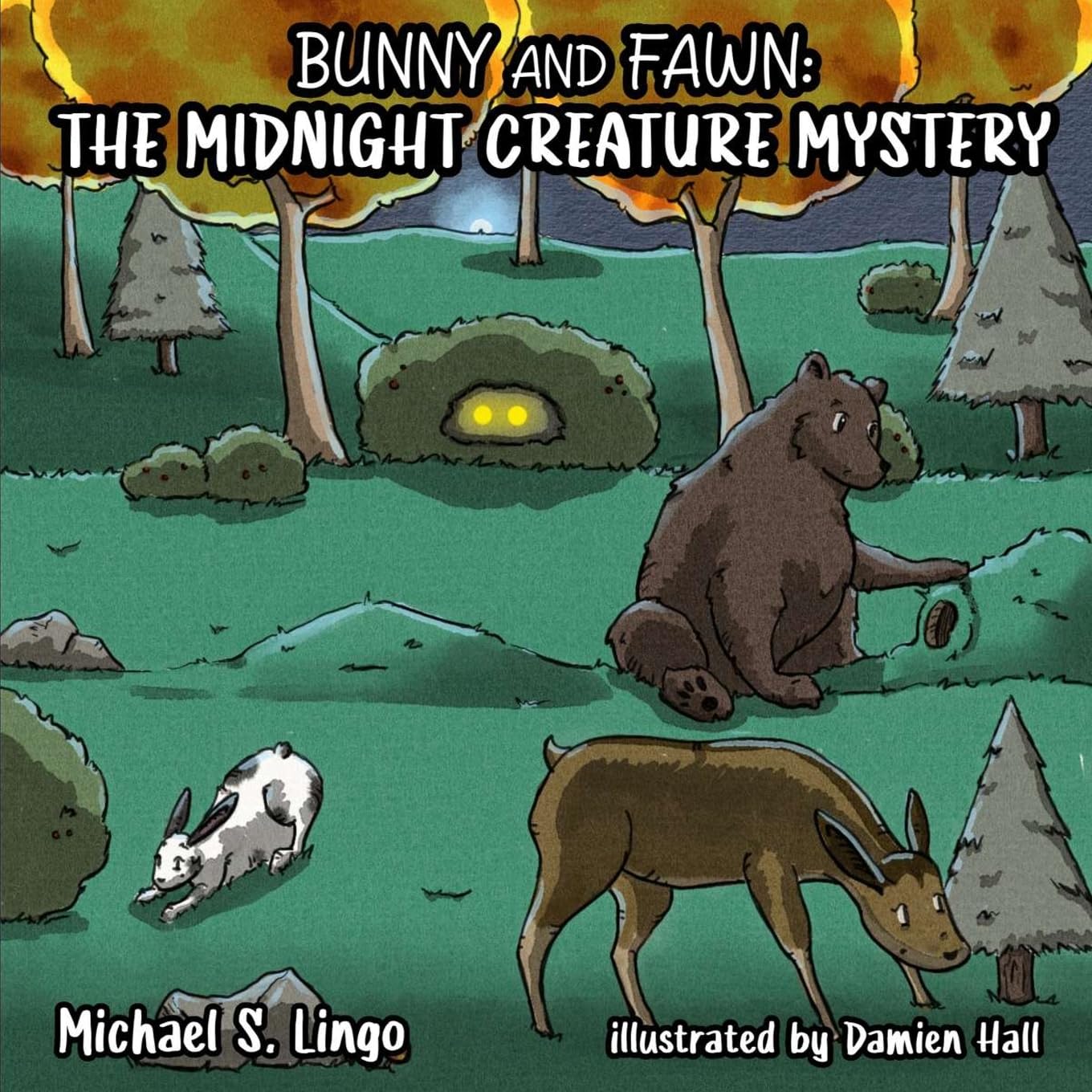

Bunny and Fawn: The Midnight Creature Mystery by Michael Lingo is a delightful and heartwarming children’s story brimming with curiosity, courage, and gentle humor. The tale introduces readers to Bunny and Fawn, who, after a devastating event, must leave the comfort of their cozy hollow log and begin anew in a different corner of the forest, accompanied by their steadfast friend, Bear.
Life in their new woodland home seems peaceful until one night, a strange noise breaks the quiet. Fear ripples through the trio, yet Bunny’s curiosity outweighs her fright. Determined to uncover the truth, she ventures out the next day in search of the mysterious creature. Along the way, they meet Truffles, a timid pig equally frightened by Bunny, Fawn, and Bear. What begins in fear soon turns into friendship, and the four spend a joyful afternoon swimming and laughing together.
Lingo crafts a story that feels alive, almost cinematic, each scene unfolding with the charm of an animated short. The illustrations, lush and nature-centered, bring a soothing tranquility to the pages and perfectly match the tone of the narrative. Bunny’s fear of the unknown is deeply relatable; many children will recognize themselves in her cautious curiosity. Moving to a new place can feel daunting: new faces, unfamiliar sounds, strange shadows. Yet, through Bunny’s journey, young readers learn that the things that seem frightening in the dark often lose their power in the light of day.
Equally touching is the friendship between Bunny, Fawn, and Bear, a reminder that change feels easier when you’re not facing it alone. Bunny and Fawn: The Midnight Creature Mystery is more than a bedtime story; it’s a gentle lesson in bravery, empathy, and the comfort of companionship. Lingo’s work captures the magic of childhood wonder while reassuring readers that fear can give way to friendship, and that even in unfamiliar places, warmth and kindness can be found.
Pages: 42 | ASIN : B0FNQGCMPW

Pigs Really Can Fly!

Horace in Space follows a little pig with big dreams who wants nothing more than to venture into the great beyond. Where did the idea for this book come from?
I’ve written children’s books for about a decade now. I always wanted to write a book for kids and the ISS. Then it hit me – Pigs really can fly! And that started the entire idea.
Is there anything from your own childhood included in your characters’ traits and dialogue?
Not so much. We had a telescope when I was little, and we looked at the moon and stars. But the ISS fascinates me. I’ve timed and researched when the ISS will fly over my area on a particular night. I get away from city lights and, clear as day, one can watch it orbit from one point in the sky until out of view. I’ve taken pictures and videos. One can easily find out when it will next be over their locale. It is visible in the daytime as well.
Why was it important for you to include facts woven throughout Horace’s narrative?
Facts are facts. My children wanted to know facts from the books I read to them, and that means I want to give out some facts for children to think about, ask more questions, expand their minds to move forward.
Can young readers look forward to more adventures from Horace? What are you currently working on?
Horace may have more adventures, or I will choose another baby animal. Horace In Space is book number sixty-one for me, so I’m also slowing down a bit. Next up is a children’s book or adult sci-fi.
Author Links: GoodReads | X (Twitter) | Facebook | Website | Amazon
Horace in Space

Mary L. Schmidt’s latest children’s book follows young Horace, who is no ordinary pig. He’s a dreamer with his snout pointed firmly toward the stars. His greatest ambition? To venture into space. Yet, despite his lofty hopes, he quietly doubts that his dream will ever lift off. Until, unexpectedly, it does. A formal invitation arrives, and Horace is headed to the International Space Station.
Horace in Space is a delightful children’s book that effortlessly blends whimsical storytelling with factual space education. Tailored for children aged 1 to 8, this charming tale is brief in length, fitting for young attention spans, but rich in imagination and heart. The book’s vibrant illustrations serve as both emotional cues and narrative anchors, helping children see what Horace feels, thinks, and experiences.
Schmidt captures Horace’s sense of awe with genuine warmth. His naive excitement, so relatable for young readers, evolves into a more grounded understanding as his fantasy meets the real-world challenges of space. In doing so, Schmidt crafts a gentle lesson: reality might differ from dreams, but that doesn’t make it any less extraordinary.
The book strikes a thoughtful balance between imaginative adventure and educational value. Without ever sacrificing the fun, it introduces children to life in orbit, from the thrill of liftoff to the peculiarities of floating in microgravity. Facts are woven naturally into the narrative, ensuring that learning feels organic rather than instructional.
While Schmidt’s prose may not echo the playful cadences of Dr. Seuss or the clever wordplay of Shel Silverstein, Horace in Space still stands as a delightful addition to any young reader’s collection. Horace himself is an endearing protagonist, one whose journey feels ripe for expansion. It’s easy to envision this story as the launchpad for a larger series.
Horace in Space delivers more than just a tale about a pig in orbit; it offers young readers a chance to explore, imagine, and discover alongside a character who is every bit as curious and wide-eyed as they are.
Pages: 26 | ASIN : B0F9VX3XZ7

What’s Wrong With Tom: A Veterinary Tale of Courage and Compassion
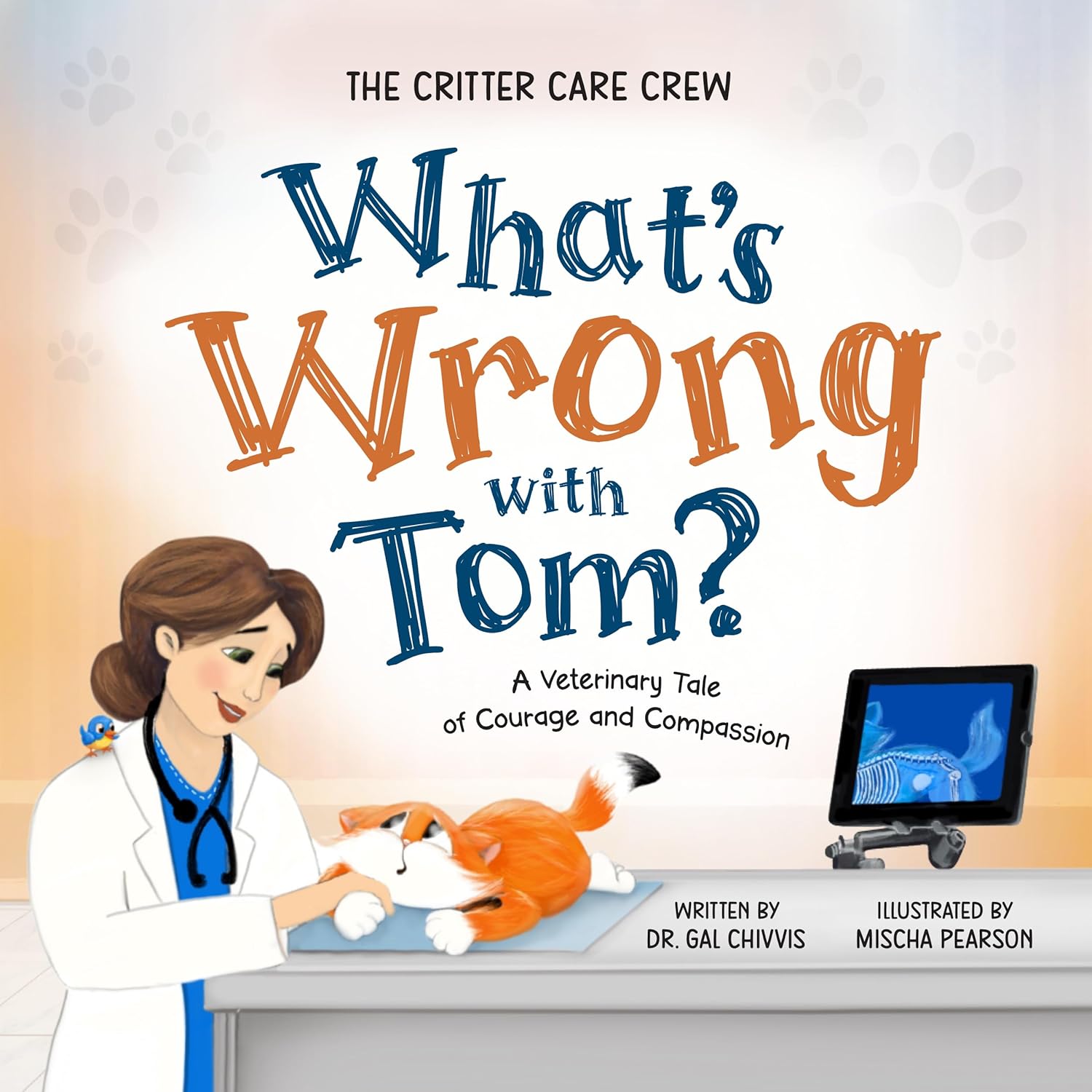
What’s Wrong With Tom: A Veterinary Tale of Courage and Compassion is a charming and educational story that’s perfectly tailored for young readers. At its heart is Thomas, a cheerful, free-spirited cat who loves to roam and explore his world. One morning, however, his playful routine is interrupted by a mysterious pain. Confused and uncomfortable, Thomas relies on his caring parents and the devoted Critter Care Crew to uncover the problem: he’s having trouble urinating.
Thanks to a minor surgery, plenty of support, and an extra dose of affection, Thomas recovers smoothly and is soon back to his old, adventurous self. His journey offers young readers a gentle, reassuring introduction to the idea of veterinary care and the healing power of compassion.
Dr. Gal Chivvis delivers a captivating narrative that balances entertainment with education. The language is accessible, the pacing is thoughtful, and the storyline keeps readers engaged without overwhelming them. One particularly delightful element is the inclusion of a machine that translates animal speech into words, an inventive touch that sparks imagination and adds a layer of whimsy.
The illustrations are vibrant and expressive, bringing Thomas’s world to life with warmth and humor. Each page invites young readers to pause, observe, and enjoy the visual storytelling, which complements the text beautifully. Thomas’s playful personality shines through, especially in scenes that depict his curiosity and love for exploration.
Chivvis masterfully conveys an important message: while medical procedures may seem frightening, they are often necessary and manageable with the right support. Through Thomas’s experience, children learn that recovery can be quick and that bravery comes in many forms.
The addition of a glossary at the end is especially thoughtful. It serves as a springboard for conversation between adults and children, clarifying medical terms in a way that is easy to grasp. This not only reinforces comprehension but encourages dialogue about health, care, and empathy.
What’s Wrong With Tom is both a delightful story and a valuable teaching tool. Whether read at home or shared in a classroom, it offers young readers comfort, knowledge, and inspiration. I look forward to more works from Dr. Chivvis, and her unique blend of heart and insight is a gift to children’s literature.
Pages: 35 | ASIN: B0FLZSL47R
Tales From Brook Meadow – The Tale of the Winter Snow
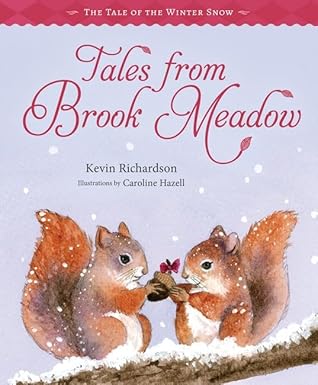
This cozy little children’s book, The Tale of the Winter Snow, is set in the idyllic Brook Meadow and follows Victor the fox and his woodland friends as they experience the first snowfall of winter. What starts as a cheerful morning filled with snowballs and laughter turns into a tender tale of compassion when the animals find a lost and weary fox named Vixen and her two squirrel companions seeking shelter. The story gently weaves themes of friendship, environmental disruption, and the kindness of community, ending with the newcomers being welcomed into the meadow for good.
I really loved how gentle and kind-hearted this kids book was. It’s sincere and warm, like a hand-knit sweater. The writing is straightforward but carries a calm rhythm that suits a bedtime read. The characters are sweet, and Victor, as the steady, big-hearted fox, feels like the kind of friend everyone would want. The illustrations by Caroline Hazell bring a lovely softness to the tale, too, adding just the right touch of charm. I found myself smiling more than once, especially when the two mice popped up from the snow and greeted everyone.
But what hit me was Vixen’s emotional backstory. The quiet, creeping sadness of losing a home to machines and noise felt very real. It didn’t lecture, but it lingered. This isn’t just about cute animals in the snow; it’s also about displacement, loss, and rebuilding trust. I appreciated that the book didn’t shy away from those feelings. It trusted its young audience—and adult readers too—to sit with those emotions for a bit. That trust makes the story stronger. There’s a quiet bravery in how it handles tough topics with such a gentle hand.
Tales from Brook Meadow is the kind of picture book I wish I had on my childhood shelf. It’s ideal for kids who love animal stories, nature lovers who want a heartfelt read, or families looking to share something thoughtful together. Honestly, it’s just a lovely book—simple, kind, and filled with heart. If you want to feel like the world still has safe, magical places where strangers become friends, this little story is your ticket there.
Pages: 35 | ISBN : 1923306073
The Power of Stories

Our Song, Our Voice follows a young golden crow as he embarks on a journey to save his grandmother and preserve his flock’s fading traditions, proving that courage, wisdom, and song can bridge generations. What was the inspiration for the setup of your story?
The main inspiration for this Our Song, Our Voice can be found in the UNESCO Indigenous Languages Decade (2022-2032). When I learned more about the topic on their website, the idea of approaching the issue through nature developed in my mind. After all, human cultures are directly connected to nature and the changes that occur within it. Just as indigenous peoples are affected by the changes caused by the modern world, the ecosystem, with its animals and plants, also undergoes a similar experience.
In my story, golden crows that once inhabited vast areas have become increasingly rare as wilderness areas shrink and diminish. Their customs and songs, which correspond to the cultures and languages of smaller groups of people, are also threatened.
I feel great sympathy for the languages of the people. Small language areas, in particular, are in danger when larger languages encroach upon them. The new unilateral development is gaining momentum from global communication, where a few languages dominate. It is inherently good that the people of the world understand each other as widely as possible and without linguistic barriers. Alongside such development, we should also strive to preserve the languages of smaller regions, peoples, and cultures. This is essential for individuals’ identity.
What role do you believe storytelling plays in preserving cultural traditions in the real world?
The power of stories is eternal. It has undoubtedly been utilized for as long as humans have been able to speak. Even in its simplest and most original form, it has been, after primitive basic skills, the most crucial tool for the survival of the human species and the development of culture. In addition to transmitting knowledge and skills, stories have conveyed all the human experiences and emotions that have fueled the progress of the human species, enabling complex forms of cooperation to arise.
The power and need for stories have not diminished as societies have evolved. They are used everywhere: in education, politics, and marketing; the list is endless. The immense power of storytelling can serve both good and bad purposes. At best, it continues to convey valuable information and emotion, forming the basis for human action. At worst, its messages are deliberately distorted, aimed at manipulating people to serve questionable goals and selfish interests.
In my children’s books, I explore and utilize the possibilities of storytelling for various essential purposes. I aim to convey information about today’s world, including history and traditions, to children in an appropriate manner. I believe this approach helps them gain a better understanding of society and function within it.
What were some themes that were important for you to explore in this book?
A central underlying theme in this storybook is the changes occurring in nature. The consequences of drastic economic projects for all living beings are often alarming and, at worst, irreversible. Increasing numbers of animal and plant species, as well as entire ecosystems and life forms, are under threat.
However, I believe that changes in nature should not be presented to children in an overly frightening or threatening way. My goal is to instill in them a respect for nature and a sense of responsibility for preserving it, rather than blaming them or projecting overwhelmingly disturbing images of danger.
I want to highlight the significance of cooperation and care between different generations as a vital foundation of humanity. By being deeply connected with people of various ages, we can pass down traditions and transfer knowledge to future generations as part of human interaction. The experiences of our predecessors pave the way for subsequent travelers on the paths of life.
My little protagonist’s name is “SISU,” a Finnish word that reflects an important theme in the story. It means determination, not giving up, and trying hard despite difficulties. It represents a stubborn strength that doesn’t make a big fuss about itself but acts regardless of obstacles. I thought it was a funny name for a little character, but it holds significant meaning and plays a crucial role in the national identity of people from my home country.
How did you develop the deep, heartfelt bond between Sisu and his grandmother, Una?
Relationships between members of different generations have always been meaningful to me. Important individuals older than me have greatly influenced my life.
To describe the special bond between Sisu and her grandmother in the story, I have drawn from moments and conversations I shared with my grandparents, who were part of my life for the longest time. Now, they are just a dear memory.
My grandfather, who lived in northern Finland, was an honest, old-fashioned man. He was skeptical of reforms that changed his world too much or too quickly. One detail in the story particularly relates to him: using tree resin for healing.
I have heard that my grandfather collected resin while walking in the forest and rolled it into a ball to take home. He would cut off pieces as needed and treat wounds or skin lesions with that gift from nature. Today, the disinfectant properties of resin are also recognized in medicine.
The story also reflects the peaceful togetherness I’ve experienced with my grandparents. They made time for me and shared many lessons that I still carry with me on my life journey.
Author Links: GoodReads | Website | Amazon
Sisu’s grandmother Una wants to teach him important lessons about life, including the crows’ traditional songs and language. The flock is among the last of their species, and Grandma worries their unique songs and customs will disappear forever.
Then little Sisu takes on a big task, a journey that is not only important to his grandmother but also to the future of all golden crows.”
Self-Taught Illustrator
Happy Bumble Bee follows a cheerful little bee on his daily nectar-gathering adventures, teaching children about pollination, friendship, and the beauty of working together in nature. What was the inspiration for the setup of your story?
I always love animals and nature, and I love bees. And so is my 4-year-old son. One day, he asked me if I could find a book about round bumble bees for him, and I decided that I should be the one who wrote and illustrated that book. That’s how Happy Bumble Bee was born. It is the book per my son’s request.
How did you balance scientific facts with storytelling to keep the book both educational and engaging?
I did a bit of research about bees, and I also read other authors’ works regarding bees.
Can you describe your illustration process and the choices you made along the way?
As a self-taught illustrator, it is not easy at all to write and illustrate the book yourself. I had to do research on how to do mood boards and format the book. I looked for different references, did many sketches, and learned more about color theory when I started coloring the book. There were a few artists that I admire and I joined their online courses, it did help me a lot through the process of illustrating the book.
What is the next book that you are working on, and when will it be available?
I’m currently sketching my 2nd book. It is another children’s picture book, age group is 2-6. It is about the friendship of a little boy and his rescued cat. This one will be a little longer, 44 pages. Therefore it may take me a while to finish. Hopefully early 2026 it will be available.
Author Links: GoodReads | Instagram | Website | Amazon
He wakes up, he does his morning routines, and flies out of his cozy nest to look for flowers.
On the way, he also meets many friends. If it rains, he will find shelter so his little wings can stay dry.
He works hard all day as a pollinator, bringing lives and happiness to all the plants, crops, animals and people.
“Happy Bumble Bee” is a a perfect book for children and parents who love to learn more about animals and nature. It also teaches young children about nature and the benefits of bumble bees with the important message : Bees are friends!
The book is a Gold Award Recipient of Mom’s Choice Award (April 2025).
Charlie, Bob and Me (Harry) The Big Wet
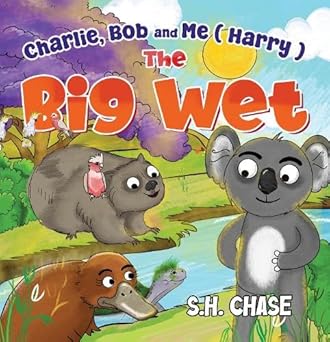
Charlie, Bob and Me (Harry) The Big Wet is a gentle, charming story about three animal friends, Harry the koala, Bob the wombat, and Charlie the platypus, grappling with the harsh realities of drought and flooding in their native Australian bush. The tale follows the trio as they first suffer through a dry, crumbling landscape and then face the overwhelming aftermath of sudden, torrential rain. Through it all, their bond stays strong as they look out for each other, adapt to change, and find hope even in chaos.
One of the things I loved most about this book was the dynamic between the three friends. It’s light, witty, and super heartwarming. There’s this early scene where Harry gets trapped under a tree branch again, and Bob sighs, “Harry, when are you going to learn?” That mix of exasperation and care instantly hooked me. It felt real, like siblings bickering with love. The humor is never overdone, just sprinkled in, and it brings the characters to life without stealing the weight of their situation.
What surprised me was how much emotion was packed into a relatively simple story. When the rain finally comes after weeks of drought, it should feel like a relief, and it does, but it also brings fear. Charlie’s burrow is flooded. Bob’s home is swamped. Even Harry, safe up high, chooses to stick with his friends. That kind of quiet loyalty is heartwarming. And then there’s the arrival of the three women, Connie, Kathy, and Sylvia, who bring food and care. It’s such a tender moment of human kindness stepping in when nature goes full throttle.
The writing is honest, and the language is simple, but it carries weight. I also really appreciated how the book didn’t shy away from the reality of environmental issues. It’s a story for kids, sure, but it respects the intelligence of the reader. It shows the fragile balance of the ecosystem and how animals struggle and help each other.
Charlie, Bob and Me (Harry) is one of those quiet little gems that sneaks up on you. It’s full of warmth, laughs, and a subtle urgency about the natural world we all share. I’d recommend this to young readers, but it’s also for anyone who needs a reminder that friendship, kindness, and community matter, especially when the skies turn wild. If you’re an animal lover, a softie for nature, or just in need of a cozy read with a message, this book is well worth your time.
Pages: 30 | ISBN : 1838759786



 LITERARY TITAN