Blog Archives
Nobody Wants To Feel Alone

The Cassandra Curse follows a portrait painter as she uses her ability to peer into the soul through her art in a desperate search for her missing twin brother in the underbelly of New York City. What was the inspiration for the setup of your story?
My mother was a portrait painter, and painted her subjects in our home (often on Saturday mornings, when I wanted to watch cartoons on TV). I had no aspirations to follow in her footsteps, but I absorbed a lot about portrait technique, color, brush work, etc. Years later, I was writing one of my Mary Crow mysteries when the notion just popped into my head—what if someone painting your portrait could read your mind? Could see what you were thinking? It was a true bolt from the blue—I have never gotten the idea for a book that easily.
The psychological depth you bring to your characters is noteworthy. How do you delve into the minds of your characters, and what challenges do you encounter in the process?
I was in a writing class when the late, great Robert Stone said, “All plot springs from character.” At first, I didn’t believe him, but the more I wrote and read, I realized he was right. People are motivated to do all sorts of crazy things, often for reasons they don’t even understand. So as a writer, you’ve got to dig deep, figure out what hurt or pain or fear in your character’s past is affecting them now. For example, in The Cassandra Curse, Augusta is obsessed with finding her twin brother. Why? The easy answer is closure. But really, it’s because she’s scared of being alone. Her parents are dead, her grandmother and uncle are very old, and she has just broken up with her fiancé. Conversely, her grandmother discourages Gus’s search for her brother for the same motivation. She has suffered the loss of a husband, a son and now a grandson. Now she wants to keep Augusta safe and close, at home with her. Two sides of the same coin, both totally understandable. Nobody wants to feel alone.
New York City is portrayed with such vividness in your book. How did your personal experiences or research influence your depiction of the city?
Two of my children moved to New York after college. Naturally, I visited often and grew to love the city with all its wild diversity. But the real hero of my research is my dear friend Steve Henry. He’s a Pratt graduate, and a popular writer and illustrator of children’s books. We traipsed through Brooklyn and Manhattan in the heat, in the snow, through rain and crazy weather. Steve was gracious, patient, and believed in this book back when at times, I was wondering what in the world had I gotten into. I truly cannot thank him enough.
What is the next book that you are working on and when will it be available?
I would like to finish Augusta’s story, and in fact, have booked a trip to Scotland to do some research. It usually takes me about a year to write a book, so I’m guessing 2025. But don’t hold me to that—books can be contrary. They can get a mind of their own, taking their writers on unexpected twists and turns. For me, that’s part of the fun of writing.
Author Links: GoodReads | Facebook | Website
Most portrait painters see just your face. Certain artists see far more. In Sallie Bissell’s riveting The Cassandra Curse, Augusta Delaney discovers her artwork can reveal more than just her subject’s physical appearance. With a newfound ability to see into the depths of a person’s soul, she is thrust into a dangerous world of secrets, lust, and murder. Searching for answers about her twin brother Jules, who vanished the night of the attack, Augusta becomes increasingly haunted by the eerie message whispered to her by their assailants. Could those sinister words be connected to Jules’ disappearance? With the help of her uncanny artistic abilities and a determination to find her missing brother, Augusta navigates a treacherous labyrinth of deception and danger.
Delving into the enigmatic human psyche, Bissell masterfully takes readers on a heart-pounding journey through the dark alleys of New York and into the twisted minds of her characters. A gripping tale of mystery, intrigue, and suspense, The Cassandra Curse will leave you on the edge of your seat until the very end.
The Strength I Needed To Keep Going
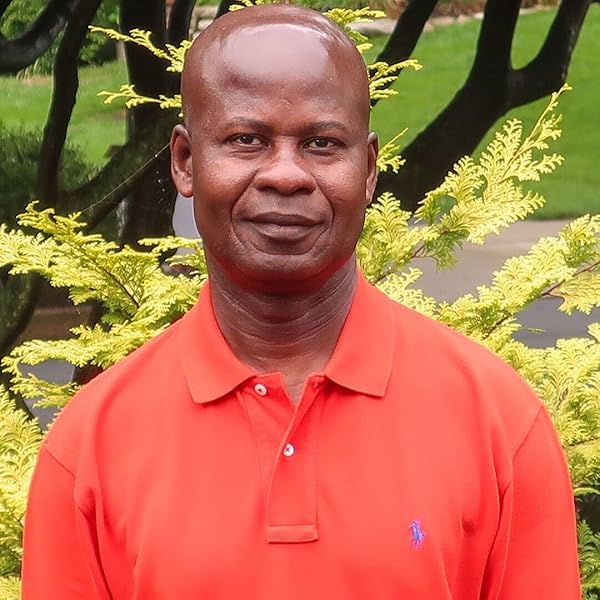
The Boy from Boadua shares your journey from a remote Ghanaian village to studying in the Soviet Union and eventually to living in America, teaching at inner-city high schools and helping others. Why was this an important book for you to write?
I grew up in a general environment that was completely hopeless. Children born in that village were not expected to be educated beyond middle school. Living in permanent poverty in adulthood as a subsistence farmer was the default expectation for pretty much everyone. As one of 14 children born to my two illiterate parents, my prospects were even dimmer than the average child in the village. There was never enough food to feed all those mouths at home, meaning that I always went to school hungry. There was no such thing as free school lunch for needy children in Ghana—we didn’t have cafeterias in our schools.
My love of reading, which began when I was a young boy in primary school, led to a series of discoveries that charted the path along which I traveled from the village to secondary schools in different parts of Ghana, to college in the Soviet Union, and ultimately to America. Due to my family’s poverty, I encountered monumental obstacles, mostly financial, at numerous stages along the journey. But somehow, I always found the strength I needed to keep going.
I arrived in America from the Soviet Union in 1992, and was hired to teach Russian and math in an inner-city K-12 public school district shortly thereafter. Weeks later, I walked into my first math classroom and had a rude awakening. The class was filled with young boys and girls, mostly minorities, who showed a complete lack of interest in education. Because of disciplinary issues, the classroom was so chaotic that I hardly did any teaching. That was bad enough, but I was even more horrified to find out in the subsequent days that the classroom picture I saw on that first day was the norm in most of America’s urban public schools, not an exception.
As a new immigrant, I had little understanding of the myriad socio-economic, racial, cultural, and other factors that combined to inspire those student behaviors. Compared to the primary and middle schools I attended in my village, the classrooms where I taught in America were state-of-the-art. The schools here had cafeterias and libraries. But the students were squandering those golden opportunities to receive the basic education that had made such a crucial difference in my life.
Confounded by that experience, I embarked on an entirely new journey to try to understand the causes of the dysfunction in the urban K-12 education system. The more I learned, the more I was haunted by the fact that given the disruptive classroom environments in urban America, had I grown up as a young Black boy in one of America’s inner cities, I perhaps could not have been able to learn and go on to do what I have been able achieve in my life.
In my students’ eyes I saw total hopelessness, which I later learned was the primary driver of those destructive classroom behaviors. That hopelessness was not that different from what was present in my village when I was growing up there. In my journey of discovery, I also became aware that this disengagement from education is the leading cause of many of the problems we find in our urban areas today—mass poverty, gang violence, broken homes, mass incarceration, and others. I was motivated to write this book to share the story of my personal journey to use it to inspire the types of children I taught in that inner-city school district. I strongly believe that the lessons and hopeful messages I share in the book can be helpful to some of those children.
I appreciated the candid nature with which you told your story. What was the hardest thing for you to write about?
That has to be my father’s untimely death, and how it led to my decision to come to America. All along, the plan had been to return to Ghana after my graduation from college in the Soviet Union. At the time of my father’s death, my fiancée, who lived in Ghana, and I were just about to welcome our first child. We planned to wed shortly after our daughter’s birth. My father had sacrificed so much for me and my siblings, and my other big dream then was to get him to retire from the backbreaking farm work that he had done for several decades to feed and take care of his large family. He was 81 years old at the time, and I wanted to do that to allow him to get some rest for the remainder of his life. His death robbed me of that opportunity, and the most painful part of it all was that I didn’t even get to pay my last respects to him. I didn’t learn about his death until I arrived in Ghana from the Soviet Union on a short visit in the spring of 1991. He had been buried 48 hours earlier.
Those were some very dark days for me. I suffered from a severe bout of depression, and coming to America was meant to be a healing mission. In writing that part of the story, it was extremely difficult for me to find the words to convey to readers exactly how I was feeling when I made the decision to leave Ghana, and how that meant I would effectively be abandoning, even if for a short period of time, my fiancée and newborn daughter.
What were some ideas that were important for you to share in this book?
I learned many important lessons along this journey. Three in particular stand out for me. One, most disadvantages should not be seen as permanent conditions. Few people are born with silver spoons in their mouths, so most of us have to start from very basic beginnings. It is not what you have at the start of your journey that matters, but what you choose to do with whatever little tools you have. You have no idea what you can achieve with scant resources until you try working with them. Two, embrace competition. Put yourself in environments where you will be challenged. Healthy competition unearths capabilities within us that we otherwise wouldn’t know exist. If you give average effort in anything, you will get average results. Three, believe in yourself. There are naysayers everywhere in this world who will always try to discourage you from doing things. One of the biggest lessons I have learned is that in general, no one knows anything. Life is unpredictable; what someone might consider to be impossible can actually be possible. Again, you never know what is achievable until you put your very best effort into something.
What is one thing you hope readers take away from your story?
My entire journey began with the accidental discovery of a piece of crucial information on a piece of paper that was lying on the ground in my village one morning. Curiosity was what caused me to pick up that paper and read what was on it. There is so much valuable information out there in the world, a lot of it often hiding in plain sight. So be deeply curious. A lot of what we do in this world is based on information. If you develop a strong sense of curiosity, you will keep learning things that will tremendously help in your personal development.
Author Links: GoodReads | Twitter | Facebook | Website
Until Patrick.
Numerous obstacles stood in the way of Patrick’s yearning for higher knowledge, including gnawing hunger, lack of sleep, and backbreaking daily chores. During school vacations, he toiled in a jungle farm teeming with poisonous snakes and insects.
Dedicating every stolen moment to study, Patrick passed the common entrance exam with flying colors. Despite major setbacks, he kept his eye on the prize. He graduated from an elite secondary school and earned his engineering degree in the Soviet Union during the perestroika era. Finding his way to the United States, he taught Russian and math and eventually obtained a superb education from top American universities.
Patrick’s travels and adventures taught him that, regardless of his hardscrabble childhood, he was a lucky man. He was raised by loving and supportive parents and lived in a society where race was not an issue. Teaching in inner-city high schools alerted him to the particular challenges faced by America’s urban Black youth.
Patrick’s amazing story offers insights, hope, and inspiration to others who face astronomical odds.
The Magic of Mexico

“Saints and Skeletons” is an emotionally evocative memoir that dives into your journey of triumphs, struggles, and self-discovery while living in Mexico. Why was this an important book for you to write?
Writing Saints and Skeletons was an opportunity for me to really look at, and live in, my own feelings about a range of things, among them my choices, my family and, yes, Fernando. What I realized I’d done in the writing of my book was forgive. It’s like a heavy weight has been lifted from me. The lagniappe is I’ve deepened the characterization in my novels through this process of introspection and self-examination.
I appreciated the candid nature with which you told your story. What was the hardest thing for you to write about?
In writing Saints and Skeletons, I was forced to accept my culpability in what happened. I was no victim. It’s easy to say “Oh, poor me!” but the truth was, in Mexico with Fernando, every less than stellar personality trait I possess reared up. To write the book, I was forced to recognize my weaknesses and forgive myself. It was easy to tell about the wonderful places we visited!
What is a common misconception you feel people have about Mexico?
For us, Mexico has long been a place where anything goes. North Americans go to “let loose” because (we think) Mexico or Mexicans don’t hold the moral values or have the same expectations of behavior we do. This is pure bunk. The Mexican people I know are disgusted with entitled tourists disrespecting them and their country. Think conspicuous consumption and spring break behavior. Of course, Mexico isn’t an example of harmony and good behavior these days!
What do you hope is one thing readers take away from your story?
The magic of Mexico. The country is beautiful, the people are generous and the spirits of the ancient imbue everything! Don’t brush off Mexico for what you hear on the news. If you go, be mindful of your surroundings and don’t act like an easy target.
Author Links: GoodReads | Twitter | Facebook | Instagram | Website
My Own Introspective Journey
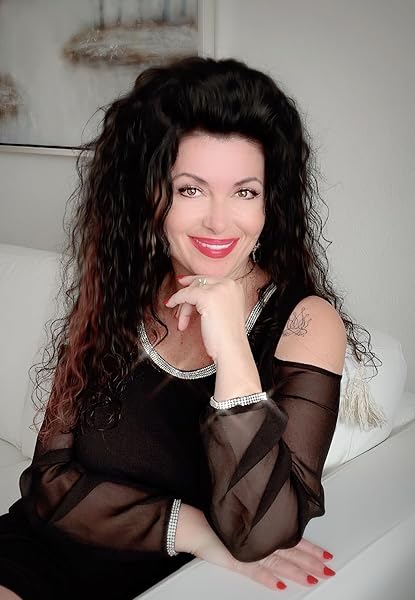
Your anthology of poetry takes readers on a journey through your emotional growth. What was the initial idea behind this collection of poetry, and how did that transform as you were writing The Realms of My Soul III?
Throughout my young adult life, I have grappled with neurodivergent issues. From my perspective, mental health struggles represent the true epidemic that plagues our society and youth today. I have dedicated myself to raising awareness in this area and to being an advocate through my writing.
When I published my debut novel, “Heart of a Warrior Angel,” in 2019, I made a conscious effort to imbue the characters with relatable challenges. This theme of triumphing over adversity, trauma, and depression is interwoven throughout “The De-Coding of Jo ” series, a dark science fiction portal fantasy for young adults aged 14 and above.
I have received numerous messages from readers who have resonated with my storytelling and found solace in the diverse characters. During my book tours over the past few years, I had the privilege of connecting with my readers, who suggested that I share my own introspective journey of healing and self-development.
As a result, in the autumn of 2022, I embarked on a journey through the “Realms of My Soul” and penned a poetry series consisting of three books. The first two volumes, “A Forgotten Dream” and “A Liberating Path,” delve into the first four decades of my life. I reflect upon the wounds of my childhood and the ways in which the desire to please others affected my development. Through this collection of poetry, I weave together my personal experiences of mental health transformation with detailed imagery, using it as a metaphor for the universal human condition.
The third book in the series, “A Golden Gift,” aims to inspire readers to embrace their inner potential and mastery. Through my own metamorphosis, I have come to illustrate the power of vulnerability and self-discovery. This poetry series serves as a beacon of hope for anyone seeking to overcome adversity and find their true purpose in life. As a creative writer, I see my art as an alchemical process. When I connect with my inner wisdom, I can tap into my essence and share it with others. Words have the power to emit energetic frequencies, serving humanity as I align with the gnosis and wisdom within me.
Through my experiences, I offer relatable lessons for those navigating today’s chaotic world. By sharing my poetry, I aim to activate my readers by transforming their journeys and finding harmony, grace, and joy. Embedded within the tapestry of my expressions are codes that can uplift those who resonate with my wavelength, offering a fresh perspective on their struggles. Ultimately, my goal is to inspire and empower others to live their highest potential and thrive.
One thing that readers will find is you use a variety of styles of poetry to express yourself. Is there one style that you are particularly drawn to?
I published my first poetry collaboration, The Joy of I. T., in the fall of 2020, and realized how much I love the rhythmic cadence of writing verses. When I released Organic eMotions: Poetry for hUmaNITY in 2022, I introduced fourteen-line sonnets with a consistent rhyming pattern as well as Haikus, a three-line poem where the first and third lines contain five syllables and the second line contains seven syllables.
For the Realms of My Soul series, I wanted to challenge myself further and included Haiku poetry to introduce each poem in every chapter. I then attempted to also include Odes, Ballads, and Petrarchan sonnets that consist of an octave followed by a sestet. The octave uses the first eight lines to describe my experience, develop a situation, or evoke a mood. The sestet is used to reflect on the experience, develop the theme further, or use different perspectives to answer questions posed in the octave.
The biggest challenge for me was writing Villanelles, a contemporary lyrical poem that consists of nineteen to twenty-six lines and two rhymes per line. But they are definitely my favorite poetry style.
What was one of the hardest parts in this collection for you to write?
Poetry holds an incredible power to establish a profound connection with audiences, particularly when exploring sensitive subjects that evoke intense emotions. It possesses a unique language that blossoms into metaphors, allowing us to transcend the boundaries of space and time. Poetry is the guardian of dreams, fearlessly venturing into the realms of the unknown.
Personally, the most challenging aspect of crafting this poetry series was delving into those past childhood memories. Through this raw and vulnerable process, I confronted core wounds, trauma, pain, shame, and the stigma surrounding depression and mental health. Poetry, in my view, provides profound insights into the human psyche and behavior, offering a space where the imagination can roam freely.
For me, writing poetry is not solely a creative art form; it is a calling, a purpose. Through my poems, I strive to assist my readers in navigating their own unresolved pain, igniting the spark of healing. I believe that my words echo the voice of my soul, acting as a guide for others on their personal journeys of self-discovery and growth.
What is the next book that you are working on and when can your fans expect it to be out?
I recently released a delightful book titled “Portals of Magic: Poetry and Activity Book for Kids 6-10.” Inside, you’ll find a charming unicorn story presented through limerick verses, as well as 40 coloring and activity pages filled with affirmations that empower young minds and little stars.
Currently, I’m working on the fourth installment of my poetry series, “Realms of My Soul.” This book will explore my unique perspectives on the crucial relationships in life. Additionally, it aims to raise awareness about the stages of menopause by sharing my personal experiences in navigating hormonal changes. Moreover, it will delve into esoteric viewpoints on self-actualization and living life through the heart’s embrace.
In addition to this project, I’m also excited to announce another captivating endeavor. I am currently outlining a thrilling dark romance/mystery that blends the suspenseful elements of “A Girl on a Train” with the intriguing allure of ancient Egypt. Set in the present day, “The Art of Rose” follows the journey of a talented artist and mystic who becomes entangled in a web of past lives and forbidden secrets. This enthralling story has the potential to become a saga, so brace yourself for its epic release in 2024!
Author Links: GoodReads | Twitter | TikTok | Website
A Golden Gift inspires the reader to embrace their inner mastery and potential. Through metamorphosis, the author illustrates the transformative power of vulnerability and self-discovery. This series is a beacon of hope for anyone seeking to overcome adversity and find their true purpose in life.
My Unhinged Humor

When a Phoenix Rose Nevermore takes readers on a journey through multigenerational stories about survival and the psychological struggles that one endures. What was the inspiration for your story?
I wanted to show how happiness doesn’t require joy, how fighting to not succumb to suicide can require every ounce of strength, and I wanted to display my unhinged humor where appropriate, without sacrificing serious themes. Furthermore, I wanted to write about grief, the coexistence of contradictory emotions, and how life is worth living despite the unreality of Happily Ever Afters.
What were some themes that were important for you to explore in this book?
Some of the themes that I wanted to convey were as follows:
– Suicidal desires can blindside and exist within oneself despite a yearning to live.
– Grief can significantly affect one’s perception of reality.
– Loneliness can be steadfast for those whose social language is different.
– Depression can be so severe that it can make one bedridden.
– Empathy can overwhelm oneself to the point of self-destruction, while causing others harm, when it’s not paired with boundaries for oneself.
– Dehumanization can happen even under the guise of “love.”
– Over-sheltering someone can leave them poorly equipped to handle reality.
– LGBTQ+ joy and celebration.
What was one scene in the novel that you felt captured the morals and message you were trying to deliver to readers?
When Karlo Noelle sings this lullaby (of his creation) to his newly adopted baby daughter, Dahlia:
Worthiness arrives not from victories.
Nor can it be received from others’ praise.
It is free from Acceptance’s decrees.
You exist; therefore, you are wonderful.
What is the next book that you are working on and when can your fans expect it to be out?
I am providing When a Phoenix Nevermore time to continue shining. However, I do have a tentative sequel in mind, and its title (for the time being) is The Extinction of Phoenixes; this book would be a tragedy, yet it would still manage to ultimately be life-affirming. Three of the major themes would be about experiencing a family member going through Alzheimer’s, optimism descending into cynicism, and love making life worthwhile, even when it feels like one has been irretrievably abandoned by happiness.
Author Links: GoodReads | Twitter | Facebook | Website
Another life-affirming journey between you and C.A. Nicholas awaits! In this standalone sequel to Cycles of the Phoenix, you will encounter tragic tales and surreal comedies, as well as degrees of horror. Yet the heroes of these diverse, interlaced, and multigenerational stories share a desire to show you how to find happiness amid persistent sorrow; their mantra is this: you are wonderful because you exist.
Science Fiction Universes
Wielders of Woe: Inferno follows an exiled prince who has to discover his family’s secrets and reclaim his birthright to save his people. What was the inspiration that drove the development of the world the characters live in?
I have always loved science fiction universes that mixed with fantasy tropes and settings. I came about the first chapter by just luck and began writing and when I finished I realized that I have something here. It was the summer of 2020, so pandemic era, and I spent most of it writing, developing, and writing some more. I’ve always wanted to tell a story of a prince that had been forsaken and a family dynamic where they all love each other but something happened to cause a split and this was it.
I found Prince Halcion Skyborn to be a remarkably well-written and in-depth character. What was your inspiration for his emotional turmoil throughout the story?
I wanted a character that stuck to his principles no matter what and wouldn’t let the world around him bend or break his character. Hal is a staunch follower of the Code of Athos and that helps him overcome a lot of problems, but it can also get him into some problems. I want him to be the pinnacle of sticking to your principles but also showcasing how, if done too much or unwilling to change, it can also hinder you. Its a part of his character development to learn how to balance it.
What were some themes that were important for you to explore in this book?
Like above, sticking to your principles, but also learning to trust others who aren’t exactly in your same mindset and always keeping your faith alive. Hal keeps his faith by following the code and Kristilin keeps her faith by following her religion, which will be explored further later. Always having something to believe in is important to everyone. I also wanted to showcase a sibling rivalry that no one wanted to happen and show what it takes to fix it. Hal and Miri are two sides of the same coin so it’ll take some work!
When will book 2 be available? Can you give us an idea of where that book will take readers?
I am currently writing the first draft of book 2 right now so it’s hard to say. Book 1 took 3 years from first draft to publishing! So I hope a little sooner! And I don’t want to spoil a lot about it but at the end of book 1 we know they’re going to Velra… but what they find there we’ll have to wait and see!
Author Links: GoodReads | Twitter | Website
In his exile, Hal must challenge powerful celestial forces, confront those he used to call friends, and unravel the secrets of his family’s ancient forebears to reclaim his birthright and save his people, even if it means facing his own blood. Though little does he know this is but the first step in a cosmic conflict that has raged for centuries and the whispers of a primordial deity are just being felt.
Mom Loved Hummingbirds
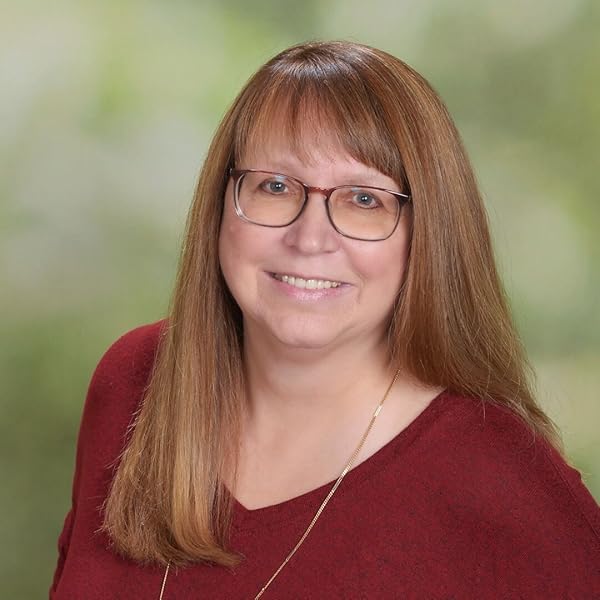
Ivy and the Hummingbird follows a young girl and her grandmother as they explore the garden to discover what is making a strange buzzing sound. What was the inspiration for your story?
The hummingbird in my story honors my mother. Mom left a legacy of giving and volunteer work over the years, some of which only became known to me at the very end of her life. People came forward during Mom’s last days and shared about the many acts of kindness she showed them. I will never forget those moments.
Mom loved hummingbirds and taught me about them. I feel close to her when I see one. I want to leave this legacy for my grandchildren and for all children.
Ivy’s story developed from my work with children. I find that spending time learning about things in nature is so important to understanding ourselves and our place in the world. Some of the best days I spent as a preschool teacher were when we took nature walks, planted seeds, quietly listened to the birds chirping, or some other nature-based activity.
In my work with children, the exploration of something in the natural world was often the most meaningful. I observed that children were often afraid of things that were new or startled them, until they were better able to understand what it was that felt scary. To grow to love, appreciate and care for our natural world, we need to gain understanding, overcome fear, and make those connections.
The art in this book is beautiful and draws readers into the story. What was the art collaboration process like with illustrator Estelle Corke?
Estelle Corke is a wonderful and talented illustrator. I am so grateful to have had the opportunity to work with her. Early in the process, we realized that Estelle had never seen a hummingbird before, given that she lives in the UK. Hummingbirds are only found in North and South America. Estelle did her research, and we spent a bit of time communicating about Ivy’s hummingbird, a female, Black-chinned variety.
Estelle took my simple notes from the manuscript and brought Ivy’s world to life. We connected well from the start. Estelle just seemed to understand exactly what Ivy’s world should look like, from the settings to the children’s clothing. The flowers in the garden were especially important, and Estelle created them so beautifully. She even incorporated my request for hidden hummingbirds throughout the book.
What were some educational aspects that were important for you to include in this children’s book?
The educational aspects that I wanted to share with children were largely about interpreting sounds in nature, and about the flowers and creatures in the garden, particularly the hummingbirds. I love the illustration on page 24, as the flowers remind me of a botanist’s journal. The observations that Ivy makes about the hummingbirds teach something about their behavior. At the end of the book, I wanted to share some hummingbird facts that might be useful in a learning environment. The hidden hummingbirds also offer an opportunity to search closely and count the hummingbirds as they are discovered.
What is the next book that you are working on and when will it be available?
My next book is still in the early stages but it will be another children’s book and will involve nature. There will certainly be a hummingbird somewhere, even if in a subtle way.
Author Links: Amazon | GoodReads
BUILDING A CONNECTED SERIES
We interviewed Susan Rogers and John Roosen about their series under the banner of Yoga Mat Mysteries. yogamatmysteries.com
With Cobra Pose as the second installment in the Yoga Mat Mysteries series, what challenges did you face in maintaining continuity from the first book, while also ensuring that it stands alone for readers who may not have read the first book?
ANS: Writing a series is much like building a set of nesting boxes or containers. One box can fit snuggly inside the other, but they are most often viewed and used separately. You start with the smallest box which is the first in the series and build from there.

The series writer knows that there will be layers upon layers developed with each successive book. Each book typically has some small carry-over items from the previous book. This is likely several characters or perhaps a continuation of an event. It might also be some small detail that is buried in one book to be fulfilled in another.
Overall, the objective is that each book stands on its own as a separate story. There may be small ‘refresh moments’ for a first-time reader choosing to start the series with a book other than the first one. These ‘refresh moments’ will provide the reader with an orientation of what happened in the beginning of the series. The trick is to limit this to only the necessary details and ensure the reader of every book in the series isn’t reading the same exact details again. An example of this is in Cobra Pose where we use the characters themselves to remember some details about each other. [Excerpt from Chapter 2 – Off Like a Rocket]
‘I found your canvas shoes,’ he said as they walked down the lane.
‘Yes, I remembered where they were … after you left. Thanks for letting me stay with you eight weeks ago; after those two break-ins at my apartment.’
‘You’re welcome. You do remember the finer details of things.’
‘Two months, Ric? And you’ve forgotten that I remember things? How about this? Height 194 centimetres, in bare feet. Shoe size 10.5. Your suit jacket is a “long”. Pants have front pleats. You’re partial to cotton, silk, merino wool and cashmere. RM Williams boots are worn for casual wear. Side speed-zip and lace-ups for work boots. You shave with a straight razor, use maca root shaving cream and wear Speedo bathing suits. And thanks to Peter, my blind neighbour, we know you like Irish Tweed cologne.’
‘Wow, pretty good, Ms Williams.’ Ric guided Elaina to the Lacey Lane building entrance. ‘Back at ya. You are 168 centimetres in height. Shoe size 6.5. You tailor your clothing to fit an hourglass figure. You also prefer cotton, silk, merino wool, cashmere and just about sheer everything else. Shoes are canvas for casual wear, leather for formal wear, and Birkenstocks are okay. I can attest a full-length bathing suit casts you as an Olympic swimmer. You prefer vegetarian pizza. Your perfume is an array of fragrances which was named after the Shalimar Gardens.’
Elaina took it all in. ‘Have you been measuring me while I sleep?’
‘Certainly not. How could I? You sleep curled up in a ball.’
‘You sleep on your back with your arms behind your head, like you’re poolside at a resort.’
‘Touché,’ Ric said.
Writing a series is like playing three-dimensional chess. The games are more difficult to build and more strategic, but they also allow time for more realism and complexity as the series progresses.
From a story perspective, a series also allows continuation of some of the characters, which becomes something readers and listeners often enjoy. This follow-on can also provide the characters time to continue to grow and develop.
How did you balance writing for two different formats – print and audiobook?
ANS: We always knew that we would produce audiobooks after each book was published. There’s just something magic about bringing the characters and plot together in an audiobook format, which is also a popular media format currently making a ‘comeback’ from audiotapes and discs.
We always read our books over and over again to each other during their construction. It allows us to hear the flow of the story, letting us know where we needed to add ‘the zing’ into the description or the dialogue.
Though reading aloud during the creation takes time. We like to listen to the words and how they sound. We work to make a ‘realistic but wonderfully descriptive’ story with the sounds. And it’s also easier for us to tell when we need to add or subtract words, concepts or connections.
We think that good storytelling naturally lends itself to audiobooks. We just had to find a way to produce the audiobook that we could hear in our heads. That was the challenge!
Did you consciously make decisions keeping the audiobook narration in mind?
ANS: We use a variety of tools to keep track of the ‘threads’ that we want to continue throughout the series, and those that may last only in one of the books. And listening to the story as we read out loud helps strengthen that structure.
We knew the ultimate work will be presented in two formats, and that drove us to spend the time crafting the structure to get it right for both formats.
The most difficult part of writing this book (and every book) is writing The End. We get very involved with the book, the characters and the plotline. So, it is like closing the door and saying goodbye to good friends, if only for awhile.
That is probably another reason we have gone on to develop audiobooks for our series. The Dead Man’s Pose and Cobra Pose audiobooks feature a world-renown voice actor, Rupert Degas. Thus, we can listen to our characters ‘in action’ whenever we have a moment. This helps reinforce where we will be going with the storyline and the character development in the future books in the series.
How did you navigate the process of writing a cohesive story as co-authors? Were there any specific challenges?
Anyone looking at our backgrounds would wonder how we met, how we stayed together, and how in the world do we write books together. It definitely isn’t easy, but it’s fun.

John’ s background was a little different, starting his career as a biologist, then serving as a commissioned naval officer. He was also a designated law enforcement officer and environmental emergency specialist in the United States. Susan’s life took a major detour when she became a commissioned naval officer and a designated law enforcement officer. Susan also headed a small arms weapons training team for the for the US Coast Guard and conducted safety and engineering inspections of ships at sea.
That’s where our paths came together. We met at Officer’s Candidate School in Yorktown, Virginia. Susan was a rule follower, doing things ‘by the book’. John liked to figure out ways to break the break the rules. There was an immediate attraction.
Now, when we write, we sit in a small bay window for 12-14 hours a day. We built a narrow American ash table that fits two computers and lots of coffee cups. Using this table, we finished our first mystery novel, Dead Man’s Pose, about a murder occurring in Sydney, Australia. It becomes three murders after wrangling a plotline from the creative ether. We argued over many things—from character flaws, to location descriptions, to unique methods of murder.
The narrowness of the table forced us to eventually see ‘eye to eye’ to continue writing the series.
How do you resolve the differences?
ANS: It is the passion between us that creates the tension in the stories. It isn’t easy to have two strong personality types build a gummy web of intrigue. As we both have military experiences, sometimes there is a bit of pulling rank or ‘drawing swords’.
Most of the time (miraculously), we maintain our humor. The impenetrable goal is always not to tarnish (too much) our long relationship by arguing over Oxford commas, how to place Australianisms, or where to bury clues so they are read, but not apparent.
We write, we focus and we share the passion that we have for each other and our stories. We laugh and cry and encourage Elaina – our main protagonist in books 1 and 2 – onwards in her journey. Our solicitor turned yoga instructor overcomes various issues in the first two books with a zig-zagging pathway.
Elaina’s handsome, dark horse partner, Ric, is easier to write about. He seems to collaborate with us throughout the mystery-thriller series, making us laugh at his wry humour and smart dialogue. Thanks Ric! Readers and listeners will get better acquainted with Ric’s past in books 3 (Tree Pose) and 4 (Warrior Pose).
We have dug deeply into our backgrounds and our personal experiences working across the world. We created a souffle of English, business, technical writing, biology, chemistry and trivia to create the series. Do we tear our hair out, gnash teeth, or threaten to jump from the 14th floor window? Well, the jumping would be difficult as we are on the ground level … but sometimes it seems like that.
During the blazing arguments and work-throughs, we pound out the direction were headed and how we would get there. That’s where our passion for writing burns brightest.
Would we do it again? You bet! We have worked together to release two eBooks and 2 audiobooks in about 16 months. And the next three are drafted and will be ‘perfected’ one by one. Drafting the stories in advance was another method to help us develop this series.
As the story of Cobra Pose unfolds in Brisbane, how did you ensure the city’s essence was captured effectively in the book?
ANS: We have spent 12 years in Australia working and exploring many of the locales in this extraordinary country of Australia. Cobra Pose takes place in the sub-tropical city of Brisbane and the surrounding area of Queensland. Brisbane is a great city which runs along the winding Brisbane River. The river actually reminds us of how twisty a mystery plot can go.
We have been fortunate to have lived and worked in many countries in the world. So, we always look for the ‘discovery’ of a city from the reader’s point of view.
We purposely ground-truth each and every locale that our characters live, visit or explore. This includes both the protagonists and the antagonists.
As Cobra Pose was being written, we ground-truthed every street, every restaurant, and even took a few days to stay on Stradbroke Island, near Brisbane in Queensland, Australia. This was to carefully plot out the final emotional action scenes related to one of the overarching themes of this book – hacking.
And it was then that we received an email from our Australian communications company. We’d been hacked!
“At first it was very frustrating to learn we’d been hacked,” John commented. “But we realised in thinking about it, that it was the perfect validation for all the work we had done in preparation for Cobra Pose.”
“And some of the things we learned during that particular occurrence, also helped us better construct the plot!” Susan concluded.
Can you give us a hint about what you’re working on next?
ANS: Absolutely!
Tree Pose is the 3rd book in the series and Ric and Elaina travel to Tasmania (one of the states of Australia) which is an island in the southern part of the country.
Warrior Pose is the 4th book in the series and Ric takes Elaina to the place he was born – New Zealand.
Half Moon Pose is the 5th book in the series and Elaina persuades Ric to head to France where her mother was born.
How do you hope readers and listeners will feel after finishing your book or audiobook?
ANS: This is the best question of all. Our answer is for the reader and listener to be swept away with the mystery, suspense and thriller themes, as well as the romance and faraway places.
Stories are a magic way of taking one to another place in a relatively short time.
And of course, we hope that the reader and listener can’t wait to get into the next eBook and audiobook and are hungry for more!
Author Links: Twitter | Facebook | LinkedIn | Website | YouTube | Instagram
It’s not just a rippling ‘scam’ job. Has Australia been infiltrated at levels they’ve never known?
Elaina Williams uses a Cobra Pose in her Yoga studio to boost her energy – she will need it! Elaina’s father, Edward, is in trouble. He’s disappeared.
As a solicitor and now yoga instructor, Elaina drags Ric, a man she’s fallen for, into the bursting web of techno-thrilling intrigue.
Ric Peters has just returned from a disastrous trip to Indonesia. Ric bills himself as a photojournalist. Elaina suspects he shoots more than just photographs. Ric has insight into the journey he and Elaina must take. He knows Elaina isn’t ready for what’s going to happen. There are too many moving parts for him to control.
Time is running out before The Cobra and The Wolf strike with their heist. They are extending their fangs towards Australia’s ‘golden coastline’ to bite into and destabilise financial institutions worldwide.
The sparkling sub-tropical city of Brisbane, Queensland, is the epicentre of this hacking tsunami of the century! But these hackers are good at hiding. They make a living out of it. They are submerged Phantoms leaving no tracks.
Can the burgeoning amateur sleuth Elaina piece this puzzle together before her father’s fate is sealed? How far is Ric willing to go in deciding to save Elaina … or Australia?
Cobra Pose is the suspense-thriller and second novel in the Yoga Mat Mysteries series. This book is filled with a snappy plot, dynamic prose, witty dialogue, and slow-burn chemistry. You’ll love Susan Rogers and John Roosen’s atmospheric whodunit. Click Cobra Pose to stretch your sense of adventure today!
The first book, Dead Man’s Pose, is available online. Next in the YMM line-up is Tree Pose – coming soon!



 LITERARY TITAN