Blog Archives
Allan Learns to Talk


Readers meet Allan, a five-year-old autistic boy who does not speak. His silence often leaves him overwhelmed; when the words simply won’t come, he collapses into tears and screams, unable to express what he needs. His sister Ashley worries constantly, unsure how to bridge the gap between her world and Allan’s.
Everything shifts when Allan begins working with a speech therapist at school. She introduces him to sign language, and the discovery feels life-changing. At last, he has a way to share his thoughts. His family, eager to support him, learns to sign alongside him. As Allan gains this new voice, they notice a remarkable change; he glows with happiness.
Allan Learns to Talk by Sharon Austin offers a gentle, motivating, and deeply inspiring story for young readers, especially those who have siblings or friends on the autism spectrum. Austin’s portrayal of Allan’s experience feels authentic and compassionate, allowing readers to view the world through his eyes. The illustrations elevate the narrative, capturing Allan’s intelligence, creativity, and vibrant imagination with striking clarity.
Equally moving is the family’s unwavering commitment to understanding him. Their willingness to learn sign language enriches the story and highlights the power of support and connection. The book deserves a place in school libraries, pediatric offices, and anywhere children and families seek stories that reflect real challenges and real hope.
As Allan grows more confident, spoken words gently emerge, an especially touching moment occurs when he says, “Mom.” Many parents will recognize their own journeys in these pages, making this book both relatable and heartwarming.

Happy Thoughts: Going to the Beach
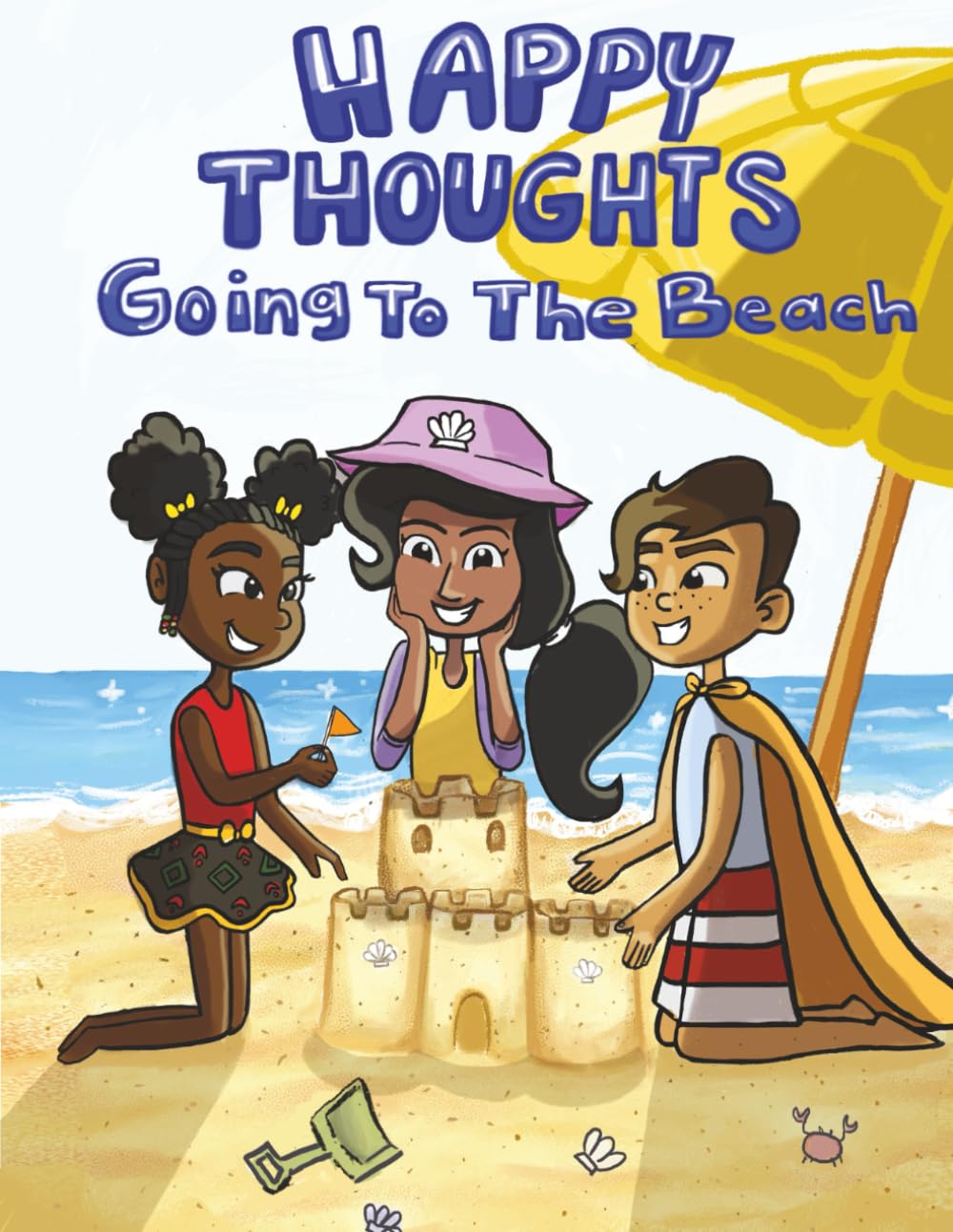
This sweet little children’s book follows Emma, a young girl with autism, as she heads to the beach with her friends Harper and Jerry. The day is full of excitement, sandcastles, and learning moments. Emma communicates using special waterproof cards her mom made, and through her friends’ kindness and understanding, the story shows how love and patience make adventures fun and safe for everyone.
I really liked how real the story felt. It didn’t sugarcoat things but still stayed gentle and positive. The way Emma’s excitement sometimes turns into overwhelm was so true to life, and the way her friends helped her made me smile. The writing is simple, but it fits perfectly for kids. I felt a lot of warmth from it, like a big sunny hug.
What really stuck with me was the message about friendship. Harper and Jerry never judged Emma, and that’s such an important thing for kids to see. The story didn’t feel preachy, just kind. The vibrant, cartoon-style illustrations depict heartwarming scenes of diverse characters. The illustrations are colorful and happy, matching that summer beach vibe. The writing has this rhythm that makes it feel like a conversation with a child, curious, honest, and full of energy.
I’d definitely recommend Happy Thoughts Going to the Beach by Lisa Jacovsky for kids around preschool or early elementary age. It’s perfect for storytime, especially for families or classrooms that want to talk about autism and inclusion in a positive way. It’s the kind of picture book that teaches empathy without even trying too hard. A good one to curl up with before a trip to the beach or anytime you just need a smile.
Pages: 29 | ASIN : B0FHL3Q61L
Barely Visible: Mothering a Son Through His Misunderstood Autism

Kathleen Somers’ Barely Visible is a raw and often gut-wrenching memoir that tells the story of her journey as a mother navigating the heartbreaking loss of a daughter and the challenging road of raising a son with autism. The book begins with a detailed account of the late-term abortion she and her husband chose after discovering a severe chromosomal disorder in their unborn child. What follows is the story of their second chance at parenthood, a son, Jack, whose development is anything but typical, and whose autism remains invisible to many who interact with him. With honesty and grit, Somers invites readers into the daily struggles, small wins, crushing doubts, and fierce love that shape her life as a mother.
The writing is plainspoken and real, never dressing up the pain or dressing down the joy. Somers doesn’t flinch when describing her darkest moments and emotions like grief, rage, and guilt, but she also doesn’t wallow. Her voice is steady and direct. What I liked was her description of being caught in a kind of no-man’s-land with Jack: not disabled “enough” for sympathy, not neurotypical enough to be understood. That tension runs through the whole book, and it’s heartbreaking. She captures the loneliness of parenting a child who doesn’t fit the mold and the silent battles she fights in parking lots, classrooms, and her own mind.
What I appreciated most was that this isn’t a story wrapped up with a bow. Somers doesn’t pretend to have all the answers. She admits to losing her temper, to doubting her decisions, to questioning herself constantly. But she also shows up for her son, over and over again, even when it’s hard, even when it’s thankless. There’s a quiet bravery in that. And her reflections on how people perceive disability, how a child’s challenges are judged based on how visible they are, stayed with me. She writes with a dry wit at times that cuts through the heaviness, which I found refreshing and relatable.
I would recommend Barely Visible to any parent, especially those who feel like they’re walking a path they didn’t expect. If you’ve ever struggled to make sense of a diagnosis, to advocate for a child who’s misunderstood, or to stay afloat when life doesn’t look the way you thought it would, this book will speak to you. It’s not just about autism or motherhood or grief. It’s about resilience and love and the messy, beautiful, brutal work of showing up.
Pages: 312 | ISBN : 978-1647428822
Love and Connect

In Watching Sarah Rise, you share with readers your experiences parenting a daughter with special needs and the way your family embraced a child-centered approach to autism therapy. Why was this an important book for you to write?
I wanted to share my experience with the Son-Rise Program so that more parents could know about it and how transformational it can be for all involved. I also wanted to help other people (parents and non-parents) know that any and all of their feelings are ok, even the ones they might judge as being too terrible to admit to. I often receive feedback that my honesty about my experiences and feelings that I write about in my blog is helpful for others, so I’m hoping that the book is helpful in the same way and can reach a bigger audience than my blog has so far.
I appreciated the candid nature with which you told your story. What was the hardest thing for you to write about?
The hardest thing was figuring out how to share the story in a way that would make sense for others because I felt like I could write chronologically or focus around different topics. I wanted to do both at the same time, and I think I sort of managed to do so, but that was difficult and took the help of my editor and husband to make it all work. Writing about difficult experiences and my feelings wasn’t difficult. That part comes easily for me and helps me accept and understand myself and Sarah more. Every time I reread the book, I learn things from my past self about how to really love and connect well with Sarah.
What is one misconception you think many people have about parenting a child with autism?
The idea that kids with autism have trouble recognizing the emotions of others. Sarah has a keen sense of how others are feeling. She definitely knows when I am stressed or sad, or upset about anything. She will either ask me why I’m sad, listen attentively and wipe my tears away, or feed off of my stress if I’m feeling anxious. That makes for two anxious and upset people so I’m really working on how I can keep myself on more of an even keel.
What is one thing you hope readers take away from your family’s experiences?
You don’t have to know all of the answers or be a perfect parent to make a world of difference for your child.
Author Links: GoodReads | Facebook | Website | Amazon
Families who have supported a child with special needs will connect with this memoir about Sarah, a feisty girl with autism and a unique genetic blueprint. Her mom, Jenny, is equally feisty and determined, which leads her to make a commitment that dramatically changes her and Sarah’s lives—as well as those of many others.
Sarah’s early years are filled with challenges, and Jenny and her husband, Carl, try various therapies in an effort to help her. At four years old, Sarah is still nonverbal, still doesn’t use the potty, and still struggles with eating. Jenny knows she must do more. She has heard of a method developed by the Autism Treatment Center of America called The Son-Rise Program, which, through loving, supportive interaction, aims to foster social connection in people with autism. It is a huge undertaking, requiring hours of one-on-one therapeutic playtime, which means Jenny needs to find and train volunteers to make it possible. Though Jenny isn’t sure she can do it, she decides to try. She calls her program Sarah-Rise.
Accompany Jenny as Sarah’s language explodes, her eye contact intensifies, and she plays games, plays imaginatively, uses the potty, eats healthily, reads, and writes. Have your heart warmed and your socks knocked off by this momentous journey.
Watching Sarah Rise: a Journey of Thriving With Autism
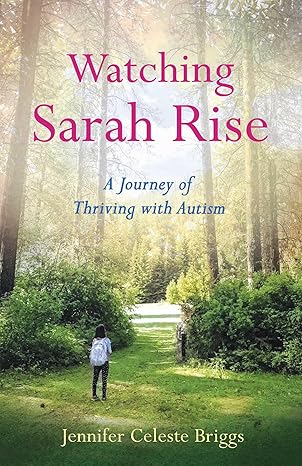
Jennifer Celeste Briggs’s memoir, Watching Sarah Rise, is a deeply personal and unflinchingly honest account of her journey in parenting a daughter with special needs. At its heart, it’s the story of a mother’s fierce love, persistent hope, and tireless effort to help her daughter Sarah grow, connect, and thrive in a world that often sees difference as deficiency. The book chronicles their family’s embrace of The Son-Rise Program, a child-centered approach to autism therapy, and how it transformed their lives. Blending storytelling with reflection, Briggs invites readers into her daily struggles and hard-won triumphs, painting a full and textured picture of both the heartbreak and the joy of parenting outside the norm.
I was moved from the very first pages. There’s a raw, grounding honesty in the way Briggs writes. She never pretends to have it all figured out. She’s vulnerable, tired, sometimes angry, sometimes thrilled, and always full of love. The writing doesn’t hide behind big words or try to be poetic; it’s just real. That’s what hit me hardest. She describes small moments with her daughter, spelling out “milkshake,” playing with candles between their toes, as if they were miracles. And you know what? They are. You start to see what she sees. Sarah’s progress becomes your progress, too. I also appreciated that Briggs doesn’t sugarcoat the toll, emotional, physical, and mental, that caregiving takes. She talks about the crying in the kitchen, the fights, the loneliness. But there’s always a thread of grit and warmth that carries you through.
What surprised me most was how inspiring the ideas in this book are, not just for parenting, but for life. The Son-Rise Program is about joining someone in their world, instead of pulling them into yours. That hit me like a brick. What if we all tried that more often, with everyone we love? I kept thinking about how much better the world would be if more of us acted with that kind of patience and respect. And it’s not just philosophy, Briggs shows how it plays out in real, messy, funny, frustrating, beautiful ways. It made me reflect on my own beliefs, my own judgments, and even how I show up for the people around me. That’s the mark of a good book: it changes how you see.
If you’re a parent, especially one raising a child with special needs, this book will speak to you like a friend who really gets it. If you’re a teacher, therapist, or anyone working with kids, it’s a reminder to lead with heart. And if you’re just someone who wants to understand more about love and growth and resilience, this book has a lot to teach. Watching Sarah Rise is not just about autism. It’s about listening. It’s about choosing to believe in possibility, even when everyone else says don’t bother. And it’s about rising, not just Sarah, but all of us.
Pages : 320 | ISBN : 978-1647428242
Shining As I Am

Makida Arshi’s Shining As I Am is a heartwarming picture book that tells the story of Adam, a young autistic boy, from his own point of view. We follow Adam from birth through childhood as he navigates milestones, struggles, and joys with the unwavering love and support of his family and friends. The story captures his challenges—like sensory sensitivity, delayed speech, and social differences—but also celebrates his strengths, including drawing and visual learning. Most of all, it highlights what it feels like to be truly loved, understood, and accepted just as you are.
The writing is gentle and honest. It doesn’t try to sugarcoat autism, but it doesn’t frame it as something broken either. That balance is tough, and Arshi absolutely nails it. The rhyming lines give the story a soothing, musical rhythm that feels almost like a lullaby—perfect for bedtime reading but deep enough to start real conversations. The repetition of the phrase “as I am” builds a strong emotional thread. You can feel the compassion baked into every single page.
The illustrations by Siddhant Jumde are beautiful. They’re bright, expressive, and full of warmth. But what really stuck with me was the message. This isn’t just a picture book about autism. It’s a story about being human—about being different, misunderstood, and still deeply loved. It reminds you how powerful patience and kindness can be. There’s this bravery in Adam’s voice that made me want to be more aware and more empathetic. And the way it weaves in other kids on the spectrum with unique strengths and challenges—that really drives home the message that autism isn’t one-size-fits-all.
I’d recommend Shining As I Am to just about everyone—parents, teachers, kids, even adults who need a gentle reminder of how to love better. It’s especially great for families with autistic children, but honestly, it’s for anyone who believes in kindness. It’s the kind of book that leaves a little glow in your heart after you close it. Simple words, big feelings, and a whole lot of truth—this children’s book shines, just like Adam does.
Pages: 38 | ASIN : B0DRSK3LC1
To Be Seen

Spark Your Story is a deeply personal and powerfully candid memoir-essay hybrid that follows the journey of a young, autistic, biracial teenage girl navigating creativity, identity, and self-worth in a world that doesn’t always make room for people like her. Why was this an important book for you to write?
I wrote Spark Your Story because God inspired me. A young teenager like me couldn’t do this alone. I feel like I’m doing the Lord’s work with every book published. Writing is a very fulfilling mission as well. I know that people are blessed with each word. Maybe even more teenagers will be touched by my story. Perhaps this will inspire a new generation of young authors.
What were some ideas that were important for you to share in this book?
It was less about lessons and teachings and more about giving the world a piece of myself. I wanted to be seen, and I thought if people saw me, they’d be inspired. Think of this book as a gift to you and everyone who desires it.
What was the most challenging part of writing your memoir, and what was the most rewarding?
The most challenging part was the section on bullying. It wasn’t because of the prose or the skill required to write, but because it reached into a vulnerable part of myself. Those pages were stained with tears. I may be a fifteen-year-old author, but I’m not perfect. I’m hurt too. And writing that was like cleansing the wound. It may have stung, but crafting it was a significant part of my healing. It helped me rise above the teasing I experienced.
The most rewarding part would have to be the amount of people touched by my words. My heart goes to those who smile at the colorful pages, scribble notes in the margins, and go on to write books of their own. Readers like those are some of the greatest blessings of being an author.
What do you hope is one thing readers take away from your story?
I hope readers learn that you’re never too young or too inexperienced to achieve. Hard work and intellectual skills can be developed at any age. You can do it. You can write a book. It doesn’t matter who you are. If you are willing to put in the time and effort, you too could become an author or intellectual.
Author Links: GoodReads | Facebook | Website | Amazon
What Are We Going to Do With Tyrone Jr.?
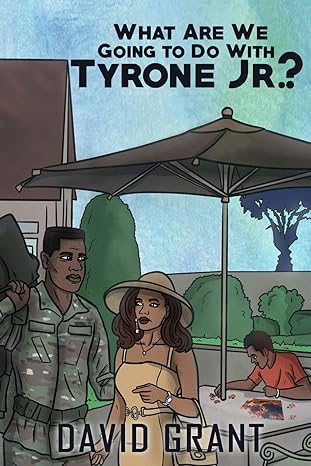
David Grant’s What Are We Going to Do with Tyrone Jr.? is a poignant and stirring narrative that dives deep into the complexities of raising a child with autism while navigating the relentless challenges of societal judgment and personal sacrifice. The story revolves around Tyrone Washington, a father struggling to provide the best life for his son, Tyrone Jr., who is on the autism spectrum. Through a series of trials, including courtroom battles, misunderstandings, and heartfelt moments, Grant masterfully paints a picture of resilience, love, and unwavering dedication.
One of the most compelling aspects of this book is its authenticity. Grant’s depiction of the everyday struggles faced by Tyrone and his family feels incredibly real and relatable. In Chapter 1, we see the frantic search for Tyrone Jr. in a mall, which sets the tone for the many anxieties and fears that follow. This scene not only hooks the reader but also establishes the raw emotion that permeates the entire narrative. The author’s ability to convey such genuine emotions is commendable and adds a layer of depth to the characters that make them memorable. Another standout element is the narrative’s exploration of societal issues. The book does not shy away from depicting the prejudices and systemic challenges faced by families dealing with autism. Grant’s background as a military officer also brings an interesting perspective to these issues, adding a unique dimension to the story. The dialogues are strong and natural, and the reflective moments offer a deeper insight into Tyrone’s internal struggles and add to the story’s emotional weight.
What Are We Going to Do with Tyrone Jr.? is a heartfelt and impactful read that will resonate with anyone who has faced adversity while caring for a loved one. It’s a powerful reminder of the strength of family and the importance of compassion in our interactions with others. I highly recommend this book to readers who enjoy emotionally charged stories with strong character development and those interested in understanding more about the challenges faced by families dealing with autism. David Grant has crafted a narrative that is both enlightening and moving, making it a valuable addition to contemporary fiction.
Pages: 257 | ASIN : B0CZ4D33NY



 LITERARY TITAN