Blog Archives
Exploring Forgiveness

Praying for a Wounded Child is a devotional prayer guide designed specifically for family members and caregivers of children who have been victims of trauma. Why was this an important book for you to write?
After perusing numerous books on prayer for one’s children as well as books on traumatized children, I noted a clear absence of books on praying specifically for traumatized children. Thus, I felt that foster parents and adoptive parents, as well as families facing battles, could best be strengthened by combining prayers along with information and guidance on traumatized children.
My heart’s desire herein is to spiritually, emotionally, and practically support those brave parents who deeply love and advocate for their wounded children. Briefly, too, I sought to use my education and experience as a mental health therapist and hospital chaplain as well as my trajectory as a parent to kids from hard places.
The book begins with the caregiver’s relationship with God before focusing on the child. Why was that sequence important to you?
This is an excellent question, and this order was intentional. An ocean of wisdom and strength is available in the Lord, as He can truly comfort and guide one. Moreover, checking the motives of one’s heart and offering forgiveness, even mentally, can liberate a caregiver’s mind and soul. Therefore, the critical area of forgiveness is duly explored.
In exploring forgiveness and various other aspects of a caregiver’s relationship with God, my intention was to first seek restoration and renewal for the caregiver spiritually as well as replenishment. Obviously, replenishment, renewal, and restoration are needed for a caregiver to give from a full bucket, as that saying goes.
What do you think caregivers often misunderstand about trauma in children?
Akin to grief, trauma in children is not the same as trauma with adults.
Generally, children lack critical thinking skills until roughly age 12 and sometimes even later, particularly with boys. Children’s verbal and processing skills are not fully established and present as their brains are still developing. Adults may be able to heal somewhat through verbalization, yet a child may need art or play with a healthy adult to begin to openly verbalize (and it may be minimal) or process their pain.
Children’s language, love language, and often their healing mechanism is play. And yes, a gift one can give to a child is to enter his or her world and play with what the child is drawn to, even if the child is not significantly wounded.
Additionally and notably, the child’s emotions may seem frozen or buried after the trauma, unlike some adults.
Thus, support groups for children where they are present with other children who have been traumatized, especially with a similar trauma, may help relieve the pain in a safe environment. These groups also may address and free a wounded child from a sense of loneliness and isolation in their pain. Examples are grief groups for kids (often found through hospices), Alateen, and foster care and adoption groups for kids.
I also wish to discourage parents from unknowingly denying or suppressing a child’s pain when the emotions come forth. Compensation, such as taking them out for ice cream, promising a gift, etc., is so easy to offer to stop the tears, big emotions, etc.
I totally understand that, and honestly, have been guilty of that as well. I truly believe this is a knee-jerk parental reaction, as it hurts us to see our child in pain.
Yet compassionate listening with statements such as, “I am so glad you are sharing this with me,” “Tell me more.” “I am not leaving you. I love you.” and “Please keep talking. I want to just listen to you.” or “I am here for you.” can heal, ensure a child’s safety with emotions, and facilitate a depth of bonding.
If a reader could take away one truth from Praying for a Wounded Child, what would you want it to be?
Raising a wounded child can be a profound vehicle to make us like Christ, meaning drawing one to Him as well as learning to respond to the child in a Christlike manner. Rather than viewing this as a burden (which can be easy to do as a human being), one can have the perspective of seeing this journey as a means to deeper prayer, a more understanding and empathetic walk with the wounded, and an opportunity to seek the heart of God for a wounded child.
Author Links: GoodReads | Facebook | Website | Amazon
Feeling Alone or Overwhelmed in the Journey?
In Praying for a Wounded Child, Wells offers a soul-stirring devotional born from her and her husband’s personal wrestling in prayer through unexpected issues as they parented all their cherished children which includes children from hard places. Her master’s degree in mental health counseling, and considerable experience with traumatized children lends to Virginia Wells’s authentic ability to empathize with parents involved in similar circumstances.
As you journey with Wells, you’ll encounter hope, wisdom, and relentless faith.
This riveting devotional goes beyond a good parenting book, and offers practical and spiritual guidance, cultivating a deeper relationship with Christ. Guidance and comfort are generously provided while still considering the emotional needs of your child.
You will discover prayers and insights about:liberating forgiveness
prejudice
the Luke 2:52 prayer
journaling intercession
attachment issues
extended family and siblings
identity
education
incarceration
abandonment
abuse
self-care
and more
Embrace a profound journey toward hope and healing, rediscovering the transformative power of prayer for both you and your children. This devotional is a beacon of hope for parents seeking understanding, clarity, and solace amid the concerns and challenges of parenting a wounded child.
The author will be donating 50 to 100 per cent of the profits of this book to help human trafficking survivors and other God-honoring, compassionate charities.
Just a Dot? I Think Not!


Just a Dot? I Think Not! by Heidi Solomon-Orlick is one of those children’s books that manages to say something quietly profound without ever raising its voice. Vibrant, joyful, and bursting with color on every page, this story speaks directly to the hearts of children and adults alike.
At the center of the story is Dottie, a dot with a mission: to connect the world, one dot at a time. What unfolds is a gorgeous celebration of difference and belonging. Each dot comes in a unique color, shape, and size, and the story reminds readers that these differences are not something to hide from or fear. They are something to celebrate. Every dot has its own personality, its own traits, its own place in the world. When they come together, they create something even more beautiful: new colors, new connections, and a rainbow of possibilities.
What stands out most is the lightness and warmth with which the story delivers its message. There is no heavy-handedness here. No lecturing. No forced lesson. Instead, the book lets its theme bloom naturally through rhyme, color, and joy. The emotional impact is real, but it arrives wrapped in playfulness, making the message easy for children to absorb through delight. I believe that this is exactly the kind of subtle yet powerful storytelling young readers need today: a gentle but clear rejection of hatred toward those who look different from us, paired with a reminder that we are stronger, happier, and more complete together. For adults, the message resonates just as deeply. There is something moving about seeing unity and acceptance presented with such clarity and joy.
The illustrations are a burst of color and a feast for the eyes. Each page radiates energy. The dots leap from the artwork with personality and charm, and the visual storytelling carries much of the book’s magic. This makes it an excellent choice for very young readers, who will be drawn in by the sheer visual joy before they fully grasp every word. The short, easy-to-follow rhyming sentences are perfectly suited for little ones, while the rhythm makes the book a pleasure to read aloud.
A lovely bonus follows the story, with pages of fun activities that extend the experience and allow children to carry the book’s joyful spirit into their own play and creativity. Just a Dot? I Think Not! is a wonderful choice for families with young children, classrooms, and anyone who believes in the power of stories to teach empathy and connection. Dottie’s message is one the world could use much more of right now.
Pages: 58 | ASIN : B0FPSVCPX4

Congaree: The Little Black Mustang From Arapaho Creek

Congaree follows a young wild Mustang as he moves from the open range of Wyoming’s Red Desert Complex into the confusing, frightening world of capture, training, trust, and adoption. At first, he’s simply “the little horse,” safe with his herd and unsure of people, but over time, he learns that gentleness can exist on the other side of fear. His journey becomes one of belonging, especially when he receives his name, Congaree, and finally understands adoption not as loss, but as love finding a place to land.
I liked the emotional patience of the story. I appreciated that it doesn’t rush the hard parts or pretend the little horse isn’t scared. The helicopter, the trailer, the pen, the new people, all of it feels big and bewildering through his eyes. The writing is plainspoken and tender, sometimes a little explanatory, but that actually fits the purpose of the book. It gives children room to understand what’s happening without being overwhelmed. I especially liked how the book connects the horse’s adoption to human adoption in a gentle, thoughtful way.
The artwork is one of the book’s strongest gifts. The watercolor textures, soft washes, ink-like lines, and splattered backgrounds give the pages a dreamlike quality. The desert scenes feel wide and sunlit, while the corral and training pages feel closer and more uncertain, which mirrors Congaree’s inner world beautifully. The ideas in this picture book are meaningful. Things like trust take time, fear can soften, animals can help people heal, and a “wild” spirit doesn’t have to be broken to be loved.
By the end, I felt genuinely fond of Congaree, not because the book asks me to admire him, but because it lets me watch him become brave in small, believable steps. This is a heartfelt, educational, and quietly moving children’s book with a deep respect for Mustangs and the people who care for them. I’d recommend it for horse-loving children, families interested in adoption stories, and parents who want a gentle way to talk about trust, change, healing, and finding your forever home.
Pages: 106 | ASIN : B0F21FKJ2T
So You Want To Be A Professional Athlete
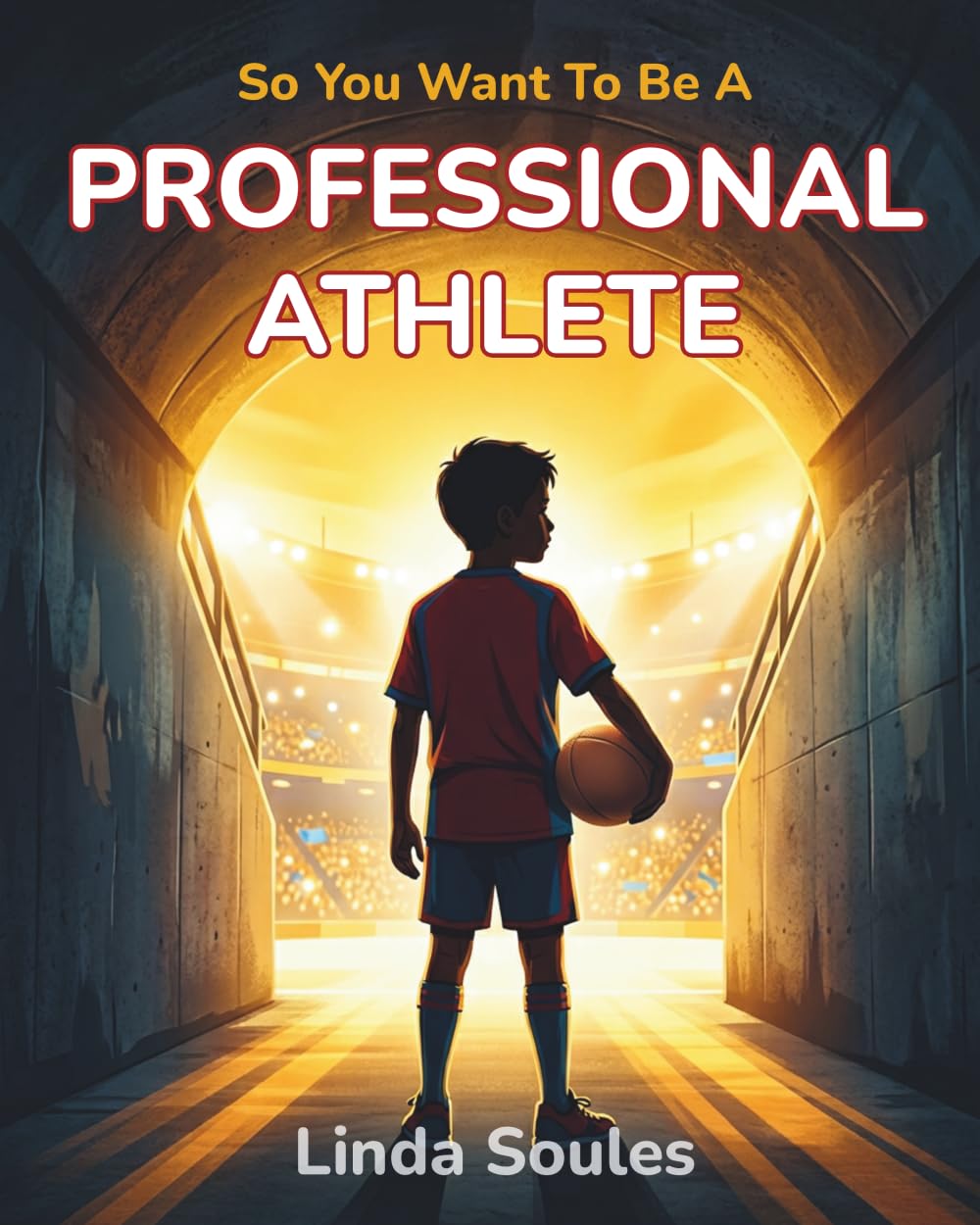
So You Want To Be A Professional Athlete, by Linda Soules, is a smart and encouraging nonfiction guide for kids who dream about playing sports at the highest level. Instead of focusing only on fame, trophies, and big game moments, this book shows what being a professional athlete really looks like behind the scenes. Soules makes it clear that talent matters, but it is only the beginning. The real work comes through practice, discipline, training, recovery, and learning how to handle pressure.
One of the best parts of this children’s book is how honest it is without being discouraging. Young readers learn about strength training, nutrition, sleep, film study, mental toughness, and the team of coaches, trainers, nutritionists, and sports psychologists who help athletes perform their best. The book also explains the less glamorous parts of the job, like injuries, early mornings, strict routines, public failure, and the fact that an athletic career does not last forever. That honesty makes the book feel useful, especially for kids who may think professional athletes mostly just show up and play.
The writing is clear, casual, and easy for kids to follow, while still treating them like serious readers. Soules doesn’t talk down to her audience, and she gives enough detail to make the world of elite sports feel real. The colorful illustrations, fun facts, real athlete stories, glossary, and “day in the life” sections help keep the book engaging. Some parts are packed with information, so it may appeal most to curious readers who enjoy learning how things work, but sports-loving kids will find plenty here to keep their attention. I also liked how it mentions that “The mental dimension is as demanding as the physical.” I don’t think many children’s book go into this aspect enough, and I was happy to see this book tackle that side of sports.
So You Want To Be A Professional Athlete is a great choice for young athletes, sports fans, families, teachers, and coaches. It gives kids a realistic look at the hard work behind greatness while still encouraging them to dream big. More than anything, it shows that being “professional” starts long before the crowd cheers your name, it starts with the choices you make when no one is watching.
Pages: 38 | ISBN : 978-1972766200
Helping Kids Understand

Why I Must Go offers parents a gentle way to talk about a family member’s military service and the reasons behind their time spent away from home. When did you realize there was a need for a book like this for young children?
My husband deployed twice in two years when my children were very young. My daughter started asking why her daddy had to leave for work when other daddies came home. I didn’t have a good enough answer that explained the magnitude of service and courage of military members. There was one defining moment on the day my husband deployed for the second time. We were at a friend’s house, and their dad got home from work. The kids all started yelling Daddy! and running to meet him at the door. My eldest got caught up in the moment and joined in, only for her face to fall when she realized her daddy wasn’t going to be home for a long time. I saw that there was a need for a way to explain to children that loved ones leave for the military because of love for them. They love their kids and family so much, they deploy to protect them.
How do you ensure the tone stays comforting without minimizing the reality of separation?
The reality of separation is very much present in the book, but I tried to pair different examples of the separation with reasons behind it. I focused on the freedoms and the safety that the children can enjoy because of the service of members in the military.
The story emphasizes routines and small moments of joy. Why was that important to include?
Life doesn’t and shouldn’t stop when family members deploy. It is so easy to fall into the trap of “Wait until Daddy gets home.” I wanted to show that fun and exciting things can still happen even though their loved ones may not be there to experience it with them.
What is one thing you hope families take away from Why I Must Go?
I want families, and especially children, to be proud of their loved ones for their service. To see the positive in their absence.
Author Links: GoodReads | Amazon
Being separated from a loved one for a long period of time is especially hard. But why is it that loved ones who serve in the military have to leave for so long? Why is it they have to miss important life events?
Why I Must Go explains to children that their loved ones leave because they love them very much, and that they serve their country to protect and ensure their freedom. It is hard, but they are not forgotten.
This book helps children understand that they are a service member’s motivation and encouragement for what they do.
Book pictures and storyline are applicable to all services and inclusive of all ranks.
Why I Must Go
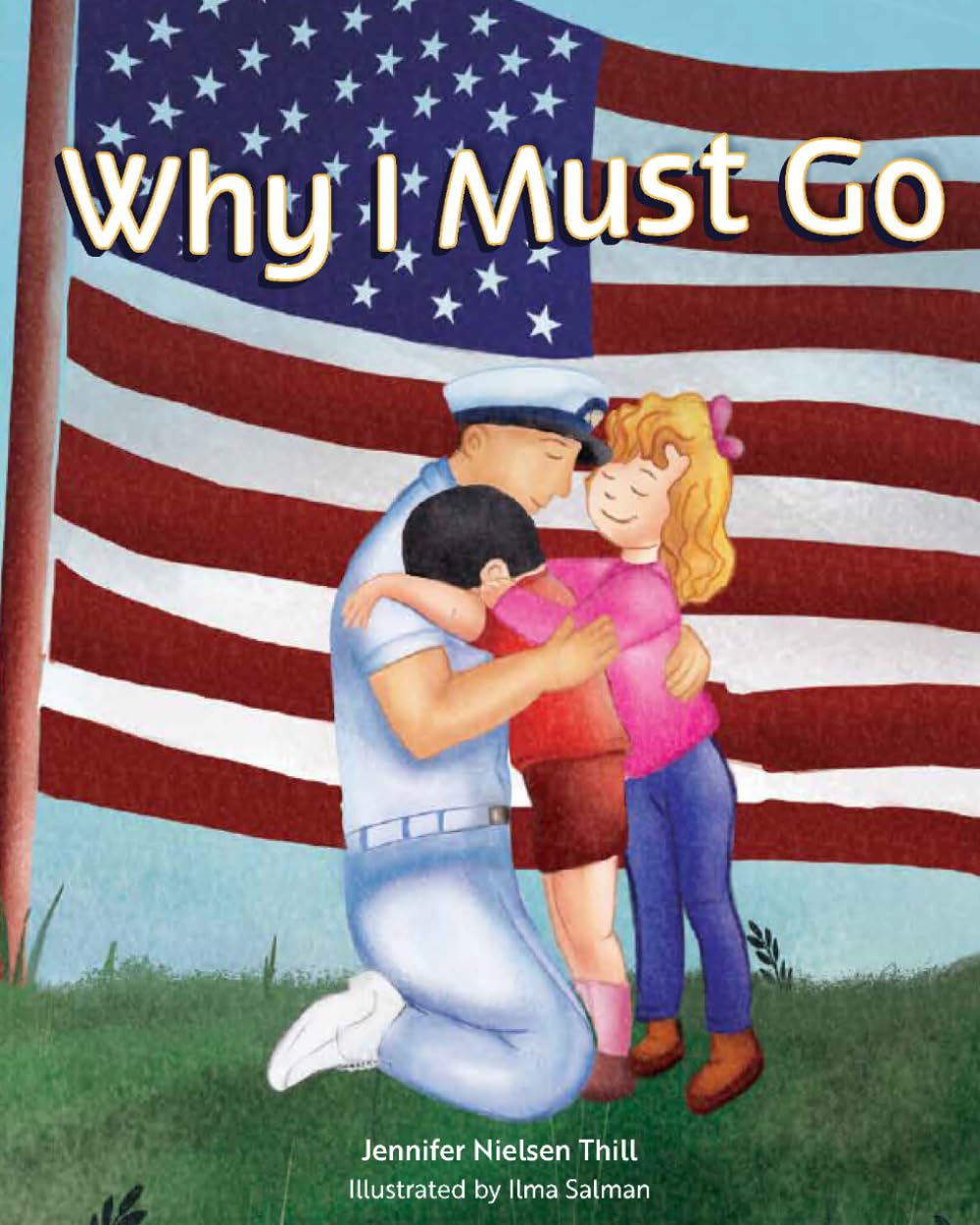
Why I Must Go, by Jennifer Nielsen Thill, is a gentle, reassuring children’s book about one of the hardest experiences a young child can face: a family member leaving for military service. Told in rhyme, the story centers on the bond between parent and child. It explains the reason for that separation with warmth, clarity, and a tone young readers can understand.
One of the book’s greatest strengths is its use of rhyme to communicate a complicated emotional reality. The writing shows how children and families keep moving through daily life, finding joy in small moments and comfort in familiar routines. At the same time, it quietly underscores that these ordinary freedoms are safeguarded by the sacrifices of those in service. That balance gives the story unusual weight. The rhythmic language softens the subject without diminishing it, making the message feel steady and comforting rather than overwhelming.
The parent’s voice is especially effective throughout. Again and again, the narrative returns to love, devotion, and purpose. That choice shapes the emotional core of the book. Instead of allowing the sadness of separation to dominate, the story frames the parent’s absence through pride, protection, and deep care for the child. The result is tender and affirming.
Ilma Salman’s illustrations also play an essential role in the book’s emotional impact. Soft, expressive, and inviting, they work hand in hand with the text to create a sense of comfort. The artwork is simple in style, yet emotionally rich. Younger children can easily connect with the images and gain a small, approachable understanding of what this kind of work may look like for their family. The visuals also emphasize the everyday moments of childhood, reinforcing the idea that a child remains loved, supported, and cared for even when a parent is away.
Why I Must Go is a thoughtful and supportive book that will be especially meaningful for children in military or service families. It is well-suited to younger readers who respond to emotional storytelling and gentle reassurance. For families searching for a calm, positive way to talk about separation, this book is likely to feel both helpful and deeply comforting.
Pages: 34 | ASIN : B0CNN15ZLB
Formative Experiences

Actually Invisible centers around a gay high school teacher struggling with grief, marriage, and infertility as she faces public scrutiny following homophobic remarks from a student. Where did the idea for this novel come from?
The idea for this novel came from many of my lived experiences as a human, but particularly as a queer public school teacher. We make headlines, but our fears and daily lives are so rarely described anywhere. I wrote the book I had always wanted to read.
The novel moves between past and present in a way that lets memory actively shape the story. How did you structure that timeline?
I structured the timeline by thinking about what kinds of formative experiences could have informed Josie’s present mindset. This took quite a bit of outlining, but I wanted to make sure I highlighted that she is—as we all are—a culmination of every experience we’ve ever had. I think it also humanizes her even more for the reader.
How did you approach the school storyline and the dynamics of public scrutiny?
I took some stories I had heard about in the news and on social media and essentially combined them with the fears that sometimes kept me up at night.
What is one thing you hope readers take away from Actually Invisible?
I hope readers take away the idea that all anyone wants is to feel seen, understood, and valued. We are all on this Earth searching for those things. Queer teachers are in a unique, complicated position where that experience can be dangerous, but it’s also worthwhile to take the risk, not only for ourselves and our mental health but also for representation for our students—queer and otherwise.
Author Links: GoodReads | TikTok | Instagram | Facebook | Website | Amazon
…until a student comes out to her in a writing assignment, and she is thrust into a small-town spotlight. As the target of the student’s angry parents and a slew of anonymous threats, Josie must decide if it’s finally time to speak up for herself and risk her job, her family, and her ambivalence.
Actually Invisible

Actually Invisible is a contemporary literary novel that follows Josie Rein-Thompson, a gay high school English teacher trying to hold together grief, marriage, motherhood, fertility struggles, and a sudden wave of public scrutiny after a student’s homophobic comment turns her private life into a community issue. The book moves between Josie’s present-day life in 2019 and earlier moments from her youth, letting us see how her bond with her late father, her first experiences of desire, and her long habit of making herself smaller all feed into the woman she has become. By the end, the story brings those threads together in a way that feels earned, with Josie finding both public affirmation and a deeply personal bit of hope.
Author Elisa Greb does not try to make Josie neat or polished all the time, and I appreciated that. She is funny, sharp, insecure, loving, petty, generous, exhausted, and very believable. The voice has that intimate quality where it feels like someone is telling you the truth before they have had time to clean it up. I liked that a lot. The book is at its best when it trusts ordinary moments to carry emotional weight: a classroom exchange, a fertility appointment, a memory in a car, a glance across a room. Even when the novel gets heavy, it keeps its feet on the ground.
I also admired the author’s structural choices. The back-and-forth timeline could have felt busy, but here it works because the past is not just background. It keeps answering the present. Josie’s father is not treated like a sentimental device. He feels like a living force in the book, especially through the robin motif, which could have been too much in another novel but works here because it grows naturally out of memory, grief, and repetition. The school storyline is handled with more nuance than I expected. The novel is clearly angry about prejudice, but it is more interested in the daily wear of being made visible on other people’s terms, and in the quiet bravery it takes to stop apologizing for existing. That landed hard for me.
I would recommend Actually Invisible most to readers who like character-driven fiction, queer fiction, and contemporary literary novels that care more about emotional truth than flashy plot. It will especially speak to people drawn to stories about teachers, family grief, chosen family, and the strange mix of tenderness and fury involved in being seen clearly at last. I think readers who want a reflective, intimate novel with a steady heart will get the most from it. It is not trying to dazzle. It is trying to be honest. And for me, that honesty is exactly what gives it its power.
Pages: 298 | ASIN : B0CW1M5M7W


