Blog Archives
Live The Life You Want

Butterfly Awakens is an emotional memoir of your life and the grief you went through after losing your mother. Why was this an important book for you to write?
As an empath, someone who can absorb another individual’s mental or emotional state, I am sensitive to the energies in this world. My mother grounded me when the world became too much. She was my safe place. When she died, I felt like my connection to my guide was cut off. I was left alone to navigate the confusing grieving process. Additionally, I burnt out from traveling back and forth from Miami to Orlando to help with her care while managing my own hectic family life, a full-time job as a federal immigration attorney, and raising young children.
I have always had a journaling practice—using writing as a tool to work out so much. So I looked for a way to navigate the grieving process and started to write as a healing tool. I started simply. I would wake in the morning and read from a book that resonated with me. When a quote or a passage spoke to me, I grabbed my journal and channeled at least three pages of longhand about what I felt my mother would want to communicate to me about it. One day led to the next, and this routine led me to complete my guide that I would later call The Magical Guide to Bliss: Daily Keys to Unlock Your Dreams, Spirit & Inner Bliss. I intended to empower myself to figure out how to will myself back to life, step into the unknown, and wake up to life again. In addition to allowing me to feel connected to my mom, it helped me muster the courage to make a career change after 20 years as a federal prosecutor. The writing was the first step towards what helped me trust my transformation; it was my cocoon, a safe place to strengthen my budding wings so that I could imagine metamorphosis into a beautiful butterfly.
I remember thinking how easy it is to get stuck in life, far short of where I wanted to be, and I felt trapped by pain and despaired that the suffering was all that there is; that bliss is just a myth. I started to get intentional with my life. Paying attention to the people, places, and things that would show up every day, I became excited about my present and future again. When I was at an all-time low, I begged the universal divine for assistance. I promised that when I did emerge triumphantly, I would share the vulnerability of my story to inspire others not to lose hope and give up on their dreams if they find themselves in darkness. I wanted my story of transformation through grief to one day be the light for others—the greatest gift is for someone to look at you and say, because of you, I didn’t give up. That helped me fight my way out of my darkness.
And, some of the events that occurred as I learned to love myself unconditionally were truly extraordinary. When Oprah’s “Live the Life You Want 2014” came to Miami, it catapulted me to take the final step and truly live the life I wanted as a published author. One of my long-time dreams was to meet Oprah, one of my spiritual guides, and I was one of the lucky ones to get called up on stage with Oprah in Miami, and as they say, the rest is history; in this case, a trilogy—The Magical Guide to Bliss, Daily Keys to unlock Your Dreams, Spirit & Inner Bliss, Sparkle & Shine: 108 M.A.N.T.R.A.s to Brighten Your Day and Lighten Your Way and finally my memoir, Butterfly Awakens!
“I will never forget Oprah looking me in the eyes, saying to me, “this is your moment, Meg, don’t miss it; it is time to live the life you want!” And so, I have! And the most fantastic thing is that I have brought many others with me.
When I was moving through grief, I promised that I would keep going to share a better story for my life, healing myself and in service to others. The metamorphosis of the butterfly and the guidance of the lighthouse were symbols that stood foremost in my mind. Never giving up in this life, doing the hard things that surround transformation, and in the end embracing your inner beauty—not needing approval or permission from others to be here. I want other people to honestly know that there is always light, even in the darkness and that they are more than enough, just as they are. And, to offer hope to those who are where I was when my mother died, that is the driving force behind sharing my story—inspiring others to keep going and reach out for help when they need it. To ultimately remind others that “we got this” and do not have to go it alone!
I appreciated how candid you were. What was the hardest thing for you to write about?
The scariest thing for me was seeing my mother suffer and not being able to help her. And, writing about her final weeks was difficult because I essentially had to relive it again. I tend to be a hypochondriac; while going through it, I started to believe that something terrible would happen to me too. I became very anxious, I began to experience panic attacks where my heart would start racing, and I felt like I would die. Sharing this kind of vulnerability was hard for me, and I had to manage that while sharing what happened all over again.
And, to share with the world, my weakness was a very vulnerable position to be in. I have moments when fear took over, and my overrun nervous system gave way to a ringing in my ears, tinnitus, that was maddening. I tried to numb out on most days; when I returned home from a full day at work and took care of my children, I retreated to my walk-in closet where I felt safe and just cried and cried because I did not know where to begin to move on without her.
However, hiding is exhausting, and I thought sharing my story could help another person feel like they were not the only one going through challenges. On the verge of what felt like a nervous breakdown, I chose to ask for help. I wanted others to know that it was ok to do the same. When I was moving through grief, I promised that I would share the vulnerability of my story in service to others when I healed. I held tight to the metamorphosis of the butterfly and the lighthouse as inspiration on the way to bliss. Choosing to never give up on me, I looked for the positives along the way. Committed to face my fears, I did the hard things that surrounded transformation. In the end, I ended up embracing my inner beauty—not needing approval or permission from others to be here. Now, I want other people to know that there is always light, even in the darkness and that they are more than enough, just as they are. Shifting what happened to me as a catalyst for positive change, I learned to reframe my situation, asking what it was trying to teach me. By sharing my story, I intend to offer hope to another who is experiencing darkness.
What advice do you wish someone had given you when your mother was diagnosed?
Seek help- you do not have to go it alone. Don’t lose sight of your dreams-that was something that helped her too. Breathe deeply again and slow down the pace a little bit. Look for a community–those helpers who are your angels ready and willing to help. I sought groups where I could get intentional, taking in all that life has to offer one day at a time. I joined author cohorts, ran monthly mastermind groups, and volunteered to serve others. And, do not wait for tomorrow to do the things with those you love today. Have those conversations, do something you love, take many photos, record beautiful stories- don’t stop living, laughing, and loving. Ultimately, death is a part of life. We can never know when it is someone’s time, but truly living a life on purpose is essential, and not having regrets.
What do you hope is one thing readers take away from your book?
That we are all stronger than we think we are as long as we do not give up. While I still experience dark times, especially after the pandemic year, the evidence shows that I can push through. I am still working to overcome pain to varying degrees. I don’t think that pain in life ever ends; my father has said that is the price we pay to be human. However, the key, I believe, is not to unpack and stay there. The root of the word emotion is e-motere, to move through. With all feelings that arise from different circumstances, instead of pushing them down or ignoring them, it is imperative to feel what you feel and trust the process of life to learn thoroughly. On the other side of the coin, this is a welcome bit of advice when you feel joy or happiness, truly embrace that and feel every bit of the good stuff as you can as well. We are here to enjoy the process too!
Author Links: GoodReads | Twitter | Facebook | Website
![Butterfly Awakens: A Memoir of Transformation Through Grief by [Meg Nocero, Habib Sadeghi, Sherry Sami]](https://m.media-amazon.com/images/I/51TvS0EjywL.jpg)
Butterfly Awakens depicts the story of the extraordinary transformation of a forty-something Italian American attorney as she moves through unimaginable grief and sadness watching her beloved mother lose her battle to breast cancer. This tumultuous life experience shifts her world, causing her to question her life choices and opening her up to her soul’s calling. Nocero brings readers along on her journey through a dark night of the soul as she deals with the grieving process, a toxic work environment, and intense stress that results in depression, anxiety, and an acquired somatic nervous disorder called tinnitus. Through it all, she never gives up, instead looking for the help she needs to start to heal and find her light. In the end, like the metamorphosis from caterpillar to butterfly, this story is a beautiful love letter that honors Nocero’s mother’s legacy while detailing the awakening of her own.
There are many stories about breast cancer and grief, but none are quite like this one. Throughout her tale, Nocero pulls the reader deep into her story through the intensity of her emotions; and in the end, after resigning from her career as a federal prosecutor due to a toxic administration, she searches for the lighthouse she saw in a vision when her mother died. Embarking on a spiritual pilgrimage on El Camino de Santiago in Northern Spain to get to the lighthouse at Cap Finisterre, she sets out to wake up and live again; the butterfly connection and stark honesty of her writing offers readers important lessons learned from moving through grief so that each person can shine their light again.

I Will Never Forget That Day

Knights of New York provides a detailed account of the FDNY along with your years of experience in the department. Why was this an important book for you to write?
The FDNY’s greatest asset is the men and women who work for the agency. I felt compelled to tell their stories. Knights of New York is about ordinary people who perform extraordinary tasks.
What is a common misconception you feel people have about fire departments?
I am not sure if people realize that the New York City Fire Department is tasked with so many roles. The department responds to a wide array of incidents and its personnel require a breadth of knowledge across many fire life safety disciplines.
You share a lot of experiences in the book. What is one experience in the book that stands out for you personally?
9/11, I will never forget that day and the days that followed. I will never forget the courageous acts I saw others perform and I will never forget the support provided by so many. The country, especially in New York, was one nation with one shared purpose – support each other.
What do you hope is one thing readers take away from your book?
I hope others recognize that there are brave men and women in New York City who stand on a wall and say, not today, not on my watch, no one is getting hurt today.
Author Links: Amazon | GoodReads
![Knights of New York by [Eugene Ditaranto Jr.]](https://m.media-amazon.com/images/I/51BLxVS0eJL.jpg)
The New York City Fire Department, better known as the FDNY, is one of the most storied organizations in American history. Their longstanding traditions and acts of bravery are well documented, from their sacrifices on 9/11 to how they handled the Covid-19 pandemic. These brave men and women are the example for others to follow. Knights of New York is a detailed look into the leadership, management, and commitment to service taught by the greatest fire department in the world. Not just for firefighters, this one-of-a-kind book is the definition of what it means to put the needs of the people before yourself.
The views within the book are the author’s and do not necessarily represent the views of the City of New York or the FDNY.
Joyful and Excruciating
Moony McNelly Author Interview
Goin’ Through the Motions is an intriguing memoir of John Henry Shields. Why was this an important book for you to write?
John Henry Shields is closely modeled on my own father. In fact many of the events chronicled in the novel have been taken from conversations with him during the last few years of his life. Many other episodes derive from my eyewitness accounts along with those related by relatives and friends. He was a complex individual who at times could be charming, engaging and thoughtful, but at other times annoying, aloof and thoughtless. As was true of many southerners of his generation, his stubborn neck was weighted with a number of albatrosses such as prejudice and misogyny, although as he began to gain the upper hand on some of his demons as he aged. His alcoholism, coupled with his what is now termed PTSD from having served in the 82 Airborne Division during WWII were his most formidable foes. Our relationship, which I will oversimplify as love-hate, has never been far from my mind, even more so as I aged and began to reflect. I realized that I too had the need to try to rid myself of the albatross hanging from my neck. Therefore, in an attempt to explain it to myself, I attempted to explain it to the world. I chose to mimic the duality of life, so I constructed it from both the factual and the fictional.
What surprised you the most about John Henry Shields life?
One of the most surprising aspects of developing the character John Henry Shields was my willingness to continue an exercise that, frankly, was both joyful and excruciating. The novel has taken me some fifteen years to complete because I left it and return to it many times. In addition, at the risk of sounding cliche, the work acted as a catharsis for me, and I am now certain that was what I wanted and needed. I will remain thankful to Virtual Bookworm accepting John Henry (my manuscript) and for helping me through the tedious process of self-publishing. That too was a surprise after more than a few “dead ends” while tramping with John Henry down publishers’ row.
What were some themes that were important for you to explore in this book?
There are numerous themes and motifs in the novel, some major, others subordinate. They are life’s old conflicts, none of which are new to art: father and son; humans and war; male and female; humans and nature; humans and their “multiple selves” and of course, the most prevalent–humans and death.
What do you hope is one thing readers take away from this book?
I suppose every writer believes one minute and doubts the very next that readers will find something in his or her work with which they can connect. Artists who claim they are creating only for themselves best stay clear of lie detectors. If I must be specific, to me, the idea of searching for some truth is universal. Perhaps readers of Goin’ Through the Motions: Last Renderin’s from a Quester and Rounder will find in the efforts of John Henry Shields, whether they be judged a success, a failure, or somewhere in between, a universal call to live a “real” life.
Author Links: Amazon | GoodReads
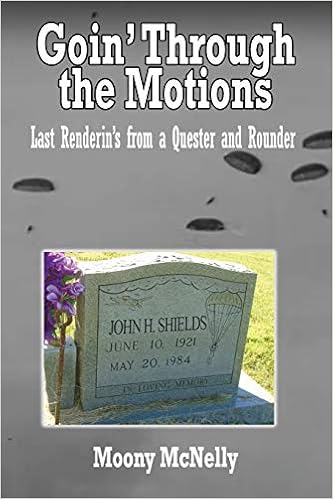
Goin’ Through the Motions: Last Renderin’s from a Quester and Rounder, most of which is interior monologue, employs a stylized dialect best described as “Southern Mountain English.” In 1984, terminally ill and confined to a VA hospital, John Henry Shields reviews his life.
Prelude, a dialogue between John Henry’s son Martin and his wife in 2012, opens the novel. The Prologue to Part One, presents John Henry on a day in 1932, when he undergoes an epiphany that sets him on his life’s quest to live a “true life.” In Part One, John Henry recollects various events in his life and begins to question if his life has been worthwhile. The Prologue to Part Two is set in the Airborne training camp in Fort Benning, GA, 1942, where on his first jump from a C-47, the awakening he experienced as a boy in 1932, is resurrected. In Part Two, John Henry continues to recall events in his life as well as choices he has made, some of which please him, while others fill him with regret. After his death, his wife Myra closes the action from 1984. The last section of the novel, Fortuitous Epilogue, recounts the dreams of John Martin Shields. In Prelude, Martin mentioned these to his wife Peggy as having occurred on six successive nights, before the Sunday marking the 28th anniversary of his father’s death.
A Victim Can Win
Escaping My Predator details your experiences in an abusive relationship and the ordeal of bringing him to justice. Why was this an important book for you to write?
I started writing my story as a way to document everything that had happened to myself and my children. I didn’t want my story to disappear like so many others do. As I continued to write my story while continuing to go to court with my abuser, I realized I had to try to help others. I had to google a ton of information for my next steps to fight my abuser, and I realized someone in a way worse off position than I was in, wouldn’t think to do that. I wanted to make the court process slightly easier, by explaining where I had contact, explaining the protection orders I asked for and received, and also applying for a private information and how I was able to have charges laid on my abuser. Many do not know that this is even an option.
I also wanted my book to have the resources I was able to use. I wanted to show people that there are many resources to help them through something like this and to also give them an idea of how those resources help. I had to show people that a victim can fight and that a victim can win.
Upon completion of my book, my only goal at the time was the hopes of it helping even one person. Today my book is being read by police officers, lawyers and victims. My book won’t just help victims of domestic violence, it will help the police to understand that when they respond to a call like this, it is a call a victim will never forget. That call for the victim and how it is responded to will either save their life so they can escape if they haven’t already, or it will harm them further, possibly sending them back to further abuse and/or possible death because they felt unheard and now feel hopeless. My book details how I had a couple of officers who were very involved in my case, who took the time to listen, to document every detail, and who understood that I was calling because I was scared for my life and that of my children.
The police understood the importance of keeping my children safe from my abuser. They also understood the dire need I had, to ask them to come to court with me to explain to the Judge why my children and myself needed such protection. It will help family law lawyers and emergency protection lawyers better understand why it’s important victims fight for their safety and that of their children. This book gives them more than a glimpse as to where changes need to be made, from the first time they connect with a victim, to go through the multiple court battles, and between family and criminal court matters of the same two individuals (the victim and the abuser) when dealing with these particular matters.
Overall, I wrote the book to help victims in any way it can.
What is a common misconception you feel people have about being in an abusive relationship?
A big misconception I think people make is assuming it’s as simple as walking out the door. There are so many reasons people have a hard time leaving an abusive relationship. I had a hard time leaving because I didn’t understand what was happening to me, only realizing I was scared of him and of being alone with him. I was naive and truly didn’t know, my then spouse could sexually assault me. I didn’t understand that I was being pulled away from people I loved and cared for. I also didn’t realize the financial abuse and psychological abuse I was being put through until I left.
I had no money to leave, I felt guilty I was breaking up my family, I didn’t know where I was going to go, and I didn’t know if I would be able to get a place to live due to not having money and because he helped me ruin my credit. I thankfully didn’t have pets, but for many, this is also a big factor in whether or not a victim can leave abuse. There is a fear of what the abuser will do to the victim should the try to leave or successfully leave. It is not uncommon to be stalked and harassed by the abuser after fleeing.
So the big misconception is “if it is that bad, why don’t you just leave”, it is never, nor will ever be as simple as walking out the door.
What is one piece of advice you wish someone had given when you were younger?
I lived a very sheltered life as a child. My parents didn’t want us to see the effects of alcohol or drugs. My parents are old school and therefore never talked about sex or what rape and sexual assault were. As a child, I never experience or was ever around anyone being abused.
I remember learning about sex in school, but they only ever touched on the word consent. They never talked about sexual violence or what to do should you ever experience it. The schools also never talked about domestic violence. So I wish the schools had this in their teachings, and I also wish parents would talk about these issues more with their teens and young adults.
What is one thing you hope readers take away from your story?
I suppose the biggest things I hope readers take away from my story is that it’s okay to rely on resources, there are many that can help you. There may be road blocks, but you can walk around them. It’s okay to be scared, but call the police when you need them, even if you call the non emergency line to ask questions about your concerns, and it’s important to stand up and advocate for yourself and your children. Understand you are never alone, there are many people out there who have gone through this, who understand how you are feeling in these moments and who will listen and believe you. When you decide you are ready to leave, take it one day at a time.
Author Links: GoodReads | Twitter | Facebook | Website
This book is a first-person account of what it takes to survive sexual assault, emotional abuse, and long-term harassment by an intimate partner. It takes the reader through the fear and anguish, the hiding and moving, and the journey through the court system to finally achieve justice and safety for the author and her children.
Few of us can imagine that we could allow ourselves to fall victim to this kind of abuse, and this book is a perfect illustration of how a strong and confident woman can go from being on the verge of meeting her career goals to being under the control of a man who is not what he seemed, and who ultimately damaged her physical and mental health, her ability to support herself, and her sense of trust and safety in the world.
But this is also a story of hope: you CAN escape an abusive relationship; you CAN ask for help and be believed; you CAN keep your children safe; you CAN bring your abuser to justice through the courts; and you CAN come out the other side to happiness and safety.
Knights of New York
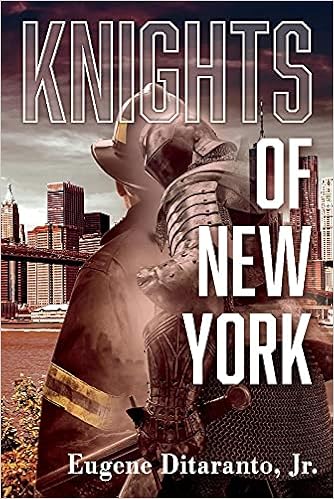

Knights of New York by Eugene Ditaranto, Jr. is a book that is dedicated to the courageous and fearless fire fighters of the New York City Fire Department, popularly known as the FDNY. This book is a testament to the dedication, exceptional leadership and management within the FDNY. This is uncommon knowledge to people outside of the department but it is critical to the safety of the community they serve, and this exceptional book highlights all the fantastic work these ‘knights’ do to serve their community.
Author Eugene Ditaranto provides detailed accounts of the roles each firefighter fills within the department. I enjoyed the clear descriptions as it helped me fully understand the fire department. Not only are there clear explanations of the ranks and duties, but the book also shows how each person plays a different role in the success of the department.
While this could be considered something of a memoir, I find it is more of a dedication to the brave firefighters that Eugene Ditaranto served with. He uses his decades of experience in the department to color all of his explanations and provides incisive observations and thoughtful information on everyone he has known, the jobs they perform, and how the people and the job function within the department. This is an illuminating book, especially for someone like me who knows little of how a fire department works. I was absolutely fascinated by all the information within the book. It’s like a literary museum that takes readers through the many contributions and achievements the ‘knights’ within the FDNY have accomplished.
The book also details various incidents that have occurred in New York and how the FDNY responded. The most notable being the terrorist attack on the World Trade Center on September 11th. I am familiar with this event, but Eugene Ditaranto provides readers with a unique perspective of the events that transpired as they are all told from the perspective of the FDNY and how they responded to the attack, the role they played in the aftermath, and the fires they delt with, such as their work in Deutsche Bank. The bank collapsed as a result of the attack and it took them over an hour to control the fire, which is such an amazing feat controlling such a large-scale fire. These harrowing experiences shared throughout the book give readers a true appreciation for the work these ‘knights’ do.
Knights of New York is an enlightening account of the FDNY and provides readers with a fascinating view of the operations of the New York City Fire Department. For anyone interested in how fire departments work, anyone looking for a unique perspective on 9/11, or any readers looking for a compelling nonfiction story, then this is definitely a book you want to pick up.
Pages: 144 | ISBN: 1098392701
Change Is Always Difficult
I See Old People shares your inspirational true story and the adversities you’ve faced in life. Why was this an important book for you to write?
After going through the process of losing my mother and having some challenges with her hospital care, I wanted to write a story about how to care with compassion and grace. It became a crusade for kindness, not just for senior citizens, but for everyone – especially those who felt unseen.
I appreciated how candid you were in your book. What was the hardest thing for you to write about?
It was hard to revisit the end of my mother’s life as well as my divorce. They were painful times with a lot of grief and guilt. Yet, these difficult times would lead me to find the greatest love of my life; something I wouldn’t imagine. Writing about it and sharing it with the world, made everything worth it.
What advice would you give to someone that was struggling to make a positive change in life?
Change is always difficult. The hardest part is getting started. I recommend starting with small changes. Before long, small changes pay big dividends and you begin to give yourself credit for showing up in the first place.
What do you hope is one thing readers take away from your book?
Love is always possible when you open your heart and give back.
Author Links: GoodReads | Twitter | Facebook | Website
A unique and timely set of circumstances create the perfect storm for a woman on the cusp of multiple changes. Her somewhat flippant decision to volunteer sets the stage for profound relationships you won’t soon forget.
When the housing bubble burst in 2008, Jeanne Corvese Hussin found herself at a fork in the road. She could either continue her job as a senior vice president for a mortgage banker at a significant pay cut or take the year-long severance and travel with her son, Jason. She chose the latter.
Now what?
After Jason would go to bed, the nights stretched out before Jeanne like a long black highway cutting through the desert. She spent the hours flirting with men online but was often disappointed by the real person behind the dating profile.
Suddenly, she had an epiphany. Or maybe it was a message from God. She should find a way to give back. Drawn to senior citizens, Jeanne found herself at a local assisted living facility volunteering her time to memory care residents in a ward ironically named Recollections.
From her inspired impulse to serve emerge the colorful characters who comprise I See Old People©. You will never be the same.
In these pages, Jeanne tells the story of her family, her interactions with the seniors at Recollections, and finally, her storybook “never too late” romance in this extraordinary memoir.
I See Old People is much more than a book; it’s an experience.
Escaping My Predator
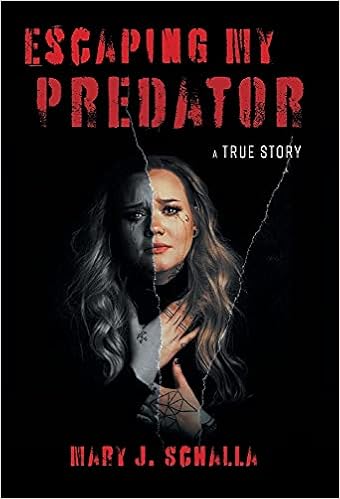

Escaping My Predator by Mary J. Schalla is the harrowing true story of a woman’s fight for freedom and safety from a man who manipulated, abused, and terrified her for years whilst she was trapped inside a relationship with him. The book is split into milestone chapters, documenting Schalla’s journey from the very beginnings of her courtship, right through to his final sentencing in court. She expresses her inner turmoil in different stages: her denial, her recognition, her battle. It is written in the style of an extended journal entry; it contains little to no written dialogue, and the characters all remained unnamed.
Escaping My Predator is raw, beautifully honest and offers many powerful messages about finding the courage and strength to not only identify a dangerous and abusive partner, but to leave them as well. I found the prose and the character development to be interesting. The author paints a poignant picture of the situation that unfolded between woman and abuser. I would’ve liked to have learned a little more about Schalla but going through her experience I was still able to connect with her. I was taken on an emotional roller coaster and was immersed in the feelings of each character in the book. Schalla’s powerful writing and emotional depth allowed me to live through the author’s experience.
It is not easy to openly share explicit details of an abusive relationship, so for this I highly commend Schalla and her bravery. Schalla’s story insightfully captured the experience of being an abused woman and what it takes to overcome this abuse. Escaping My Predator is a stirring and emotional story that is ultimately inspiring and uplifting. You too can escape and abusive relationship, and Mary Schalla inspires anyone who thinks otherwise.
Pages: 150 | ISBN: 152559818X
Chasing the Surge
![Chasing the Surge: Life as a Travel Nurse in a Global Pandemic by [Grover Nicodemus Street, Sandra de Abreu Guidry-Street, Ja-ne de Abreu]](https://m.media-amazon.com/images/I/51Xbp1qlXZS.jpg)
This pandemic has been strewn with misconceptions from the vaccines, to the medications that could “cure”, to the ways we infect others with the virus. The truth comes to light through the eyes of an American travelling nurse, Grover Nicodemus Street, in Chasing the Surge. Mr. Street, a former US Air Force Trauma Nurse who now travels America working in hospitals in almost every kind of medical scene imaginable, recounts his day-to-day life during the first year of the pandemic. He talks about his up-close and personal experience with the virus, what he and his family went through to survive, and the emotional struggles he went through as a person in the medical field. Mr. Street explains in detail the importance of wearing a mask, sanitizing and distancing; teaching us what happens to our family and friends who disregarded these safety measures. During his recount of the past year, he has described multiple times how this pandemic is a war in and of itself.
This compelling medical memoir is conveyed in a diary-like structure. The timeline of the story jumps around, from a hectic hospital setting into Mr. Street’s childhood. This disrupts the straightforward narrative and instead we’re given a story that is well balanced between some heavy emotional subjects with some lighter ones. It creates a less depressing atmosphere and lets us get to know Mr. Street, what his motives are for sticking around during this crisis, and why he is an incredible nurse.
The story is fast-paced, and for the most part it covers lots of activity that keeps readers engaged. The story does have some medical jargon that makes the book feel authentic but could go over the head of a layman, but the author does explain the less well-known terms and phrases to help his readers along.
This is an amazing and endearing story that is sure to address people’s questions and insecurities about the pandemic. If you are still stuck at home, you should learn a little bit about why that is. This book is an absolute must-have on your nonfiction reading list this year.
Pages: 280 | ASIN: B08VMG8YM1



 LITERARY TITAN