Blog Archives
The Kindred Chronicles: Shifting Sands


Shifting Sands follows the survivors of Sol Thalen in the immediate aftermath of its fall. The story opens on a city crushed into ruins and a people clinging to hope by the thinnest threads. Chris, Grace, Elline, Raham, Camille, and the thalenar struggle through endless hours of digging through collapsed halls, pulling survivors from the rubble, mourning the dead, and trying to understand what comes next. Their grief shapes every choice. Their loyalty holds them upright. And the central tension of the book becomes clear early on. How do you rebuild a culture when the ground beneath it has literally vanished? The novel is driven by emotion and community and a sense that every character must decide who they are now that their world has been unmade.
I found myself slipping into the atmosphere without effort. The author leans into sensory details, and the rubble and smoke and sand build a world that is both beautiful and bruised. What struck me most was how the story rarely lets the characters breathe. Grief becomes a kind of weather. it’s constant, pressing, and shaping them in ways they cannot fully articulate. I enjoyed that the book doesn’t rush healing or transformation. It lets emotions sit heavy and raw, and that made the characters’ quieter victories hit harder. At times, the prose felt a little lofty for the scenes it described, but even then, it carried an emotional punch that kept me invested.
I kept thinking about what it means to lose not just people, but culture. identity. the songs and rituals that tie a community together. The thalenar blade lore and the meaning of song within their traditions stood out as some of the most compelling worldbuilding in the book. And I found Raham’s arc especially moving. the quiet strength, the slow cracking, the way he tries to hold others together while he’s barely holding himself. Grace’s exhaustion and determination also pulled me in. Her efforts to see the essence of life while losing pieces of herself felt intimate and aching. If anything, I wish the story had paused more often to let certain emotional beats land, but the constant urgency also felt true to the setting.
This book would resonate with readers who enjoy character-driven fantasy, stories about surviving loss, and worlds built through culture as much as magic. I’d recommend it to anyone who likes tales that sit with hard emotions and still reach for light. Fans of the series will find this entry in The Kindred Chronicles especially satisfying, since it deepens the world and the characters in ways that feel rewarding.
Pages: 488 | ASIN : B0G64WJHFQ

Janice Everet: A Southern Gothic Jane Eyre Retelling
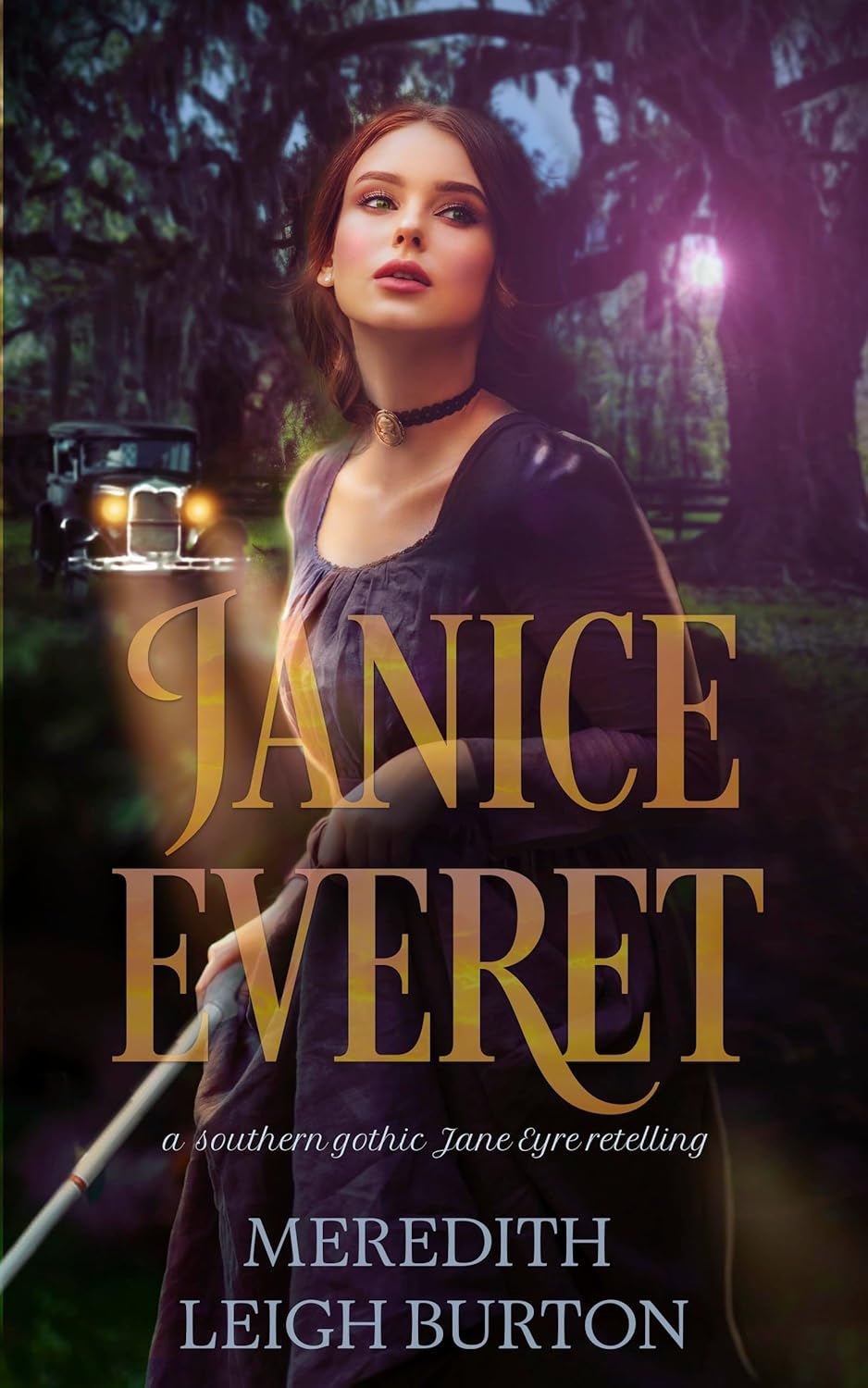
Janice Everet is a Southern gothic historical romance that retells Jane Eyre through the perspective of a blind heroine growing up in the 1930s American South. We follow Janice from a childhood shaped by cruelty and neglect, through her years at a school for the blind, and into adulthood as she becomes a teacher and finds both purpose and love. The book mirrors the familiar arc of Jane Eyre but transforms it, rooting the story in disability representation, trauma survival, and the complicated social dynamics of its time.
As I read, I kept returning to how intimate Janice’s voice feels. Burton writes her with a sensitivity that made me slow down, especially during the painful early chapters. The scenes with Arnold, in particular, are hard to take. They’re written with an unflinching honesty that makes Janice’s fear almost tactile, and moments like the doctor noticing the bruising around her eyes and gently explaining her retinal damage hit me right in the chest. The book doesn’t sensationalize the abuse; instead, it sits with the emotional fallout and lets Janice carry both her pain and her stubborn resilience. I liked that the writing never turns her blindness into a metaphor or punishment. Burton even says in her author’s note that she wanted to challenge that trope directly, presenting blindness not as a tragedy but simply as part of Janice’s life and identity. That intention really comes through.
What surprised me most was how naturally the story shifts from gothic tension to warm, character-driven romance. The scenes with Edwin feel like stepping into sunlight after a long walk in the dark. Their relationship grows slowly, with a gentleness that contrasts with everything Janice has survived. I found myself appreciating the quieter moments: shared meals, woodworking, guiding each other through unfamiliar emotional terrain. Even the small exchanges with side characters, like Janice reading a story to a child on the bus or meeting friends at Pembrook, widen the world and keep the novel from sinking into despair. Burton’s choices here make the story less about escaping the past and more about claiming a future. And because the book is a romance, the emotional payoff lands in a satisfying, comforting way.
By the time I reached the end, I felt like I’d traveled with Janice rather than just observed her. The blend of Southern gothic atmosphere, historical detail, and classic romance gives the book a distinct flavor. It’s not a light read; some chapters sit heavily, especially for readers sensitive to themes of assault, trauma, and systemic prejudice. But the heart of the story is hopeful. It’s a journey toward dignity, connection, and the quiet courage of choosing joy after years of being told you don’t deserve it.
If you enjoy character-centered stories, historical romance with emotional depth, or retellings that genuinely reimagine their source material, this book will speak to you. Fans of Jane Eyre who have wondered what that story might look like with a heroine whose challenges aren’t tied to beauty or sight but to agency and survival might find this version even more resonant. I’d recommend Janice Everet to readers who appreciate Southern gothic atmosphere, nuanced disability representation, and a romance that feels earned and tender.
Pages: 238 | ASIN : B0FYK3JCKG
Handsome Dark Stranger


Handsome Dark Stranger tells the story of Beth, a young woman living with her grandfather in a quiet coastal village, where grief, devotion, and the supernatural wrap themselves around the rhythms of daily life. The book follows her encounters with a mysterious figure who moves between light and shadow, showing himself in dreams, graveyards, and even burned fields. The line between the ordinary and the otherworldly blurs as Beth navigates her family’s past, her grandfather’s fading strength, and the strange force that seems to answer her unspoken longing. The story folds together gothic atmosphere, spiritual imagery, and the steady beat of village life to build a world where presence and absence feel almost the same.
The descriptions pulled me in with their quiet intensity. Some scenes made me pause just to take in the mood. I found myself caught between wonder and unease, which I loved because it made the world feel alive, even when nothing dramatic was happening on the surface. The pacing moved gently, almost deliberately, and at times I wished it would hurry, but the slow burn worked for me. It let the emotions simmer. The supernatural figure felt both beautiful and unnerving, and I liked how the author never rushed to explain him.
There were moments when the emotional weight of the story was surprisingly deep. Beth’s memories of her parents and grandparents felt tender and raw. I could feel the love in them. I could also feel the exhaustion that comes from carrying someone else’s grief while trying not to lose yourself. The gothic elements added another layer. The dreams, the howling, the flicker of stained glass coming alive, all of it made the story feel thick with something hidden just under the surface. At times, I wanted clearer answers, but part of me enjoyed the uncertainty. It kept me reaching forward, curious and slightly on edge.
I think that this book would speak most deeply to readers who like stories filled with atmosphere and emotion rather than fast action. It suits anyone who enjoys quiet supernatural tales, introspective characters, and a slow, thoughtful unraveling of mystery. If you like your fiction moody, poetic, and touched with both comfort and fear, you’ll enjoy this book.
Pages: 104 | ASIN : B0FTGFVZBB
Dirty South Haiku

Dirty South Haiku sketches a childhood and young life shaped by family legends, Southern landscapes, and the mix of sweetness and grit that sits in so many memories. The book moves through tiny scenes. Grandmas with sharp edges, gumbo secrets, cousins who grow strange, drums and guitars, pageants, honeysuckles, hot sauce, hoodoo, moonshine, and music that hums through it all. Each haiku captures one quick flash. Together, they paint a loose but vivid portrait of a Southern girl growing up around beauty, chaos, and deep roots.
While reading, I found myself smiling at the warmth tucked into these short lines. The poems feel plainspoken and familiar. I liked how the author keeps the tone light, even when hinting at hard things. Nothing gets weighed down. The rhythm stays airy. A poem might nod toward heartbreak or trouble, then slip into a memory of food or song. That contrast felt honest. Life in these pages is messy, yet the speaker holds it with affection. I felt that softness, and I enjoyed it.
Some scenes passed so fast that I wanted a fuller picture, but that is part of the charm. The book plays with nostalgia in a way that feels almost slippery. One moment, we are with a machete-wielding grandmother. Next, we are at a pageant. Then, suddenly, moonshine under a night sky. The jumpiness gave the book a dreamy, scrapbook vibe. I loved that loose flow.
I would recommend Dirty South Haiku for readers who enjoy poetry that is easy to slip into and full of mood and memory. It fits anyone who likes Southern culture, family stories, or short poems that carry a lot of heart.
Pages: 39 | ASIN : B0DXQG5C42
Olympus or Oblivion
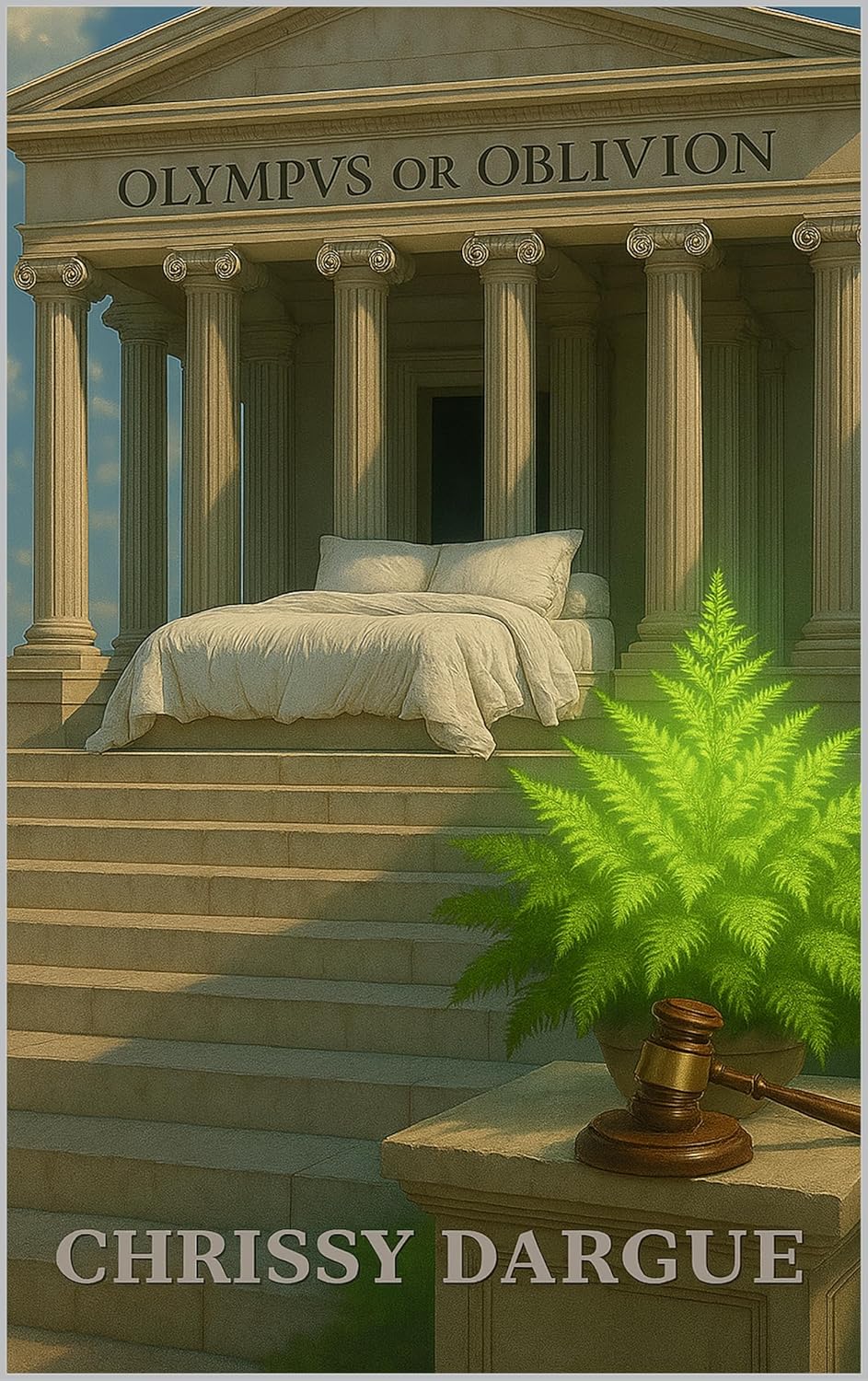
Reading Chrissy Dargue’s Olympus or Oblivion feels like being dropped into a wild, bawdy, self-aware pantheon where celebrity fantasy, personal philosophy, and unapologetic filth collide in the most chaotic way possible. The book introduces itself as an erotic satirical anthology, then immediately proves it can deliver on all three fronts. Each chapter follows a fictional sexual encounter with a different Hollywood icon, framed as both myth and judgment, and the voice that guides it is loud, human, furious, sentimental, and very funny. It moves fast, plays hard, and somehow manages to build a whole moral framework while describing sexually explicit escapades. The tone is intimate and irreverent and completely in control of its own madness.
As I read, I kept feeling a blend of admiration and “what the hell just happened” amazement. The writing is quick, chatty, and sharply observant. It has that feeling of sitting with a friend who tells a story so confidently that you follow, even when it plunges off a cliff into a disaster of sex toys, tree frog cigarettes, emotional vulnerability, or misplaced anatomy lessons. I loved the honesty here. The narrator is flawed and hilarious and often furious at the world, yet there is so much heart behind the jokes. The Henry Cavill chapter swings between worship, frustration, and affection with an almost musical rhythm. Depp’s chapter, on the other hand, crashes into surreal farce, tenderness, and genuine madness, and the contrast really shows off what the author can do. I laughed a lot. I winced a lot. More than once, I was slightly horrified, then impressed by how quickly the story made that horror feel warm. There is something bold about how the book refuses to hide the narrator’s desires or insecurities. It made the comedy sharper and the emotional punches landed harder.
What surprised me most was the philosophical streak running under the chaos. For all the sex and satire, the book is also a meditation on power, desire, loneliness, and the strange ways we try to judge the people we want. The Olympian framing is funny but also revealing. Every encounter becomes a test, not for the celebrity but for the narrator’s own values, boundaries, and hunger for connection. Even the absurd moments, like fainting from frog toxins or sketching a diagram of a vulva to keep a confused man on track, carry a sort of emotional grit. The narrator wants to understand people. She wants to be understood in return. I found myself weirdly moved between the jokes. Sometimes the writing gets messy on purpose. Sometimes it hits a poetic rhythm that blindsided me. The mix works because the voice stays genuine.
I’d recommend Olympus or Oblivion to readers who enjoy sharp humour, chaotic storytelling, sex-positive honesty, and big, unstoppable personality. If you like fearless writing, emotional whiplash, and stories that show both the ridiculous and the tender parts of being human, this book will hit the spot. It’s funny and vivid and unexpectedly sincere, and it left me feeling like I had just witnessed someone telling the truth in the most unhinged and heartfelt way possible.
Pages: 401 | ASIN : B0FLQL7VHN
Tiger and My Eye Patch

A young girl begins her summer burdened by an eyepatch meant to correct her lazy eye, and the weight of it grows heavier each time her classmates sneer. Branded “Pee Wee the Pirate,” she endures a name flung at her by children blind to the harm it causes. Relief arrives only when she escapes to Johnson City, where her grandparents wait with open arms, and with Tiger, their towering, gentle Great Dane. Tiger adores her. He offers no judgment, no mockery. Just warmth. Yet Tiger’s size and enthusiasm often land him in trouble, and before long, the girl’s courage and ingenuity are put to the test as she tries to save the companion who has quietly saved her.
Tiger and My Eye Patch, written by Colleen Lent, is a children’s story best suited for readers around ages 3 to 8. Its spirit echoes classic series like The Berenstain Bears, delivering an abundance of life lessons without losing its sense of play.
Lent draws from her own childhood, and that honesty radiates through the narrative. The sharper emotions, the confusion, and the vulnerability surface in the protagonist’s perspective and give the story a lived-in quality. Her world feels colored by past hurts, yet not dominated by them.
Joy still rises. It unfolds through tender moments with her grandparents and through the undeniable bond she forms with Tiger. The giant dog, good-natured yet misunderstood, mirrors her own struggle. His size invites assumptions, and he, too, carries the burden of being judged before being known. Their connection emerges naturally from shared experience, and it becomes the emotional heart of the tale.
Tiger and My Eye Patch maintains a light tone, but beneath it runs a clear thread of catharsis. Lent writes toward healing her own and that of any child who has ever been singled out for being different. The lesson she imparts, treat others with kindness, especially when they stand apart, is delivered with grace rather than force. Paired with lively, colorful illustrations, the story becomes both a comforting read and a meaningful one, offering young audiences a narrative they can enjoy again and again while absorbing its gentle wisdom.
Pages: 32 | ASIN : B0FV9W4242
Recovery is Possible

Where Did My Brain Go? tells your story about being involved in a car accident that left you in a coma, how you went nine years with an undiagnosed traumatic brain injury, and the long road to rebuilding your life. Why was this an important book for you to write?
I started writing this memoir in 2007 because I was angry. For nine years, I wandered around confused, asking friends if they thought I’d changed. They laughed. I got drunk to stop wondering what was wrong with me. When a specialist finally diagnosed my traumatic brain injury in 1995, I learned that a note in my ICU chart had said “Patient is confused. Someone should check his head.” My physician wife read that chart. She checked me out of two hospitals before anyone examined me.
I needed to write this book because every brain injury memoir I found featured helicopter evacuations, loving families, and treatment teams fighting for the patient’s recovery. Mine featured an angry wife who didn’t want a brain injured husband, a charlatan psychiatrist who prescribed legal speed, and years of stupefying drugs that kept me profitable and dependent.
The book took 18 years to finish. Confronting these memories was harder than learning to walk again. But I kept writing because professionals wanted me drugged and living in supervised housing. A charming employment counselor encouraged me to work on a factory assembly line for $3.50 an hour with her other disabled clients. Slick salespeople described the joys of “clubhouse” parties.
One exceptional surgeon gave me back my ability to walk. One dedicated social worker helped me escape the system. But most professionals wanted to keep me dependent. I said no. I found a job and relinquished my disability benefits.
This book is proof that recovery is possible even when nobody’s helping. Even when the person who should protect you is the one who betrays you. I wrote it for people in pain who need to know they can reclaim their lives outside the system designed to keep them trapped.
What is a common misconception you feel people have about Traumatic Brain Injuries?
One day, while overmedicated and feeling hopeless, I remembered reading that people only use half of their brain. At that moment I realized I had to ignore medical advice, stop taking stupefying pills, and rejoin the world.
Most professionals don’t know how to help brain injury patients. Others don’t care. They support themselves by keeping people dependent on pills and living in supervised housing. There’s more profit in dependency than recovery.
The common misconception is that the medical system wants you to recover. It doesn’t. Professional athletes get unlimited physical therapy until they’re healed. Regular people get cut off after a few sessions and sent to pain clinics for legal narcotics.
Two professionals helped me recover. One surgeon restored my ability to walk without requiring health insurance. He provided unlimited physical therapy for over a year. One social worker helped me escape the disability trap when others wanted me working on a factory assembly line for $3.50 an hour.
Recovery isn’t about finding the right pill. It’s about finding the right people, learning acceptance, and refusing to accept dependency as your only option.
What was the most challenging part of writing your memoir, and what was the most rewarding?
The most challenging part was confronting my wife’s betrayal. She saved my life after the accident. She found the surgeon who fixed my ruptured diaphragm and kept me breathing in the ambulance. But she also checked me out of two hospitals before anyone examined my head. She watched me struggle with memory and confusion every day. Instead of seeking treatment, she helped me stay drunk. She brought me extra long hospital straws to suck vodka through my wired jaws while I played computer games in the basement.
Writing about that took 18 years. I had to accept that the same person who saved my life also sabotaged my recovery. She didn’t want to be married to a brain-injured husband. She wanted a software developer to help her retire early. I was demoted to babysitter.
Every chapter forced me to relive moments I’d rather forget. The confusion. The screaming in my sleep. The nine years of wondering what was wrong with me while friends laughed when I asked if I seemed different. Getting drunk to stop caring. It was harder than learning to walk again.
The most rewarding part is hearing from people who recognize the system I’m exposing. Several readers have praised me for writing a book that shows how the medical system wants to keep people with brain injuries overmedicated and useless. They see what I saw: there’s more profit in dependency than recovery.
Medical professionals are especially delighted to hear that one person actually relinquished disability benefits. They rarely see anyone escape the system. Most of their patients stay trapped, overmedicated in supervised housing, shuffling through medication lines twice a day.
I wrote this book to describe the awful medical treatment I received, my wife’s awful behavior, and to show that I escaped the disability trap. That’s the story I needed to tell.
What do you hope is one thing readers take away from your story?
Trust your abilities. Measure your progress. Don’t trust people who ruin your judgment with stupefying drugs or want to limit your freedom.
The system profits from keeping you dependent. Psychiatrists promise to “fix” you with pills that make you too calm to get dressed. Once you’re overmedicated, employment counselors cheerfully suggest factory assembly lines for $3.50 an hour. Once you’re working, salespeople describe the joys of supervised housing and “clubhouse” parties where your salary goes directly to the facility. You lose your salary, your freedom and your ability to make rational decisions.
Recovery means refusing to accept dependency as your only option. You might not recover completely. I lost 32 IQ points and most of my impulse control. But I escaped the disability trap. You can too.
Author Links: GoodReads | X | Facebook | Website
For nine years, Miller struggled with memory problems and confusion without understanding why. When a specialist finally diagnosed traumatic brain injury, Miller faced a choice: accept lifelong disability and medication, or find his own path to recovery.
This memoir chronicles Miller’s 39-year journey from accident to independence. Unlike conventional recovery narratives, his story includes minimal family support, inappropriate medical treatments, and pressures toward dependency rather than rehabilitation. His recovery came through friendship, personal achievement, and ultimately rejecting the disability system that kept him medicated and isolated.
Miller recounts his experiences with psychiatric medications that left him unable to work, employment counselors who suggested factory assembly lines at below minimum wage, and social service systems designed to maintain dependency. He also describes the healthcare professionals who made a difference: the surgeon who provided unlimited physical therapy without requiring insurance, and the social worker who helped him escape supervised housing and reclaim his independence.
Where Did My Brain Go? examines the intersection of traumatic brain injury, medical system failures, and the disability industry. It raises questions about treatment approaches that keep patients overmedicated in chemical fogs and supervised housing. The system prioritizes profit over patient recovery and independence.
Where Did My Brain Go? is for readers interested in brain injury memoirs, healthcare system failures, and recovery against the odds. Mitchell Miller found a job and rejoined the world. He relinquished disability benefits and chose independence over dependency.
The Manglers of Carraig

The Manglers of Carraig drops readers straight into a city split by wealth, fear, and the eerie green glow of warding gems. It follows Conell Byrne, a boy fighting to keep his family alive in a world where monsters stalk the night and the rich hoard their safety behind iron fences. His desperate attempts to protect his sister and his mother collide with the power games of men like Garban the loan shark, and the story pulls that thread tighter as the dangers grow. Alongside this grim struggle is Riona, a jeweler whose bold designs using mangler claws spark outrage among the elite. Their stories move on separate tracks at first, one soaked in survival and the other in ambition, yet both expose the city’s deep fractures and the unseen costs of living in Carraig.
I found the writing fast and punchy. Scenes land quickly and hard. I especially liked how the book lets moments breathe right before everything goes sideways. Conell racing through dark streets with only gemlight to save him had me clenching my jaw. The author leans into sensory details that linger and refuses to clean things up for comfort. I felt the grit of the lower districts and the cold shine of North Hill. I felt Conell’s panic when he returned home and found the door broken open and the ominous quiet inside. The emotional hits come simply and directly, which makes them incredibly impactful.
The worldbuilding grabbed me, too. I appreciated how the author mixes small human choices with the big looming terror of the manglers. It all feels grounded even when the story dips into the grotesque. Riona’s chapters were a surprise. They twist into subtle power struggles and hidden desire. Her jewelry made of claws could have been a cheap gimmick, but it ends up saying something about the people of Carraig and what they choose to look away from. I enjoyed how these two storylines sit far apart but rhyme in the way everyone is just trying to survive something, even if the monsters look different.
By the end, I felt a strange mix of sadness and curiosity about where the story might go next. I would recommend The Manglers of Carraig to readers who enjoy dark fantasy with heart, quick pacing, and a world that feels alive even in its ugliness. If you like stories about people pushed to the edge and forced to make impossible choices, this one will stick with you.
Pages: 188 | ASIN : B0FX3WVJ1C



 LITERARY TITAN