Blog Archives
The Case Against Jasper


The Case Against Jasper is an allegorical mystery set on Wildwoods Farm, where gossiping hens, nervous rabbits, and a wrongly accused squirrel turn a simple accident into a full-blown witch hunt. It begins with Jenny’s fatal fall and the farm’s rush to blame Jasper, her closest companion. From there, the story unravels like a rural courtroom drama with animals as witnesses and moral philosophers. Ink the ferret and Fiona the cat, unlikely detectives, sift through lies, fear, and half-truths to reveal that the tragedy is less about guilt and more about how communities twist truth when panic takes hold.
I found the writing to be both charming and haunting. Wilcox blends the innocence of a children’s tale with the sharp edge of social commentary. The dialogue feels lively, sometimes gossipy, and the pacing, though deliberate, mirrors how real-life rumors spread, slow at first, then uncontrollable. The tone is simple but carries a quiet intelligence, like an old storyteller who knows how to make you see yourself in the animals. Some sections are weighed down by exposition, yet the prose always pulls you back with its sincerity. The setting, rustic, quiet, full of whispering fields, feels alive, almost cinematic.
What struck me most was how human the story felt. Beneath the feathers and fur, Wilcox explores bias, fear, and the instinct to assign blame when truth is inconvenient. The farm becomes a mirror for our own world, where perception often wins over evidence. I felt anger for Jasper, admiration for Ink’s calm logic, and deep sadness for how easily the crowd turns cruel. The ending, more restorative than punitive, felt like a sigh of relief and a reminder that justice is as fragile as reputation.
I’d recommend The Case Against Jasper to readers who enjoy thought-provoking fables and slow-burn mysteries. It’s perfect for those who liked Animal Farm or Watership Down but crave something more intimate, something about forgiveness and truth in small places. It’s not just a story about animals. It’s a story about us, the way we talk, accuse, forgive, and finally, understand.
Pages: 273 | ASIN: B0FRYJLV4W

Code Quest: The Ethics Engine

If you’re a parent, you already know it’s only a matter of time before your children venture into the digital world. Unless your family is entirely off the grid, your kids will soon be online, learning, exploring, and connecting through technology. And with that new freedom comes risk. Code Quest: The Ethics Engine dives straight into this reality, following four children as they navigate a vibrant online universe that mirrors the challenges of our own connected world. Each digital trial they face unfolds as an entertaining game, yet every victory carries a lesson in awareness, responsibility, and integrity.
Teri Green’s book blends education with adventure, offering something reminiscent of Dora the Explorer or Blue’s Clues, yet more intellectually stimulating. The premise is simple: four young friends must rescue their school’s malfunctioning artificial intelligence. Along the way, they encounter ethical dilemmas drawn from real-life decisions about honesty, empathy, privacy, and online safety. Readers aren’t just spectators; they learn right alongside the characters.
While topics like data protection and misinformation may sound heavy for grade-school readers, Green’s lively storytelling and bright, engaging illustrations make the material accessible and fun. The challenges are designed with common-sense solutions, helping young readers internalize values such as empathy, digital responsibility, and critical thinking.
In an age where technology shapes nearly every aspect of childhood, Green’s message feels both timely and essential. Many parents try to shield their children from digital dangers for as long as possible, but such protection has limits in a world that moves at the speed of innovation. Green wisely acknowledges this tension, offering an approachable tool to bridge the gap between curiosity and caution.
Not enough educators or parents are having these conversations with children, and the absence of guidance leaves a critical gap. Code Quest: The Ethics Engine fills that void beautifully. It’s an imaginative, meaningful read that empowers kids to think ethically and act wisely in a digital landscape that’s here to stay.
Pages: 47 | ASIN : B0FKWV6JXB
Fables from the South Seas

Kez Wickham St George’s Fables from the South Seas is a heartfelt collection of modern fables that reimagine the moral storytelling tradition through the lens of South Pacific landscapes and folklore. Each tale carries its own moral current, bound by themes of renewal, kindness, courage, and the deep connection between nature and humanity. The book feels both ancient and timely, a reminder that wisdom often hides in the quiet corners of imagination.
I found myself swept away by the warmth of the author’s voice. There’s a gentleness to her writing, even when she confronts sorrow or loss. Each story unfolds like a dream. The prose is vivid and unhurried, full of rhythm and heart. Sometimes it leans into a childlike wonder, yet there’s always an undercurrent of grief for the things humans have forgotten, our respect for nature, for each other, for the unseen magic of the world. The language is simple, almost old-fashioned, but that’s what gives it charm. It’s storytelling in the pure sense, the kind that glows around a campfire or before sleep.
Some stories, like Rouget and The Sobstone Bird, burn with mythic weight, almost biblical in their symbolism. Others, such as The Wicklow’s or The Glass Jar, drift into cozy folklore. The transitions can feel abrupt, but I didn’t mind. What struck me most was the compassion at the book’s core. St George doesn’t moralize; she nurtures. Her messages, protect the earth, honor friendship, cherish innocence, arrive softly.
By the end, I closed the book feeling peaceful. Fables from the South Seas is for anyone who’s ever needed reminding that love and kindness still matter. It would be perfect for readers who adore classic fairy tales, nature writing, or stories that heal rather than simply entertain. I’d recommend it to dreamers, to parents reading aloud to their kids, and to adults who miss the magic they once believed in.
Pages: 94 | ISBN: 1763869229
Miles Lassiter (circa 1777-1850) An Early African American Quaker from Lassiter Mill, Randolph County, North Carolina: My Research Journey to Home

This book is part history, part memoir, and part detective story. Author Margo Lee Williams traces the remarkable journey of her ancestor, Miles Lassiter, a free African-American Quaker living in North Carolina before the Civil War. Through genealogical records, dusty courthouse files, and oral histories, she reconstructs the life of a man whose quiet defiance of the times stands as a beacon of dignity and faith. The narrative also follows her own search for identity and belonging, from vague family memories to a rediscovered home in the Carolina countryside. It’s as much about the process of finding history as it is about the man himself, a story of persistence, connection, and the hidden layers of American life.
I was struck by the warmth of Williams’s writing. She doesn’t just present facts; she brings people to life. The scenes of her research trips, pouring over records, meeting cousins she never knew she had, walking the land her ancestors once farmed, made me feel like I was there beside her. Her tone is tender but firm, respectful yet real. There’s a sense of wonder in her words, the kind of awe that comes from holding pieces of the past in your hands. At times, her attention to genealogical detail can slow the pace, but that same care is what makes the story believable and human. I admired her honesty when she admitted confusion or surprise. It reminded me that history isn’t neat, it’s messy, layered, and full of contradictions.
As someone who loves history, this book hit me deep. It’s rare to find a work that balances emotion with scholarship so gracefully. The story of Miles, a Black Quaker in the antebellum South, is extraordinary. His life defied the boundaries of race, religion, and law. Williams’s discovery that her ancestor was both enslaved and later a respected Quaker moved me profoundly. It challenged what I thought I knew about early African-American history. There were moments I had to pause, just to take in the weight of it all, the perseverance, the quiet resistance, the unspoken courage.
Miles Lassiter is a love letter to ancestors who endured, to forgotten stories waiting to be told, and to the act of remembering itself. I’d recommend this book to anyone who loves history that feels personal and alive, to readers who crave stories of ordinary people doing extraordinary things without fanfare. It’s perfect for genealogists, students of African-American history, or anyone who has ever wondered where they came from.
Pages: 150 | ASIN : B0064FITWQ
Tales of the Beechy Hollow Great Outdoors Club


Robert E. Saunders’ Tales of the Beechy Hollow Great Outdoors Club is a collection of wild, funny, and oddly heartfelt stories centered around a ragtag group of Appalachian misfits who call themselves the Beechy Hollow Great Outdoors Club. The book follows Rob Greenwood, a small-town journalist who returns home to Looneyton, West Virginia, and falls back in with his late father’s eccentric circle of friends, hunters, hikers, and backwoods philosophers who turn every camping trip into a slapstick odyssey. From “Bobcat Boogie,” a harebrained mountain lion hoax gone wrong, to “The Evil Psychic Mule of Devil Ridge,” each story feels like a campfire yarn told by someone who’s laughing too hard to finish their sentence.
This book made me grin like an idiot more than once. Saunders writes with that kind of sly humor that sneaks up on you, mixing tall tales with a sharp understanding of small-town life. The characters are loud and flawed and strangely endearing. Rufus Sneed, the ornery old-timer, might be one of my favorite literary rednecks of all time, and Rob’s dry narration grounds the chaos with a wry self-awareness. What I enjoyed most was the sense of place, the muddy trails, the smell of woodsmoke, the hiss of an old coffee pot in the corner of a rundown diner.
At times, though, the story lingers long on the jokes. I found myself wanting him to dig deeper into Rob’s quiet loneliness. Still, when the humor lands, it really lands. Beneath the goofiness, there’s a current of melancholy, a sense that these characters are clinging to something pure in a world that’s gotten too polished and fast. That emotional undertow surprised me and made the funny parts hit even harder.
Tales of the Beechy Hollow Great Outdoors Club is a gem for anyone who’s ever loved the woods, small-town storytelling, or that peculiar mix of friendship and foolishness that only seems to happen outdoors. It’s for readers who crave laughter with a hint of truth hiding underneath. If you’ve ever told a fish story that grew with every retelling, this book will feel like home.
Pages: 274 | ASIN: B0FTT78W4K
Born Missionary: The Islay Walden Story
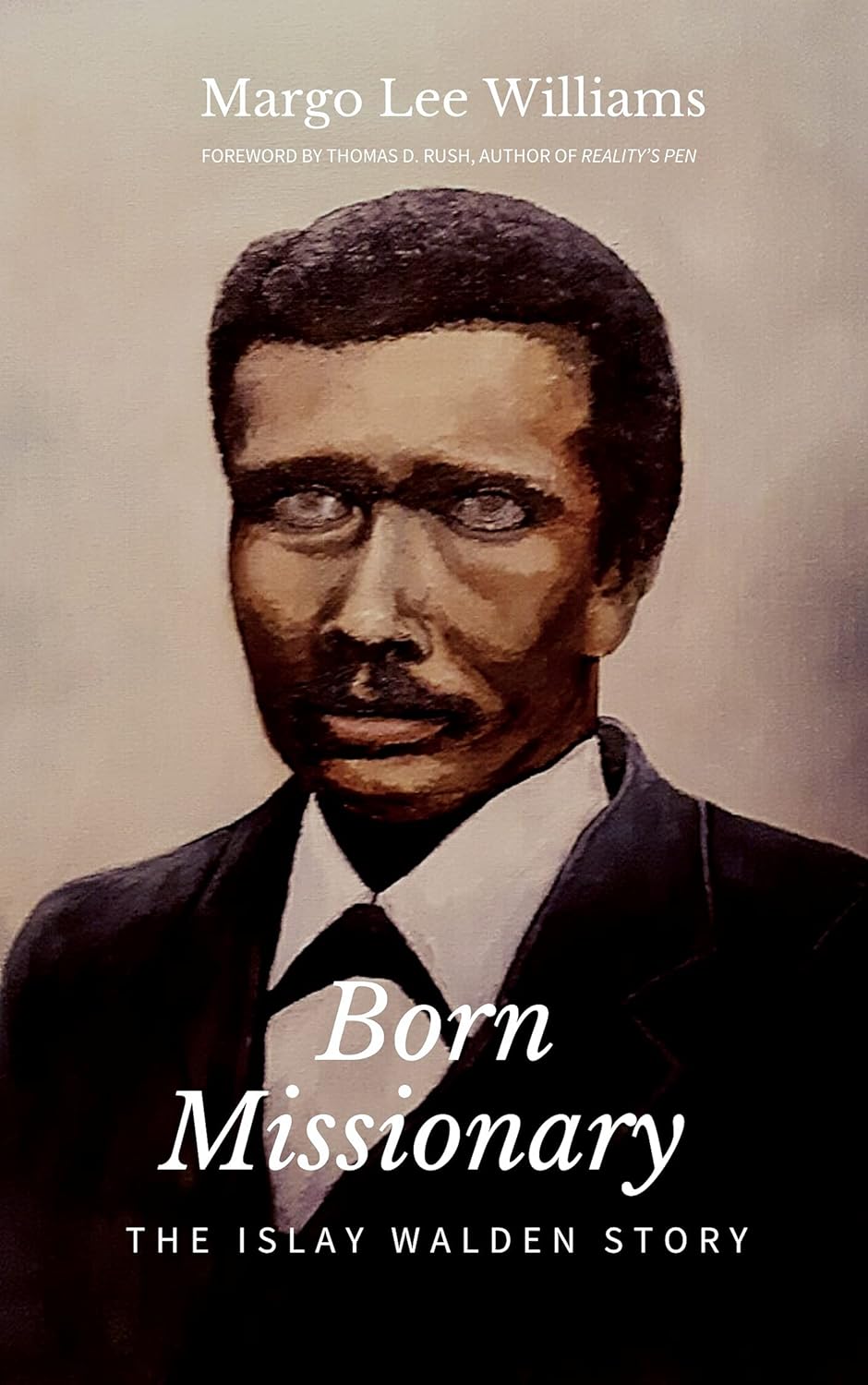
Margo Lee Williams’s Born Missionary tells the remarkable life story of Islay Walden, a man born into slavery who overcame blindness, poverty, and prejudice to become an educator, poet, and minister. The book traces his journey from the plantations of North Carolina to the halls of Howard University and the New Brunswick Theological Seminary, where he became one of the first African Americans ordained in the Reformed Church in America. Through meticulous research and a clear narrative voice, Williams reconstructs a life of faith and resilience. She doesn’t just recount events. She restores the humanity and voice of a man who was almost lost to history.
Reading this book stirred something deep in me. I could feel the grit in Islay’s story. His persistence through blindness and hardship hit me hard. The way Williams weaves letters, poetry, and newspaper clippings into a vivid picture of his struggles makes the past feel close. Her writing feels both scholarly and warm, and she lets the historical documents breathe. I’ll admit, there were moments when the detail slowed me down, but I didn’t mind. The care she took made me trust her. I found myself rooting for Islay, not as a distant historical figure, but as someone I might have known. Williams also captures the contradictions of his time, the faith that built him up, and the racism that tried to keep him small.
Emotionally, I found myself angry, proud, and sometimes just quiet after reading a passage. Williams doesn’t sermonize; she shows the quiet power of purpose. Her portrait of Islay’s devotion to teaching and preaching made me think about how education itself was a kind of rebellion. I liked how she handled the tension between his poetry and his ministry. You can sense that both were ways for him to see beyond blindness, to express what light looked like to him. It’s moving without ever feeling forced.
I’d recommend Born Missionary to anyone who loves history that feels alive. It’s perfect for readers interested in African American heritage, the Reconstruction era, or stories of perseverance that don’t sugarcoat the past. Teachers, pastors, and anyone who believes in second chances will find something here. It’s not just a biography, it’s a reminder of how one life, lived with courage and faith, can echo through generations.
Pages: 121 | ASIN : B091MF5B48
Pegasus Road

Pegasus Road is a haunting and beautifully written wartime novella that weaves love, loss, and resilience into a deeply human story. It follows Barbara, a young Englishwoman who refuses to accept that her fiancé, Andrew, a British lieutenant missing in action, is gone. Her journey from a quiet Dorset farm to the battered fields of Normandy becomes both a literal and emotional odyssey, one that explores devotion, courage, and the price of hope in a world torn apart by war. The book moves between Barbara’s desperate search and Andrew’s fight for survival, drawing the reader into both the intimacy of their bond and the vast chaos surrounding them.
The writing is cinematic and raw, full of moments that feel suspended between heartbreak and grace. Harry Black doesn’t rush anything; he lets silence do the talking, and that patience gives every scene its weight. What struck me most was how grounded the emotions were. There’s no melodrama, just quiet honesty. The war isn’t romanticized, nor is love painted as invincible; instead, both are messy, uncertain, and painfully real. The pacing slows at times, but I didn’t mind. The pauses felt like breaths between heartbreaks.
What really stayed with me was Barbara herself. She’s not a hero in the conventional sense, yet she embodies courage in its truest form, the kind that comes from stubborn love and relentless faith. Her defiance feels believable, even when it borders on reckless. And Andrew’s perspective balances hers with stoic tenderness, revealing the weariness of a soldier clinging to humanity in inhuman circumstances. The dialogue feels organic. It’s not the kind of book that shouts; it whispers, and somehow that makes it hit harder.
Pegasus Road left me reflective and strangely comforted. It’s a story about finding light in ruins, about ordinary people doing extraordinary things for love. I’d recommend it to anyone who loves historical fiction with heart, especially readers drawn to stories like Atonement or The Nightingale. It’s not just about war or romance; it’s about endurance, about how hope keeps flickering even when everything else burns out.
Pages: 129 | ASIN : B0FNXS83MX

Commi Kitchen

When I first opened Commi Kitchen, I expected a quirky behind-the-scenes tale about life in a kitchen. What I found was a raw, almost cinematic journey through the chaos, grime, and strange camaraderie of a shared commissary kitchen. The story follows Brand, an eager young chef trying to launch his catering career while navigating the hostile, absurd, and sometimes comical environment of the “Commi.” Alongside a cast of larger-than-life characters, from grumpy bakers to eccentric sushi innovators, Brand struggles to carve out a space for himself in a place that’s equal parts opportunity and nightmare. The book blurs the line between fact and fiction, and the energy of real lived experience runs hot through every page.
The writing is fast and unpolished in spots, but that’s what gave it charm. It mirrors the chaos of the kitchen itself, with grease on the walls and tempers always boiling over. Some moments made me laugh, others made me feel sick with the grime and dysfunction. I admired the way the author didn’t try to make Brand a flawless hero. He’s insecure, sometimes naive, but he also carries a stubborn pride that’s infectious. There’s a rhythm to the prose, a thumping drumbeat like the clatter of pots and pans. It pulled me in.
The dialogue had a casual looseness, and some scenes lingered longer than I expected. But it does a great job of building the atmosphere. The flow mirrored the unpredictable rhythm of kitchen life, where plans fall apart and you just roll with it. I could almost smell the burned chicken, hear the shouting over ovens, and see the buckets of salsa tipping where they shouldn’t. That kind of immersion mattered more to me than smoothness.
I’d recommend Commi Kitchen to anyone who enjoys true-to-life stories about struggle, grit, and chasing dreams. Chefs and foodies will recognize the kitchen madness, but even readers far from the culinary world will connect with the persistence and passion at its heart. This isn’t a glossy Food Network fantasy. It’s a sweaty, cigarette-stained, curse-filled ride through the underbelly of food service.
Pages: 447 | ASIN: B0FNQ6QT6P



 LITERARY TITAN