Blog Archives
The Golden Mansaic Age: The Legendary Malian Empire


Woody R. Clermont’s The Golden Mansaic Age tells the sweeping story of Mali’s rise from a patchwork of small kingdoms to a vast empire that commanded the world’s attention through trade, faith, and intellect. The book opens with the quiet strength of Naré Maghann Konaté, passes through the legendary journey of Sundiata Keita, the Lion King of Mali, and culminates in the golden reign of Mansa Musa, whose pilgrimage to Mecca shook the medieval world. Clermont doesn’t just trace kings and battles; he gives life to the land itself, the Sahel’s dry winds, the Niger’s silver bend, the hum of markets, and the griots’ songs that carried memory across generations. It’s both a historical chronicle and a deeply personal exploration of heritage, born from the author’s discovery of Malian roots in his own DNA.
I found Clermont’s writing vivid and heartfelt. He writes history like a storyteller sitting by a fire, his tone warm and patient. The details of Mali’s geography and trade, salt, gold, the lifeblood of empires, feel tactile, almost cinematic. Sometimes the descriptions linger too long, but that lingering adds to the sense of awe. The way he frames Sundiata’s journey from frailty to kingship hit me hardest. There’s something powerful about watching a child mocked for weakness grow into the man who unites nations. Clermont’s reverence for Mali’s intellectual legacy, especially Timbuktu’s libraries, made me pause more than once. He captures the quiet grandeur of a civilization often reduced to footnotes. Reading it, I felt the weight of history and also the sorrow of how much the world forgot.
Emotionally, this book moved me. Clermont’s mix of fact and faith feels intimate, almost confessional. His admiration for Mansa Musa is clear, but he also warns against seeing gold as the only measure of greatness. I liked that balance. His tone is proud yet thoughtful, his sentences simple but rhythmic. You can sense the author’s own rediscovery of self through the story of Mali. At times I caught myself smiling, other times I felt a pang of grief for what was lost when empires fade and stories fracture. It’s the kind of book that makes you want to look at a map, trace the old trade routes, and imagine the caravans shimmering under the desert sun.
I’d recommend The Golden Mansaic Age to anyone who loves history that feels alive, especially readers drawn to Africa’s forgotten empires or to stories that connect ancestry with identity. It’s not a dry academic study. It’s a heartfelt retelling, full of rhythm and respect. If you like books that teach you something while also stirring something inside you, this one will do that. It’s for those who want to remember that the world’s golden ages were not all born in Europe, and that sometimes the brightest light comes from the heart of the desert.
Pages: 225 | ASIN : B0FSXFPYT9

A Single Tapestry

Transcendence is a sweeping exploration of how the mind bridges science and spirit, revealing the brain as an oracle that connects intuition, dreams, and divine dialogue. What inspired you to weave neuroscience and mysticism together?
I’ve always felt that science and spirit aren’t rivals — they’re different languages describing the same mystery. Neuroscience gives us the wiring, but mysticism gives us the meaning. The inspiration came from realizing that breakthroughs in brain research — about memory, dreams, or intuition — echo things mystics have said for centuries. Writing this book was my way of drawing those threads together into a single tapestry. Since I was a child, I came to realize that in a way, people in the world around me appear in my dream world. Some people call it the astral realm or the ethers. It’s usually not for the better. I have had to learn boundaries, because they have tried to bring me down, or steal from me. Electromagnetic field (EMF) theories of mind/brain integration have been proposed to explain brain function for over seventy years. Interest in this theory continues to this day because it explains mind-brain integration and it offers a simple solution to the “binding problem” of our unified conscious experience.
Were there particular case studies or personal experiences that most convinced you of the brain’s “oracle” potential?
Yes. There are clinical cases where patients, in altered states of consciousness, reported insights or visions that later proved astonishingly accurate — like dreams predicting events or intuitions guiding survival decisions. But just as important were my own moments of deep meditation and dream recall, where the brain seemed to act less like a machine and more like a messenger. It convinced me that the brain isn’t just processing data — it’s participating in a dialogue larger than itself. From my own personal experience? In the past 15 years, I have had dreams of events that have happened. The dreams do not easily portray each future in a straightforward way. Sometimes, I might view an event from a completely different point of view, but when the event takes place, I am like, “Oh that is what that was.” So I had to study this to understand the “why” I get such visions.
The sections on dreams and prophecy are especially powerful. How do you personally practice dreamwork, and what have you learned from it?
I keep a dream journal. Writing first thing in the morning allows the symbols and emotions to stay vivid before they fade. Over time, patterns emerge — recurring images, motifs, even warnings. What I’ve learned is that dreams aren’t random static. They are coded messages from the deeper self, and sometimes from something beyond the self. They’ve taught me patience, humility, and a willingness to listen to what reason alone might dismiss.
Looking ahead, how do you imagine transhumanism and artificial intelligence reshaping our capacity for transcendence?
We’re entering an era where technology will blur the line between the natural and the artificial. AI might expand our access to knowledge, while neural interfaces could deepen our ability to map consciousness itself. But the real challenge will be ensuring that these tools don’t reduce us to data points, but rather help us reach further into the mystery of being human. My hope is that transhumanism doesn’t strip transcendence away but amplifies it — giving us new ways to experience awe, connection, and meaning.
Author Links: GoodReads
Bridging modern neurotheology with ancient wisdom traditions, Transcendence examines how prophetic dreams, intuitive cognition, and spiritual sensitivity are not anomalies but core features of the evolved human mind. Each chapter peels back layers of illusion to reveal how time, identity, memory, and perception are intertwined with sacred geometry, the aura, the gut-brain axis, and quantum possibility.
From the teachings of mystics and prophets to cutting-edge insights into magnetoreception, biofields, and heart-brain coherence, this book maps a path forward for the spiritual seeker in a digital age. It investigates technospirituality, lucid dreaming, neurodivergent sensitivity, and the destiny of the awakened soul in a rapidly shifting world.
Transcendence is not just a book—it is an invocation to reclaim your inner oracle. You will discover practices, questions, and revelations that align intuition with divine will, empowering you to walk your highest timeline with confidence and clarity.
Perfect for readers of Joe Dispenza, Carl Jung, Gregg Braden, or Michael Harner, this book is a must-read for mystics, visionaries, spiritual empaths, and anyone drawn to the sacred intelligence of the cosmos.
A Hero to Admire and Inspire

The Eye of Ebon follows a young girl who is brutalized and left to die in the snow, who is delivered a mysterious sword that has the power to change the course of her world, if she can survive. What was the inspiration for the setup of your story?
First of all, thank you for having me, and for your interest in my story, The Eye of Ebon. I greatly appreciate this opportunity to talk about my work, and to be showcased on the Literary Titan website. It is an honor.
The inspiration for the Eye of Ebon came from things I was witnessing in our culture and in the entertainment world around me. I saw strong trends towards glorifying villains, and bad things, and a falling away from valuing heroes in our daily lives. Gone was Adam West’s Batman, and Shatner’s Kirk, and here was Darth Vader and Prince Zuko. The conversation changed. People were more interested in villains, and heroes were cast aside as dull, or boring, or too ‘good’ to be interesting. The questions that floated around in the writer’s circles were no longer about the virtues of heroes, but instead about the complexity of villains, and many times it was just, ‘Is my villain cool enough?’ I wanted a story that brought the focus back to heroes, and one in which the villains were reacting to them. I wanted heroes that were admired and were inspiring to people, and I wanted villains that had no redeeming or likable qualities.
But there was more. I am a believer that for light to shine brightest, it must be pitted against the greatest dark. Samiare is in a dark world, and suffers a terrible ordeal. I knew from the beginning that I wanted to write a female character. I wanted the greater difficulty that comes with that territory. I wanted the female aspects of her character to matter, to not have her just be a man in female trappings, hitting things with her sword in a male, swashbuckling way. I wanted her to have terrible things to overcome. Samiare wrestles with anger and hate and pain through much of the story. She is physically and spiritually damaged, and has a lot to contend with. The opening scene and the ordeals she suffers carry with her throughout all the books, but are strongest in the Eye of Ebon.
Ruegette also has many things to overcome as well, there is a great sadness and regret in her, and her devotion to duty has cost her much, and may cost her more again. She is more mature than Samiare, but her journey is equally as real. My first concept of her was that she needed to be a role model that could make Samiare confident that she could follow in the ways of warriors as well. She needed to be a friend and mentor. In a world where women do not play the role of warrior, one who was living that life, and being highly successful at it, might give the spark that others could do it too. Ruegette is highly competent, and knows when to take risks. And she is just as driven as any to achieve her aims. But to make the choice that has set her on this path has come with a great cost. While it is not as front and center as Samiare and her issues, there is still much pain in Ruegette, and there is no way for her to set it right. She too takes risks of life and limb and does her duty for Tierinor, but is it what she truly wants? Or does it just end in more heartache? There is no going back for her. There is only braving the way ahead.
What were the driving ideals behind Samiare and Ruegette’s character development throughout the story?
For Samiare, I wanted her to wrestle with her feelings of anger and hate, both at her ordeal, but also at the monstrous Groll who did it. Samiare has to come to terms with a lot of change right away. And she is wielding the White Sword. It connects her to powers above—powers unlike those following the Seven Gods have ever known. Her faith and her belief carry a lot of importance, and few in the story share it with her. Samiare is asked to trust, but given little as to why she should. Yet she cannot just ignore the powers that work through her. She does believe, but can she bear it when she hates so much?
With Ruegette, I wanted to pit her devotion to duty, against that of finding love. The daring Captain Darimus travels with her, and she must work with him even though he is an agent from a foreign power—one that is supposed to be an ally to Tierinor, but is seemingly working with the Groll instead. Ruegette cannot wholly trust him, and yet…in their quest together, their feelings for each other grow. It isn’t all just foolish banter, there is something genuine behind it as well.
Ruegette is a Tagore, duty before all else is in her blood. How can she walk the line of duty to her own nation while contenting with her growing feelings towards the Marish captain? Can she survive if she must deny love to keep the Eye of Ebon safe? And what is the cost of duty when the stakes are so high?
What were some themes that were important for you to explore in this book?
There are many themes explored in the book, and in the series.
In the Eye of Ebon we see strong themes of duty and faith, as well as many others, such as overcoming, persevering, loyalty, trust, love, honor, and sacrifice. And many more themes as well. But for me, personally, I wanted the story to reflect that faith matters, and that trust in things greater than oneself is something that even the most faithful wrestle with. Samiare has a lot of faith. Some of it is just hard wired into who she is, and much more of it comes from the act to save her, and her connection to the One Who Watches Over. But she wrestles with that connection throughout the story, growing in faith and questioning trust. This is a theme the spans all five books and lives with the character for the entirety of the tale. Samiare gains somewhat of the warrior ethos over the span of the five books and that too plays a role in who she is.
Ruegette has duty first on her heart. It was bred into her by the importance of being a Tagore, and plays out over the many books as well, as she tries to come to terms with her father’s love, and his effort to do his duties as well. It shapes who she is. Ruegette wants to overcome the grip that duty has on her, but knows the gravity of events means she cannot just put it aside. She must find her own way, and make her own amends. Ruegette has great loyalty to her house and to her nation, but the lone act of rejecting her father’s plans has had a cost on both herself, and on others she loves. It cannot be so easily forgotten or forgiven. Ruegette must find some way to make peace with her demons as well.
When will book two be available? Can you give us an idea of where that book will take readers?
Book 2, The Promise of Eternity, is delayed in becoming available. I am currently working with an editor to help me provide a high quality work, and fix some of the problems it may have. And I am also waiting on the cover artist to make some changes I had asked for in the cover design. Teresa Jenellen is a wonderful artist, and I love her work. She is worth waiting for.
I am looking to have these out early in 2026, if not earlier.
Books 1-4 are all written, and book 5 is in progress. When Book 2 is released, and the rough for book 5 is written, I will be putting all my energy into getting book 3 released. Unfortunately, I have been wrestling with cancer for the last year, and I now feel it is more important to get the whole story written than to meet release date deadlines. It is important to me to complete the tale whether my cancer is cured or not. Hopefully, I can meet a schedule of one a year, or one every 18 months. The editing does take a lot of effort, and the latter books have much higher word counts.
It is my great hope that readers will enjoy them all, and stick with my tale through its darkness and grit to see its beauty as a whole.
My story has been described as, ‘What if Joan of Arc had used her sword and not her banner?’ Well, Sami is not quite Joan, but I’d like to think Joan would have admired her.
Author Links: GoodReads | Facebook | Website
Pulled into a conflict greater than nations and Gods, both Ruegette, and the girl she rescues, try to survive in a land full of threats against brutal foes that will show them no mercy. Can Samiare find the strength to overcome her torments, and can the White Sword be enough to push back the dark? –Or will a sinister creature reclaim its prize…
The Shadow is rising…
…It seeks back its eye…
…It won’t be stopped.
Witches and Pumpkins, Fur and Fangs

The book is a collection of eerie short stories that all orbit around Halloween, monsters, and the uncanny. From haunted pumpkins to mischievous goblins, from restless spirits to twisted killers, each tale drops the reader into a familiar world that quickly spirals into the unsettling. What makes the book stand out is how it taps into both folklore and modern horror, shifting easily between campfire-style legends and grittier contemporary scares. Every story feels like it belongs to the same haunted neighborhood, and that gives the collection a strong, cohesive flavor.
This is a very entertaining collection. I was caught up in the thrill of the scares, the build-up of tension, and the shocking payoffs. I found myself grinning at the way the author played with tropes I thought I knew inside out. Some of the stories reminded me of watching late-night horror movies as a kid, the kind where you want to cover your eyes but never actually do. The writing doesn’t waste time. It dives headfirst into dread, yet still leaves room for atmosphere, the kind that makes you glance at the shadows in your own room.
Some stories hit harder than others. A few felt predictable, but even then, I didn’t mind, because the fun was in the ride, not just the destination. When the author’s imagination really kicked in, though, the stories burned bright. “Jack of the Lantern” and “Hob Gob” stuck with me the most. They had this creeping inevitability that made me uneasy in the best way. I also liked how the collection never tried to be highbrow. It doesn’t put on airs or dress itself up. It just tells spooky stories the way they’re meant to be told, direct, raw, and with a wicked grin.
I’d say this book is perfect for readers who want to get lost in Halloween vibes any time of the year. If you like scary stories that mix folklore with fresh, gory twists, this is for you. If you want a jolt, a chill, or that delicious sense of dread before bed, you’ll enjoy this ride. I’d recommend it to horror fans, casual readers looking for a scare, and anyone who still feels that spark of excitement when the October moon rises.
Pages: 189 | ASIN : B0FM335L3H

Thank You for the Kiss


Beth Jordan’s Thank You for the Kiss is a memoir that traces her journeys to Cuba, woven with heartbreak, longing, and the allure of escape. The book opens with vivid portraits of Havana’s plazas and rhythms, then slowly moves inward, unraveling her grief after a broken marriage and her mother’s death. The narrative swings between travel writing and raw confession, filled with moments of recklessness, desire, and attempts at healing through adventure and connection.
Jordan’s writing sings with detail. Her Havana is alive with colors, smells, and sounds, and the way she describes cars, streets, and people almost made me feel the heat on my own skin. Yet at times, her honesty about loneliness and her hunger for love hit harder than the travelogue parts. It was messy, even uncomfortable, but that’s also what made it gripping. I couldn’t shake the feeling that I was sitting beside her in those plazas, watching her chase something that might not have existed.
At the same time, I caught myself admiring and questioning her choices. I admired the courage to lay bare such vulnerability, to admit vanity and mistakes, to talk openly about being fooled by charm and youth. I felt she often judged herself so harshly, and it hurt to watch. Still, I think that sharp self-awareness is what gives the book its bite. Without it, the book might have been just another glossy travel diary. Instead, it’s something rawer and more relatable.
I’d say Thank You for the Kiss is best suited for readers who enjoy memoirs about loss, travel, and the messy ways we search for healing. If you’ve ever made a questionable choice in the name of love or tried to outrun your own grief, this book will strike a chord. It’s not a light read, but it’s one that you will remember.
Pages: 350 | ASIN : B0BTXCTG86
Rock and Roll Heroes: Hendrix / An Illustrated Look at the Life of Jimi Hendrix
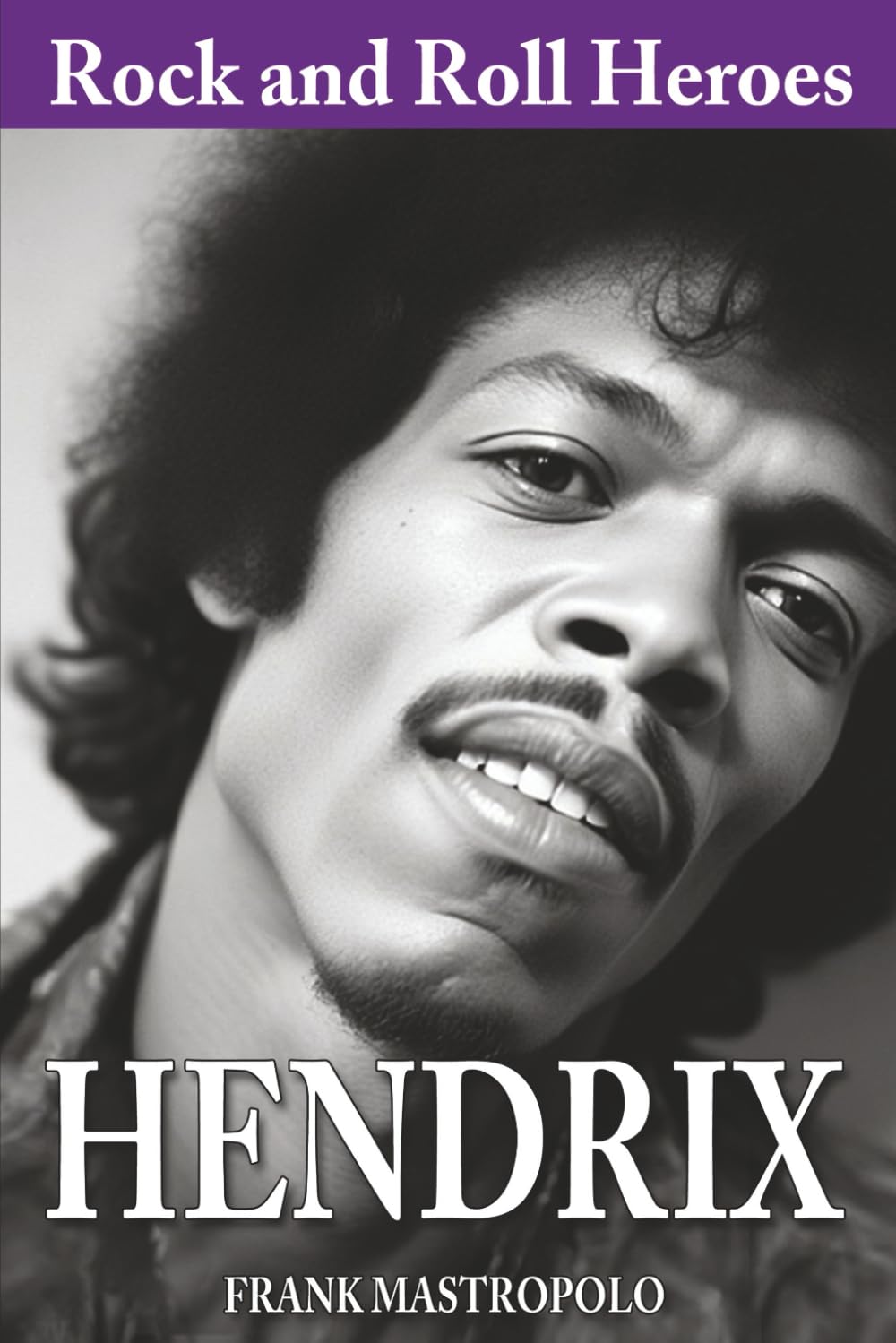
Frank Mastropolo’s Rock and Roll Heroes: Hendrix is a vivid and fast-moving look at Jimi Hendrix’s life, stitched together through sharp stories, rare details, and the voices of those who knew him. It begins with Hendrix’s tough Seattle childhood, where he strummed on broomsticks before getting his first cheap guitar, and carries us through his years of hustling gigs, the whirlwind fame in London, the legendary Monterey fire ritual, and the sound-shaking triumph of Woodstock. The book pulls no punches about the chaos that came with the fame, drugs, legal messes, endless tours, and the tragic burnout that ended his life at 27. Yet, threaded throughout is Hendrix’s relentless drive to make sounds no one had ever heard before.
I loved how Mastropolo leaned on eyewitness accounts. It made me feel like I was sitting in smoky clubs or watching jaws drop in London when Hendrix blew the local scene away. The language is crisp, not academic, which fits because Hendrix wasn’t an academic kind of genius. The book shows him as a shy kid who became a performer who could burn down the stage, literally and figuratively. It also gives plenty of attention to the small things: the busted cheap guitars, the clashes with managers, the sleepless recording sessions. Those details made me feel close to the man, not just the legend.
I felt sad about how badly Hendrix was managed and how little control he often had over the packaging of his own work. Mastropolo doesn’t glorify the tragedy, but he doesn’t soften it either. The tension between Hendrix’s huge imagination and the limits of the business world comes through on every page. I sometimes wanted more of Hendrix’s own voice, his own words, but maybe that distance actually makes the silences louder. It feels right that he comes across as unknowable in parts, like his guitar solos. The accompanying illustrations throughout the book are detailed and sharp, adding a striking artistic layer that brings Hendrix’s story to life with the same energy and clarity as the writing.
I was left with admiration but also a bit of heartbreak. Hendrix’s music still feels like it belongs to the future, and this book makes you feel the rush of that innovation and the cost it took from him. I’d recommend it to anyone who loves music history, but especially to readers who want to see the human being behind the myth. Fans of Hendrix will get new insights, and newcomers will understand why he’s still called the greatest.
Pages: 79 | ASIN : B0FN6TX6ZV
Yawns Are Quite Contagious
I Bet I Can Make You Yawn! follows a cute and determined sloth who asks readers to play a game with him where he will try to trick them into yawning. What was the inspiration for your story?
I am a mother and an educator. I LOVE reading books with children. I have read many books throughout my lifetime and had the opportunity to observe hundreds of children interacting with literature. I chose to make this book interactive because I love to watch kids engage in and interact with a text. It has them being a part of the text and begging to read it again.
I chose a sloth because who else can convince you to yawn but a slow moving animal that sleeps so much? Plus, who doesn’t love sloths? My illustrator, Audrey Kennedy, did an amazing job bringing Sammy to life.
What were some ideas that were important for you to share in this book?
It is important to me that kids realize reading can be fun.
I wanted the readers to feel like Sammy the sloth was playing a game with them. They also learn that yawns are quite contagious.
What scene in the book did you have the most fun writing?
The entire book was fun to write. It was quite difficult not to yawn through the entire process.
I really enjoyed creating the final scene (the final attempt of Sammy trying to get you to yawn). Even though there is no written text on this page, the illustrations effectively convey the message to evoke an emotional response. When the idea came to me, I thought it was perfect. The reaction I get when I read it to kids, reassures me of that decision.
Is this the first book in the series? If so, when is the next book coming out and what can your fans expect in the next story?
This is the first book. There is no set date on the next book coming out. My illustrator and I have tossed around some ideas about the next book, so it is a possibility.
Author Links: Amazon | GoodReads
Forged in Fire: Grief, Purpose, and Devotion of a Woamn at War

Robert L. Gangwere’s Forged in Fire tells the true story of Blanche Barnes, a young Midwestern woman who joins the American Red Cross’s Clubmobile program during World War II. Through her eyes, we witness the war from an unusual vantage point, one shaped not by combat but by coffee, doughnuts, and determination. Blanche’s journey is full of heartbreak, resilience, and unexpected adventure. She faces devastating personal loss, brushes with death, and the realities of war’s chaos, while also encountering generals, spies, and musicians. What begins as an ordinary life of music and marriage transforms into a remarkable testament to courage, purpose, and survival in the face of global upheaval.
I was struck by how alive Blanche felt on the page. The writing doesn’t just record her story, it breathes with it. Some passages are quiet and tender, while others hit hard with sudden violence or grief. I found myself laughing at her boldness, then minutes later, my throat tightened as she endured unimaginable loss. Gangwere manages to capture both the sweep of history and the tiny, intimate details that make it real. The prose is clean and direct, which kept me moving, but it also left room for my own emotions to rise up and spill over.
What stayed with me most was Blanche’s spirit. She was not painted as flawless or untouchable, but as relatable. She doubted, she stumbled, she hurt, and she kept going anyway. That stubbornness felt familiar and comforting. I also appreciated how the book didn’t shy away from the darker truths: the Red Cross’s policies, the ever-present danger for women, the moral compromises of war. It reminded me that history isn’t tidy. It’s messy, layered, and often unfair. And yet, through Blanche’s story, I felt a surge of pride and gratitude for the ordinary women who chose to step into extraordinary circumstances.
Forged in Fire left me both heartbroken and inspired. It is a book that stays with you, one that makes you think about resilience and the quiet forms of heroism that often get overlooked. I would recommend it to anyone who enjoys World War II history told through a personal lens, especially readers drawn to stories of women who found strength in unexpected places. It’s not just for history buffs. It’s for anyone who believes in the power of ordinary people to do extraordinary things when the world demands it.
Pages: 324 | ASIN : B0FFN4HKHP



 LITERARY TITAN