Blog Archives
The Moral of the Story is the Story

The Tilted Palace: Weeds of Misfortune follows a retired Green Beret haunted by Vietnam and marooned in the quiet of small-town Massachusetts, who meets a disheveled paster with whom he forms a bond as they struggle to survive. What was the inspiration for the setup of your story?
Righting the narrative around Vietnam had been simmering inside me since before I returned from that war in 1968. Discovering and writing an essence of the real story, beyond the general impression of the presumed feckless French in the French-Indochina War, got the ball rolling with Weeds of War: Those Who Bled at Dien Bien Phu, the first in the trilogy.I understand there are something over three thousand books on Vietnam, from text-like to raw and unending visceral adventure. While each may have a distinct target audience, I needed something that speaks to my neighbor, my ex-wife, and a general audience. Ingesting human interest story with historical “corrections” is what I came up with in Weeds of War, and carried forward with Irish Weeds and now The Tilted Palace.
What are some things that you find interesting about the human condition that you think make for great fiction?
Our assumptions about others — almost always wrong. Our mistaken belief in knowing what is best or not knowing, much less understanding, the entire story. The too late epiphany between characters. The “Plan B” that each of us comes up with when life goes south.
Was it important for you to deliver a moral to readers, or was it circumstantial to deliver an effective novel?
In large part, the moral of the story is the story. Imparting my truth has been the point. Being able to do so in a manner that touches the mind or the heart or the soul of the reader is, of course, an effective novel.
Where do you see your characters after the book ends?
There is potential for all of them going in different directions, either together or separately. Trinity and Jilly could easily be lesbian or bi-sexual, or seen to be, then discovered so by the communist government — oh my! Chang may be “turned” by a CIA operative — oh my! Jimmy Ray? Who knows? Perhaps a pathetic effort to replace Jezz or he may be saved by the need of the other characters to be saved by him. Or another story could begin with Jimmy Ray’s headstone and epitaph. Patrick and Thuy? They may simply die on the vine, aged and with memories that have either sustained or killed them — what could have been, perhaps. Or, Jimmy Ray’s mother could easily return to be the classic character she is in Irish Weeds. Old, yet fiery, Bess could be a main character in The Troubles of Northern Ireland, with Jimmy Ray either assisting or trying to redirect her.
What fun it all is.
Author Links: Amazon | GoodReads
The reality is strongmen with militias pressing for power, and multiple politicians and political factions with sharp elbows eyeing the Presidential Palace and affecting its balance.
Supported and directed by communism, a guerilla force called Viet Cong is recruiting and stirring things up for the government. Patrick and Thuy did not expect another war, nor to be engaged in it to the bitter end and beyond.
Now, fifteen years after it ended, that American-Vietnam War is seldom spoken of other than when an isolated veteran messes up real bad. Then Vietnam vets are referred to as “drug-crazed baby-killers.”
Jimmy Ray Crandall served years in the war. “It ain’t right,” he would grind out, revealing a hint of his trauma. Just in time he meets the dog. Her owner is a young woman with her own troubles. There is sharing, drinking, and bickering until insight begins to perform little miracles.
Can a return to Saigon be healing?
Old friends with new stories come to the fore. Regardless of it all, the war was lost years ago—no change there. Perspective on the past, however, can change a great many things.
An Entertaining Duo

Candace McFly: Undercover Spy Case #1 The Botched Beauty Pageant follows a sharp, puzzle-loving third grader who enters the town’s beauty pageant despite her fears to help her friends and solve a mystery. What was the inspiration for the setup of your story?
When I was a Writing Lab teacher about 4 years ago, I was beginning a fun Mystery Writing unit for my 3rd graders to start after just completing our state testing that spring. I was randomly brainstorming possible story ideas modeling what my students would soon be doing. Since I had a small background in pageants when I was in high school, I thought this would be a fun topic to write about. Originally, it was going to be a spoof on pageants, but it turned into something totally different.
As we got further into our unit, I developed a character sketch on my two main characters- Candace and Arnold- before I even began writing the story. My students loved them right off the bat, saying they felt they’d be friends with Candace and Arnold if they were real kids! As I wrote the first two chapters, modeling how to incorporate various writing strategies, the students LOVED the storyline and proposed a challenge to me; to turn these ideas into a book. Having always wanted to write a book but thinking it wouldn’t happen until retirement and readily accepting a challenge because I constantly asked them to take risks as writers, I accepted! I wrote the entire summer and into September, submitted to a few publishers, and the rest is history! I loved the characters of Candace and Arnold; their personalities work well together, making for an entertaining duo.
What character did you enjoy writing for? Was there one that was more challenging to write for?
That makes me so happy that you loved Candace and Arnold! I love them, too, and enjoyed writing for both equally, but in different ways. Since Candace was telling the story through her eyes, she wasn’t that difficult to write for. She helped guide me through the storyline. However, the challenge with her was to show what a strong, smart girl she is, but not come across as a know-it-all. I wanted her to be likeable and relatable, yet vulnerable and humble at the same time. As a teacher, I see a lot of personalities come through my classroom. My goal with Candace was to show what a true friend is like and make her a role model to young girls who read this book (and future books to come), and that there’s nothing wrong with being smart or having fears. Be comfortable in your own skin.
And then there’s Arnold… I knew I wanted to have a partnership where one of the characters is quirky and fun. One that people will roll their eyes at from his outlandish ideas and actions. But also, a character who rises from vulnerability and being in the shadows, to one exhibiting leadership and caring about others. Most of the time, I’d be giggling writing Arnold’s parts, or they’d bring me to tears. Arnold is a hybrid of all the quirky boys I’ve taught throughout my past 30 years and sprinkled with my imagination.
How did the mystery develop for this story? Did you plan it before writing, or did it develop organically?
As I mentioned earlier, this idea originally came from a lesson in my Writing Lab. While modeling the writing process for my students, I did indeed create a skeletal plan (a story map) of how I envisioned the story developing. But as I completed writing the first few chapters and introducing new characters, the story morphed in a totally different direction than I ever imagined.
I once read how Michael Connelly, one of my favorite mystery writers, has an initial idea for the big idea of his novel, but he then lets the story take him where it’s supposed to go, and he won’t know what that is until he gets there. I feel that’s how I am as a writer as well. I had an initial plan, but certain events I created caused a chain reaction or led to another event I never saw coming. In fact, even as I got toward the end of writing The Botched Beauty Pageant, I had no clue as to how it would end. I didn’t want to make it too obvious with the clues I’d been leaving thus far, so I had to get creative. My initial plan was nowhere near where I landed in this Live Oak journey.
Can you tell us more about what’s in store for Candace McFly and the direction of the second book?
I would be delighted to! Actually, I’ve already written the next installment in the Candace McFly, Undercover Spy series: https://a.co/d/8npwOny (Case No. 2 The Phantom of Live Oak). Candace, Arnold, and all of their Live Oak friends are back with even more adventure and crazy shenanigans, with a touch of a kid-friendly ghost story.
Currently, I am working on Case No. 3, which isn’t titled yet- I don’t create the titles until I’ve finished writing the entire book- but it is a treasure-hunt themed adventure.
Author Links: GoodReads | Facebook | Instagram | Website | Amazon
Candace is not your typical third grader–or your typical girl for that matter. She’s not into her appearance or competing in the Li’l Miss Live Oak pageant like all her friends are or the ladies in her family were. Her mama was a Li’l Miss Live Oak, her grandmother was…her great-grandmother too. But she has no interest in competing even though it’s her year to. Plus, there’s that little stage fright issue she has.
But she does love to figure out puzzles and mysteries! Her best friend, Arnold, isn’t like other boys their age either, but his quirky ways make him the perfect sidekick who always keeps things interesting.
Normally, life in a small town can be dull. But not in Live Oak. School has just ended, and Live Oak’s pageant season has just begun, along with mysterious happenings to the contestants. Candace’s friend Anna Kate swims up to Candace and Arnold at the School’s Out for Summer Soiree, requesting Candace’s help. Telling her a tale so unbelievable, Candace can’t help but be reeled in as more bizarre events keep occurring to her friends.
To truly find the culprit, Candace must make one of the toughest choices of her life–go undercover, becoming a contestant in Li’l Miss Live Oak, overcome her stage fright phobia, and catch whoever is trying to botch the beauty pageant. With Arnold by her side, anything’s possible, but will they solve it in time to crown the next Li’l Miss Live Oak?
Difference in Perspective

Conversations with My Mother tells the tender and heartbreaking story of a son watching his mother fade into dementia. What was the inspiration for the setup of your story?
I started writing the book after a weeklong stay with my mother, during which she’d been diagnosed with vascular dementia. Afraid that the mother I’d known was fast disappearing, I began visiting and calling her as often as possible. Consequently, from her initial diagnosis through her passing several years later, I periodically witnessed both firsthand and at a remove her growing disorientation and anxiety as well as her increasing bursts of candor and flights of fancy. It was this on-again, off-again exposure to the effects of her condition that led to the episodic construction of the book, whose chapters recount particular days or moments in the course of the heroine’s long and debilitating illness.
Are there any emotions or memories from your own life that you put into your character’s life?
Since Conversations With My Mother is a kind of fictionalized memoir, many of the narrator Rob’s emotions and perceptions reflect my own. From 70 to 80 percent of the book’s events are based on memories, though some were melded or otherwise modified to support its narrative and thematic development.
What were some themes that were important for you to explore in this book?
The book’s central theme is that loss is not always as complete as it might seem. Though a dementia victim’s personality may fade or shatter, fragments of it often remain, and we should do our best to recognize, respect, and cherish them, however few.
Another important theme is the disparity between a geographically distant offspring’s experience of a parent’s dementia and that of an offspring who is a caregiver and, as such, in constant contact with the parent. For example, the book’s narrator, Rob, lives several states away from his mother, so he experiences her decline only in periodic phone calls and visits, whereas his sister, Diane, her primary caregiver, experiences its consequences daily. This leads to a difference in perspective between the two, with Rob being more focused on the emotional and Diane on the practical. Rob, from his insulated remove, occasionally glosses over or sentimentalizes issues, which is easy to do from a distance, while Diane, being in the thick of caregiving, sometimes feels overwhelmed and becomes impatient, which is understandable, given the demanding, continuous nature of caregiving. Neither perspective is more valid than the other. Each is simply the result of the character’s particular circumstances.
What is the next book that you are working on, and when is that book due out?
My next book is a family saga describing the experiences of a French-Canadian immigrant woman from the dawn of the 20th century through the 1980s, contrasting her early life’s poverty and hardships with the different challenges faced by her more affluent children and grandchildren. Like Conversations with My Mother, it’s based on my family’s history, drawing on the experiences of both my maternal and paternal grandmothers. I expect it to be ready for publication sometime in 2027.
Author Links: GoodReads | Amazon
Distinguished Favorite, New Fiction, 2025 Independent Press Award
Honorable Mention, 2021 Lorian Hemingway Short Story Competition
Poetry Thrives on a Mystery

What We Hold No Longer is a collection of poems that circle around memory, aging, identity, and the haunting void that lies beneath it all. What inspired you to write this particular collection of poems?
I’ve recently become an avid reader of psychoanalyst Adam Phillips. Last year, one of his books introduced me to Jacques Lacan. Specifically, how our subconscious impacts language, and in turn, how we use language shapes desire. For a poet, what could be more delicious to explore? Ineluctably, even mentioning Lacan brings up his theories on the Void (The Thing) and religion. This, in turn, led me to Lacanian scholar Richard Boothby (Embracing the Void). Along the way, I also read a book by Phillips on our ambivalence towards transforming our lives (On Wanting to Change). Transformation is a particularly important topic at this stage of my life. What I did not anticipate in reading this book was the evocation of so many memories. As a pediatric psychoanalyst, Phillip’s description of childhood, particularly the excruciating years of adolescence, flooded me with things I’d long forgotten (eg, seeing my grandfather’s corpse at age 9, the inchoate sense of frustration, and seeking revenge on my parents’ reputation with a can of red spray paint, etc.).
Can you share a bit about your writing process? Do you have any rituals or routines when writing poetry?
I’m trying to understand my writing behavior. I appear to have a natural rhythm, whereby I’ll write a dozen poems over a month or two and then go silent for just as long. During the quiet months, I read more and pay attention to what I see and listen to: all the things popping up as thoughts and feelings. The poems “The False God’s Lullaby” and “New Year’s Day” were brief glimpses of people, just a few moments of an image that resonated deeply, and unexpectedly.
What moves me from outside triggers something poignant nesting deep inside: “The I of my other who moves silently with me” (The False God’s Lullaby). Also, I love editing. Paul Valéry once said: “A poem is never finished, only abandoned.” I think he meant you can always refine and improve a poem. I try to limit my revision window to six months. Once a poem reaches structural stability (ie, I know what I want to say and the confines to say it in), I put it away for several days or weeks at a time. It’s important to understand that during initial composition, the poem’s neural map is being built using high stores of neurotransmitters. This is how we learn. However, it also prevents us from seeing inherent weaknesses when we’re still trying to get our thoughts written down. Taking a break for days or weeks reduces neurotransmitter stores. This removes the blinders to our writing, so we can see problems more readily and find better ways to say what we’re trying to convey.
How do you approach writing about deeply personal or emotional topics?
I think it is important during initial composition to just let things rip, because that is likely to be the most truthful. However, there is a balance to be struck. I’m reminded of a phrase from the Upanishads: “The path to salvation is narrow. It is as difficult to tread as the razor’s edge.” I view confessional poetry as an attempt to achieve psychic salvation. To shy away from powerful emotions creates a sense of falsity impossible to ignore. Yet, in the passion of writing, we can also say too much. Poetry thrives on a mystery, on what is left unsaid. That’s part of the art form I’m still working on improving.
How has this poetry book changed you as a writer, or what did you learn about yourself through writing it?
I have the sense in writing What We Hold No Longer that I’m beginning to mature as a poet. I’m not sure anyone else would agree. But there was something about the Lacanian cycle of poems that shifted my writing in a way I haven’t fully grasped. At this moment, I can’t imagine writing anything more profound or better composed than those poems. Time will tell. Every book I’ve written so far has enriched my sense of self and given me a sense of being more at peace with myself. Something that had eluded me before I’d written The False God’s Lullaby.
Author Links: GoodReads | Amazon
Such topics have been the foundation of his poetry explored in his previous works and have been expanded upon in “What We Hold No Longer.” As in his other works, poems are grouped together in themes. These themes approached from a deeply psychic perspective and include: personal transformations throughout life, existential encounters with “Nothingness,” the rise of fascism, loss, and the realm of an interior life (both our conscious narratives and our river of unconsciousness). What Gedaliah refers to as “the I of my other, who moves silently with me” (The False God’s Lullaby).
The poems in this current collection maintain characteristics that reviewers of his previous works have consistently noted. That “Gedaliah seamlessly blends philosophical depth with artistic expression, offering a deeply reflective journey through identity and human complexity, striking a perfect balance intellectual exploration and emotional resonance.”
I Love the Me I See In You
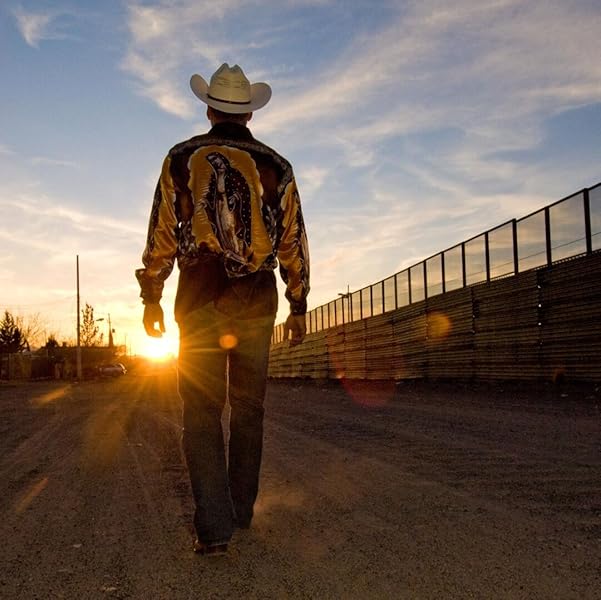
In Hope on the Border, you address existing misconceptions surrounding the US–Mexico border and offer an honest look at life in this perilous area. Why was this an important book for you to write?
America is in trouble. We are more divided and unhappy than ever. In the 2024 World Happiness Report, people under 30 in the U.S. ranked 62nd globally out of 143 countries in happiness and life satisfaction. And this abysmal ranking is plummeting. Suicide is now one of the leading causes of death for American preteens (ages 8–12). How can this be when roughly 95% of the planet is financially worse off than the average American?
(Of interest, Mexico ranked 25th in the 2024 World Happiness Report.)
At our four-decade-old Rancho Feliz Charitable Foundation, Inc., we have a proven solution, and America needs to know what we have to offer. So I decided to write a book.
Ensnared in technology’s frenetic pace, many youth and young adults in America are experiencing a poverty of purpose, meaning, and connection in an environment of unparalleled abundance. Paradoxically, this poverty fosters the same primal fear, alienation, loneliness and emptiness that haunt the poor and underprivileged in Mexico, on the U.S. southern border. In fact, both have the same negative symptoms, just on opposite ends of the socioeconomic spectrum.
Rancho Feliz’s volunteer program allows both sides of the charitable transaction to be simultaneously donors and recipients, thereby thriving in tandem. In a very real sense, the volunteers feed the stomachs of the poor and, in turn, the poor feed the souls of the volunteers. It’s an equal exchange of energy with no logical end—and it transforms the lives of everyone.
This two-pronged approach of serving the poor and creating purpose for the privileged fosters a symbiotic relationship—one in which givers become receivers and receivers become givers. Everyone benefits equally from the same service transaction. We call this reciprocal giving. Under this operating mandate, we have changed thousands of lives on both sides of the border.
To run a successful volunteer-based charity, the greed of human nature must be recognized and harnessed. In other words, service work is foremost in your best interest, and the recipient benefits as a result.
10,000 years of failed religious teachings have taught us that presenting charity as a sacrifice, an action grounded in lack, doesn’t work.
Rather, Rancho Feliz appeals to the driving force of basic human self-interest. Out of selfishness, a form of altruism blossoms.
This isn’t about helping Mexicans – it’s about helping ourselves (by which the Mexicans get helped in the process). This is a true win-win.
In light of our current situation, Americans need to hear this message now more than ever.
How long did it take to research and put this book together?
“Hope on the Border” is a collection of lessons and experiences I gleaned over 38 years of volunteering on the Mexican border, coupled with a lifetime interest in the workings of the mind. My interest in the mind led me to five expeditions into Tibet’s Himalayan “Hidden Lands of the Blossoming Lotus” A.K.A. “Beyul Pemakö” where I studied with several learned Buddhist monks and indigenous ascetics. I firmly believe that in the arena of the mind, what we believe to be true is.
To this end, I also had an early interest in hypnosis and visualization. In the late 1970’s this fascination led me to the Institute of Noetic Sciences which, in turn, led me to studying eastern philosopher Paramahansa Yogananda and his self-realization teachings. Though Yogananda was a Hindu, this study led me to a profound interest in Tibetan Buddhism. In 1993, I took my Bodhisattva Vow of Compassion directly from His Holiness the 14th Dalai Lama. This experience further strengthened my resolve to help others as a path to a rich and full life.
I attended Buddhist meditation master Chögyam Trungpa’s “Shambhala: The Sacred Path of the Warrior” classes in Boulder, Colorado, and completed all 12 levels of the meditation teachings in 1998. It’s important to me to note that I do not consider myself a Buddhist – rather I am a student of Buddhism and how our minds work.
It has been my experience that meditation changes us. It changes our brains. It changes the way we think and relate to our world and to each other. It breaks down the hard boundaries that separate us. As a life-long meditator, I have experienced this firsthand. Likewise, when I am in service, the distinction between me and you is blurred. I see myself in others.
At Rancho Feliz we have created a venue where our volunteers can see themselves in others less-fortunate. When this true view is mastered, the only logical conclusion is to serve – for in serving others you are serving yourself.
Both meditation and serving others unveil the interconnected nature of all things. This awareness further strengthens one’s resolve to help others as a path to a rich and full life.
And this is what led me to start Rancho Feliz. I began seeing myself in others. I could no longer default to ‘empathic blindness’ as I realized that the only difference between me and the poor on the border was ‘luck’ – just blind luck.”
Did you learn anything in the course of writing Hope on the Border that surprised you?
Yes. I came to understand the difference between the statements, Love thy neighbor as thyself and I love the me I see in you. I learned that the worn-out and ineffectual statement Love thy neighbor as thyself is a gullible and simply impossible moral imperative that doesn’t work. It goes against our basic instincts of self-interest. To love a stranger is treacherous. It’s a dualistic love. It assumes a separateness, a distinction between you and your neighbor. And all divisions invite conflict. All I had to do was look at our border wall for proof of that.
I love the me I see in you, on the other handis the “true view”(as the Buddhists would say) of our human condition. We are not separate and independent from each other. Rather we only exist in relation to, and are dependent upon, everything else as strands in a universal web of cause and effect.
I love the me I see in you is personal and reflective. It concentrates on unity and shared being. It’s about recognition and connection. It’s self-referential – focused on how the other person reflects you back to you. It suggests that when you look at another human being, you see yourself – echoing the same emotions, wants, needs, hopes, joys, and vulnerability of our shared experience. And you love them because they mirror what is familiar in you.
This is love based on recognizing our “oneness” – the sense that you and I are not truly separate. Love here comes from seeing ourselves in the other and recognizing our shared existence – our shared humanity. We’re all in this together. None of us knows exactly why we’re here, yet we’re all doing the best we can with the circumstances we were born into. This is a non-dual love – a love that dissolves the boundary between self and other.
In writing “Hope on the Border” I was forced to define what made Rancho Feliz different from other charities and religions. Working in one of the most divisive atmospheres on earth – the U.S./MX border – made me contemplate deeply what approach to charity is in sync with our basic human nature and what approaches are not. I attribute much of Rancho Feliz’s success to this simple but all-powerful understanding.
What is one thing you hope readers take away from this book?
We all have a hand in the maladies that plague our southern border. And the pain, suffering, desperation, misunderstanding and divisive contempt will continue until such time as we truly take to heart the fact that you can best serve yourself by serving others.
Author Links: GoodReads | Facebook-Author | Facebook-Book | Website-Author | Website-Book | Instagram
The U.S.–México border is more than a line on a map. It’s a place of hardship and resilience, inequity and generosity, division and connection. In Hope on the Border, Gil Gillenwater draws on nearly four decades of firsthand experience to bring readers face-to-face with the realities of the world’s most dangerous migrant corridor—and the hope that still thrives there.
Through vivid storytelling and dramatic photography, Gillenwater reveals the heartache and humanity that define life on both sides of the border. His unflinching accounts expose the shared responsibilities of two nations, while his insights point to a deeper truth: Mexico’s material poverty and America’s spiritual poverty are intertwined.
Readers will discover:
Authentic border experiences free from partisan narratives and media distortion.
Stories and photography capturing resilience and humanity.
Insights into poverty on both sides of the border.
A blueprint for hope through reciprocal giving.
A challenge to reflect on personal responsibility.
Hope on the Border won’t just inform you—it will transform how you see division, compassion, and your own capacity for change. If you’re willing to move beyond comfortable assumptions and discover what truly has the power to unite us, this book will be your guide.
Join the movement. Start reading Hope on the Border today.
$5 of each book’s proceeds will support Rancho Feliz’s life-changing work on the U.S.–México border.
You Can Thrive

Sociomom is a raw and gut-wrenching memoir about surviving a childhood dominated by abuse, manipulation, and the long road toward emotional healing. Why was this an important book for you to write?
It was important to me to author this book not to share my story, but to illustrate that no matter what your past is, where you come from or what your current circumstances are, you can overcome and thrive.
What were some ideas that were important for you to share in this book?
There are several:
- You are not alone in your struggles.
- If you want something different and better in your life you have to try different and better options to heal.
- No matter how hard you try, you can not and are not meant to do it on your own.
- There is no one size fits all approach but you have to lean into physical, mental and spiritual health options to move forward.
- Overcoming trauma and mental health challenges is a journey not a destination.
What was the most challenging part of writing your memoir, and what was the most rewarding?
The most challenging part was having to relive my journey and put all of my “stuff” out there for the world to see.
The most rewarding was the validations from reviews and other feedback how the book has helped others be seen and be inspired to move forward in their journey.
What do you hope is one thing readers take away from your story?
It is never too late, and you are not too broken to move forward and change your path to healing.
Author Links: Website | GoodReads | Instagram | Facebook | Tik Tok | YouTube | LikedIn
killing brumbies


Sue Andrews’ Killing Brumbies is a strange, moving, and very Australian book. It weaves fact and fiction into a story that roams from love and art to politics and moral outrage. It opens with a stark scene of wild horses and government men with guns, then slows down into something tender and tragic. The novel moves through time and memory, past and present blurring, anchored by the wildness of the land and the cruelty that sometimes hides beneath good intentions. It’s about freedom, loss, and the quiet grief of watching something beautiful be destroyed.
Reading it, I felt pulled between admiration and sadness. Andrews writes like she paints, with color and feeling, though her brush can be rough. The book drifts at times, focusing on history or other digressions, but when it hits its mark, it’s powerful. Her prose is visual and sensual. You can smell the dust, hear the flies, and feel the chill of mountain air. I could sense her anger at bureaucracy and her love for horses, and I respected both. There’s a sort of fury under her words, an old wound that never healed, and she lets it bleed across the page without apology. I liked that.
There are moments of brilliance, lines that hum with truth. Some parts meander, but through it all, there’s heart. Andrews writes with conviction. She cares deeply about what she’s saying, and that matters more to me. By the end, I felt like I’d lived through something hard and necessary, like stepping out of a storm.
I’d recommend Killing Brumbies to readers who love the Australian landscape, who want stories with grit and spirit rather than tidy conclusions. If you’re drawn to tales of rebellion, of art and nature and moral courage, this book will speak to you.
Pages: 406 | ASIN : B0FM191NQM

A Guide for Reclaiming Clarity

In The Cathedral of Quiet Power, you share with readers your advice for quietly rebelling in order to survive in a world whose systems of power rely on our dependence. Why was this an important book for you to write?
Because most people don’t realize how deeply they’ve been programmed — not by machines, but by systems built to keep them anxious, productive, and compliant. I wrote The Cathedral of Quiet Power for anyone who’s ever felt that quiet dread of “doing everything right” and still feeling lost. It’s a rebellion against that conditioning — and a guide for reclaiming clarity, strength, and self-sovereignty.
I appreciate the candid nature with which you tell your story. What was the hardest thing for you to write about?
The moments when I had to admit I was complicit in my own burnout. It’s easy to blame the system, but much harder to face how ambition, ego, and fear made me play along. Writing those parts felt like stripping myself bare on the page.
Did you learn anything about yourself while writing this book?
That peace isn’t found in control — it’s found in surrender. I used to think strength meant domination: of time, people, or outcomes. Through this process, I learned that real strength is quiet, unshakable, and inward-facing.
What is one thing you hope readers take away from The Cathedral of Quiet Power?
That you don’t need to burn out to wake up. The book is a map for building a life that feels powerful without being loud — grounded, sovereign, and free from the machinery of performance.
Author Links: GoodReads | Amazon
“Raw, poetic, and brutally honest. A manifesto for anyone tired of being managed by the machine.” — Editorial Review
“Bracing, honest, and not for the faint of heart.” — Verified Reader
“Bold, raw, and deeply restorative—a lifeline for anyone burned by the grind.” — Verified Reader
“It’s not self-help—it’s a system override.” — Verified Reader
“A thoughtful roadmap for resilience in chaotic times.” — Verified Reader
THE CATHEDRAL OF QUIET POWER
How to Build an Unshakable Life in a World Designed to Break You
You did everything right.
Followed the rules. Hit the milestones. Played the game.
So why do you still feel restless, anxious, and quietly trapped?
Because the system isn’t broken—it was built to break you.
It rewards noise over depth, compliance over clarity, and performance over peace.
This book isn’t motivation—it’s liberation.
Part memoir, part manifesto, The Cathedral of Quiet Power is the field manual for thinkers, builders, and survivors who refuse to be owned by the machine.
Evan Yoh takes you through the journey from collapse to clarity—
from sleeping in a leaking car to building a sovereign, grounded life on his own terms.
Inside, you’ll learn how to:
See through the illusions that keep you grinding for nothing.
Reclaim clarity in a world addicted to distraction.
Build quiet power—strength without noise, peace without permission.
Live sovereignly, free from systems designed to feed on your weakness.
Readers call it:
“A powerful blend of stillness and strength.”
“A quiet revolution for anyone tired of living on autopilot.”
“Transformational—more truth than most self-help books dare to tell.”
If you’ve ever felt like success came at the cost of yourself,
this book will help you remember who you were before the noise.
It’s not about winning.
It’s about walking free.



 LITERARY TITAN