Blog Archives
JOHAN
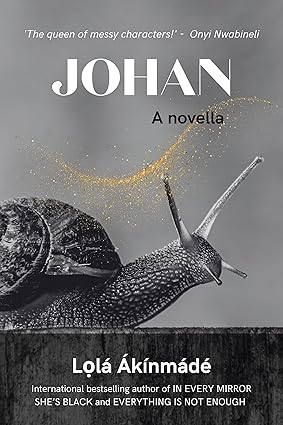

The novel follows Johan von Lundin, heir to a powerful Swedish dynasty, as he grows from a lonely, misunderstood boy into a complicated man whose desires often blur the lines between love, obsession, and control. Spanning decades, the story shows his struggles with privilege, identity, and intimacy, all while he chases Maya Daniels, the Jamaican-British girl who becomes both his anchor and undoing. It’s a portrait of a character both magnetic and unsettling, someone who wants nothing more than to be understood but rarely knows how to bridge the gap between his yearning and the world’s perception of him.
I found myself torn while reading this book. On one hand, the writing is sharp and immersive. The scenes have a way of pulling you in, whether Johan is crushing snails as a boy or running through the streets of London in pursuit of Maya. There’s a precision to the language that makes his world vivid. Yet at the same time, Johan’s mind is not an easy place to sit with. His intensity, his awkward silences, his fixation on control, it made me uncomfortable, but in that way where you can’t look away. It felt like being invited into someone’s private darkness, and part of me didn’t want to stay, but I did anyway.
What struck me most was the way the book makes you feel complicit. I kept questioning myself as I read. Why was I rooting for him in some moments when I knew his choices were troubling? Why did I feel a pang of sympathy for someone who could be manipulative and obsessive? That tension is the book’s strength. It doesn’t give you clean lines between love and possession, between care and harm. The book left me unsettled, even jittery, because it refused to give me the relief of easy answers.
I think this is a book for readers who crave complexity and aren’t afraid of messy characters who make you squirm. If you liked In Every Mirror She’s Black, you’ll appreciate how this novel expands that universe, offering Johan’s point of view in all its raw, often disturbing honesty.
Pages: 158 | ASIN : B0FJMZJ11Q

Beauty and Toughness
Splenditude follows a literary-minded woman coping with mental illness and looking for love and a fulfilling life in 1990s Chicago. What was the inspiration for the setup of your story?
Beginning the novel at an Irish wedding highlights Deirdre Collins’ ethnic and religious roots. Chicago is introduced in its beauty and toughness, foreshadowing that Deirdre’s expectations of a traditional trajectory for her life will be upended.
Did you plan the tone and direction of the novel before writing, or did it come out organically as you were writing?
I outlined the novel before I started to write it, using a Save the Cat format as a general guideline. Some plot changes were made during the writing, but I am more of a planner than a pantser.
There was a lot of time spent crafting the character traits in this novel. What was the most important factor for you to get right in your characters?
I wanted Deirdre Collins, the protagonist, to change from an unreliable narrator to a reliable narrator as she moved toward the positive. I also wanted to show Max Fletcher’s humanity in spite of his troubles and missteps.
Can we look forward to more work from you soon? What are you currently working on?
I am working on a short story collection which will be published by High Frequency Press next year, and a novel about children and gun violence slated for 2027.
Author Links: GoodReads | Amazon
Beyond Spoken Words

The Summer Knows is an emotionally layered novel about a single mother who returns to her hometown one sweltering summer to confront buried family trauma, a long-lost love, and the shadows of her past. What was the inspiration for the setup of your story?
I weaved my childhood experiences, growing up on the Southeast shore of Florida, into The Summer Knows. My eccentric and undiagnosed bipolar grandmother co-raised me alongside my mom and grandfather. I also had two best friends who were brothers, and they came to visit their grandparents, who lived down the street from me, every summer from age six until we all went to college. The Atlantic coast was always a backdrop for my childhood memories. It was fun taking elements from my growing up and creating a new fiction story.
Adrienne is an intriguing character. What were some driving ideals behind her character’s development?
I am always fascinated by coming-of-age stories, and so I wanted Adrienne to have that coming-of-age tale, and then we also get to see her return and face the aftermath of her coming-of-age summers. By running away so young, she never gets to resolve and heal until she is an adult. I wanted to capture that feeling of unfinished business that many of us experience as we transition into adulthood. I also wanted her to come to find some understanding as to why her grandmother was such a bitter and controlling person. This understanding allows Adrienne to free herself from the idea that she caused her grandmother’s misery. So many of us go around thinking we are the cause of other people’s problems, and that is a heavy weight to carry, when most of the time this idea is self-imposed. We see this ideal recur with her relationship with Quinn and Lucas, and her struggle to see herself as a chef.
What were some themes that were important for you to explore in this book?
Communication was a big theme I wanted to explore. None of the characters are very good at it, which is the cause of all the trouble in the novel. I wanted to examine different ways of communicating beyond spoken words, such as cooking meals and feeding each other, as a form of communication. Food becomes a mode for coaxing characters to communicate, to share things they have kept hidden, and ultimately a source of healing.
Place was also a theme I wanted to work with. I feel that the town and the natural world surrounding the story are almost characters. Harbor Point, South Road, the Atlantic Ocean, and the Back Bay are all deeply connected to each moment of the story, shaping how we perceive and understand the actions of the plot.
What do you hope readers carry with them after finishing The Summer Knows?
Not everyone is redeemed, and the girl sometimes does not end up with the guy, but we can get what we need when we realize the guilt and shame we have held onto is nothing but our own invention. That food and feeding people is an ancient form of communication with powerful healing properties.
Author Links: GoodReads | Facebook | Website | Amazon
Adrienne’s world is upended again when she gets the call that her eccentric grandmother has nearly burned down the family cottage. Adrienne has no choice but to return, and the town wastes no time in thrusting her back into the harsh limelight. When local fishmonger Christopher Crane offers Adrienne a chance to be the chef at the fish market her grandfather once owned, Adrienne might just figure out how to face the past and forge a new future.
Freedom Highway

Priscilla Speaks follows a young girl living in poverty who is cast out of her home at sixteen, leaving her to set out on the Appalachian Trail, where she meets diverse people who help her learn about life and relationships along the way. What was the inspiration for the setup of your story?
The answer is broader than you might have anticipated. I have thru-hiked the Appalachian Trail four times, and have found each journey to be life-changing or life-affirming. As a consequence, it is an element in much (although not all) of my fiction. I find the trail to be regenerative. Most who successfully thru-hike it or even hike long sections of it feel the same. It is the total immersion that does it, having one’s ego worn down by sweat and hunger and bugs until the real you is exposed. A long weekend on the trail won’t quite get one there.
Relating to the Speaks Saga as a whole, and Priscilla in particular for the moment, during Hike 3 in 2018 I hiked into a town for resupply, a town brought closer by a trail relocation and a town I’d never been to before, in an area where rednecks were known to harass hikers, and where I’ve personally witnessed hillbillies doing some pretty bizarre things. I was struck by the despair of the place before I’d even entered the town, considering the drug paraphernalia I spotted littering the curb. Once in the town, I encountered people almost unintelligible in their speech who volunteered the most offensive racist comments to a total stranger, and many of whom sported the missing teeth and cleft lips of heavy meth addiction. I couldn’t hike out of that town quickly enough.
I pondered as I continued my hike, wondering how one could wrest oneself out of that environment, then realized that the Appalachian Trail, an actual freedom highway, lay right at their doorstep. I conceived the first novel, Timewall Speaks, within the next hundred miles, and have used the Appalachian Trail as a means of escape for every character since.
Priscilla is born into a world of poverty, addiction, and abuse, but refuses to let that define who she is or who she will become. What was your process to bring her character to life?
I knew from the beginning that Priscilla might be the most complicated character in the Saga, and I had to reimagine her a few times before I felt I’d gotten her right. The epiphany came as I was writing Chapter Two, the fight scene, her brother injured, and I knew right then who I wanted Priscilla to be. I raced back, did a lot of re-writing, made Pris autistic and fearless, had her cut off her braid (probably spoilers in this), and evolved her into an outsider in her own family. Unknown to Pris, she is more like her mother at that age than she would ever want to accept, strong, unyielding, fierce, and in her own emotionally-numbed way, proud.
What were some themes that were important for you to explore in this book?
As always, that transformation from dysfunctional to emotional health, and that people are not defined by their circumstances, but defined by themselves. I wanted to demonstrate that it is possible to escape, despite the burdens that Pris carried. I have known people in similar circumstances who have rescued themselves, so Priscilla’s journey is not a stretch.
Will this series continue in another book, or are you working on a different story?
There will be one more novel in the Saga, The Family Speaks, in which a story arc covering fifty years will be brought full circle. I intended to end it there, although I have been encouraged by many to expand the Saga to incorporate some of the secondary characters. That might happen in the future, novels in a Speaks Universe if you will, but immediately after The Family Speaks (and a fifth Appalachian Trail thru-hike), I will begin work on some unrelated novels that have been nagging me for a few years now.
Author Links: Goodreads | Website | Amazon
In Book Four of The Speaks Saga, Blaize’s second daughter, Priscilla, born during the worst of her mother’s addiction, begins at an early age to count the years until she can escape the drudgery and boredom of her dismal, impoverished life, all the while watching as her older siblings leave one by one.
Cast out on her own at the age of sixteen, Priscilla ventures forth in search of an uncertain future while grappling with her sexuality and the phenomenal capacity of her mind. Using the Appalachian Trail as a means of escape, distracted from her obsessive nature by the day-to-day trials of the wilderness, her journey thrusts her into the company of diverse people who steer her toward a fuller understanding of the complexities of life and relationships. Through confounding emotions, heartache, and moments of grace, she is forced to confront mortality, love, and loss, all pointing her toward a staggering awareness of space and time.
With deliberate cunning, Priscilla does battle on her own terms, calling forth the hardened legacy of her family as she fights against the abuses she encounters in society.
Splenditude
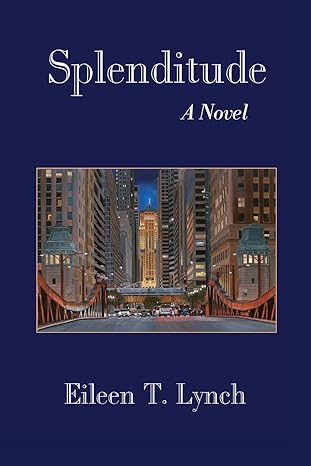
Eileen T. Lynch’s Splenditude tells the story of Deirdre Collins, a sensitive, literary-minded woman navigating love, mental illness, and the longing for a fuller life in 1990s Chicago. The novel traces her downward spiral into mania and depression, her struggle to find meaning, and her slow, painful climb back toward stability and purpose. Anchored by her deep interior life and longing to be a writer, Deirdre’s story unfolds against a vivid Chicago backdrop, with its smoky bars, biting winds, and old neighborhoods filled with ghosts and grit.
Lynch’s prose is rich and layered without being heavy. Her writing dances between lyrical and blunt, often in the same paragraph. I was struck by how intimately she renders Deirdre’s mind. Its sharpness, its fragility, its longing. The emotional rhythm felt honest. There are no neat bows here, no characters who say just the right thing. People disappoint and disappear. Love drips in awkward silences and backhanded compliments. I loved that. I also loved the humor tucked into the darkness, the literary references like secret handshakes, and the way Lynch pulls Chicago off the page like steam from a manhole.
There were a few moments when I found myself hoping for a slightly quicker pace or a smoother shift between scenes. The ending felt more like a gentle exhale than a grand finale, which may have been exactly the intention; life rarely ties itself up neatly. Still, that’s a small note in a book that, overall, truly stayed with me and moved me in ways I didn’t see coming. I found myself underlining sentences, re-reading passages, and pausing just to sit with what Lynch had unearthed.
Splenditude is a book for anyone who’s ever felt too much, thought too deeply, or tried to crawl their way out of a dark place with only stories and hope as their tools. It’s for readers who savor emotional honesty, who can live without tidy arcs, and who believe beauty and brokenness often walk hand in hand.
Pages: 234 | ISBN : 978-1962931199

Let Them

Until I Come Back for You follows a young girl, the youngest of five siblings, as her family escapes the dangers of Detroit and tries to build a new life in the countryside, only to encounter a menacing and violent new neighbor. What was the inspiration for the setup of your story?
That’s easy – my real life! My family really did leave Detroit in the early 70s, and my city-slicker parents really did buy a small farm on a dirt road in rural Michigan. The bad guy is fictionalized, but the setting and family characters are all real.
What was your approach to writing the interactions between characters?
For me, the key to dialogue is to let it come quickly, naturally, and not overthink it. Don’t argue with your characters – let them speak. Let them stutter. Let them mispronounce words. Because that is how humans talk. Dialogue should “play” in the readers’ heads as if they can hear it, and so it has to “sound” authentic. If a writer edits dialogue the same way she edits the narrative, you lose that authenticity.
How do you balance story development with shocking plot twists? Or can they be the same thing?
For story development, I’m an avid plotter. I map out the big parts of the story, the bones. For this story, I focused on “the event” and worked backwards to include everything that had to come before it. Then worked forward, writing all the consequences and fallout.
The plot twist(s) were afterthoughts that organically stemmed from the story. There is a writing rule: “Get your protagonist in trouble. Then get them in more trouble and more trouble.” When I did that, she really surprised me, and it was just my job to capture that.
What is the next book that you’re working on, and when can your fans expect it out?
For right now, I’m having so much fun with this book, I can’t even think about another. This was a bucket list goal for me, so I’m just allowing myself to revel in this moment.
Author Links: GoodReads | Facebook | Website | Instagram | Amazon
Right where she left it.
UNTIL I COME BACK FOR YOU invites you to wallow in the comforting nostalgia of the 1970s, a simpler time when there were only three TV channels, two colas, and one phone in the house. Smell the honeysuckle of lazy summer days; listen to sisters sharing whispers in bunk beds before drifting to sleep. Just when you get comfortable, you’ll find yourself stranded in a tree, dragged across a field, held down on a cold examination table. Taste the blood in your mouth from a lost tooth. Feel the breath of a predator on your neck. Hear the death rattle of a lost soul.
Follow one family’s history woven into the tattered fabric of the Midwest and witness one girl tear at the seams of girlhood, suspended between the generations of women who reinvented womanhood.
“What if ….”


The Secret Hamlet follows a brave and intuitive young woman gifted with a mysterious spiritual connection who gives birth to her daughter under extraordinary circumstances, causing her and her found family to seek a life away from the threats. What was the inspiration for the setup of your story?
It started with a “What if ….”. The ongoing barrage of news and media was woven with overwhelming stories around war. Brian starting thinking … Are women starting these wars? Are they involved in the planning? What if they did … and they were. Would the world be a different place today? Women aren’t the power brokers at the war tables. They, and children, are always the victims. What if women could have a deep and ongoing voice and strength?
Originally, more books were planned, but as we dove into it, multiple changes happened. More characters evolved. They spoke to us—even challenging some of the situations we wrote and the dialogue used. Skills started to surface in book 1, The Secret Journey that weren’t originally thought of, they just bubbled up as we wrote together—never in our minds in the beginning.
Brian had a first draft and joined forces with Judith, someone who had written several books and had an expertise in writing about women. Wanting to help Brian get the book done, the characters took her over, waking her at night. She was committed to completing the book, not realizing that they had a solid series in their hands.
We write differently from other partners. One of us will start a chapter in a Word document, then it’s Zoom time where Judith becomes the wordsmith and types away as they both talk, view, and verbally write together for a two or three hour stretch nonstop in a full collaboration.
Typically, we complete a chapter within one to two sessions. During those sessions, we banter back and forth as Judith writes and talk forward as to what we see is coming or needs to be created to fill a void that has bubbled up as we work together. What works here is we are both in the same place, with the same mind/talk think., bouncing live ideas off of each other … and then a “Yeah, that works…”
I found the characters in your story to be relatable and engaging. What character did you enjoy writing for?
Always Nichol and what we could do with her. The “what if she …” was a common phrase between the two of us. Nichol became part of us, almost like family—the one who bypassed fear did what needed to be done. Judith loves to describe her as a “badass young woman who can take down four men in one minute with a bow and arrow—something that was never imagined in the beginning. As Brian says, “Why not have a young woman do great things, unexpected things … why is it always the men in stories?” We let Nichol’s vision become the roadmap for us … often not knowing what she would reveal as the writing evolved.
The monk Timo was just this kind man who was open for Nichol to be what she was and would become. His nonjudgment has become a huge strength in her … and himself. Timo was always going to be a good guy and friend. We didn’t see him as a major character and he let us know he was and will be forward in the series.
Shadow, the wolf pup introduced in the first book, The Secret Journey, was a “bubbled up” storyline that became a major in all the books. As a protector of Nichol, she’s one smart wolf, reading sign language and anticipating Nichol’s and her children’s needs.
Was there one that was more challenging to write for?
Book 1, The Secret Journey introduced three cruel characters—Astrid the cruel mother, Fredric the vicious half-brother, and Priest Loupe who dripped with everything bad about the church. Astrid withers away in The Secret Hamlet, but we allowed Fredric and Priest Loupe to gather in building turbulence throughout and we planned deliciously for their downfall. What awful things could we do? You will see in Book 3 The Secret Rise!
What were some themes that were important for you to explore in this book?
Women are hot! Women can be smart … Women can get it done. Women can meet and handle challenges. And that working together works. The theme of family and caring for others, even when they are family, is important—for them and for self. The power of building a community and creating a gathering place where the glue can be spread and trust developed.
In the beginning of The Secret Hamlet, with Nichol and her family on the run from the greedy and evil Priest Loupe, she comes across a young woman in a daze who recently gave birth from a rape and not wanting anything to do with the baby. She and the infant were thrown away by the young woman’s family. Instantly grasping the situation, Nichol, on the run herself, promises her sanctuary and saying, “Your child will become my son. All I ask is that provide him milk until he no longer needs it. I will care for him with my infant daughter.”
Where does the story go in the next book, and where do you see it going in the future?
Empowerment runs through Book 3 The Secret Rise and the mystical Lady remains with her, her three children, and those she is in close contact with. Also scandal, tragedy, and triumph. Her strengths continue to grow and she now sees variations of them within her children. Nichol becomes a trusted advisor to Duke Richard—saving his life—and Shadow has pups, introducing them to become heroes and setting the stage for Book 4, The Secret Awakening.
Author Links: X | Facebook | Website
WINNER! American Fiction Awards … Fantasy Historial Fiction
Can the Hamlet of Harmonie Remain Hidden?
It’s the 11th century and Nichol with an infant daughter must escape Paris with her extended family. In Book 2 of the Harmonie series, The Secret Hamlet, the power of Nichol is turned loose. At her side is Shadow, her wolf-dog. In the bitter winter, she has become the target of the ruthless priest Loupe and her evil brother Fredric, both in pursuit of her and her daughter, Lucette.
With her expanding vision and skills coupled with the guidance of the Lady, Nichol leads her family, and those in need, to the creation and development of Harmonie. Hidden within the Kingdom of Normandy, Harmonie abuts No Name, another hidden hamlet.
Will the jeweled dagger stay in the hands of the rightful owner?
Will Nichol’s friendship with the new Queen of England benefit both?
Will the alliance with the Duke of Normandy protect the Harmonites?
Will more secrets be revealed by Nichol, Robert, Ezra, Helene, and Timo?
And … will the alliances last? Will the Lady stay by Nichol’s side?
The Secret Hamlet is Book 2 in the Harmonie series.
Authors Brian Barnes and Judith Briles weave a book series for the reader to open and fall into. It’s historical fiction that unravels the 11th century. Out of the darkness comes the empowerment of Nichol … a sanctuary, and the revelation of what women with vision can achieve.
The Secret Hamlet

The Secret Hamlet, the second installment in The Harmonie Books Series by Brian Barnes and Judith Briles, is a sprawling historical fiction novel that blends medieval intrigue, mystical elements, and family drama in a 1000 AD setting. The story follows Nichol, a brave and intuitive young woman gifted with a mysterious spiritual connection, as she gives birth to her daughter Lucette under extraordinary circumstances. As whispers of witchcraft and danger spread, Nichol, her husband Robert, and a group of devoted allies, including a loyal dog, a monk turned farmer, and a wise matriarch, are forced to flee, seeking safety in a secret land revealed to Nichol through visions. This is a tale of survival, belief, and the forging of a new community amidst threats from both church and state.
Reading this book pulled me into a richly painted world, and I often found myself surprised by how real the characters felt. The writing flows like a familiar story told around a fire. There were moments when the dialogue felt a bit modern for the time period, but honestly, that made it more personal. What stood out most was how the authors balanced the mystical with the grounded. I didn’t expect to care so deeply about a donkey named Moki or find a newborn’s connection to light so emotionally moving, but those scenes resonated with me. The pacing slows down at times with a lot of description, but the story always picks up again with a new challenge or twist that pulled me back in.
What I really appreciated was the heart behind the ideas. This isn’t just a book about a woman escaping danger. It’s about trust, rebuilding from nothing, and holding on to light when others call it darkness. The theme of found family shines bright throughout, and that really resonated with me. I also liked that the mystical “Lady” guiding Nichol isn’t explained too much. She’s a force, not a plot device. That restraint actually made her presence more powerful. The final chapters, where they start building their new haven, gave me chills. There’s real hope in those pages.
If you love historical fiction that leans into emotion and magic without turning into a fantasy epic, this book is worth your time. It’s perfect for readers who want strong women leads, tight-knit communities, and a little mystery wrapped in old-world charm. I’d especially recommend it to book clubs. There’s so much here to talk about, from gender roles to spiritual belief to survival under persecution. This is a warm, soulful book that doesn’t shy away from darkness but still manages to feel like a candle flickering in it. I closed it feeling deeply moved.
Pages: 428 | ASIN : B0CRXRD3JH


