Blog Archives
Hope

Terra Tamers: Alpha follows a teenager living in a city adrift at sea whose brother is kidnapped by a flock of Holo birds, and he will do whatever it takes to rescue him. What was the inspiration for the setup of your story?
The inspiration for the setup of my story was the idea of two brothers surviving a post-apocalyptic world. At first I was thinking kind of a science fantasy direction and leaned more into possible future technology instead.
In many contemporary coming-of-age fiction novels, authors often add their own life experiences to the story. Are there any bits of you in this story?
I’d say the tone of the book, the themes of pursuing hope in a decaying world are the parts of me that bleed through the pages. That and my love of video games.
What were some themes that were important for you to explore in this book?
The most important theme to me in Terra Tamers: Alpha was hope. Without it, there’s no point in continuing to live. I see the death of hope as the greatest poison affecting our modern world. People feel so powerless, and the world is so obviously broken, that now we struggle to even address the obvious issues we see in our communities because people feel hopeless, like nothing they do matters. So why bother? More fun themes were what the future of artificial intelligence could look like, how video games might interact with reality, and friendship.
Where does the story go in the next book, and where do you see it going in the future?
The story will follow Matt and Oakley into exile as they chase the evil AI Gaia. Expect new friends and foes, more creatures and game mechanics, and a greater exploration of a post-apocalyptic American landscape!
Author Links: Newletter | Website | GoodReads | Bookbub | X | Facebook | Instagram | Amazon | Pateron
– YA appropriate story (think 12 and older). Does have mild violence.
– First Person POV from male MC
– World Building (Post-apocalyptic), game design
– Monster taming and battles
– Short chapters, fast pace. Note the eBook is closer to 300 pages.
– Light LitRPG elements (I am working on a TTRPG system for Terra Tamers). Takes time to show up.
– No cursing unless you count H-E- double hockey sticks.
– Grayscale creature illustrations in the back!
I think fans of Digimon, Code Lyoko, Monster Tamer Academy, Maximum Ride, .hack//SIGN and similar stories which blend gaming, science fiction and compelling characters will enjoy Terra Tamers: Alpha!
Caroline’s Purpose
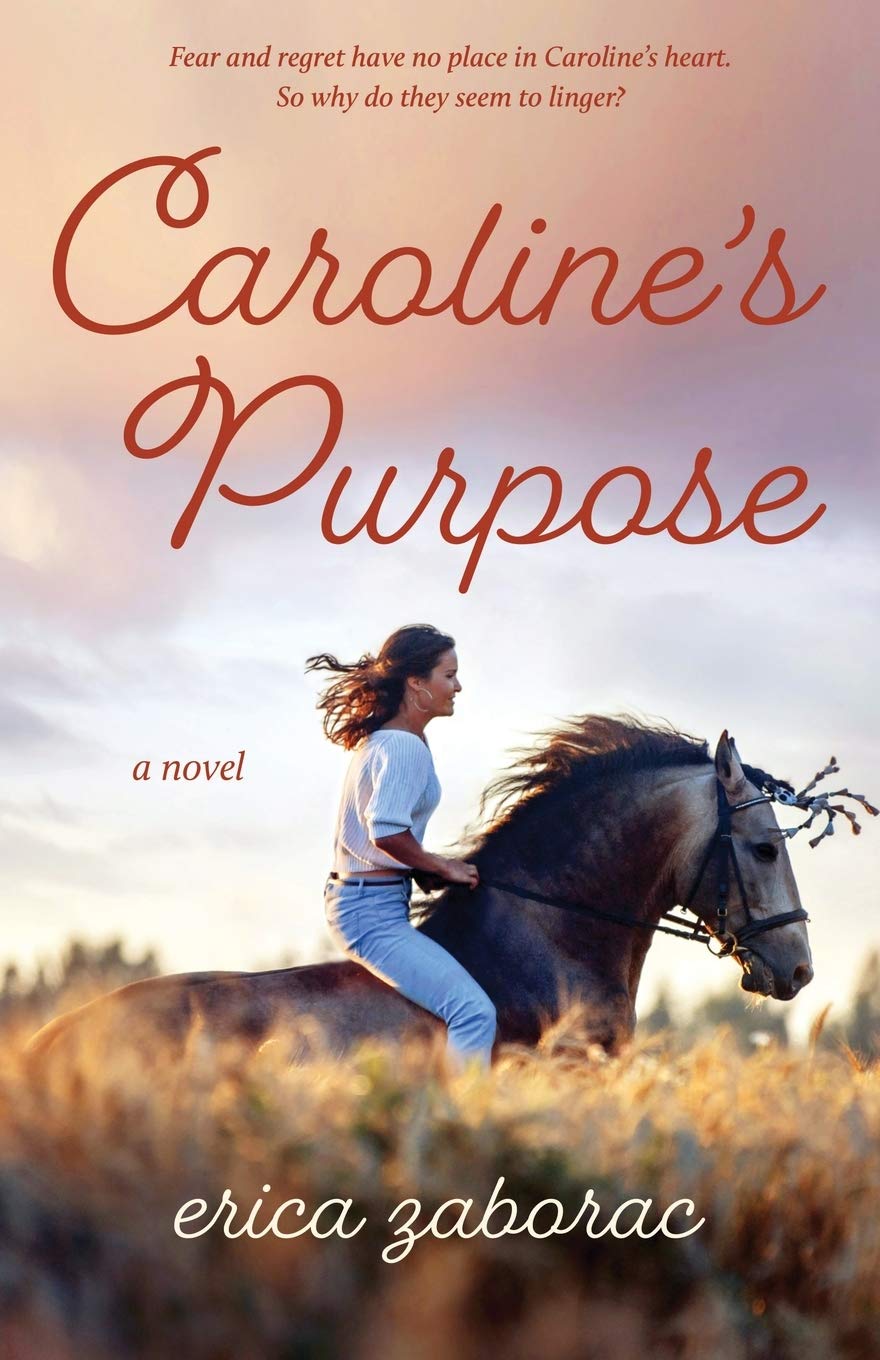

Erica Zaborac’s Caroline’s Purpose is a heartfelt coming-of-age story about loss, faith, and rediscovery. It follows Caroline Davis, a once-promising athlete and equestrian whose dreams are shattered by injuries and tragedy. As she navigates college, broken relationships, and haunting memories, she struggles to find purpose in a life that feels hollow. Through new friendships, reluctant encounters with horses, and a reawakened faith, Caroline slowly learns that healing isn’t about returning to who she was, but about embracing who she’s becoming.
I knew this book would be emotional right from the start. Zaborac writes with such sincerity that it’s hard not to feel Caroline’s pain right alongside her. The story never rushes her healing, and I appreciated that. Caroline’s fear, anger, and guilt feel raw, and they hit close to home. The writing is clean and direct, never flashy, and that simplicity lets the emotions breathe. I loved the moments with Luna, the weanling filly, those scenes carried a quiet grace that said more about healing than any speech could. The faith elements were woven gently, never forced, and they gave the story warmth instead of weight.
The dialogue is straightforward, and I admired how Zaborac balanced heartbreak with hope. Connor’s steady kindness and his belief in purpose grounded the story when things got heavy. The pacing dipped in a few middle chapters, but the emotional payoff near the end made up for it. The book reminded me how fragile and strong people can be all at once. It left me thinking about how pain doesn’t always end neatly, and maybe that’s okay.
I’d recommend Caroline’s Purpose to anyone who’s ever had to start over. If you’ve loved something, lost it, and had to figure out who you are without it, this book will speak to you. It’s perfect for readers who enjoy stories about resilience, second chances, and quiet faith. Caroline’s Purpose feels like a blend of The Lucky One by Nicholas Sparks and It Ends With Us by Colleen Hoover, but with a gentler heart and a stronger thread of faith running through its core.
Pages: 222 | ASIN : B08P57Z37B

Moral Awakening
Switch and Blue Eagle is a coming-of-age superhero novel where a young sidekick battles villains, expectations, and his father’s outdated ideals in a world that no longer sees justice in black and white. What inspired you to explore the father-son dynamic at the heart of the story?
It’s actually an element from my worldbuilding. When I first started doing this, I was inspired by the TTRPG Masks. When me and a gaming group I was part of were preparing to start a campaign in that, I looked over the basic information and saw that the ages of comic book history–the Golden Age, the Silver Age, and so on–were canon as Generations in Masks. So I decided to follow suit with in-universe Ages of Heroism. I’ve always loved the contrast between more serious, darker takes on superheroes and their lighter, more kid-friendly takes of old. So Blue Eagle and Switch ended up being the first two characters I created–along with Queen Venus and one more character that you can likely guess who it is if you read the epilogue–as a contrast between the Silver Age and the Modern Age of Comics and Heroism.
So, in my larger world, I have Silver Age characters and their values, I have Dark Age characters and their values, and I have the younger Modern Age characters trying to find their place in the world.
I know that sounds like an answer to a different question, but the father-son dynamic in this story was actually built from worldbuilding rather than character exploration, at least in the beginning. Once that foundation was built, I started asking myself, “What would people from different Ages of Heroism disagree on when it comes to superhero-ing? What differences would a superhero from each era of comics have, like Superman of the 1950s and Rob Liefeld’s Youngbloods characters in 90s Image Comics, and today’s teen heroes like Miles Morales and Kamala Khan? What complications would those differences create when the people who have those differences also have a father-son and superhero-sidekick relationship? What are some real-life, dare I say political, equivalents to those disagreements?” And this was ultimately my answer.
Jack often questions what makes someone truly “good.” How do your own views on morality shape the story?
Haha, when I was a dumb, edgy 20-something, I really hated Superman (now that I have a fully functioning frontal lobe, I’m now a huge Superman fan). I thought he was way too powerful to have good stories with suspense and stakes, but I also hated how he was essentially a paragon of perfect morality. It was like being super strong allowed him to dictate what was right and wrong. One thing I always said was that, unless a hero possesses “super-morality” as an actual superpower, they have no more credibility on morality and ethics than anyone else.
I now see Superman in a different light, but Blue Eagle represents that part of the old me that was right. That feeling that those in power—churches, pundits, corporate compliance departments—shouldn’t get to dictate what is right and wrong just because they have societal power. A conservative media influencer has no grounds to determine that trans people are immoral while saying nothing about school lunch programs being defunded; a company shouldn’t be able to say an employee having outside income is a conflict of interest while it funds destructive pipeline construction on sacred indigenous land; an elected official shouldn’t be able to say that the presence of migrants is immoral criminal behavior while they take bribes and makes laws that help their rich friends at the expense of education, healthcare, and the environment.
Switch, on the other hand, represents in his teens the moral awakening I didn’t have until my thirties. That society has a real responsibility to lift up its “lowest” and give people real chances to succeed. People don’t succeed in life on their own. We all have support from family, friends, community, and institutions. And when those systems fail people, they are left with paths in life that we would never choose for ourselves. So instead of using force to punish those we deem to be immoral, rightly or wrongly, I believe there is a duty for society at large to ensure that we all have the tools to live happy, dignified lives.
It was that moral conflict that I wanted to place at the core of Blue Eagle and Switch’s disagreements. The father-son conflict and Switch’s desire for independence aside, there is a difference regarding the moral responsibilities that come with power.
The book blends superhero action with introspective realism. Did you set out to challenge typical comic tropes from the start?
Not really. This is another thing born from worldbuilding. This is not the first story I’ve written in this universe, only the first one that I’ve published. And even before I decided to write SWITCH and Blue Eagle, the Blue Eagle Universe, as I call it, was always a superhero universe played mostly straight. It certainly plays with, satirizes, celebrates, and challenges, as you say, comic tropes as well. But it also is one played straight, meant to exist alongside the Marvel, DC, Image, Astro City, Valiant, and other shared universes.
If anything, I would say that the world this book is set in is less “What if superheroes existed in the real world?” and more “What if realistic people existed in a superhero world?”
Jasper’s subplot humanizes the villains. Was it important for you to blur the line between hero and antagonist?
Not really. Not for this book, at least. That’s because I don’t really view Jasper as an antagonist, but one of the two main characters. He just works for the bad guys. The actual antagonists of this book—other than any high-minded literary concept like “Switch’s inner struggles” or something—are the villains. Queen Venus is the primary antagonist, which is fitting as she is the primary member of the Blue Eagle Rogues Gallery.
Actually, the idea for Jasper and the broad spot he sits between the two conflicting ideological positions presented was inspired by a movie I saw from 1990. It was a very high-brow, snooty, underground arthouse film you’ve probably never heard of, called Teenage Mutant Ninja Turtles. Haha. But seriously, in that movie, there are two characters in that film whose fate is really the thematic center point of the movie, and that’s Charles and Danny Pennington. Fatherhood and family are the central themes of that film, with the Turtles and Splinter representing a nurturing and loving family and Shredder and the Foot Clan representing harshness and distance. They present two sides of it, while the Penningtons are teetering on the fence. In the end, they fall into the Turtles’ side, reuniting and beginning the process to reconcile and become closer.
Broadly speaking, Jasper is the same as the Penningtons. Switch believes in societal responsibility and rehabilitation, while Blue Eagle touts personal responsibility and tough love. Jasper’s the case study to prove one of them right and one of them wrong.
Author Links: GoodReads | BlueSky | Facebook | Website | Amazon
Switch the Blue Eaglet is the son and teen sidekick of Blue Eagle, one of Herald City’s top superheroes. But being a sidekick isn’t all glory. Switch is tired of living in his father’s shadow, tired of his strict rules, and tired of being told he’ll never be strong enough to stand on his own.
Jasper Clemens is just another faceless villain henchman. All he wants is to get out of the criminal business. But his debts to the mob keep piling up, and he’s stuck taking the riskiest jobs in order to protect his family.
When a dangerous supervillain launches her deadliest scheme yet, it’s up to Switch and Jasper to stop her. Can Switch prove to the world he’s more than just a sidekick? Does Jasper have what it takes to be a true hero?
Or is Herald City doomed?
Perfect for fans of coming-of-age superhero tales, this short novel delivers action, heart, and a fresh twist on what it really means to be a hero.
Don’t miss this adventure of SWITCH and BLUE EAGLE!
SWITCH and Blue Eagle: A Superhero Sidekick Novel is a short prequel to my main series currently under development, SWITCH and the Challengers Bravo, and the introduction to my larger superhero world of Herald City. It has two focus characters. There is Switch the Blue Eaglet, the sidekick of Blue Eagle, who deals with the self-doubt that comes with the constant criticisms he gets from his father, as well as his unreliable powers. He wants to eventually become a superhero on his own, but he feels the need to prove his worth first. And then there is Jasper Clemens, a supervillain henchman who wants to get out of the business. But his debts to the mob keep piling up, and the only way to keep his family safe is to take on more and more dangerous jobs. And in the background of all of this, Queen Venus, the archenemy of Blue Eagle and Switch, is sprouting her deadliest plan yet and the whole world might be at stake.
Trigger warnings include fantasy violence, father-son family drama, and mob debt.
Not Just Another Brick in the Wall


When I started reading Not Just Another Brick in the Wall!, I expected a typical high school drama. You know the type: sports, crushes, maybe a few fights in the hallway. But this book surprised me. It’s more layered than that. It’s about a group of teens trying to hold on to friendship while life starts showing its teeth. Cali Snipe, the main character, is just beginning ninth grade, nervous and curious and trying to stay grounded while the world around her keeps changing. There’s romance, a bit of danger, even a thread of mystery that creeps in when you least expect it. The story shifts between lighthearted teen moments and dark undercurrents that make you stop and think.
What really stood out to me was how the book captures the in-between. Those moments when you’re not quite a kid anymore but not yet an adult. The writing feels like memory. It’s full of chatter, inside jokes, awkward pauses, and those tiny details that make teenage life feel real. I could see my own high school self in the mix, nervous before the first day, wondering who to sit with at lunch, pretending not to care when I cared too much. The book nails that feeling. Sometimes it wanders, sometimes it circles back, but that’s exactly how being young feels.
I also liked that the story isn’t afraid to show adults in gray shades. The teachers and parents aren’t just background noise. Some are kind, some are creepy, and some are both. That part hit me harder than I thought it would. It reminded me that growing up means realizing not everyone who’s supposed to protect you always does. I won’t spoil the darker turns, but the tension builds quietly and sticks with you after the last page. It’s the kind of discomfort that makes you think about how fragile trust can be.
In some ways, Not Just Another Brick in the Wall! reminds me of the emotional honesty in Judy Blume’s coming-of-age novels and the raw realism of S. E. Hinton’s The Outsiders. It has that same heartbeat of youth and rebellion, but with a modern voice that feels closer to Laurie Halse Anderson or Sarah Dessen, writers who don’t flinch from showing how messy growing up really is. Like those authors, author Richard Read doesn’t just tell a story about teenagers; he lets them stumble, speak, and learn in their own rhythm. The book fits comfortably beside classics about adolescence and identity, yet it still stands apart with its mix of small-town grit and genuine warmth.
Pages: 236 | ASIN : B0DNXYKZKX
Brutal Disclosure

Brutal Disclosure is a gritty, emotionally raw thriller that follows Declan O’Neill, a young man from Brighton whose world collapses after the mysterious death of his brother, Sean. Fleeing the suffocating poverty, crime, and guilt of his past, Declan escapes to New York in search of reinvention. What he finds instead is a world equally unforgiving, one full of hustlers, danger, and fleeting kindnesses. The book is both a crime story and a character study, tracing Declan’s struggle to survive and make sense of loss while navigating the dark edges of human nature. Author Kevin Polin writes with cinematic detail, turning each grimy alley and smoky bar into a character of its own.
Reading it, I felt pulled into Declan’s head. His fear, his anger, and his yearning for meaning hit hard. Polin doesn’t write clean or polite sentences. His prose feels lived-in, raw, broken in places, honest to a fault. The dialogue sounds real, almost like an overheard conversation. There’s a deep sadness running through every chapter, but it’s balanced by moments of unexpected gentleness, especially in Declan’s encounters with Isabella and the people who briefly pass through his life. Polin never romanticizes suffering, and that makes the story hit even harder. The writing reminded me of early Irvine Welsh or Roddy Doyle, where every bit of grime carries weight.
It’s dark, sometimes brutal, and not every turn feels comfortable. But that’s the point. Polin’s world is painfully real, the kind of truth you don’t want to admit exists. Still, there’s something human and tender at its core. Declan’s longing to become someone better, someone whole, kept me turning the pages. I caught myself caring about him like he was a real person, stumbling through a place that doesn’t care whether he makes it or not. The pacing sometimes lags when the scenes stretch long, but Polin’s eye for detail makes even the quiet moments matter.
I’d recommend Brutal Disclosure to readers who appreciate dark, character-driven fiction, readers who liked Trainspotting or A Clockwork Orange, or anyone drawn to stories about lost souls trying to find a way out. If you want something that feels real, something that bleeds a little, this one’s worth the ride.
Pages: 280
Blade Rider
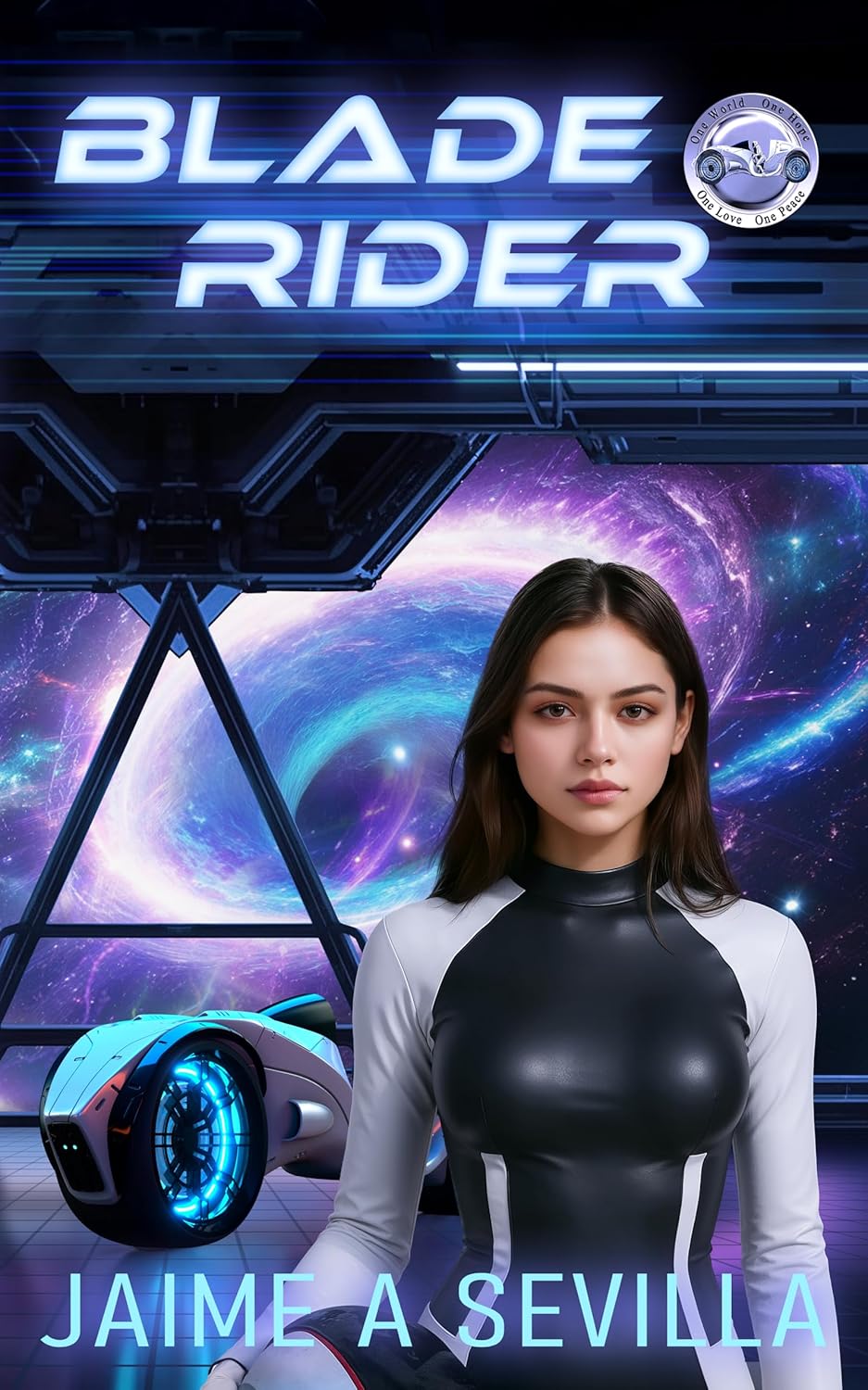
Blade Rider is a wild ride through stars, steel, and heart. The story follows Raven Pierce, a young woman chasing her dream of becoming an Air Ranger in a universe where courage is as rare as the gemstones mined from distant planets. The book blends sci-fi adventure with coming-of-age grit. It starts on the luminous planet of Aurora and soars through trials, rivalries, and the fire of ambition. There’s high-speed action, moments of calm beauty, and a deep pulse of hope that runs through every page. What makes it shine is not only the futuristic flight scenes but the emotional gravity that keeps Raven’s journey grounded.
The writing moves like music, lyrical and cinematic, yet simple enough to feel real. Sevilla doesn’t just describe light or sound, he paints them, fills the air with them, makes you feel the hum of engines beneath your skin. The pacing is deliberate, but I didn’t mind. Those quiet chapters gave the story its soul. There’s a rhythm between tension and tenderness that feels intentional. I could sense the author’s musical roots in every scene. The prose often felt like verses from a song, full of rhythm, breath, and longing. I caught myself smiling, even tearing up, when Raven faced her doubts or looked up at the stars she was born to chase.
The ideas in this book resonated with me. It’s about finding purpose when the world tells you you can’t. It’s about identity, resilience, and the fire that keeps dreamers alive. The world-building is big but personal, the characters flawed yet fiercely human. I loved that it wasn’t just lasers and engines, it was belief and persistence. There’s something deeply nostalgic in its optimism, almost old-fashioned in the best way. It reminded me why stories about flying still make our hearts race.
I’d recommend Blade Rider to anyone who ever wanted more than what they were handed. If you like sci-fi that carries heart, or if you’ve ever stared at the night sky and wondered what’s out there, this book is for you. It’s for dreamers, for the stubborn ones who don’t give up, for those who still believe in the power of hope.
Pages: 344 | ASIN : B0FX8QJYYJ

ZOEY WONDERS WHY AND THE GREAT CATASTROPHE
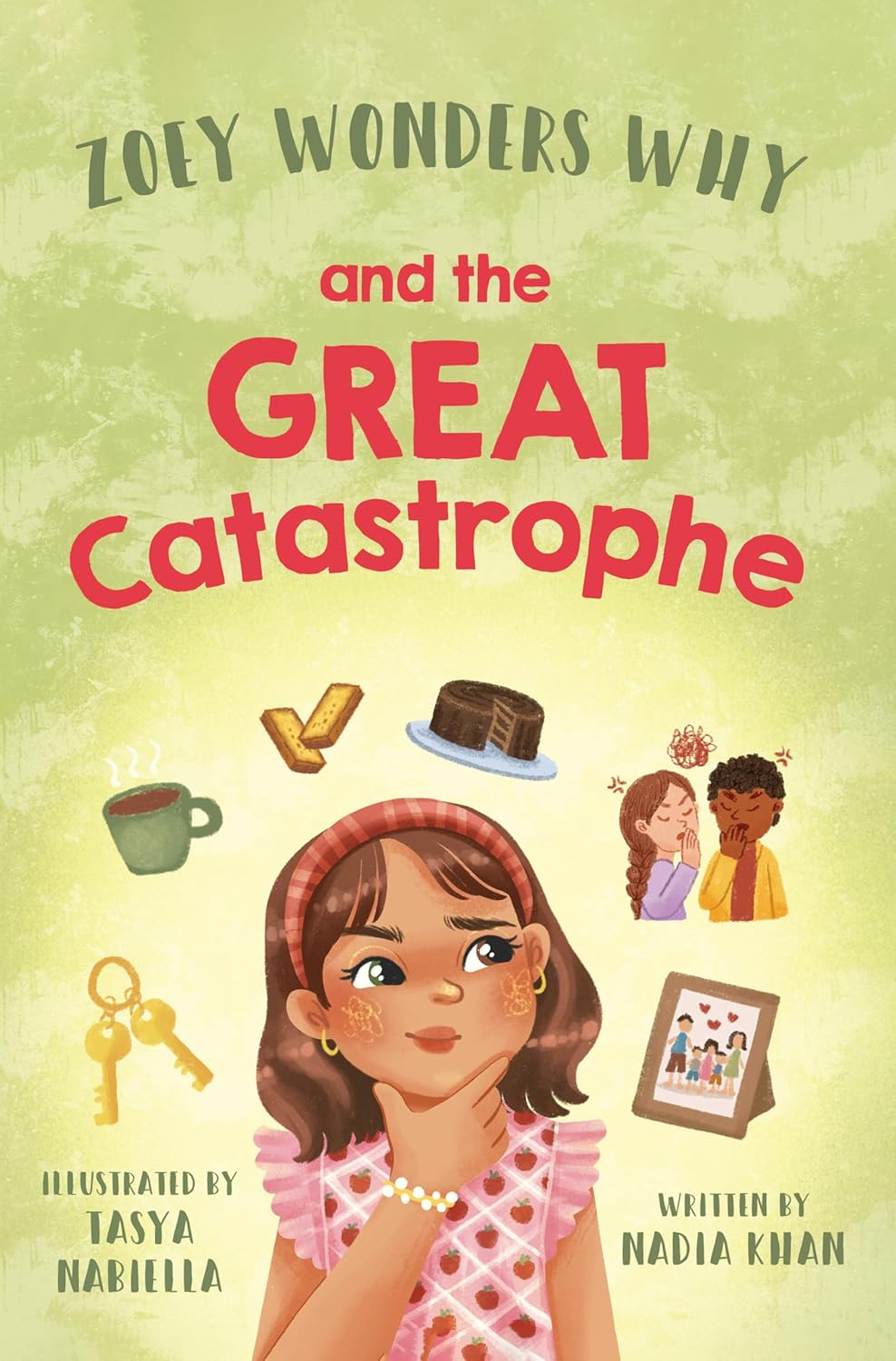
Wow. This book really pulled me in. Zoey Wonders Why and the Great Catastrophe tells the story of Zoey, a curious and bright fifth grader who’s just trying to make sense of life, friends, family, and growing up. She’s excited about turning ten, planning the perfect birthday party, and figuring out who her real friends are. Then, her world shifts when her dad suddenly loses his job. What follows is a story about change, love, and finding gratitude even when life feels upside down. It’s packed with little lessons, family warmth, and delicious food scenes that made me hungry more than once.
I honestly didn’t expect to feel so attached to Zoey and her family, but I did. The writing feels like a conversation with a friend. Zoey talks to “you” (the reader) like you’re part of her world, which makes the story feel personal and cozy. I loved how she learns to handle tough emotions, like disappointment, confusion, and sadness, without it ever getting too heavy for a kid’s story. The mix of humor, sibling chaos, and heart-to-heart family moments feels real. I also liked how the book sneaks in little lessons about empathy, money, and resilience without sounding preachy. It’s smart and warm at the same time.
There were moments that hit me harder than I thought they would. The scene where Zoey finds out about her dad losing his job? My chest actually tightened a bit. And when she decides that family is more important than fancy parties, that one stuck with me. The writing is simple but full of heart. I loved the illustrations strewn throughout the book. They draw the reader in with warm, vibrant colors and expressive characters.
I’d totally recommend this book to kids around nine to thirteen, especially anyone who’s been through change or family struggles. Parents could read it with their kids too; it’s a great way to talk about feelings, money, and what really matters. If you like stories that make you smile, think, and maybe tear up just a little, this one’s for you.
Pages: 119 | ASIN: B0FN7CL6PC
Powerful Tools for Storytelling

Wing Haven follows a fairy who finds herself queen after being betrayed by her sister, and along with some unlikely allies, enters into a dangerous adventure. Where did the idea for this novel come from?
I looked on Submittable for short story and flash fiction writing contests because I think it’s a good way to flex your writing muscles, and saw one which must have had a fairy or forest theme. I hit the word count limit and had so much more to say about Almond’s journey that I just kept going.
There was a lot of time spent crafting the character traits in this novel. What was the most important factor for you to get right in your characters?
I think archetypes are powerful tools for storytelling, and each character has a role: the hero, the sidekick, the love interest, the comic relief, the villain, the muscle, etc. In Wing Haven, the hero is a fairy, the sidekick is a chipmunk, the comic relief is insects—and they have motivations and quirks corresponding with their roles in the story that I hope draw the reader into a suspension of disbelief that allows them to go along for the ride.
What were some themes that were important for you to explore in this book?
Some of Wing Haven’s most important themes are self-reliance, chosen family, and acceptance. Almond must learn to live outside of the regimented Fairy Nook, where there are no rules or safety nets, but also learns to trust the creatures she befriends. They’re a ragtag group of very different creatures who accept each other as they are and appreciate each other’s strengths.
Can fans of Wing Haven look forward to more work from you soon? What are you currently working on?
I am excited to share that I’m working on my first closed circle murder mystery, but I also have ideas for more adventures for the Wing Haven crew, so sign up on my website for updates.
Author Links: GoodReads | Facebook | Website | Amazon



 LITERARY TITAN