Blog Archives
A Magical Discipline

Kit’s Awakening follows a young noble heir through a childhood shaped by fear and control and into a world where magic is a discipline that demands pain, focus, and comes with a price. Where did the idea behind this novel come from?
The core of Kit’s Awakening came from a deeply personal place. I wanted a way to explore and share the very real experiences of trauma, control, and hardship, but deliver them in a way that was compelling, visceral, and engaging for a fantasy reader. By translating the emotional and psychological weight of those real-world struggles into a magical discipline, where power demands an actual, tangible price, I could ground Kit’s journey in genuine human resilience. It’s a fantasy novel, but the emotional survival at its heart is very real.
Did any books, games, myths, or historical influences help shape the world of the novel?
I’ve been inspired by many books and games over the years, but a few key influences heavily shaped the world of Kit’s Awakening. Emotionally and psychologically, I drew a lot of inspiration from the character depth of FitzChivalry Farseer from Robin Hobb’s work, as well as Azoth’s grueling journey in Brent Weeks’ Night Angel trilogy. Both characters brilliantly showcase what it means to survive an unforgiving, high-stakes environment. For the magic itself, I wanted something rigorous and analytical, which led me to draw from the clever progression found in Mother of Learning, combined with the tactical structure and variety of Dungeons & Dragons.
Found family becomes increasingly important as the novel progresses. Why was that theme significant to you?
Because for me, found family is the only truly real thing in the world. As I mentioned, the inspiration behind this book hits very close to home. When your early life is shaped by fear, control, or hardship, the family you are born into isn’t always a safe harbor. Found family is about choice, trust, and unconditional protection. Writing that theme into Kit’s Awakening was essential because Kit needed to learn what I have learned: that the bonds we forge ourselves, out of love rather than obligation or transaction, are the ones that actually save us.
If you could spend one day with any character from Kit’s Awakening, who would it be and why?
It’s a toss-up between two characters, for very different reasons. On one hand, I’d want to spend the day with Kit himself, if only to look him in the eye and tell him that eventually, it will get better, that the pain has a purpose and he will make it through. On the other hand, I’d love to spend a day with Sarah, the young servant girl he spends time with. She is just a genuinely kind, warm, and lovable person. In a world as harsh and dark as Kit’s, getting to sit down with someone who represents pure, uncomplicated goodness would be a wonderful breath of fresh air.
Author Links: GoodReads | Website
A dark progression fantasy about a broken mind turned into a weapon.
His father tried to break his body. To survive, Kit Landon rewrote the rules of his mind. At eight years old, Kit is the sole heir of the “Butcher” a man determined to forge the perfect successor through pain, isolation, and control. But when Kit’s mother dies, the brutal training stops. The attention vanishes. And the boy left behind is no longer a son, just a discarded experiment.
His only refuge is Cowl, a reclusive mage with a dark past tied to the Landon bloodline. Under his guidance, Kit’s greatest curse reveals itself as something far more dangerous.
Where most magi learn to partition their thoughts, Kit goes further, fracturing his consciousness into sentient, semi-autonomous Vestiges.
He creates an Emotional Vestige to carry his pain. Logical Vestiges to process and plan. A system of survival built from the ruins of his own mind.
But as political intrigue turns the Landon estate into a slaughterhouse, Kit is forced to rely on the very thing that’s keeping him together. In a world where power is earned, refined, and taken, Kit’s evolution may cost him the last pieces of himself.
Perfect for fans of Mother of Learning and Robin Hobb’s Farseer Trilogy.
The story continues in Kit’s Crucible, available now on Amazon!
5 Steps You Must Take to Win the Battle of the Mind


5 Steps You Must Take to Win the Battle of the Mind, by Joe Roach, is a Christian guide to confronting fear, anxiety, doubt, racing thoughts, and depression through the lens of spiritual warfare. Roach frames the mind as a contested place where lies must be recognized, resisted, and replaced with biblical truth. The book moves through five steps: understanding the battle, acknowledging troubling thoughts, identifying the enemy’s lies, guarding the mind with Scripture and gratitude, and building a disciplined daily rhythm of prayer, meditation, devotion, and thought inventory. Along the way, it folds in biblical stories, practical exercises, a “Power in Your Pocket” section of truth cards, and a thirty-day devotional meant to help readers carry the teaching into ordinary mornings, anxious nights, and repeated inner struggles.
I appreciated the book’s insistence that thought patterns matter deeply, not in a vague self-help sense, but as part of a spiritual and emotional life that requires attention, honesty, and practice. Roach is at his strongest when he gets close to the lived experience of mental battle: waking with racing thoughts, feeling accused by old labels, or needing something steadier than willpower when fear starts circling the room at night. The suggestion to write down looping lies, replace them with Scripture, and keep truth close in tangible form, even on simple 3×5 cards, has a humble practicality I found moving because it’s usable. There’s also a welcome generosity in the chapter on medication, where the book avoids treating medical support as a failure of faith and instead allows room for God to work through professionals, treatment, prayer, and slow healing together.
The writing is earnest and direct. The Q&A sections are useful, especially for readers new to spiritual warfare. There’s sincerity here that’s hard to dismiss. Roach writes like someone who wants readers to stop being bullied by their own inner darkness, and that urgency gives the book its pulse.
I came away from Win the Battle of the Mind with respect for its pastoral seriousness and its belief that freedom is cultivated through daily surrender, not dramatic shortcuts. Its best moments are practical, compassionate, and bracingly clear: identify the lie, speak the truth, return again tomorrow. I’d recommend it especially to Christian readers who want a Scripture-centered, action-oriented approach to anxiety, negative thinking, and spiritual discipline, particularly those who find comfort in devotionals, guided routines, and concrete tools they can use throughout the day. This is a book for believers who don’t merely want to understand the battle of the mind but want to begin fighting it with steadier hands and renewed hope.
Pages: 209 | ASIN : B0G5261VHZ

Lilli’s Question

Lilli’s Question follows Jim McGann, a young American seminarian whose brief, luminous encounter with a German woman named Lilli leaves him with a question he spends his life trying to answer: why be a priest? What begins as an intimate memory from a bus trip through Europe widens into a decades-long reckoning with vocation, grief, love, Catholic hierarchy, and moral courage. Jim becomes a priest, suffers the shattering loss of his brother Tommy in Vietnam, wrestles with celibacy and desire, rises through the Church, and finally finds his answer by using his authority to challenge the exclusion of women from the priesthood.
I was struck by how patiently this novel lets a life accumulate. The book is not hurried toward revelation; it gathers weather, meals, old friendships, liturgies, landscapes, jokes, silences, and losses until Jim’s final act feels less like a plot twist than the slow ignition of everything he has lived. O’Neill writes especially well about the Catholic imagination, not as a set of abstractions but as a tactile world of incense, vestments, parish kitchens, funeral prayers, institutional politics, and private doubt. The scenes around Tommy’s death are devastating because they refuse easy sanctity. Jim’s grief is raw and unbeautified, and the book is strongest when faith and fury are allowed to occupy the same pew.
I appreciated the novel’s moral seriousness without pomposity. Jim can be reflective, even theological, but he is also funny, embarrassed, lonely, and frequently bewildered by the turns his own life takes. The women in the novel, especially Lilli, Jeannie, Sally, and Anna, are not merely stations on his spiritual journey; they are the voices that press him toward honesty. The novel’s discursiveness may test readers who prefer a tighter, more conventionally dramatic structure, but I found its spaciousness fitting. This is a book about conscience forming over time, and conscience is rarely efficient. It moves by detour, recurrence, ache, and sudden clarifying flame.
This is an ideal novel for readers of historical fiction, spiritual fiction, and character-driven coming-of-age stories that stretch across a lifetime. Readers who admire Graham Greene’s fascination with faith under pressure may find a gentler but no less searching companion here, one more interested in vocation as a lived tenderness than as a battlefield of damnation. Lilli’s Question is a thoughtful and tender novel about the cost of answering a question honestly.
Pages: 270 | ASIN : B0H3M7BQ1F
Secrets of the Sea: The Prophecy


Amanda L. Vasquez’s Secrets of the Sea: The Prophecy is a heartfelt underwater fantasy about duty, healing, and the difficult work of becoming the person you’re called to be. The story follows Kalama as she moves closer to becoming a Guardian, a protector of the reefs, while also facing the pain she’s carried from her childhood on O’ahu. Around her, kingdoms gather, old romances return, prophecies awaken, and a dangerous creature named Taniwha rises from the deep. It’s a big, ocean-spanning story, but at its center is Kalama trying to understand what protection really means.
The book works best as a character-driven fantasy with strong family and friendship bonds. Kalama’s relationships with Tai, Tamatoa, Cornelius, Kane, Ona, and her royal family give the story warmth, especially when the plot grows heavier. Tai’s early transformation into a Guardian sets the tone beautifully, especially when he says, “I feel complete.” That line captures what so many characters are searching for in this book: a sense of purpose, belonging, and peace with the path ahead.
Kalama’s journey is the emotional core of the novel. Her trial isn’t just about power or bravery but about returning to the place that hurt her and learning how to protect it without denying what happened there. The book treats forgiveness as something complicated and active, not something easy or instant. That gives Kalama’s growth real weight, especially as her personal healing connects to the larger need to restore balance between land, sea, humans, merpeople, and the reefs.
The worldbuilding is generous and colorful, filled with royal courts, sea creatures, Guardians, Oceanriders, ancient songs, and cultural ties to Pacific island settings. The Jellyfish Celebration is one of the most memorable sections, and Kane’s vision gives the story a sense of urgency that reaches beyond one kingdom. The Hawaiian proverb Kalama remembers, “Pūpū Kāhi i Holomua,” translated in the book as “Unite in order to progress,” fits the whole novel well. This is a story about kingdoms learning that survival depends on trust, cooperation, and shared responsibility.
The Prophecy is an earnest and faith-touched fantasy adventure with a strong environmental heart. It blends mermaid lore, royal drama, prophecy, romance, and coming-of-age themes into a story that cares deeply about the ocean and the people connected to it. Readers who enjoy sincere fantasy with big emotions, brave young leaders, family loyalty, and a clear moral center will find a lot to appreciate here.
The Stonecaster


The Stonecaster, by Dillon W. Buck, is a modern parable about James, a sensitive boy who receives a mysterious stone that changes color according to the state of his heart. Through childhood wounds, college temptation, heartbreak, work, leadership, marriage, grief, faith, and entrepreneurship, James learns that life is shaped less by what happens to him than by the quality of his response. The stone becomes less a magical object than a mirror, teaching him that every choice sends ripples outward.
I appreciated how the book uses a simple allegorical device without letting it become merely decorative. The color-changing stone could have felt too tidy, but Buck gives it emotional utility: blue for peace, red for misalignment, gold for purpose. It becomes a private weather system, a way for James to notice what he is carrying before he releases it into the world. I was especially drawn to the early chapters, where James’s pain as a misunderstood child is rendered with enough tenderness to keep the lesson from feeling sermonized. The book is at its strongest when it lets discomfort sit on the page before translating it into wisdom.
What also stayed with me was the book’s insistence that growth is not a single luminous breakthrough, but a repeated return. James fails, forgets, chases the wrong things, confuses intensity with love, and mistakes validation for worth. That gave the story some necessary grain. I found the later sections more openly instructional, and at times the parable edges close to motivational speech, but its sincerity carries it through. The most affecting movement is James’s shift from striving for worth to living from it. That idea gives the book its spine, and it turns the final chapters into something calmer than triumph: a kind of earned stillness.
Readers who enjoy inspirational fiction, personal growth books, leadership parables, faith-based self-help, and coming-of-age stories will find The Stonecaster inviting and useful. It belongs beside books like Paulo Coelho’s The Alchemist or Andy Andrews’s work, though Buck’s focus is less on destiny as a far horizon and more on the daily discipline of response. This is a book for readers who want a story that behaves like a compass, gently but persistently turning them back toward intention. The Stonecaster reminds us that the life we build begins with the ripple we choose to send.
Pages: 119 | ASIN : B0H1N8BWDL
Nebraska Avenue

Nebraska Avenue follows Vinny Perino, a Brooklyn boy newly transplanted to North Bay Shore, Long Island, during the bicentennial summer of 1976. Lonely, uncertain, and out of step with suburban rhythms, Vinny finds his way into a circle of paperboys, Artie, Wally, Franco, Lenny, Curtis, and Gabby, whose days revolve around Newsday routes, baseball, fireworks, neighborhood codes, and the small but momentous dramas of being thirteen or fourteen. What begins as a story about a new kid learning how to belong becomes a warm, funny coming-of-age tale about friendship, nerve, loyalty, and the strange civic order of childhood.
I was quickly won over by the book’s comic patience. Author Vincent Rubino doesn’t rush past the details; he lingers over milk crates tied to handlebars, grape juice in the fridge, paper shacks, banana-seat bikes, pink suburban houses, and the private laws that govern kid society. That accumulation gives the novel its charm. The humor has a wonderfully local flavor, often built from banter, mock-serious debates, and the ornate logic of boys who think they are businessmen because they collect newspaper money on Saturdays. I especially enjoyed how the novel treats childhood not as a soft-focus postcard but as a bustling republic with its own economy, rituals, grudges, and heroic nonsense.
What surprised me most was how much feeling Rubino draws from ordinary adventures. The book is nostalgic, certainly, but not embalmed in nostalgia. Vinny’s homesickness gives the story a tender undertow, while the friendship that forms around him feels earned rather than preordained. Artie’s quick mouth, Wally’s steadiness, Gabby’s sharp presence, and Mr. Raviola’s role as both boss and neighborhood fixture give the story a generous ensemble feel. By the time the plot turns toward burglaries, suspicion, and a paperboy-led scheme to clear Mr. Raviola’s name, the stakes feel just right: large enough to matter deeply to the kids, small enough to remain true to the world they inhabit.
I think the book is ideal for readers who enjoy coming-of-age fiction, historical fiction, humor, and middle-class suburban Americana. Readers who liked the boyhood camaraderie of Stephen King’s The Body, though with far more sunshine, mischief, and neighborhood comedy than dread, will find a similar affection for the fierce, temporary kingdoms children build together. Nebraska Avenue is a funny and bighearted ride through a vanished summer, where a newspaper route can become a map to courage, friendship, and home.
Pages: 246 | ASIN: B0H1YRFHFH
How the Winterlilies Grow
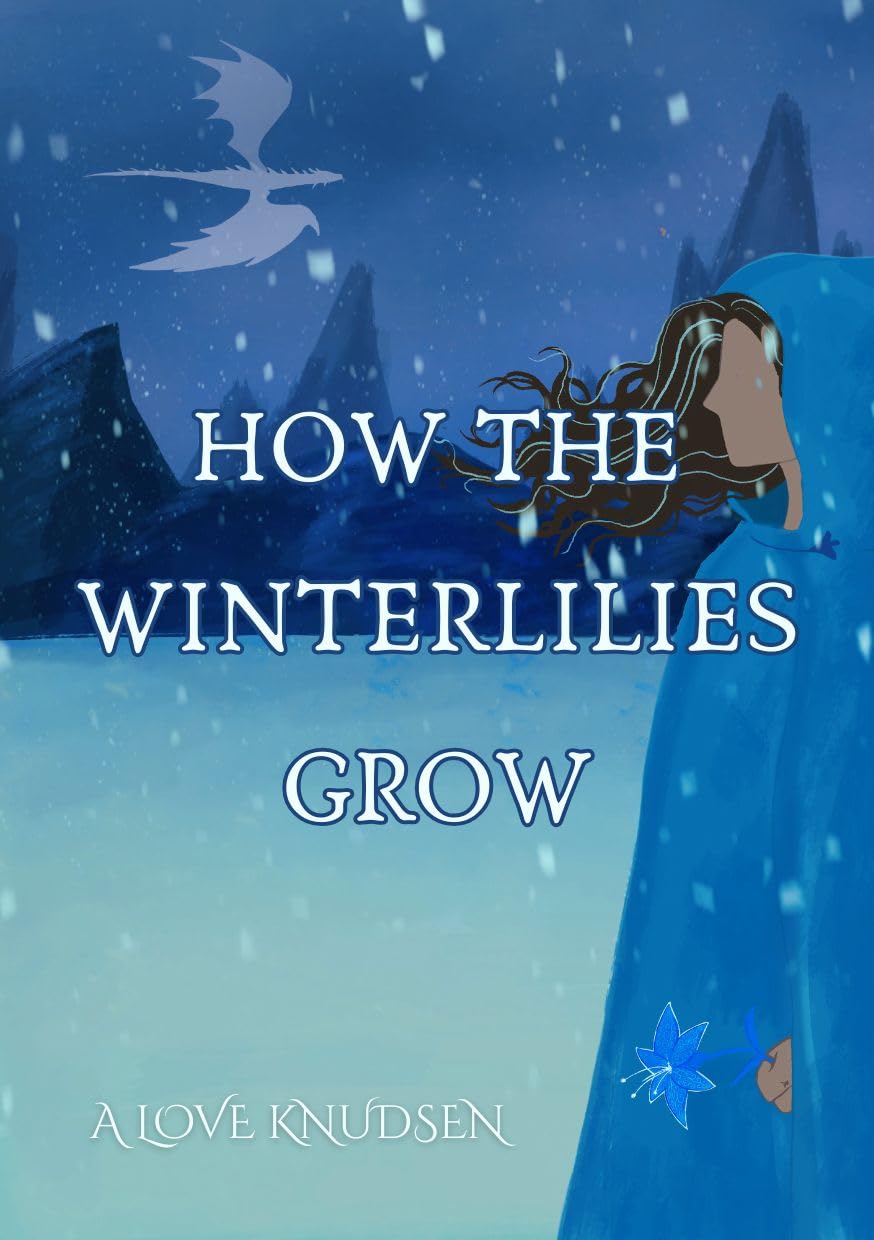
How the Winterlilies Grow follows Aradella, a young woman desperate to save her mother from the deadly Aurora Veins, as she is pulled from her ordinary life of candles and marketplace worries into a kingdom-shaking quest for the legendary winterlily. What begins as a search for a healing flower widens into a journey through dwarven bargains, goblin negotiations, sea voyages, hidden gardens, spiritual testing, and open rebellion against King Draven’s cruel rule.
I was most drawn to the way the book treats courage as something trembling rather than polished. Aradella is not a fearless heroine carved from marble; she is anxious, stubborn, tender, and often overwhelmed. That makes her growth feel earned. Her search for the winterlily becomes more than a plot device. It becomes a crucible where grief, faith, control, and surrender all meet. The story’s Christian elements are direct and unmistakable, but they work best when woven into Aradella’s fear of losing her mother and her slow realization that she cannot carry the whole world by herself.
The novel also has an appealing classic fantasy feel. There are dwarves, goblins, sirens, magical weapons, winter-bound towns, royal decrees, secret histories, and a climactic ball that turns into something far more dangerous than ceremony. The story’s abundance makes the pacing feel crowded, and some scenes pause to explain feelings that the action already suggests. Still, I found the sincerity of the book hard to dismiss. Its best moments have a lantern-lit quality: warm, earnest, and bright against snow.
I think this book is best suited for readers who enjoy Christian fantasy, young adult fantasy, adventure, fairy-tale quests, and faith-based coming-of-age stories. Fans of C. S. Lewis’s moral clarity and Gail Carson Levine’s enchanted-kingdom sensibility may find familiar pleasures here, though this story leans more openly into devotional reflection. How the Winterlilies Grow is a snowy quest about healing, but its deeper bloom is trust. A tender fantasy where faith flowers in the coldest places.
Pages: 338 | ASIN : B0GX2Y96BD
I Want Readers To Have Fun With It

Back to the Beach follows a young gay man shaped by childhood longing, family tensions, and betrayal, as he leaves Queensland’s Sunshine Coast for Sydney in 1981 and searches for freedom, identity, and belonging. What was the inspiration for the setup of your story?
The inspiration for Back to the Beach was to draw from my own experiences when faced with homophobia and prejudice growing up in the 1970s. Exploring these themes within a fictionalised setting, I hoped, would allow readers to identify with the characters and the obstacles they face in the novel. Similarly, the search for freedom, identity, and belonging is a universal challenge that everyone is confronted with at some point in their lives, regardless of their sexuality. These are central themes of the novel.
Previously, I had written murder mysteries. In Back to the Beach, I wanted to write a character-driven story that resonates with readers and sometimes challenges their preconceptions. Ultimately, though, I want readers to have fun with it and enjoy the nostalgia and the world I tried to recreate. Humour is used as a contrast to the darker themes of the book, as it does in life.
How did you approach balancing Tim’s personal coming-of-age journey with the broader social history of queer life in Australia?
Although Back to the Beach is written in multiple points of view, Tim’s story centres the narrative. Homophobia was institutionalised in Australian society during the 1970s, and this only gradually improved in the 1980s. Tim’s coming-of-age storyline offers an insight into the prejudice of the period and the challenges anyone seen as ‘different’ faced. My intention was to portray this world in an authentic and accessible way by exploring the isolation and alienation that many people experienced growing up.
I undertook extensive research to get the social and cultural references correct in the novel. In terms of the broader social history of queer life in Australia, I supplemented my research with enquiries to AQUA (Australian Queer Archives), who were extremely generous with their time. Writing a historical novel is challenging at the best of times, but especially when it is set in a time period that is within living memory. You have to get the details right; otherwise, the risk is that any errors can distract the reader from the story.
Back to the Beach offers a snapshot of Australian society during the 70s and 80s. It is also a poignant look back at the Sydney gay scene, just before the devastating impact of AIDS, when everything irrevocably changed.
The novel is candid about desire, shame, sex, and self-discovery. What felt most important to get right when writing those scenes?
Given that Back to the Beach is aimed at an LGBTIQA+ readership, I wished to explore all these themes in a realistic and unfiltered way. The reader demographic has to be resilient, in terms of the challenges they face as a community, and I believe they are looking for this in their fiction.
Although the novel tackles serious issues, readers should find the novel uplifting. Tim’s often difficult road to self-discovery shows how many of us have to reevaluate our inherited prejudices and preconceptions to make sense of the world. Tim’s journey portrays this as challenging, yet worthwhile, in order to be himself and have a happy and fulfilling life. Tim’s youthful optimism prevails, even though at times, he is miserable. The book’s message is that no matter how bad things may seem, things will get better.
My approach to the sex scenes in the novel was unflinching. Sex is part of life, and especially in terms of the gay sex portrayed, I believe the target demographic of the book demands honesty and a candid approach. I also felt it was important to approach the foibles and desires of each character without judgement or censorship.
Olivia and Sylvia’s chapters widen the story beyond Tim’s experience. Why was it important for you to include their perspectives?
In writing Back to the Beach, I felt the secondary point of view characters added that sense of realism I was striving for in the novel. It is quite layered, especially considering the two timelines in which the narrative unfolds. The secondary characters, in how they respond to the changes in society in the 70s and 80s, show how the cultural shifts of the times play out. The role of women, for example, was undergoing a dramatic shift during these decades. Olivia challenges the traditional role that was assigned to women. Similarly, Sylvia, a far more conservative character than Olivia, is unafraid to stand up for herself. Many of the test readers cited Sylvia as their favourite character in the book, and she is a nod to the many strong women I knew growing up.
Each of the point-of-view characters assists in propelling the narrative along and also provides contrasts in how they see the world and deal with its challenges. These differing perspectives enrich the narrative, which would have been impossible if the novel had been written in the first person.
Author Links: GoodReads | Facebook | Instagram
This story is juxtaposed with Tim’s arrival in Sydney in 1981. Now 20, he must learn to navigate the city’s vibrant gay scene, as he dives headlong into everything this big, bad city has to offer. Tim believes he has escaped his past, but life is never that simple. Tim’s adventures offer a compelling snapshot of Sydney’s early 80s gay scene with its bars, saunas and nightclubs, before AIDS changed everything.
BACK TO THE BEACH is a prequel to Alistair Sutton’s The Day Before You Came, which was #13 in The Bookshop Darlinghurst’s top seller list for 2020. If you are looking for a layered, character-driven novel, Back to the Beach, with its attention to detail, quirky characters, and engaging situations, is a must read.


