Blog Archives
NICK and CLANCY – A Tale of Nine Lives


NICK and CLANCY – A Tale of Nine Lives tells the story of Nick, a gentle and wounded man recovering from severe heart trauma, and Clancy, the sharp, funny, deeply devoted dog who enters his life at exactly the right moment. The narrative moves through years of shared life, illness, dreams, small victories, and fear, often told from Clancy’s point of view. At its core, the book is about survival, companionship, purpose, and the strange ways love shows up when life feels fragile and uncertain.
The writing feels intimate and conversational, almost like someone sitting across from you and telling you a story late at night. I laughed more than I expected. I also felt a quiet ache settle in as the pages went on. The dog’s perspective could have felt gimmicky, but it does not. It feels earnest and oddly wise. Clancy’s humor, guilt, loyalty, and protectiveness landed hard for me. I felt protective of Nick, too, even frustrated with him at times. The writing is messy in a relatable way. It rambles. It lingers. That worked for me. Life rarely moves in neat arcs, and this book does not pretend otherwise.
The theme of borrowed time runs through everything. Illness hangs over each chapter like background noise that never fully shuts off. I felt the anxiety of waiting for the next medical crisis. I also felt the stubborn hope that keeps Nick moving forward anyway. The story made me think about purpose in small terms. Not destiny. Not grand success. Just showing up for someone else. Just staying. There is a tenderness here that caught me off guard. Some sections felt repetitive, and a tighter edit could help in places, but I did not mind lingering with these characters. I cared about them. That matters more to me than polish.
I would recommend this book to readers who enjoy character-driven stories and emotional honesty. It is especially well-suited for animal lovers, people who have faced serious illness, or anyone who has felt unmoored and searching for meaning. This book is reflective and heartfelt and sometimes sad. If you like books that feel personal and lived in, and you do not mind getting a little misty-eyed along the way, this one is worth your time.
Pages: 288 | ASIN : B0FMTS6KZK

Comfrey, Wyoming Book 4: Black Sheep, Black Sheep
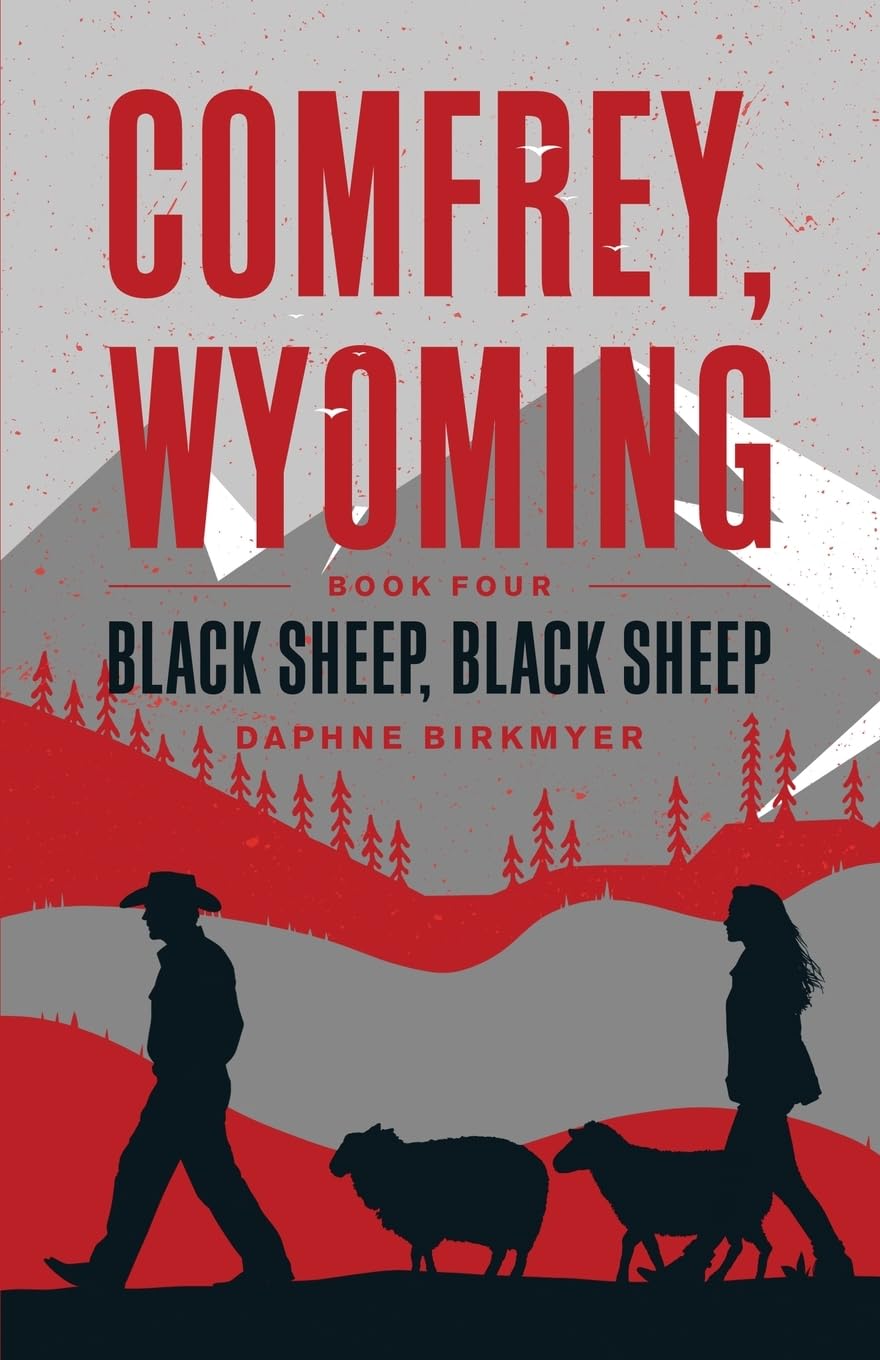

Black Sheep, Black Sheep, the fourth book in the Comfrey, Wyoming series by Daphne Birkmyer, is a layered family novel that follows intertwined lives shaped by love, secrecy, disability, and belonging. The story moves between past and present, with a strong focus on Melissa McNabb and the people orbiting her world, from siblings and parents to lovers, friends, and the quiet town that absorbs them all. It explores what family really means, how truth surfaces whether invited or not, and how difference can be both a burden and a gift.
What struck me first was the writing itself. It feels intimate and patient. The prose slows down when it needs to. It lingers on small moments. A look, a gesture, a habit. I felt close to these characters very quickly. Melissa especially stayed with me. Her inner world is rendered with care and respect, and I felt protective of her almost right away. The author never rushes her. That choice made me emotional more than once. I found myself smiling at her sharp humor and aching during her quieter struggles.
The ideas in this book landed hard for me. It takes on autism, family secrets, chosen family, and loyalty without preaching. It trusts the reader. I liked that nothing was neat. People mess up. They love fiercely and badly at the same time. I felt anger toward some choices and deep empathy for others. The theme of being the odd one out hit close to home. The black sheep idea is not just symbolic. It feels lived in.
Like Eleanor Oliphant is Completely Fine, this book feels quieter and more grounded. Where Eleanor Oliphant uses sharp humor and big emotional swings, Black Sheep, Black Sheep slowly reveals its heart in smaller, steadier moments. I would recommend Black Sheep to readers who love character-driven stories and emotional realism. It is a good fit for people who enjoy family sagas, small-town settings, and emotional books that make you think. It is especially meaningful for readers interested in neurodivergent characters written with warmth and depth.
Pages: 450 | ASIN : B0FY8W9LGM
Moving Maggie: A Midlife Moxie Novel
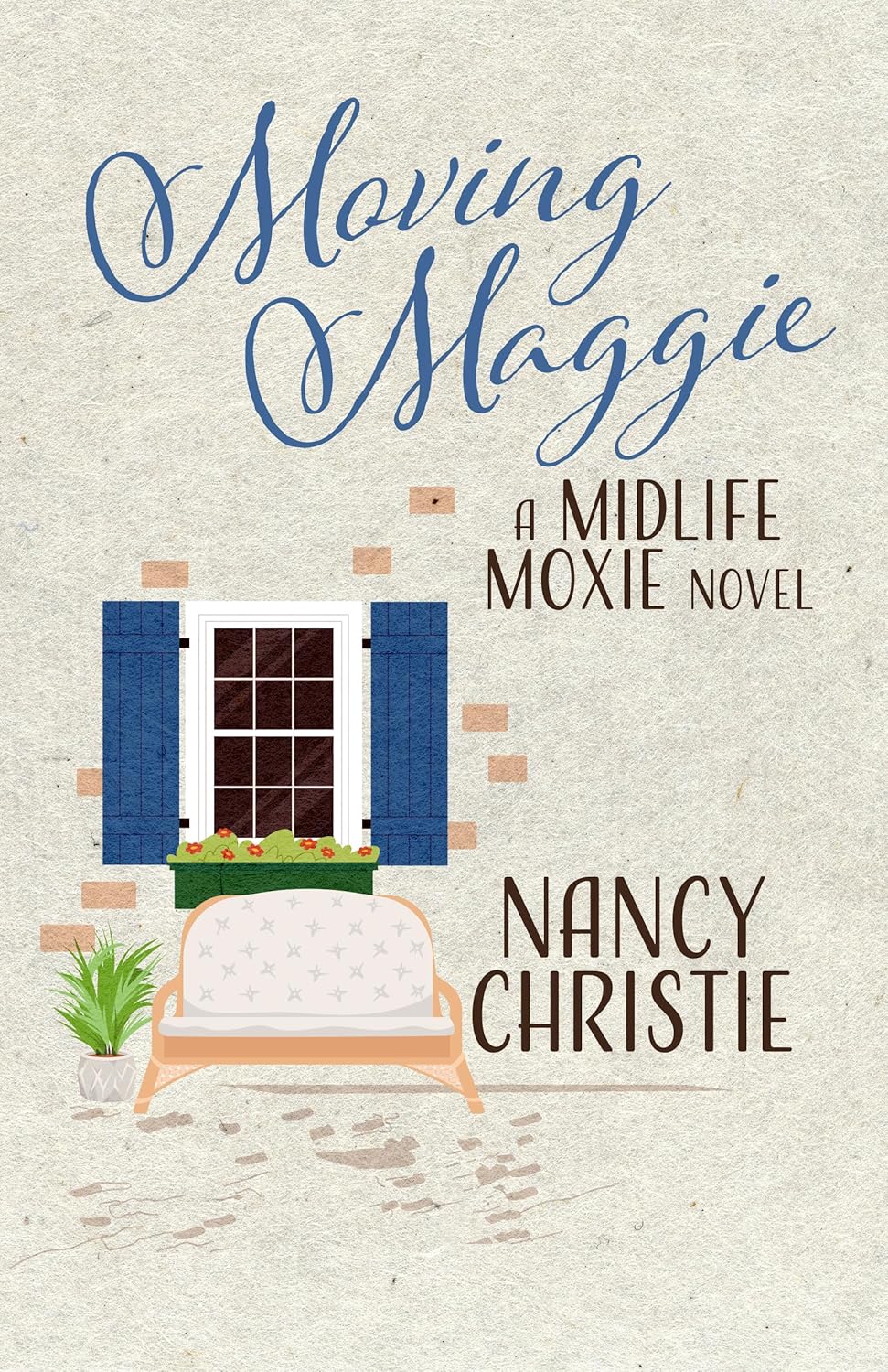
When I picked up Moving Maggie, a novel about a sixty-year-old woman whose life unravels all at once, I thought I knew the shape of the story I was walking into. Divorce, job loss, a sudden move to a rural town that feels both too quiet and too honest. And yes, the book gives you all of that. But what surprised me was how grounded and warm it felt. The novel follows Maggie Cartwright as she leaves her old life behind and tries, sometimes reluctantly, to build a new one in Eden. The plot slowly widens from survival mode to connection and growth, weaving in community, friendship, and a late-in-life courage that sneaks up on her. By the final chapters, where Maggie begins journaling her hopes and small victories, there’s a real sense of arrival, not just in place but in self .
Maggie’s voice is steady but bruised, and I appreciated how author Nancy Christie doesn’t rush her healing. There’s no magical “everything’s fixed” moment. Instead, the book lingers in those everyday tasks that become emotional landmines: cleaning out a house after a marriage ends, sorting through holiday decorations that no longer match your life, deciding what parts of the past are worth carrying into the future. And when new relationships enter the picture, the story doesn’t force romance at the expense of realism. Everything unfolds in a way that feels honest to a woman whose sense of identity has been upended.
I also found myself noticing the author’s choices more than usual. Christie writes with a gentle confidence, giving even simple scenes an emotional undercurrent. The supporting characters feel authentic, not decorative. And the book’s central theme, that reinvention is possible at any age, never turns into a slogan. Instead, it hangs quietly in the background as Maggie stumbles, retreats, and tries again. There’s a moment near the end where she lists the small blessings of her new life, including a child in Eden finally receiving a long-awaited kidney transplant, and it hit me how much the story celebrates resilience without preaching about it.
Moving Maggie is a good fit for readers who enjoy reflective women’s fiction with heart, sincerity, and a strong sense of community. If you like stories about starting over in midlife, rediscovering your own voice, or finding unexpected joy after loss, this one will speak to you. It’s gentle, relatable, and empowering.
Pages: 288 | ASIN : B0DH31PSHV

Searching For Meaning

White Jasmines follows a woman facing a profound personal crisis who engages in direct conversations with God, sending her on a deeply introspective journey confronting love, faith, and identity. What was the inspiration for your story?
The inspiration for White Jasmines came from a period in my life when the inner world felt louder than the outer one. I was watching how people, including myself, search for meaning when they feel lost—how we try to speak to something larger than ourselves when the usual language of life stops making sense.
I became fascinated with that private space where doubt, faith, love, and identity collide. The idea of a woman in crisis having a direct conversation with God allowed me to explore those questions with honesty and vulnerability. It wasn’t sparked by a single event, but by a long stretch of introspection, memories that resurfaced unexpectedly, and the desire to understand how we rebuild ourselves after being broken open.
The story grew from that silence, that questioning, and the need to give shape to emotions that often go unnamed. It became a novel before I realized it—almost like the dialogue had been waiting for someone to write it down.
Are there any emotions or memories from your own life that you put into your character’s life?
Yes, there are emotions and memories from my own life woven into the character’s journey, though never in a literal or autobiographical way. I drew from moments when I felt untethered, when life asked questions I wasn’t ready to answer. Those private experiences—grief, uncertainty, the search for meaning, the ache of longing—helped me understand her inner landscape more honestly.
Some memories, even small ones, left echoes that shaped how she thinks and feels. The way she notices silence, the way she questions love, the way she rebuilds her faith—those elements grew from my own reflections during challenging periods.
While the character is not me, the emotional truth behind her struggles and transformations is deeply personal. I used those memories as a compass, guiding me toward a story that felt authentic rather than imagined from a distance.
What were some themes that were important for you to explore in this book?
Several themes guided the heart of White Jasmines. I was drawn to the tension between faith and doubt—how both can coexist inside one person, and how questioning can sometimes be its own form of belief. The book also explores the fragility of identity, especially when life forces us to confront the parts of ourselves we try to avoid.
Love, in all its complicated forms, was another essential theme. Not just romantic love, but the quieter forms: self-love, forgiveness, and love that persists even after disappointment.
And finally, I wanted to explore transformation—the slow, often painful process of breaking and rebuilding. The 40-day dialogue with God became a way to examine how someone can return to themselves with new clarity after facing the hardest truths.
Those themes together naturally, creating a story that sits at the intersection of introspection, spirituality, and emotional honesty.
What is one thing you hope readers take away from White Jasmines?
If readers take one thing from White Jasmines, I hope it’s the understanding that their inner struggles are not a sign of failure but a passageway to gaining deeper self-awareness. The book invites readers to sit with their doubts, heartbreaks, and questions without rushing to hide or fix them.
I want readers to feel that even in moments of loneliness or confusion, there is meaning to be found—sometimes quietly, sometimes unexpectedly. If the story gives someone a little more compassion for their own journey or reminds them that transformation often starts in the most uncertain places, then it has achieved what I hoped for.
As her days become part of a greater spiritual plan, her ordinary experiences take on new meaning and significance. She reflects deeply on her daily life, imagining God present in her moments and narrating her philosophical perspectives on life, death, and love. Through her narratives, she intertwines philosophy and poetry, questioning love and creation in search of understanding, even regarding the Lord of the Universe. She engages in deep, intimate dialogues with God, inviting Him into a profound challenge while liberating herself from her pain and sorrow. In turn, God grants her life new meaning by revealing His presence in the beauty of nature. By recounting her memories, she frees herself from her previous world and enters a new realm within herself, which she expresses poetically. The book consists of an introduction followed by forty days of narration, telling the story of a Sufi in love who liberates herself from her past and enters a world of light and inner peace, envisioned for the reader in a dream-like manner.
Into The Arms

From the very first page, Into the Arms throws you straight into the storm. This isn’t a story told, it’s lived. We follow Rei, a girl clawing through her youth with an aching heart and sharp eyes, struggling to understand love, shame, and survival in a world that often turns its back on innocence. Author Angelica Lamb’s novel is part memoir, part emotional reckoning, a raw and lyrical unraveling of trauma, told through flashbacks, poetic fragments, and brutal honesty. We’re led from Rei’s early days at a cold Catholic boarding school through a series of shattering, formative experiences into womanhood. What holds it all together is a quiet inner light, dimmed but never out. The writing itself is jagged, unfiltered, emotionally dense, and it works.
Angelica Lamb doesn’t give you time to warm up or settle in. You’re tossed into Rei’s mind. Her pain, her longing, her awkward, tender, and often horrifying moments, every one of them slices through you. Some scenes, especially with Rei’s father or the grotesque acts at boarding school, made me physically squirm. And yet I couldn’t stop. The writing is wild. Sentences swerve, thoughts bleed into each other, and punctuation comes second to rhythm. It reads more like memory than fiction, fragmented, dreamlike, vivid. Lamb’s greatest gift might be how she makes trauma feel both intensely personal and alarmingly universal. I saw my younger self in Rei more times than I care to admit.
There’s barely a plot in the traditional sense, but the emotional thread? Oh, it’s there. It pulls you under and doesn’t let go. I loved the way Lamb lets Rei be a contradiction. Sweet and angry. Lost and wise. Scarred and still somehow soft. Her journey is filled with abuse, abandonment, awakening, and through it all, this persistent, haunting whisper: “You are love.”
If you’ve ever felt silenced, if you’ve questioned your worth, or carried shame that didn’t belong to you, then Into the Arms might just feel like someone seeing you. I’d recommend it to women healing from emotional or sexual trauma, to lovers of poetic memoir, and to those who find power in pain. It’s a hard read. A beautiful one. And one I won’t forget.
Pages: 416 | ISBN : 1036966186
Emotional Vulnerability

Thank You for the Kiss follows a traveling entrepreneur who arrives in Cuba, carrying heartbreak and longing with her, seeking an escape and a new identity for herself. Why was this an important book for you to write?
“Thank You for the Kiss” was an important book for me to write because it allowed me to explore the fragile intersection between personal longing and cultural complexity. At its core, it’s a story about emotional vulnerability -how heartbreak can push us to seek escape, reinvention, and connection in unfamiliar places. But it’s also a cautionary tale about the seductive glamour of tourism and the ease with which we can misread the world when we’re emotionally altered.
I wanted to show how, in moments of pain or disorientation, we can lose ourselves,not just in the beauty of a place, but in the illusion that we understand it. The protagonist’s journey through Cuba is not just physical; it’s a descent into the blurred lines between empathy and projection, generosity and vanity. Gina’s desire to help, to connect, to feel something real, is sincere, but it’s also tangled with misunderstanding, privilege, and the unconscious assumptions we carry when we move through cultures not our own.
Writing this story was punishing in its honesty. It forced me to confront how easy it is to let consequences drift when we’re consumed by our own emotional needs. But it also offered compassion, or the flawed ways we try to heal, for the mistakes we make when we’re trying to do good, and for the quiet hope that even in misunderstanding, there can be growth.
I appreciated the candid nature with which you told your story. What was the hardest thing for you to write about?
The hardest part of writing this story was admitting it to myself first. Revisiting those nine months meant confronting not just the events, but the emotional undercurrents that shaped them: the heartbreak, the impulsivity, the moments of vanity and misjudgment. Putting it into raw words,without softening the edges, was bruising. It exposed the flaws of the protagonist, who in many ways mirrored my own vulnerabilities.
But that candor was necessary. It allowed me to reflect with humility, to trace the journey from emotional disorientation to deeper self-awareness, and to offer readers something honest to connect with. I wanted the story to be more than just a personal reckoning,I hoped it would resonate with anyone who’s tried to help, who’s felt lost in unfamiliar terrain, and who’s learned, through discomfort, how to see with greater clarity and compassion.
What were some themes that were important for you to explore in this book?
Some of the most important themes I wanted to explore in Thank You for the Kiss were deeply personal, but also universally resonant:
EMOTIONAL INSTABILITY – I was drawn to the idea of what happens when we’re emotionally ddestabilise,how heartbreak can push us to seek new identities, new geographies, and new versions of ourselves. The protagonist’s journey is as much about internal transformation as it is about physical travel.
CROSS – CULTURALISM – A central theme was the fragility of cross-cultural encounters, especially when filtered through the lens of emotional vulnerability. I wanted to explore how easily good intentions can be misread, how privilege can distort perception, and how tourism can sometimes blur the line between connection and consumption.
GLAMOUR AND SEDUCTION – There’s a seductive quality to escape, especially in a place as visually and emotionally rich as Cuba. I wanted to show how easy it is to fall into the fantasy of a place, to romanticize it, and in doing so, lose sight of its realities and the people who live them every day.
VANITY, VULNERABILITY AND SELF-REFLECTION -This story demanded a raw honesty about the protagonist’s flaws and her desire to help, her longing to be seen, her missteps. It was important for me to write a character who is both well-meaning and deeply imperfect, because that’s where growth happens: in the tension between who we are and who we hope to be.
POWER/ A HARK BACK TO COLONIALISM AND THE NEED TO DO GOOD I also wanted to examine the complicated dynamics between those who have and those who do not. The protagonist’s attempts to help are sincere, but they’re also shaped by her own needs and assumptions. This theme was about interrogating the ethics of giving, and how easily we can project our own desires onto others under the guise of generosity.
I wanted the story to be not just about love or loss, but about the messy, beautiful, and often uncomfortable process of learning to see more clearly – both ourselves and the world around us.
What do you hope is one thing readers take away from your story?
I hope readers take away from Thank You for the Kiss, that vulnerability is not weakness ; it’s a doorway. The story invites readers to sit with discomfort, to witness the messy, imperfect ways we try to heal, connect, and understand both ourselves and others. It’s a reminder that emotional honesty, even when painful, can lead to clarity and compassion.
Author Links: GoodReads | Facebook | Website
When warrior Queen Gina arrives in Havana, she seeks to rebuild her shattered life after profound loss. But Cuba, with its vibrant chaos, becomes both a healer and a destroyer. Caught in deception, cultural misunderstandings, and the pull of forbidden love, Gina must decide: surrender to ruin, rise again as the formidable woman she was meant to be.
a raw and unforgettable memoir of grief, identity and transformation
Thank You For The Kiss, a memoir, invites readers to witness one woman’s extraordinary fight to reclaim her life and spirit.
CRIMSON BLOODLINES The Rise of King Musa Africa’s First Vampire

Crimson Bloodlines tells the story of Emma Woodford, a passionate genealogist whose quest to uncover her family roots leads her to a shocking discovery, she is descended from King Musa I of Mali, the famed ruler of the 14th century. Her curiosity takes her from the quiet hum of city life to the scorching heart of Africa, where history, myth, and horror collide. The story starts like a historical mystery and slowly turns into a supernatural thriller, blending the grandeur of West African history with the dark myth of vampirism. The book pulls readers from scholarly research tables to ancient ruins and secret cities hidden beneath the desert sands, creating an atmosphere thick with tension and wonder.
I didn’t expect a vampire story to weave so neatly into African history, but author Aubin Jack makes it work. His writing has a cinematic feel. You can almost hear the hiss of the desert wind or see the gleam of a gold-encrusted citadel rising from the dunes. At times, the prose is lush and descriptive, even indulgent, which slows the pace but also deepens the mood. I found myself swept up in the worldbuilding, the Tuareg warriors, the sacred baobab trees, the mystery of Old Mali, though I occasionally wished for a tighter focus. Still, the book’s heart beats with genuine curiosity about ancestry, identity, and power. I felt Emma’s excitement, her fear, her awe at discovering she might be part of something ancient and monstrous.
Underneath the fantasy and bloodshed is a sharp commentary on legacy and climate change, a surprising but fitting connection, given the author’s background in public safety and activism. Some passages veer into lecture territory, but they come from a sincere place. What stood out to me most was how human this story feels despite its supernatural premise. The vampire lore isn’t just for thrills; it’s used to explore how power, greed, and immortality twist even noble intentions. By the time King Musa’s transformation unfolds, the horror feels earned. It’s not just about monsters feeding on blood, it’s about humanity feeding on the planet and on each other.
Crimson Bloodlines is part adventure, part history, part warning. I’d recommend it to readers who like their historical fiction with a bite of the supernatural, especially those drawn to African mythology, lost civilizations, or climate-driven allegory.
Pages: 150 | ASIN : B0DTRL2D52
White Jasmines

White Jasmines is a poetic, spiritual, and deeply introspective journey through the soul of a woman confronting love, faith, and identity. The book unfolds like a diary of divine conversation, tracing forty days of communion between a narrator and a presence she perceives as God. It drifts between prose and poetry, dream and revelation, exploring themes of solitude, womanhood, and transcendence. The story begins with heartbreak and the collapse of faith, then moves through cycles of pain and renewal. What begins as an inward cry slowly transforms into a meditation on existence itself.
Hasti Saadi’s writing doesn’t just describe emotions; it breathes them. Her words rise and fall with the rhythm of confession. The imagery of seas, skies, the Virgin Mary, rain, and jasmine feels alive, wrapping each page in tenderness and melancholy. The tone wavers between gentle surrender and fierce rebellion, as though the narrator keeps arguing with God but never stops loving Him. The sincerity behind each line hit me.
There were moments when the prose turned heavy, circling the same questions of pain and faith. Still, it’s part of what makes the book powerful. It mirrors the way grief and longing echo in real life. I admired how Saadi wove philosophy and personal reflection without sounding like she was teaching. Her honesty about doubt and divine loneliness was what struck me most. She doesn’t try to explain life; she feels it raw and lets it spill. The tenderness in her language reminded me that even despair can be beautiful if faced with courage.
I’d recommend White Jasmines to readers who crave depth and aren’t afraid of introspection. It’s for those who’ve loved fiercely, questioned their faith, or felt unseen. It’s not a book you read quickly; it’s one you sit with, letting its quiet questions linger. It’s a spiritual mirror for anyone ready to look closely at the mess and mystery of being human.
Pages: 220 | ASIN : B0FRJDTTTC



 LITERARY TITAN