Burned Butter Island follows a lonely boy who lives with his father, a grey cat, and a white duck on a small Baltic island where the lighthouse stands watch over wind and sea. The boy, still grieving his mother, wanders through forests filled with foxes and white deer, bakes blackberry tarts, reads old books, listens to storms, and discovers the strange magic of a narwhal’s tusk. When a violent storm pulls him into the ocean, a real narwhal saves him, guiding him back to shore and back to hope. The book blends poetry, fable, memory, and gentle magic into a tale about loss, wonder, and the courage to live again.
The language is simple, yet it carries an emotional weight that sneaks up on you. Scenes drift from soft domestic moments to wild visions of storms and enchanted creatures. I found myself slowing down because the rhythm feels like someone humming by the fire. I loved the poems sprinkled throughout. They felt warm, handmade, and a little fragile. Sometimes the narrative jumps between moments and I had to catch up. It felt like listening to someone who speaks from the heart and lets the story wander where it wants to go.
What I liked most was how honestly the book speaks about sadness. The boy’s grief shows up in tiny gestures, in memories of his mother’s lullabies, in the way he stares at the tusk as if it holds the answer to something he cannot name. I felt a lump in my throat when he read the message on the rocking horse. The moment he sees that love does not vanish, and that sadness does not have to swallow him whole, felt tender and real. The author writes about loneliness without heavy words and lets magic offer comfort instead of escape. I liked that a lot.
I would recommend this book to readers who enjoy gentle stories that glow from the inside. It is perfect for people who love fairy tales, lyrical writing, and small moments that carry big feelings. It would also comfort anyone who has walked through grief and wants a reminder that joy can return in unexpected ways.
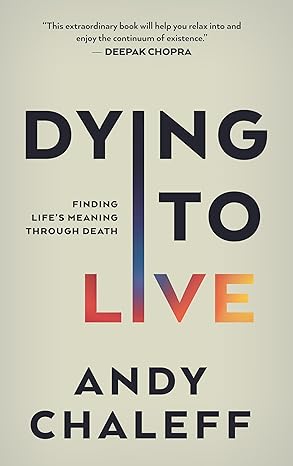
Dying to Live takes readers on an intimate and eye-opening journey, revealing how making peace with mortality can unlock a richer, more meaningful life. Why was this an important book for you to write?
For most of my life, death has been a silent companion, something that shaped my choices more than I realized. From losing my mother when I was young to the many moments since where mortality came close, I’ve learned that it isn’t something to fear as much as it is something to learn from. Writing this book was a way of bringing those lessons forward, not only for myself but for anyone who has ever felt the weight of impermanence and wondered how to live more fully because of it.
What were some ideas that were important for you to share in this book?
I wanted to show that death is not just an end but also a mirror. It reflects back the stories we’ve been telling ourselves, the identities we cling to, and the fears we avoid. One idea that mattered to me was the practice of “dying to live,” which is about shedding old roles, patterns, and emotional baggage so that we can step into a freer, more authentic life. I also wanted to share that this work isn’t abstract philosophy. It is lived, messy, human. My stories are meant to open space for readers to look at their own lives with gentleness and courage.
How has writing Dying to Live impacted or changed your life?
The writing process forced me to sit with truths I might have preferred to leave buried. It slowed me down, made me listen more deeply to myself, and invited me to face the places I still resisted. In doing that, I found more ease, more gratitude in the everyday. By leaning into death I became more alive, more playful even. It reminded me that life is fragile, fleeting, and far too precious to postpone.
What do you hope is one thing readers take away from your story?
That it is possible to turn toward death without being consumed by it. My hope is that readers will feel less alone in their fears and more connected to the beauty of simply being here. If even one person puts the book down and feels a little lighter, a little freer to live with love and presence, then it has done its job.
What if embracing death is the key to truly living? We spend our lives avoiding the thought of death-yet its presence shapes everything we do. In Dying to Live, Andy Chaleff takes readers on an intimate and eye-opening journey, revealing how making peace with mortality can unlock a richer, more meaningful life. Blending memoir, philosophy, and deeply personal reflections, Chaleff invites us to step beyond society’s distractions and face death with curiosity rather than fear. Through poignant stories and thought-provoking questions, he helps us see that dying isn’t the end of life’s meaning-it’s where we finally begin to understand it.
Andy Chaleff’s Dying to Live is part memoir, part meditation, and all heart. With the tone of an honest friend and the vulnerability of someone who’s walked through fire, Chaleff invites readers into an intimate, sometimes raw conversation about death and, maybe more importantly, about how thinking about death helps us actually live. This isn’t a book that preaches answers. Instead, it’s a meandering, deeply personal journey through loss, fear, letting go, and making peace. From the death of a childhood dog to the gut-wrenching loss of his mother, and on through reflections on identity, legacy, and even sex and silence, Chaleff wrestles openly with life’s biggest unknown.
What struck me first was how disarmingly simple and powerful the writing is. Chaleff doesn’t try to impress with fancy language. He speaks like someone who just wants to be understood. He writes about the death of his dog, Apricot, when he was six, and how that loss introduced him to what he calls the “gray zone,” a numbing fog that returns every time grief visits. His ability to recall that moment without filtering it through adult logic gives the story a punch of realness. And when he says, “Buying this toy is just a way to bring a little joy back into your life, not a reward for your grief,” I teared up. It reminded me of how often we try to patch grief with distractions and don’t realize we can feel two things at once, sad and grateful, broken and hopeful.
One of the most impactful chapters, for me, was Chaleff’s account of learning about his mother’s death in a car accident, a moment that irrevocably altered the course of his life. He connects this devastating event to the parable of “The Farmer and the Horse,” suggesting that it is often impossible to immediately discern whether a moment is truly good or bad. That kind of spiritual patience is rare and difficult to cultivate, yet Chaleff communicates it with quiet clarity. It’s this calm, unembellished insight that elevates the book beyond memoir; it becomes something closer to healing.
Another particularly striking section is when Chaleff reflects on the profound shift that occurs after the loss of both parents, the realization that he now stands closest to death. While the subject is inherently somber, his description of sorting through old boxes and choosing to let go of long-kept mementos carries a quiet elegance. “It wasn’t about erasing the past,” he writes, “but making space for the present and future.” That sentiment lingered with me. It prompted me to consider the things I’ve held onto, not out of necessity, but because they anchor a sense of identity. Chaleff’s exploration of detachment is neither rigid nor emotionally distant; it is sincere, deeply personal, and quietly resonant.
Dying to Live is not so much a book about death as it is a meditation on how to live with greater presence and depth. It speaks to those who have experienced profound loss, who find themselves quietly wrestling with mortality in the still hours of the night, and who carry unresolved grief just beneath the surface of daily life. It is especially meaningful for readers who yearn to live more intentionally but may not know where to begin. I would recommend it to anyone prepared to pause, reflect deeply, and perhaps be moved in unexpected and lasting ways.
Final Notes follows a 107-year-old man on his deathbed who drinks a medically approved psilocybin tea that takes his mind on a mind-bending journey to explore what it means to exist. What was the inspiration for the setup of your story?
Ever since I was quite young, I have been aware and interested in the absolute inevitability of my own death, of everyone’s, really. I have encountered it in my own life many times, puzzling at its often arbitrary takings and the metaphysical implications of oblivion. My own adventure with psilocybin, the proverbial “magic mushrooms,” caused me to explore this somewhat peculiar obsession. The title and premise for the book came to me during such a trip.
I thought this story had a unique setup and an interesting premise. What were some goals you set for yourself as a writer in this book?
I chose the deathbed setting of a very elderly man, as such an individual would have had much to reflect upon and consider, and was consciously aware that his remaining time was limited to hours. As I have with other published works, I created the last line of the book and wrote towards that. On a more personal level, it presented me with the opportunity to delve deeper into the mystery of death and come to some conclusions of my own, like how I would like to leave existence if given the chance.
What were some themes that were important for you to explore in this book?
Obviously, death and the process of dying when one is fully aware that the end is imminent. But I also wanted to tease the reader with his or her own reflections on mortality and the prospect of non-existence, what it might mean when eventually no one remembers anything about you. Another motif is the incredible understanding of what it means to live on a “pale blue dot” in a minor galaxy where nearby nothingness is all we know.
What is the next book that you’re working on, and when can your fans expect it out?
Ha! Well, this book is certainly a “one-off” due to the subject matter. But before starting this book, I was halfway through writing what I thought was a sci-fi book with an interesting premise involving nano-bots and avian flu. I stopped after I realized that AI had outrun my plot and narrative. I may go back and do a rewrite, though I admit to being a bit “spooked” by the acceleration of AI and its implications for everything.
A dying man takes the trip of a lifetime in the company of Azure Sky, a psilocybin infused tea, resulting in a remarkable end-of-life experience.
Everyman meets Alice in Wonderland is a thoughtful and adventurous journey of the mind that focuses on the recall, revelations and realizations that one experiences at the onset of death.
Meet an unnamed 107-year-old man at the end of his life. His ingestion of medically approved psilocybin carries him on a mind-bending journey as he contemplates his imminent future of eternal non-existence. Mentally alert but physically depleted, the dying man accepts the offer-his doula and hospice team at his side. Soon, the psilocybin triggers recall, revelation, and realization in startlingly new ways that create an odyssey of the mind in the narrator’s last hours. His experience is accompanied by a proprietary selection of music fashioned by Johns Hopkins for such occasions.
Inspired by the actual practice of using psilocybin to process, understand, and come to terms with terminal illnesses and trauma, Final Notes is a beautiful narrative with prose as lyrical as the music played on its pages.
Readers will come to grips with their own comprehension of what it means to “exist,” as well as be encouraged to ponder universal truths of life and death. The incredible inward journey of a man at the end of his days is a powerful lesson for every human willing to contemplate the inevitable occasion of one’s deathday.
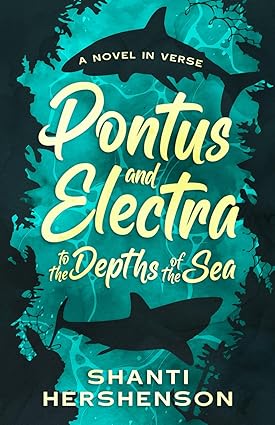
In Pontus and Electra: To the Depths of the Sea, Shanti Hershenson weaves a lyrical, aching tale of two lonely great white sharks—Pontus and Electra—who find purpose and connection in each other. Told in a poetic, vignette-like structure, the book alternates perspectives, blending environmental commentary with raw emotion and surprising tenderness. Against the backdrop of warming oceans, human threats, and grief, Pontus and Electra navigate fear, loss, companionship, and ultimately love, diving deeper into the sea and each other.
I didn’t expect to get emotional reading about sharks, but here I am, completely gutted and grateful. Hershenson writes with a dreamy style that’s both tender and brutal. Lines float like seafoam and then crash like waves. I loved the way she captures the loneliness of the ocean, of being “one-of-a-kind,” of searching the blue void for someone who understands. And when Pontus meets Electra? I held my breath. Their relationship builds slowly, clumsily, beautifully. It’s not just a romance, it’s survival, forgiveness, and healing.
There’s no traditional plot arc, and the prose leans on repetition and abstraction. But for me, it worked. It made the ocean feel mythic, the sharks feel ancient and sentient. The environmental message about pollution, overfishing, oil spills, and the cruelty of finning hits hard, but it never feels preachy. It’s heartbreaking because it’s told through creatures just trying to live. The parts about Electra losing her mother were absolutely wrenching.
Pontus and Electra is a love story, yes, but also a quiet plea to look deeper, to care more, to recognize the wild hearts beneath the waves. I’d recommend this book to readers who enjoy poetic storytelling, character-driven narratives, or marine life in fiction. Teens and adults alike could connect with it. It’s especially perfect for fans of lyrical prose and gentle speculative stories.
Always Something Heartfelt: Life, Love, and Heartbreak is a raw, vulnerable, and deeply personal collection of poetry and reflective prose exploring a myriad of human experiences. What inspired you to write this particular collection of poems?
Every piece in this collection was hand-stitched with everything I was feeling inside at the time of its inception. Growing up, it felt like the only time I was allowed to be sad, disappointed, hurt, etc. was at funerals. I started journaling when I was 17. It was a newfound outlet to what started to feel like a form of freedom to be able to communicate my raw emotions. Then, one near-fatal curveball in life, in the form of a car accident that physically propelled me from a vehicle, pushed me to open up to the world because life wasn’t promised. I gained the confidence to boldly articulate things I felt. Life became too short to be anything other than authentic. Through performing at spoken word events, I got feedback that showed me that my expressions were relatable. When I chose the poems from my collection to put together Always Something Heartfelt, I focused on providing my most genuine expressions. The goal was to expound on the notion that my experiences, though deeply personal, were relatable to others.
How do you approach writing about deeply personal or emotional topics?
I write what I feel in the moment with as much honesty as I can manage. I approach emotion the way I used to approach music—as therapy. Whether I’m hurting, reflecting, or just trying to understand something, I let the pen run freely. Free verse gives me the room to speak plainly and honestly, without worrying about form getting in the way of truth. I aim for clarity, and I hope that clarity resonates with people who’ve felt something similar.
Do you have a favorite poem in the book, and if so, why does it hold special meaning for you?
I do not have one particular favorite, but there are some poems I really like. That list includes poems like “She trusted Me”, “TV Failed Me”, “Maybe I never loved her”, “Windows”, “The next guy”, “Temporary insanity”, “I really wanted to”, and “Like you”. These are poems that are pivotal spaces and times in my life. To me, it’s like going through the pages of your life and marking them with a highlighter.
How has this poetry book changed you as a writer, or what did you learn about yourself through writing it?
Writing this book showed me that authentic emotions, though deeply personal, are very relatable beyond just the community that I’ve shared my expressions with over the years. These poems represent universal concepts that express how we all can feel at any given moment in life. That notion encourages me to keep writing and count myself as blessed to even have experiences to share. Though considered fleeting and temporary, emotions provide substance to your experiences and help you set, change, or stay the course in life.
Ashton Harper’s collection, Always Something Heartfelt: Life, Love, and Heartbreak, is a myriad of human experiences captured in lyrical verse. As tributes and eulogies, the poems in this collection capture the “Maybe I’ll kiss your lips, gently,” potential love to the “Is this what heaven feels like?” daydreamy love to the “But I’ve always wanted you,” unrequited love. From the highest of romance-filled highs to the lowest of loneliness lows, and everything in between, the poet’s honest and vulnerable journey leads by example, inviting readers to come to this collection as their whole, full-spectrum-of-emotional selves. With urgency and a deep understanding of what it is to celebrate and grieve genuine connection, Harper unabashedly explores the unmapped terrain of life, and the relationships made and lost along the way, with fierce language and visceral storytelling.
Shadows Amongst the Threads is a haunting, soul-baring collection of poetry that plunges headfirst into the murky depths of the human psyche. Written by J.A. Santana, the book explores the concept of the “shadow” — that darker half of our personality Carl Jung warned us not to ignore. The poems are a tapestry of anguish, longing, introspection, and myth. The collection moves through surreal landscapes—withered forests, shadowy corridors, dreamscapes, and apocalyptic ruins—while reflecting on fear, identity, sin, love, and collective moral decay. Santana threads together classical references, psychological insights, and raw emotion, pulling readers deep into a world where monsters wear familiar faces, often our own.
I enjoyed how immersive and atmospheric the writing is. Santana’s voice feels ancient and modern all at once—like a lost prophet speaking in riddles. The rhythm and word choice at times feel Shakespearean or Biblical, yet there’s also a grounded emotional rawness in many of the lines. Some pieces like “Darkness,” “Doppelgänger,” and “Rain I” are unsettling in their vivid imagery but unforgettable in their truths. You can feel the poet wrestling with shame, existential dread, and an aching thirst for meaning. And it isn’t just gloom for gloom’s sake. There’s an undeniable urgency behind the words—as if Santana is begging readers to confront their own shadows before they become monsters.
The language, though beautiful, is dense. I found myself needing to take breaks, reread stanzas, and sometimes simply sit with the weight of it all. A few poems are abstract or metaphor-heavy, and the emotional intensity sometimes overwhelms the clarity. But even when it was hard to follow, I never doubted the sincerity. There’s a strange kind of beauty in getting lost in Santana’s bleak, lyrical universe. It’s not for everyone, but for those who’ve stared down their own darkness, it will feel eerily familiar.
Shadows Amongst the Threads is a collection that rewards patience and introspection. I’d recommend it to anyone who loves poetry that digs deep into the soul and isn’t afraid of getting their hands dirty. It’s especially powerful for readers interested in shadow work, trauma, mythology, and the emotional weight of existence.
Always Something Heartfelt is a raw, vulnerable, and deeply personal collection of poetry and reflective prose by Ashton Harper. Spanning multiple emotional phases of the author’s life, the book travels through love, heartbreak, fatherhood, self-doubt, spiritual resilience, depression, and healing. Divided into five parts, it weaves a nonlinear journey of introspection and reckoning, delivered through conversational yet impactful language. Harper reflects on intimate experiences and societal observations with unfiltered honesty, never shying away from emotional depth.
Reading this book felt like being invited into someone’s private journal—except the handwriting was lyrical and honest to the bone. Harper’s writing isn’t polished in the traditional literary sense, and that’s what makes it special. His language is colloquial, immediate, and unpretentious. There’s something deeply brave about the way he lays his pain bare—whether it’s about being alone, yearning for his child, or admitting where he’s gone wrong in love. He manages to ask the kind of questions we all keep buried. And when he’s angry or defeated or full of love, he lets it rip. It’s messy, but it’s real. At times, I found myself underlining lines like I was trying to hold onto pieces of someone else’s heartbreak to better understand my own.
The emotional weight can be heavy, and the lack of traditional structure might not be for everyone. But then again, that may be the point. Love, grief, identity—none of it follows rules. And Harper’s refusal to wrap his pain in bows or follow poetic conventions feels like an act of rebellion. A lot of his strongest pieces come when he shifts from personal reflection to cultural critique, challenging toxic masculinity, absentee parenting, and community disconnection. That balance of personal story and broader relevance gives the book its power.
If you’ve ever loved someone who left you, struggled to find your place in the world, or looked in the mirror unsure of what you saw, then Always Something Heartfelt Life Love and Heartbreak will feel like a conversation you didn’t know you needed. I’d recommend this book to readers who crave vulnerability and aren’t afraid to sit with discomfort. It’s soulful, heavy, and at times, beautifully healing.









 LITERARY TITAN