Blog Archives
Internal Conflicts
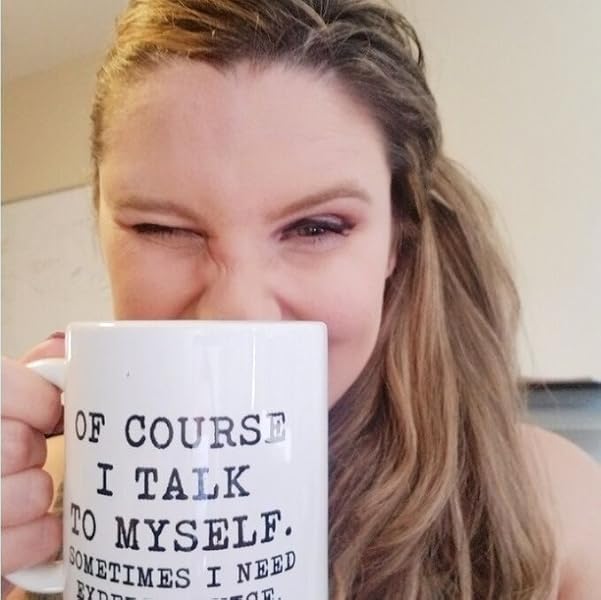
Star Lost follows a woman living in a world where ignorance is reinforced as the government routinely wipes memories of the people, who starts to unravel the truth behind the dystopian state and become involved with a group trying to save their world. What was the inspiration for the setup of your story?
Well, as this review and others have mentioned it is a chillingly plausible reality, isn’t it? Though Star Lost is set in the near future it was inspired by recent frustrations. I have seen a recent decline in our society’s interest not only in the understanding and memory of historical events but appreciation for anything deemed “outdated.” That said, the book was not written to say that the be-all and end-all of human existence is old tech and books, reading, and the written word (although some book lovers might disagree), but rather to explore why we have such animosity as a society towards anything “old”, historical record, reading, and understanding of our own personal histories. Not to mention the recent influx of revisionist history and book banning. I think it best, despite our motivations for wanting to dispel it, to hold on to our history so we don’t repeat it. I also take a bit of a dig at social media, which carries over into all three books.
Luccee is a fascinating character trying to just hold on to her memories and understand what is happening to the world around her. What scene was the most interesting to write for that character?
I think Luccee is a really fun FMC all around. She has an underdog quality, but she knows how to kick things up when she needs to. I recently finished book 3 of the series and those scenes are more fresh, but in attempting to recall Luccee’s scenes from Star Lost, I’d have to say she is the most fun to write when she has realizations about herself and other people. I think any scene with Trevers where he does his best to help her see “reason” but Luccee is able to stand up to him is my favorite. I love giving Luccee opportunities to grow as a person. Her scenes with Wilda are another favorite. I love their mentor/mentee dynamic.
What were some themes that were important for you to explore in this book?
Familial discord is a big one. Family history obviously plays a big part in the narrative as well. If your MC is having a disagreement with their family, I think it’s important to explore that in-depth at some point in the narrative. It’s often the source of their internal conflicts, and usually what sets them on a journey towards something external. And since Star Lost is the first book of the series, it was necessary for me to dwell on the “past lives” of the characters, so the reader better understands them and what makes them tick in future books.
Can you tell us more about what’s in store for Luccee and the direction of the second book?
I’d be happy to! Luccee will definitely go on the journey she is meant to (and the one readers of Book 1 will be yearning for), immediately beginning with Book 2. She will go on what some readers have called “a wild ride” and whether intentionally or accidentally, meet people who have an odd connection to her she couldn’t have imagined. And her life will change in ways she never would have predicted. That will even carry over into book 3 which is coming out this fall! But if you read books 1 and 2 in tandem, it will give you the sense you’ve been transported from the status quo to a more colorful universe. From sepia tone to technicolor!
Author Links: GoodReads | Website | Instagram | TikTok | Amazon
Emotional Trauma & Healing
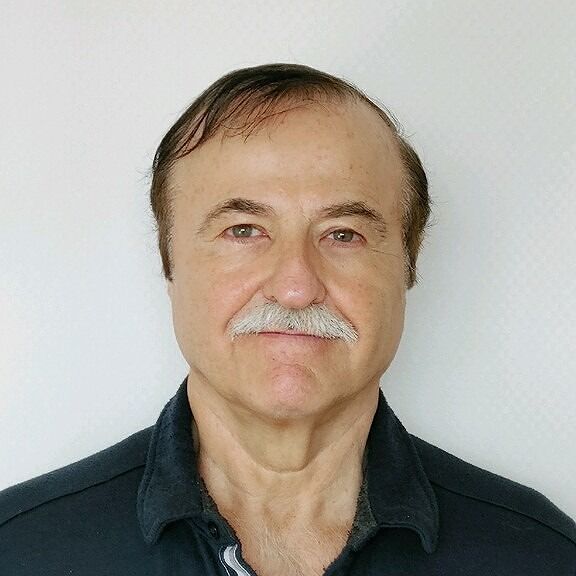
Of Ashes and Dust follows a Vietnam Veteran, now a professor, who is haunted by his past only to discover as the world is headed to Armageddon that the conspiracy theories he questioned are, in fact, truth and nothing is as it seemed. What was the inspiration for the setup of your novel?
There’s an obvious long-term cover-up by the US Government regarding the existence of ETs & UFOs, dating back to 1947. This, in part, served as an impetus for my “inspiration” to weave this narrative thread into the story arc. Also, I work with US military retirees, combat vets, many suffering from PTSD, as well as having served in the Army myself. This also added impetus to incorporate these elements into the plot.
The relationships that the characters form and, ultimately, the betrayals hook readers into watching everything unfold. What was your approach to writing the interactions between characters?
It came naturally. I’ve lived the majority of my life overseas having worked with the US military during almost all this time. Dealing with stress-related combat vets almost daily has led me to come face-to-face with their problems, often getting personally involved with their emotional trauma & healing.
What was the chosen theme of the novel, or did it develop organically as you were writing?
It pretty much “develop[ed] organically.” The story, except for one or two events toward the end, naturally unfolded for me. Wish all story arcs would do that!
What is the next book that you are working on, and when will it be available?
Working on publishing a chapbook (small poetry book), then a children’s book, and then the sequel to Of Ashes and Dust (OAAD). The OAAD sequel will most likely be more psychologically-driven & deeply delving into the troubled mindset of the protagonist & first-person narrator, Prof. Will Watson, rather than mostly event-driven as in the original.
Author Links: GoodReads | Website | Amazon
Their tale traces back to two covert operations from the Vietnam War era–a revelation about UFOs from the U.S. Air Force and the clandestine Project Sixty-Seven.
At the heart of the story is Professor Will Watson–a war-ravaged Vietnam veteran, a fervent activist of the New Hampshire Liberty Militia, and a man haunted by specters of his past. As the world edges toward Armageddon, he seeks solace in the arms of his Japanese graduate student assistant, Kimiko Tanimoto. Amidst escalating pursuit by the State Police and FBI, Watson is confronted with the harsh realities of his traumatic past and the imminent downfall of a world crumbling around him.
However, the truth about his “friendship” with Mark Mercotti, a fellow militia member with a hidden sexuality, proves to be more sinister. During their service in VIetnam, Mercotti had Watson enlisted in the enigmatic Project Sixty-Seven and arranged for a covert implant to be placed in Watson’s head. This unsettling revelation forces Watson to question his sanity, but he soon learns that Mercotti’s web of deceit runs deeper.
As Watson navigates the aftermath of his military service, he stumbles upon a reality beyond his wildest dreams: the implant was a government ploy to monitor him. Meanwhile, Mercotti is far from the friend he claims to be. His conspiracies are more than mere theories; they’re cold, hard facts.
“Of Ashes and Dust” is a relentlessly intense tale of alternate history set against the backdrop of global Armageddon. It’s a thrilling exploration of conspiracy, survival, and unforgiving intrigue, culminating in a finale as explosive as it is unexpected.
Another World


Another World, by I.M. Stoicus, is the sequel to the dystopian fiction Humans’ Enhancements, which introduced us to the dark, futuristic tale of Solon, an enhanced soldier. In this follow-up, Stoicus delves deeper into a dystopian future where global elites wield advanced technologies to exert control over society. The Globalist Legislative Unified Enterprise, a new power rising from the ruins of cities devastated by the Great War, offers stability at the cost of freedom, using deceptive holograms to maintain their grip. Solon emerges as the central figure in the rebellion against this regime, battling both human oppressors and formidable android armies.
Another World explores themes of resistance, unchecked technology, and the unbreakable human spirit against tyranny and oppression. The story propels readers into a future where technology is both a tool of control and a beacon of hope. Solon is a relatable character whose struggle against the globalist regime echoes real-world issues, making his fight compelling and poignant. The book excels in world-building, immersing readers in a society where freedom is sacrificed for a false sense of stability, prompting reflections on the true meaning of freedom.
Another World stands out as an impressive continuation of what promises to be a thrilling series. The interaction between humans and androids adds a layer of intrigue, prompting ethical considerations about advanced technology. The plot’s twists and turns maintain a brisk pace, though I feel the narrative leans occasionally toward detailed descriptions. This, however, does not detract from the gripping storyline. The book’s portrayal of resistance and the fight for freedom is powerful and unflinching, highlighting the harsh realities and stakes of rebellion.
While some plot twists are predictable, the emotional depth and resonance of the story make it a worthy read. Familiar themes and conflicts are given fresh, thoughtful treatment, making Another World a compelling exploration of contemporary concerns about technology and governance.
This story of resilience and courage, and the thirst for freedom will captivate fans of thought-provoking dystopian fiction. Not only does Another World successfully continue the gripping tale from its predecessor, but it also stands alone as a phenomenal story with a powerful message about the indomitable human spirit and the fight for what is right.
Pages: 156 | ASIN : B0D348C7L6

A Blessing and a Curse

In Sentience Hazard, artificial intelligence takes center stage when the cognitive abilities of beings developed by both the US and China threaten humanity. What was the inspiration for the setup of your story?
We are now witnessing the biggest explosion of Artificial Intelligence development in history. Although I have strong reservations that the current path of generative AI and machine learning can lead us to true AI, I am sure that what we now call AI is here to stay, and it will impact all our lives. Despite warnings from specialists, AI finds its way more and more into the military. Nowadays, powerful countries seem to slip further into autocratic regimes. As someone who lived seventeen years in a country led by a dictator, I worry about empowering such governments with strong AIs.
With Sentience Hazard, my goal was to say that we need to focus our efforts on creating AI in a way that is, as much as possible, compatible with us. We need to raise it to be aware of our shared human values and, once we give it free agency, it should want to help us. AI needs to be born in a place that values democracy and freedom. Otherwise, all of humanity will be in trouble.
What are some things that you find interesting about the human condition that you think make for great fiction?
Humans are complicated beings. Civilization advances on the eternal struggle between love and empathy on one hand, and hatred and tribalism on the other. So far, we have made amazing progress, but the availability of mass destruction weapons has the potential to spin things in a nasty way quickly. Human nature is simultaneously a blessing and a curse. Fiction writing is one of the best tools we have to steer humanity on the right course.
What type of research was required to perfect the scientific aspects of your novel?
I’ve been interested in Artificial Intelligence since the late ‘80s when I was first exposed to ELIZA, an early chatbot created by Joseph Weizenbaum, a professor at MIT. Although ELIZA was built on much more primitive tech compared to the likes of chatGPT, it certainly made an impression on me as a young boy. ELIZA and my desire to study AI made me go into Computer Science. In the late ’90s, I had the chance to work on one of the first general AI projects with Ben Goertzel, who coined the term “Artificial General Intelligence” and continues to work on creating AI. In 2012, I was accepted into a Neuroscience PhD program at the University of Southern California – that I ultimately decided not to pursue because of circumstances beyond my control. All my life I read a lot of books and scientific papers about the human mind and AI. In time, I formed my own opinions, and I selected the research I find most promising. One challenge with writing Sentience Hazard was to take a few interesting aspects of the human mind and present them in simple language, somewhat coherently, wrapped in a story that keeps the reader engaged.
What is the next book you are working on, and when will it be available?
I would like to write a sequel to my first book, The Soul Machines, which is something that readers asked for. I also purposely finished Sentience Hazard so that I could continue the story in many directions. Either way, my next book will certainly not come out this year.
Author Links: GoodReads | X (Twitter) | Facebook | Amazon
The US and Chinese artificial beings, developed with radically different principles, share one essential quality: their cognitive abilities go well beyond those of any human being. The future of the world hangs in the balance. Can humanity survive the clash between two sentient forces of its own creation?
Out-Of-The-Box Solutions

In Children of RaShell, a geneticist and a former security officer join forces to restore the world as humanity faces extinction following the release of devastating toxins. What was the inspiration for the setup of your story?
Believe it or not, Children of RaShell started out as something completely different. I am a Discovery writer and had written the first chapter, thinking the story was going to be based soley on a conflict that stemmed from something underground. After writing the first chapter, my mind started to go in a different direction and before long, I was neck deep in a story about cloning, a dying world, and a race to save humanity. A lot of the inspiration came from a conversation I had with my son (the book is dedicated to him) about the ethics of science and whether people in scientific and medical fields were morally obligated to do more when necessity required out-of-the-box solutions for life-altering problems. Now, I did go way off topic from that conversation in Children of RaShell, but it goes to show that inspiration can come from anywhere.
How long did it take you to imagine, draft, and write the world your characters live in?
Start to finish, four months. I don’t usually write quite that fast, but there was a deadline involved and I was determined to meet it. Also, once I got going, the story flowed so well, it basically just spilled out of me. I’ve found that when I’m writing something that’s really working, that’s usually the case.
What were some themes that were important for you to explore in this book?
I really wanted to dive into the ethics of cloning and how far was too far to go when humanity was at stake. As I wrote it, I wanted to uncover what science and medicine could potentially come up with to solve a crisis where human extinction was at stake. I also wanted to explore the idea that the world and everything in it is connected. That what we do now can potentially have unforseen consequences decades or even centuries down the road. I wanted to represent a morally ambiguous character who was willing to do anything to provide a solution, no matter how unethical. An exploration of a person, and a corporation’s, willingness to cite the greater good as a reason to crash right through the boundaries of ethical and moral behavior. And I wanted to show what the consequences of such “solutions” could be. At the end of the day, I wanted to be able to ask the question, was it worth it?
What is the next book you are working on, and when will it be available?
Next up is my post-apocalyptic novel, 187 Days, which takes place after the world crumbles when a blood-type virus wipes out or mutates 98% of the population. “A braver person might’ve left sooner, might’ve tried to find other immune people and help the survivors. I wasn’t brave though. I was a thirty-four-year-old lunch lady who needed to lose fifty pounds. And I didn’t want to save the world, just one person.” – 187 DaysI don’t have a firm release date yet, but it’s slated to come out late 2024. The next project after that is the sequel to Children of RaShell, titled, RaShell Reborn.
Author Links: GoodReads | X | Facebook | Website
But RaShell Bionics has a solution to solving the problem of the decreasing population; genetically engineered hybrid clones with the ability to reproduce.
That is, until the discovery of an underground settlement and its secrets changes everything.
Now Sabine Reed, a geneticist from RaShell, has fled her lab to join the settlement and uncover the key to restoring the world. With the help of ex-security officer, Xander Mitchell, she hatches a plan to convince the head of RaShell Bionics to stop using clones to reproduce.
But when her plan fails, the cost is higher than she ever could have imagined.
A futuristic thriller from Jodi Jensen to keep you on the edge of your seat.
Societal Observations and Reflections
Desuetude follows an elite hunter of dangerous creatures struggling to find her place in an ever-changing world dominated by factories and growing cityscapes. What was the inspiration for the setup of your story?
The inspiration for my story was watching society develop and change, both as a whole and in my personal life. I have a background in the social sciences. This allowed me to see the underlying trends and possibilities for the future impartially. My hometown had transformed over the last fifteen years from about 50K people to 150K people. I watched my world being bulldozed and remade; this was a huge influence on my writing of Desuetude.
How long did it take you to imagine, draft, and write the world your characters live in?
I started the book in 2020. My final first draft was completed in 2022. It took me over another year of editing before I got it copyrighted in 2023. This work taught me a ton as a writer and helped me grow immensely.
There was a lot of time spent crafting the character traits in this novel. What was the most important factor for you to get right in your characters?
Isolation and observation were the most important factors for Desuetude. I wanted Val to seem and feel intensely separate from the world she was thrust into. The other characters she interacts with were designed to have a distant feel to them. Most of the characters don’t have name, and that was done purposely for reinforcing Val’s sense of isolation as Val’s world caves in around her. For the observations, Val was a hunter. Her entire job was to watch, study, and track her query. This translated over to her societal observations and reflections. Being detached gave her a unique perspective on urban life and technology. It gave her an objective view, free of technology’s influence.
I find a problem in well-written stories, in that I always want there to be another book to keep the story going. Is there a second book planned?
No. For this book there will not be a sequel. Val’s story is complete in this one installment.
Author Links: GoodReads | X (Twitter) | Facebook | Website | Amazon
Technological selection is coming. There is only so much land left. Where there were once vast open spaces, there are now never-ending streets. Where there was once plant life, there are now factories and rows of buildings. Progress knows no mercy.
Val is aware of this. She has become a foreigner in her own homeland. Her hunting profession is dying out. Val is struggling to find her place in the new world, but what can one person do in a society that has forgotten them?
Desuetude is the exciting new literary sci-fi from Nicholas “Tac” Whitcomb.
Survival and the Will to Live

The Edge of Life follows two individuals fleeing Seattle who manage to find love once more as they navigate the myriad of dangers accompanying an asteroid that threatens Earth. Where did the idea for this novel come from?
The main idea came from reading online about Vivos xPoint in South Dakota. It’s a decommissioned military base with underground bunkers that they sell as “cabins.” During the early days of the pandemic, they sold like hotcakes. I thought they looked interesting and read more on their website about how the location was intentional, too far from an important city to be a target of a nuclear attack, away from the tectonic activity of the Ring of Fire, and beyond the Yellowstone blast zone. It was somewhere safe.
This made me decide that a global catastrophe would send my characters on a cross-country road trip as society crumbled around them.
What was your approach to writing the interactions between your characters?
I wanted it to be believable that in the face of danger, Kat and Ryan could find the good in themselves, each other, and the world, despite the chaos. I wanted to include simple moments that were sweet and intimate, so they could get to know one another and be vulnerable.
What were some themes that were important for you to explore in this book?
Friendship
Acceptance
Survival and the will to live
Beauty
Courage
Love
What is the next book you are working on, and when will it be available?
I am doing the final line edits for the sequel to The Edge of Life: Love and Survival During the Apocalypse, called Aftermath: Into the Unknown. It takes place three years after the first story and is another road trip to Vita xTerra (my fictional bunker based on the real one). The FMC is looking for her uncle who was a minor character in the first book. It will be published December 19th, 2024.
The third book in the series (Love and Survival #3) is in the planning stage and will take place a few years after Aftermath and is set in the bunker city. The characters in the first two books will be featured, though they will not be the main focus.
I have two additional books being published in 2025, the third and final installment in my Train Hoppers series for April and an all-new sports romance, Racing Towards Destiny (series name: Love on Track) about a woman who abandons her old life, moves to Europe, and takes a job working with professional motorcycle racers on the MotoGP circuit.
Author Links: GoodReads | X (Twitter) | Facebook | Website | Amazon
Warned that a planet-killing asteroid is on a collision course with Earth, acquaintances Kat and Ryan join forces in an effort to survive. Mere hours before impact, they race toward the safety of Ryan’s inherited South Dakota bunker, encountering chaos. A last-ditch effort to nuke the asteroid only manages to fragment it into chunks causing multiple strikes.
Earthquakes, fire, and volcanic ashfall assail Kat and Ryan, who turn to each other for solace. Kat finds someone kind who values her differences and Ryan finds himself falling for Kat’s pluck and quick-thinking. Though jaded, they learn to trust and rely on one another.
Attempting to survive the onslaught of their new world, Kat and Ryan must reach the bunker before imminent food shortages and catastrophic climate change cause society to further unravel.
The Edge of Life shows that survival can include falling in love. With steamy romance and non-stop action, this is one thrilling apocalypse road trip you shouldn’t miss.
Desuetude

Desuetude, by NTW, is a gripping work of fiction set in a dystopian future where nature and humanity clash in a fight for survival. The protagonist, Valerie Wiggins, is a hardened exterminator tasked with eliminating dangerous creatures that have evolved to threaten human encroachment into the wilderness. Through her eyes, we navigate a world filled with synthetic enhancements, corporate greed, and the ever-present tension between the wild and the civilized.
NTW’s writing is immersive and richly descriptive, painting vivid images of both the desolate urban landscapes and the treacherous wilderness. The scene where Valerie confronts a massive crustacean near the lake is particularly memorable, showcasing the author’s ability to blend action with deep, reflective moments. The narrative is interspersed with Valerie’s internal monologues, which provide a poignant commentary on her weary existence and the grim realities of her job.
The author explores themes related to environmental degradation and technological overreach. The vertical farm run by the biologist character serves as a microcosm of the broader societal issues at play. The description of the artificially sustained crops and the sterile, controlled environment contrasts sharply with the wild, untamed nature just beyond the fence, highlighting the unnatural balance humanity has imposed on the world. The novel’s pacing introduces a varied rhythm, with certain chapters offering a deep dive into technical details that enrich the narrative. The intricate descriptions of Valerie’s equipment and mission preparations, while detailed, provide an interesting layer of realism and authenticity to her character. The secondary characters, like the biologist, present opportunities for further development, which could add even more depth to Valerie’s interactions and the world she navigates
Desuetude is a thought-provoking read that offers a stark reflection on the consequences of humanity’s relentless pursuit of progress. NTW’s skillful storytelling and vivid world-building make it a compelling book for fans of dystopian fiction and those interested in environmental themes. I would recommend this book to readers who enjoy immersive, reflective science fiction with a strong environmental message.
Pages: 98 | ASIN : B0CTHSNYVR



 LITERARY TITAN