Blog Archives
We Are Not Prepared
Overlord follows a group of unlikely companions who form a team to survive amidst multiple catastrophic natural disasters due to climate change. What was the inspiration for the setup of your story?
I read a New York Times magazine article several years ago about incarcerated women pressed into service as firefighters to combat wildfires. The occasion of the article was that one of the women had died while fighting wildfires. What struck me was that despite the experience they were gaining their criminal records would prevent them from ever becoming firefighters in real life.
What sort of justice is this? What kind of a thank you for people risking their lives? To me, this wasn’t justice, this wasn’t a thank you, this was the state using people as disposable assets to do with what it saw fit.
That was the inspiration for the hopeless salvage team that is the core of the Overlord salvage team, and it seemed right that it be led by a woman who has been through a lot by the time the readers meet her.
The other core of the novel, rapid onset climate disaster, was inspired by a what if that I’ve been thinking about for awhile – an awful lot is happening all around us, particularly if you start with Hurricane Katrina where we effectively lost a city for a long period of time. I put the two ideas together and that’s how Overlord was developed.
Each of the main characters is unique, and despite their differences, they blend well together, forming a cohesive team. Did you create an outline for the characters in the story before you started writing, or did the character’s personalities grow organically as you were writing?
Since Madison was a given as a female (and Cuban-American given the way the story starts out) and as the lead, I built the cast around her and what I thought would be a good group of skills and experiences to have – they work well together in the field, but it’s not like they are buddy-buddy when they are not working.
This novel touches on more than just how Climate Change impacts the physical land. What were some themes that were important for you to explore in this book?
- That we are not remotely prepared for anything like this to happen.
- That we never want to let things get to this point because once they do, we’re effectively done for.
- The incredible negative impact anything like this would have on the US and the world, in terms of the global economy, which is only hinted at, as well as food production and a whole host of other things.
Will this novel be the start of a series, or are you working on a different story?
My next novel is a continuation of a different series, one that got me started as a writer many moons ago.
But Overlord is the beginning of a trilogy which I am hard at work writing now.
Author Links: Website
Melting ice at the poles triggers a sudden drop in the North American tectonic plate. Within months, the United States has been irreversibly transformed — New York and Miami have been swallowed by rising seas, and California has been claimed by the ocean. The refugees from those areas, known as “coasties,” are forced to scavenge for resources amidst the ruins of their former world, while facing an evolving existential threat.
For ex-Miami police officer Madison Cervantes and her weary salvage crew a burning oil rig in the polluted Gulf is another life or death assignment — put out the fire before the Gulf itself ignites — when they end up on the wrong side of a big storm. Unable to escape the flames or the weather, they must beat back the apex predators lurking in the waters and hope that the weather clears before their ammo runs out…
Full of heart-stopping action and heart-wrenching moments, Overlord is a haunting exploration of a possible future that will leave readers questioning the impact of climate change on our planet and our way of life.
Overlord


Set in a not-too-distant future, Overlord delves into the possible aftermath of severe natural disasters that reshape the very terrain of North America, challenging the resilience and adaptability of its inhabitants. Madison Cervantes leads a team of survivors, each confronting the dire consequences of a climate crisis that has rendered the East and West Coasts of the U.S. desolate. This grim scenario of displacement gives rise to prison camps, martial law, and a disintegration of societal norms.
Eric James Fullilove masterfully crafts a narrative teeming with urgency and suspense. At the heart of Overlord is Madison’s eclectic team, comprising military veterans, demolition experts, and tech savants. Their unforeseen confinement in a prison thrusts them into forming a cohesive unit. Fullilove employs a sophisticated narrative structure that interweaves present-day challenges with insightful flashbacks, granting readers an intimate understanding of each character’s backstory. By the time events reach their climax, readers are fully vested in the emotional journeys of these characters, silently rooting for their success.
Parallelly, General Freeman’s mission is grand in scope, leveraging his tactical acumen to mitigate the chaos. Through his character, Fullilove paints a broader picture, juxtaposing the intricate dynamics of Madison’s squad against the harrowing backdrop of national casualty, offering readers a multifaceted view of the crisis.
In Overlord, the reality is unapologetically bleak. As anarchy ensues, dormant societal tensions around race and immigration re-emerge. The visceral portrayal of human cruelty is unsettling yet poignantly mirrors the stark headlines of today’s news. Through this, Fullilove powerfully conveys a United States irrevocably altered by cataclysm, urging readers to reflect on the fragility of our interconnected world.
Pages: 318 | ISBN : 1639889612

Writing Connects Me to the Universe
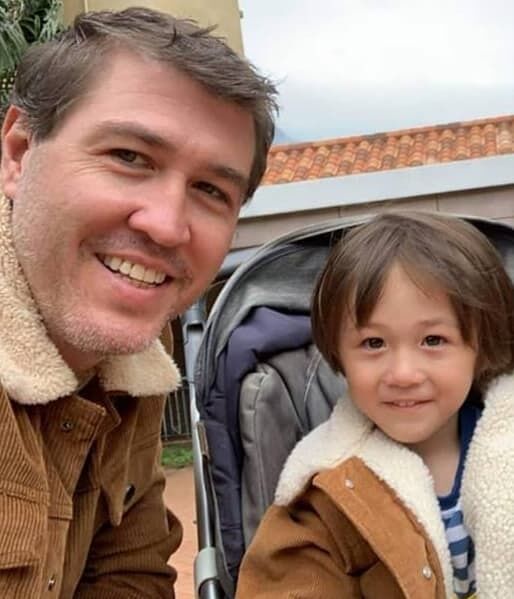
Conquergood & the Center of the Intelligible Mystery of Being follows a man living in a post-apocalyptic society who goes to work for a mega-corporation in hopes of finding his brother. What was the inspiration for the setup of your story?
Regarding the inspiration for the story, there are multiple sources, some literary and some existential.
The orphan tale of Jerome Conquergood (and his twin brother Vincent) is implicitly mirrored in the great work David Copperfield (1849) by Charles Dickens: an orphan, an outcast, rises through the ranks of society and ends with the protagonist, now mostly successful, finding family. Now, David Copperfield is set in the 19th century and focuses on issues of that specific time period, so I thought it might be interesting as a writer to explore what it might be like for an orphan finding himself alone and poor in the 22nd century and forced to deal with a completely different society than the one that challenged David Copperfield. Because of the book David Copperfield, I chose to write this futuristic sci-fi story in terms of not looking forward but imagining further into the future than 2183 and then looking back and writing the story as though it is history, despite it taking place far into the future. I would also be remiss to exclude Dickens’ novels Oliver Twist (1838), Hard Times (1854), A Tale of Two Cities (1859), and Great Expectations (1861) — although these books did offer some inspiration, they were minor inspirations compared to other literary works.
Without question, the tale of one person hating the very thing he/she comes to love—which touches on ideas pertaining to growth, education, maturity, perception, etc.—and that person struggling throughout with complicated concepts of society is also implicitly mirrored in the profound work Nineteen Eighty–Four (1949) by George Orwell. As a writer, I attempted to imagine what Orwell’s story and what society might be like in the 22nd century. Orwell took his world-building up to a certain point and stopped: he imagined a world still filled with warring nations set thirty-five years into his own future. The story of Conquergood is set one hundred and sixty years into the future (from our current time period), where all nations have been abolished, and basically, a one-world government found in the Korporation has been established through decades of societal erosion and societal evolution. This notion of the Korporation, and its system of Korporatilism, was loosely and roughly based (as somewhat of a launchpad) on a German book called Die Korporation Der Berliner Buchhӓndler (1898) by Ernst Vollert.
One more source of inspiration, out of countless others, is from my own personal experience of having been born and raised in America and then traveling abroad to eventually live and work in Ho Chi Minh City, Vietnam, at the age of twenty-seven. In 2007, I began writing Conquergood’s story, and in 2008, when I moved from South Korea to Vietnam, the novel took a significant shift and turning point. During the first month of living and working in Vietnam, I was captivated by Vietnam’s pride of Communism, a system of living that is abhorred by most Americans and seen as an evil. But from the viewpoint of most Vietnamese, Communism, illustrated in their symbols and flags, is seen as a necessary good. From this existential spring within — of how one society could love a thing, an idea, a system, and how another society could also hate that exact same thing, exact same idea, and exact same system — this paradox of the human heart and mind, is what drove me to create and shape Conquergood and his story.
Jerome is an outcast at the beginning of the novel but puts his ideals aside to find his missing brother and ends up on a journey of self-discovery as well. What were some driving ideals behind your character’s development?
To be completely honest, much of the character’s development is primarily due to the character himself, to Jerome Conquergood. As I began writing the story and followed the character on his journey, I wasn’t at all sure what or how he might be changed or if he would change at all. There were things I wanted him to do that he did not do. There were things I wanted him not to do that he ended up doing. This happened with all the characters, for that matter, and these were some of the big reasons why I struggled with writing this story and why it took fourteen years to finally publish or for me to finally let this book go out into the world.
By 2009 I had a completed first draft, and off and on for the next fourteen years, I wrote and reworked, and tweaked the novel, but a large part and all of the spirit of the novel have remained in place since the beginning. As to why that is, I can only attest to the fact that some stories live and some characters are alive and their contextual meanings have something far more important to say to the world than one writer’s personal agenda. As one-brief example, as a writer and reader, I had hoped and believed, or expected, that Jerome Conquergood would not find his twin brother Vincent, and Jerome Conquergood would eventually burn down and destroy the entire Korporation and its system, but both did not happen. I guess that is exactly like life. Sometimes we expect things to go a specific way, or the way we wish it to go, and by the end, the exact opposite has happened, despite our wishes and prayers and demands on reality, on a god, and on life in general.
One of the biggest ideals behind Conquergood’s development, out of the many ideals found throughout the novel, comes directly from me as a person. I cannot tell you how many days I have cursed myself and blamed myself (much like Conquergood does early in the book) for being a writer who writes novels (books no one really reads) and — despite taking decades to come to terms with myself and accepting who I am, ever since I first began writing stories at the age of eight, and dealing with family and friends hating me or despising me or also cursing me for focusing my time and energy on writing my novels, which have not come to terms (for them) to great financial or commercial success; they feel I have wasted and do waste my time with my writing, and perhaps they are right — what I’m trying to say, and what I’m doing a poor job at explaining, is that for the last twenty years I have wished to be someone other than who I am, to be someone who is content with working the farm from sunrise to sunset, to be someone satisfied with an office job from nine to five with no further aspiration than the next promotion, the next pay raise, and to simply go home and spend time with the family (using a historical reference, to be someone more like Lewis Strauss who cares only for his political career versus J. Robert Oppenheimer who has his head in the sciences and the stars, so to speak). How many nights have I stayed awake, sleepless in bed, wishing I could be that person who did not aspire to write books (and to not have family and friends bemoan and deride me for my fictional works), but to work a normal job and to be happy and content doing so. But there’s something in me, or there’s something in this crazy universe that won’t let that happen. When I stop writing, when I try to give up, and move on and just wish to focus my mind and labors on something else (like my wife and son, like Jujitsu, like a hundred other things), something, some unexpected tragedy, happens to me, things I would not wish on anyone, and it is only when I am back at writing and creating that I feel that I am connected and one with the universe again (in the 1990-film The Godfather: Part III, Michael Corleone has that great quote which sums it up perfectly for me, “Just when I thought I was out, they pull me back in” — but for me, “they” is the universe).
For Conquergood, I imagined it something like that — a path in life that moves us to and fro, and though he makes choices and decisions, outside forces help shape and navigate Conquergood to an outcome that even he might not have expected or desired but must come to finally accept by book’s end. Even though, for many readers, Conquergood might not be considered free from the Korporation, he is in many ways experiencing true freedom out of all the days of his existence. And as for Conquergood, I am happy he did not end up like me, stuck to a certain path, much like Prometheus or Sisyphus.
With many ideas relevant to the modern world, your story is extremely thought-provoking. What were some themes that were important for you to explore in this book?
In 2007, I first began contemplating the themes for this book, and I wanted to explore and touch on a vast array of themes, not just one or two — a challenge I feel I have failed at, but nonetheless I tried.
A few of the themes that brought me to task were the implications of Artificial Intelligence (A.I.) and the Soul, the terms and definitions of “reality”, the process of human evolution seeking immortality (and what that might mean in the digital and non-digital worlds), the importance of history and our ancestors and family, the dilemma of understanding “consciousness” and its direct relationship or connection to “love”, the meaning of self-sacrifice, the conflict and contradictions of “perception”, and the blind (or in many cases, not-so-blind) obedience and allegiance to corporate governance (at the time I began writing Conquergood I did not know this, but now, in today’s terms, we know this to be ESGs: “Environmental, social, and corporate governance” — which is exactly what the Korporation is guilty of doing in my book).
Even as far back as 1998, I understood the severe implications of peer pressure and cancel culture, the lies and radical distortion of brainwashing through the use of propaganda, which all of these things have only become more amplified and more extreme from then to now, and the sheer absurdity of it all.
When I first read Nineteen Eighty–Four (1949) by George Orwell, I was a senior in high school, and at the time, I was in a detention center separate from the high school (a place that imposed silence and independent work as punishment throughout the day — which is not that different from what I do now as a novelist). During those long-silent days, I sat and read Nineteen Eighty-Four, and between chapters, I would have to memorize the detention center’s propaganda.
One day I was called into the Director’s office, and the Director told me to tell my sister to stop smoking in the campus parking lot (even though my sister stayed in her car) when my sister came to pick me up. I repeated the “party line” verbatim and told the Director the very words she forced me to memorize: “I am not responsible for the actions of others. I am only responsible for my own actions”, or some such nonsense. The Director repeated her dire warning, and I repeated the propaganda. She then saw what I was doing and told me then that if my sister did not stop, then I would be punished for my sister’s actions, that I would never be able to leave, and I would not be able to graduate — the Director and I immediately saw the concrete contradiction in her own words and demands and threats: despite what the propaganda they made me memorize said, I was in fact responsible for another person’s actions. It was then, in the Director’s office, as the afternoon light lay soft and golden, I fully understood that the Director did not care if I followed the rules or obeyed the propaganda; the Director wanted power over me, she wanted me to do whatever it was she wanted, regardless of the rules in society or even the rules in her own propaganda she was forcing the students to memorize.
You would not be wrong to think that Conquergood was born out of that moment in the Director’s office, that moment of absurdity, because when I was finally allowed to leave that place and return to high school, I knew that one day I would write a book that could help illustrate what I had learned in the Director’s office, and you do see some of that in the early chapters of the book when Conquergood is being “educated” by his “teachers”.
What is the next book that you are working on, and when will it be available?
Currently, I’m working on two novels simultaneously (this helps with writer’s block: if I get stuck on one book, I just switch and work on the other book).
One of the two books is the third book in the “A Time To” series called A Time to Remember in Moscow, which I hope to be finished and published in 2025. The first book in the series is A Time to Love in Tehran (2015), and the second book in the series is A Time to Forget in East Berlin (2022) — so as you can see, this third book set in the Soviet Union in the late 1970s is going to be the culmination of ten years of work.
The second of the two books I’m currently working on is a historical fiction set in Texas in 1901. I do have a few titles for the novel but that can wait for now. The story follows a fifteen-year-old kid who, after a funeral, goes on an adventure where he meets some important historical figures along the way.
Author Links: Facebook | Instagram | Goodreads | LinkIn | Website
Steve the Zombie
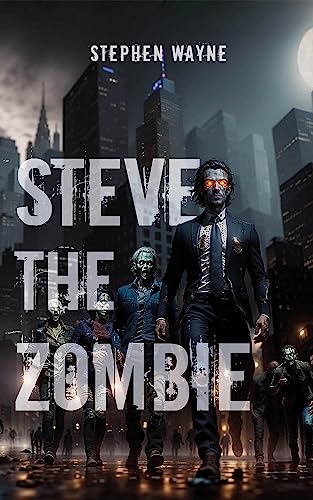

In Steve the Zombie, readers are introduced to Steve, a detective at the pinnacle of his promising career. This engaging tale pivots sharply when a mysterious illness descends upon his community. While investigating what appears to be the onset of a Zombie apocalypse, Steve makes a terrifying discovery: he has become infected. The fear of becoming a monster, once only a distant nightmare, is suddenly a chilling reality. Yet, even as the infection ravages his body, transforming his appearance and sapping his strength, Steve’s humanity endures.
The narrative then takes us on a thrilling journey as Steve wrestles with his metamorphosis and the urgent need to save his partner, Sarah, from the virus that is consuming him. Will he succeed?
One of the standout qualities of Stephen Wayne’s writing is his ability to craft a palpable emotional connection between the reader and the protagonist. Wayne’s portrayal of Steve’s thoughts and emotions is nothing short of masterful. Readers are privy to Steve’s mind, gaining intimate insight into his decisions, feelings, and the relentless pursuit of a cure. Steve’s selflessness and discipline remain awe-inspiring, even as he confronts his transformation into a zombie.
The novel presents a focused cast of characters that keeps the reader’s attention firmly on the main storyline. For those who appreciate the depth, the narrative’s emphasis on Steve’s experience allows an immersive understanding of his situation. The story’s pacing, filled with action and complex thoughts, provides an energetic and engaging experience for those who enjoy a more intricate read. Even for readers unfamiliar with the genre, the novel’s complexity may present an exciting challenge and a refreshing departure from conventional storytelling.
Steve the Zombie offers a rewarding deviation from the norm, even for those who do not typically venture into dystopian literature. Wayne’s literary prowess is genuinely impressive, bringing a fresh twist to the familiar zombie narrative by using a zombie’s perspective.
Steve the Zombie is a compelling read that will likely appeal to fans of fast-paced dystopian novels. If you have an appetite for a unique take on zombie lore, exploring resilience and humanity’s struggle against the monstrous, this book will not disappoint.
Pages: 146 | ASIN : B0C8692JP2
The Light Reapers: Revenge and Redemption
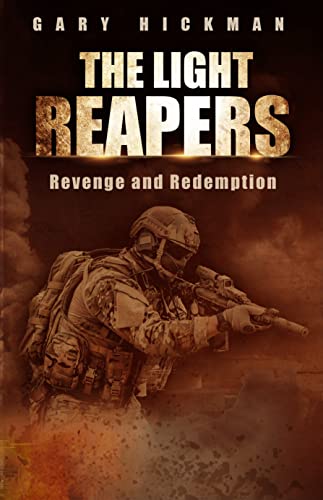
Step into a world forever transformed by the emergence of Major Reece and his formidable brotherhood of ‘infected,’ whose relentless pursuit of global dominion reshaped life as we knew it. Against a backdrop of adversity and betrayals, our valiant team of saviors grapples with the daunting challenge of preserving unity. In the face of dire circumstances, they are forced to resort to unconventional measures, leading Priest and Webb to a crossroads between revenge and redemption as they strive to secure humanity’s survival.
Welcome to the gripping third installment of Gary Hickman’s series, The Light Reapers: Revenge and Redemption, set amidst a chilling zombie apocalypse. In this riveting narrative, Hickman weaves a tale that promises to captivate readers, leaving them hungry for more. Hickman’s skillful portrayal of the military is nothing short of impressive. From capturing the essence of army lingo to depicting the unwavering dedication of soldiers to protect others, the story exudes authenticity and draws readers into the heart of warfare. These characters’ loyalty, courage, and sacrifices add a layer of depth and immersion that genuinely resonates. Amid this meticulously crafted military setting, the protagonist, Priest, emerges as a shining example of Hickman’s attention to detail. With a multi-dimensional personality that acknowledges both strengths and weaknesses, Priest becomes an authentic and relatable figure. The tender portrayal of his affection for Lia adds genuine emotion, further engaging readers in his journey. Amidst the high-stakes drama, the narrative never falters in delivering thrilling, action-packed scenes. The author’s vivid descriptions of carnage, violence, and tactical maneuvers leave readers on the edge of their seats, eagerly turning each page.
The Light Reapers: Revenge and Redemption offers an enthralling and engaging read, firmly gripping its audience with visceral depictions and a well-crafted military backdrop. Gary Hickman’s storytelling prowess shines through, making this a must-read for fans of engaging action and captivating narratives.
Pages: 266 | ASIN : B0C6C6GQ45
The Light Reapers: Revenge and Redemption
In the gripping sci-fi novel, The Light Reapers: Revenge and Redemption, readers are thrust into a world where survival hangs by a thread. Following a devastating assault that left their beloved city of New Orleans in ruins, the resilient Light Reapers face a daunting path to embark on a treacherous sea voyage and seek a new existence. Little do they know that this fateful journey will take an ominous turn, shattering their already fragile hopes. As the team sets sail, the unsettling shadows of betrayal loom over them. Their trust is shattered, and they find themselves ensnared in a web of deception.
However, amidst the chaos, they unexpectedly cross paths with a decimated military unit desperately needing their expertise. United by circumstance, the Light Reapers welcome new blood into their ranks, forming an alliance that will forever alter their fate. But danger lurks on the horizon, for the evolving threat they face challenges the rules of engagement. The team finds themselves in a race against time, grappling with an ever-changing enemy, demanding new strategies and sacrifices. In the face of this daunting adversity, the Light Reapers must confront their desires for revenge or redemption.
Author Gary Hickman’s astute portrayal of military dynamics shines through in The Light Reapers Revenge and Redemption, capturing the essence of soldiers’ mannerisms and dialogue with precision. Characters such as Lia, a resilient and fitting addition to the team, embody this military-like spirit. The delightful interplay of witty banter among the characters deepens their bonds, particularly when faced with the relentless challenges the infected presents.
Readers accompanying the Light Reapers on their harrowing journey are immediately drawn into an engrossing atmosphere of palpable suspense and tension, skillfully established from the very first page. Navigating and surviving a post-apocalyptic world becomes a riveting and immersive experience. To fully appreciate the characters’ intricacies and their trials, it is advisable to read The Light Reapers as part of the series, allowing for a comprehensive understanding of each character’s development.
Hickman deftly explores a range of emotions throughout the narrative, defying the reader’s expectations. From the searing sting of betrayal to the unwavering courage displayed by the protagonists, the profound acts of self-sacrifice, and the indomitable strength of unity, the story embarks on an exhilarating emotional roller coaster ride. Amidst the book’s eventful nature, Hickman skillfully maintains a sense of coherence and closure, steering the narrative toward a profoundly satisfying conclusion.
With its exhilarating plot twists and highly original narrative, The Light Reapers: Revenge and Redemption, captivates readers and immerses them in a pulse-pounding odyssey that keeps them teetering on the edge of their seats. Each page is eagerly turned with breathless anticipation, propelled by the relentless action that unfolds.
Pages: 266 | ASIN : B0C6C6GQ45
Conquergood & the Center of the Intelligible Mystery of Being
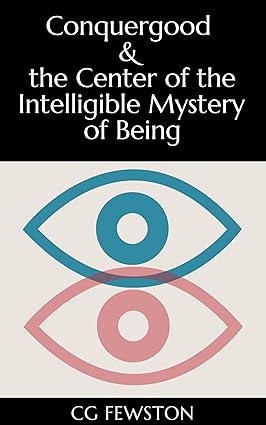
Conquergood & the Center of the Intelligible Mystery of Being is a captivating new dystopian science fiction novel by CG Fewston, an author already making a name for himself with his thought-provoking work. Set in the year 2183, Conquergood is set in a world where one company, Korporation, reigns supreme and has obtained world peace, through oppression.
The story follows Jerome Conquergood, a homeless outcast known as a strayer who lives in what is left of Old York City. His life is at its lowest point yet, but he has a goal, to find his mysterious brother, Vincent, who has gone missing.
This mission leads Jerome to being offered a job in the Turnkey Akweesitions Department of the authoritarian Korporation. He hates them for what they’ve done to the world, but he knows this job is perhaps his only hope of finding his brother. As Jerome navigates the dangerous world of the Korporation, his journey of self-realization unfolds, revealing the intricate web of secrets surrounding both the entity and his own identity.
The world-building in the novel is remarkable. Fewston has created a believable and authentic post-apocalyptic society with technological wonders and thought-provoking societal issues. The relevance of the themes to the state of the world today adds an extra wrinkle and makes the story even more compelling.
Speaking of the story, it is well-paced, quickly gaining momentum as it progresses, and big reveals begin to pile up. Fewston expertly weaves together multiple storylines, including Vincent’s mysterious story and the brothers’ family background. These serve to add a nice additional layer of emotional depth to the tale.
But the book’s true strength lies in its messaging. Good science fiction isn’t all about great world-building and fancy technology; it needs to say something. Fewston poses Jerome with fascinating moral quandaries as he is forced to become what he has always hated. His character growth is fascinating to watch. The questions Fewston raises about the future of humanity in a world full of genetic and mental manipulation are equally interesting.
Conquergood & the Center of the Intelligible Mystery of Being is just an excellent piece of dystopian sci-fi all around. The pacing and story are exciting enough to keep casual fans engaged throughout. Those who like their sci-fi to have some depth will likely fall in love with the book. There’s a lot to unpack in Fewston’s new novel, and doing so is a pleasure.
Pages: 318 | ASIN : B0BY84F3X7
Changing Tide
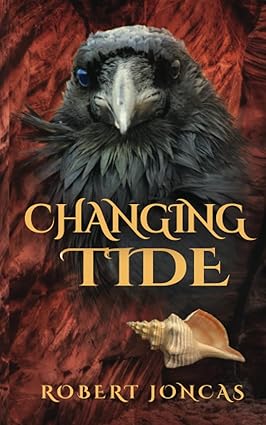
Changing Tide, by Robert Joncas, is an enthralling fantasy novel that immerses readers in Skye Conner’s captivating journey, spanning from the picturesque coast of California to the majestic Grand Canyon. At the tender age of 18, Skye endures the heart-wrenching loss of her father, followed shortly by the tragic passing of her mother. With only her steadfast Nana by her side, Skye’s path intertwines with an enigmatic alien on a mission to protect Earth from a malevolent race of extraterrestrials.
One of the remarkable aspects of Robert Joncas’ storytelling is his choice to employ the first-person perspective, which allows readers to experience the unfolding wonders of this universe alongside Skye. We witness the world through her eyes, forging an intimate connection that cannot be replicated through any other narrative technique. Although this approach occasionally limits our understanding of the broader picture, as it is confined to Skye’s knowledge and emotions, it undeniably enhances the sense of immersion. While Skye mentions her fear of heights, there were instances where I yearned to fully experience the depths of her trepidation. For example, when she found herself perched on a cliff’s edge or scaling its steep face, I longed to share in her terror. Nevertheless, I commend Skye for her courage in confronting her fears head-on.
One aspect that left me longing for more was the absence of alternative perspectives. It felt as though a piece of the narrative puzzle was missing, as we were solely privy to Skye’s viewpoint. Additionally, the pacing took some time to reach its crescendo, and unfortunately, the resolution of the story was left unresolved. Once the narrative delved into the heart of the tale, I found myself thoroughly engaged, eagerly rooting for Skye and Paul’s triumph. It was disheartening not to witness their ultimate victory. While I appreciate the significance of establishing Skye’s ordinary world before thrusting her into the extraordinary, it did take a considerable portion of the book to reach the truly extraordinary elements. I yearned for a more substantial exploration of that captivating realm.
Changing Tide by Robert Joncas is an enchanting fantasy novel that sweeps readers into Skye Conner’s remarkable odyssey. Despite a few minor drawbacks, the story eventually grips readers tightly and leaves them yearning for more of its extraordinary allure.
Pages: 206 | ASIN : B0C9VHRC25



 LITERARY TITAN