Blog Archives
Creating My Own Fantasy World
The Tydareus Kingdom, Alliance of Nations follows twin princes in a tale of epic proportions as they navigate the wreckage of a long lineage of family secrets and power struggles. What was the inspiration for the setup of your story?
The Inspiration for the story was the ending of the Game of Thrones TV Series. I have always loved the fantasy world of Kings and Queens and decided to create my own fantasy world. As I sat down to write the Alliance of Nations, the plot seemed to drive itself from one kingdom to the next.
What intrigues you about this time period enough to write such a thrilling period piece?
As I stated, I love the fantasy world of royalty with Kings and Queens and wizardry. From King Author and Sir Lancelot to Game of Thrones and the many different kings portrayed in the books, I think the fantasy worlds offer a break from reality with dragons, stonemen, etc. Although, I chose not to add mythical creatures and other type animalistic avatars, I do find them interesting. However, I sometimes have a more difficult time relating to books with such characters, which is why I chose to maintain humanlike characters with emotional conflicts on a more personal level relatable to common people. Also, I’m not such a big fan of The House of Dragon Prequel. I haven’t read the books, but I think the series feels rushed and lacks the time development of the plot and characters. That is why I took the time to create realistic plots and focus on character development so that readers could relate to the characters on a more personal level and connect with their personalities whether good, bad or indifferent. It was important to maintain in-depth situations that followed each character’s persona. Of course that made for a much longer read, but I hope that the intrigue and thrill of both plot and characters made the book feel less cumbersome in length.
Were you able to achieve everything you wanted with the characters in the novel?
Yes, as each character came to life, so to speak, each person’s persona felt natural and unforced. From Stavros and his twin to the different kings, it was important that their persona was relatable and realistic. Although I didn’t particularly like each character’s persona, I think it made for a more intriguing plot with relatable twists and emotional conflict. It was important that readers form an emotional attachment to the characters as the story progressed, whether perceived as an antagonistic protagonist, a villain, or a heartfelt protagonist that drives the story forward while overcoming challenges.
Can we look forward to seeing the follow-up to this novel? What are you currently working on?
Yes, the follow-up sequel is The Tydareus Kingdom, A Nation of Slaves which delves more into the lives of the slaves as these 3 kingdoms continue on the path to war. The final book is entitled The Tydareus Kingdom, A War of Three Nations, which of course will follow the lives of the kings as they progress through the war. I’m currently working on the sequel to The Women’s Meeting entitled, Saga of My Scars, The Aftermath of Life’s Wounds which follows Dr. Angela Morrison through her quest for answers to her life as presented by the 3 different personalities. The Women’s Meeting revealed her Renee Lindsey personality to Dr. Morrison forcing her to confront the truths of her childhood, adoption, abuse, etc. Unknown by Dr. Morrison, she finds herself entangled in conflict with a newly emerging personality, Erin Philips. Unlike Renee, Erin has her own ideas about taking over Dr. Angela Morrison’s life—determined to eliminate all other personas and assert herself entirely. Erin is determined to avenge the people responsible for the abuse and degradation of Angela, Renee and herself even if that means destroying Angela in the process.
Author Website
The imminent invasion by Kadir, the brother exiled to the Western Island, forces Arius and Acuitius to seek an alliance with the Eastern Shore Kings—Matteo, Obasi, and Basili—to safeguard their western borders and train their soldiers in an Army that has not experienced combat in centuries. However, these three Eastern Shore Kings, notorious tyrants of their lands, harbor their own ambitions and agenda. They aim to overthrow the Tydareus Kingdom, destroy the brothers, and seize control, regardless of the cost.
Ultimately, this may escalate into a war between the three nations. “Alliance of Nations” delves into the lives of these six kings as they navigate the complexities of forming alliances through marriages and conflicts that threaten to derail their strategies for a successful union.
Recognizing the Strengths Within Ourselves

Heroes of Another Age follows twin shifter brothers who realize their destiny lies in stopping a catastrophic event, and they must leave their home to battle a sinister force that may prove fatal. What was the inspiration for the setup of your story?
I’ve spent my life writing and reading about characters with magical powers and incredible abilities—but one day, a question struck me: What would it feel like to suddenly discover that you had powers of your own? That you weren’t “normal” anymore? How would that reshape your sense of self and your place in the world? And what if those powers demanded something of you—something that you didn’t want to give?
That’s how Aton and Aaron were born: two brothers, one thrilled by the discovery, the other unsure and reluctant to take up the call.
I find the world you created in this novel brimming with possibilities. Where did the inspiration for the setting come from, and how did it change as you were writing?
I’ve been fortunate to travel across six continents, experiencing a wide range of cultures, cuisines, and landscapes—and that inspiration weaves itself into my writing. As I followed Aaron and Aton on their journey, I found myself revisiting places from my own memory: their hometown, Vidar, has the feel of an old European village; the mountains they cross are echoes of the Alps; and the City of Sky Fire carries distinct influences from my time in Asia. Each real-world place helped shape the mood, texture, and wonder of every new step on their path.
What were some themes that were important for you to explore in this book?
Some of the core themes that guided me while writing were the reluctant hero, the strength of family bonds, and—most importantly—self-validation. It’s so easy to compare ourselves to others: someone who writes better, runs faster, or seems so much smarter. But it’s much harder to recognize the strengths within ourselves. That’s what I wanted to explore in this story—the quiet courage it takes to believe in your own worth.
Where does the story go in the next book, and where do you see it going in the future?
My next book is titled A Glimmer of Hope, and it marks the beginning of The Guardian Series—with Heroes of Another Age serving as its prequel. This story follows a young human sorceress named Resara, her encounter with the Five Gods of Eris, and a mysterious plague threatening to wipe out life across the world. In this first installment, readers will meet Garron, her werewolf guardian, along with a vibrant cast of characters from all walks of life—and species.
The series is planned as 8.5 books: four novels in the first arc, a fun interlude novella, and four more in the second arc. Along the way, readers will explore more of the world of Eris, encounter strange and wonderful creatures, and maybe even run into Aaron and Aton again.
I hope you’ll join me for the journey ahead.
Author Links: GoodReads | Instagram | Website
Aaron loves the life he’s got. It’s just him, his twin brother Aton, and their mother living atop a picturesque mountaintop, herding sheep, and hiding the fact that they’re all werewolves. The humans down below don’t care much for shifters, and they’d like Aaron even less if they knew he also had magical powers. But as long as they stay hidden, they’re safe.
After a tragic accident, Aaron and Aton learn of a looming catastrophe in the east—and that it’s their destiny to stop it. Aton is eager to embrace the call to adventure. He’s always been the stronger, braver brother. But Aaron isn’t so sure.
Trekking through snow-covered mountains and shadowy forests filled with vicious, unrelenting demons, Aaron begins to question if he’ll even survive the journey—let alone face the sinister force that awaits.
Can Aaron’s fledgling magic and Aton’s warrior strength stand against the darkness? Or will they be swallowed by it? Fate may have chosen them—but when dragons and gods enter the fray, how can two brothers hope to defy destiny?
If you enjoy His Dark Materials, you won’t want to miss Heroes of Another Age by B.L. Mostyn—an epic fantasy full of magic, monsters, and myth.
Will Aaron rise to meet his destiny—or be devoured before he gets the chance?
Click BUY NOW and begin the adventure.
Paragons of the New Moon (Book 2 of The Last Battlefield for Light and Darkness)
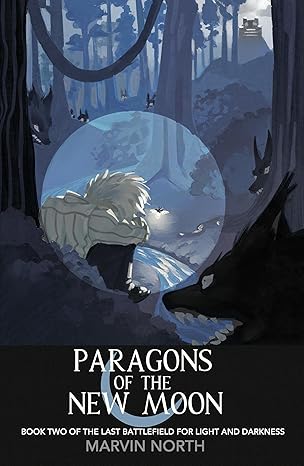

Paragons of the New Moon is a sweeping cosmic fantasy filled with layered lore, celestial politics, and introspective heroes fighting not only monsters but the haunting echoes of their own pasts. This second book in The Last Battlefield for Light and Darkness saga follows Rayeen Beeta—a man brought back from the dead by otherworldly magic—as he’s sent on a mission by the enigmatic Overseer Shamooga to track down a mysterious boy named Kosinki, whose powers may very well rewrite the universe. What unfolds is a bold journey that dances between metaphysical philosophy, epic-scale action, and raw emotion, stretching from the dusty violet dunes of Amethyst Sands to the heart of cosmic archives and long-buried grief.
The opening chapters hooked me right away with their weird, wonderful energy. You get this totally surreal setting—Shamooga in a tower beyond physics, manipulating reality like origami. And then Rayeen’s dropped into a vision quest-style battle with his inner demons and literal monsters. His body is dead, his soul’s in his pocket, and he’s trying to hold onto his humanity through sheer force of will. North knows how to blend high-concept magic with gut-punch emotion, and that combo really shines here.
In the middle of the book, the pace kicks up a notch with Rayeen tracking Kosinki, clashing with pirates, and getting absolutely wrecked by the Black Lake and its Corrupted beasts. The fight scenes are wild—like, anime-level intense—but what I appreciated more was Rayeen’s frustration. He’s powerful, nearly godlike, but he’s constantly told “not yet,” “you’re not ready,” and you can feel his resentment simmer. It’s not just about power—it’s about emotional readiness, and man, that hits harder than any boss battle.
We finally learn about Shamooga’s own past—how he survived an apocalypse, got offered godhood, and became an Overseer almost against his will. These late chapters are steeped in lore, with cool reveals about the higher powers pulling the strings, and even a secret archive Shamooga keeps to remember people the universe has erased. The vibe gets almost melancholic toward the end. By the time Rayeen returns, frustrated and desperate to go home, there’s this shared, quiet pain between the two of them.
If you’re into Final Fantasy, Fullmetal Alchemist, or anything that blends big cosmic ideas with messy, soulful characters—you’ll dig this book. It’s poetic, intense, a little chaotic, and full of heart. There’s some deep stuff in here, and it helps to read slowly to catch all the meaning. But it’s worth it. North doesn’t spoon-feed. He lets you feel lost, like the characters. And that makes the victories—no matter how small—feel earned.
Pages: 299 | ASIN : B0F2SD32FK

As Long as We’re Alive, Problems Will Arise

Pandora’s Box follows a 14-year-old boy who discovers he is a demigod like his late mother. His life has become a whirlwind of magical schools, ancient mythologies, and adventure while he tries to prevent evil from taking over the world. What was the inspiration for the setup of your story?
My son was my inspiration. When I became a mother, a new fear was unlocked: what will become of my child if I am not here tomorrow? I wanted to write something that could speak to him, nurture him, and entertain him, while leaving him with the values I hope I will have the time and support to instill in him.
The MC’s name is my child’s name: Liam. His mourning is built on my biggest fear.
The chaos the MC faces is nothing but the chaos of life. We tend to think our problems are the biggest in the world—and for us, they are. But it’s important for children to see that everyone has problems, which, to them, feel just as big. As long as we’re alive, problems will arise, and that will be true for everyone. The realization of this fact gives them a sense of belonging, helping them step out of the victim mentality and see problems for what they really are: opportunities for solutions and growth. I was careful to reflect that on each and every page.
I find the world you created in this novel brimming with possibilities. Where did the inspiration for the setting come from and how did it change as you were writing?
My inspiration comes from the books I grew up with. I’m a huge Star Wars fan, which is why you’ll see a mix of Sci-Fi and Fantasy in my work. I also love The Lord of the Rings and The Hobbit, and I read a lot of Agatha Christie and Sherlock Holmes as a child—this helped me develop my approach to building suspense, planting clues, and leading characters (and readers) toward discoveries.
Role-playing games have also been a major influence. I spent years as a Game Master for Vampire: The Masquerade and Dungeons & Dragons, which shaped my multi-perspective storytelling, worldbuilding, and rule-setting for magic and power. RPGs also helped me focus on character growth, much like players leveling up through campaigns.
Brazilian folklore played a big role in my childhood—it was mandatory in school and deeply woven into our culture. This sparked my curiosity about other mythologies, particularly Nordic folklore. Beyond that, I have a very poetic way of describing emotions, which comes from my younger years when I wrote poetry, competed in poetry contests, and attended poetry events as early as 12 years old.
On top of that, I love Greek mythology, Egyptian history, and the original versions of the stories that Disney adapted—many of which were quite dark in their European roots before being softened for children. That’s probably why my writing naturally leans toward darker themes.
Honestly? My writing style hasn’t changed much while writing. What has changed is my awareness of how readers perceive my published works, which influences what I choose to emphasize or tone down in future books. Since I haven’t read anything published in the last 20 years, my writing style remains uninfluenced by modern trends—it’s purely shaped by the stories I love.
What were some themes that were important for you to explore in this book?
Self-discovery, the concept of character (discerning good from bad), cause-and-effect (accountability for our choices), and inner power were all central themes. I wanted to show that having flaws doesn’t make you incapable of achieving great things—nor does it automatically turn you into the villain. It’s important for teenagers to develop a fair sense of self rather than viewing themselves through extremes of “good” or “bad.”
Faith in something bigger also plays a key role. Throughout the trilogy, I touch on difficult topics, even taboos like suicidal thoughts, in hopes of helping young readers recognize that the voice telling them they’re not enough doesn’t come from them—and that they can (and should) break free from it.
Can you tell us more about where the story and characters go after book one?
Without giving too much away—because surprises are half the fun—the second and third books take the characters much deeper into the prophecy hinted at in Pandora’s Box. Relationships will evolve, secrets will come to light, and the stakes will grow far beyond what they imagined. You’ll see characters like Liam, Ada, and others struggle with even more challenging situations, both magical and personal. Also, expect to see new realms, powerful antagonists, and the consequences of choices made in book one. It becomes a story not just about stopping evil, but about understanding yourself and the cost of standing for what you believe in.
Author Links: GoodReads | X | Facebook | Website | Trilogy Website
Liam Hale gets a posthumous gift from his late mother, Bree, on his 14th birthday. It’s a holographic message that turns Liam’s life upside down: According to a projection of Bree, Liam is a demigod (as Bree had been), will attend a magic school, and will take over his mom’s role as keeper of the Seven Wonders (Earth and six other dimensions).
He will have to be “initiated” before claiming the keeper’s throne within 90 days, or the resultant fight for the position will trigger an intergalactic war (“It’s too much power”). As if that weren’t enough pressure, Liam must also complete Bree’s mission of finding “the Pandora’s Box,” an artifact that will restore the balance between good and (currently rising) evil. Luckily, he’s got help: His allies include his best friend Ada, mage student Benji, and perpetually bickering witch-twins Zac and Zoe.
With mythological creatures, a magic school, and dimension-hopping adventures, Liam and his friends must uncover the secrets of The Pandora’s Box before darkness takes over.
Heroes of Another Age: A Guardian Prequel (The Guardian)
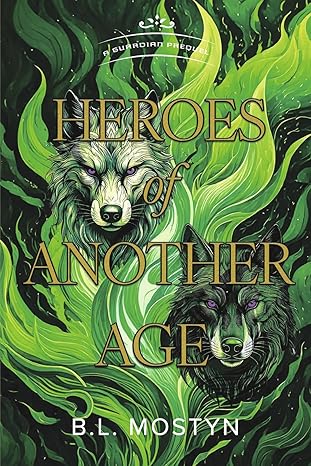

Heroes of Another Age is a fantasy coming-of-age tale that follows twin brothers Aaron and Aton, two young werewolves living a secluded life with their mother on a remote mountain peak. What starts as a quiet pastoral existence quickly unravels into a tale of magic, identity, and legacy when Aaron discovers he has mysterious healing powers and Aton’s supernatural abilities begin to surface. Their world, previously defined by sheep herding and cinnamon bread, begins to crack open with danger, secrets, and signs of a larger destiny.
This book completely surprised me. It starts off with such a calm, even cozy vibe. The early chapters, especially when Aaron talks to sheep who don’t fear him and worries about feeling ordinary despite being a werewolf, are honestly kind of adorable. There’s warmth in the writing, especially in the family dynamic. Their mother is tough but nurturing, and her presence anchors the story beautifully. When Aton climbs the peak to get their mom a flower, only to get badly hurt, I felt that mix of horror and love. The magical healing moment had me wide-eyed and flipping pages.
I really appreciated how this book handles magical discovery, not with flashy spells and big showdowns, but with quiet awe and genuine confusion. Aaron’s realization that he has healing magic comes not with cheers but with a panic attack and a desperate attempt to save his brother. And that scene where he wakes up and sees his mom casually cradling glowing green light in the kitchen? It’s magical but also intimate. That’s what this book does well; it makes the fantasy feel close to home. There’s a wonderful sense of scale: this isn’t a story about kings and kingdoms but about a little boy trying to understand who he is and how he fits into a world that might fear him.
It’s not all sweet family vibes and glowy hands. There’s darkness creeping in. The book doesn’t shy away from fear, especially fear of being different. When Aaron’s mom explains that people might kill casters just for using magic, it’s a terrifying thought. And Aton’s growing distance, his determination to protect his brother, and the way he starts carving a wooden sword, it all points to something bigger on the horizon. The tension grows slowly, but it’s there like storm clouds building behind a sunny sky. I genuinely loved how much emotional weight was packed into the little moments. Even small things, like the way the brothers bicker, felt so real. The writing doesn’t try to be clever; it’s honest and vivid, with a lot of heart.
Heroes of Another Age feels like the start of something special. It’s a small story, but it hints at big things. If you’re into slow-burn fantasy that puts relationships first, this book is for you. It’s perfect for readers who liked The Lion, the Witch, and the Wardrobe but wanted more time in the wardrobe. Or for anyone who enjoys quiet magic, complicated families, and characters, you just want to wrap in a blanket. It’s a book that made me feel warm, then worried, then hopeful, all in a couple hundred pages.
Pages: 378 | ASIN : B0F395WJSQ
Safe Space
Eastlanders’ Fall is a tale of ancient evil rising again, powerful cults seeking domination, and unlikely heroes trying to stop the world from crumbling—literally. What was the inspiration for the setup of your story?
I drew inspiration from the real world and used my fantasy setting as a safe space for an unbiased reflection on current issues.
I find the world you created in this novel brimming with possibilities. Where did the inspiration for the setting come from and how did it change as you were writing?
In the 90s, I served in the Brazilian military. When cartel violence spiraled out of control, Rio’s governor requested federal troops, and my unit was one of those deployed to assist.
For several months, in between missions, to avoid dwelling in the violence and bleakness, my mind took off. Fantasy books and role-playing games came to the rescue, and the continent of Ananthia was born.
To be in a place where evil and injustice could be fought and defeated—unlike in the real world—was like a drug, so I never left. All the mind space I could spare went into world-building, and seventeen years later, with no plan or ambition, I began laying it down.
The RPG campaign setting I wrote had such an elaborate backstory that I was entreated to tell it all. Eastlanders’ Fall began taking form, and a decade—and eight countries—later, A Drying World trilogy was completed.
Ananthia was so deeply developed in my head that it needed no change to accommodate the story – it was the story.
What were some themes that were important for you to explore in this book?
Bias, hubris, and blind ambition—and how to beat them.
Where does the story go in the next book, and where do you see it going in the future?
Eastlanders’ Fall is the first book of a trilogy. In book 2 (Two Storms), the children of the protagonists, born at the end of the book, take the lead, assisting their whistleblower uncle who’s on to Darvis Talsdrums second phase plans but struggles for decades to prove it. In book 3, the heroes take the fight to the lich.
In the future trilogy, I take the reader to Central Ananthia – the region where the desertification started, now under the sand. It will be told in two parallel timelines: the present, featuring the surviving protagonists, and the past, telling the story of how it all began.
Author Links: GoodReads | X (Twitter) | Facebook | Website | Amazon
The land of Ananthia is dying. Its once-prosperous heart has turned to sand, swallowing Empires and burying faiths. But a darker shadow looms—Darvis Talsdrum, a warlock whose cunning strengthens his demon lord’s grip on the continent.
Talented as he is reckless, veteran wizard Milendil’s mistakes could seal the fate of Ananthia, when bitterness bids him to tip the scales for tragedy.
Air ranger Solostamir never asked to be a hero. Burdened by a family rift and torn between two powerful women—Keera, the elven noblewoman who shares his past, and Lilyanna, a prodigy human archer whose fire reignites his hope—he walks a razor’s edge between love and duty.
When war drives them apart, Lilyanna’s fate becomes entwined with Soraya’s, a battle-hardened warrior whose growing bond defies expectation.
As ancient magic stirs and loyalties splinter, these fractured heroes must unite what’s left of Ananthia before darkness consumes it all. But love is as dangerous as war—and not every heart will survive the fire.
Eastlanders’ Fall is a sweeping epic of sacrifice, redemption, and love tested at the brink of ruin—perfect for fans of high fantasy with heart, grit, and consequences.
Sorcerer Seed

From the very first dusty, confused breath in a strange crater, Sorcerer of Almora Sorcerer Seed dives headfirst into a fantasy tale rooted in mystery, survival, and identity. We follow Maylore, Jendrin, and Airalee—three strangers who wake up in an alien world with no memory of who they are or how they got there. Their journey begins with danger, then spirals into deeper questions about who erased their pasts, why, and what purpose they now serve in the vivid world of Almora. As they traverse lava tubes, confront creepy glowing-eyed creatures, and navigate tense social structures in a mysterious village, they must rely on each other to survive and find their place.
This book hooked me hard from Chapter 1. Maylore blinking away dust while trying to figure out if he’d murdered someone is compelling character work. The tension is real and tight from the beginning. Then it just layers mystery on top of amnesia on top of survival horror. I appreciated how author Curt Sylvester didn’t throw everything at us all at once but slowly unwrapped the world through dialogue and small, believable discoveries. I mean, who doesn’t love a cave escape, shadowy politics, and wolves the size of a small car?
Sylvester keeps the writing tight and conversational. It feels natural, especially in the banter between Maylore and Jendrin. They’ve got this reluctant buddy energy—one’s calm and analytical, the other all “I-don’t-trust-nobody”—that just works. Airalee brings a refreshing edge. Her mistrust, her inner monologue, her rock-clutching paranoia—it made her relatable. And she’s fierce. But the real gem was the pacing. From wolves chasing them to navigating dark tunnels with burning fur and finding human bones in an abandoned camp, the story moves in waves. It builds, breathes, and then slams the door shut with tension again.
Some of the dialogue veers into on-the-nose territory, especially when characters recap things for each other that we just saw. And while the amnesia trope is cool at first, by the middle of the book, I was itching for more forward movement. But the mystery of why these people were wiped clean and dumped in this world is fascinating, and Sylvester doesn’t drag it out without payoff.
Sorcerer of Almora is a solid and immersive fantasy read with a great blend of mystery, survival drama, and slow-burn worldbuilding. If you’re into books that drop you in the middle of nowhere with no map and make you claw your way toward meaning—this is your book. It’s perfect for fans of classic fantasy with a modern vibe, especially if you enjoy character-driven stories with a hint of danger and a lot of heart.
Pages: 787 | ASIN : B0DR67TS4P
The Tydareus Kingdom, Alliance of Nations

J.E. London’s The Tydareus Kingdom is an ambitious epic that plunges the reader into a richly woven tapestry of royal intrigue, betrayal, and political ambition across a sprawling, multi-regional empire. The story traces the legacy of the Tydareus lineage, beginning with the wreckage and rise of Quintus Tydareus and evolving into the tangled fates of his descendants—particularly the twin princes Stavros and Kratos. The narrative winds through a maze of kingdoms, love affairs, family secrets, and brutal power struggles, culminating in a saga that is both grand in scale and intimate in its emotional complexity.
I enjoyed the intensity of the prose. London doesn’t ease you in; she drops you into a storm of evocative language and raw human drama. The writing is rich, even poetic at times, and while that style can be beautiful, it occasionally teeters on excess. Still, there’s no denying its power. There’s a sense of fatalism baked into the world, and London’s vivid imagery makes you feel every betrayal, every oath, every secret.
What I truly enjoyed was the relationship between the twin princes. Stavros and Kratos are magnetic in their contrast. Stavros is a tyrant-in-the-making, all ego and rage, while Kratos is introspective and torn by duty. Their first scene together in the vineyard set the tone—raw, physical, tense with unspoken history. I found myself siding with Kratos often, especially as Stavros descended further into cruelty. The tension between them is Shakespearean, and that dynamic carries much of the novel’s emotional weight. There were moments when the dialogue veered into melodrama, and the frequent physical and verbal brutality was almost too much. But maybe that’s the point—this kingdom is built on blood and silence.
Then there’s the character of Avana, the queen. Her story gutted me. She’s caught between the title of royalty and the reality of being stripped of agency in a patriarchal, violent court. Her scenes with King Arius are some of the most difficult to read, especially when he asserts dominance not just politically but physically. The abuse and the gaslighting is brutal. I felt genuine anger, and sadness, and helplessness for her. London doesn’t shy away from depicting the consequences of power in the hands of those who abuse it, and while it’s hard to stomach, it’s also honest. She’s trying to survive in a world that constantly tells her she’s expendable.
The Tydareus Kingdom is a harrowing and layered portrait of human ambition and moral collapse. It’s not for the faint of heart. If you’re looking for a fairy tale, this isn’t it. But if you’re drawn to political drama, moral gray zones, and character-driven epics where no one is safe and every choice has weight, then this book delivers. I’d recommend it to fans of Game of Thrones or The Witcher—people who don’t mind getting dirty in the trenches of family legacy, loyalty, and betrayal.
Pages: 825 | ASIN : B0DXWKC4JQ



 LITERARY TITAN