Blog Archives
The Soul Machines
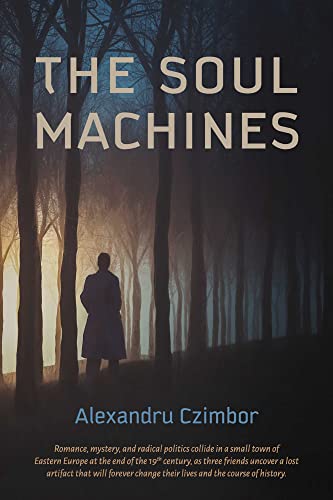

Set in the 19th-century Austro-Hungarian Empire, Alexandru Czimbor’s The Soul Machines is a captivating novel that explores the impact of a mysterious device on the lives of three young friends and the residents of a burgeoning mining town in Transylvania. As the discovery of this peculiar object unleashes a wave of violence, murder, and lunacy, the three young men must navigate a complex web of conflicts, including a pauper’s love for a wealthy girl, a villain’s sinister plans, and a group’s plot to harness the power of the device.
What I appreciated most about this gripping book was the author’s skillful weaving of multiple minor conflicts, which together create a dramatic and engaging story. Czimbor expertly blends genres, including mystery, thriller, and forbidden love, to deliver a rich and elaborate reading experience. By shifting between multiple perspectives, we gain a comprehensive understanding of the story and how the character’s interactions with the device influence their plans and objectives. Moreover, the book raises insightful and thought-provoking discussions around religion, naturalism, Marxism, and Darwin’s theories of evolution. The combination of themes makes this genre-blending novel perfect for eclectic readers.
The Soul Machines is an emotional rollercoaster, filled with unexpected twists and turns that will keep you glued to the pages for hours. For readers looking for a historical narrative that is both captivating and emotionally engaging, this book is a must-read. Be warned, however, that the book ends on a cliffhanger, leaving readers eagerly anticipating a sequel. Overall, I highly recommend this book to anyone seeking an unforgettable reading experience.
Pages: 584 | ASIN : B0BRT85YMG

To Improve Tolerance And Understanding
Homespun follows the people from two small South Carolina towns who struggle with adapting to the changing world. This is an intriguing setup for a novel that is high in social commentary. What was your moral goal when writing this novel, and do you feel you’ve achieved it?
I wanted to showcase the South in a fresh light, and I accomplished that, I do believe. The characters aren’t perfect, but you grow to care about them, and that’s the main moral goal—to improve tolerance and understanding.
Ginny and Jack face a moral dilemma in dealing with her family’s opposition to them seeing one another, but my real purpose in that situation was more along the lines of showing how each party’s stubbornness caused the most lasting harm. Conflict inevitably occurs in all families, but to hold grudges forever can be literally heartbreaking, as we see in Homespun.
Promoting the development of empathy has always been an underlying goal of The Silk Trilogy. I think most novels do achieve this, at least to an extent. Let’s hope that my distinctive characters—for example, Ginny’s domesticity as opposed to Vivian’s more outgoing lifestyle—put that empathy-learning curve on the accelerated track. Empathy makes for kinder, not-so-dismissive people; plus it’s simply intriguing to try to figure out what prompts certain decisions. Everyone has reasons for what they do, even if they’re bat-shit crazy ones—but more often, they’re not.
That said, Homespun is perhaps less motivated this way than the other two novels in the trilogy. I’m afraid it even tends towards campy at times. Maybe that has to do with it being inspired, in large part, by true events or rumors—which are all highly fictionalized. For instance, the story of Henry up in the tree, waiting to jump down on Buford, was inspired by a real-life situation I heard about my great-grandfather. In retrospect, I probably didn’t plumb the true depths of his feelings there, though I suppose I must have seized on some of his rationale.
Neglect is a great evil that can’t so much be applied to Jessie’s host of negative traits, so it seemed only fair to bring it up. It’s one fault that our new antagonist, Zingle Caddell, is imbued with, and it causes his family much grief. With many millions of refugees in the world today—whom I rarely hear about anymore in the news—and more specifically the refugee camps near our border with Mexico, it seems important to be cognizant of what harm comes from neglecting people. Factory farms for livestock animals terribly neglect their basic needs for movement and fresh air as well, violating nature in the extreme—and I suspect those creatures can bear it less well than humans, actually, as we are more cerebral and can escape through deep conversation and within our imaginations, at least.
Each character in this novel is unique and memorable. What character did you enjoy writing for the most? Was there one that was more challenging to write for?
Vivian was the most fun to write, of course! When I was penning the trilogy’s early draft, I even had a dream of Vivian going off and parachuting into the jungle—only afterwards realizing that her personality was being tapped from a friend of mine who really did go rafting down the Amazon. She was her sorority’s president and became an ER doc and ran marathons. She’s working on a book, too, and is an advocate for patients’ rights. She can do anything, and it’s all in the attitude. She’s bright enough, certainly, but there are countless people just as bright and attractive who never have the courage nor the vision to succeed like her. Vivian even looks like her, I realized. The great-aunt whose spot she fills was someone I never met and know very little about—except for that whole baby-giving scene. It was inspired by my grandfather’s indignation, even into his old age!
You might be surprised to learn that Ginny was the most challenging character to write. Her perspective felt narrow, even claustrophobic. Ginny wasn’t a reader, and she was secretive and held grudges—but she was also loving. I was trying to depict how she’d been damaged by her upbringing, absorbing some of Jessie’s behaviors without necessarily sharing her mentality. Those formative earliest years had been different for Vivian, who had her mother, and Gaynelle, who had Vivian, and even for Annie, who had Ginny. I’m afraid, though, that Ginny comes across as more flawed than I’d meant for her to, although some of those flawed aspects of her personality were there, too, in the ‘real’ Ginny, if not to that extent. Her character is based on my granny, a woman who was actually such a comfort to be around that the local hospital once offered her a job to simply come and sit with patients—that’s how soothing she was. I’m convinced I did not capture that portion of her personality very well, and I’m sorry for it. Isn’t it fascinating that she came across as so incredibly soothing—and yet once had a nervous breakdown herself?
As this ends the trilogy, where do you see your characters after the book ends?
Since this is a highly-fictionalized version of my own genealogy, I have a very clear idea—undoubtedly clearer than most novelists—of what happens to all the characters afterwards. The epilogue in Homespun actually gives a broad overview.
What are your plans now that this series is completed? Have you started another story?
I’m writing two separate series, both entirely different. The Silk Trilogy has a slender connection, however, with one of them. In Tapestry: A Lowcountry Rapunzel, the middle book of The Silk Trilogy, there’s a brief discussion—to Rosa Pack’s embarrassment—about how she is descended from King George II. Well, my next book happens to be about King George II’s mother, Sophia Dorothea of Celle. Set in the Baroque era in the Holy Roman Empire, it’s a biographical novel about her life—but in that story, I don’t purposely change the names, nor is it quite so fictional!
You might be surprised to learn that the other series is a YA Fantasy about a runaway princess, a wild boy, and a wolf-dog. At this point it is a duology. It may stay that way, as that was my original intent, but I was surprised at the end of the second novel’s draft when I left it set up for another adventure, as if I couldn’t help myself, so we will see if that’s how it stays. This storyline came into being when we went on a trip to the Poconos, where my favorite childhood author vacationed as well—we’d actually visited Lloyd Alexander near Philadelphia for our first anniversary, so he was high in my thoughts as we headed back to Pennsylvania for another anniversary (when I was twelve, I’d even dreamt that he was my actual father—hence my pen surname). I might have been in the midst of writing Sophia Dorothea’s story at the time of our Poconos vacation, but the connection to Lloyd Alexander called for something different; he had been writing-obsessed during his own Poconos vacation, as well, as he related in his charming book about his wife, Janine is French. I’d already been toying with the idea of starting a fantasy novel in his honor while there, but when I fell sick with a miserable flu early during our vacation and couldn’t go out, that cinched it. I seized the opportunity to begin my first fantasy novel, hoping to draw inspiration through that special place with that amazing fantasy author. I think it might have worked.
Author Links: GoodReads | Twitter | Facebook | Website
Meet Zingle Caddell, who doesn’t regret the destruction left in his wake so much as he is annoyed by it. Figuring no man can continue to have such bad luck, Zingle is waiting for his fortunes to improve. He knows what he likes–alcohol, women, and family, in about that order–and he’ll continue on with them as before. That is, until he’s surprised by a violent encounter with his match, Jessie Bell, when her stepdaughter doesn’t come home as expected. Bad blood is rampant between the Bells and the Caddells by the time Jessie’s daughter and Zingle’s nephew unwittingly fall in love. Forbidden to see one another, the couple must decide how much they’re willing to risk. Is it worth being ostracized from their families? Destitution? Their very lives?
Literary License
“Where’s Helen?” follows an unassuming girl’s harrowing quest for justice as she navigates family dysfunction and uncovers dark secrets, finding strength in her own resilience and an unexpected alliance with her enigmatic grandmother. What was the inspiration for the setup of your story?
The basic theme was derived from the speeches of Russ Dizdar, who helped the police in occult crimes and was very familiar with Satanic ritual Abuse themes. The characters are mainly composites, and I have taken a lot of literary license with the ones inspired by real humans I have met or even fictional characters I like from other author’s novels.
Helen is an intriguing and well-developed character. What were some driving ideals behind your character’s development?
Helen has many of my own characteristics, but she is a better, stronger, sane, and more sensible version. I see mistakes I made during my youth and how I could have done better. However, it must not be discounted that Helen had Anna as a role model, even if she could not depend on her own mother. It would have been extremely difficult to navigate the situations Helen was in without Anna’s influence and mentorship.
What were some themes that were important for you to explore in this book?
I wanted to present two themes. First, can a girl who was not raised in a “good” family be a moral and virtuous girl? Absolutely, yes, but it will take more commitment to God, who will protect her, and more strength on her part. Second, I wanted to show what a narcissistic personality looks like from the viewpoint of those who have to deal with it in a family situation. Anyone who has had a narcissistic close family member and “woken up” from why the person is that way knows what I am saying.
What is the next book that you are working on, and when will it be available?
I really enjoyed writing “Where’s Helen?”. I want to write another book, but right now, there are only vague ideas floating around in my head. I want to write something original. Many romance authors turn out novel after novel, which is basically a selection of the same themes mixed and matched over and over. Plate wrote of a Sacrates situation where Socrates met an actor called “Ion.” Ion acted in the plays of Homer and was renowned for his acting in his time. When he acted in another playwright’s play, he was only a so-so actor. The plays of Homer inspired his with a muse, Socrates said, so he could truly act the part. When a creator is inspired, they will stay up late, get obsessed with their task, and enter into another world. Ayn Rand is an author I admire, and she writes about this when Roark designs the Enright house. Ayn Rand was not an architect, but she understood what it meant to be inspired by your work. I can see her staying up writing her own novels all night and slumping over her desk in quiet exhaustion in the morning.
I have written a lot that I never tried to publish and much of which I never finished. The muse has to hit me, and as a Christian I need to make sure God approves as well.
Author Links: Facebook | Amazon
Our Inheritance And Legacy
The Spirit of Ruchel Leah tells the story of a woman living during the Holocaust and her struggles not just to survive but see her family escape to America away from the Nazis. Why was this an important book for you to write?
The Spirit of Ruchel Leah revolves around the letters that Ruchel Leah, my aunt, sent to my grandparents and father from 1938-1941 and subsequent letters from extended family members after the war. These letters, as the only remaining connection with Ruchel Leah and her family, were saved and passed on to my father, Abraham. After several years, he took on the task of translating the letters from the original Yiddish, Polish, Russian, and French so that his sister, brother, brother-in-law and nieces would not be forgotten by future generations.
Upon reading the translations, my sister Elaine and I told our father that the story is not just for our family, but needs to be exposed to a wider audience. When we inherited the letters and preliminary work from our late father, we embarked on an extraordinary research mission to bring the village, the family, and the era accurately to life. This was our inheritance and legacy.
We must learn from the past in order to engage in the present and have an impact on the future.
What were some ideas that were important for you to share in this book?
It was important to share the strength, courage, hope, and resiliency of one woman as she struggled for mere survival against unimaginable obstacles. To me, Ruchel Leah represented the essence of our people. It is also important to be aware that social and political implications direct decisions, such as the restrictive 1924 immigration laws, which impacted many individuals in the past and can affect the future. This generation needs to be proactive to change those implications for the good.
Did you find anything in your research of this story that surprised you?
Everyday of research produced surprises. We had to identify the individuals and events written about in Ruchel Leah’s letters and place them into the appropriate historical context. Being able to trace information about Ruchel Leah’s brother-in-law in Paris and sister-in-law who ultimately immigrated to Israel was perhaps the most surprising research. Tracking down the disposition of the visa application was also amazing and telling.
What were some goals you set for yourself as a writer in this book?
The biggest challenge in writing The Spirit of Ruchel Leah was presenting a Holocaust story capturing the emotions and feelings of the individuals in the book in a manner that transcended being just the story of our family but also offered the reader a microcosm of the entire Holocaust experience.
Author Links: GoodReads | Twitter | Facebook | Website
Stymied by the bureaucracy of the United States immigration policies, Ruchel Leah pursued obtaining the proper documentation so her daughter, Elka could immigrate to “The Golden Land”. As the murderous wings of the Nazi hordes enveloped Poland, the family fled east into Soviet Russia. Until her final letter, Ruchel Leah continued to express her resolution to save at least one child from the Holocaust.
Then, silence. Ruchel Leah, her husband, Anschel Taus, daughters, Elka and Surcha, and her brother, Moshe Blum were lost in the milieu of the Holocaust.
In writing The Spirit of Ruchel Leah, parallel yet divergent sagas of survival emerged, each unique and with different conclusions. Consistent throughout was the unimaginable determination, courage, and persistence for survival exhibited to protect and save their families, particularly their children.
The Spirit of Ruchel Leah is a wide ranging Holocaust book which takes the reader on a complete educational journey. The book is international in scope ranging from Poland and New York to Belarus, Soviet Russia, Cuba, Cyprus, Israel, Brazil, and Paris.
Our legacy is The Spirit of Ruchel Leah.
“For the dead and the living, we must bear witness.” Eli Wiesel, Holocaust survivor
We will never forget!
Homespun
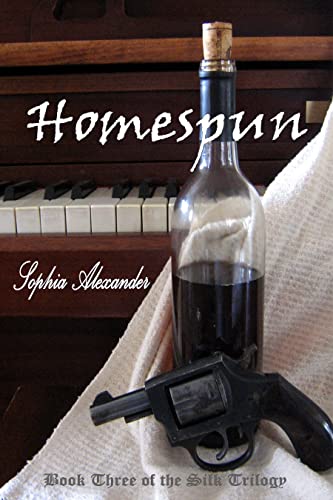
It is a time of significant change in South Carolina. The time between the First and Second World Wars is filled with progress in industry and social structures. Women are taking a more active role in the world, and things like automobiles, electricity, running water, and radios are becoming more commonplace in homes. But, for the Bell and Caddell families, their long-standing feud continues, and it is on the younger generation to try and mend fences. When Ginny and Jack fall in love, it is a forbidden romance full of strife and struggle. Family ties are stretched to their limits, and the question of “Is love enough” hangs in the air.
As the third and final installment of Sophia Alexander’s ‘Silk Trilogy,’ readers return to the small towns of Greeleyville and Kingstree in Homespun. Jessie’s personality is as hateful and disagreeable as ever, but her villainous deeds are overshadowed by the introduction of Zingle. A character that feels no remorse has no morals and no saving grace. While misguided, Jessie’s character stands behind her family values and morals; Zingle offers no redeeming qualities and gives readers someone new to hate and despise. He is the perfect villain for this final novel.
What stands out about ‘Silk Trilogy’ is the focus on ordinary people and their struggles during this time of rapid change in America. Between the war, industrial revelation, and women taking on roles outside the home and showcasing they have more to offer than just raising babies, this series shed light on how the average citizens faced these changes. From the country families to the small-town residents, everyone is shown fighting to find a place. Vivian’s character is inspirational and has been from the start. Homespun allows her to shine through and gives her character, as well as women from this time, a voice. Ginny reminded me of someone stuck between two generations, trying to bridge the gap and find herself. Many women will relate to her coming-of-age story in this novel, even in modern times. The struggle to balance family and breaking off to follow their own path is still relevant today.
Homespun is a gripping and captivating conclusion to the historical fiction ‘Silk Trilogy.’ Readers will be drawn into the drama and transported back in time to the South Carolina countryside and experience the winds of change that were blowing through the Lowcountry South. Some of the best fictional stories have roots in the truth, and the world that Sophia Alexander has created here is one that stays with readers long after they finish the story.
Pages: 377 | ASIN : B09VSYQZL9
Battlegrounds

Battlegrounds, the first installment in a four-book series by Stephen A. Carter, offers readers an immersive and captivating tale set against the backdrop of the American Civil War. The novel opens with John Saxton, heir to a prominent shipping company, setting sail with his mentor and friend, Marcus Brown, a former slave. Together, they uncover a horrifying atrocity while intercepting a slave ship, which compels John to become a fervent supporter of the abolitionist cause. As the Civil War erupts, John and Marcus find themselves pitted against the captain of the slave ship, who is now attempting to smuggle weapons into the Confederacy. This initial conflict leads to a web of political intrigue and espionage that is sure to keep readers on the edge of their seats.
Carter masterfully blends historical accuracy with thrilling action scenes, creating a superb example of historical fiction. While the pacing of the novel can slow at times due to the inclusion of political intrigue and plotting, these elements contribute significantly to the story’s overall engagement, underscoring the high stakes and making each action sequence even more meaningful. The author’s meticulous attention to detail is evident in the realistic portrayal of characters and settings, lending a palpable sense of authenticity to the narrative. The numerous illustrations included in the book serve to aid the reader’s visualization of the characters and settings.
Overall, Battlegrounds is a vividly imagined and captivating work of historical fiction. Carter expertly brings to life the dangerous and fascinating era of American history through engaging and fully fleshed-out characters, many of whom are based on real historical figures. This novel is a must-read for anyone interested in thrilling stories of political intrigue and espionage set against the backdrop of the perilous time leading up to the Civil War.
Pages: 442 | ASIN: B0BHL55JCM
With Hidden Dreams

Hungry Trails follows a spirited Irish girl as she leads her family through famine and disease on a perilous journey to the New World, where they must face challenges and redefine the bonds of kinship and resilience. What was the inspiration for the setup of your story?
The first seed of Hungry Trails was sown when my poem called Great People of the Irish Famine was published in Vision On, an anthology of selected poetry judged by English poet, Katherine Pierpoint in 2005.
Later, I wrote a short story which was short listed in a couple of competitions. A further three years of research inspired my novel. In my story, the Foley family are evicted from their humble mountain dwelling in the Mayo town of Attymass.
I wanted to write a story in which I could walk alongside the Foleys. To observe Julie, if possible, become Julie, a member of that family, a young girl, aged sixteen, a girl who was bright and ambitious with hidden dreams of becoming a teacher.
Before the potato blight, before Julie and her family were given a lifesaving opportunity to emigrate to North America, I wanted to see, hear, taste and feel what she experienced when she woke on her bed of straw in a tiny cabin every morning to partake in a breakfast of buttermilk and oatcakes before walking to school. A hedgeschool that was situated two miles away in a dilapidated cowshed in a field hidden by hazel trees. A school that opened her simple world to new possibilities. Possibilities, once alive in Celtic Ireland, a country of myth and legend. A country of justice ruled by the Brehon Laws, high kings of Tara, Druids and chieftains. Possibilities that were dashed centuries before, with the implementation of the Penal Laws. I wanted to see Julie’s dormant dreams open like a tiny flower that can take root and thrive between concrete slabs. I wanted that wee flower to blossom, for Julie to grow and become who she was born to be. That was the inspiration for my story.
Julie is an intriguing character. What were some driving ideals behind your character’s development?
Julie’s character was born out of the history and the politics I read about in my research.
I wondered why, if there was an abundance of food available, did Julie and the Foley family quake with fear when the potato crop failed? Because they relied so much on it for survival. Huge quantities of other food supplies were being exported to Britain and other countries leaving the Irish peasants to starve to death.
The Government did import maize from America to feed the starving but this was difficult to cook with and many peasants died from typhus, scurvy and dysentery. The British did set up soup-kitchens, a road works employment scheme and workhouses for the poor but they drastically underestimated the scale of the disaster and many people received no aid at all. To add to the crisis, landlords evicted peasants who could not pay the rent because they had no potatoes to sell.
So, in 1845 when a fungal disease called ‘phytophthora infestans’, or ‘potato blight’ struck and wiped out much of the potato crop, a million Irish peasants in rural areas faced disease, starvation and death.
Fortunately for the Foley family the hedgeschool master and his wife gifted them tickets which allowed them to board the ship to North America.
Also the Catholic Church generated a sense of community at that time that would likely have strengthened Julie’s faith and may have been the lynchpin for her family’s survival.
For Julie, the art of storytelling, poetry, history and Gaelic song provided food for the soul. The practices of reciting the Rosary, sharing what few resources they had with friends and neighbours, provided Julie with decent values for the life that lay ahead on the Elizabeth and Sarah ship as she sailed from Killala to North America and later when she and her family settled in the working-class district of Griffintown in Montreal.
Julie is blessed with a sense of humour and she and her brothers exchange lighter moments when they share their mirth about Julie’s feisty behaviour the morning following the humiliation of their eviction. She is not afraid of the peelers and is prepared to challenge them even as they threaten violence, burn their thatch and tumble their walls.
Julie experiences vulnerability when she feels overwhelmed by appalling conditions in steerage on board the ship, when she is called ‘Bridget’ like so many other Irish immigrant women on arrival in Canada. Julie’s blood boils when the wealthy Northern Irish widow who owns a mansion on Mount Royal makes rash assumptions about her character in the first minutes of their meeting. But Julie’s gift of compassion wins through when she recognises that Mrs. McKinnon is vulnerable too.
Julie is determined. The parish priest of St. Ann’s in Griffintown becomes her champion and assists Julie in her quest to become a teacher. What follows is a sinuous road. Will Julie’s faith keep her dreams alive when time and again further obstacles threaten to extinguish them?
What were some themes that were important for you to explore in this book?
Hungry Trails is about the triumph of the human spirit in the face of adversity. Despite the hardships Julie experiences from family poverty, the death of her wee sister, the loss of her home through eviction, appalling steerage conditions on board the Elizabeth and Sarah ship and several other challenges, Julie manages to cling to her dreams.
The story is also a coming-of-age. Julie experiences tragic loss of childhood innocence from the opening chapters. When Peader, the hedgeschool master, announces the closure of his school due to the calamity of the potato failure, Julie recognises the loss;
‘…that young ones like us were bound to leave school to haul baskets of stones to build roads caused bile to rise from my belly.’
Another loss of innocence is forced upon Julie on the road to the ship when she witnesses corpses of men, women and children who lie strewn across the fields and ditches, having dropped like flies from fever, exhaustion and starvation.
Aside from family and neighbourly relationships, Julie awakens to her first love when she meets a young man, Fionn, on the ship who has his own dreams of life in The New World. We see their tenderness and intimacy blossom in moments of their meeting in the shadows on the ship and later in a series of letters between them when they reach their destinations.
Time and again her dream of being a teacher is waylaid when she is forced to take care of her family. But in the process, she grows up and through a friendship with an Algonquin Indian woman (who has converted to Catholicism) and her continued correspondence with Fionn, her dreams shine once more.
What is the next book that you are working on and when will it be available?
I am presently busy promoting Hungry Trails but my unconscious is working on a sequel to this novel. I may need to travel to the US to research Julie’s story further. Perhaps I will visit New York to follow Fionn’s story. Julie’s brothers, Dermot and Cian are also possible follow up stories. At present, I am content to read, research, make notes about plot and structure and reflect on organising my travel arrangements.
Author Links: Facebook | Website
Since childhood, Julie has yearned to become a teacher. Can Fionn McDonagh, the young Irish rebel and poet, persuade Julie to hold on to her dream despite the squalid conditions on board the ‘Elizabeth and Sarah’? Will Julie’s faith keep her dream alive when her family settle in the working-class district of Griffintown in Montreal, and the only chance of earning a shilling is working in domestic service? Can Julie’s dream of a teaching career survive as she toils under the cruel eyes of her employer, a wealthy Northern Irish widow who owns a mansion on Mount Royal?
As a tiny flower can take root and thrive between concrete slabs, ‘Hungry Trails’ celebrates the resilience of the human condition.
Hungry Trails

In Hungry Trails, author Maire Malone masterfully weaves an evocative tale of an Irish family’s desperate journey to escape the devastating effects of famine and disease. As they navigate the tumultuous waters of a world turned upside down, the Foley family is tested, their bonds of kinship and friendship strained to their limits. What awaits them across the ocean in the New World, however, remains uncertain—will the foreign shores offer them refuge, or will they merely exchange one set of hardships for another?
Narrated through the eyes of Julie Foley, the family’s spirited and inquisitive daughter, Hungry Trails presents a poignant coming-of-age story that explores themes of self-discovery, resilience, and familial sacrifice. Despite the relentless adversity that befalls her loved ones, Julie remains steadfast in her pursuit of knowledge and her quest to forge her own path in life. Her unwavering dedication to her family and her unyielding optimism drives the narrative forward as readers eagerly anticipate whether Julie will ultimately find the fulfillment she seeks.
Set against the sweeping backdrop of historical events, Hungry Trails is a must-read for those who appreciate intricately crafted stories that transport the reader to another time and place. Malone’s exquisite prose and rich descriptions paint vivid images of the characters and their surroundings, immersing readers in the trials and tribulations of the Foley family. Accessible and engaging, Hungry Trails is a highly recommended read for discerning readers of all ages who are seeking an unforgettable literary journey.
Pages: 280 | ASIN: B0BPDXV3FH



 LITERARY TITAN