Blog Archives
The Girl


The Girl, by Victory Witherkeigh, follows a girl who lived a difficult life. Despite her privileged upbringing, with class and money, her parents scorned her the day she was born. She was often neglected of affection and care, and anyone in a position to provide kindness either lived too far away or don’t understand the circumstances, including her grandparents. The girl’s brother seems to capture everyone’s attention in a positive light, while she is deprived of the same. Once she discovers secrets from her heritage, she learns details about herself and her past, which gives her more power than she could have imagined.
This book is a riveting coming-of-age story that blends spiritual, supernatural, and modern elements into a well-written book. There is also a rich inclusion of Filipino history and folklore, which is both interesting and educational – a welcoming surprise for me, as I have Filipino heritage. I thoroughly enjoyed how many authentic references make it into this modern story, which is not common in many novels. I enjoyed the author’s reflection on religion and morals, which is depicted in a way that is relatable and thought-provoking.
While this book is tragic and focuses a lot on the girl’s struggles, there are moments of joy and self-realization that are satisfying for the reader, which give a sense of closure and peace. I found the author’s take on familial ties, young adulthood, and religion to be honest, and gives the reader something to think about long after the book is finished. I personally enjoyed the supernatural themes and how they are woven into a dramatic story about sensitive topics and growth.
The Girl is a fantastic read that is not too lighthearted, but it will give you a lot to contemplate about family, morals, and acceptance. I highly recommend this book and look forward to reading more from this author.
Pages: 356 | ASIN: B0BFBTC8X7

We Must Never Lose Hope

Where the Lilacs Bloom Once Again is based on the true historical experiences of generations of a Jewish Romanian family and their acquaintances before World War II. Why was this an important book for you to write?
There are two main reasons that led me to write this book and to reveal my family’s stories. It was especially important for me to publish the book now.
The personal motive relates to my father’s death.
In December 2009 my father passed away. I went home for the funeral and found an old family photo album, a handwritten family tree, and a note that read “Write their stories, tell the world what really happened to them.”
And so, I did.
I wrote this book to tell my family’s stories. I wrote this book to give the silenced stories a voice.
My second motive for writing this book relates to the increasing incidents of anti-Semitism that we are experiencing these days. I believe with all my heart that history is doomed to repeat itself.
We must keep telling, we must share our past, we must learn from history, otherwise, the truth may be lost, and hate is doomed to be repeated.
What research did you undertake for this book to ensure you got all the details right?
The book is a culmination of 12 years of family research. I was able to find a lot of supporting and personal documents, but there are still many questions that remain open.
After my father’s funeral I returned back home. I had the old family album, the handwritten family tree and many questions.
I started researching. I read everything I could find about the history of Romania in general and the history of the Jewish communities in Romania in particular. I interviewed dozens of people, relatives who are still with us, and their children and grandchildren who knew little or some about their family’s history in Romania.
For many hours, I sat in the archives and read, researched and asked. I was able to find some old personal documents as birth certificates, photos of graves, and more.
I reached out to Jewish organizations and other research groups via social media and Facebook groups. I also received help from an organization who research the communist crimes
The puzzle is not complete. I continue to research and learn and dig into every piece of information.
The Romania’s archives and databases are few and limited, but I refuse to give up. I continue to search, to look for more answers, and I will not rest until I find the last piece of the puzzle.
What were some ideas that were important for you to share in this book?
The family I grew up in was loving, warm and close-knit. My father was an honest, hard working man who believed in the values of modesty, humility, and honesty. I admired those qualities in my father. Family was a top value for Dad and from a young age he made sure to visit the “elders” in the family, respect them, and learn from their wisdom.
In this book I present the family stories on which I grew up and was educated upon. Honest and kind people who had to deal with an oppressive and murderous regime. My great-grandmother Rosa, who lost her brother and his family in the Iasi massacre, my grandmother Aurica (Golda) who had to flee and leave behind everything that was familiar to her, and my grandmother’s cousin, Friddie, an innocent young girl who fell in love with the wrong man, was arrested, tortured, accused of a crime she didn’t commit, and spent 13 years in prison and in labor camp.
And despite all the suffering they went through, they continued to believe in compassion, in justice, in the kindness of mankind.
What is one thing you hope readers take away from your book?
We must remember, we must respect our elders, learn from their wisdom, and we must never lose hope. There is always a new day, a better world, a world where humanity will succeed in overcoming evil. We should never forget our history, and we should never let evil overcome.
Author Links: GoodReads | Twitter | Facebook | Linkedin
After calling off her wedding to a young, parentally-approved accountant, she escapes to a city on the coast, where she meets a scientist-perfumer named Freddy. He is the true love she has been looking for—and a ticket to her dream.
Soon, though, that dream turns into a nightmare she never could have predicted.
Friddie’s story of incredible hardship is interwoven with the stories of her family. We follow her Aunt Rosa’s life as the glue of her household, even though she loses her husband in mysterious circumstances; her Uncle David, who dreams of becoming a schoolteacher and starting a family in Iași, and her cousins, who uproot their lives in Bucharest to start again in Israel.
In this tragic-heroic novel, the true stories, the victims, and the small moments of happiness are revealed in the Danube’s labor camps, under the fascist-dictatorial and communist rule that has been a part of Romania for so many years.
Based on the true experiences of a Jewish Romanian family, Where the Lilacs Bloom Once Againunearths stories that could so easily be lost to the passage of time. This family’s tale has emerged at a critical time, to show the need for compassion and kindness, even in the hardest moments.
About the author
Roni (Aharona) Rosenthal, PhD, was born in Haifa, Israel. She is named after her grandfather Aharon, who passed away eight months before her birth.
Roni is the Director of Judaic Studies and a Hebrew Literature Professor at the University of Maryland, Baltimore County. This is her third novel.
The “What If” Game All Writers Play

Return to Hardscrabble Road picks up where Hardscrabble Road left off and delves deeper into Roger’s growth from a tormented boy to a determined young man at the crossroads of everything he loves and fears. What was the inspiration for the setup of your story?
Hardscrabble Road was born from a 10-year oral history project, during which I interviewed my former father-in-law and his two older brothers about their violent, unsettling childhoods during the Great Depression and war years with a psychotic bootlegger for a father and a mother who had no interest in raising her kids. Theirs were childhoods that would’ve killed most of us, but they not only survived and escaped into the military but then thrived as adults. All three were remarkable men and were extraordinarily resourceful children as well, so I collected their stories and used them as the inspiration for what has become my bestselling novel, Hardscrabble Road, which outsells all my other books combined and probably will continue to do so for all time. Many readers over the years have requested a sequel, which I resisted at first–preferring to write mysteries, thrillers, and other genres–but eventually I found myself missing the rambunctious MacLeod family and decided to pick up right where Hardscrabble Road left off. I used a couple stories from the oral history project that I couldn’t fit into the first book as my stepping-off point and then embarked on the “what if” game all writers play to decide on the rest of the plot.
Roger “Bud” Macleod and his two brothers are intriguing and well-developed characters. What were some driving ideals behind your character’s development?
When I began my first draft of Hardscrabble Road, the three boys were based very closely on the actual men who inspired the book, but as I continued to write about them, their fictional guises took shape more concretely, until the only similarities between Roger, Chet, and Jay and the three men I interviewed were purely coincidental. The longer an author writes about a given character’s thoughts, dialog, and actions, the more they come to life in the author’s mind and on the page. For Return to Hardscrabble Road, I reread the first book to remind myself about their styles of speaking, favorite expressions, and attitudes, and then I built on them. It was like revisiting old friends and discovering new facets of them as they were now coming into their own as young men.
What were some themes that were important for you to explore in this book?
I wanted to explore how the scars my characters developed in their youth–due to the trauma they experienced–would be revealed in their behaviors as young men who now have agency and can act on their impulses and desires. For example, Roger struggles with giving in to violent reactions when faced with bullies and threats to his family. I also wanted to explore forgiveness, family loyalties, and the urge to “fix” others’ problems. All of these issues drive the plot in different ways and lead to Roger’s growth and maturation.
What is the next book that you are working on and when will it be available?
I’ve started a sequel that brings back the heroine of my amateur-sleuth murder mystery Aftermath and the heroine of my kidnap thriller Watch What You Say, putting them together (against their will, at first) and sending them on a new adventure. I’m hoping to pull in characters–and descendants of characters–from my other novels. If Marvel can do that, so can I! I’m a ponderously slow, perfectionistic writer, so the as-yet-untitled sequel won’t come out for a couple years. Meanwhile, though, fans of the Hardscrabble Road books have lots of other novels of mine to explore. Rest assured, characters from all of them will get a mention or perhaps a cameo in the new book.
Author Links: GoodReads | Twitter | Facebook | Website
home of their youth, on emergency leave from the military after the
murder of their reviled father. Instead of having the festive reunion they’d planned
with Mama and their sister, the three soldiers are flung into a series of violent
confrontations with old and new rivals plus double trouble: Papa’s siblings. In their
way, Harvey and Rutha MacLeod are even more brutal than Papa, hellbent on
claiming the legacy they believe he left for them and willing to run over anybody
in their way. Picking up where the critically acclaimed Hardscrabble Road left off, Return to
Hardscrabble Road delves even deeper into Roger’s growth from tormented boy to
determined young man at the crossroads of everything he loves and fears. This
time, he doesn’t merely have to survive—he must save his whole misbegotten
family without sacrificing his soul.
Where the Lilacs Bloom Once Again
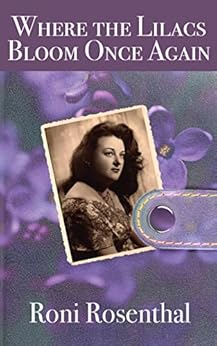
Where the Lilacs Bloom Once Again is based on the true historical experiences of generations of a Jewish Romanian family and their acquaintances before World War II. The novel focuses on Friddie, a young woman of Romanian descent who dreams of living freely. At eighteen, Friddie rebelliously cancels her marriage and, against her family’s wishes, marries Freddy. Their union is short-lived however, leading to years of adversity for Friddie. Her story is told alongside that of her family members, like Aunt Rosa, Uncle David and her Cousins who are victims of the dictatorial and communist rule that plagued Romania for years.
It is clear from the author’s narration that Friddie’s story is an important landmark in the family’s history, passed down from generation to generation. Although I felt the stories were disconnected at the beginning, they slowly came together with different perspectives. It is a tragic story of a large family that was scattered abroad due to anti-Semitism. It is sadly ironic that Freddie, who dreams of living as a free woman, spends the better part of her youth locked up under the worst circumstances.
This thought-provoking and impassioned novel showcases the gruesome loss of lives, grief and the inhumanity during one of the most difficult times in human history. Some of the scenes are graphic, featuring explicit descriptions of maiming, slavery, genocide, and infanticide. Despite these, a love story is forged in the most unlikely place, reestablishing the theme of keeping hope alive when things seem hopeless.
The author’s writing style is easy to follow and how she tells the story keeps the reader engaged throughout. There are heartbreaking moments, but the book also shares wisdom and great life lessons. Where the Lilacs Bloom Once Again by Roni Rosenthal is a tragic but beautiful story that is evocative and heart wrenching but ultimately uplifting.
Pages: 203 | ASIN: B0BC5LF1KQ
Get On With The Business Of Living
Maiden Voyage follows the twins as their guardian tries to keep them safe among Marcela’s gender affirming surgery and Amadeus’s future in Alaska’s fishing industry. What was the inspiration for the setup of your story?
Maiden Voyage, the third book in the COMFREY, WYOMING series, finds the twins standing on the cusp of adulthood. At last Marcela Crow has the body she has been seeking since early childhood. Amadeus has always been his sister’s protector and advocate, but after her surgery he feels the loss of the little boy he learned to walk with and talk with—the little boy who once looked so very much like him. Unsure of the role he now plays in Marcela’s life, disillusioned with college and struggling with the illness that claimed his mother, Amadeus leaves Wyoming and family and strikes out on his own.
For Marcela’s story, I relied heavily on a family friend, assigned female at birth, who advocated for his authentic self from a very young age. Like Marcela, he had the support of a loving family, but it couldn’t protect him from painful bullying in school. He is now a successful young man living in another part of the country, where he can maintain his privacy and get on with the business of living. His experience in school was why I deemed it crucial for Heidi, the twins’ guardian, to move the family to Comfrey, where no one would know the children were born identical, and where Marcela would be accepted as a girl.
I had rich sources of experience to call upon for Amadeus’s journey north and his immersion in Alaska’s fishing industry. A woman who travels the Alaskan Canadian highway annually with her dog shared pictures, diaries and anecdotes of her trips with me. Another person, who has worked on fishing boats in Bristol Bay and the Bering Sea for years, spent many hours sharing his experiences and answering my questions. I was so grateful I named my fishing captain after him.
I am also indebted to a college friend, who witnessed and described the gruesome accident that ended the life of one of my characters at sea. For much of his career, my friend worked as a marine scientist monitoring fishing vessels in Alaskan and Arctic waters. He often worked with Inuit observers and remains a passionate advocate for Indigenous fishing rights.
Marcela and Amadeus are intriguing and well-defined characters. What were some driving ideals behind your character’s development?
As babies, the twins’ physical appearance, personalities and precocity were derived from a very special little boy, who joined our family for a time. He is still at the edge of my consciousness when I write about the twins, but his influence has waned as the twins have matured and taken on lives of their own.
Despite being born physically identical, Amadeus and Marcela are essentially yin and yang, opposite but interconnected forces bound by a fierce loyalty. Where Marcela is academic, grounded and artistic, Amadeus is impulsive, competitive and intimately connected to the natural world.
What were some themes that were important for you to explore in this book?
People who can communicate with the dead have always intrigued me. Three very different characters in my series maintain strong ties with departed loved ones. Heidi, the twins’ guardian, continues to commune with her deceased child. Beppe, an Italian winemaker and one of the twins’ honorary uncles, hears his grandfather’s voice as he walks his vineyards at dusk. Amadeus is aware of his mother, Nara, in the wind and the sea.
Despite my dive into metaphysics, however, a scientific current thrums in the background of my books, the legacy of my years of teaching science. In Maiden Voyage, that current includes the genetics of Sphynx cats, the mating rituals of elk and the effect of climate change on the distribution of fish in Arctic waters.
Another theme in Maiden Voyage is the importance of representation—LBGTQ representation, and racial representation. I am blessed to be part of a racially and gender diverse family. I hope my complex and relatable characters capture readers who may be unfamiliar with the LBGTQ community. Heidi’s cousin, Karl, and his Italian husband, Beppe, have provided her with emotional support for years. They are the strong, loyal men she turned to when she lost her baby to genetic disease in Birds of a Feather, the first book of the series. In Maiden Voyage, Karl comes to San Francisco to support Heidi after Marcela’s surgery. Beppe is the person Amadeus seeks for comfort after he suffers trauma at sea.
My trans character was introduced in the series as a young child, to make her less threatening to those who believe they have never met a transgender person. I wanted readers to bond with Marcela. I wanted them to not merely tolerate her, but to truly appreciate her, her wit, her talent and her integrity.
To peel back a layer of white privilege, I included a young black man in Maiden Voyage to illustrate the danger and stress of driving while black. My sons are black, my nephews are black, and on my most recent trip to Wyoming for research, I drove with a black friend. The hyper-scrutiny is real, and the hyper-vigilance a person feels under that scrutiny is exhausting. My black character drives from San Francisco to Wyoming alone, always on edge, always with a feeling of dread that he’ll disappear into what he perceives as a wasteland, and never be heard of again.
What is the next book that you are working on and when will it be available?
Black Sheep, Black Sheep, Book Four of the COMFREY, WYOMING series, will be released in 2023. People from Pennsylvania, California and the Philippines join the citizens of Comfrey, and at long last, that endangered and highly venomous Midget Faded Rattlesnake alluded to in the first three books, has a significant part to play.
Author Links: GoodReads | Website
A richly diverse cast, including a Shakespeare-quoting street basketball player and a Chinese purveyor of pu-erh tea, joins characters already beloved by readers of the series in this transcendent tale of nontraditional family and steadfast friends.
Listen for Water


Listen for Water begins by following a young teen named Dakota Starr who is having a strange dream about a fish and a drumbeat. She then returns to the real world, but the drumbeat follows her. What she managed to forget about for a second in her dream was her poor living conditions. Sharing a government-funded apartment with her deadbeat mother Ray, who she doesn’t even call mother. All her mother does is play video games and schlep around the house, leaving Dakota to fend for herself. All while trying to find enough money to buy food and attending improvisational dance lessons at her local Indigenous dance school. The story takes a drastic turn when Ray wanders into a moving truck. Dakota follows her inside, but they are closed in before she can convince Ray to come out. This begins an epic emotional journey that will change both of them, and their relationship, forever.
This is an impassioned coming-of-age story that explores addiction and family. What I really enjoyed about this poignant novel was the way in which it reversed the mother-daughter role while still showing the force of family and how it permeates our lives. But where other novels may make light of a child caring for a family this novel handles it in a substantive way. Dakota is forced to spend time with a mother that she hates, while her mother loves her like a daughter, even though Ray never provided for her like a mother would. They have an interesting dynamic and their relationship is the highlight of the novel, and one that readers will be thinking about long after they put the book down. Through the story, the two characters get to know each other for the first time, while also making new discoveries about one another and themselves. In a way I think this story is a character study; of two characters. And a dissection of a troubled relationship. I found it all immensely compelling.
This book will resonate with anyone facing similar issues as Dakota as the story is grounded and the emotions feel authentic. The author really plants the reader in Dakota’s head, not just through the first person perspective, but also by using words a girl Dakota’s age would use, even if they’re incorrect or made up. Novels often make their young characters seem older then they are. While Dakota needs to be older, given her situation, she still seems like the child she is supposed to be. This makes her character relatable and readers are able to empathize with her more. The characters and the writing alone make Listen for Water worth the read. I highly recommend it to any book club looking for an emotionally-resonant and evocative coming-of-age tale.
Pages: 341 | ASIN: B09XKP8HQ2
A Reluctant Guardian
Cherokee Steel follows Amelia as she tries to find a family member who’s worthy to carry the special family heirloom on to the next generation. What were some new ideas you wanted to introduce in this book that was different from book one and two?
In book 1, Amelia was very young and knew nothing about the special stone. In book 2, she is surprised that she is chosen to inherit the stone and becomes a reluctant guardian. By book 3, she has matured and has freed herself of much of the emotional baggage she has carried throughout her life. Now that she has become truly worthy of the stone, it is time to turn it over to someone else.
Amelia is a compelling character that I enjoyed watching evolve. What were some driving ideals behind your character’s development?
I wanted to show how emotional trauma experienced by a young person will not only affect that person but will affect the generations to come. Conversely, I wanted to show that even a badly damaged individual can find redemption. I also wanted to give readers a glimpse into how Amelia’s Cherokee history and culture continued to impact her life even when she seemed to forget it.
What were some themes that were important for you to explore in this book?
Effects from the past, family abuse, family violence, alcohol abuse, infidelity, tragedy of war, feelings of inadequacy, rebellion, dealing with death, persistence of love, the touch of the supernatural, the influence of culture, realization of dreams, discrimination, bullying, and redemption.
What is the next book that you are working on and when will it be available?
Before We Were a State, 2023.
Author Links: Twitter | Facebook | Website
In the final chapter of Bluebird and Grey Wolf’s Cherokee descendants, the story of Amelia Clay Stone, their great granddaughter, will continue to evolve. Not only the sad legacy of the Trail of Tears, but Amelia’s abusive experiences at the Cherokee Girls’ Mission will take their psychological toll on her children, grandchildren, and great grandchildren.
Meanwhile, young Bonita McKindle, the love interest of Amelia’s sons, Clay and Ross, struggles to overcome the damage brought upon her by tragedy, poverty, and neglect. Forced to quit school to care for her critically ill, alcoholic father, Bonita desperately yearns to escape and make a better life for herself, only to encounter more heartache. When she gives birth to her daughter Miranda, Bonita experiences new hope, but Miranda and her children will soon find their own demons to battle.
All the while, the fate of a special family heirloom—the stone Bluebird carried on the Trail of Tears from Georgia so long ago—rests in Amelia’s hands. It has been passed down through the generations to Bluebird’s descendants. Will the aging Amelia find any family member who is worthy to carry it on to the next generation? Or will the traditional Cherokee beliefs the stone represents be lost forever?
A Strategy For Personal Awakening

Holy Parrot follows three people who form an unlikely friendship and bond while struggling with their own beliefs and dark secrets. What was the inspiration for the setup to your story?
The disparity of personalities creates a multi-perspective insight into a challenging set of events. The value is to show that, for any given moment, the viewer is part of the event in a way that is specific to their personal circumstance. Maria is a teen who says she is to be the mother of the new Christ. Leo is a science student who has unilateral faith in reductionist logic. Robin is a mythologist who looks for the value of collective belief in any given circumstance. Everyone is a master of their own perspective. We expand our potential for wisdom as we explore to understand events from multiple perspectives.
What were the morals you were trying to capture while creating your characters?
The morals are actually stated in the novel (spoiler alert). Love, light and life are stated to be a foundation of existence as expressed through conscious attention to the behaviours of compassion, creativity and connection. The narrative offers a strategy for personal awakening through precise moral behaviour conducted with authentic sincerity.
What were some themes that were important for you to explore in this book?
There are a number of layers integrated into the story. Perhaps one to mention is that the main characters are all seeking to transcend or deal with unique personal suffering in their own way. Their support of each other is a key to the effective resolution of the challenges faced.
What is the next book that you are working on and when will it be available?
The next book is called Bring Me To Life. I like to think of it as a Gothic Romance. It is a graphic novel about a (kind of) ghost who becomes inexplicably enamoured with a special woman. So much so that he seeks to return to life for her. The story is complete and the illustrations are in the process of development. I’m not sure how long that will take. Sorry…
Author Links: GoodReads | Facebook | Website | Twitter | Facebook
Was Maria lying to hide a despicable secret? Or was she birthing the leader of the new millennium? Phenomenal events unfolded as millions united, chanting one phrase – ‘Loro Santo’: Holy Parrot.



 LITERARY TITAN