Blog Archives
The Magnificent Legend of the Steampunk Warrior
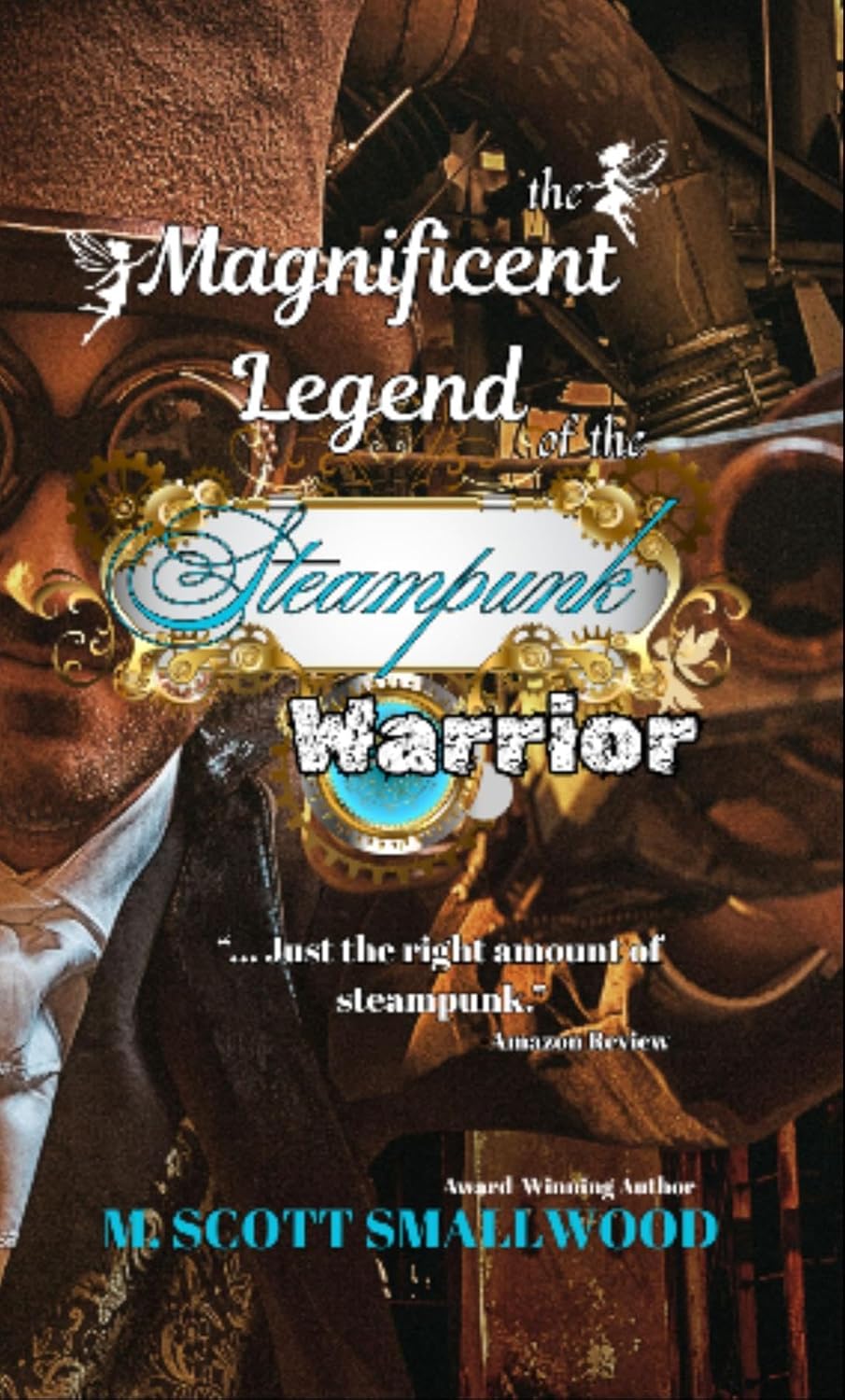

From the first page, The Magnificent Legend of the Steampunk Warrior feels like diving headfirst into a swirl of brass gears, magic dust, and heartbreak. It’s a strange and beautiful mix of time travel, friendship, and redemption. The story follows Thaddeus Might, a self-proclaimed Time Magician, along with Clyde, Arnold, Karl, and others as they tumble through centuries and worlds chasing after fragments of the fabled Golden Lion. The book blends steampunk invention with mystical lore and even a touch of science fiction, all while threading through themes of loss and second chances. It’s a wild, cinematic journey, jumping from Victorian England to alien worlds, filled with wit, wonder, and a surprising amount of emotion.
The writing is lush, full of rhythm and melody, almost poetic at times. Author M. Scott Smallwood clearly delights in language, spinning dialogue that feels both archaic and alive. Sentences twist and turn like clockwork spirals, sometimes dazzling, sometimes dizzying. Still, the characters kept me grounded. Clyde’s weariness and Arnold’s loyalty hit close to home. Thaddeus, with his tragic backstory and impossible hope, stood out the most. He’s eccentric and endearing, the kind of character who makes you smile even when he’s rambling about time’s cruel logic. What I liked most was how human it all felt beneath the fantasy, people clinging to purpose, trying to fix what can’t quite be fixed.
At times, I caught myself grinning. Other times, I found myself working to keep up with the story’s many threads. Yet, I never wanted to stop reading. There’s something earnest in the storytelling, something old-fashioned and heartfelt. You can feel the author’s joy and pain in every page, the same way you can hear a musician’s soul in the flaws of a live song. The mix of humor and heartbreak worked for me, especially when the story leaned into its quieter moments, those small pauses between battles where the characters actually breathe. That’s when the book shone brightest.
The Magnificent Legend of the Steampunk Warrior is an ambitious and oddly touching ride. I’d recommend it to readers who love sprawling adventures, old-school fantasy, and stories that aren’t afraid to get weird and sentimental. It’s messy, it’s moving, and it’s magnificent in its own peculiar way.
Pages: 268 | ASIN : B0FR2PMMPD

The Passage of Time

The Admiral’s Gamble follows a decorated officer at the end of his long career, who stumbles upon a mysterious device capable of altering time and leaving him to decide how the future will play out, and at what cost. What was the inspiration for the setup of your story?
The inspiration came from my fascination with the idea of fate versus free will, how a single decision can ripple through time and alter everything that follows. I’ve always loved sci-fi movies and have a deep respect for the military, so I wanted to see if I could combine the two in a meaningful way while keeping traditional values and storytelling at the heart of it.
I found Admiral James Harrington to be a well-written, in-depth character. What inspired him, and what drove his emotional turmoil throughout the story?
Admiral Harrington is a blend of strength, regret, and redemption. He’s inspired by real-world veterans and leaders who carry the weight of their choices long after the battles end. His turmoil comes from the struggle between doing what’s right and doing what’s necessary.
I think everyone, at some point, wonders “what if” — what if we could change a single moment or decision from our past? That’s something everyone can relate to, and it’s what makes Harrington such a human character. He represents that quiet part in all of us that looks back and wonders how life might have turned out differently.
What were some themes that were important for you to explore in this book?
The main themes are sacrifice, morality, and the passage of time. I wanted readers to think about the price of second chances, that even with the power to change the past, you might lose something far more valuable in the process. The story also touches on legacy, how we’re remembered, and whether it’s worth altering fate to protect that legacy.
What is the next book that you’re working on, and when can your fans expect it out?
My next project, Return What Was Taken, was released not long ago. It’s a psychological thriller that explores what happens when the mind begins to fracture, dealing with mental health struggles and the battle between reality and perception. I think that’s something many people in today’s world can relate to on a personal level.
I’m also working on a new full-length novel that combines elements of sci-fi, fantasy, and thriller. It’s a bold story with deep characters and moral questions, similar in tone to The Admiral’s Gamble. My goal is to have it completed sometime next year.
Author Links: GoodReads | X (Twitter) | Facebook | Amazon
Admiral James Harrington thought his final mission was behind him. After decades of service, he’s preparing for retirement until a top-secret assignment throws him into a war not bound by space or time. A temporal breach has unleashed chaos, rewriting history and threatening global collapse. Now, Harrington must lead a mission through shifting realities and fractured timelines, where every choice could erase the people he loves or doom millions. As old enemies resurface and long-buried regrets return, the Admiral must confront not only the mission but himself. This explosive sci-fi thriller blends military strategy, time travel, and deeply human stakes, perfect for fans of Jack Campbell and The Expanse. The Admiral’s Gamble is a story about courage, consequence, and the impossible decisions leaders must make when the future is on the line.
My Sister’s Quilt
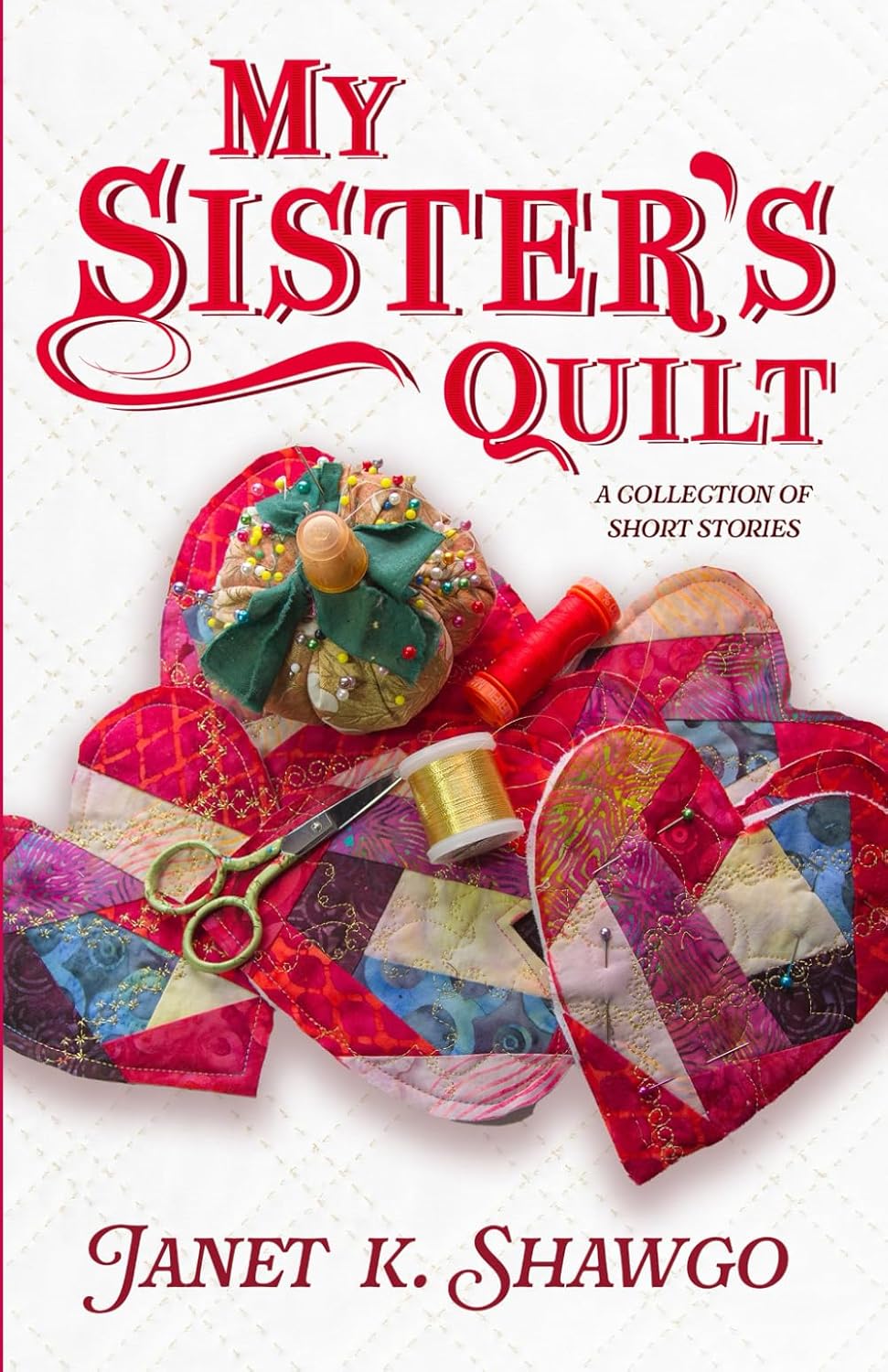

My Sister’s Quilt is a tender and heartfelt collection of short stories woven together by the enduring art of quilting and the threads of family, love, and legacy. Across its pages, the book travels through time, from the age of sailing ships and noble estates to the shadowed years of the Underground Railroad, linking each story with a common motif of fabric and memory. Each story, though distinct in setting and character, feels stitched from the same cloth of compassion, strength, and the quiet resilience of women who endure, create, and remember.
The writing has an old-fashioned gentleness to it, like something you’d hear on a front porch swing in late afternoon. Shawgo writes simply but with feeling. Her characters are vivid without being forced, and her dialogue carries a kind of natural rhythm that makes even the smallest moments, like sewing a stitch or sharing a meal, feel important. Sometimes the pacing slowed a bit more than I’d like, but that slowness felt right for the kind of storytelling she’s doing. It invites you to linger, to feel the texture of the scenes instead of rushing through them.
What I loved most was how deeply emotional this book became without ever turning sentimental. The relationships between sisters, mothers, and daughters are tender, sometimes strained, but always human. There’s a sense that the quilts are more than fabric. They’re witnesses, binding generations together through hardship and joy. I felt both comforted and stirred, like the stories were asking me to think about what we pass on and how we remember those who came before us. The writing has a warmth that sneaks up on you.
I’d recommend My Sister’s Quilt to readers who love quiet, heartfelt storytelling, especially those drawn to historical fiction, women’s lives, and family sagas. It’s for anyone who has ever held something handmade and felt the history in it. This book would speak beautifully to quilters, to daughters, and to anyone who believes stories, like stitches, can hold us together when everything else falls apart.
Pages: 146 | ASIN: B0FSW2L1MC
Sense of Foreboding

Along the Trail follows a young woman traveling westward with her family in search of new beginnings on the Oregon Trail, who learns about resilience, love, and the freedom and cost of such a dangerous journey. What was the inspiration for the setup of your story?
I grew up in Kansas City, MO, which is about 20 minutes from the town of Independence, where the Westward Trails began. It was a point of interest for me, starting all the way back in elementary school. I found everything about it fascinating: the adventure of it all, the beauty of the wilderness, and the extreme grit and hope that the people of that time had to possess in order to even begin. But I also wanted to make sure to highlight the drudgery, the discomforts, and the dangers that they faced along the way. I didn’t want it to be overly romanticized, as that would downplay the magnitude of the obstacles that the travelers faced, which was the opposite of what I hoped to do during the story.
Winnie is a charismatic character that readers get to watch figure out who she is and what path she wants to follow. Were you able to achieve everything you wanted with her character in the novel?
I doubt any author can ever say they achieved everything they wanted with a character, haha. Well-developed characters often seem to move through their story on their own, and it’s all the writer can do to keep up with them! But honestly, I wanted Winnie to be representative of her time and her circumstances. That said, she had to be open-minded enough to recognize that some of her initial reactions to things she encountered during their journey were not justified reactions – rather, that some of them came as a result of fear and not from her own experience. I do think that she’s a relatable character, and even an admirable one. Not everyone will so readily admit to being wrong as she does. Not everyone chooses personal growth, but Winnie does.
What were some themes that were important for you to explore in this book?
I think one of the biggest themes for me was that the setting (thousands of miles of wilderness) was often the protagonist, but also sometimes acted as the antagonist. Such an environment was brutal and beautiful. Stunning, and stifling. It had to flow and change along the way, and at other times, remain so similar and vast as to seem unconquerable, like the travelers were barely making progress at all. It was important to me that the setting inspire both a sense of wonder and a sense of foreboding.
Another theme that I hope comes across is that of resilience, enduring hope, and personal growth. The characters experience some grueling physical challenges, and also some tough mental ones – things with the potential to break anyone’s spirit. But instead of turning on one another, or even turning back, they come together to form a community and rely on each other in times of need. I didn’t want my characters to be stealing from one another, or harming each other – I wanted them to represent the best of humanity, to help rather than harm, wherever possible. Perhaps that’s a bit naive, but there’s enough doom and gloom in the world these days; I chose to highlight human resilience and hope rather than focus primarily on division.
That’s not to say there aren’t some nuanced perceptions that the characters have to overcome to achieve personal growth, because that’s one of Winnie’s main character arcs. But she gets through it because she has the introspective honesty and open-minded nature to acknowledge a prejudice in her world, analyze the validity of it through what she experiences (rather than what she’s told by others), and come out the other side with her own opinion. And I hope that journey shines through for readers.
Will this novel be the start of a series, or are you working on a different story?
I’m seriously considering writing a sequel and making it a duology. There is a lot left to explore with the Hayes family once they reach their destination, and also a lot that I’d like to expand on with Mae and some of the other strong secondary characters.
Even though their journey ended once the overland travelers chose a spot to settle, their hardships did not. It was grueling work to build a homestead, to make it through winter in an unfamiliar territory. There’s a lot to discover there that I think would make for a great second novel.
Author Links: GoodReads | Instagram | Facebook | Website | Amazon
Threatened by storms, wild animals, and outlaws, Winnie must rely on the bonds she’s made and all she’s learned in order for them to make it to Oregon alive. She also must decide if she is ready to risk forming an attachment to Hal, the cowhand who has a knack for showing up just when help is needed, or whether she will emulate Mae, the free-spirited daughter of their trail guide.
Mask of Romulus

Mask of Romulus, by Mark Jamilkowski, is a sweeping historical novel that bridges the grandeur of Rome with the mysticism of ancient India. The story begins with the rise of Augustus and stretches across continents, weaving Roman ambition with Eastern spirituality. It follows Kamala, a visionary oracle from Ujjain, whose divine insight leads her into the political currents of two powerful civilizations. The book paints vivid portraits of Julius Caesar, Augustus, and their world, while revealing an unexpected connection between these empires through diplomacy, faith, and human yearning. It’s a dense and cinematic journey that turns history into living, breathing drama.
Reading this book felt like walking through marble halls and dusty roads at the same time. The writing is lush, descriptive, and deliberate, but also deeply emotional. I admired the author’s attention to historical detail, yet I found myself pulled in even more by the human side of it all. The conversations between Caius and Marcus, the moments of fear and defiance, had a strange intimacy that stuck with me. It’s not an easy read, sometimes the prose is heavy, and I felt the pacing is a bit slow, but it feels earned. Every page builds toward something larger, like watching a fresco take form stroke by stroke.
What I enjoyed most, though, was the way Jamilkowski handled belief and destiny. The Roman hunger for order meets the Indian hunger for meaning, and somewhere between them, you feel the question that still haunts us: what does it mean to be guided by fate? The author writes with both reverence and rebellion. At times, the dialogue feels ancient and formal, and at other times, raw and modern. I caught myself pausing, rereading sentences not because I had to, but because I wanted to. They hit somewhere deep, stirring something old and familiar. There’s real heart here. It’s not just history, it’s longing dressed in Latin and Sanskrit.
I’d recommend Mask of Romulus to readers who love sweeping historical epics and who don’t mind getting lost in layered storytelling. It’s for those who like The Eagle of the Ninth or The Palace of Illusions and wish someone had tied them together. It is more than a worthwhile read that rewards patience, curiosity, and empathy.
Pages: 342 | ISBN : 978-1959127482
Safe Haven – Where Hope Lives
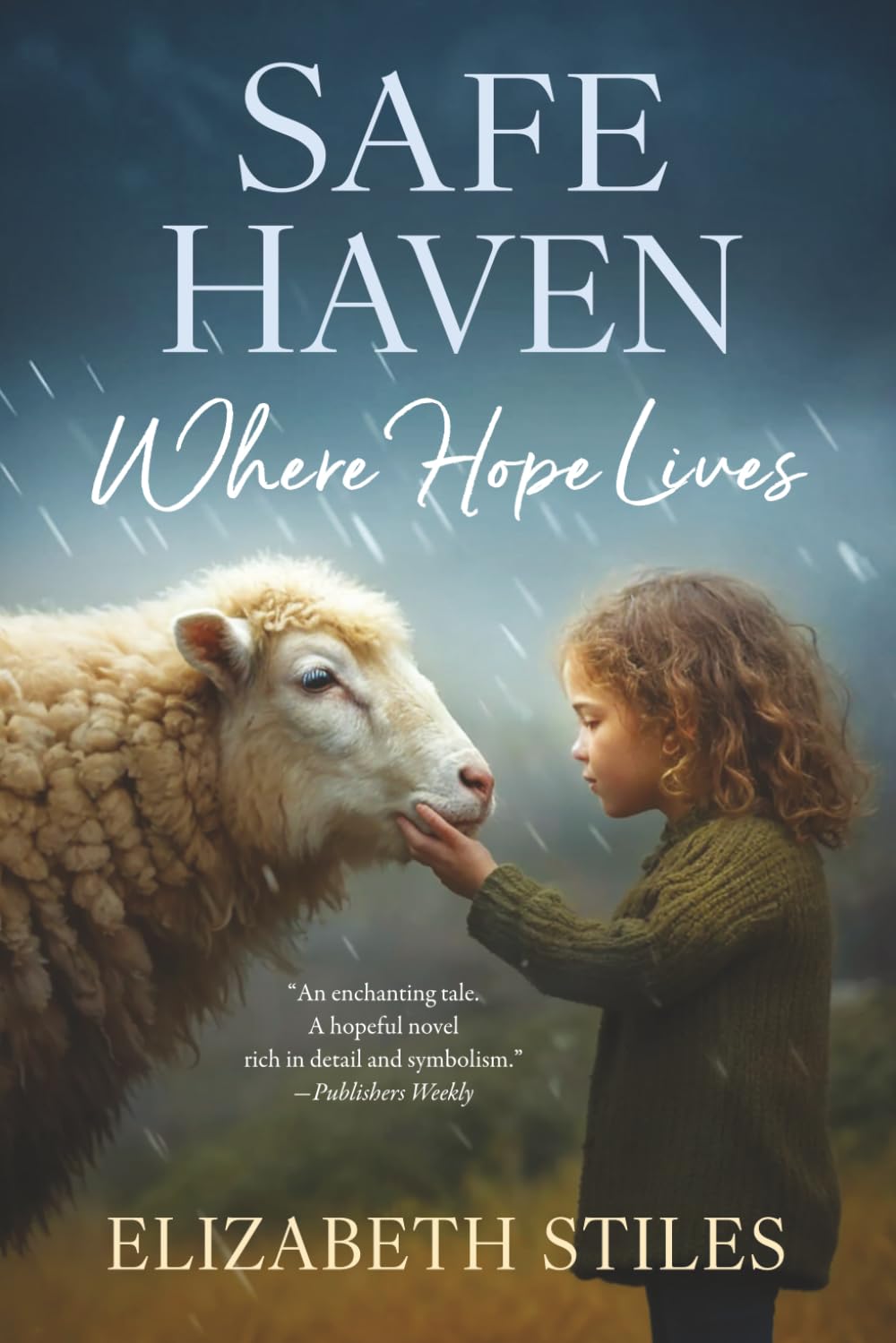
Elizabeth Stiles’s Safe Haven: Where Hope Lives tells the story of Michael Russo, a Chicago news anchor whose seemingly perfect life shatters overnight. After losing his career and fiancée, he retreats to a crumbling farmhouse in East Haven, hoping to rebuild both his home and himself. There, he meets a cast of characters who carry their own wounds. Mac, a man haunted by loss; Sally, a sharp-tongued shop owner raising her nonverbal son; and Charlie, a tough young woman scarred in ways that go far beyond the physical. What begins as a story of personal failure grows into a web of redemption and second chances. The novel weaves pain, love, and hope into something honest and deeply human.
From the first chapter, I felt swept into the quiet ache of this story. The writing has a cinematic pull. Clean dialogue, vivid imagery, and just enough restraint to make the emotional moments land hard. Stiles doesn’t rush anything; she lets grief breathe. Her prose reads like conversation, unpolished in a way that makes it real. The story asks what happens when life strips away all the things you think define you. I liked that it never promises easy answers. At times, the pacing slowed, but the stillness fit the theme. It felt like sitting beside someone who’s hurting and finally ready to talk.
This book hit me harder than I expected. I caught myself caring about these people as if they were neighbors. There’s a quiet beauty in the way Stiles writes brokenness, not as tragedy but as possibility. The connection between Michael and Mac, and later with Sally and Henry, shows how love can exist in small gestures, in the messy middle of pain. The themes of faith and suffering run deep, yet they never feel preachy. What stood out most was how the story treats hope not as something shiny or naive, but as something fought for. It reminded me that redemption doesn’t come in one grand moment; it seeps in slowly, like light through old windows.
It’s emotional but not sentimental, thoughtful without being heavy-handed. The story speaks to anyone who’s ever had to start over, anyone who’s loved and lost and dared to love again. I’d recommend it to readers who enjoy character-driven fiction, to fans of Nicholas Sparks or Kristin Hannah, or to anyone looking for a story that feels grounded in real pain and real grace.
Pages: 300 | ASIN: B0DS16ZBCX
A Trail in the Woods

A Trail in the Woods follows Epiphany Mayall, a psychic counselor in her sixties who sets off with her son and granddaughter for a summer retreat in Lenox, Massachusetts. What begins as a family getaway turns into a haunting journey filled with mystery, loss, and spiritual reckoning. The story drifts between realism and the supernatural, weaving ghosts, psychic visions, and tangled histories into a tale of grief and renewal. O’Connor paints both Florida and New England with lush, sensory detail, and her characters are written with the quiet melancholy of people trying to understand both the world around them and the worlds beyond.
I found the writing to be smooth and deeply atmospheric. The author’s voice has that old-fashioned warmth, steady and patient, but it also hides sharp edges. I loved how the conversations between Epiphany and her son capture that mix of affection and frustration that defines family life. Some scenes, especially those with the ghosts, felt almost cinematic. Others lingered on explanation, and I caught myself wanting the story to move faster. Still, the pacing fits the theme. It’s a book about healing, and healing never happens in a rush.
Emotionally, the novel caught me off guard. It isn’t scary in a horror sense, but it’s haunted in a quieter, sadder way. I felt the weight of regret, the pull of memory, and that fragile thread of hope that keeps people going after loss. O’Connor’s use of dreams, coincidences, and spirit encounters makes the reader question where grief ends and magic begins. I admired that. It made me think of how every family carries ghosts, visible or not.
A Trail in the Woods isn’t just a ghost story; it’s a meditation on love, forgiveness, and the strange ways the past reaches into the present. I’d recommend it to readers who like slow-burning mysteries with a spiritual twist, to anyone drawn to stories about mothers and sons finding common ground, and to those who don’t mind a few eerie chills mixed with heartfelt emotion.
What Is Unseen

J. Andrew Rice’s What Is Unseen weaves together the stories of people wrestling with grief, faith, morality, and redemption in small-town Texas. The novel follows several characters, Kyle Luman, a grieving widower; Phylicia Jones, a civil rights attorney returning home after loss; and Ben Mueller, a hardworking man dealing with betrayal and corruption. Their paths cross in a world where hope and pain walk hand in hand, and where unseen forces, faith, conscience, and community, shape every life. The story unfolds gently, yet it builds momentum through layered perspectives and a shared struggle for meaning. Rice uses East Texas not just as a backdrop but as a living presence, a place heavy with history, heat, and hidden grace.
Reading this book hit me harder than I expected. The writing has an easy rhythm, simple but deep, like someone telling you their story over coffee on a quiet porch. Rice doesn’t rush his characters or their pain, and that patience made me care about them. Kyle’s loss felt real, almost raw, and his slow climb out of grief was both painful and uplifting. The dialogue felt like a homegrown conversation, unpretentious and familiar. At times, though, the story takes its time, and some descriptions felt more like journal entries than storytelling. Still, there’s beauty in the way Rice captures human resilience. The message about hope, faith, and the unseen hand that steadies us is one that sticks with you.
I’ll admit, I didn’t expect to feel so attached to these people. Rice brings out a kind of emotional honesty that sneaks up on you. The novel reminded me that good and bad often live side by side, and sometimes the right thing is murky, not shining. The characters are flawed, sometimes unlikeable, but always relatable. There’s something tender about that. The way grief meets faith, how bitterness bends toward forgiveness, it all feels earned, not forced. The story doesn’t preach, but it does nudge you toward reflection. It made me think about what I hold onto and what I let go of.
I’d recommend What Is Unseen to anyone who likes stories about redemption, faith, or small-town life with real heart. It’s perfect for readers who enjoy character-driven fiction and don’t mind a slow burn. This isn’t a thriller or a love story, it’s a quiet journey through brokenness toward light. For those who’ve lost something or someone and are still figuring out what comes next, this book will feel like a friend.
Pages: 364 | ASIN: B0F861FZ9Z



 LITERARY TITAN