Blog Archives
Harriet Hates Lemonade


Harriet Hates Lemonade follows Harriet Henderson, a rigid and lonely widow in Bozeman, Montana, who breaks her ankle after a showdown with a neighbor’s off-leash dog and suddenly cannot outrun her own life anymore. Stuck at home with her beloved dog Bibbo, she clashes with new neighbor Robyn and Robyn’s young daughter, then slowly notices that something is very wrong inside their house. As Harriet gets pulled into their struggle with an abusive husband and into group meetings at Harmony House, she starts to recognize patterns from her own marriage to Les and the ways she has buried those memories. The story tracks Harriet’s halting attempts to help Robyn find safety, her growing bond with Audrey, and her reluctant softening toward community, small kindnesses, and even a few messy surprises. Underneath the neighborhood gossip and petty HOA battles sits a clear through-line about the cycle of emotional abuse and the work it takes to break it.
I really loved how the writing lets me sit deep inside Harriet’s prickly head. The narration stays close to her thoughts and habits, so her sharp comments about neighbors, librarians, and lemonade stands made me laugh even when she was objectively being awful. Scenes like the humiliating hospital pickup, the underwear-in-the-grocery-bag mix-up, and the crusade against the off-leash dog feel both funny and sad at the same time. The prose itself is clean and unfussy, and the humor feels natural, not forced. I also appreciated the sensory details around aging and the house, from the cave-like wood paneling to Harriet’s irritation with her own body, because they grounded the story in a very tangible midlife reality.
The ideas in the book hit me harder than I expected. The sessions at Harmony House walk through the cycle of narcissistic abuse, love bombing, devaluing, and hoovering, and the explanations are clear without turning the novel into a pamphlet. I found myself wincing as Harriet initially resists the word “abuse” and defends Les with religious language and talk about old-fashioned vows, because that denial felt painfully believable. The story shows how emotional abuse hides inside “rules,” jokes, and backhanded remarks, and why leaving is not a simple act of will. I liked that Robyn’s journey does not follow a neat straight line and that Harriet’s support is clumsy and sometimes controlling, since that messiness mirrors real life. The book also nudged me to think about community and neighborliness, how easy it is to hide behind privacy and routine, and how risky it feels to butt into someone else’s marriage even when every instinct screams that something is wrong.
Harriet Hates Lemonade will suit readers who enjoy character-driven contemporary fiction, small-town settings, and complicated, not-always-likable women who have to unlearn a lifetime of bad lessons. If you have liked books in the vein of A Man Called Ove or Olive Kitteridge, or if you are interested in stories that unpack domestic abuse with compassion and plain language, this novel is a strong pick for you and for book clubs that like big feelings and big discussions.
Pages: 330 | ASIN : B0G2YPGWHV

A Bold Bargain

A Bold Bargain follows Jack Blaine, an eighteen-year-old conservation agent in 1950s Missouri who keeps stumbling into danger, mystery, and unexpected connections. The story moves between tense encounters with poachers, the quiet bond between a boy and a half-wolf pup, and Jack’s growing involvement with vulnerable people near the Sac River. The book blends rugged outdoor life with soft moments of compassion, and it ties everything together with a thread of personal history that Jack can’t quite outrun.
Jack’s mix of grit and gentleness lands with a real thump in the chest, and the writing makes his inner world feel close enough to touch. The scenes along the river pulled me in fast. The pacing shifts from calm to sharp in a blink, and that rhythm kept me turning pages even when I told myself I should stop. The dialogue feels natural, plain spoken, and warm. I liked how it brought out the heart of the community around him. No big speeches. Just people trying to make sense of life as it comes.
I also felt a tug of emotion watching how Jack steps into other people’s pain without hesitation. His encounters with Mrs. Fletcher and the French family hit me harder than I expected. The writing paints poverty, loneliness, and aging with a simple brush, and it still lands heavy. Nothing feels overplayed. I appreciated how the book lets kindness show up quietly, almost shyly. At the same time, I wanted just a touch more complexity in a few side characters. Still, the sincerity in the storytelling made me forgive that pretty quickly. I could tell the author cares deeply about these people and this place, and that care shines through.
A Bold Bargain is a book for readers who enjoy heartfelt stories set against open sky and rough country roads. If you like character-driven tales with danger, tenderness, and a little old-fashioned grit, this one will be perfect for you. In many ways, A Bold Bargain reminded me of Where the Crawdads Sing, because both stories mix raw nature, quiet resilience, and the fierce pull of human connection into something that stays with you.
Pages: 346 | ASIN : B0FD7VSY68
Trade-Offs

Crossfire follows a high-powered executive who is struggling to juggle corporate pressure, family expectations, and the uneasy beginnings of an environmental partnership that pushes her boundaries. What was the inspiration for the setup of your story?
I am fascinated by the impact of each choice we make in life, and each benefit requires a sacrifice, no matter how small. I wanted to use the green energy debate to show how small decisions really add up over time. For the series inspiration, I think we have so many books focused on coming-of-age stories, decisions that define the original trajectory of a life in early adulthood, but few dealing with middle age, which is where I wanted to focus. This first book series looks at a woman in the middle of her life, reflecting back on all those trade-offs she’s made—like choosing career over family, or balancing what she believes about the environment with what’s actually practical. I was most inspired by the idea that all these choices we think are separate actually connect and end up shaping where we land in life, but one or two different decisions can change everything at any point.
There was a lot of time spent crafting the character traits in this novel. What was the most important factor for you to get right in your characters?
It was important that Moirin, the main character, remained deeply committed to her convictions while being unyieldingly tough and independent in the workplace, yet vulnerable and yearning in her personal life.
What were some themes that were important for you to explore in this book?
This series explores the experiences of women in midlife, and a common theme is the impact of life choices, such as prioritizing work over having a family or vice versa. I wanted to explore this with the extra layer of the moral, ethical, and financial choices made on behalf of a corporation. Every choice each of us makes impacts not only what we expect, but often has implications we could have never imagined. The results end up being our legacy in life, and the ultimate choices Moirin made.
What will the next book in that series be about, and when will it be published?
The next book in the series follows Jo Sanderson, Moirin’s best friend, who is dealing with the midlife financial challenges of a widow who loses her job, but a deeper struggle is at play with overcoming decades of loss and grief. As a result of her history, she developed a people-pleasing personality, constantly seeking to support the dreams of others, even those deceased, at the sacrifice of her own. It’s another story of growth that has a lot of cowboy and Wyoming outdoor influences. It will be available by mid-year 2026.
Author Links: GoodReads | X (Twitter) | Facebook | Website | Amazon
Everyone around her marked the passage of time through celebrations of weddings, anniversaries and graduations, measuring life success through joy in family portraits. Everyone else had a life with husbands and wives, children, grandchildren. Moirin has a cat named Orson.
After decades spent building her grandfather’s Denver-based energy company into an international corporation, she’s poised to be the next CEO, when the Board of Directors announced a rigorous vetting process, ostensibly to avoid nepotism. It should have been a formality, but the challenges of an environmental impact study, resolving a string of increasingly suspicious management issues, and a vindictive business associate aren’t helping her pass their scrutiny.
When she meets a state brand inspector and team roping cowboy, his pragmatic outlook and life philosophy challenge her ideas about environment, life, and legacy. On the verge of achieving everything she’d worked for, Moirin Garrett wonders – had she made the right choices in life? At this stage, was it too late to change her legacy?
A Second Chance

Lunch Tales: Teagan follows a woman grieving the loss of her husband and adapting to being a single parent who, through this crisis, is reunited with her first love, and dares to think she could find love again. What was the inspiration for the setup of your story?
The inspiration for the setup of Lunch Tales: Teagan started with her best friend Suellen’s book, where we first meet Teagan. The inability to have children and the financial burden of fertility treatments were causing problems in Teagan’s marriage. She didn’t think she could ever get over not being able to have a child, while her husband Mike, said that she was enough for him, and thus began a clash in their marital partnership. Eventually, Mike gets on board with Teagan’s wish to adopt, and just as their threesome has blossomed in the best way, Mike is killed in a car accident, and Teagan finds herself a single parent at the start of her story. Since I write realistic fiction, many of my themes come from real-life stories. Teagan’s story is a blend of several occurrences I pondered, and I wanted to give it the respect I would give anyone in a similar scenario. The purpose of my stories is to inspire and instill hope.
There was a lot of time spent crafting the character traits in this novel. What was the most important factor for you to get right in your characters?
I had a head start because Suellen’s book included Teagan’s work friends, which gave me a basis to build upon. As for Teagan’s family, I have Irish friends who helped me with the particular traits of an Irish family. Our closeness, coupled with several interviews, gave me confidence that I would get it right.
What were some themes that were important for you to explore in this book?
Teagan’s experience highlights the strength found in the backing of friends and family, while I also explored adoption as a positive option. The most uplifting and charming theme is a romance that offers a second chance.
Will there be a third book in the Lunch Tales series? If so, who will the story focus on?
The third installment of the Lunch Tales series will feature Carol and is currently in early development.
Author Links: GoodReads | X (Twitter) | Facebook | Website | Amazon
Pushing her son’s stroller on a summer day, thirty-six-year-old Teagan Quinn has no reason to think a big change is looming-the kind that happens in a mind-blowing instant. Nothing could prepare her for a shocking heartbreak.
Gripped by the trauma and grief of suddenly becoming a single parent, Teagan leans heavily on her lunch friends and lively Irish family for support. But when something ends, something usually begins-and Officer Luke Pisani walks back into Teagan’s life. Not just any old friend, he was her idealistic first. The man who got away.
As the grieving months go by, Luke is there at every turn, and gradually, old attraction reignites. But as ambivalent feelings challenge Teagan’s new beginning, a series of hurtful anonymous notes arrive, each angrier than the one before it.
With grit and urgency, Teagan must summon her inner sleuth before the letters poison one of the best things that could happen to her-learning to love again.
Wake the Lake
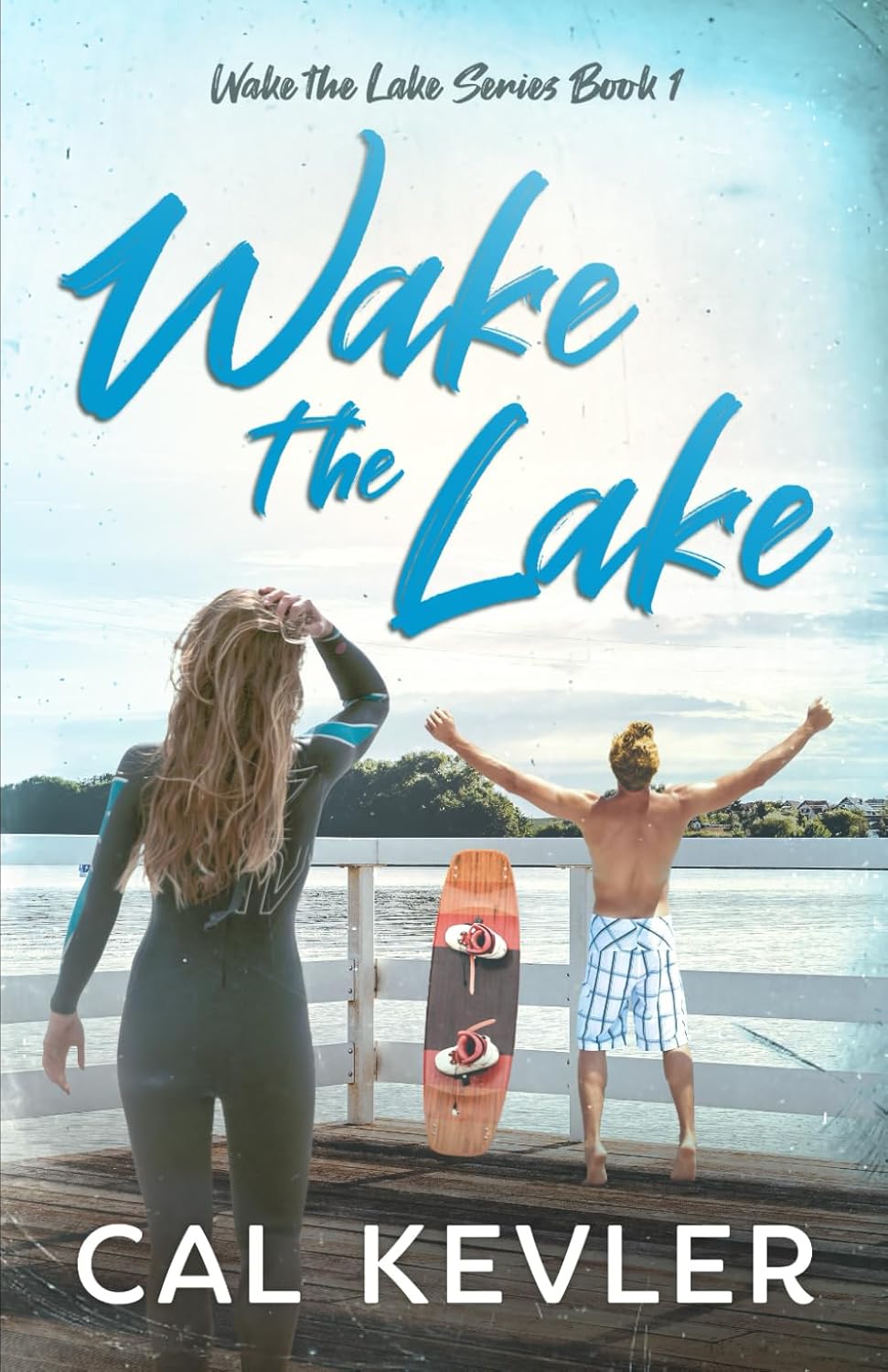
Wake the Lake follows fifteen-year-old Hudson Holloway, a driven wakeboarder chasing perfection on the glassy waters of Lake Watanabe while navigating the ripples of family struggle, fear, and self-doubt. Her father, Jim, a blue-collar worker with his own demons, supports her dream despite financial strain, while her mother, Evie, once a wakeboarding champion herself, watches from a wheelchair after a tragic accident. The story swells toward Hudson’s journey to the Junior Nationals, where ambition, anxiety, and family wounds collide in a powerful coming-of-age ride.
This book grabbed me from the first page. The opening scene, Hudson soaring across the lake, the water alive beneath her, felt cinematic. Kevler’s writing is sharp but tender, full of motion and heart. He nails the rhythm of sport and the quiet spaces in between, those moments when confidence fades and doubt creeps in. Hudson’s inner world is drawn with such authenticity that I found myself rooting for her even when she stumbled. The tension between her parents hit me hard, too. Jim’s flaws felt painfully real, and Evie’s strength broke through every page. There’s a rawness to their love that made me ache a little.
What really worked for me, though, was how the book balanced adrenaline and vulnerability. One chapter has you holding your breath through a stunt; the next leaves you still with heartbreak or hope. The prose flows like water, fast when it needs to be, gentle when it should. Sure, a few lines dip into melodrama, but I didn’t mind. The emotions felt earned. I could feel the sun, the spray, the exhaustion, and that electric need to prove something to yourself when no one’s watching.
Wake the Lake is a story for anyone who’s ever chased a dream while fighting the weight of life pulling them down. It’s especially for young readers who crave stories about resilience, family, and finding peace with imperfection. I’d recommend it to teens, athletes, and parents alike, or anyone who knows what it means to fall, get back up, and keep riding.
Pages: 253 | ASIN : B0FF4B3CF5

Something Resembling Love


Something Resembling Love tells the story of Jane Davenport, a young woman burdened by loss and a rare medical condition that shadows her every choice. After losing her parents and discovering she has hereditary hemorrhagic telangiectasia, her life becomes a balancing act between survival and desire. Years later, she crosses paths with Peter, a quiet researcher haunted by his own solitude. Their worlds intertwine in Chicago through mutual friends, late-night labs, and hesitant hearts. The novel moves between perspectives, revealing how two people learn to accept imperfection and find something close to love amid fear, science, and second chances.
Author Elizabeth Standish writes with a kind of honesty that sneaks up on you. The story isn’t flashy or overly romantic, it’s gentle, careful, and raw in ways that feel human. I loved how Jane’s sharp wit balances her vulnerability, how her pain never turns her bitter, only more determined. Peter’s quiet awkwardness, his devotion to science, and his fumbling affection make him real and lovable in his own hesitant way. Their chemistry builds like a slow burn, full of small gestures and unspoken emotions, the kind that make you smile and ache at the same time.
What stood out to me most was how Standish weaves science into intimacy. The clinical details of DNA, blood vessels, and soil chemistry mirror the characters’ search for connection. The writing feels almost poetic in places, but it never drifts into pretentiousness. The dialogue feels lived-in, the pacing patient but never dull. Still, there were moments when I wanted the story to push harder, to show more of Jane’s darker thoughts, or Peter’s guilt, instead of keeping things so contained. But maybe that’s the point. Love here isn’t cinematic. It’s quiet, flawed, and a little messy. Just like the people trying to hold it together.
Something Resembling Love isn’t just a romance, it’s a meditation on resilience, grief, and the fragile beauty of being known by another person. I’d recommend it to readers who enjoy character-driven stories with emotional depth, to anyone who’s ever loved someone despite fear, and to those who prefer subtle emotion over melodrama.
Pages: 317 | ASIN : B0FMP96X96
“The Line of Horror”

A Dangerous Friendship follows a woman navigating heartbreak, loneliness, and the lure of risk, who, after a failed marriage, is drawn to a magnetic yet volatile woman whose energy feels both liberating and destructive. What was the inspiration for the setup of your story?
Any kind of loss that forces a woman to question her future and identity sends me into story-telling mode. Especially against the backdrop of New York City in the 1980s, where there was an electric vibe and the possibility that anything could happen if you were open to it. I lived in the City during that time and it was magical. Wealth, street art, theater, fantasies of changing your life in a New York minute—it was heaven.
What was the inspiration for the relationship that develops between Tina and Spike?
Every female friendship I’ve had or witnessed since high school. We know the archetypes of the popular girls, the mean girls. What about the dangerous ones? What about the women who promise to give us power. Who tell us stories that we want to believe are true because are own lives seem so meh. Also, in the 1980’s, there was a second wave of feminism with women fighting for equal rights and questioning cultural and social norms. That history fans the flames of the relationship between Tina and Spike and their confusion: wanting to be powerful in their right but also looking to be elevated to a different reality by wealthy men.
What were some themes that were important for you to explore in this book?
Reinvention after loss. I like to explore the ways women navigate identity and self-worth when their lives take an unexpected turn. Also, truth vs. fiction. I’m fascinated by the stories we tell ourselves and each other to survive. Finally, the thin line between attraction and danger. Tina calls this “the line of horror,” which she refuses to cross at first, then leaps over, believing that Spike, like a cult leader, will change her world.
What is the next book that you are working on, and when can your fans expect it to be out?
My next novel is The Enlightenment of Henry Pike. It leans even further into dark humor than A Dangerous Friendship. It follows a slightly unhinged philanthropist who’s being swindled out of his fortune by those closest to him. At its core, it’s also about loss and reinvention—and our endless obsession with wealth, power, and the lives we think we deserve. Readers can expect it in the next two years.
Author Links: GoodReads | Instagram | Facebook | Website
In 1980s New York City, aspiring writers Tina and Spike bond in a complex, all-consuming friendship that will change their lives forever.
Desperate to redefine herself after a failed marriage, twenty-nine-year-old Tina embarks on a thrill-seeking journey to feel alive again. When she meets thirty-five-year-old Spike, a beautiful, seductive, seemingly invulnerable woman, she becomes enthralled by the older woman’s stories of NYC power brokers, sex, wealthy men, and her past. Tina latches on to Spike as someone who can save her from mediocrity and show her how to be the kind of woman who can have power over men—both in romance and in life.
Chasing adventure and the writing life, Tina and Spike rent a cabin together for the summer in the rural backwoods. There, they go on a wild, manic, darkly humorous journey involving dive bars, drugs, men, and all-night dancing, becoming increasingly psychologically entangled in each other’s lives along the way. But eventually Tina realizes just how dangerous Spike is, and is forced to act to save herself.
Filled with New York wit and fast-paced dialogue, this is a story of loss, betrayal, survival, and blurring the line between attraction and peril.
A Dangerous Friendship
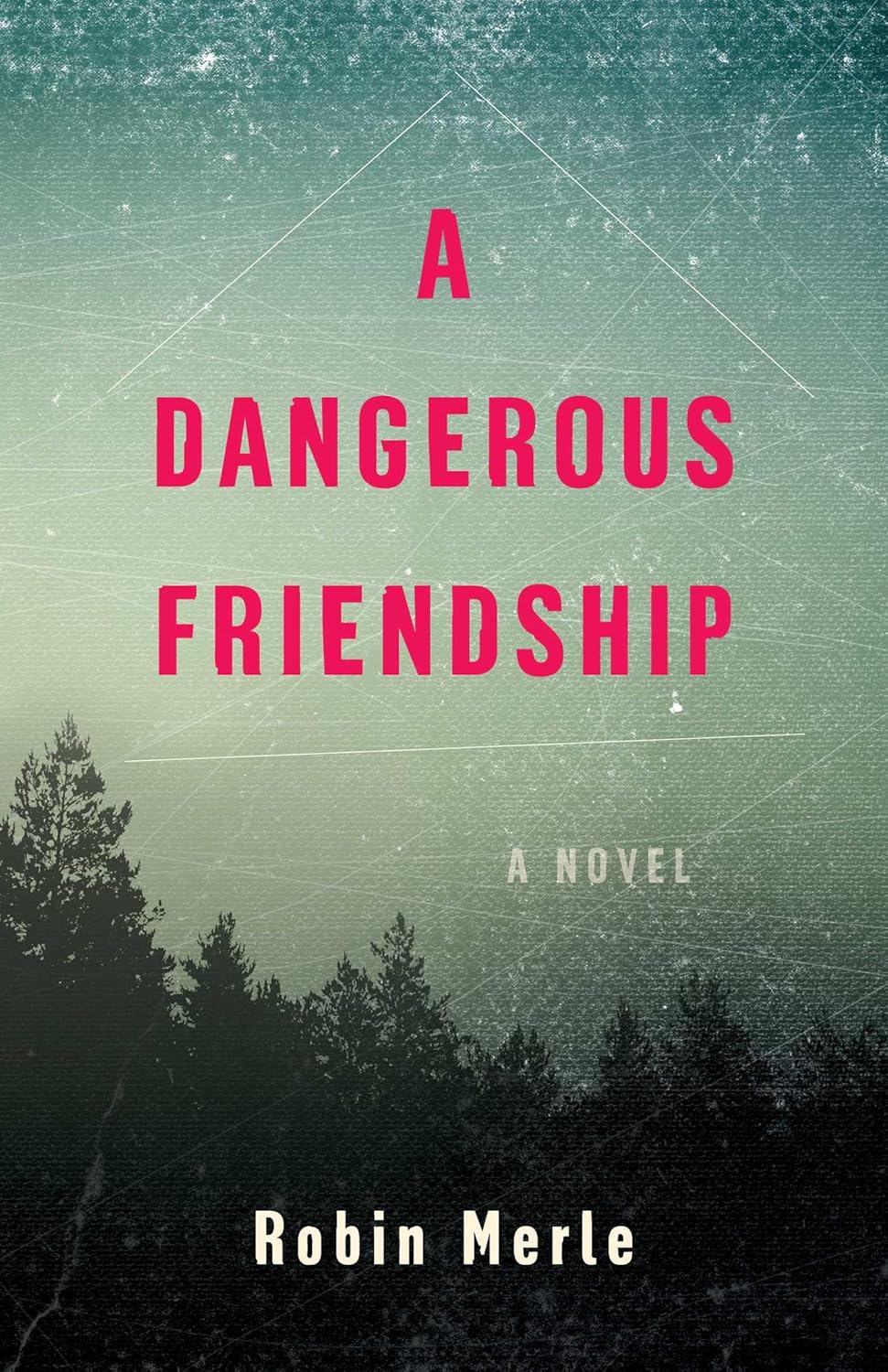
Robin Merle’s A Dangerous Friendship tells the story of Tina, a woman navigating heartbreak, loneliness, and the lure of risk, who is drawn into a powerful and consuming relationship with Spike, a magnetic yet volatile woman whose energy feels both liberating and destructive. The book unfolds as a mix of confession, memory, and cautionary tale, with Tina’s voice pulling readers through the strange encounters, reckless adventures, and raw emotions that define her search for meaning and connection. At its heart, the novel explores how desire, loss, and self-deception intertwine when we reach for love in places that might destroy us.
The writing is sharp, sometimes even intoxicating, as if the sentences themselves were alive with the same restless energy that fuels Spike. There were moments I felt swept along by the chaos, unable to look away even when the scenes grew uncomfortable or unnerving. The style often felt conversational, almost like overhearing someone at a bar late at night telling you the truth they hadn’t meant to say out loud. That rawness worked for me. It made me trust the voice even when I knew the choices being described were dangerous or misguided. Still, there were times when the sheer intensity wore me down. I caught myself needing a pause, needing to breathe, because the book doesn’t really let you step away from the emotional heat. That relentlessness is its strength, though.
I kept coming back to the theme of how easily people mistake chaos for passion, or instability for depth. Spike is fascinating because she’s equal parts irresistible and terrifying. I understood Tina’s attraction to her. Who doesn’t want to be pulled into someone’s orbit when they seem larger than life, when they make you feel braver than you are? Yet I also felt a knot in my stomach, knowing where such relationships might lead. The book never pretends that this friendship is healthy, and I liked that honesty. It made me think about the kinds of people we let in when we’re at our most fragile, and how often the need to feel alive can push us right to the edge of destruction.
A Dangerous Friendship left me unsettled in the best way. It’s not a comforting read, but it is a truthful one. I’d recommend it to readers who enjoy stories about flawed characters, messy emotions, and the dangerous beauty of being swept up in someone else’s storm. If you’re drawn to novels that explore obsession, betrayal, and the thin line between love and ruin, this one will keep you turning pages.
Pages: 311 | ASIN : B0DWYJWSBF



 LITERARY TITAN