Blog Archives
A Literary Hero

Dracula: Finding of a Shadow is a bold reimagining of Bram Stoker’s gothic masterpiece, presenting it as a stage play that mingles dark comedy, high drama, and an intriguing exploration of vampiric lore. What were some ideas that were important for you to share in this book?
Dracula – is one of the most successful heroes of mass culture, who came to us from the pages of the famous gothic novel by Bram Stoker “Dracula”, written over 125 years ago. This book (“Dracula: Finding of a Shadow”) is dedicated to the image and character of Dracula: how it was formed, how it has transformed over the years, its future, and further development in the world of literature, film, and theatre.
Did you find anything in your research of this book that surprised you?
In the recently discovered Bram Stoker’s diaries and notes, published by the great-grand-nephew of the famous author – Dacre Stoker, I have found for myself a number of answers to questions about how this literary hero was born, why the author awarded him particular characteristics and qualities. I’ve also discovered information about Bram’s attitude towards theatre in general and the staging of his novel in particular. You can read all about it in the Foreword, written by Dacre Stoker himself, and also in the exclusive interview with Dacre included in the book.
In my original play “Dracula: Finding of a Shadow” the character of Count Dracula is presented as a collective image, based not only on the original novel by Bram Stoker, but also the prequel and the sequel, co-authored by Dacre Stoker, who used Bram’s notes and diaries to create them.
What is the next book that you are working on, and when will it be available?
My next book – “Teach Me How to Die. A Novella and Other Stories” – is currently being published. It is my first prosaic experience. The novella “Teach Me How to Die” is dedicated to a very important issue of our time – suicide and its prevention. I believe the book will be released this summer.
Author Links: GoodReads | Facebook | Website | Instagram
as the 175th anniversary of its author, Bram Stoker. In the foreword, written by the great-
grandnephew of the writer, Dacre Stoker, we discover that Bram Stoker worked in theater, loved
theater, and was inspired by the dramatic art. Dacre’s exclusive interview introduces the results
of his detective-research of various documents and Bram’s personal journals and notes — all of
the many discoveries led to the creation of the prequel, Dracul, and the sequel, Dracula the Un-
Dead.
Lisa Monde’s play Dracula: Finding of a Shadow was inspired by the original novel by
Bram Stoker, as well as both – the sequel and the prequel. The play had several Off-Broadway
productions. This current edition also includes an original play by the guest-playwright Thomas
R. Gordon – Dracula: Bloodlines. Both plays premiered at the Gene Frankel Theater in New
York City.
Over ten years ago, Lisa published her first scientific article on the evolution of the image
of Dracula in literature and art. Besides the plays, two essays by Lisa Monde are also included in
this book, both shedding light on the mystery of the birth of the stellar literary character and the
evolution of the image of Dracula.
In the Epilogue, Lisa summarizes the stages of the path traversed by Dracula in literature
and other types of art, as well as shares her ideas on Dracula’s future.
Dracula: Finding of a Shadow


Dracula: Finding of a Shadow is a bold reimagining of Bram Stoker’s gothic masterpiece, presenting it as a stage play that mingles dark comedy, high drama, and an intriguing exploration of vampiric lore. Through layers of theatricality and clever dialogue, the book serves as both a tribute and an expansion of the Dracula mythos. It’s packed with eccentric characters like the sultry vampiresses and the enigmatic Alucard, blending modern humor with classic gothic intensity. The narrative weaves moments of levity and horror, making it an unconventional but engrossing continuation of the Dracula legend.
One of the main values of this anthology lies in its deep study and research into Dracula as a subject, meticulously carried out by the author. This commitment to exploring the Dracula mythos elevates the work beyond mere storytelling. The book is enriched with an interview featuring Dacre Stoker, the collector and keeper of Bram Stoker’s literary legacy. This fascinating addition offers insights into the theatrical potential of the novel and the importance of theater in Bram Stoker’s life and work, making the anthology not just a play but an immersive dive into the world of Dracula.
The anthology also includes two thought-provoking essays that delve into the origins of Dracula as a literary character and his enduring legacy in cinema, theater, and musical theater. These essays give readers a unique opportunity to see Dracula from multiple perspectives: his birth, evolution, and lasting cultural impact. This exploration of Dracula’s image across different mediums adds layers of context and richness to the experience, allowing fans to appreciate the depth and breadth of the Count’s influence.
At the heart of the anthology is the play Dracula: Finding of a Shadow, which draws inspiration not only from the original novel but also from the prequel and sequel written by Dacre Stoker. The play captures the essence of the gothic classic while blending it with contemporary themes and dramatic innovation. The Epilogue offers a visionary take on Dracula’s future, presenting him as one of the most successful heroes of mass culture over the last two centuries, a perspective that feels both fitting and ambitious.
What struck me first about the play itself was its playful tone, especially in the scenes featuring the vampiresses. Their banter about trivialities like fashion or misunderstandings of modern vocabulary adds a quirky charm that offsets the brooding atmosphere. One particularly memorable scene was the Tango sequence between Dracula and Mina. It was strange and theatrical, but it effectively captured Dracula’s hypnotic allure while also hinting at his underlying vulnerability. These creative choices kept me entertained.
The character of Alucard is a standout. As Dracula’s estranged shadow, his mix of resentment, mischief, and strange loyalty gave him depth. His philosophical musings about shadows and freedom resonated with me more than the main plot.
Dracula’s raw, unyielding yearning for his lost love, Elisabeta, remains compelling. Lines like, “I wanted to forget her, but she comes to me once again,” highlight his tragic romanticism and elevate the character beyond a stereotypical villain. Yet, I couldn’t help but wish the script balanced these emotional beats better.
While I appreciated the modern twists, some elements felt overdone. The vampiresses’ slapstick antics and their convoluted schemes occasionally derailed the tension. At times, I wanted the story to focus more on Mina and Jonathan’s arc. Their rushed wedding at a corrupted church was both eerie and heart-wrenching, especially with the subtle hints that Father Dominic might not be human. That scene was masterfully creepy, though it left me craving more development of Mina’s perspective and her growing ties to Dracula’s world.
Dracula: Finding of a Shadow is for fans of gothic theater who enjoy modern flourishes and a bit of camp. It’s a work that doesn’t take itself too seriously but still delivers moments of intrigue and poignancy. By including not just the play but also essays, an interview with Dacre Stoker, and a rich examination of Dracula’s influence across art forms, the anthology becomes a must-read for anyone fascinated by the vampire legend. If you love quirky reimaginings with the freedom to not always stay true to the source material’s tone, you’ll likely enjoy this.
Pages: 220 | ASIN : B0CN9QNSSZ

Ashes


Alice Reaper’s past clings to her like a shadow. Ever since the haunting night at the funeral home, her life has been consumed by nightmares and the oppressive weight of unseen terrors. Isolated from those she once loved, Alice resigns herself to a life devoid of joy or peace. But when Viviana enters her world, a glimmer of hope cuts through the darkness. For a moment, everything feels possible—until it doesn’t. Can Viviana pull Alice from the depths of despair, or will the shadows swallow her whole?
Ashes, by David Edgar Grinnell, is an evocative exploration of grief, despair, and the journey toward healing. Told in the raw, intimate perspective of first-person narration, readers experience Alice’s turmoil as if it were their own. Her father, Oscar, and other supporting characters add layers to the narrative, showing the different ways people live with—and sometimes succumb to—trauma. Grinnell doesn’t just present pain; he holds a mirror to it, reflecting its complexity and its power to shape lives.
While Ashes dives deeply into themes of sorrow and loss, it offers solace to readers who see their struggles mirrored in the characters. Tarot card readings and philosophical exchanges between Alice and Viviana provide moments of introspection and guidance, carving a path toward hope. The story is as much about finding light in the dark as it is about acknowledging the darkness itself.
Grinnell deftly weaves elements of Gothic tradition, paganism, and tender romance into the narrative, adding depth and dimension to the story. Viviana, with her Gothic charm and fascination with the dark arts, brings an air of mystery and intrigue. Though the spark between Alice and Viviana feels sudden, their unfolding relationship is both poignant and deeply satisfying. The romance balances the novel’s weightier themes, offering warmth and connection amid the bleakness.
One of the novel’s standout features is its cast of characters. Despite their youth, they carry a profound sense of wisdom. Their voices resonate with thought-provoking reflections, often quoting classic literature in ways that feel both meaningful and natural. These moments of insight elevate the story, offering readers not just entertainment, but inspiration.
At its core, Ashes, by David Edgar Grinnell, is more than a tale of grief—it’s a story of resilience, hope, and the transformative power of love. Readers drawn to Gothic themes, explorations of mental health, or heartfelt LGBTQ+ romances will find much to cherish in this beautifully crafted novel. It’s a reminder that even in life’s darkest moments, there’s a chance to heal and move forward.
Pages: 368 | ISBN : 978-1736867587
Lone Crusader

The Camaro Murders follows a man straddling the line between two worlds who is tasked with gathering murdered souls and subsequently uncovers the identity of a young girl’s killer. What was the inspiration for the setup of your story?
Music was a huge influence for this story, and so there were a lot of vibes and abstract ideas floating in my head that gelled in unexpected ways based on what I was listening to at the time. One of the primary examples is Coheed and Cambria. Their albums are concept albums, and the lyrics tell a story, but only part of the story. And sometimes seemingly small/inconsequential parts of the story, relatively speaking. There was a forum at the time where fans would try to piece the story together based on what they could glean from the lyrics, and I found the whole thing really interesting. And so, my goal with The Camaro Murders was to invoke a similar experience with the reader where they get most of the story but have to fill in some of the connective tissue with their own imaginations. But there was also a lot of my childhood in the story: the podunk town where my grandparents lived, the Knight Rider motif of a lone crusader and his car, the Biblical narrative of Cain and Abel, things like that. I would also call out Sheriff Bell from Cormac McCarthy’s No Country For Old Men as an archetype for Sheriff Hildersham’s character.
How long did it take you to imagine, draft, and write the world your characters live in?
The writing process was largely organic, and if I recall, took place over the course of about a year and a half. I was working mostly by impulse and with abstract ideas–impressions, if you will–and developed some basic ground rules for the world I was creating before piecing together the events of two winters, twelve years apart. It was the first long-form thing I’d done even though it was only 30,000 words, and so probably took longer than it would if I did it today.
I particularly enjoyed the technique of using four different narrators and perspectives. Was that a challenge to construct?
Thanks. I wouldn’t say it was a challenge per se, but it was a lot of fun at any rate. I really like getting into a character’s head and trying to speak and think the way they would. That said, it’s always easy to accidentally slip into your own voice, or sometimes cross wires on characters, so if there is a challenge in balancing multiple first-person POVs, that would be it. You want each character to have their own motivations and way of looking at things… The one nuance about The Camaro Murders is that the story is told out of sequence from a chronological perspective, and so I had to be cognizant of how the characters thought, spoke, and behaved at different times of their lives–in one case, this meant the difference between a seven-year-old and a college student.
Can we look forward to more work from you soon? What are you currently working on?
I’m currently writing the third book in my Reeve series, which is a Gothic Western, alternate history type of thing. The title is Riders of the Black Cowl. My goal is to have the first draft finished by the end of summer. That means I should have a final manuscript ready to go by the end of the year, but we’ll see. The interesting thing about this installment is I’m writing it completely organically. I haven’t done that since writing The Camaro Murders–I’ve employed an outline for every book since. So, there might be some more intense revising this time around.
Author Links: GoodReads | Facebook | Website | Amazon
The man known as the Driver wanders between the living and the dead, tasked with gathering murdered souls. When he learns a young girl’s killer will act again, he must make a choice: carry out his duty or intervene to save a boy’s life.
The Camaro Murders
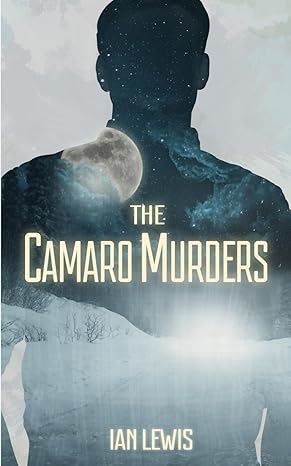
In The Camaro Murders, Ian Lewis crafts a compelling narrative centered around a murder in a small town, told from four distinct perspectives, including one from beyond the grave. The driver of the Camaro, a man straddling the line between the living and the dead, is tasked with gathering murdered souls. As he navigates this eerie realm, he uncovers the identity of a young girl’s killer, who poses an imminent threat. Faced with a moral dilemma, he must choose between following his orders and saving a boy’s life by intervening.
Lewis excels in creating an otherworldly atmosphere while grounding his characters in relatable human experiences. Each perspective is uniquely rendered, with narratives in the first person that are well-crafted and thoughtfully developed. The multi-faceted storytelling draws readers deeper into the plot, making it a gripping read from start to finish. The book’s non-linear timeline, which shifts back and forth, enhances the plot’s complexity and intrigue. This narrative technique adds depth to the story, making it more engaging as the reader progresses. The careful construction of these shifts in time demonstrates Lewis’s skill in maintaining a coherent and compelling storyline.
Notably, The Camaro Murders is a clean read, devoid of lingering graphic violence. Lewis’s sensitivity in handling violent themes with caution and restraint is commendable, ensuring that the story remains impactful without unnecessary gore. This thoughtful approach allows the reader to focus on the emotional and psychological aspects of the narrative.
The Camaro Murders is an excellent read, earning a solid four out of five stars. Ian Lewis’s experimental technique as a writer complements the plotline effectively, making the book a standout in its genre. I highly recommend this book to anyone looking for a thought-provoking and engaging read with a unique narrative structure.
Pages: 153 | ISBN : 978-1976976339
People Are Complicated

Upon the Pale Isle of Gloam follows a girl who wakes up on a deserted shoreline with no memories and surrounded by supernatural beings. What was the inspiration for the setup of your story?
I have a deep appreciation for gothic fiction. One day the desire struck me to start on a story that would be somewhat of a love letter to the genre. To me, few things capture gothic storytelling better than horror. So, when I started writing Upon the Pale Isle of Gloam, I wanted to draw inspiration from the classic themes and elements we all love in gothic literature and horror. Things like existentialism and abandoned places, for example. A misty, supernatural island seemed like a great place to start.
What are some things that you find interesting about the human condition that you think make for great fiction?
That’s a great question. I think people are complicated, and though most are aware of that, there’s still this tendency to try and generalize others. Sometimes we’re quick to label them. Sometimes we oversimplify the complex problems they’re facing. We force black and white bottom lines onto gray areas. But no matter how much we do it, those complexities and gray areas are still there glaring back at us. Ignoring them doesn’t make them any less relevant.
Exploring parts of the human condition that are overlooked and shrugged off makes for interesting stories. At times it can be awkward. Sometimes ugly. But we can learn a lot from taking a moment to consider what others are going through. Maybe even learn more about ourselves—all while indulging in the escapism that stories deliver. Just look at the impact of a book like Mary Shelley’s Frankenstein.
I felt that Upon the Pale Isle of Gloam delivers the drama so well that it flirts with the grimdark genre. Was it your intention to give the story a darker tone?
It was, absolutely. I tend to be drawn toward dark stories that make me feel something or walk away with a different perspective, even if it’s not one I’m comfortable with. When I chose to write a tale set within the gothic horror genre, I felt a darker tone would be crucial to delivering the kind of story I wanted to tell.
What is the next book that you are working on, and when can your fans expect it to be out?
I’m currently in the early stages of my next book, which will likely be more of a literary drama rather than horror. It’s hard to say when I’ll be finished with it, though I hope it won’t take me too long. In the meantime, I’d like to encourage readers of Upon the Pale Isle of Gloam to follow me on social media for updates. I’d love to hear from everyone.
Author Links: GoodReads | Twitter | Website
Upon a deserted shoreline, Rue wakes alone with no knowledge of her past. Decades of wreckage lay sprawled across the beach. The days are impossibly short, and the weather foreboding. Worse are the supernatural beings that stalk the landscape, littering it with corpses. Using only her instincts, Rue embarks on a journey to reclaim her truth and find a way home—all while unraveling the isle’s dark secret.
A spooky weekend read brimming with gothic themes and atmospheric horror.
Some content may not be suitable for all audiences. For more information, please visit http://www.markgulino.com/novella.
Upon the Pale Isle of Gloam

Upon the Pale Isle of Gloam, by Mark Gulino, is a gothic horror novella that introduces readers to Rue, a protagonist shrouded in mystery. Rue awakens on a beach littered with remnants of the sea spanning decades and realizes she has no memory of her past. The only path available leads into a dense forest and further into the heart of the island. This setting, characterized by its persistently gloomy weather and unusually short days, forms the backdrop of Rue’s unsettling journey. As Rue navigates the island, she encounters other individuals who share her amnesiac condition. They are guided by an apparition known as Riel, who instructs them to rediscover their former lives. However, Rue and her newfound companions soon realize they are not alone on this island, hinting at deeper, darker mysteries to be uncovered.
Gulino’s narrative effectively creates an atmosphere of tension and intrigue from the outset. The reader is drawn into the story by questions surrounding Rue’s identity, the enigmatic Riel, and the island’s peculiar inhabitants. The island itself, with its haunting landscape and hidden dangers, adds to the sense of foreboding that permeates the novella. The characters offer a spectrum of personalities, providing points of connection for a diverse range of readers. Each character, despite their memory loss, retains distinct personality traits that contribute to the overall mystique of the setting. The writing style of the novella is intentionally crafted to be vague and mysterious, imbuing the story with a sense of intrigue and encouraging deeper engagement with the text. This stylistic choice invites readers to explore the narrative more thoroughly, often revisiting previous sections to uncover hidden layers of meaning. The amnesia experienced by the characters further enriches the narrative, adding complexity and depth to their personalities and traits, which unfolds gradually, keeping the reader’s interest piqued throughout the story.
Upon the Pale Isle of Gloam offers a compelling foray into gothic horror, weaving together elements of mystery, amnesia, and survival in a setting that is both haunting and intriguing. While the writing style may occasionally obfuscate details, it contributes to the novel’s enigmatic and atmospheric quality, making it a notable addition to the genre.
Pages: 225 | ASIN : B0CJNL1P2T
What is Redemption?

The Redemption of Jarek follows a man struggling to find his place in the world following his banishment from the only home he has ever known and the throne he was destined to occupy. What was the inspiration for the setup of your story?
Readers of my previous material with long memories might recall when Alathea mentioned one of the fights in this book, or perhaps that goes too far back. More recent is how Jarek shows up in The Fate of Lenn, takes a beating, slinks away, and is never seen or heard from again in that book. His whereabouts near the end of that book may have even been mentioned in passing, but with no explanation given. In short, I have set the table for this story since way back, and it was waiting for me to be ready.
A personal challenge was to explore the redemption of an already introduced character who could be considered a minor antagonist during his first appearance. I have written pure villains who were killed, and some who were stopped without having to die. I have written a sympathetic book about a villain who genuinely wishes to save her world from suffering and loss she had to feel, and I hoped readers picked up on the toxic forces teaching her toxic lessons from the beginning of her life, her inability to be better than them, and how this could apply to some people in our world. I had yet to write about anyone who faced that antagonist’s defeat and, when offered a slim opportunity to do something different, successfully took what they learned and became their own kind of hero.
I find that authors sometimes ask themselves questions and let their characters answer them. Do you think this is true for your characters?
When composing the early drafts of the story, everything progresses a certain way because I have certain things in mind that I wish to happen. I couldn’t leave it like that. Over the course of revisions, trying to see the world as these characters do, I think I develop a better idea of how some things should go based on my improved understanding of what these characters would say/do. Some of the “discussion” scenes of this book retained a necessary goal given their purpose in the story, but how the characters arrive at that goal shifts to better fit the personalities involved. How do they argue with each other in the most in-character manner? It’s also important to determine how Jarek would handle his “council”, a glorified band of powerful criminals who once had royal patronage/sanction for their actions. Can he take for granted that they are on board with any plan he makes just because they didn’t have an immediately better option for a leader when they found themselves outlawed?
There tends to be an in-character answer to these questions. While the story at the top level didn’t stray far from my plan (and can’t, because it’s a prequel and certain events are canon to existing works), the way it arrives at this destination is much more fitting.
Is there any moral or idea that you hope readers take away from the story?
I often write about leadership figures because I like to contrast duty and responsibility with entitlement, but that’s just one dimension of things. I have a few things I hope the reader considers in case they haven’t before:
1. What does redemption mean? How do you arrive at it when there’s no culturally specific rite, no rubric handed to you, yet strange circumstances give you an opportunity to continue to act after your terrible failure? And what if those who have the most right to dictate your path to redemption are no longer available for guidance?
2. Some might perceive Jarek as broken by the end of his adventure, but others will see him as transformed. The path of redemption may begin with deep resentment, but by the end of it, you may resemble those you hated and wronged the most.
3. Sometimes, those who insist everyone must perceive them as absolutely powerful, absolutely dominant, those who display a need for absolute control of everyone and everything around them, they are the most broken and insecure people of all. The meaning of an imperial mask in this story has not changed at all since I wrote about Alathea. You are meant to ask what it’s there to hide. After all, this is a story about her first ancestor to insist on wearing one, and he, too, insists on being perceived as fearless, indomitable, and wise. How desperately far he feels he must take this act poses a greater long term threat to him (and by extension his people) than most of his enemies.
Also, while the current leadership of the Russian Federation didn’t invent using prisoners/captives to bloat an army to intimidating size, or to have more lives to throw at a bloodbath, I was thinking specifically of them and to some extent their mercenary partners when I wrote the chapter “Debtors and Prisoners”. Elcimer, too, must not waver or compromise, nor must anyone ever see him afraid. I wish despotic villains were relegated to historical and speculative fiction, but here we are. The archetype lives on for a reason.
What is the next book you are working on, and when will it be available?
My decision to release this book so soon after the last might not have surprised anyone more than me. In my initial view, I had an original trilogy, and a prequel trilogy, and that was that until I had some other idea beyond this series. Yet, to finish this interview with one of the facts that started it, I laid the groundwork for this story in its predecessors. I have the strangest feeling I am running out of time, and I trusted no one else to finish this for me.
Time will tell if I’m going to surprise myself again.
Author Links: GoodReads | Facebook | Website
Much of Jarek’s youth revolved around making him fit for the throne, but one terrible day in adulthood finds him defeated, humiliated, and banned from the capital. He may only return upon complete surrender. Once home, he faces a trial by his commanders, though they are also fugitives by decree. Their land is a former province cut off from royal support, only kept free by the number of soldiers loyal to Jarek; but he swore to uphold the terms of his defeat, never to attack the capital.
As every illusion Jarek lived under is falling apart, he receives a visitor who tells him how people have suffered under his oblivious leadership. He faces a choice: drink himself to death while everything falls apart or change his land for the better. The latter might be impossible.
Just as he makes his choice, strangers arrive from a part of the world unknown to him, seeking a free and peaceful life, warning of a tyrant who pursues them. The story of their homeland is also told.
What is Jarek willing to do? And will anything ever be enough?
(Contains medieval violence/combat)


