Blog Archives
Charlie Chaloosy Refuses to Snoozy
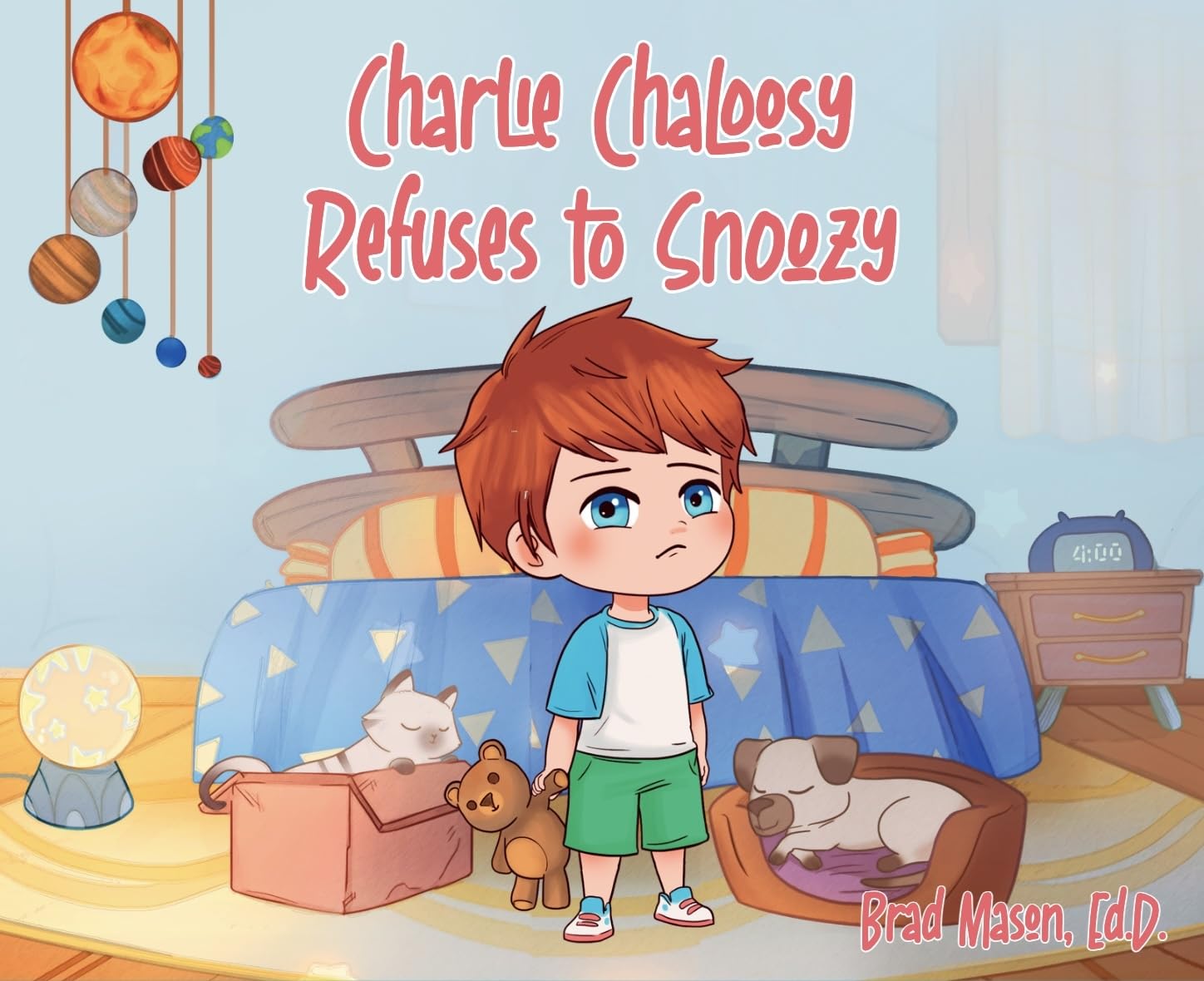

Charlie Chaloosy Refuses to Snoozy is a playful and lighthearted children’s book that tackles the familiar challenge of getting kids to nap. The story follows young Charlie Chaloosy, a boy who stubbornly resists nap time every day. Despite his protests, Charlie eventually drifts off into adventurous dreams, from being a pirate to taming lions, and wakes up feeling refreshed and ready for more fun. The rhyming narrative is simple, and the book encourages kids to embrace naps by showing them the exciting possibilities that sleep can bring through their dreams.
One of the things I really enjoyed about this picture book is the way it uses rhyme to make the story flow effortlessly. Each verse is fun to read aloud, which makes it perfect for story time with kids. The rhymes are catchy, and even though the topic is about something as routine as napping, the author makes it feel light and engaging. The rhythm keeps the story moving, and I can see how it would hold a child’s attention.
I also loved how the book portrays sleep as something imaginative and exciting. Charlie’s dreams take him on different adventures, and that’s such a clever way to show kids that nap time isn’t just about resting, it’s an opportunity to explore fun dreamscapes. When Charlie dreams of being a pirate or a pastry chef, it’s easy to see how these vivid scenes could spark a child’s imagination. This approach might actually make naps more appealing to kids, which, let’s be honest, is a huge win for parents! The interactive element at the end of the book is another highlight. The invitation for children to write and draw their own dreams is a fantastic way to engage young readers further.
Charlie Chaloosy Refuses to Snoozy is a charming and energetic children’s book that would be great for bedtime or nap time routines. It’s perfect for young children who struggle with taking naps or those who enjoy dream-filled adventures. Parents will appreciate how the book mixes humor, fun rhymes, and a gentle message about the importance of rest.
Pages: 24 | ISBN: 1960810766

Where’s Grandma?: A Child’s View on Loss, Grief & Bereavement

Where’s Grandma? is a heartfelt picture book that thoughtfully explores the experience of young Jordyn as she faces the difficult reality of losing her grandmother. Through her mother’s gentle guidance, Jordyn learns to navigate her grief by focusing on the joyful memories they shared like playing games or dancing and singing. These cherished moments offer her comfort, reminding her that her grandmother’s presence continues in her heart and memory.
The vibrant and meticulously crafted illustrations stand out and beautifully complement the emotional depth of the story. Jordyn’s emotions are vividly portrayed and bring her journey of loss and remembrance to life. Tackling the sensitive topic of loss can be challenging, particularly for young readers who often grapple with the concept of someone being there one day and gone the next. Author Tracey Smith addresses this challenge with compassion and skill, encouraging readers to embrace the memories of those they have lost and treasure the time spent with loved ones.
The language throughout is accessible and engaging, making it suitable for early readers whether they are reading independently or with a parent. The activities Jordyn enjoys with her grandmother are universally relatable, which will create an instant connection for readers. As a parent, I found these moments particularly resonant, having experienced many of the same activities with my own child. This story will undoubtedly strike a chord with young readers, offering them valuable insight into how they can process feelings of sadness and loss.
Where’s Grandma? is a tender and thoughtful children’s book that introduces young readers to an essential life skill of learning how to cope with grief and loss. I highly recommend this book to families who have recently experienced the loss of a loved one or to those seeking to open a meaningful dialogue with children about this important subject.
Pages: 28 | ASIN: B0CY8166M2
Children and Adults Have Fears

Dread in the Dark follows a little boy that has a new sister and a new room, but the new room is scary at night. What was the inspiration for your story?
It must be admitted that I am fascinated by different fears. That’s why I have written a whole Little Fears Series! Both children and adults have them, and the ways to cope with them vary. I think that adults have a great responsibility to ensure children’s welfare. This does not mean growing up in cotton wool and removing all difficulties, but sensitivity to recognize situations where help is needed. In this book, on the one hand, I deal with the common fear of the dark, but as a side plot, I also deal with the significant change that the birth of a little sibling causes in the family.
I remember trying to sleep in the kitchen for a while as a child – with no success. Although I wasn’t afraid of the refrigerator, its vibrations and noises in the middle of the night made it difficult to fall asleep. The birth of a new child also creates confusing contradictions in the lives of many families. Older children often feel that they are losing something in their status and may worry about their parents’ feelings for them. Fortunately, as a child, I was thrilled to be a big sister, so that side of the story is not based on my experiences.
What were some ideas that were important for you to share in this book?
Dread in the Dark is a book in the Little Fears Series that addresses various situations of wise parenting – seven books so far! So, the book’s target group includes both children and their parents. Little ones can best overcome their fears with adults’ encouraging and calm attitude.
With my book, I want to highlight the importance of cooperation between adults and children when fear disturbs a child’s life. When viewed through the eyes of an adult, recognizing the need for help may be complicated because fearful situations often seem pointless from their perspective. The little person doesn’t always get the parent’s patient attention and calm handling in a problematic situation.
A child’s fear may unexpectedly appear in an everyday situation where the adult’s attention is on other, more important things in his opinion. In the middle of a rush, he may ignore the child’s fear lightly, even irritably, or postpone dealing with it to a more suitable time from his point of view. Of course, giving the case enough time is a good idea, but this promise must not go unfulfilled. A few friendly words of encouragement, even in the middle of a rush, might help as first aid. So the child will be noticed and feel valued.
Children may also be reluctant to confess their fears and talk about them. The pressure of coping alone and being brave is also there. Building trust and revealing even sensitive thoughts is a long-term process. You could also write a whole book about it under the parenting title!
What was your approach to writing the interactions between Elliot and his dad?
It is no coincidence that I chose a child and his father for this book. My relationship with my father was the bedrock of my childhood. Although Father was an old-fashioned man in many respects, he also could understand a child’s sensitivity and need for security. On the other hand, I have gained the challenge of coping with different situations myself.
My parenting experiences as a mother of three children – and now also a grandmother – have confirmed my idea that dealing with different fears is essential. There are many ways. There is first aid and long-term work. There are playful solutions, serious discussions, and, above all, sensitive listening. It’s pointless to try to force quick solutions, no matter how busy you are as an adult. It is better to find time and patience when the child’s need is greatest – not until tomorrow or next week. Childhood is short, but what it creates for the rest of life is vital!
Some essential topics in Dread in the Dark relate to Elliot’s trust in his father and the security he represents. Catty Flores’ delightful illustration brings humanity and warmth to both main characters. Adult readers can undoubtedly identify with the sleepy father’s attempts to get the situation under control in the middle of the night, with his own eyes half closed from fatigue.
What is one thing that people point out after reading your book that surprises you?
Especially with the Little Fears Series books, I often get into conversations where adults reveal their surprising childhood memories. I am usually amazed at how big someone’s small fears can become in a person’s mind. Situations that seem trivial in themselves may have grown into problems that affect even an adult’s life.
Often, fearful situations and memories concentrate on two kinds of strong feelings. The first category is anger and disappointment with the adults of one’s childhood: Why didn’t anyone notice? Why didn’t anyone understand? Why didn’t anyone help? The second type of thought is a shame that an adult feels: Am I still the same timid child? Dare I admit to anyone that I still need help dealing with this old fear?
I have sometimes ended up hugging and comforting an adult for whom painful memories from childhood have suddenly surfaced. That’s when I’m on the right and necessary path when writing books like this. I have succeeded if I can help children in challenging situations and make it easier for parents struggling with parenting issues!
I often get suggestions from children and their parents for new stories in the Little Fears Series. I collect them because they may inspire more books in this much-needed series. – One of those topics brewing in my mind recently popped up, and I found a fun way of handling one more fear! Just wait and see!
Author Links: Facebook | Website
Elliot has a new baby sister. He also has a room of his own now, where he can build castles out of blocks, as big as he likes.
But there is one thing that worries Elliot. In his new room, he can’t fall asleep as easily as he did when he slept closer to Mom and Dad. On top of that, a monster is nesting under his bed. It growls every single night, even though no one believes Elliot.
Finally, with Dad’s help, Elliot learns the cause of the strange noise, and he can sleep peacefully again.
Do You See Me Playing Sports?


Ever wondered how a young kid perceives their first sports experience? Do You See Me Playing Sports? is a delightful children’s book that takes you right into the heart of that journey. It’s a charming tale of a young child, affectionately part of the Chipmunks sports group, navigating the big, noisy, and often intimidating world of sports.
Author Tuula Pere’s use of simple language and relatable situations makes it easy for young readers to connect with the protagonist’s feelings of excitement, fear, and eventual joy. The narrative flows smoothly, capturing the child’s emotions brilliantly as they face various challenges. One moment that stood out was when the child felt overwhelmed by the huge stadium and the idea of competing on such a large field. It’s so relatable for anyone who’s ever felt out of their depth in a new environment.
The illustrations by Majigsuren Enkhbat are vibrant and playful, perfectly complementing the story. Each page is a visual treat that keeps things fun and light. I particularly loved the sequence where the Chipmunks are encouraged to jump over a stretchy band instead of a high bar. It’s a great example of how the book encourages adapting sports to fit the needs of younger kids, making the experience less daunting and more enjoyable.
What I appreciate most about this picture book is its gentle approach to introducing sports. It acknowledges that sports can be scary and overwhelming for young children but also offers solutions to make them more accessible and fun. The idea of starting races with a clap instead of a pistol or playing barefoot soccer are fantastic ways to ease children into sports without the pressure of competition and noise. This book has the ability to make children feel less intimidated by sports, instilling a sense of reassurance and comfort in parents.
Do You See Me Playing Sports? is a heartwarming read that would be a fantastic addition to any child’s library. I think it’s perfect for parents who want to introduce their kids to sports in a gentle, fun, and supportive way. Highly recommended for ages 3 to 7, and a must-read for any parent looking to make their child’s first sports experience a positive one.
Pages: 32 | ISBN : 9528200370

No Dog Food, Please!

Linda Costarella’s No Dog Food, Please! is a charming children’s novel that explores themes of adjustment, family dynamics, and the special bond between animals and humans. The story, seen through the eyes of Jack, a Labrador Retriever, transitions from city life to rural farm living, offering an engaging contrast for young readers.
The opening chapter, “I’ve Been Moved,” skillfully introduces readers to the family dynamics, highlighting the differing attitudes of the stern grandfather and the more understanding grandmother. As the story progresses, the focus shifts to Jack’s day-to-day farm experiences, presenting a thoughtful exploration of his adjustment process and the family’s life, including their market activities and the grandfather’s traditional views on animals. This portion of the book paints a vivid picture of Jack’s world, lending authenticity to the setting.
The narrative then moves to explore Jack’s interactions with the children, offering a delightful contrast to the grandfather’s views and underscoring the generational differences in perceiving pets. These episodes are particularly effective in showcasing the growing bond between Jack and the children, infusing the story with warmth. The novel revisits Jack’s past, giving readers a poignant glimpse into the events that led to his relocation. This backstory enriches the narrative by providing deeper insight into Jack’s character and emotions.
One thing I particularly enjoyed about this book is the depiction of a family birthday party, which serves as a pivotal moment in illustrating the family dynamics and the affectionate relationship between the children and Jack. This festive element adds wonderful depth to the narrative. The novel culminates in a storyline focused on Jack’s distaste for dog food and his connection with Ben, a child who sympathizes with him. This aspect not only adds a touch of relatability for young readers but also underscores themes of understanding and acceptance within the family amidst adult apprehensions.
No Dog Food, Please! is a delightful and heartwarming tale that expertly captures the nuances of change and the sense of belonging. Costarella’s storytelling has a particular resonance with children, reflecting their experiences of adapting to new environments. The book’s accessible narrative and relatable themes make it an appealing choice for young readers, especially those fond of animal stories.
Pages: 333 | ASIN: B0CJR3G4FM
I Write the Difficult Children’s Stories

The Owl and the Shepherd Boy follows a young boy who is left to care for the family’s goats up on a mountain when a storm destroys their home. He must now find a way down the mountain alone. What was the inspiration for your story?
My Survival Stories Series, including The Owl and the Shepherd Boy, were written in response to the devastating 2015 earthquake that struck Nepal. This tragic event brought immense challenges for the nation, resulting in emotional and material losses. The rebuilding and repairing efforts continued for years.
By writing my survival stories, I aimed to provide hope and inspiration to readers facing these difficult circumstances – or better understand and help those who struggle.
Various shepherd topics are close to my heart because I still remember many childhood experiences my father told me about. It’s not easy for a little boy to be responsible for guarding the neighbor’s cattle in the pasture all alone.
I also like to write about the power of nature and how it constantly surprises us. Often it’s about pleasant surprises, but sometimes the destructive forces of nature make us feel small and helpless.
In every situation, people should understand their place as a part of nature and not as its master. The surrounding environment deserves all our respect and care. We should learn this from childhood.
What were some goals you set for yourself as a writer in this book?
I want to answer this question by describing the experience mainly from the point of view of writing stories on complex topics.
I also write about things many avoid in children’s books – such as poverty, fears, illness, and social crises. I consider it important that I can describe children’s experiences of how it feels to live in the middle of these situations.
As a writer, it would certainly be easier for me to avoid such demanding topics, but I think they are perhaps the most important ones. Writing about them requires the courage to stand beside the children and support them – at least with words – even when it is the most difficult.
In these more problematic stories, depending on the case, I also use various fantasy elements. They can help us to look at the situation a little “above” the everyday perspective. The main thing is that the result is understandable and comforting for the child. When the book cover closes, the readers should be left with the feeling that they have survived together with the main character.
What were some educational aspects that were important for you to include in this children’s book?
By telling the story of this shepherd boy, I wanted to emphasize the power of natural forces, which I already referred to earlier.
Another essential theme in this book is related to social differences between countries and regions. The young protagonist lives in a culture where children’s responsibility for work is more significant than in countries where livelihoods are more secure. In such an environment, children must take responsibility early on, often much too early. They carry tasks that are heavy, scary, or otherwise oversized.
Of course, there are various kinds of societies in which to live. For those children whose lives include safe schooling, play, and adequate food, it is good to realize that not everyone is equally lucky. Understanding this makes them more sympathetic toward others and increases their desire to support and help.
Also, I wanted to encourage children with this story. When they read about the difficulties and fears of the shepherd boy, they realize that it is possible to survive even in such a situation. It is important not to stop trying – which is pretty universal and encouraging advice.
What story are you currently in the middle of writing?
For the past few weeks, I have been writing two unique stories connected to India. They were “donated” to me by a friend, originally from India, who shared some of his own experiences with lots of human wisdom. Writing such stories has been a challenging and gratifying task.
Of course, the most important thing is to do justice to the actual events in the background of the books. I try to pass on the materials I receive from events, people, the environment, and culture. I’m melting these elements into my story version.
When the original ingredients and foreshadows of stories are light and fun, it’s easier to write without fear of hurting anyone’s feelings. But the events I heard also have such characteristics that they raise deep emotions in my mind as a writer, even sadness.
I want to emphasize that these two stories are products of the imagination detached from their models, but I still feel responsible. I also try to write the stories to fit a believable cultural and geographical setting.
I believe this credibility requires that I, as the author, have my own background knowledge and check the details, too. What bread are people buying at the market in the place in my mind? Which fruit trees can bloom in the garden? When is the rainy season, and how long is it? Finding suitable names is particularly interesting, as they have their cultural meanings. I hope I hit the right ones!
Overall, I took some time to ponder how to deliver my friend’s experiences and the wisdom in them to the little ones, too. – But as a children’s author, you always find a way.
Author Links: Facebook | Website
In the darkness of night, Nicky spots a big owl. Can the mysterious creature help Nicky find his way home?
Challenging Situations are Valuable Lessons
Do You See Me when We Travel follows a small child who is unsure about new experiences as their family travels to a new city, the parents help the child see new things are not bad. What was the inspiration for the setup to your story?
I think family vacations have always been the best! Many surprisingly small things can influence their success. I have tested my methods in our close circle for decades – and dare to recommend them to others. They guarantee everyone good experiences and happy memories of shared moments.
In my time, I had three children in the same car, plane, ship cabin, hotel, or foreign city. Our family traveled every year to many destinations together. We learned to reconcile different wishes and take care of the needs of travelers of different ages.
I already have two grandchildren, with whom we have also been abroad – my dream is to introduce them to interesting places in the same way I did to their parents when they were children.
What was the most interesting place you ever visited?
This is a difficult question because there have been many unique travel destinations. Our best travel experiences with the family often involve historically significant places or cities. My favorite cities are probably Istanbul, Rome, and the old inland towns of Spain – especially Toledo, Seville, and Granada. The great mountain areas in the Alps and the northern parts of Spain will also remain in my mind forever.
Perhaps my most cherished memory is connected to Toledo and its magnificent Catedral Primada Santa María. My older children could already read, and they had noticed the big streetside ad about the extensive church art exhibition in that incredible building. To my surprise, they suggested that we go there. “You would like to, though, wouldn’t you, Mom?”
Our visit to the Toledo Cathedral lasted hours because the extensive exhibition covered probably twenty different rooms. Even our youngest, just a toddler, was excited about various artwork and didn’t rush away. I remember how my children found a statue that they wanted me to see among the objects. In that special work of art, Baby Jesus tickled Mother Mary under the chin and made her laugh! The message was clear to me, too. A parent and a child need to be close and have fun together – even on trips!
I also want to praise historic hotels – like Paradors all over Spain – which are often incredible buildings full of stories that I have been able to tell my children. That way, traveling gets a deeper dimension. Of course, everything we have done and discussed has been adjusted to suit the children’s age.
What book changed your life or greatly influenced you?
As a child and teenager, I read a lot. The interest changed from children’s to non-fiction books and novels for adults early on. As a memorable book experience, I have cherished Mika Waltari’s ”Sinuhe”, whose narrative and historical background made a great impression on me. Later, I read more of Waltari’s historical novels, but my first experience with ”Sinuhe” remained invincible.
It is important to me that the background of the book is authentic and that the author has both knowledge and the ability to tell the story impressively by using quality language. I am a fan of reflective books. I want to get deep into the thinking of the main characters and try to understand their choices in life.
Waltari’s epic novels are full of incredible events and fantastic adventures, but I think the main thing in them is the main character’s inner life.
Different twists and turns are interesting in children’s books, but I like to write books with small and ordinary events, too. They are just a frame for the personal development and thinking of the main characters.
Will there be more “Do You See Me” books?
My “Do You See Me Series” already has three books. The other two are “Do you see me at home?” and “Do you see me in nature?”
I have already written also the fourth manuscript, where we are in the world of sports activities. Adults and children may look at it from very different perspectives. There will be challenging stunts, noise, rush, and pressure to perform – sometimes even unpleasant surprises.
The “Do You See Me?” Series is quite exceptional among the children’s books I have written. I wanted to make a series where the point of view of a small child would be the absolute focus. I have written these books in a new way, all based on a pure conversation between an adult and a child. The lines have different colors depending on the speaker.
The topics of the “Do You See Me?” books are very familiar to most families with children. Challenging situations where help and understanding are needed can be found both at home and in the nearby environment – or further away as we travel. The adult must have time to listen and consider the concerns and wishes of a small child. It often helps if adults try to remember their own experiences as children. After all, we all carry our childhood experiences still with us.
I have received excellent feedback on the parental and educational aspects of these ”Do You See Me?” books. Many adults have said that the conversations are very realistic, and they recognize the situations of the stories in their family life. Readers have also liked my Mongolian illustrator Majigsuren Enkhbat’s vision, where a small child is often surrounded by new or overwhelming things – and the little ones are often literally presented surrounded by the feet of adults.
I want to give all my experience of everyday family life, travels, and celebrations with children to the use of others. I believe there is a great need for books like these as they can help everybody. The families will develop mutual understanding by reading the books together.
Everyone benefits if challenging situations are resolved in a good spirit. Being and doing things together is valuable!
Author Links: Facebook | Website
When your family takes a trip, it may feel too long; the food may taste strange; and the unfamiliar people may seem scary. A quick visit to the playground, a little taste of food served in a fun way, or a word game on a road trip may be just the thing you need. Luckily, when staying the night in a strange place, you can move your rollaway bed closer to your parents.
Have a wonderful trip, everyone!
A Deeper Story To Be Told

Turning Pennies Into Dimes follows a stressed-out wolf who learns from his friend that there is more to life than work and he should do things that bring him happiness. What was the inspiration for your story?
“Turning Pennies Into Dimes” features the character of Doc the Wolf, who embodies my own experiences navigating a highly demanding and stressful phase of life. Similar to Doc, I found myself consumed by work and driven by the pursuit of success and financial gain. The inspiration to start writing the book emerged from a combination of sources.
Firstly, I felt a strong desire to prioritize meaningful time with my family, particularly my daughter, and to elevate our relationship above work commitments. Reflecting on the precious moments we shared and the profound joy that arose from being fully present with loved ones, I realized that there was a deeper story to be told. This realization became a powerful motivation to translate these experiences into a narrative that could resonate with others.
Secondly, the Wolf Pup NFT from the Wolf Den community played a pivotal role in inspiring the creation of Doc as a character in the book. Guided by the teachings of the Wolf Den, I embarked on a closer examination of my own life. This introspection led me to a realization: the relentless focus on work and material possessions was not providing the fulfillment and happiness I sought. It prompted me to question whether there was more to life than mere accumulation of wealth and professional success. This profound realization became the seed that germinated into the story of “Turning Pennies Into Dimes.”
What were some educational aspects that were important for you to include in this children’s book?
The main theme and educational aspect of the book revolve around a simple yet profound message: Are the actions you are currently taking helping you to get closer to what you genuinely want in life?
Through the narrative of “Turning Pennies Into Dimes,” both parents and children can embark on a journey of introspection and self-reflection. By continually reading the book together, they can gradually internalize the concept and develop a deeper understanding of how their actions align with their desires.
What is one thing that you hope readers take away from Turning Pennies Into Dimes?
The book encourages readers to critically evaluate their choices and consider whether their actions are appropriate in relation to their goals and aspirations. It prompts them to pause and reflect on whether their current path is leading them closer to a life of fulfillment and happiness.
Will this book be the start of a series, or are you working on a different story?
In addition to the story itself, a collection of 365 days of six-word lessons has been created as collectibles for those who wish to own a piece of Doc the Wolf history. These lessons offer concise and impactful messages that resonate with readers and provide daily inspiration.
The forthcoming series of books aims to delve into various concepts, providing readers with a deeper exploration of important themes. While the second book continues Doc’s journey and focuses on the theme of creativity, each subsequent book within the series will explore different concepts that may not typically be covered within the school system. The intention is to introduce children to a diverse range of ideas and perspectives, fostering their personal growth and intellectual development.
Alongside the second book, a coloring book set in the world of Doc the Wolf is also being developed. This coloring book will offer readers a chance to engage with the characters and scenes of Doc’s world in a creative and interactive manner.
To keep updated on any new developments or to learn more, readers can visit https://docthewolf.com/
For the children: A visually appealing story with a cool wolf character.
For the adults: A daily reminder that “more” is not always better, sometimes “more” only moves you further away from what truly matters in your life.


