Blog Archives
Creating Something Entirely Mine

Bloodbound: Alternate Tracks follows a once-human vampire and his maker as they face off with a rival faction and battle their own inner turmoil. Where did the idea for this novel come from?
I was toying with ways to extend the Bloodbound universe, to bend or even snap the genres of existing vampire fantasy and create something entirely mine. One day I had a random thought: What if twins (or multiples for that matter) weren’t meant to be born in the same world – what if they were each allotted their own universe to exist in, and what if we could see what other paths those alternate versions might take? I decided to explore that concept in the Bloodbound saga.
Do you have a favorite character in this novel? One that was especially enjoyable to write?
Exploring a different version of your own main character is especially delicious if they don’t abide by the same constrictions or even morals. I didn’t want Hunter II to be a polar opposite – I didn’t want him to be the proverbial ‘evil twin’ … but instead I wanted him to be more morally ambiguous, at least starting off. This Hunter lives a rockstar lifestyle and can also be unapologetically violent. We’ll learn there’s a purpose for that as we go along.
What draws you to the horror genre?
A genre that encourages you – dares you – to push boundaries and go beyond the limits of tastefulness? What’s not to love? Add in a fantasy world where the laws of physics may not strictly apply, and you’ve got the makings for some really entertaining (read: gross) things to write about.
Can fans of the Bloodbound series look forward to another installment soon? What are you currently working on?
Bloodbound 4 (Extreme Temperatures – https://books2read.com/Bloodbound4/ ) is already out. Coincidentally, the very night I was given this interview, I had just finished the first draft of Bloodbound 5: Reverberations – which lets us see even more of Hunter II and reveals his true allegiances. I’ll be releasing ‘Reverberations’ later this year.
In the meantime, May 6 will see the release of my first collection of short stories – called “Body Parts.” It’s 13 body horror tales of varying tones – some are seriously disturbing, some take a more humorous tack, but in all of them I tried pushing some of those boundaries I spoke of earlier! https://books2read.com/BodyPartsBook
And July 1 will see the reboot of another old series of mine. The first volume of “Abel X,” Echoes of Demons, combines two original novellas I first wrote in the mid 2010s based off a role-playing game character I created. https://books2read.com/AbelXEchoes
Author Links: GoodReads | Amazon
When a demon with the ability to traverse dimensions and kill on contact breaks into our realm, Kai and The Order are tasked with finding and stopping the ever-growing threat, which involves asking the alternate-world Hunter and his bandmates for help. However, the other realm’s version of Hunter appears to have an agenda of his own and won’t think twice about opting for brutality to achieve his goals.
Bloodbound: Alternate Tracks
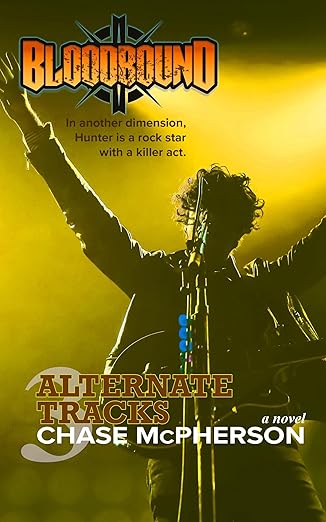

Bloodbound: Alternate Tracks drops readers headfirst into a pulsating world of supernatural espionage, romantic chaos, and moral grey zones. Think queer vampire secret agents mixed with gothic glam rock and high-stakes interdimensional danger. The story follows Hunter, a once-human vampire with hidden demonic roots, his maker-lover Kai, and their ancient, emotionally-complex partner Gibson as they battle both external threats from a rival faction called The Crown and internal turmoil about identity, power, and love. It’s urban fantasy, but not the moody, fog-soaked kind. This one crackles with neon, music, blood, and banter.
McPherson’s writing is this punchy mix of earnest and irreverent, and it works. The dialogue sparkles. Hunter’s snarky quips, Kai’s quiet intensity, Gibson’s flamboyant menace. They all clash and collide in the best ways. One of my favorite scenes has to be the opening in the artist suite where Mickey, the shady manager, gets drained dry by the lead singer of a vampiric rock band. That moment sets the tone: flashy, brutal, and a little unhinged. Later, the scene where Kai ends up in a weird alternate reality Dallas, able to walk in sunlight, ordering a sandwich like some confused immortal tourist was hilarious and oddly sad. The worldbuilding balances camp and dread in a way that feels totally unique.
The alternate universe storyline was wild, and while I love a good multiverse twist, it got a little dizzying with all the doubles and overlapping identities. Still, I loved how emotionally grounded it stayed. Even while being hunted, poisoned, or half-possessed, the characters are still trying to figure out their feelings. I genuinely felt for Hunter during his blood transfusion scene—his fear, his longing for Kai, his vulnerability. And the twist with the demon venom was dark. Really dark. The emotional undercurrents carry the high-concept fantasy, which I didn’t see coming.
I would absolutely recommend this book. It’s perfect for fans of urban fantasy who are tired of the same old brooding loner vampire tropes. If you like queer romance, secret organizations, chaotic polycules, and lots of sarcastic flirting mixed with visceral horror, this is your book. It’s not a subtle book. But it’s a fun one. Bold, sexy, weird, and somehow heartfelt—Bloodbound: Alternate Tracks doesn’t just bite, it leaves a mark.
Pages: 214 | ASIN : B0DWLNL79M

Representation is Lifesaving
Sadness & Sadness Accessories is a raw, vulnerable, and unapologetically human collection of poetry that explores identity, trauma, queerness, grief, and resilience with a voice that is equal parts tender and ferocious. What inspired you to write this particular collection of poems?
There are poems in this collection that I wrote ten or fifteen years ago when I started writing, but the energy and depth of the poems transformed when I transitioned three years ago. All at once, my body was aligned with my spirit, and the poems poured out of me. I did a lot of healing in a short amount of time after I lost my job because of my transition. So much pain in my life that was repressed by PTSD or numbed by disassociation and dysphoria was screaming in my ear. I had so many things to say all at once, and for the first time, they were coming from me. The true me. I processed a lot of this pain via writing, and these words healed me greatly.
But as I think is always true for anything I write, I wanted to put out into the world what I couldn’t find and what I wish I had when I was younger. I didn’t read any trans authors growing up. I didn’t even meet a trans woman until my thirties. Without the words for my pain or hopes, I felt alone and lost. Representation isn’t just a cute marketing line; it’s lifesaving. There are other trans girls in their eggs out in the world who may be helped just a little bit by my poems, and that’s why it’s out and had to happen. And to my various cis friends and allies, I wanted to do my best to present dysphoria and euphoria. That was a big part in writing “Musth,” just trying to put language on something that baffles even my strongest supporters.
What was the biggest challenge you faced in putting together this poetry collection?
I would say it was facing the pain presented in these poems, but honestly, the hardest part was trying to balance grief and hope. Unfortunately, much of my poetry is an attempt to manage my sorrow, but I never want to present being trans as a life of pain and torment because the truth is that our joy is world-shaping. Poetry is a place I visit when I want comfort, and I wanted to come to that place with my delights. Poems about my cat, about the sweet sound of pages turning, and about cold glasses of Dr. Pepper were all essential to keep this book from becoming a pity-party, to represent more accurately that being trans isn’t just dysphoria but heaps of euphoria, and to keep the energy of the book from dragging out and driving the reader insane.
How has this poetry book changed you as a writer, or what did you learn about yourself through writing it?
Writing is how I explain myself to myself. The first poem I ever wrote was a lesbian love poem, but at the time, I thought I was male. It was an overwhelming outpouring of emotion, and it felt right, but as soon as I finished, I felt I had stepped into a room where I wasn’t welcome. I felt like an intruder. But I had no idea what my brain was trying to tell me, and to this day, my own poetry surprises me as it shows me areas of myself I haven’t fully uncovered. I learned about the repressed memories of abuse I suffered at the hands of my parents when the words and images appeared in my poems. Then I went back, flipped through poems I’d been writing for decades, and found the information there the whole time.
But all of that to say that this book healed me. Everything inside of me felt chaotic and noisy, and I had no means to turn on the lights and look into that darkness. Finding the images of my childhood helped me pull out memories of hiding from my parents. It showed me the joy in dancing to Britney Spears in my sister’s bedroom and something about it feeling right and foreign, forbidden and all I’ve ever wanted. It was therapy, and for so long, it felt too vain to put that onto paper and charge people money for it. However, I had many friends, readers, and audiences at open-mic performances, they felt certain that others would benefit from my words, and that they were worthy of sharing. So this book taught me that my words mattered, even if they were ugly and full of pain.
What is the next book that you are working on and when can your fans expect it to be out?
I write in many different genres, and I am working on a collection of YA fantasy novels. They are about a boy named Finn who discovers he can fall into his favorite books to meet his favorite characters and live their adventures. In the first book, The Fullness of Time, which is out now, Finn goes into a book about a young King Arthur, but when the plot goes wrong, he finds his presence might cause the story to be changed for the worst forever. The second book in that trilogy will be coming out later this year, Music of the Spheres. In it, Finn galls into Little Women and falls in love with Beth March. However, if anyone has read Little Women, they will know exactly why Finn desperately wants to change the ending of this book forever. It is very much in line with Sadness & Sadness Accessories as it explores grief, hope, and beauty.
Author Website
The Gift


Scott Terry’s novel The Gift is a heart-wrenching coming-of-age story that takes readers to Farnsworth, California, in the late 1960s—early 1970s. Pansy is a little girl who has seen more abuse and trauma than one should. When her father murders her mother, she goes to live with her Uncle in Salt Lake. At eighteen, she is looking for something more in life and meets Ace, a young man struggling against his identity and beliefs. Pansy is determined to marry Ace and move to Fresno, California, where they can start a new life together. When things do not go as planned, she ends up pregnant in Fresno alone. She is taken in hand by the Jehovah’s Witnesses where she finds a new sense of purpose and dedicates her life to the service of the Truth.
Seven years later, Pansy makes a decision that will forever alter the course of her life and that of her son, William. They move to the Siskiyou Mountains, and it is here that William meets the man who will become a surrogate father to him. The first cracks that appear in Pansy’s well planned and laid out life is when her son changes his name to Butch, a real cowboy name. This is the turning point for Butch, where he starts to struggle with his mother’s views on the world and Religion, the conservative view the mountain country, and his own self-identy.
The Gift is Butch’s story of trying balance the expectations of his church and mother with discovering and accepting his true authentic self. Butch tries to follow the teachings of his church but when he is caught kissing a boy, the church and his own mom turn on him, casting him out untill he repents for his sins and returns to a Godly way of living. Living in a place that shuns anyone different, especially those that identify as LGBT causes him to isolate himself and push aside the one man that he falls in love with. Butch’s life is one of secrecy in the mountains, meeting men in secret, while those in the city embrace the roaring 70s and live authentically in the public. He claims he is just a simple cowboy and is happy living alone, and that he doesn’t need the world to know about his business. But underneath it all, readers can see the struggle, the frustrations, and how his own pride keeps him from finding the happiness others keep telling him he deserves. There is a touching moment near the end after his mother calls him and tells him his father is dead and that he is “just like his father” that we get to see how the isolation of being gay in this time and place has hit him.
Scott Terry has given readers a story that accurately portrays the bigotry of the late 60s and early 70s, especially from the perspective of small town communities. He also sheds light on religious extremism that uses fear and isolation to get members to conform to their way of life. Butch’s story is one of survival, self-discovery, and acceptance. While written about a period in the past, The Gift is still relevant today and is an excellent choice for LGBTQ+ readers struggling to find their way and accept who they are, or anyone who enjoys family dramas.
Pages: 294 | ASIN : B0DV9Y68SS
Sadness & Sadness Accessories

Aurora Hatchel’s Sadness & Sadness Accessories is raw, vulnerable, and unapologetically human. Through deeply personal narratives, Hatchel explores identity, trauma, queerness, grief, and resilience with a voice that is equal parts tender and ferocious. The poems move fluidly between confessional honesty and lyrical beauty, blending biting social critique with moments of heart-wrenching intimacy. It’s a book that stares sadness in the face and refuses to look away.
What I love most about this collection is its unflinching emotional honesty. The opening poem, “I’ll never kill myself but—,” is breathtakingly stark in its confrontation with suicidal ideation, religious trauma, and the weight of survival. The imagery is staggering—the Abyss becomes a lover, the past lingers like an unwanted shadow, and hope is a fragile, wavering force. As a teacher, I wish more of my students could read poetry like this—poetry that doesn’t just dance around difficult emotions but drags them into the light and examines them without shame. Hatchel’s ability to make pain both deeply personal and universally resonant is a gift.
Another standout piece, “A Rejection Letter for JK Rowling,” is sharp, witty, and righteous in its fury. It’s a scathing critique of transphobia wrapped in humor and literary brilliance. It doesn’t just call Rowling out—it reclaims the magic that she failed to wield responsibly. Hatchel’s poetry doesn’t just grieve; it fights back, and that’s a necessary act of resistance in a world that too often silences marginalized voices.
But it’s not all pain and defiance. There’s joy here too. “Trans Joy” is an anthem of survival, celebration, and self-love. Hatchel writes about finding beauty in small moments, from the perfect pair of jeans to the simple act of existing as her true self. There’s something incredibly moving about reading a poem that acknowledges suffering but refuses to let it be the whole story.
Sadness & Sadness Accessories is not a light read, but it’s an important one. This book is for anyone who has ever felt like an outsider, for those who have wrestled with faith and family, and for anyone who needs to be reminded that survival is an act of defiance, and poetry can be a lifeline.
Pages: 79 | ASIN : B0DCRP3WH9
Maurice in London

Maurice Verdal is restless. He’s dapper, charming, and endlessly curious about the world, and right now, he’s bored of Paris. So, on a whim, he leaves for London, eager to immerse himself in the city’s social scene. Written by Xavier-Marcel Boulestin and originally serialized in Akademos in 1909, Maurice in London is a witty, observant, and gossipy tour of pre-World War I London’s queer subcultures. Maurice, a well-dressed and well-connected Frenchman, floats through high society and artistic circles, mingling with theater actors, aristocrats, and eccentric socialites, all while dissecting the oddities of English life with his sharp and often sardonic humor.
The writing is lively, drenched in irony, and full of razor-sharp observations about people who desperately want to be noticed. Maurice’s narration is both indulgent and self-aware, which makes him a fascinating character to follow. Take, for example, his interactions with the flamboyant and ever-dramatic Reggie de Vere, who declares, “I adore acting like a tart; I have tendencies in that direction.” Maurice doesn’t judge him outright, he simply watches, amused, and lets Reggie’s behavior speak for itself. This is a common pattern in the book: Boulestin doesn’t hammer his points home. Instead, he trusts the reader to catch the subtle digs, the unspoken hierarchies, and the absurdities of social posturing.
One of the book’s greatest strengths is its vivid portrayal of a particular time and place. This is London after Oscar Wilde’s trial, where the old-school aesthetes are fading, and a new wave of modern, queer intellectuals are reshaping the scene. Maurice navigates it all with an outsider’s keen eye. Whether he’s dodging bills in fancy restaurants, watching actors compete for attention, or attending an over-the-top house party that ends in scandal, his experiences feel authentic. The dialogue is snappy, often hilarious, and full of lines that would fit seamlessly in a modern social satire.
I feel like the story is less concerned with the plot than with experience, and that makes for a lot of scenes where people simply talk, gossip, and revel in their own cleverness. It’s entertaining, but some moments feel like they exist purely for the sake of capturing a mood rather than moving the story forward. The final chapters, in particular, lean heavily into these social vignettes.
Maurice in London is perfect for readers who love social satire, historical queer literature, or novels that thrive on wit and character dynamics. Fans of Oscar Wilde, Evelyn Waugh, or even The Great Gatsby will find much to love here. It’s a novel filled with lavish settings, scandalous characters, and dialogue that still sparkles over a century later.
ISBN : 9781590217849
Better Than Sex
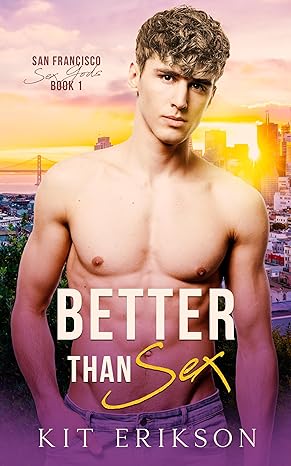
In Better Than Sex, Kit Erikson spins an unapologetically raunchy and surprisingly heartfelt story of two very different men navigating their lives and desires in San Francisco. Spencer is a charming yet commitment-averse playboy whose self-image as a “sex god” belies deeper insecurities, while Mickey is a wholesome, endearing nanny grappling with his inexperience in love. Their paths cross in a chance encounter, setting the stage for a journey that blends humor, longing, and emotional growth.
What stands out most is Erikson’s ability to balance humor with emotional depth. The opening scenes, particularly Spencer’s internal monologue about his “sex god” rules, had me laughing out loud. His morning-after exchange with Rory is witty and over-the-top, yet it highlights Spencer’s struggle to maintain emotional distance. On the other hand, Mickey’s tender moments with Logan, the child he cares for, exude warmth and sensitivity. One scene where Mickey comforts Logan with a stuffed tiger encapsulates his nurturing nature, making him instantly relatable.
The writing style is bold and descriptive, yet not without its quirks. Erikson doesn’t shy away from graphic depictions of sex, but these moments are balanced with tender, introspective scenes. Spencer’s ongoing quest to complete his “f*ck-it list” showcases his hedonistic lifestyle but also subtly reveals his fear of vulnerability. Similarly, Mickey’s internal debates about putting himself out there romantically tug at the heartstrings. Erikson weaves these contrasting tones seamlessly, keeping the reader engaged while switching between the characters’ perspectives.
The book’s greatest strength lies in its exploration of self-acceptance and love. Both Spencer and Mickey seek validation, one through hookups and the other through his dream of a romantic connection. Their development feels genuine, with moments of vulnerability that hit hard. Spencer’s realization about the hollowness of his lifestyle, juxtaposed with Mickey’s hesitance to take risks, creates a compelling narrative arc with a satisfying conclusion.
I highly recommend Better Than Sex to fans of LGBTQ+ romance who enjoy stories that mix explicit content with genuine emotional weight. Readers looking for a blend of humor, steam, and heart will find plenty to enjoy here. It’s a story that’s not afraid to embrace both its lighter and darker moments, making it as memorable as it is entertaining.
Pages: 396 | ASIN : B0DMMMN9CX
The Lost Boy

Callum “Cal” Nowak fled the confines of foster care and his small-town upbringing in the Catskill Mountains when he turned eighteen. In New York City, he joined the police force, determined to escape the shadows of his traumatic past and carve out a new life. Fourteen years later, after being placed on administrative leave, Cal reluctantly returns to his hometown, where every street and memory resurrects the pain of his mother’s murder. When the husband of his ex-girlfriend dies in his arms, Cal finds himself thrust into a gripping investigation. Convinced of her innocence, he’s determined to uncover the truth and expose the real killer before she’s wrongfully imprisoned.
How do we confront the weight of our past while forging a path forward? The Lost Boy: A Small Town Murder Mystery Gay Cop Romance by S. F. Williams explores this question poignantly. This enthralling series opener pulls readers in from the first page, weaving a narrative that balances the unraveling of Cal’s childhood trauma with the suspense of a high-stakes murder mystery. It’s a compelling, emotional, and unforgettable read.
What truly stands out is the nuanced portrayal of Cal. Through his perspective, readers are invited to reflect on their own struggles and resilience. Williams writes with a compassion that makes Cal not a perfect hero, but an authentic, flawed, and deeply human character. His journey is raw, relatable, and profoundly moving.
I do feel the storyline occasionally feels a little weighted with unnecessary details. Within the narrative, there seems to be a blending of genres which I believe can sometimes detract from the central storyline. Even so, these moments do not overshadow the book’s many strengths.
The Lost Boy‘s approach to representation is significant. The story offers a refreshing perspective, a gay protagonist whose challenges stem more from his personal history than his sexuality. This kind of storytelling is vital and refreshing, delivering both inclusivity and depth without resorting to clichés.
In the end, The Lost Boy, by S. F. Williams, is a beautifully written and emotionally resonant tale that combines mystery, introspection, and heart. It’s a story that stays with you and one that leaves readers eager for the next installment in the series. A truly remarkable debut.
Pages: 285 | ASIN : B0DK41MW5J




 LITERARY TITAN