Blog Archives
Understanding Economics
Why You Should Give a Damn About Economics a passionate and plainspoken call to action aimed squarely at the average American voter to help them understand how government spending and economic principles shape their daily lives. Why was this an important book for you to write?
Most citizens have not had basic economics, and it is important for them to understand that in order to understand the economic policies we are following and the dangers we face. So, part II delved into the key issues and severe problems that most people do not think about. We must get there attention and hope they will recognize the serious nature of our economic problems, AND let their elected representatives know they want it fixed.
What were some ideas that were important for you to share in this book?
Basic economics first, both micro and macro in an easy-to-understand condensed version but covering all the major topics. Then introduce the problems in a way that they can relate to and understand. I try to get across how serious the problems are and what we can do about them.
What is one thing about economics in politics and its impact on the average American that you think is misrepresented in the media?
The bias is widespread, and it leans left in almost all cases. I want them to understand good economic policies beget good results, and our out-of-control spending to buy votes, is killing this country. Limited Government + fiscal restraint + reasonable regulations will get us back to growth and prosperity, as we used to have it.
What is one thing that you hope readers take away from Why You Should Give a Damn About Economics?
Our spending is out of control and the deficits will eventually destroy this country for our kids and grandkids. Our debts today are around $37 trillion and moving in 10 years to nearly $70 trillion if we stay on our current course. That will destroy us. But the politicians are focused on the next election, not the next generation, so they do anything to get elected, and if we are uninformed about the consequences, we will keep supporting them as they buy our votes with endless give-a-ways.
America is facing a fiscal crisis. The accumulating national debt now reaches into the tens of trillions—and shows no end in sight. Meanwhile, our leaders in Washington have done little to mitigate this threat. In Why You Should Give a Damn About Economics, business executive and former CPA Leslie A. Rubin explains why this pressing issue matters to every American.
In simple, straightforward language, Rubin explains how national economics affects our daily lives. He aptly outlines the basics of US economic policy, the crisis we face today—and both the pitfalls and benefits of proposed solutions. A concise but comprehensive handbook, Why You Should Give a Damn About Economics provides the tools we need to disarm the debt bomb before it’s too late.
Why You Should Give a Damn About Economics: The US Debt Crisis and Your Future
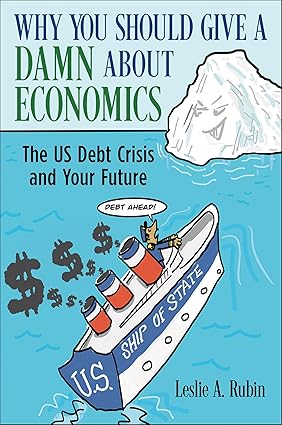

After reading Why You Should Give a Damn About Economics by Leslie A. Rubin, I found it to be a passionate and plainspoken call to action aimed squarely at the average American voter. The book is split into two parts. The first explains foundational economics concepts like supply and demand, fiscal and monetary policy, and different types of economic systems, all in accessible terms. The second half focuses on the United States’ growing national debt, the dangers of inflation, entitlement programs, and governmental inefficiencies. Rubin argues that an uninformed electorate is a key reason behind poor economic policy, and he believes that basic economic literacy is the only way to correct our course.
Rubin is not an academic economist, and that turns out to be one of the book’s strengths. He writes like a concerned citizen, not like someone trying to prove his intellect. The tone is direct and sometimes emotional. There are moments when the fear of economic collapse feels almost like a doomsday warning, but Rubin keeps it grounded with historical context and real-world examples. He even manages to inject humor through little sidebars and “KISSEs” (Keep It Simple, Stupid Examples), which made me smile more than once.
Rubin clearly emphasizes concerns about government overreach, and he makes an effort to stay nonpartisan. His perspective brings a clear and focused argument, though readers from different viewpoints might see things differently. His tone throughout carries a strong sense of urgency, especially when discussing the national debt and entitlement spending. At times, it feels intense, but it comes from a place of concern and care for the country’s future. His passion is clear, and his message is meant to prompt action.
I’d recommend this book to anyone who feels left out of economic conversations or overwhelmed by jargon-filled debates on fiscal policy. It’s especially helpful for young adults, new voters, or anyone who wants to understand how government spending and economic principles shape their daily lives. If you’re someone who’s been tuning out because economics sounds boring or too complicated, this book might change your mind.
Pages: 202 | ASIN : B0CY2W2J6H

Solving Global Warming Will Kill the Fossil Fuel Industry
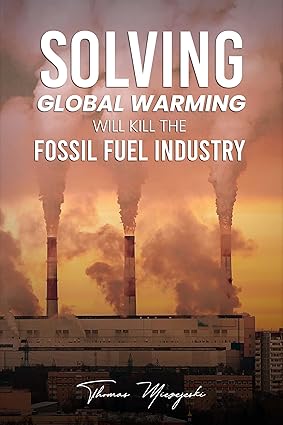

Thomas Miezejeski’s Solving Global Warming Will Kill the Fossil Fuel Industry is an urgent and thorough exploration of what happens when one of the world’s most powerful industries meets its inevitable decline. The book isn’t just about climate change; it’s about the economic, social, and geopolitical tremors that will follow the fall of fossil fuels. Miezejeski takes readers through the science of energy, the history of industrialization, and the strategies that oil and gas companies are using to cling to relevance. This is more than just a warning; it’s a deep dive into a global transformation already in motion.
One of the strongest aspects of this book is its blunt honesty. Miezejeski doesn’t waste time trying to convince skeptics that climate change is real; instead, he assumes his audience is already past that debate. Instead, he focuses on the massive fallout that will occur as the world transitions away from fossil fuels. The opening chapter sets the tone with a stark analogy: global warming is a storm that we can’t stop, but we can prepare for. This sense of urgency keeps the book engaging, making it clear that the demise of the fossil fuel industry won’t be neat or painless. When he details the economic impact on countries like Saudi Arabia, Russia, and Venezuela, it’s hard not to feel a little anxious about the future.
Miezejeski also does a fantastic job of connecting technological change to economic collapse. His comparison of the fall of the fossil fuel industry to the obsolescence of typewriters is one of the most effective parts of the book. Companies like Smith Corona, once giants in their field, failed to adapt when computers took over, and they disappeared almost overnight. The fossil fuel industry, he argues, is on the same trajectory, and history suggests they won’t go down without a fight. The book describes how energy companies are scrambling to diversify into renewables, invest in carbon capture, and rebrand themselves as environmentally friendly. It’s fascinating but also a little depressing; these efforts seem more like delaying tactics than genuine solutions.
Miezejeski does acknowledge the positive impact that fossil fuels have had on society. He credits them with powering the Industrial Revolution and enabling modern civilization. But he doesn’t let nostalgia cloud his judgment. He’s clear that the future belongs to renewable energy, and the longer we delay the transition, the worse the economic and environmental damage will be. His chapter on the costs of global warming over the next 25 years is particularly sobering, breaking down losses in agriculture, health, biodiversity, and even tourism. The numbers are staggering, and they drive home the point that inaction is not an option.
Solving Global Warming Will Kill the Fossil Fuel Industry is a must-read for those who want to go beyond the basics of climate change and understand the larger, messier, and more politically charged reality of the energy transition. Policymakers, business leaders, and anyone curious about the future of energy will find this book an eye-opener. Miezejeski’s thorough research and compelling historical comparisons make this a worthwhile and thought-provoking read.
Pages: 241 | ASIN : B0DMQFG4LS
Armageddon
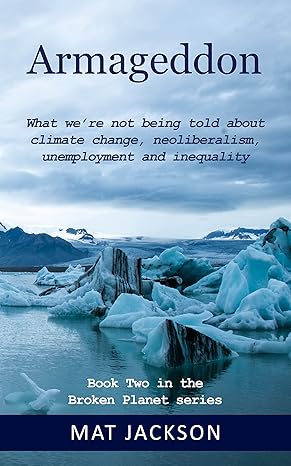
Mat Jackson’s Armageddon is a compelling exploration of global warming and international economic relations, structured in two distinct parts. The first section delves into the complexities of global warming, examining its causes, consequences, current mitigation efforts, and the challenges we face today. The second part shifts focus to the dynamics between developed and developing countries, scrutinizing how institutions like the World Bank and the IMF operate as instruments of Western economic power to influence and protect their interests globally.
Jackson’s analysis of IMF practices is particularly insightful, offering a balanced view of their benefits and drawbacks. He also explores how developing nations can leverage foreign policies and loans to foster economic growth and enhance their circumstances.
While the first half of the book addresses the crucial issue of global warming, it leans heavily on technical details, statistics, and scientific studies. I feel this data-centric approach, although informative, can somewhat overshadow the emotional connection necessary to engage readers on a human level. I believe incorporating more personal stories and emotional appeals might have made this discussion more impactful and accessible. Jackson’s thorough research and educational approach simplify complex subjects, making them accessible to readers with limited prior knowledge of international relations. His ability to present intricate information without overwhelming the reader is commendable. Each topic is clearly explained, with relevant references to historical and current events.
Armageddon is a thought-provoking and inspiring read, particularly for those interested in international relations and environmental issues. Mat Jackson’s work not only informs but also motivates readers to consider their role in making a difference in the world.
Pages: 206 | ASIN : B09H2Q4M52
The ISSA Manuscript

The ISSA Manuscript: An American Public Policy Statement is a well written book that discusses every critical aspect of Social Security. The author, who at the start of the book says he did not intend to write a book, did an impeccable job explaining Social Security, how it worked for Millennials, Generation X, and baby boomers, and how it should be for future generations. Scott A Ginn is articulate in his discussion, focusing on the vital details and giving comprehensive conversations with just a few words. Everyone knows that Social Security is a federal government-run program whereby Americans are provided with a source of income when they retire or are unable to work due to disability. Scott A Ginn, in his book, is here to tell readers that there is much more that the general public is unaware of.
Within the first few pages, the reader is introduced to the Independent Social Security Administration (ISSA), how one can enroll and how various demographics of people benefit from it. While reading this informative book, the reader is introduced to multiple terms and social security jargon. Scott A Ginn defines and clearly clarifies what unfamiliar terms mean and how they are used.
Tax and taxation are some of the major topics in this book. The author enlightens readers on how tax is calculated and how contributions are made. I also got to learn about terms of trading, equity funds, investments, retirement, and pension. Even for someone with no financial background, this book becomes easy to read thanks to the dozens of definitions given by the author and his explanations when expounding on a new topic.
Two features of The ISSA Manuscript: An American Public Policy Statement make the book worth reading; the tables and illustrations shared by the author when he is discussing complex topics and how articulate his points are. I enjoyed going through the tables. Scott A Ginn simplifies everything for the average reader, making his book interesting. It would take a lot of effort for a book whose main subject is social security to be enjoyable, but for Scott A Ginn, everything is flawless and, thus, easy to read.
The intricate nature of Social Security and related policies appears smooth, simple, and even fascinating for curious minds. I applaud Scott A Ginn for the solutions he offered and the letters to the US Senate, House of Representatives, and the Federal Reserve Board chairman. His letters give the reader a clear perspective of the status quo.
The ISSA Manuscript: An American Public Policy Statement is the perfect reference book for all things social security. The author uses statistics and research to back his facts while explaining every theory logically. As a result, this book has the ideal financial blueprint that is quick to read.
Pages: 62 | ASIN : B0B8Q8D8HN



 LITERARY TITAN