Blog Archives
Have Fun With Your Fandom


How to Celebrate Your Fandom is an interactive guidebook structured around 52 activities designed to help fans of any age dive deeper into their chosen fandoms, showing readers that you are never too old to find your passion. What was the inspiration for the original and fascinating idea at the center of the book?
NICHOLAS SEIDLER: We had an experience at a convention, in which we went to a panel on fanzines, and the presenters at the front of the room were talking about how difficult it is to make one. I was honestly totally disappointed in the panel, because doing a fanzine is as simple as writing down your thoughts on a piece of paper, making copies of it, and sharing it with others who are interested in the same topic. The point of entry should be so simple and available to everyone, but the fanzine editor presenters — in an attempt to make themselves a bit self-important – were giving bad advice to the audience. It actually demotivated the new and younger fans in attendance. After that panel, we had a conversation about how we needed to give fans better advice and encourage anyone to be a part of whatever fandom they are interested in!
STEVEN WARREN HILL: Together, we all became friends through our shared interest in several fandoms. We sought to express our enthusiasm for promoting “best practices” among fans by fostering positivity, encouragement, representation, and camaraderie, while rejecting the negative aspects of certain portions of fandom.
LIBBY SHEA: When I was brought into the project, the original idea for the title was “How to Be a SuperFan.” To me, that felt like we were setting a “higher level” of fan, which could very easily be used to separate and discourage those that may already feel excluded. All I could think of is 8-year-old me being told “Oh, you aren’t a superfan because you haven’t done everything in the book” and that set a negative tone for something that we all wanted to be very positive. So, we transitioned away from putting a label on fans to focusing on how to be more involved in what you enjoy. All of us (the authors) have become friends by being in the same fandom and celebrating what made our friendship as strong as it is, is the core of what inspired this book.
ROBERT WARNOCK: We’ve seen too much negativity in fandom over the years. We wanted to write something that was inclusive and non-judgmental, especially if someone was just starting out in their fandom.
What were some ideas that were important for you and the other writers to share in this book, and how did you come up with the activities you suggest?
ROBERT WARNOCK: It was important to keep the activities at the beginning fairly simple, so we didn’t intimidate new fans. We started thinking of activities in a brainstorming session at a convention.
LIBBY SHEA: Because this is a book aimed primarily at kids, teenagers, and those just entering into the fandom space, we really wanted it to be a guide of how to be an overall positive influence in fandom. So often you hear of fans taking it too far and forgetting that everyone they interact with are still people. The activities are there to give you a starting place. We originally came up with over 100 ideas, but wanted to focus on 52, so that you could do one a week for a year and allow yourself to deep dive into your fandom. They are in order from easiest to (our perceived) most difficult to complete. When coming up with our final list of ideas, we tried to keep in mind what it would actually look like for a younger child to complete them. We kept the ideas generic enough so that if you had limited money or resources, you could still have fun and feel like you’re a part of something.
STEVEN WARREN HILL: Coming up with the ideas was a lot of fun. Some of the ideas stemmed from odd things we did ourselves when younger. Once we had a long list of ideas, we grouped them in several different ways (such as by difficulty, and how much we liked each one) and also eliminated the ones that were too similar to others. As Libby said, we decided the final list should number 52, so they could be weekly goals, adding another functional facet to the book.
NICHOLAS SEIDLER: We also realized that fandom was a very broad topic – and we wanted to give advice that applies to them all. Whether someone is a bibliophile, a sci-fi fan, interested in gaming, likes to cheer for a sports team, enjoys horseback riding, music, or whatever, the advice in the book applies to their interests. We chose to select activities that everyone can do, regardless of ability, and they become more complex further into the book, as a person’s fandom and experience grows.
What are some tips you have for older generations that are just now learning to embrace the world of fandom and feel behind the curve from the younger generations, or even like a fraud for not being involved sooner?
LIBBY SHEA: It’s okay that you found your fandom when you did. It’s not about younger or older, and it’s not about how long you’ve been in the fandom. Everyone walks different paths to get to where they are. What matters is how you show up to engage today. Feel safe and confident in the knowledge that you are a fan now and that’s all that matters.
STEVEN WARREN HILL: I used to bristle somewhat at younger people joining the same fandom that I’ve been in for decades, for the usual flawed reasons, until I realized that without young people joining my fandom, the fandom would just keep aging until it died. We need to remember, first and foremost, that if someone says they are a fan of something, then they ARE, even if they enjoy it in a different way. Conversely, for older people who have privately been fans of something and are only just stepping into fandom, my number one tip is to treat all your fellow fans as equals, regardless of anything, especially their age or the extent of their knowledge.
ROBERT WARNOCK: It’s never too late to get started. Your involvement can be as immersive as you want it to be. Be observant early on in your involvement to get a lay of the land, so to speak.
NICHOLAS SEIDLER: Be your authentic self. If you love something, own it – most people will love you for it. It’s our interests and fandoms that make us interesting.
What is one thing that you hope readers take away from How to Celebrate Your Fandom?
LIBBY SHEA: Everyone has to start somewhere. When you finally get to the point of feeling fully immersed in your fandom, embrace others who are just starting out, pass this along to them, and join in their journeys.
ROBERT WARNOCK: That anyone can be involved in whatever fandom they choose, at whatever level they choose.
STEVEN WARREN HILL: That it’s okay to focus on positivity! Not just the positivity of your specific interest, but positivity among your fellow fans and across other fandoms.
NICHOLAS SEIDLER: And have fun. We interviewed over 30 fans from ages 5 to 101 years old (their interviews appear in the book) and that was the advice they each shared with us — have fun! I think that’s what our book is all about.
Author Links: GoodReads | X | Facebook | Website
Fandoms build friendships and communities through many engaging activities. With the help of this book, you can learn new ways to enjoy being a fan. Inside are numerous pathways that one can connect with others with similar pursuits! Whether it is through starting a collection, dressing in cosplay, writing a blog, or attending a convention, each of these brings happiness to those who participate.
This book also contains interviews with fans of all ages (5 to 101), who tell their stories and share how they participate in their hobbies. Celebrate your fandom and the things that you enjoy the most! Fun Things to Do! New Things to Learn! Cool Things to Try!
How To Celebrate Your Fandom


How to Celebrate Your Fandom is both a guidebook and a love letter to the communities that form around shared passions. It is structured around 52 activities designed to help fans of any age dive deeper into their chosen interests. From writing an elevator speech about your fandom, to hosting watch parties, making crafts, or even creating charity projects, the book celebrates creativity, connection, and joy. The later sections include interviews with fans of all ages and backgrounds, showing just how wide and welcoming fandom culture can be. The tone is encouraging, lighthearted, and inclusive, with constant reminders that there is no “wrong” way to be a fan.
I loved the spirit of this book. It feels like a big hug from the fandom world, the kind of thing that makes you smile while reading. The writing is simple, but it’s clear that the authors want everyone to feel included and safe. I especially liked the emphasis on kindness and respect, because fandoms can sometimes get messy. The little tasks are fun and surprisingly practical. Even something as small as decorating a bag with fan art or sending someone a compliment reminded me of why I fell in love with my own fandoms in the first place. It’s not just about stuff. It’s about joy, and that comes across on every page. The charming sketch artwork scattered through the book gives it a playful, handmade feel that makes the whole thing warmer and more inviting.
Some of the activities, like “put a photo of your fandom on your phone wallpaper,” made me smile because I already do that without thinking twice. But then I realized that’s part of its charm. The book isn’t about reinventing fandom, it’s about celebrating even the small things. It’s almost childlike in tone, but there’s a sincerity here that cuts through cynicism, and in a world that’s often harsh, that kind of sincerity is refreshing.
I think this book would be a wonderful fit for younger fans just starting out, or for families who want to share fandom activities together. It’s also a sweet pick for anyone feeling jaded and looking for a reminder of why being a fan matters. If you’ve ever cheered too loudly at a game, cried at a show finale, or stayed up way too late talking about your favorite character, you’ll find something here that sparks a smile. It’s not heavy reading, but it is heartwarming, and sometimes that’s exactly what we need.
Pages: 135 | ASIN : B0DGN4VSLK

“Time” is Not Our Enemy
Understanding Time and Eternity takes readers on a thought-provoking and ambitious journey to explore how humans perceive, conceptualize, and live within the realms of time and eternity. What was the inspiration for the original and fascinating idea at the center of the book?
The idea to write this book came to me many years ago, seeking to understand the connection between us and “time”. I have always been concerned with how time “flows” and how it influences us. I was also interested in how time “modifies” our bodies, aging them. I wondered if there were no more eternity, would we be eternal?
My visit to Japan in 2023 catalyzed the process of writing this book and gave it its final form. Following this visit, I tried to understand “time” in a broader way, going beyond just the Western vision of time. I studied the Western and Eastern visions of the concepts of “time” and “eternity” in comparison. To my surprise, I found that they have many common elements, of course, in addition to the elements specific to each religion or philosophy.
One thing that stood out was the extent of your research and how you drew from multiple disciplines to form your theory, rather than relying solely on science or religion. Did you find anything in your research of this story that surprised you?
Yes. While doing research for this book, I was often surprised to find many common elements in both Eastern and Western religions or philosophies. I was surprised that “time” as a concern of man has been at the core of human philosophy since ancient times. Man – regardless of faith – has correlated the idea of “time” with the concept of divinity. Another “goal” that appeared almost obsessively was how man seeks to continue his own earthly existence in a certain way through “eternity.” It was also surprising for me to observe how different and sometimes opposing the Western vision is to the Eastern one regarding certain aspects of “time” or “eternity” and at the same time how close this same vision is for other views related to “time” and “eternity”.
What were some ideas that were important for you to share in this book?
Through this book, I tried to convey more of the idea.
First of all, understanding the concepts of “time” and “eternity” helps us to better integrate into society and have a broader vision of humanity. Also, understanding how these concepts influence people’s thinking and shape their religious beliefs contributes to the general progress of humanity.
“Understanding Time and Eternity” shows my own vision of “time”, namely the fact that time “exists” in the form of “timelines” that can be individual or societal, as well as my vision that time can also be in the form of “loops”, not only cyclical or linear. I also emphasized the idea that these “timelines” can “interact” with the “eternity lines” as well as my concept related to “time travel”.
However, I concluded that the emergence of a new temporal system is inevitable in the future due to the evolution of human society and the increasing influence of artificial intelligence.
What is one thing that you hope readers take away from Understanding Time and Eternity?
Through my book, I would like readers to understand that knowing ourselves and our relationship with what is around us will come to define us as individuals. When we appear in this world, we are not asked, and when we leave this world, we are also not asked for the accord. We come to this world from eternity, and after we die, we go again into eternity. From these aspects, we should start our introspection and analysis of the relationship between us and “time”.
We must understand that “time” is not our enemy and death is not the end. Regardless of our philosophy of life or our faith, temporality and eternity are intertwined, and we must each find our own “niche” that ensures our emotional stability and personal fulfillment.
I wish that my readers in the West gain a better understanding of Eastern philosophy and those in the Far East gain a clearer vision of how Westerners live their daily lives.
But are we really in a battle with time? Is it our enemy? Can’t we make it our friend during our earthly life? Regardless of whether we consider it a friend or an enemy, time leaves visible the effects of its passage through our individual lives or our collective lives as a society.
In this book, I was exclusively concerned with time in a philosophical sense, specifically with how humans perceive it and how they relate time to their philosophical conceptions and religious beliefs. I explored the relationship between temporality and eternity, and I have concluded that, although time and eternity are opposites from all points of view (in the general view), in my view—which I have presented in this book—they are not as opposites. Still, they interpenetrate and influence each other.
I have concluded that not only does the past influence our future, but the future can also influence the past.
This book is a continuation of my previous works, which explore philosophical and religious themes and complement my philosophical and theological vision regarding the reality around us and what lies beyond it.
I have analyzed the concept of time from a philosophical and theological perspective.
I examined the concepts of “time” and “eternity” from the perspective of the Abrahamic religions (Christianity, Islam, Judaism) but also from the standpoint of Eastern religions/philosophies from the Far East (Buddhism, Daoism, Hinduism, Shintoism, Confucianism, Jainism). It was essential for me to examine how humans relate to “time” and “eternity,” as well as the impact of these philosophical concepts on the lives of common people throughout the millennia.
A significant chapter was the realization of a comparative analysis between Eastern and Western thought regarding temporality and eternity.
At the end of the book, I conclude that the emergence of a new temporal system is inevitable in the future, given humanity’s evolution and the increasing influence of AI on human society.
Understanding the concepts of “time” and “eternity” helps us integrate better into society and have a broader, more inclusive vision of humanity.
I hope that the readers from the West will gain a deeper understanding of Eastern philosophy and that those from the Far East will have a clearer vision of how Westerners live their daily lives.
This book aims to decipher the “energies and philosophies” that shape a community’s behavior, whether it behaves similarly or differently from other communities. Religions and philosophies are essential for the health of communities, and the concepts of “time” and “eternity” are crucial to them Therefore, their understanding is essential for the general progress of humanity.
Joe Gross is Dead

Helen DeBell’s Joe Gross Is Dead is a raw and deeply personal memoir chronicling her battle with depression, bullying, and self-worth, and how her life was radically transformed through her faith in Jesus Christ. Growing up as the youngest child in a large Iowa farm family, DeBell weaves memories of her loving home life with the intense isolation and cruelty she experienced from peers. The nickname “Joe Gross,” cruelly given to her in high school, became a symbol of deep shame and self-loathing. But over the course of her story, we witness a spiritual awakening. DeBell shares how the voice of God intervened in her darkest moments, eventually leading her to a life of purpose, joy, and ministry. Her journey from the pain of near-suicide to becoming a mother, writer, and Christian leader is both heartbreaking and inspiring.
Reading this book was like stepping into someone’s diary and watching the pages of hurt slowly turn into a hymn. What struck me most was Helen’s ability to balance poetic honesty with gritty memories that don’t sugarcoat anything. The way she describes the moment she nearly took her own life felt like time stopped. Her writing is simple but full of emotion. It never felt distant or rehearsed. She made me feel like I was there beside her, in her childhood barn, in her quiet heartbreak, and later, in her healing. I admired her strength in exposing wounds that many people would rather forget. There’s something rare and brave about the way she holds nothing back.
But what really moved me wasn’t just the pain. It was the change. The book doesn’t just say “things got better.” It shows it. Her love story with Randy, her discovery of worship music, and the moment she gave her life to Christ, those pages glowed. You can sense her joy, not just in the words but in the way she lifts the weight off the story. There’s a powerful beauty in the way she reclaims the insult “Joe Gross” and turns it into “Jehovah’s Gardener.” It’s rare to read something that feels so personal and still leaves space for the reader to reflect on their own story.
Joe Gross Is Dead is for anyone who has ever felt invisible or broken, for anyone who’s been labeled and left out. It’s especially meaningful for people of faith or those curious about finding hope in God during deep pain. This isn’t a perfect, polished redemption arc, it’s a real one. I wouldn’t call it light reading, but I would call it necessary. If you’ve ever needed proof that people can come back from the edge and find life again, this book is it.
Pages: 42 | ASIN : B0F7C9F4BM

KNOWLEDGE AND WISDOM: SUBLIME THOUGHTS TO ELEVATE YOUR LIFE
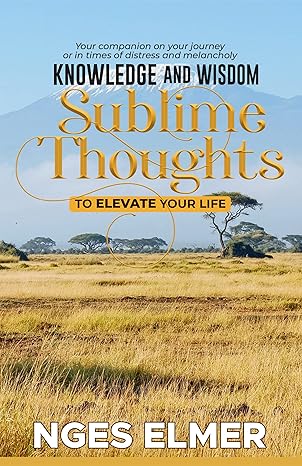
Knowledge and Wisdom: Sublime Thoughts to Elevate Your Life is a pocket-sized collection of over 300 quotations arranged alphabetically by subject, compiled by Nges Elmer. It draws from a wide range of historical and contemporary figures like philosophers, writers, leaders, and anonymous voices alike. The book presents bite-sized pieces of wisdom meant to inspire reflection, action, and growth in everyday life. Topics range from ambition and change to prayer and resilience, with each quote centered around themes such as education, love, forgiveness, success, and character. Designed to be carried easily, it’s positioned as both a spiritual and practical companion for personal development and social living.
Reading this book felt like walking through a garden of timeless truths. Some quotes struck me deeply, like William Wordsworth’s musing on the value of small acts of kindness or Emerson’s call to greet each day afresh. I appreciated that Elmer included reflections from diverse cultures and centuries, making the book feel universal in its intent. It’s not a narrative journey but a mosaic of ideas. I sometimes longed for more context or commentary to link them together, but maybe that’s the point: let the reader draw their own connections.
Stylistically, the book leans heavily on structure over storytelling, but it does what it sets out to do. Elmer’s choices are thoughtful, occasionally surprising, and clearly personal. I liked how he mixed sacred and secular wisdom without pushing an agenda. There’s a gentle, humble spirit throughout the compilation that makes it feel like advice from a wise friend rather than a lofty lecture. While not every quote felt equally strong or relevant, I found myself pausing to reflect more often than I expected.
Sublime Thoughts is a book I’d recommend for readers who like to sit with an idea and turn it over in their mind. It’s perfect for morning meditation, journaling prompts, or just flipping through when life feels noisy. Teachers, preachers, and writers looking for inspiration will likely find this a handy resource.
Pages: 114 | ASIN : B09JWRVMLK
Understanding Time and Eternity


In Understanding Time and Eternity, Vasile Ghiuta sets out on an ambitious journey to explore how humans perceive, conceptualize, and live within the realms of time and eternity. Drawing from a vast array of sources like Western philosophy, Eastern religions, Christian theology, modern physics, and psychology, he examines how time has been viewed through history and what it might truly mean. From ancient philosophers like Aristotle to contemporary scientific ideas about spacetime, and from Buddhist cycles to Christian eschatology, Ghiuta dissects and compares how cultures, thinkers, and faiths have tried to grasp these elusive ideas. A central thread running through the book is his personal thesis that time and eternity are not opposites but intertwined states of being that bleed into each other, influencing the fabric of our lives and identities.
Ghiuta writes with passion and a sense of awe, but sometimes it felt like he was trying to fit the whole universe into one bottle. There were times I was completely drawn in, like when he described time as an illusion we all share, or the theory of temporal and eternal “loops” intersecting in our souls. I found that idea beautiful and haunting. But other parts, especially those heavy with historical summaries or theological debates, felt academic. He clearly has deep respect for every tradition he references. That said, his sincerity shined through, and I appreciated that he wasn’t afraid to say when he disagreed with figures like Plato or Nietzsche. He wasn’t just retelling what others thought, he was wrestling with it all in his own voice.
What really stuck with me was how Ghiuta returned, again and again, to the personal side of time, how it shapes us, how it defines our memories and our fears, how it quietly holds hands with eternity in everything we do. His reflections on death, legacy, and the “timeless” qualities of love and kindness felt honest and moving. It’s not every day you read a book that jumps from astrophysics to Japanese cultural concepts like “Ma,” and still tries to land on the question of what happens when we die. That wild scope was the book’s strength. It made me think hard, and I never stopped being curious about where he would go next.
I’d recommend this book to people who like big questions and don’t mind taking the scenic route through philosophy, religion, and science to get some answers, or more likely, better questions. If you’re the type who likes to read slowly, underline a lot, and sit quietly with your thoughts afterward, you’ll find something rich here. It’s for seekers, wanderers, and lovers of deep thought, Ghiuta’s book might just shift how you think about your own clock, and what lies beyond it.
Pages: 492 | ISBN : 978-1-7775695-4-9
Gratitude with Grace: Finding Happiness


Gratitude with Grace: Finding Happiness is a deeply personal and heartfelt guide to self-love, healing, and spiritual transformation. Written in an accessible and conversational tone, Anita Fonteboa draws from her own life—her hardships, her healing, and her growth—to offer readers a roadmap to joy. The book is organized into thematic chapters that tackle gratitude, manifestation, intuition, and self-awareness. It encourages readers to tune into their inner voice, shift their mindset, and connect to something greater—be it God, angels, or the universe. Through affirmations, real-life anecdotes, meditative practices, and soulful wisdom, the book leads you to discover your own light, even in the darkest moments.
Reading this felt like having a warm and honest chat with a wise friend who’s been through the wringer and still found reasons to smile. I appreciated how Anita doesn’t hide behind theory or abstract advice. She gives you the raw truth of her lived experience, from financial struggles and single motherhood to spiritual awakenings. That honesty makes her message land with impact. The writing is simple, direct, and full of warmth. She repeats her messages often, which might bother some readers, but to me it felt intentional, like a mantra. I especially loved the affirmations peppered throughout the book. At times, I actually found myself saying them out loud, which is a testament to the author’s ability to make her words feel like an invitation rather than a command.
There were moments I wished for more clarity or a deeper dive into certain tools she mentions, like grounding or chakras, which are touched on. Still, the emotion is always present, and that’s what kept me hooked. This isn’t a textbook or a clinical how-to. It’s a love letter to the person who’s struggling but still showing up every day. And that makes it an incredible tool. Chapter 8 was one of my favorite parts of the book because it felt like the heart of everything Anita had been building up to. It was empowering and full of emotional honesty. I loved how she tied all the previous lessons together and reminded us that happiness isn’t something you wait for, it’s something you claim.
I’d recommend Gratitude with Grace to anyone who’s feeling stuck, broken, or lost in the noise of daily life. It’s perfect for readers new to the world of self-help or spiritual growth, especially those who resonate with personal storytelling and faith-driven inspiration. If you’ve ever whispered “there has to be more than this,” this book might just be the soft nudge toward that “more.” It won’t change your life in one read—but it just might remind you that you can. And that’s more than enough to start.
Pages: 82 | ASIN : B0CK79ZGX6
Start-Up Century
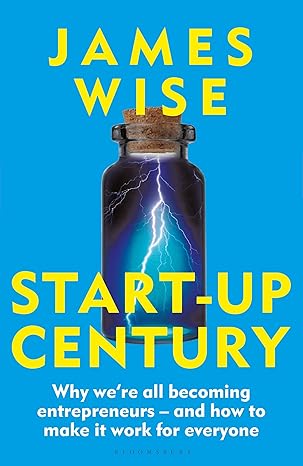
James Wise’s Start-Up Century is an engaging deep dive into the entrepreneurial shift reshaping the global workforce. The book explores why more people are leaving traditional jobs to start businesses and how technology has accelerated this transition. Wise argues that this movement isn’t a temporary trend but rather a fundamental change in the way we work, and he backs up his claim with data, anecdotes, and historical analysis. By blending personal stories with economic insights, he paints a compelling picture of a future where small businesses and self-employment become the new norm.
One of the strongest aspects of this book is Wise’s ability to connect big economic trends with personal stories. Early on, he shares how his father’s small auto business adapted to the rise of the internet, demonstrating firsthand how technology empowers small businesses. This personal touch makes the book relatable and engaging. The chapter on “Building Something New” introduces Jessica, a lawyer-turned-entrepreneur who built an online wills business using no-code tools. Her journey illustrates how accessible starting a business has become. These examples make the book more than just theory; they provide tangible proof that the entrepreneurial shift is already happening.
Wise presents the decline of traditional corporate jobs as an exciting opportunity, but he doesn’t fully address the struggles that come with self-employment. While he acknowledges that entrepreneurship isn’t for everyone, the realities of financial instability, lack of benefits, and burnout don’t get enough attention. The chapter “For Better or Worse” touches on these challenges, but a deeper exploration would have balanced the book’s otherwise glowing outlook on the future of work.
Another highlight is Wise’s discussion on how technology lowers the barrier to entry for entrepreneurs. In “Digital Scaffolds,” he explains how AI, e-commerce, and social media have made it easier than ever to launch a business. He makes a compelling case that tools once reserved for large corporations are now in the hands of individuals, allowing them to compete on a level playing field. But while technology democratizes entrepreneurship, it also raises concerns about market saturation. The book would have benefited from more analysis on how new entrepreneurs can stand out in an increasingly crowded space.
Start-Up Century is an insightful, well-researched, and inspiring read for anyone interested in the future of work. It’s particularly valuable for aspiring entrepreneurs, gig workers, and business students who want to understand the shifting job landscape. Wise’s enthusiasm is infectious, and his book serves as both a guide and a call to action for those looking to take control of their careers. While it could have been more critical of the challenges ahead, it remains an excellent resource for anyone curious about how technology is reshaping our professional lives.
Pages: 270 | ASIN : B0CM1X4LGZ


