Blog Archives
I Strive to Connect My Stories to the Past
The Recyclers’ Paradise: Dust of the Gods unveils a dystopian world where seven interwoven stories explore the dire costs of rebellion, the perils of a society bound by mechanical obedience, and the dance between free will and destiny. What inspired you to write this collection?
The inspiration was twofold.
First, my wife shared with me stories from her childhood, where she grew up under Stalinist communism. The hardships they experienced were a sharp contrast to my own, even though Medellin, Colombia, my hometown, had its own share of unique problems. Her family fled their native country and sought refuge here, in the United States. While we always hear people stating that Americans take their freedoms for granted, her family’s accounts really hammered that home.
On one hand, there were the ideals espoused by her native government, where everybody would, in theory, get what they needed. But it was also a central-planning regime, where people had little say in their futures.
The stories in this book borrow from her experiences, and magnify certain aspects by orders of magnitude, but they are not a recounting of any specific incident. After all, these stories are fictional and set on another planet.
Second, there is a famous line in the Bible that states that we are created in God’s image. This was an opportunity, for aside from surveillance and punishment, the galactic authorities have their hands in creation, too. As a result, humanity’s origins, as well as its ultimate demise, takes on a narrative very different from the typical theories of nuclear Armageddon, boiling ourselves in a climate-induced hell, or an AI revolt.
How did you conceptualize the dystopian society in The Recyclers’ Paradise, and what influenced the creation of the mechanical brain implants as a mechanism for control and maintaining order within this universe?
The implant offers the ultimate form of control. It allows the authorities to monitor people’s thoughts as well as direct punishments remotely. With a realm spanning the galaxy, it would be inconvenient to have fleets squashing rebellions in far-flung regions, so this offered a means of absolute and immediate domination over the populace.
But the implant has its benefits, too. People can use it to exert control over themselves, as several characters do in the book. Balancing it was important, so it would not just be an instrument of terror.
As a basis, I borrowed from the ideals espoused by the communists that ruled over my wife’s native country. For example, there is no currency or wealth, and everybody automatically gets everything they need. Scarcity is non-existent. However, they also get no say in their future. Everything is perfect and harmonious insofar as people enjoy the mandates assigned to them by bureaucrats.
But people always want to push the boundary. That is evident all around us here on Earth. This opposition took various forms throughout the stories, with the most overt coming from the privateers.
And finally, all of this could not have just popped up out of nowhere. As we see here on Earth, decisions made during times of hardships or war tend to outlive their original purpose and take on a new role. Thus, the historical elements of the society feature prominently, and, much like former Soviet cities exhibit the aggrandized architectures showcasing the Soviet Imperial style, so, too, do the galactic authorities have their own flavor of that. This also borrows heavily from my wife’s experiences, where entertainment primarily focused on heroic clashes during WWII. Here, the Great Galactic War takes the place of Earth’s world wars, and the heroic victories and defeats in that past conflict decorate all the government buildings, as well as drive such mundane things as children’s lullabies. An example of this was when one of the characters recalls his mother singing the Hymn of Falaclaza, which celebrated a notorious defeat.
The subtle and varied acts of rebellion by different characters in the stories are intriguing; can you delve into your process of character development and how you navigated embedding resistance within individuals in a world stringently opposed to such defiance?
Rebellion is a key component of these stories, but the implants definitely make it challenging to pull off successfully. And few do. For some of the characters, such as Silfreda and and Colfred, they are natural emotional responses to the things happening around them. Crushing your own dreams or willfully ignoring the safety of your family are not things people are used to doing, especially in a world where hardships have mostly been eliminated.
Solla, in The Illness of Wayward Citizens, brings a new dimension to rebellion. Inspiration for this character came from the many procedural shows that fill television’s primetime, where the police run informants to root out crime. Simple concept, but the combination of technology and enforcement transform it into something far more perilous than simple crime-and-punishment. That offered some interesting dynamics, especially with the bouts of paranoia Solla experienced. But it also offered a great opportunity for him to expose how life in the shadows can survive despite the authority’s total control.
The trailing stories, starting with The Refugee Conundrum, really begin to take on a new dimension. These give the Nosfelen a lot more prominence, both in the distant history as well as with recent events. For Danfirth, it was important to put this starship captain in a position that his mandate never really considered, both with having to deal with a rescue of a brutish race of primitives, as well as putting him on a collision course with the galaxy’s nemesis. But his journey was also very emotional, both in having to cope with things beyond his control, as well as feelings of connection and loss. For the ships behaviorist, Jellumis, I took inspiration from the political officers that would oversee the commanders on former Soviet naval vessels.
To further deepen the controls that the authorities exert over the populace, it was key to make citizens infertile. Control reproduction, and you can control everything else. This is the origin of the galaxy’s ruling Institute, for example, which shares its acronym with a rather notorious agency right here on Earth. As a result, The Recycler’s Apprentice gave me a chance to peek under the hood of a process that is critical to this centrally planned society. Galhan represents, as much as he can, the elite citizen. He has a cushy job with a lot of latitude. For him, like with the cat, curiosity is what gets him in trouble.
The final stories, Doomsday and Brew of Chaos, are transitions to the main series. For Doomsday, Deepallan represents the typical radar technician stationed in Alaska that had to watch for incoming ICBMs or nuclear-armed bombers. That Cold War post was what drove both his role as well as the Doomsday story itself.
In addition, each story tackles a different aspect of the galactic society. Whether it is family life, infiltration, environmental stewardship, war, law enforcement, or creation and recycling, each story puts a character in place to expose that facet of control.
What is the next book that you are working on and when will it be available?
I’m working on two books. The first is the Book 1 of the Dust of the Gods series, which will pit the galaxy’s rulers against the mysterious angels that appear in Doomsday and Brew of Chaos. At this point I should note that The Recyclers’ Paradise is part of that series, and as a Book Zero, represents an ancillary collection of prequels.
The other book is a historical sci-fantasy that takes place in the Amazon jungle. While this will be a fictional tale with sci fi elements to it, it is rooted in actual events.
As a student of history, I always strive to connect my stories to something from our past. Even Dust of the Gods upholds that principle, though the tie-in is more subtle, and is reserved from the core books in the series.
It will probably be about a year, give or take, before either of these hits the market.
Author Links : GoodReads | Twitter | Facebook | Website
Sure, there is safety. Everybody receives a predefined purpose before birth. And scarcity is nonexistent! But there is a hidden cost.
The law has reduced free will to a fantasy. People can make any choice they want, but obedience and selfless dedication to purpose are the only ones that do not invite punishment. Beneath the imposed veil of peace and abundance, however, is a grim reality where torture is but one thought away and war continues to fester in distant outposts. This collection of interconnected stories exposes the pitfalls ordinary citizens face under the watchful regime that rules our Milky Way, but they also redefine the meaning and origin of life itself.
The Recyclers’ Paradise


Embarking upon an enthralling journey through a meticulously crafted dystopian universe, The Recyclers’ Paradise: Dust of the Gods by J. N. De Bedout offers readers a contemplative exploration of free will amidst a society bound by strict, predetermined purposes. The novel seamlessly intertwines seven distinct narratives, each unearthing different facets of a world where even the minutest act of rebellion comes at a dire cost.
The stories: “The Mandate of Purpose,” “The Illness of Wayward Citizens,” “Duty Between Fire and Ice,” “The Refugee Conundrum,” “The Recycler’s Apprentice,” “Doomsday,” and “Brew of Chaos,” unfold in a universe where mechanical brain implants dictate obedience, rendering any form of dissent punishable – ranging from temporary incapacitation to the chilling prospect of being recycled.
De Bedout’s initial tale, “The Mandate of Purpose,” delicately unwraps the realities of the world he has conjured, showcasing the stark contrast and parallelisms with our contemporary society. The narrative demonstrates a sharp understanding of societal structure and consequence, notably exploring what unfolds when a departure from the ordained path is neither corrected nor quelled. In a particular instance, “The Recycler’s Apprentice” sheds light on the peculiarities of a character who diverges from their prescribed societal role, peeling back the layers of conformity to reveal a subtle rebellion beneath.
While I enjoyed this book, I felt the potential of some narratives, such as “The Illness of Wayward Citizens” and “The Refugee Conundrum,” seem underexplored due to a scarcity of conflict, leaving me yearning for deeper, more impactful clashes. “Doomsday” and “Brew of Chaos” introduce an intriguing new threat, purportedly in the form of angels. The absence of a direct, tangible conflict between the introduced beings and the established Nosfelen tantalizes readers with what might have been an epic cosmic showdown.
In his world-building, De Bedout exhibits a remarkable depth, crafting a universe pulsating with rich history and complexity. Nonetheless, a few entities make unheralded appearances, their origins, and purposes shrouded in mystery, which might, on one hand, spark a sense of intrigue and on the other, birth a morsel of frustration due to the scarce exposition.
The Recyclers’ Paradise presents a compelling tapestry of interwoven stories, mirroring certain aspects of our current societal paradigms. While it beckons with the promise of deeper exploration and untold tales, it remains a thought-provoking read that implores reflection on freedom, destiny, and the fine line that perpetually dangles between order and rebellion.
Pages: 654 | ASIN: B0CGMW515R

I Like Dead Things That Move

Blood Ever After follows a teenager who, after grappling with the suicide of his brother, navigates a zombie-infested, dystopian world to reunite with his parents and his newfound love amidst a backdrop of anarchy. What was the inspiration for the setup of your story?
I read a book called Tomorrow When the War Began and decided I wanted to write something similar to it. Since I was reading and watching a lot about zombies at the time, I decided to infuse the idea of a zombie apocalypse and a bunch of teenagers alone in a post-apocalyptic world together. It took a few rewrites to get it where I wanted it, but I like the end result, particularly the second half …
Tyler’s transformation from dealing with personal tragedy to becoming an inspiring hero is remarkable. How did you approach the development of his character?
I needed Tyler to change from being a lost young boy to almost a horrible, but courageous monster by the end of the story. For that to happen, something needed to trigger his confidence, his desperation, in a sense. I decided that the worst thing to happen to someone can also be the thing that makes them someone anew, and gives them hope.
The horror elements, particularly the presence of zombies, adds an intriguing layer to the plot. Can you talk about your decision to include these elements and how they served the overall story?
I was watching lots of zombie films at the time, so, for me it was a natural inclusion. I knew a lot about them. What I like about these zombies is that they don’t enter the story until over the half-way mark, which I don’t think has been done before that much. The zombies serve the story by adding an element of horror. It’s probably not some inclusion of deep symbolism, I just like dead things that move. 😊
What is the next book that you are working on and when will it be available?
I’ve just finished a kids’ book called Monster Hunter Madness which will come out in a few weeks, and have cook pics and stuff. It’s like Diary of a Wimpy Kid for horror fans.
Author Links: GoodReads | Twitter | Facebook
Tyler misses his brother. He lost Joshi two years back now to suicide, and Tyler – emotionally at least – has not recovered. The panic attacks. Depression. Regret. All of it. All bottled up for him and him only.
Until the apocalypse, that is.
Now the dead have risen one more time, and with them Tyler’s brother.
Joshi just wants to see Tyler one more time … to give him a hug … to tell him he loves Tyler … and that he wants to be with him, forever.
Will Tyler have what it takes to withstand his brother’s approaches, or will he flail at the last moment, succumbing to his brother’s deadly love, and destroy himself in the process?
Blood Ever After is a new adult horror thriller, with depth, heart, and some quirky jokes.
Trigger warning: contains themes of suicide, violence, and gore. Includes language some may find offensive.
Blood Ever After
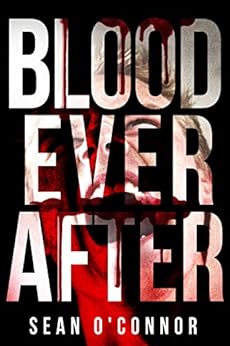
In Sean O’Connor’s thrilling novel, “Blood Ever After,” readers are escorted into the emotionally charged world of Tyler, a teenager coping with the tragic suicide of his brother, Joshi. As Tyler wrestles with the phantom pain of his brother’s absence, he finds a comforting distraction in the form of Charlotte, a captivating and assertive new arrival at his school.
This fleeting tranquility, however, is abruptly shattered when a cataclysmic event decimates their world, reducing the population significantly, including the tragic loss of Tyler’s family. Simultaneously, a sinister wave of anarchy engulfs their home city of Oakland, as nocturnal marauders instill an atmosphere of fear in the eerily vacant streets. Undeterred, Tyler, together with an unlikely group of allies, shoulders the responsibility of guardians, striving to reinstate a modicum of order in the wake of dystopian chaos. Amid survival struggles, Tyler embarks on a personal quest fraught with considerable challenges, aiming to reunite with his parents and Charlotte.
O’Connor’s novel plunges the readers into a potent cocktail of suspense, raw horror, and the tender elements of teenage romance. Tyler’s remarkable transformation from a victim of personal tragedy to an inspiring hero makes him an exceptionally relatable character for readers.
The narrative unfolds at a brisk tempo, captivating the reader from the onset. This swift pacing will likely appeal to those who relish intricate, dynamically evolving storylines. The dialogue is characterized by hearty, vernacular language, with sporadic profanity included, which may enhance authenticity for some readers, though it may not resonate with everyone’s taste. The novel bravely ventures into horror elements, notably zombies, which lends an additional layer of fascination for aficionados of this genre. The inexplicable absence of some characters infuses a sense of mystery, potentially piquing the interest of readers intrigued by deciphering the narrative’s ultimate trajectory.
“Blood Ever After” is destined to captivate horror enthusiasts, intertwining moments of palpable fear with a sensitive exploration of youthful relationships. This narrative offers a compelling study of resilience, illuminating a unique perspective on overcoming personal tragedy and symbolizing a beacon of hope amidst overwhelming adversity.
Pages: 326 | ASIN: B0BTC2B64K
The Posh Prepper
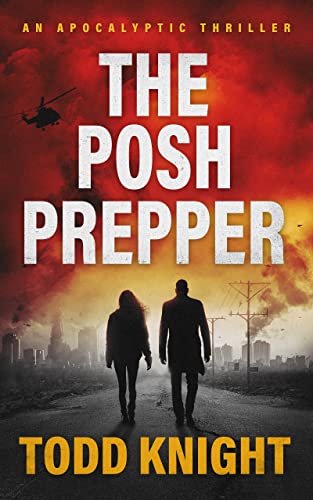

In Todd Knight’s riveting novel, The Posh Prepper, we follow the dynamic journey of protagonist Nick Ritter, an expert survivalist frequently sought after by the elite for his bespoke emergency plans. However, in an ironic twist of fate, Ritter finds himself in dire need of his own strategies as a deadly virus brings the world to the precipice of extinction. Regrettably, his meticulously crafted plans consistently falter, compelling him to navigate a world consumed by disorder. Along this tumultuous journey, he forms an unlikely alliance with a diverse group of survivors, united by the singular goal of reaching his safe haven in New Zealand, a sanctuary seemingly immune to the pervasive destruction.
Set in the ominous backdrop of the 2030s, The Posh Prepper is a spellbinding apocalyptic thriller that holds the reader hostage with its relentless pace and unpredictable plot. Knight expertly manipulates suspense and tension, cultivating a narrative landscape that ensures the reader’s anticipation never wanes. The culmination of these elements is a crescendo of high stakes that leaves the reader gasping in trepidation and tantalizing anticipation.
The Posh Prepper may be the quickest I have ever devoured a 400-page book. The narrative momentum is propulsive, dragging the reader through its electrifying plot with an exhilarating velocity that mirrors the urgency of Ritter’s quest for survival.
Knight’s vivid and graphic descriptions serve as the novel’s lifeblood, effectively transforming the written word into a cinema of the mind. His unflinching portrayal of an apocalyptic reality is both haunting and immersive, a testament to his prowess as a storyteller.
Perhaps the most striking aspect of Knight’s narrative is his assembly of protagonists. These are not superhuman characters performing implausible feats; instead, they are relatable, flawed individuals relying on courage, intellect, and sheer determination to confront insurmountable odds.
Knight’s dialogue serves as a critical conduit for character development, enabling the reader to understand each character’s unique personality and emotional state through their verbal exchanges.
The Posh Prepper is a thrilling, immersive reading experience that weaves together elements of suspense, emotion, and human resilience. It’s an apocalypse tale that will linger in your consciousness long after the final page.
Pages: 474 | ASIN: B0BVNRQ4B4
The Cycle of Eden

The Cycle of Eden: The Young Revolution by Daniel Varona is a riveting tale that transports readers to the world of Eden – a land engulfed by darkness and in dire need of a savior. At the center of this epic adventure is Seth, a young hero who must rise to the challenge of restoring light to Eden before it’s too late. As the son of a legendary figurehead who once guided the prosperous state of Eden, Seth is burdened with the daunting task of living up to his mother’s legacy. However, his tactical skills pale in comparison to his mother’s, and he is left to navigate this treacherous landscape alone.
Varona’s prose takes readers on an exhilarating ride as Seth and his companions encounter a host of creatively written monsters and face a variety of challenges that are both well-described and original. One of the most enjoyable aspects of the book is the inner dialogue of the characters, particularly Seth, whose thoughts are laugh-out-loud funny and offer a lightness to the otherwise tense situations they find themselves in. The world-building and plot are intricately woven, and readers will appreciate the vivid descriptions of the various landscapes and characters that populate this richly imagined universe.
One of the standout characters in the story is Chase, Seth’s loyal animal companion whose unwavering friendship is a testament to the age-old adage that dogs are indeed man’s best friend. Their bond is heartwarming and adds a relatable quality to the story that will resonate with readers of all ages. Varona’s writing is clever and full of unexpected twists that keep readers on the edge of their seats. This novel is a page-turner from start to finish, with recurring themes such as self-discovery woven throughout Seth’s journey as he navigates the choices he must make to restore Eden and its people.
Overall, The Cycle of Eden: The Young Revolution is a highly engaging and imaginative space opera. I highly recommend it to anyone looking for a thrilling science-fiction adventure that combines action, creativity, and a touch of humor.
Pages: 598 | ASIN : B0BT7VNMQ9
A Web Of Conflict

Pray to the Dead: Book Two in Angels Have Tread Trilogy is a unique and interesting concept for a storyline. Where did the idea for this trilogy come from, and how did it develop over time?
As part of a writing course, we were asked to write an action scene so I had this idea for a researcher looking for a cure to save her son. That formed the basis of the character for Dr Harris. As I developed that idea, I realised that most action books and movies are set in a male dominated world. In the first draft of the first book in the trilogy, When All Hope Is Lost, I didn’t explain to readers that all men over 20 had died from a disease. Instead I dropped the reader directly into a world where all the characters were female; politicians, doctors, guards, reporters. I gave those opening chapters to a number of readers and the response from male readers was interesting. They were visibly upset by the lack of men. That’s when I realised that I didn’t want to write about the disaster or the struggle to get through it. I wanted my readers to discover a world that was already a comfortably established matriarchy. It’s a world that accepts women in all walks of life.
What was your approach to writing the interactions between characters?
I wanted to create a three dimensional world so I felt it was important to have multiple points of view. I wanted characters that had known the world before the pandemic and those who’d grown up in this changed world. I wanted to show that intergenerational conflict. I also wanted characters that came from different locales which is why there is the urban versus rural points of view. In my first book, When All Hope Is Lost, the relationships are laid out in parallel lines. Patricia the reporter lives with her mother. Dr Bonnie Harris with her son Josh. Evelyn as the political leader in Melbourne has her inner circle in the same way Sofia has hers in the Warragul Colony. The idea was to bring these separate lines together in a web of conflict that reaches its conclusion in the final book of the trilogy.
What experience in your life has had the biggest impact on your writing?
I took the creative writing course as a way to reconnect with life. I’d spent time caring for my partner whose dementia was slowly eating away at both our lives. Covid struck, he went into full time care and I was bereft. I’ve always made up short stories but I found myself with a lot of time and the need to deal with my loss. That loss added a new dimension to my writing.
What will the next book in that series be about and when will it be published?
The next book, For Where There Are Harps, is still in first draft but it brings all the characters together in the civil war called the Great Upheaval. As one of my early readers pointed out, this world is out of whack and you need to put it back in balance. Book three is about destroying what isn’t working and laying the groundwork for something that will be better.
Author Links: GoodReads | Twitter | Facebook | Website | Instagram
Even After The End Of The World

Descent of the Vile follows a photographer and mysterious woman who barely escape death and must figure out a way to survive together and save humanity. What was the inspiration for the setup of your story?
This was the first time I used a dream to create a novel. I’d watched all three films in the Three-Flavours Cornetto Trilogy consecutively, and although the films have comedic elements, I had a nightmare that night that became the opening sequence to Descent of the Vile. When I woke, I had the feeling that an epic journey would come of it, and I wanted to write it down. Originally, I wrote it as a novella, but I had to cut too much out to keep it at the shorter length. So, I revised it to add the missing part of the story, and it became this short novel. I liked the idea of an antagonist that changes throughout the story and a hero who is flawed, but learns from his past mistakes. I also wanted to have Jackson’s perspective, even if a flawed one, the only perspective we see throughout the story, watching the events unfold through his eyes. His journey isn’t only the one he takes with Nadine, but a journey of discovery as he learns that life still holds possibilities for him, even after the end of the world.
What was the inspiration for the relationship that developed between the characters?
Originally, I thought I didn’t want to have it be a romance at all. And I think there is a romance that isn’t quite a romance between them. They bond with each other beyond any level of attraction. I also didn’t dwell on it, but there is an age difference between them, so I did consider that they might separate at the end, but the further I got into writing it, that seemed unlikely due to the personalities of the characters of Jackson and Nadine both. Although they might not have met if not for the apocalypse that occurs, I thought they would at least find comfort in not being alone through the traumatic experiences that they endure. It was important to me that Nadine save Jackson’s life, in more ways than one, and that Jackson opens up to her, learning that together they are stronger than they are apart. But I didn’t want her to remain as someone Jackson has to protect, that they evolve to working more as a team. It was also difficult to write from a male perspective, while creating a character who might be at once hurt but not broken. He is healed by Nadine’s presence and discovers that he can evolve as a person, too.
What were some themes that were important for you to explore in this book?
I definitely wanted to write a story about an older protagonist. Jackson is in his forties at the point of this novel, although it isn’t mentioned. He has an established career. Nadine was a student who dropped out of college, so she is younger, but she’d been in a stable relationship before she meets Jackson. It was important that they both learn to accept each other for who they are and to grow as individuals. But the main thing is that there is never a point of no return, when someone can’t make a new start. I feel like there are few older protagonists in genre fiction especially, and older people still have valid contributions to make. Also, making the point that being established doesn’t mean that a person can’t make a change and start over was important to me. It’s never too late to learn a new skill or to make a career change or to move across the country to your dream house. Life isn’t static ever, and finding your own peace is something you have to work at, but you’ll never know what you’re capable of if you never attempt anything new.
Will there be a follow-up novel to this story? If so, what aspects of the story will the next book cover?
The sequel was signed by my publisher last summer, so it should come out this year. It’s titled The Blood Hotel, and it takes place five years after the events in Descent of the Vile. Jackson and Nadine have settled into a comfortable routine when the return of a familiar foe uproots them and sends them fleeing once again. This time, the enemy has changed tactics, and they wonder what they can do to end the threat forever. There will be some themes that do come up again, like the fear of change, but it’s a new story with a different setting, so hopefully readers of Descent of the Vile will enjoy it. I think it’s a bit darker in tone with historical correlations, but you can simply read it as an action adventure if you prefer. I want it to be an enjoyable read, but there’s something more if you look for it.
Author Links: GoodReads | Twitter | Facebook | Website
He barely escapes horrifying peril on the shuttle and races away in his car, only to rescue an enigmatic woman named Nadine who barely speaks to him. In doing so, he wonders what strange new terrors he’s discovered. Seeking to uncover the answer to the mystery, he drives away from the city and hopes to outrun any danger while also keeping his new companion safe. Eventually, however, he is no longer sure that running for the rest of his life is enough. To end the threat, he thinks he may have to return to the starting point but wonders if Nadine is too traumatized to face it again. Facing the choice of what to do with the mysterious woman he supposedly rescued, he must decide if he will protect her at all costs or if he will put her at risk to save the last of humanity.



 LITERARY TITAN