Blog Archives
No Redemption, No Recovery

Because of His Heart centers around the strained marriage between a journalist and a doctor, and the psychological maze that tests their limits. Where did the idea for this novel come from?
It is not uncommon for an author to find inspiration in a dream. This was the case with Because of His Heart. The dream, quite a few years ago, provided the basic conflict, sexual abuse in marriage, but also the overwhelming uncertainties that attend when strong emotions are present. Much like “the fog of war” that is often described, there are several characters who know each other to varying degrees, but invariably make critical errors of judgment as well as indulge in half-truths in communicating. No single character understands the whole, and the reader must bring it all together.
What were some of the trials that you felt were important to highlight your characters’ development?
I believe that a thoughtful, competent, successful individual (in this case, Erica Seames) would suffer profoundly if all that she worked for, all that she created for herself, was to steadily fall away, beyond her control. So much that we believe of ourselves hinges on a feeling of agency, that our choices and actions are efficacious. If this sense collapses, the alienation and sadness may be overwhelming. In Because of His Heart, Erica Seames’ loss of trust in her husband, in her work as a physician, and finally in her own body, is her trial. Erica’s reason does not fail her, but she is led by a malign influence to depression and resignation. Her recovery is achieved by regaining her world. It is, finally, a joyous thing. In contrast, Nathan Milo chooses pain in love and deception in his progress, leading to further evil choices, including the destruction of others as he rationalizes. He too loses agency, but as it was his choice, there is no redemption, no recovery. Unreliable narratives compound uncertainties. Secondary characters, Constable John Deuter, student poet Dale Jeffer, and arts promoter Dorothea Lunnery, add to the density of the interwoven community, and the continuing uncertainty in moral choices of the main characters.
When you first sat down to write this story, did you know where you were going, or did the twists come as you were writing?
I began writing Because of His Heart with the core conflict in mind. (see above)
Honestly, I can’t remember how or when the other characters emerged, though I outlined each one as I wrote. Elements and characters from two other proto-novels entered the plot over time as the three-part structure settled in. Note: Because of His Heart took almost ten years to write, not because of uncertainties, but because I was working as a classical musician and had limited time for writing. I cut over 30,000 words from the final drafts because the length and focus became too broad over the years of writing. Some of this material may have value in itself. I am considering publishing some extra segments on my website if there is interest in the future.
What is the next book you are working on, and when will it be available?
I am an older fellow, so I may not work on another new novel. However, I have another novel complete right now. Its title is: Francis. It is quite different in design, an adventure in northern Kenya (where I have spent some time over the years). The character, Philip Stroud, who is an important figure in Because of His Heart, makes his appearance in Francis as a young man. We get the back story on Stroud and his fiancée, psychologist Jaye Stevens, in what might be considered a prequel novel. Francis is ready for publication, but my plan is to promote Because of His Heart, which I call my magnum opus, for at least a year before moving to publish Francis.
Author Links: GoodReads | Substack | Facebook | Website | Amazon
Erica is losing her identity and purpose. How could she have been so wrong about her husband? Charles is shocked by this personal tragedy, but as a reporter who knows his beat, he is determined to understand. “I am not a bad man, I am not.” He had acted foolishly, even meanly, but as he considers his joyful marriage of eight years, he discovers that there is something vital he is missing.
As Erica flees New York for her childhood home in Toronto, an anonymous blog is her creation and refuge. She is never alone. Yet when Charles discovers Erica’s online diary, he no longer recognizes his wife or himself in her anguished assertions. To whom can he turn?
In this chilling psychological thriller, abuse, infidelity, psychological manipulation and calculated malice draw a group of near-strangers together to save Erica―in pursuit of elusive justice.
Trolling in Social Media

BLOATER follows a neurosurgeon devastated by his wife’s sudden death who experiences a psychological collapse and makes it his mission to enact justice on the world by killing off sinners. What was the inspiration for the setup of your story?
I felt it would be interesting to weave a tale of retribution for those who use social media platforms to spew hate and prejudice upon innocents. My intention was to create a deranged vigilante to exact vengeance. I spent many years in the operating theater as a surgical device representative for several Fortune 500 medical manufacturers, so a medical setting felt comfortable.
Dr. Jeremiah Nowak is a fascinating character, watching him transform and justify his killings. What scene was the most interesting to write for that character?
I endeavored to subtly display Nowak’s increasing obsession with killing, and the satisfaction he derived from it. My favorite scene to write was the finale, where we witness his lust for mutilation and murder, but then ride along as it all comes apart.
I felt that BLOATER delivers the drama so well that it flirts with the grimdark genre. Was it your intention to give the story a darker tone?
Yes. It was important for me to help the reader understand that although trolling in social media is hurtful and can be harmful, it pales in comparison to a maniacal quest for blood.
What is the next book that you’re working on, and when can your fans expect it out?
I am writing a sequel that delves into another Camby and Lanquist investigation. I hope to complete the book by March of 2026. My original plan was to develop a series of three novels for the duo, but I am open to more depending upon the response from your readership.
Author Links: GoodReads | Website | Amazon
The man who once repaired the human brain begins to dissect the human soul… one sinner at a time.
His victims don’t just disappear.
They float—bloated, ballooned, grotesquely smiling—left drifting like obscene warnings across the city skyline.
Each murder is a flawless surgical performance.
Each body a message carved in flesh.
Each kill more daring than the last.
And Nowak tells himself it isn’t vengeance.
It’s justice.
You Write What You Know

Reservations follow a gifted FBI profiler with psychological insight whose mentor dies while working on a serial killer case, leaving her to pick up where he left off. What was the inspiration for the setup of your story?
First, I have to start with a backstory. In 2017, I was having a difficult time in my life; ending a 28-year marriage, leaving a job I was unhappy in, selling my house, and in need of a life overhaul. One day, I woke up and demanded a do-over from the Universe. Several nights later, the dreams started, and the books began. This book, Reservations (originally under a different title), was written in less than a month, followed by six more in a period of six months. I dreamt every night and wrote every day. The dreams were a visceral guide, with me filling in the blanks. A lot of stops and starts, but eight years later, here we are.
Samantha Wright is as real a character I could write because she is all of us. She is me. The story is about losing those who are close to us, who have made us who we are, and when they are lost to us, how we move on and try to make them proud with our attempt, we try to make things better. Sam has a career at the FBI, dealing with death while trying to find justice for the victims of the heinous things people do to each other. In this world, we all deal with what Sam does, just in a more unnoticed way. Just as Sam is trying to learn to live with everything she witnesses and is surrounded by daily, so are we with the very personal stories we all have to tell about how we live within the 24-hour news cycle and the reality we all see. I needed Sam to be many things, and she could be those things if her job had leverage to it.
I enjoyed Samantha’s character; she is engaging, intelligent, and complicated, not at all predictable. What was your inspiration for Samantha Wright’s character, and how did you craft her outlook on life?
They say you write what you know, and there is a lot of subconscious memory that is a treasure trove of bits and pieces that surface once they are awakened. Samantha Wright is a culmination of women I’ve known over the years that made a difference in me and my thinking, and by morphing those qualities and remembrances – well – Samantha was born. Once I had Samantha Wright and the dreams, I pieced the puzzle together. I’ve worked for attorneys as a paralegal, and that brought connections to stories of people and situations that made sense of the dreams and enabled me to weave a story together anchored by this amazing woman, Samantha Wright. Sam’s outlook is one of despair backed by hope. Strength of conviction, but willing to be weak, with not always knowing what to do. A yearning for love, but knowing her responsibilities will always color any relationship she would have. Again, Sam is us. I write with first and third person – I want the reader to know at all times all the characters in the scene and what they feel, think, and say, even when Sam isn’t part of the scene.
What were some themes that were important for you to explore in this book?
I have always had a connection, an affinity to Native culture, having lived in the Western state of Colorado. I’ve been drawn to the sense of Tribe and the rich history since I was young. I’ve also lived in situations that brought abuse, addiction, strength through fear, cultural divides, and love, of course, in my life and the life of those I know. I try to slowly bring themes into the plots, without being preachy or making it stand out – themes don’t have to stand out; they just have to be absorbed by the reader as part of the story. I want the reader to think back and see layers in what they’ve read.
Is this the first book in the series? If so, when is the next book coming out, and what can your fans expect in the next story?
The series has seven books – the first, Reservations: A Samantha Wright Crime Series, the second, The Last Profile, which just launched on Amazon, continues the core characters that are so integral to the plots and the important stories they bring forward. The Last Profile has Samantha following a case on and off the reservation, three plots going on at the same time, leading her through a maze of lies and betrayal by the very people her life centers around. If you love Will Little Bear, he helps Sam work the case that is supposed to finally free her from the FBI, so they can have the life they yearn for. Five more books follow; manuscripts finalized, waiting in the wings to be launched every six months. Plots that you may never have read before, characters that attach themselves to you, and relatable stories that resonate with the reader. The books are about people who have a family life and a work life – they figure out how to make it work, and in Sam’s case, her family, her tribe, is her foundation that gives her the ability to do her most difficult job, finding justice and a voice for those who can’t speak for themselves.
Author Links: GoodReads | Website | Amazon
When Special Agent Samantha Wright’s mentor dies while profiling a disturbing serial killer case known as “The Reservations Case,” she’s left to pick up the pieces—and finish what he started. Young Native American boys are being abducted, sexually assaulted, and murdered across multiple states, and the trail leads deep into the heart of the American West.
Sam is no ordinary profiler. Gifted with an uncanny psychological insight and a darkly self-deprecating sense of humor, she sees patterns others miss. But as the case grows more complex—and culturally sensitive—she’ll need more than sharp instincts to bring the killer to justice.
With help from her commanding yet complicated boss, Special Agent Charlie Falken, and a skilled Cheyenne tracker, Will Little Bear, Sam must navigate the perilous intersection of federal law, reservation sovereignty, and cultural trauma. As tensions rise and bodies pile up, alliances deepen—and so do emotions.
RESERVATIONS is a gripping crime thriller that blends psyc
Because of His Heart


Because of His Heart tells a twisting story of strained love, private wounds, and the strange ways people hide from themselves. The book moves between Charles Portland, a journalist who stumbles through heartbreak and confusion, and Erica Seames, a doctor whose inner world spills into journals, therapy sessions, and dream-like reflections. Their marriage trembles under jealousy, grief, illness, and the pull of outside influences. Around them swirl detectives, therapists, academics, and a host of observers who add tension and mystery. What begins as a domestic rift grows into a psychological maze that pushes everyone toward breaking points and revelations. The story feels intimate and huge at the same time, like a whisper that somehow shakes the walls.
I felt pulled in by the writing right away. The style is rich, sometimes thick with emotion, sometimes floating in quiet sadness. I caught myself slowing down just to feel the rhythm of a paragraph. At other times, I sped ahead because the tension swelled and I needed to know what someone would say or remember or confess. The voices of the characters shift often, and that creates a strange, almost musical pattern. I enjoyed that. It felt risky and bold. When the book turns inward, especially through Erica’s journal passages, I felt a kind of ache, something tender and unsettling. The language is lush, sometimes a little wild, but it fits the turbulence inside her.
The book probes marriage. It pokes at the pride and fear that sit quietly between two people who love each other but stop speaking honestly. It also wanders into questions about identity, longing, projection, and the blurry line between truth and imagination. Some sections confused me in a way that felt intentional, almost like the author wanted me to experience the disorientation the characters felt. At times, I wished for clearer edges, yet the fog added to the emotional weight. I admired how the book balanced real-world problems with almost mythic undertones. Charles and Erica felt fragile but also alive, and their pain carried a beauty.
I would recommend Because of His Heart to readers who enjoy psychological fiction that digs deep into relationships and the hidden storms beneath daily life. It is perfect for someone who likes character-driven stories that wander through memory, longing, and emotional tension. If you want a straightforward plot, this may feel heavy. If you love getting lost in voices, feelings, and messy human truths, this will be a fantastic book for you.
Pages: 555 | ASIN : B0FS5BF8GD

Reservations: A Samantha Wright Crime Series
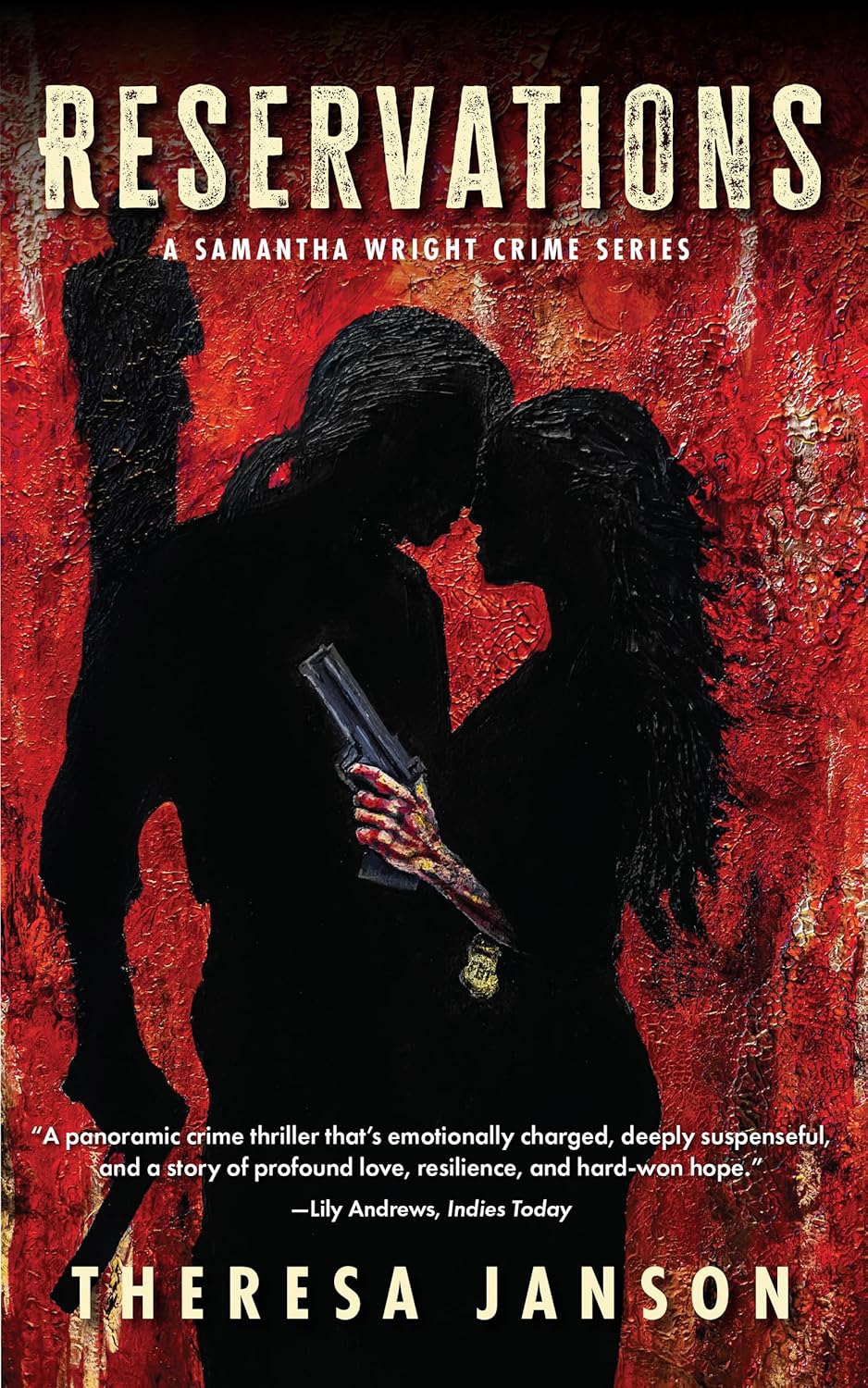

Reservations follows FBI profiler Samantha Wright as she’s pushed back into the hunt for a serial killer after the sudden death of her mentor and closest friend, Dr. Edmond Sampson. The story opens with grief, then moves fast into danger as Sam takes over the RESERVATIONS case, a string of murders involving young boys on reservations across the American West. Her past traumas, messy romantic entanglement with Special Agent Charlie Falken, and deep loyalty to Dr. Sampson color every choice she makes. The book blends crime, trauma, culture, and romance in a way that feels raw and intimate, almost like sitting beside Sam as she thinks her way through every dark corner of the investigation.
I liked how emotional the writing feels. The author doesn’t rush through Sam’s pain. She lets it sit there, real and jagged. Sam grieves her mentor with this quiet, private sorrow that feels heavy and familiar. At the same time, the pacing snaps between slow internal moments and sudden shocks. The memories of the BAKER’S DOZEN case are especially rough. The writing keeps things personal. It doesn’t pretend Sam is made of steel. She’s brilliant, but she’s tired, haunted, and sometimes unsure, and I liked her more because of that.
The mix of genres also surprised me in a good way. The romantic scenes with Charlie are blunt, sweaty, flawed, and full of emotional landmines. They’re not polished or dreamy. They feel like two people clinging to each other because they don’t know what else to do with their hurt. Then the story swings into investigative mode with sharp detail and a steady buildup of dread. The casework feels grounded and tense, especially when Sam revisits crime scenes or pieces together old trauma with new evidence. The writing is vivid.
I’d recommend Reservations to readers who enjoy crime fiction with strong emotional depth and a protagonist who feels human in all the best and hardest ways. It’s especially fitting for people who like stories that dive into trauma, culture, identity, and the complicated ties we form with the people who shape us. If you want a thriller with heart and heat, something that grips you and makes you feel a little raw by the end, this book will get you there.
Pages: 332 | ASIN : B0FHYLFVBZ

Trail of Buried Evidence

In The Mourning Locket, an empath confronts the owner of a unique agency comprised of sentient heirlooms capable of remembering their owners and seeks to uncover its long-buried secrets. Where did the idea for this novel come from?
The idea started with my own family heirlooms. I grew up around old photographs, jewelry, keepsakes — things that didn’t look like much from the outside but held entire histories inside them. I always wondered what they’d “say” if they could talk.
When I started writing The Mourning Locket, it was my way of honoring those stories that get lost between generations. I wanted to capture that feeling of holding something that once meant everything to someone who isn’t here anymore. The book grew out of that love for family history and the questions we never get to ask the people we miss.
How did you go about capturing the thoughts of the heirlooms?
To write the heirlooms, I imagined them the way we imagine the stories behind things we inherit. When you hold something that belonged to someone you loved, you automatically think about what it meant to them.
That’s the energy I wrote from. Their thoughts come through impressions, not sentences — a heaviness, a chill, a warmth, a pull. The emotional tone of the object shows up long before the mystery does. It made them feel alive without ever stepping outside of realism.
Were you able to relate to your characters while writing them?
Absolutely. I related to my characters in different ways, sometimes in ways I didn’t even expect. Rowan’s determination, Piper’s anxious overthinking, Cassian’s quiet intensity — those all come from real emotions I understand. And then there’s Sable, whose sarcasm and perfectly timed humor felt like the pressure valve everyone needed.
I relate to her a lot — that instinct to lighten a tense moment, or to say the thing everyone else is only thinking. Writing her was almost like letting the honest, unfiltered side of myself onto the page.
Each character carries something human and familiar, and that connection made writing them feel less like creating fictional people and more like spending time with versions of myself and the people I love.
Can you give us a glimpse inside Book 2 of The Inheritance Bureau series? Where will it take readers?
Book 2, The Music Box from Ashford, drags the Bureau into its darkest investigation yet. What begins as a simple heirloom assessment turns into a trail of buried evidence, altered records, and a past that someone worked very hard to erase.
The music box at the center of it all isn’t just an antique — it’s a trigger. And once it resurfaces, everything the Bureau thought it understood about its own origins is shaken.
This book pulls readers deeper into the hidden corners of the Bureau: the cases that never made it into the official files, the mistakes no one was supposed to uncover, and the people who paid the price for trying. Rowan gets pulled into the heart of it, Piper and Sable uncover secrets that were never meant to see daylight, and Arden is forced to confront what leadership really costs.
The investigation reaches back more than a century, and the past refuses to stay quiet this time.
Without giving too much away — Book 2 opens a door the Bureau can’t close, and what waits on the other side changes everything heading into Book 3.
Author Links: GoodReads | Facebook | Amazon
Empathic appraiser Dr. Cassian Vale can feel a person’s final emotions through touch—an ability that makes him invaluable, and dangerous. Investigating an 1860s mourning locket, Cassian relives a woman’s death and uncovers a conspiracy linking grief, immortality, and bloodline control.
As the echoes grow louder, the team must decide whether to silence the past—or listen before it consumes them.
Servant
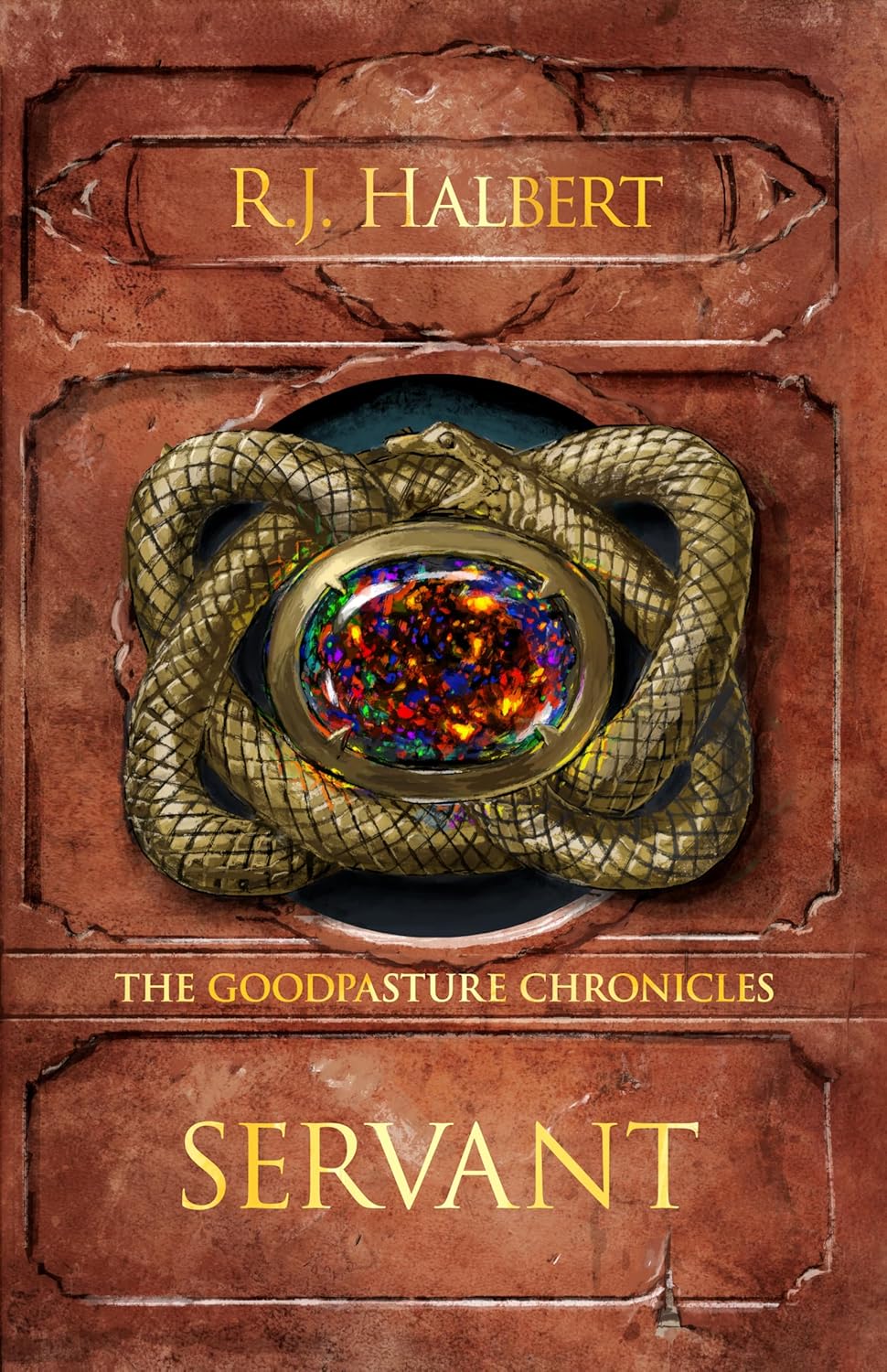
Servant is a supernatural fantasy novel that blends family drama, ancient mystery, and time-crossed storytelling. The book follows two threads that eventually begin to echo one another: Zach, a middle-school kid from the Keane family who vanishes from his house under eerie circumstances, and Akolo, a boy living centuries earlier whose life is marked by war, trauma, and the demands of kings. As Zach’s family searches for him in the present day, he finds himself wandering through stone hallways, oil-lit corridors, and a world that feels pulled straight from his dad’s archaeology stories. Meanwhile, Akolo faces his own captivity in a foreign palace controlled by a ruler who insists he will “need” him. Both boys are caught in places where power, fear, and destiny collide. By the time the book reaches its epilogue, the story has cracked wide open into something larger, hinting at deep magic, interwoven timelines, and a house that is far more alive than anyone wants to admit.
I found myself pulled in by the writing style. It’s simple on the surface but has this steady emotional current running underneath. The authors don’t rush. They let each moment breathe. Even the small scenes, a father making coffee, a daughter complaining about pizza for breakfast, or the house creaking in the early morning, carry a sense of “something is happening here,” even if you can’t name it yet. I liked that. It made me feel like I was sitting inside the Keanes’ home, overhearing bits of life while the bigger mystery brewed just out of sight. And then we cut to Akolo’s story, which feels raw and grounded and ancient. Those chapters landed hardest for me. His fear. His confusion. The way he clutches the jeweled stone in his pocket just to feel connected to something familiar.
I also appreciated the author’s choices around pacing and perspective. Switching between timelines can easily feel gimmicky, but here it feels purposeful. Zach’s modern confusion mirrors Akolo’s ancient disorientation, and that parallel makes the supernatural elements feel earned. I liked how the book doesn’t give its secrets away too quickly. We get hints, symbols carved into doors, fog in places fog shouldn’t be, Marshall knowing more than he says, but the authors trust the reader to sit in the unknown for a while. That kind of patience is rare, and honestly, refreshing. The emotional beats hit hardest because they’re framed by that tension: the Keane parents’ terror when Zach goes missing, Ariel’s mix of resentment and fear, Akolo’s grief for his family, Marshall’s haunted loyalty to forces he doesn’t entirely understand. All of it builds toward that late-book shake of the earth, where the house itself moves as though waking up.
Servant doesn’t wrap everything up, but it feels like a middle chapter that knows exactly what it is. I’d recommend this book to readers who love supernatural fantasy with a human heart, people who enjoy stories about families surviving strange things, or anyone who likes time-slip mysteries tied to ancient cultures. If you want something atmospheric, character-driven, and a little eerie without tipping into horror, this one will hit the spot.
Pages: 262 | ASIN : B0FQ5ZGH1R
How Identity Survives

My Twelve-Year-Old Wife follows a desperate man searching for his missing wife, who has a twelve-year-old girl with his wife’s memories show up at his door, claiming to be her. What was the inspiration for the setup of your story?
The initial spark came from a simple, unsettling question: What if the person you love most disappears… and then returns as a child, still believing they are your wife? That idea gripped me because it collides love, memory, morality, and time in a way that instantly creates emotional and ethical tension. I wasn’t interested in explaining it with heavy science fiction rules. I wanted to explore how far love stretches, where it breaks, and how identity survives when reality bends. The premise let me push a psychological and emotional boundary in a very human way.
Were you able to achieve everything you wanted with the characters in the novel?
For the most part, yes. Dan and Celia evolved as I wrote them. They stopped being just “characters” and started behaving like people with real trauma, confusion, loyalty, and fear. What surprised me most was how much restraint I actually had to show—what they don’t say or do often carries more power than what they do. There are still layers I’m continuing to explore more deeply in Book Two, but I feel I created honest, flawed, believable people in an impossible situation.
When you first sat down to write this story, did you know where you were going, or did the twists come as you were writing?
I had a few major anchor points in mind, but the story very much revealed itself as I wrote it. Certain scenes appeared suddenly in my head, sometimes late at night, and demanded to be written. The twists weren’t plotted on a board — they came from asking myself, “What is the most emotionally honest (and disturbing) thing that could happen next?” In many ways, the story surprised me while I was writing it.
What is the next book that you are working on, and when will it be available?
I’m in the middle of an intense release window and will be launching three books within the next several months. The first is My Twelve-Year-Old Wife 2: Erased Memories, which expands the timeline fracture and deepens the emotional and psychological consequences introduced in the first novel. The second is Memoirs of a Serial Killer: Book Two, continuing the disturbing and introspective descent of the series. The final release is a reimagined and expanded edition of Chloroform Wars, retitled Rhea’s Game — which was a runner-up at the Paris Book Festival — now featuring several additional chapters and a sharper focus on Rhea’s perspective within the dystopian world.
Together, the three books continue to explore identity, power, memory, and moral collapse in different but interconnected ways.
Author Links: GoodReads | Facebook | Website | Amazon
By morning, a twelve-year-old girl stood on his porch — carrying his wife’s memories.
Finalist — 2025 American Writing Awards (Fiction, Psychological)
From Dan Uselton, author of Chloroform War — Runner-Up (Wild Card), Paris Book Festival
Updated Edition – November 2025: Revised timelines, refined pacing, and new author edits for the most immersive reading experience yet.
Dan Fox can’t explain it. The girl knows intimate details from his marriage—things no one else could possibly know. She remembers everything.
As Dan hunts for answers, he’s dragged into a twisting psychological nightmare where memory and identity fracture and:
A masked predator stalks them through shifting realities
Every revelation spirals into deeper deception
One impossible choice could erase the woman he loves forever
My Twelve-Year-Old Wife is a dark psychological thriller about grief, devotion, and the terrifying grip of the past. Fans of The Silent Patient, Verity, Gone Girl, and Behind Her Eyes will be hooked until the final page.



 LITERARY TITAN